


Tools for Data-Driven Strategies That Actually Change Decisions
Written with AI assistance under our editorial guidelines
Effective data-driven strategies require more than tools and dashboards. Despite widespread adoption, only 32% of marketers report "very successful" data-driven strategies because organizations lack critical thinking, challenge assumptions, and integrate human judgment. Success demands both quantitative and qualitative data, cultural readiness, and teams prepared for genuine change, not just technology investment.
In a world drowning in dashboards and obsessed with “data-driven” everything, the promise of tools for data-driven strategies has never felt more seductive—or more treacherous. C-suite leaders preach the gospel of analytics, while teams stare at endless streams of “insight” that are either blindingly obvious or fatally misleading. Welcome to the labyrinth, where every turn offers a new platform, a shinier algorithm, or the next must-have BI gadget, and yet nobody warns you about the price of getting lost. If you think the right data tool will finally deliver clarity, buckle up—because the truth is far messier and far more revealing than most vendors or evangelists dare admit.
This article rips open the myths, exposes hidden costs, and lays bare the nine brutal truths behind tools for data-driven strategies. You’ll learn what actually works, where the bodies are buried, and how to escape the endless cycle of hype and disappointment. Whether you’re a seasoned strategist, an overwhelmed marketer, or just data-curious, the following investigation will arm you with the insight to make data tools work for you—not the other way around.
The promise and peril of data-driven strategy
Why everyone wants to be data-driven (and what they’re missing)
The modern business landscape is built on a single obsession: be data-driven, or be left behind. From boardrooms to back offices, companies chase analytics platforms in the hope of uncovering the next revenue spike or operational shortcut. But here’s the uncomfortable question—what are they really chasing? According to data from Statista (2024), 63% of marketers rate their data-driven strategies as “somewhat successful,” while only 32% call them “very successful.” In other words, a majority are still circling the runway, not soaring.

What’s missing isn’t more dashboards, bigger datasets, or smarter AI. It’s the human element—critical thinking, a willingness to challenge assumptions, and the courage to admit that sometimes, the numbers are lying. The real threat isn’t ignorance, but overconfidence in poorly understood tools wielded by teams unprepared for the cultural shock of genuine data-driven change.
“The most challenging part of becoming data-driven was enabling teams, learning how to gather meaningful insights regularly, and convincing stakeholders that we need both quantitative and qualitative data.” — Lesia Polivod, Expandi.io, Coupler.io, 2024
The real story behind the hype: data tools in 2025
Behind every new platform launch and glowing case study, the reality of data tool adoption is far more nuanced. According to recent research from Gartner, advanced analytics and AI tools—like Tableau, ThoughtSpot, and Markov—now enable faster, no-code insights, promising to democratize decision-making. But do they deliver? Data fabric deployments, for instance, have quadrupled data utilization efficiency and cut manual management in half, yet the transformation is often neither linear nor painless.
| Tool Type | Success Rate (%) | Typical Pitfalls | Best Use Case |
|---|---|---|---|
| Self-service BI | 67 | Inconsistent data definitions | Departmental reporting |
| Embedded Analytics | 72 | Integration headaches | Customer-facing applications |
| Data Fabric | 60 | Complex setup, high cost | Cross-departmental analytics |
| AI/ML Platforms | 54 | Skills gap, overfitting | Predictive analytics |
| Data Warehousing | 80 | Migration risks, silo creep | Enterprise-wide reporting |
Table 1: Success rates and pitfalls of prevalent data tool types.
Source: Original analysis based on Gartner (2024), Statista (2024), Analytics Vidhya (2024)
What they never tell you about tool adoption
The hidden costs of “going data-driven” are rarely discussed openly. Here’s what most sales decks leave out:
- Cultural resistance: Technical implementation is the easy part. Convincing your people to trust data over gut feeling (the HiPPO effect—Highest Paid Person’s Opinion) is an ongoing knife fight.
- Integration nightmares: New tools rarely play nice with old infrastructure, leading to tangled workflows and wasted hours on “fixing the connectors.”
- Data governance fatigue: With every new platform comes a tangle of permissions, compliance checks, and version control drama.
- Training black holes: The latest tool is only as good as the people using it. Upskilling teams is expensive and often underestimated.
- ROI illusion: Vendors love to tout “time to insight,” but the real return on investment is muddy at best and, at worst, a mirage.
Bridge: From shiny dashboards to real-world decisions
If you feel like you’re living in a perpetual state of “tool evaluation,” you aren’t alone. The parade of dashboards, integrations, and platform upgrades never ends—but actual business advantage comes only when you cross the chasm from analysis to action. The next section strips away the marketing gloss and decodes the landscape, so you can finally see what’s real and what’s just vaporware.
Decoding the data tool landscape: must-knows before you choose
The many faces of data tools: platforms, analytics, and more
The phrase “tools for data-driven strategies” covers a sprawling jungle of platforms, apps, and services. Each claims a unique edge, but most fall into a handful of categories.
| Tool Category | What It Actually Does |
|---|---|
| Business Intelligence (BI) | Turns raw data into visual dashboards and reports. |
| Data Warehousing | Stores, organizes, and centralizes vast data sets. |
| Analytics Platforms | Allows advanced analysis and modeling (often with AI/ML). |
| Data Integration | Connects data sources, cleans and merges data. |
| Visualization Tools | Creates interactive charts and graphs for storytelling. |
| Decision Intelligence | Blends analytics, automation, and business rules. |

The original workhorse—think Tableau or Power BI. Great for slicing and dicing, but often reliant on clean, well-structured data.
The digital vault—Snowflake or Google BigQuery. Stores and structures, but doesn’t guarantee insight.
Where the magic (or chaos) happens. Tools like ThoughtSpot or Alteryx promise advanced modeling, but can overwhelm with complexity.
The “behind-the-scenes” glue. Tools like Fivetran or Zapier. Not sexy, but absolutely vital.
For the storytelling nerds. Turns numbers into something the C-suite can understand.
The new kid on the block. These tools (like teambmember.ai) aim to blur the line between analytics and action.
How to spot vaporware, snake oil, and sustainable solutions
Not all tools are created equal. If you want to avoid buyer’s remorse, follow this playbook:
- Scrutinize the demo: Does the product solve your actual workflow, or just look pretty in PowerPoint?
- Ask for real references: Demand case studies with measurable before-and-after data.
- Interrogate their claims: “AI-powered” is meaningless without specifics—ask for proof, not platitudes.
- Check integration pain: Is there a graveyard of failed connectors? Test with your weirdest data set.
- Probe for hidden costs: Training, migration, overages—get it in writing.
- Assess company health: Is the vendor growing or quietly laying off staff?
- Demand a trial: Never trust screenshots. Insist on a hands-on pilot with your data.
Major tool types and their real strengths (and quirks)
Here’s where the rubber meets the road. Different tools shine—and stumble—for different reasons.
| Tool Type | Core Strength | Known Weakness | Example Platforms |
|---|---|---|---|
| BI Dashboards | Quick visualization | Can oversimplify, static insights | Tableau, Power BI |
| Data Warehouses | Scale, structure | High setup, migration risk | Snowflake, Redshift |
| Embedded Analytics | User-facing, fast | Integration complexity | Sisense, Qlik |
| AI/ML Analytics | Predictive power | Steep learning curve, data hungry | DataRobot, H2O.ai |
| Decision Intelligence | Automated recommendations | Black-box logic, trust issues | teambmember.ai, IBM DI |
Table 2: The real strengths and weaknesses of major data tool categories.
Source: Original analysis based on Gartner (2024), Number Analytics (2024), direct platform documentation.
At the end of the day, knowing the quirks of each tool—what it does well, what it fumbles—is the difference between strategic advantage and digital chaos.
Top 3 misconceptions about data-driven toolkits
The biggest myths about tools for data-driven strategies persist because they’re comforting—and dangerously wrong.
- “The right tool will fix bad data.”
No amount of analytics wizardry can salvage garbage in. Invest in data hygiene before you build castles atop quicksand. - “Automation means no more human error.”
Wrong. Automation just means mistakes happen faster and at scale—usually due to bad logic, not bad math. - “More dashboards = more insight.”
Information overload is real. Without context, extra dashboards multiply confusion, not clarity.
Too many organizations learn these truths the hard way—after the budget’s been spent and the results underwhelm.
The evolution: from spreadsheets to decision intelligence
A brief history: the rise and fall of data tools
The data revolution didn’t begin with AI. Like all good stories, it started with spreadsheets—simple, powerful, but terrifyingly easy to break.
- Era of Spreadsheets (1980s-1990s): Excel ruled, but scaling was a nightmare. Teams built empires on brittle formulas.
- Rise of BI (2000s): Platforms like Tableau and Cognos emerged, promising clean dashboards and deeper insight.
- Cloud Analytics Boom (2010s): Big data, big promise—Snowflake, Redshift, and scalable storage changed the game.
- AI/ML Hype (2020s): Predictive models, natural language queries, and “insights as a service” became buzzwords.
- Decision Intelligence (2024-2025): Automation meets analytics, integrated directly into workflows (hello, teambmember.ai).

Why some tools vanished—and what that means for you
The digital graveyard is littered with the remains of once-hyped platforms. Why do tools disappear? Often, it’s because they failed to adapt—either technologically, or culturally. Spreadsheets couldn’t scale, legacy BI tools became too rigid, and the “next-gen” platforms that ignored usability or integration died off just as quickly.
For users, the takeaway is brutal: betting on the wrong tool can mean wasted months (or years) and mountains of sunk cost. Survivors are those who blend adaptability with a ruthless eye for value. Data-driven doesn’t mean tool-obsessed—it means results-obsessed.
Timeline: how data-driven platforms evolved (and what’s next)
| Era | Dominant Tool Type | Defining Feature | Limitation |
|---|---|---|---|
| 1980s-1990s | Spreadsheets | Accessibility | Manual, error-prone |
| 2000s | BI Platforms | Visualization, reporting | Siloed, IT dependent |
| 2010s | Cloud Analytics/Data Warehouses | Scalability, speed | Integration complexity |
| Early 2020s | AI/ML Analytics | Predictive, automated | Skills gap, trust issues |
| 2024-2025 | Decision Intelligence | Workflow integration, DX | Black-box risk |
Table 3: Evolution of data-driven platforms and their defining characteristics.
Source: Original analysis based on Gartner (2024), Statista (2024), Analytics Vidhya (2024)
Bridge: What yesterday’s failures teach today’s leaders
If history teaches us anything, it’s that tools come and go, but foundational principles—adaptability, skepticism, and relentless focus on outcomes—never get old. The true test isn’t picking the flashiest tool, but learning from the missteps of those who came before.
How data tools change the game (and sometimes break it)
The power shifts: who really controls the data?
In theory, democratized data means universal access and smarter decisions. In reality, power often shifts to those controlling the tools—and the narrative. According to Confiz (2024), data governance is now a top concern, as organizations grapple with who gets to decide which metrics matter and whose queries get priority.
“Biggest lesson? Don’t let a single department own the dashboard. Data fiefdoms destroy trust and cripple collaboration.” — Anonymous Data Officer, Analytics Vidhya, 2024
Control isn’t just technical; it’s political. The most advanced analytics platform can be reduced to a vanity project if real buy-in is missing. Data tools must serve the whole, not just the loudest voice in the room.
Workplace impact: from culture clash to collaboration
Insert a new analytics platform, and watch the culture wars ignite. IT wants security, marketing wants speed, finance wants accuracy, and leadership wants all of it—yesterday. The result? Turf battles, endless steering committees, and, if you’re lucky, some honest-to-God collaboration.
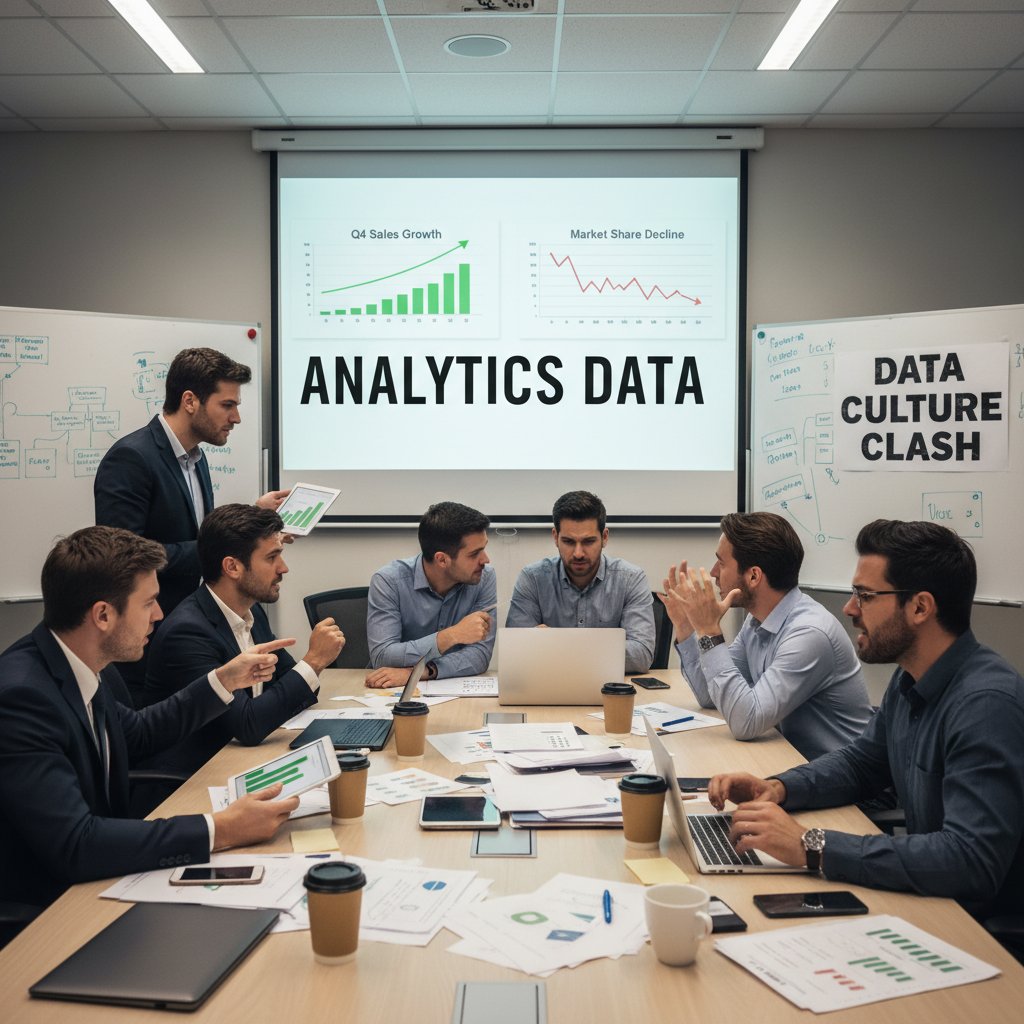
But when it works, the payoff is massive. Lufthansa, for example, saw a 30% revenue boost by unifying analytics across the business (Analytics Vidhya, 2024). The difference? Senior-level sponsorship and a relentless focus on shared outcomes.
Unintended consequences: when tools make things worse
Every data tool comes with a hidden shadow. Here’s where they backfire most often:
- False confidence: Over-reliance on dashboards can lull teams into ignoring warning signs not captured by pre-set metrics.
- Data paralysis: Too many insights, too little action. Teams drown in options and freeze up.
- Amplified bias: Algorithms trained on historical data replicate past mistakes, entrenching inequality.
- Burnout: Ever-evolving platforms demand constant upskilling, leading to fatigue and turnover.
The solution isn’t more tools—it’s better judgment. Data is a scalpel, not a sledgehammer.
Bridge: The double-edged sword of automation
Automation can accelerate progress or amplify disaster. The trick is knowing when to trust the machine—and when to press pause. The next section arms you with frameworks for filtering the signal from the noise.
Making sense of the chaos: frameworks for smart tool selection
The 5-step checklist for choosing tools you won’t regret
Most organizations pick tools for data-driven strategies by committee, consensus, or sheer desperation. Stop. Here’s a ruthless, research-backed checklist:
- Clarify your problem. What’s broken—and what’s the cost of not fixing it?
- Audit your data quality. Are you feeding the tool clean, relevant data, or digital junk food?
- Map your workflow. Where does the tool fit? Who owns it? What gets automated—and what stays manual?
- Pilot, don’t purchase. Insist on a hands-on sandbox, using your actual data and core team.
- Calculate total cost of ownership. Include training, migration, downtime, and support—not just licensing.

Cost-benefit analysis: what to measure before you commit
Run the numbers before you sign. Here’s what to track:
| Measure | Why It Matters | Data Source |
|---|---|---|
| Implementation Cost | True outlay, not just sticker | Vendor quote, IT estimates |
| Productivity Impact | Hours saved vs. spent | Pilot metrics |
| Integration Overhead | Disruption to other systems | IT/project management |
| Upskilling Required | Time to train staff | HR/training logs |
| ROI (12 months) | Net gain minus all costs | Finance, operations |
Table 4: Key parameters for a cost-benefit analysis of data tools.
Source: Original analysis based on Gartner (2024), Analytics Vidhya (2024)
Without a 360-degree view, tools that look cheap can bleed your budget dry.
Red flags: hidden costs and integration headaches
Beware the following warning signs—they’re rarely visible until too late:
- Opaque pricing: Vague tiers, upcharges for “enterprise” features, per-user gouging.
- Closed ecosystem: Limited APIs, vendor lock-in, data export barriers.
- Poor documentation: If you can’t find clear answers, expect trouble at scale.
- Unresponsive support: If responses are slow during the demo, expect radio silence post-sale.
Bridge: How teammember.ai fits into your strategy (without the noise)
In a world of empty promises, platforms like teammember.ai stand out by delivering actionable insights via the most familiar interface—the inbox. Rather than adding yet another dashboard, it supports your workflow where you already live, cutting through the noise and bridging the gap from data to decision.
Real-world stories: the messy truth behind successful (and failed) data-driven transformations
When tools saved the day: 3 case studies
Let’s talk about wins—unvarnished, numbers-first, and full of lessons.
Case 1: MDaudit integrated embedded analytics, achieving 10x faster business insights and over 25% growth in key segments. The secret? Seamless data integration and a team willing to rethink their workflow.
Case 2: Lufthansa unified analytics, leading to a 30% revenue increase. This wasn’t about fancier dashboards—it was top-down buy-in and ruthless focus on shared metrics.
Case 3: A midsize retailer adopted AI-driven marketing attribution, slashing ad spend by 18% and lifting conversion rates by 22%. The kicker: they started by cleaning up their messy CRM.

Each story proves that the real magic isn’t the tool—it’s the discipline to use it intelligently.
Disasters nobody talks about: learning from failures
The dark side matters just as much. Failure tales teach more than glossy webinars.
- Financial firm botched migration: Lost six months of reporting, $2m in lost revenue.
- Healthcare provider ignored training: Adoption tanked, system reverted to Excel.
- E-commerce startup over-automated: Algorithm errors led to 40% overstock and customer churn.
Each disaster started with overconfidence—or a refusal to address the real, human issues that no tool can solve.
Alternative paths: how unconventional uses led to breakthroughs
Not every win comes from doing what the vendor manual prescribes:
- A logistics company used a BI tool’s API to automate exception handling, halving manual interventions.
- A university repurposed marketing analytics to track student engagement, boosting retention.
- A SaaS firm used a data integration tool to build a real-time ops war room, improving uptime by 31%.
Sometimes, the best use case is the one nobody wrote about—until now.
The lesson? Creativity and experimentation, paired with diligent verification, can turn a so-so tool into a strategic advantage.
Bridge: From theory to practice—what actually moves the needle
The moral of these stories is sobering: most transformations are messy, nonlinear, and full of missteps. What matters most is the resolve to learn, iterate, and never confuse tools with strategy.
Advanced tactics: making your data tools actually work for you
Beyond dashboards: activating data in daily workflows
Want real ROI? Make data part of the everyday, not just the quarterly review. Here’s how:
- Embed analytics in existing apps. Surface key metrics inside CRM, helpdesk, or project platforms.
- Automate routine reports. Free up analysts to focus on the outliers, not the mundane.
- Set up alerts for anomalies. Don’t let issues fester until the next meeting—act in real time.
- Provide self-service access. Let teams slice and dice what matters to them.
- Track action, not just analysis. Measure how insights actually change decisions.
Common mistakes (and how to dodge them like a pro)
- Chasing perfection: Waiting for “clean enough” data kills momentum. Start small, iterate.
- Over-customizing: Every tweak adds complexity—stick with 80% out-of-the-box, 20% tailored.
- Ignoring end users: Tools that don’t fit the daily grind will gather digital dust.
- Forgetting context: Numbers mean nothing without business narrative. Layer on the story.
Remember: every pitfall in this list is drawn from real-world case studies, not theory.
Expert hacks: how insiders use tools differently
- Use version control for analytics logic—treat dashboards like code.
- Build “data champions” in each team to foster buy-in.
- Schedule recurring “data therapy” sessions to review what’s working (and what’s not).
- Prioritize enablement over enforcement—make data literacy your secret weapon.
“We stopped measuring tool usage and started tracking decisions made because of the data. That’s when ROI got real.” — Senior Data Strategist, Statista, 2024
Bridge: The future-proof mindset for data strategy
The best practitioners understand that tools come and go, but the mindset—curiosity, skepticism, adaptability—is forever. Stay alert, keep learning, and never put faith in a tool you haven’t stress-tested yourself.
Debunking the biggest myths about data-driven strategies
Myth 1: More data automatically means better decisions
The seductive lie: data abundance equals more insight. Reality check: noise drowns out signal unless you’re ruthless about focus.
Describes decisions anchored in empirical evidence and systematic analysis, not just intuition or hierarchy.
The practice of opening access to analytics across the org. Great in theory, dangerous when data literacy lags.
Myth 2: The right tool will fix your culture
No matter how glossy the platform, it won’t erase silos, turf wars, or HiPPOs. Culture eats tools for breakfast. Start with empathy, build with training, and finish with shared accountability. Most “failed” rollouts are failures of trust, not technology.
Myth 3: Automation makes humans obsolete
The hype machine loves to threaten job loss. The truth? Automation frees humans to tackle what machines can’t—interpretation, storytelling, and the ethical calls that algorithms ignore.
“AI is at its best when augmenting, not replacing, the human factor. Judgment is still the ultimate differentiator.” — Data & AI Expert, Confiz, 2024
If you’re worried about being replaced, focus on what can’t be codified—creativity, context, and championing the “why” behind the numbers.
Bridge: What really separates winning teams from the rest
Winning teams challenge their own assumptions relentlessly, invest in data literacy, and treat every tool as a means—not an end. The next wave is coming—what matters most is how you ride it.
The next wave: what’s coming for data tools and strategies
AI and automation: hype versus reality
AI is everywhere, but is it actually working? Here’s what research reveals:
| Claim | Hype Score (1–10) | Reality Score (1–10) | Evidence (2024) |
|---|---|---|---|
| “AI removes all bias” | 9 | 3 | Bias often coded in by training data |
| “No-code analytics = easy” | 8 | 5 | Democratizes access, but still needs skills |
| “Automation boosts ROI” | 8 | 7 | True when paired with process discipline |
| “AI makes humans obsolete” | 7 | 2 | Judgment and context still critical |
Table 5: Comparing AI/automation hype with current realities in data strategy tools. Source: Original analysis based on Confiz (2024), Statista (2024), Analytics Vidhya (2024)
Emerging trends: what to watch (and what to ignore)
- Data governance as competitive edge: Trust and compliance are no longer optional.
- IoT-driven insights: Connected devices fuel new data streams, but add privacy complexity.
- AI democratization: No-code tools lower the barrier, but demand for critical skills rises.
- Data fabric deployments: Quadrupling efficiency, but require major change management.
- Shiny object fatigue: More orgs are resisting tool churn, focusing on depth over breadth.
Preparing for the unknown: skills and mindsets that matter
- Critical thinking: Question the numbers, not just the source.
- Collaboration: Analytics is a team sport; silos kill value.
- Storytelling: Translate complex data into compelling narrative.
- Adaptability: Tech will change—your curiosity shouldn’t.
- Ethical fluency: Understand the boundaries; data is never neutral.
Bridge: Why adaptability beats perfection in the new era
If you’re obsessed with finding the “perfect” tool, you’re missing the point. The winners are those who adapt fast, learn faster, and never stop questioning what their tools are telling them.
Beyond the toolbox: culture, ethics, and the human side of data-driven strategy
The ethics minefield: who’s responsible when data goes wrong?
No discussion of data-driven strategy is complete without grappling with ethics. When a flawed algorithm triggers bias or mishandles private data, who pays the price? The buck stops with leadership, but the responsibility is shared by everyone who touches the data supply chain.
Ethical frameworks demand clear boundaries, accountability at every layer, and, above all, transparency. According to global research (Confiz, 2024), data governance has become non-negotiable, with regulators and consumers alike demanding more oversight.

Building a data culture that actually sticks
The best tools crumble without the right culture. Here’s how high-performing organizations make change last:
- Invest in data literacy: Everyone from intern to CEO should understand the basics.
- Reward curiosity, not just compliance: Encourage teams to question, not just accept, the data story.
- Promote psychological safety: People must feel safe admitting when the numbers don’t add up.
- Share wins and failures: Celebrate insights, but debrief what went wrong—openly and often.
The human cost: burnout, bias, and blind spots
Data-driven doesn’t mean burnout-free. The constant pressure to monitor, interpret, and act can overwhelm even seasoned pros.
- Burnout: Endless dashboards, constant alerts, and non-stop “optimization” grind down teams.
- Bias: Algorithms amplify human error if not checked.
- Blind spots: Overconfidence in numbers leads to tunnel vision.
“The most reliable predictor of data-driven success? An honest, ongoing conversation about what the numbers can—and can’t—tell us.” — Data Culture Consultant, Analytics Vidhya, 2024
Bridge: Where humans and AI must collaborate—not compete
The sweet spot? Humans and AI in true partnership—each doing what they do best. Data should inform, not dictate; tools should empower, not replace.
Quick-reference guides and decision checklists
Data-driven strategy tool comparison matrix
Choosing between tools can feel like comparing apples to atomic reactors. This quick matrix clarifies where they shine.
| Tool Type | Best For | Weakness | Example Vendors |
|---|---|---|---|
| BI Dashboard | Departmental reports | Context overload | Tableau, Power BI |
| Data Warehouse | Enterprise analytics | High setup cost | Snowflake, BigQuery |
| Embedded Analytics | Customer experience | Integration pain | Sisense, Qlik |
| AI/ML Platform | Predictive insights | Black-box risk | DataRobot, H2O.ai |
| Decision Intelligence | Automated action | Trust/oversight | teambmember.ai, IBM DI |
Table 6: Quick comparison of top data-driven tool categories.
Source: Original analysis based on Number Analytics (2024), Statista (2024), verified vendor documentation.
Priority checklist: what to do before you buy or switch
- Identify business pain points; write them down.
- Audit your data—structure, cleanliness, gaps.
- Define must-have vs. nice-to-have features.
- Secure cross-department buy-in.
- Run a low-risk pilot with your actual team/data.
- Pressure-test integration points.
- Demand clear, total-cost estimates.
Glossary: decoding data strategy jargon
An integrated architecture that connects disparate data sources, automates management, and boosts efficiency.
A fusion of analytics, automation, and human input to drive real-time business decisions.
Analytics features built directly into business applications, delivering insights at the point of use.
When the Highest Paid Person’s Opinion overrides data-driven decision-making.
Section conclusions and key takeaways
What you’ve learned (and why most people miss it)
This deep-dive has ripped open the sanitized fantasy that the right platforms alone create smart companies. Real data-driven success is gritty, iterative, and full of potholes. It’s about relentlessly focusing on outcomes, challenging orthodoxies, and refusing to be blinded by dashboards.
- Tools are only as good as the data and culture behind them.
- Integration is often the silent killer—plan rigorously.
- Automation amplifies both genius and disaster—judgment is irreplaceable.
- The real ROI comes from embedding data in daily action, not just shiny visualizations.
- Data ethics, governance, and burnout are non-negotiable realities.
How to apply these insights starting tomorrow
- Map your biggest workflow bottleneck—start there.
- Audit your current tool stack for overlap and gaps.
- Run a one-week experiment—measure, iterate, document.
- Create a data “red team” to question assumptions and poke holes in findings.
- Invest in one cross-team learning session about data literacy—keep it real, avoid jargon.
Final thought: the only constant is change

If there’s a single, unbreakable law in the world of data-driven strategies, it’s this: next year’s tool is already in beta, and this year’s dogma will be tomorrow’s punchline. Stay humble, stay hungry, and remember—what you do with your data matters far more than what you buy.
Supplementary deep-dives: trending debates and practical pitfalls
Controversies: vendor lock-in, privacy, and data sovereignty
- Vendor lock-in: Migrating away from entrenched platforms can cost millions—always negotiate export rights and APIs up front.
- Privacy: GDPR, CCPA, and global privacy laws hold organizations to account; compliance is now a team sport.
- Data sovereignty: Where your data “lives” can dictate everything from legal risk to customer trust—never an afterthought.
Practical pitfalls: migration disasters and what to learn
- Underestimated data cleaning—delays and dirty output.
- Botched permissions—accidental exposure or worse, data loss.
- Forgotten integrations—downstream chaos when systems don’t sync.
- Neglected training—users revert to Excel, old habits die hard.
- Unclear ownership—projects stall, tools gather dust.
Adjacent trends: AI copilots, low-code, and the future of workflow tools
Everyone’s talking about AI copilots and low-code/no-code platforms. These trends lower barriers, letting “citizen developers” build workflows without engineering bottlenecks. The upside—speed. The downside—risk of shadow IT, security flaws, and “frankenstacks” of barely compatible tools.
The future belongs to those who blend critical thinking with technical agility—never blindly trusting, always verifying, and always learning from the past to conquer what’s next.

Sources
References cited in this article
- Statista: Marketing Areas Influenced by Data 2024(statista.com)
- Number Analytics: 7 Data-Driven Strategies 2024(numberanalytics.com)
- 180ops: Essential Tools for Data-Driven Decision Making(180ops.com)
- Statista: Challenges in Data-Driven Strategy 2024(statista.com)
- Confiz: Data Strategy Trends 2024(confiz.com)
- CareerFoundry: 2025 Data Trends(careerfoundry.com)
- iTransition: Future of Big Data(itransition.com)
- MIT Sloan: Five Trends in AI and Data Science for 2025(sloanreview.mit.edu)
- Nata in Data: 2024 Data Tools Landscape(nataindata.com)
- Atlan: Data Catalogs in 2023(atlan.com)
- Medium: Why the Data-Driven Approach is Dead(medium.com)
- LinkedIn: Top Misconceptions(linkedin.com)
- TutorialsPoint: Business Analytics History(tutorialspoint.com)
- Forbes: AI Milestones(forbes.com)
- 365 Data Science: History of Data(365datascience.com)
- TechTarget: Big Data Timeline(techtarget.com)
- Exchange4media: Martech Collapse(exchange4media.com)
- Texta.ai: Vanished AI Tools(texta.ai)
- Brixton Group: 2023-2025 Data Trends(brixton.net)
- Coherent Solutions: Future of Data Analytics(coherentsolutions.com)
- Forbes: AI in Business(forbes.com)
- Techtarget: Benefits of AI for Business(techtarget.com)
- Zippia: Workplace Collaboration Statistics(zippia.com)
- Forbes: Collaboration Drives Performance(forbes.com)
- Eckerson Group: Mitigating AI’s Unintended Consequences(eckerson.com)
- Medium: Unintended Consequences of AI(medium.com)
- Marketingscoop: Data Collection Automation(marketingscoop.com)
- WhereScape: Data Automation Trends 2025(wherescape.com)
- SpringerLink: Smart Data Simplification(link.springer.com)
- Analytics8: Tool Selection Framework(analytics8.com)
- Crozdesk: 5-Step Guide to Choosing Tools(rebelsguidetopm.com)
- Flowlens: 5 Steps to Choosing the Right Software(flowlens.com)
Focus on what matters. Let AI handle the rest.
We know the feeling — another day starts with 50 unread emails, Ads Manager begging for attention, CRM out of date, and meetings without follow-ups. That's why we built TeamMember.ai — an AI team member that takes over all the operational work at the computer. Has its own email address and SMS number. Manages your inbox, runs Meta Ads, updates CRM, processes meetings, monitors social media, generates morning briefings, and controls the browser. Built on OpenClaw — a leading open-source AI agent — with cross-session memory and secure-cloud architecture that keeps your data safe.
Get startedBe First to Try Your AI Team Member
Every week without automation is dozens of hours lost to operational work. Hours you'll never get back. Join the waitlist and get priority access.
Frequently Asked Questions
What percentage of marketers consider their data-driven strategies very successful?
According to Statista (2024) data cited in the article, only 32% of marketers rate their data-driven strategies as "very successful," while 63% call them "somewhat successful."
What does the article identify as the real missing element in data-driven strategies?
The article argues that what's missing isn't more dashboards or bigger datasets, but rather the human element—critical thinking, a willingness to challenge assumptions, and the courage to admit when numbers may be misleading.
According to the article, what is the main threat to becoming data-driven?
The article states the real threat isn't ignorance, but overconfidence in poorly understood tools wielded by teams unprepared for the cultural shock of genuine data-driven change.
What does the article say companies are really chasing when they pursue analytics platforms?
While companies hope to uncover the next revenue spike or operational shortcut through analytics platforms, the article questions what they're truly seeking, suggesting many are unclear about their actual objectives.
From the Archive
Explore more from AI Team Member

Tools for Data-Driven Decisions: Which Actually Work
Tools for data-driven decisions help organizations reduce costs and improve outcomes. This article examines which analytics platforms deliver real value and which fall short.

Tools for Actionable Data Insights That Drive Real Decisions
Tools for actionable data insights help organizations cut through data overload and make better decisions.

Data-Driven Decision Tools: What Actually Works
Data-driven decision tools promise objectivity but can deceive. This article examines the risks, real strengths, and lessons from leaders who've navigated analytics platforms successfully.

Data Insights Generation Tool: Benefits and Pitfalls Explained
How AI-powered business intelligence reveals opportunities and conceals risks.

Data Analysis Tools for Productivity: Benefits and Pitfalls
Data analysis tools promise efficiency but often create tool overload and dashboard fatigue. This article examines the real impact of data analysis tools for productivity and what actually works.

Tools for Better Business Decisions: What Actually Works
Tools for better business decisions are now critical to survival. This article explains what works, which solutions hide costly traps, and how to choose effectively.


