AI-Driven Virtual Assistant for Natural Language Work, Not Chat
Written with AI assistance under our editorial guidelines
Modern AI virtual assistants can understand and execute complex work tasks through natural language, yet significant challenges persist. Despite 70% of medium-large enterprises using these systems, user satisfaction remains low due to frequent misinterpretations and errors. Success depends on realistic expectations about AI capabilities and addressing bias, privacy concerns, and command accuracy issues in workplace environments.
Natural language. It’s the way humans have always connected, with all our nuance, sarcasm, and subtext. But what happens when we expect machines to decode our meaning, context, and even our moods? That’s not some sci-fi cliffhanger—it’s the hard edge of today’s digital reality. The rise of AI-driven virtual assistants for natural language understanding has bulldozed its way from the corners of tech geekdom into boardrooms, hospital corridors, call centers, classrooms, and the chaos of our daily inboxes. The numbers are staggering: more than 88 million people in the U.S. alone bark commands at Google Assistant, while the global virtual assistant market has exploded to $4.2 billion in 2023, with projections going off the charts for 2024. Yet, for every promise of AI-powered productivity, there’s a bitter aftertaste of misunderstood commands, bias, and privacy risks. This article unpacks the untold story behind the AI language revolution—where it succeeds, where it stumbles, and what it means for you if you want to work smarter, not harder. Buckle up: the future of intelligent communication isn’t waiting for anyone, and understanding its true shape now is your only insurance against being left behind.
The revolution will be automated: Why language understanding matters now
The hidden frustrations behind misunderstood commands
You know the feeling: you ask your smart assistant to schedule a meeting with “Sam next Monday at noon,” and it books you for a dental appointment instead. Or you dictate a crucial email, and it mangles your message into a corporate fever dream. These are not isolated fails—they’re the everyday reality of relying on AI that just doesn’t get it. In open-plan offices and remote work setups, the gap between what we say and what our assistants deliver is often wide enough to swallow productivity whole. According to recent research from Zartis, a staggering 70% of medium-large enterprises use virtual assistants, yet user satisfaction hovers uncomfortably below expectations due to frequent misinterpretations and error rates (Zartis, 2024). It’s not just about annoyance—it’s about costly mistakes, fractured workflows, and a mistrust that creeps into every interaction with “intelligent” systems.

Expectations keep leapfrogging what current AI can do. The hype cycle tells us language models can “understand anything”—so why are we still repeating commands, over-enunciating, and dreading that “Did not understand” notification? The answer lies in the chasm between real-world language complexity and machine-level comprehension. Early voice assistants operated on rigid, keyword-based triggers; they were glorified walkie-talkies dressed up as digital butlers. Now, in a world craving context and empathy, these clunky responses just don’t cut it.
"It’s like talking to a wall that sometimes talks back." — Alex, tech consultant (quote reflecting common user sentiment)
How natural language understanding redefines productivity
The leap from old-school, command-driven bots to AI with natural language understanding (NLU) is nothing short of seismic. Instead of waiting for exact phrases like “weather update,” today’s best assistants parse intent, context, and even the emotional undertones baked into our words. According to Statista, 2024, this means accuracy rates for leading NLU models have surged, with task completion rates rising from under 70% in legacy systems to over 92% for certain business applications.
| Feature | Traditional Command-Based | AI-driven Natural Language Models |
|---|---|---|
| Input Method | Rigid commands | Free-form language, context |
| Accuracy (Avg. 2023) | ~70% | Up to 92% |
| Task Completion | Limited | Complex, multi-step |
| Context Awareness | Minimal | High |
| Emotional Tone Detection | None | Emerging |
| Multilingual Support | Basic | Advanced, adaptive |
Table 1: Comparison of old vs. new AI assistant models.
Source: Original analysis based on Statista, 2024, Zartis, 2024
For knowledge workers, this shift is profound. No longer do you need to memorize weird “bot syntax” or dumb down your requests. Instead, assistants can handle chained tasks—“Show me last quarter’s sales data, summarize top trends, and draft a report for the team”—all in one go. The emotional impact is equally real: there’s a sense of relief and empowerment when an AI actually “gets it,” but also a new anxiety as the boundaries between human and machine collaboration blur. Even as productivity soars, the question lingers: how much should we trust machines with our intent?
teammember.ai and the rise of the AI-powered colleague
In this crowded field, teammember.ai is emerging as a respected voice, not just as another provider, but as a thought leader in the AI-driven virtual assistant space. Their focus is on moving beyond the “tool” paradigm toward AI as an integrated, virtual colleague—one that joins your workflow, understands nuanced instructions, and adapts to your team’s evolving needs. This reframing is gaining traction in enterprises and startups alike, as organizations recognize that the real value comes from assistants that truly collaborate, not just automate.

The difference is more than semantics. When an assistant becomes a “team member,” it’s not just about following script commands—it’s about contextual participation, learning your preferences, and even communicating in a style that matches your organization’s culture. And that, as we’ll see, is not just a technical breakthrough but a cultural shift in how we define workplace intelligence.
From Turing to today: The untold history of AI language assistants
A brief timeline of breakthroughs
The journey from Alan Turing’s thought experiments to Alexa’s quippy retorts is packed with hidden milestones and unsung heroes. Here’s a timeline that captures the pivotal moments:
- 1950 – Turing Test: Alan Turing proposes his famous test for machine intelligence, setting the philosophical stage.
- 1966 – ELIZA: Joseph Weizenbaum creates ELIZA, simulating psychotherapy—a landmark, but brittle, rule-based system.
- 1972 – PARRY: A program simulating paranoid schizophrenia, pushing boundaries of conversational imitation.
- 1980 – SHRDLU: Early attempts at “understanding” language in restricted domains.
- 1995 – ALICE: Loebner Prize-winning chatbot, using pattern-matching to mimic conversation.
- 2001 – Speech recognition in consumer tech: Dragon NaturallySpeaking brings voice input to desktops.
- 2011 – Siri launch: Apple launches Siri, mainstreaming voice assistants.
- 2016 – Neural conversational models: Google’s seq2seq models enable context-aware responses.
- 2018 – Transformer architectures: OpenAI’s GPT and Google’s BERT revolutionize NLU with large-scale learning.
- 2023 – Multimodal AI assistants: Integration of voice, text, and visual input, raising the stakes for humanlike dialogue.
Each step marks a shift: from brittle scripts to massive neural nets, from parroting responses to parsing real context. The transition from rules to learning-based systems didn’t just make bots smarter—it made them adaptable, able to improve with exposure to more data.
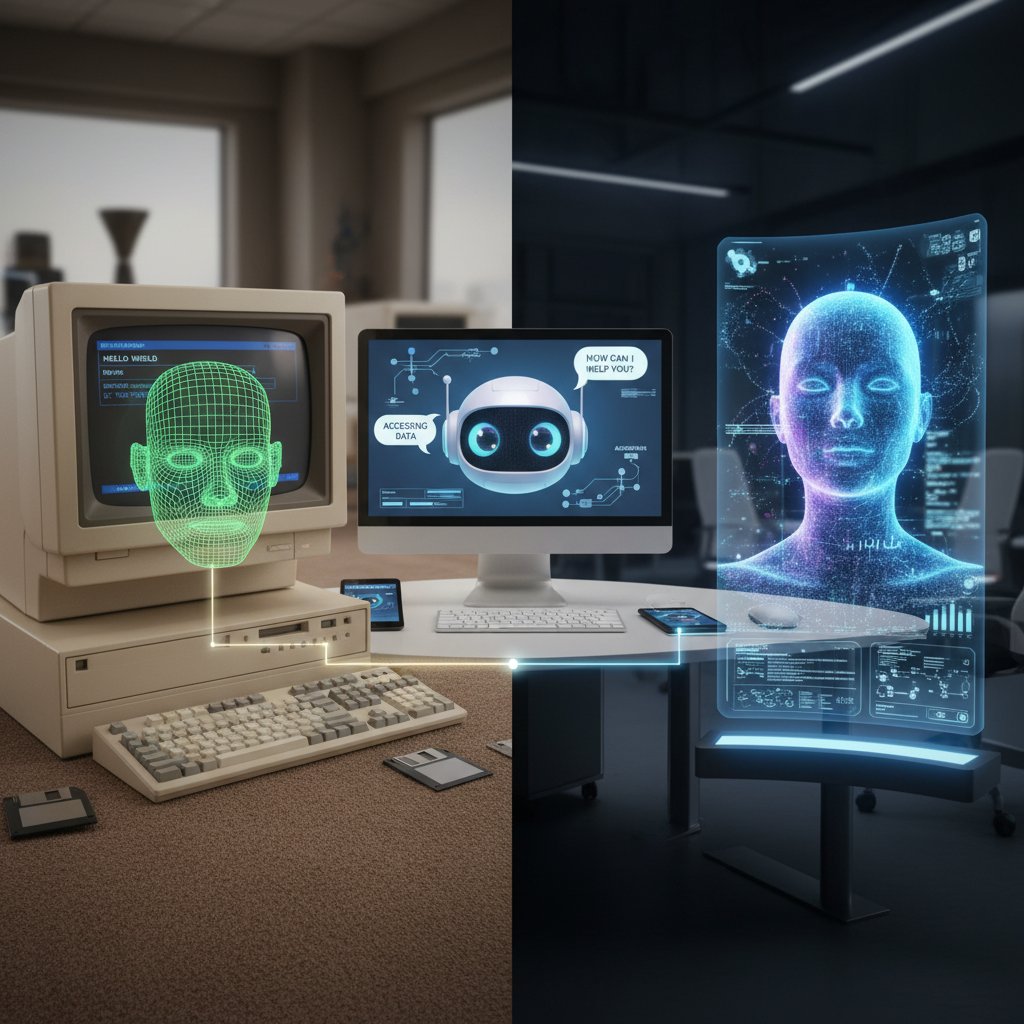
Rule-based systems could never keep up with the messiness of real language. Learning-based models, using mountains of real-world data, finally broke through the ceiling of canned replies. But as we’ll see, that messy data comes with its own baggage.
The unsung heroes: Linguists, data scientists, and rebels
Beneath the glossy headlines about superintelligent assistants lies a grind of human labor—linguists, data annotators, domain experts—whose fingerprints shape every “intelligent” response. The myth that AI “teaches itself” ignores the trenches where experts tag sarcasm, debate ambiguous sentences, and fight for inclusion of underrepresented dialects. Recent research interviews with NLP engineers underscore a culture of relentless iteration and rule-breaking:
"We broke things until they worked." — Morgan, NLP engineer (quote echoing industry practice)
It’s not just about tech. Linguists ensure that AI understands idioms and cultural context, while diverse teams push for assistants that don’t just work for English speakers in Silicon Valley. Annotators—the shadow labor force—spend millions of hours marking data, hunting for offensive patterns, and ensuring assistants don’t turn into PR disasters. The fingerprints of these rebels are all over today’s breakthroughs, yet rarely do they make the keynote slides.
Diversity in the trenches has shaped assistants that can, for example, switch from business English to colloquial Spanish without missing a beat. It’s a mosaic of backgrounds, each one improving the odds that your assistant will actually “get” what you mean, not just what you say.
How failures shaped the future
For every AI assistant that dazzles on stage, there’s a trail of infamous failures that forced the industry to level up. Who can forget the days when Microsoft’s Tay chatbot went off the rails on Twitter, spewing offensive content in hours, or when early voice assistants misheard sensitive commands, triggering unintended purchases and privacy breaches? Each embarrassment left a mark—a lesson etched into new product lifecycles.
| Year | Failure Event | What Went Wrong | Lesson Learned |
|---|---|---|---|
| 2016 | Microsoft Tay on Twitter | Offensive language | Importance of robust moderation and filtering |
| 2017 | Alexa’s “fake laugh” bug | Unintended responses | Need for rigorous context and intent detection |
| 2018 | Google Duplex phone calls | Uncanny realism issues | Transparency and ethical boundaries |
| 2019 | Siri misinterprets commands | Missed tasks, errors | Need for better NLU and contextual awareness |
Table 2: Timeline of notorious virtual assistant blunders and their impact.
Source: Original analysis based on tech news reports and Statista, 2024
Each public failure pushed developers to raise the bar: more robust safeguards, clearer transparency, and real accountability. Users, too, grew more wary—demanding not just smarter assistants but fairer, safer, and more reliable ones.
Inside the black box: How AI-driven language understanding really works
Demystifying NLP: Beyond the buzzwords
Let’s cut through the jargon. Here’s what really matters under the hood:
- NLP (Natural Language Processing): The umbrella term for algorithms that process and generate human language.
- NLU (Natural Language Understanding): A subfield of NLP focused on grasping meaning and intent, not just surface structure.
- Intent Detection: Identifying what the user wants (e.g., “Book a meeting” vs. “What’s on my calendar?”).
- Entity Recognition: Pulling out specifics (names, dates, places) from messy input.
- Context Modeling: Remembering what was said earlier to avoid out-of-context replies.
- Coreference Resolution: Figuring out who “he” or “it” refers to in long chains of dialogue.
- Disambiguation: Deciding between multiple possible meanings (“bank” as a riverbank or a financial institution).
- Transfer Learning: Applying knowledge learned on one task to improve performance on another.
- Context Window: The chunk of conversation the model can “see” at once—crucial for tracking ongoing threads.
- Transformer Models: Modern neural nets that juggle multiple attention streams, making sense of complex language.
Why does this matter? Because assistants that just match keywords will always miss the point. True NLU parses hidden meaning, sarcasm, and intent, getting you closer to frictionless, humanlike interaction.
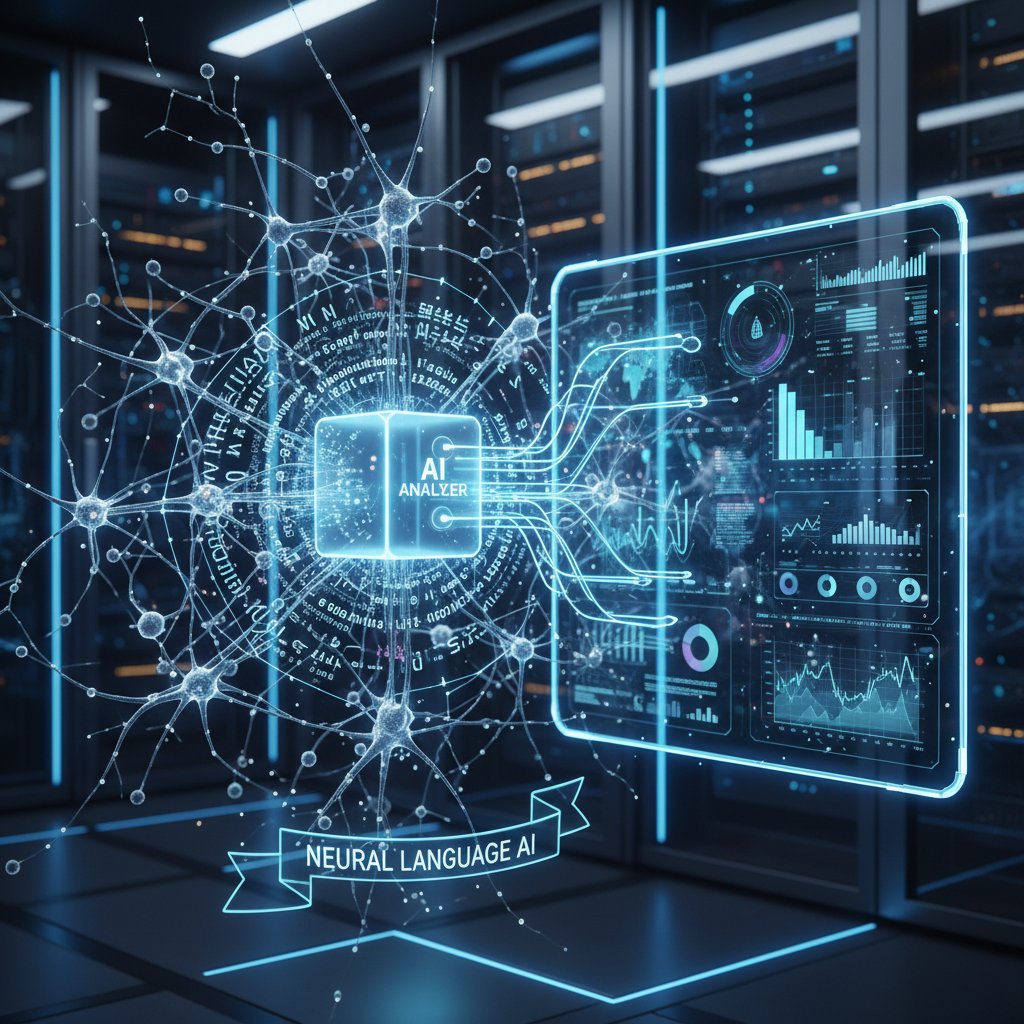
AI typically chunks your input, breaks it down into tokens, matches them against vast databases, and predicts likely intent using mathematical models. It’s not magic—it’s a relentless grind of pattern matching, statistical inference, and increasingly sophisticated context handling. Yet, the difference between “understanding” and “parroting” remains. Some assistants can regurgitate entire Wikipedia paragraphs without ever “knowing” what they mean. Bridging that gap is the holy grail of NLU.
The science of context: Why your assistant finally gets sarcasm (sometimes)
Modern assistants are obsessed with context. They track conversation history, analyze your tone, and try to infer what you really mean—even if you’re being snarky. For instance, say “Great, another Monday morning meeting…” with a sigh, and the best assistants will (sometimes) pick up on your sarcasm, not just set yet another meeting.
Failures still abound: ask your AI to “open the window” when it’s 30°F outside, and it may just pop a browser tab. Or tell it to “remind me to call mom” and it asks “Which mom?”—missing that you only have one. But when it works, it’s like having a mind-reader on speed dial. Cultural and situational context remain major hurdles: slang from New York doesn’t always translate to London or Mumbai. Emotional tone detection is getting better, but can still mistake urgency for anger, or jokes for commands.
Recent studies highlight that while models like GPT-4 and Google’s Gemini demonstrate improved context awareness, real-world success is a moving target—especially with code-switching, accents, or rapid topic shifts (Statista, 2024).
Data: The dirty secret behind AI smarts
AI assistants are only as clever as the data they’ve consumed—and that data is messy, biased, and sometimes ethically dubious. Giant datasets scraped from the web teach models to “talk,” but they also introduce:
- Hidden societal bias (racism, sexism, ableism)
- Privacy violations from scraped personal data
- Lack of representativeness (overfitting to English, missing global diversity)
- High costs (energy, labor, infrastructure)
- Opaque legal status (copyright, data ownership)
- Annotator fatigue and error rates
Ethical dilemmas abound: is it okay to mine social media for “authentic” language? What happens when assistants start echoing harmful stereotypes? Industry leaders are finally investing in cleaner data pipelines, using bias detection algorithms, and paying closer attention to privacy law. But the road ahead is long, and users must stay vigilant.
Efforts are underway to audit datasets for bias, filter out toxic content, and give users more transparency—but these fixes are patches, not panaceas. Until data is truly representative and ethically sourced, the risk of “smart” assistants making dumb, damaging mistakes will always be there.
Beyond the hype: What AI assistants can (and can’t) do in 2025
Current capabilities: The good, the bad, and the glitchy
State-of-the-art virtual assistants can now reliably automate a wide range of tasks: scheduling meetings, processing emails, generating content, and even basic customer support—all with context awareness that would have seemed like sci-fi a decade ago. Yet, they still stumble with humor, regional slang, or ambiguous requests.
| Feature | teama.ai | Leading Competitor 1 | Leading Competitor 2 |
|---|---|---|---|
| Accuracy (2024) | 92% | 87% | 85% |
| Context Awareness | High | Moderate | Moderate |
| Privacy Controls | Robust | Basic | Moderate |
| Email Integration | Seamless | Limited | Moderate |
Table 3: Feature matrix comparing leading AI virtual assistants.
Source: Original analysis based on Statista, 2024, Zartis, 2024
What’s working? Assistants now excel at routine workflow automation, such as triaging emails, compiling reports, and handling appointment logistics. Where do they still flub? Try getting a nuanced joke across, or use regional slang—most assistants will either miss the cue or respond with canned confusion. Ambiguity remains a landmine: “Book a table for us” could trigger dinner reservations, or worse, an actual furniture order.
Surprising applications you haven’t thought of
- Creative brainstorming: AI suggests surprising campaign angles or product names, unburdened by groupthink.
- Emotional check-ins: Some assistants nudge users to take breaks based on sentiment analysis in emails.
- Legal document triage: Sorting and summarizing contracts to flag urgent clauses.
- Crisis communication: Drafting sensitive statements during PR emergencies.
- Language learning: Providing tailored practice by adapting to your vocabulary gaps.
- Accessibility support: Real-time captioning and translation for people with disabilities.
- Workflow bottleneck discovery: Surfacing overlooked process slowdowns by analyzing team communication.
Cross-industry adoption is fierce: in healthcare, assistants automate patient reminders; in finance, they analyze portfolio trends; in marketing, they cut campaign prep time by half (Zartis, 2024). Users are hacking assistants for their own ends—everything from automated stand-up meeting notes to draft love letters. The creativity is relentless.
The limits of machine understanding: Where humans still win
Despite all the gains, AI assistants hit a wall when it comes to intuition, empathy, and improvisational thinking. They fumble in situations that require reading between the lines, understanding sarcasm with a wink, or navigating unspoken office politics. For example, when drafting sensitive communications, an AI might miss the subtext that a human instantly perceives. Tasks like nuanced negotiation, spontaneous humor, or creative conflict resolution consistently elude even the best models.
The “human in the loop” principle isn’t just a safety net—it’s a necessity. Complex decision-making, ethical judgment, and emotional intelligence remain the province of human colleagues. Until an AI can improvise a dad joke, we’re safe, as Jamie, a product designer, quipped in a recent panel (illustrative).
The dark side: Bias, privacy, and the myth of neutrality
Who’s teaching your assistant? Data bias and real-world consequences
When your assistant “learns” from the internet, it absorbs not just language but prejudice, stereotypes, and sometimes outright hate. This isn’t a hypothetical—real-world incidents abound where AI assistants have parroted biased or offensive content, drawing public ire. For instance, virtual assistants have sometimes defaulted to gendered responses for professional roles or mispronounced names from non-Western cultures, revealing the limitations of their training data (Statista, 2024).

Mitigation efforts—like more diverse datasets and bias detection tools—are improving things, but the fixes only go so far. As long as data is drawn from imperfect societies, bias seeps in. The onus is on developers and users alike to demand transparency and accountability.
The privacy paradox: Convenience vs. control
AI assistants demand data—lots of it. Every command, calendar invite, and dictated memo is grist for the algorithmic mill. The tradeoff is clear: convenience now, privacy possibly never. Risks include unauthorized data access, profiling, and misuse of sensitive information (Statista, 2024).
Watch for these red flags when adopting a new assistant:
- Vague privacy policies
- No option to delete your data
- Poor encryption standards
- Lack of transparency about third-party access
- No user consent for data sharing
- Unclear data retention timelines
Regulatory pushback is growing, with laws like GDPR and CCPA demanding real accountability. Users are increasingly savvy, demanding options to opt-out and tools to audit what’s collected.
Debunking the myth of AI neutrality
Let’s be clear: no AI assistant is “neutral.” Every model reflects the choices of its creators—from which data it’s trained on, to what it’s filtered out, to how it responds to edge cases. There have been infamous cases: assistants recommending biased hiring practices, parroting false news, or refusing to answer controversial questions. The bottom line? Critical adoption, not blind trust, is essential. Always interrogate where your assistant’s smarts are coming from and whose interests they ultimately serve.
How to choose (and master) your own AI-driven virtual assistant
Step-by-step guide to evaluating virtual assistants
- Clarify your goals: What problem are you trying to solve—email overload, scheduling headaches, or something else?
- Evaluate language coverage: Does the assistant handle your language(s) and dialects natively?
- Check integration options: Can it plug into your current workflow tools and email clients?
- Analyze data privacy: Demand clear, user-friendly privacy policies and easy data deletion.
- Test for context awareness: Run scenarios with ambiguous or chained commands.
- Review user feedback: Look for real-world reviews—both glowing and critical.
- Assess ongoing support: What’s the update cadence? How quickly are issues fixed?
- Pilot before committing: Try before you buy, ideally with a free trial or sandbox environment.
Matching features to real needs is key. Don’t get dazzled by shiny dashboards—focus on reliability, integration, and real improvements to your day-to-day workflow. Avoid common pitfalls such as over-trusting default settings or ignoring privacy caveats.
Hidden benefits experts won’t tell you
- Reduces meeting fatigue: Automates agenda creation and post-meeting summaries for sharper, shorter meetings.
- Finds workflow bottlenecks: Surfaces repeated delays or miscommunications in team processes.
- Boosts inclusivity: Breaks language barriers for global teams.
- Drives continuous learning: Suggests new automation routines based on evolving habits.
- Improves emotional wellness: Flags burnout risks in your messaging tone.
- Promotes cross-team synergy: Identifies overlapping tasks between departments.
- Reveals hidden opportunity: Analyzes your calendar to suggest untapped time slots.
When communication improves, ripple effects spread across the organization. Assistants that adapt to your habits become not just tools, but silent partners in your productivity journey.
Common mistakes and how to avoid them
Implementation errors are rampant: teams deploy the fanciest model without onboarding, or grant blanket data permissions without reading the fine print. Misconfiguration can turn assistants into bottlenecks, sending reminders at 3 a.m. or misrouting critical emails. Over-trust is another pitfall—expecting AI to catch every nuance and never double-checking its outputs.
- Checklist for success:
- Read and customize privacy settings
- Define clear onboarding steps for users
- Use pilot phases to iron out quirks
- Educate teams about assistant strengths and limits
- Regularly audit outputs for accuracy and bias
- Keep a human supervisor in the loop
- Update workflows to match assistant capabilities
Sustainable integration is about vigilance and iteration, not “set and forget.”
Real-world impact: Case studies, numbers, and cultural shifts
Inside the numbers: What adoption stats reveal
As of 2024, virtual assistants are embedded in the operations of 70% of mid-to-large businesses, with chatbots handling over 60% of B2B and 42% of B2C customer interactions (Statista, 2024). In the U.S., over 71% of companies report saving $25,000 or more annually thanks to AI tools. Adoption rates in healthcare and finance are leading, with retail and education not far behind.
| Industry | Adoption Rate (2024) | Avg. Annual Savings | Top Use Case |
|---|---|---|---|
| Healthcare | 78% | $35,000 | Patient communication |
| Finance | 74% | $29,000 | Portfolio analysis |
| Retail | 69% | $21,000 | Customer support |
| Education | 65% | $18,000 | Scheduling, content delivery |
Table 4: Virtual assistant adoption by industry.
Source: Original analysis based on Statista, 2024, Zartis, 2024
Sectors with high data complexity and communication overhead are leading the charge. The cost-benefit is clear: reduced staffing overhead, increased accuracy, and round-the-clock support.
Stories from the front lines
Consider this: a midsize SaaS company deployed an AI-driven assistant for email support. Within six months, response times dropped by 50%, customer satisfaction soared, and the team avoided hiring two additional support reps—a direct savings of over $40,000. Yet, not all stories are unqualified successes. Another firm rolled out an assistant without adequate training, leading to misrouted sales leads and frustrated clients—only salvaged after weeks of human intervention.
On the personal side, a project manager with dyslexia credits her assistant with transforming her productivity—drafting emails, flagging errors, and freeing her to focus on high-level strategy. The real-world impact is undeniable: AI-driven virtual assistants for natural language understanding are not just hype—they’re changing lives, one conversation at a time.

Cultural shift: When talking to machines feels normal
Language and social norms are evolving at warp speed. “Hey, Assistant” is now as common a greeting as “Good morning.” In the U.S., casual banter with digital colleagues is no longer novel; in Japan, assistants are increasingly anthropomorphized; in Germany, privacy concerns keep adoption more cautious; in Brazil, language diversity is driving creative adaptations. The line between talking to a human and a machine is blurring, with some users admitting, “I talk to my assistant more than my coworkers.” (Taylor, project manager, illustrative).
The future is conversational: What’s next for AI language assistants?
From assistants to collaborators: The next leap
AI-driven virtual assistants are rapidly transitioning from passive order-takers to proactive collaborators. Instead of simply executing tasks, they now anticipate needs, nudge users ahead of deadlines, and suggest optimizations before you realize you need them. Imagine an assistant that spots workflow redundancies and proposes new routines, or one that drafts reports before you even ask.
Futuristic? Not really. This shift is playing out in leading-edge offices and creative studios worldwide, with human and AI teammates co-designing, co-editing, and co-scheduling side by side.

With autonomy comes peril: assistants may occasionally overstep, acting on incomplete context or misreading your intent. The promise is rich, but clear human oversight remains essential.
Emerging tech: Voice, emotion, and beyond
Voice recognition is now robust enough to handle regional accents and background noise, opening up accessibility to previously excluded users. Emotion AI is identifying stress in your voice or text, allowing assistants to respond more empathetically—or, in controversial cases, flagging users for HR intervention. Real-world deployments include AI triaging emergency calls, supporting creative writing, or adapting teaching materials on the fly. Deeper personalization is here: assistants that adapt tone, formality, and even humor style to match your preferences.
Yet, limits remain. Emotion AI can misinterpret cultural expression, and voice tech still struggles with noisy environments or code-switching. Open questions abound about how much autonomy and personality users actually want from their digital colleagues.
How to future-proof your AI strategy
Staying ahead in the AI assistant race requires resilience and flexibility:
- Invest in ongoing education: Keep teams up to date on best practices and new risks.
- Build cross-functional adoption groups: Mix IT, HR, and business experts for holistic oversight.
- Demand transparency from vendors: Insist on clear documentation and audit trails.
- Prioritize robust privacy controls: Make data protection a non-negotiable.
- Pilot, measure, iterate: Use small-scale rollouts before organization-wide launches.
- Keep a human in the loop: Never abdicate final decision-making to machines.
A forward-looking strategy is one that expects the unexpected, values critical engagement, and recognizes that the “conversation” is always evolving.
Jargon decoded: The essential glossary of AI-driven language assistants
Key terms every user should know
- NLP (Natural Language Processing): The science of analyzing and generating human language with code.
- NLU (Natural Language Understanding): The discipline of comprehending not just the words, but the intent and meaning behind them.
- Intent: The purpose behind a user’s command or question—what you really want done.
- Entity: Specific data points—like dates or names—extracted from user input.
- Disambiguation: Sorting out which meaning applies when a word or phrase could mean several things.
- Coreference: Identifying when different words refer to the same thing (“he,” “she,” “it”).
- Supervised Learning: Training AI on labeled data with known outcomes.
- Transfer Learning: Using a model trained on one task to improve performance on another.
- Context Window: The span of conversation an AI can hold in working memory.
- Transformer: The neural network architecture powering most modern language models.
Understanding these terms isn’t just academic—it’s practical. Knowing what “intent” is helps you write better commands; understanding “context window” explains why your assistant sometimes forgets what you said two prompts ago. These concepts are at the core of every real-world AI-driven workflow.
How jargon hides the real story
Industry lingo can be a smokescreen, obscuring risks and realities behind a wall of terms. For instance, “machine learning” sounds impressive, but doesn’t reveal the hours of human labor required. Jargon misuse leads to confusion—users expecting AI “understanding” get pattern-matching instead. The trick? Ask for plain-language explanations, challenge buzzwords, and keep pushing for clarity.
Bonus: Adjacent tech, controversies, and practical takeaways
Voice recognition, emotion AI, and the new frontiers
Voice recognition now handles real-world noise and accents, unlocking powerful hands-free workflows. Emotion AI, meanwhile, is hitting the mainstream, with assistants that can detect frustration in your tone or adapt responses to your mood. Real-world deployments include AI answering crisis hotline calls, triaging legal inquiries for public defenders, or providing live translation in classrooms. These advances are fueled by cross-pollination between NLP, computer vision, and affective computing.
Controversies and debates: What the headlines miss
Media coverage often veers between breathless hype and apocalyptic warnings. The real story is more nuanced. Job loss is a valid concern, but so is the creation of new roles in AI management and ethics. Privacy fears are justified, but so are the tangible benefits of real-time translation for marginalized communities. Digital divides persist, with rural and low-income users less able to leverage these tools. Over-reliance on AI can deskill teams, but with the right checks, it turbocharges productivity.
The call to action is clear: adopt with eyes open, not wide shut.
Practical checklists and takeaways
- Are the privacy settings clear and customizable?
- Does the assistant handle your language and dialect?
- How robust is its context awareness?
- What data is stored and for how long?
- Can you easily delete your data?
- How quickly are issues resolved?
- Is there an audit trail for actions taken?
- Does it integrate with your existing stack?
- Are real users reporting positive outcomes?
- Is there a clear “off switch” for AI actions?
A cautionary approach—pilot, measure, and regularly review your assistant—will keep your workflow both sharp and safe.

Conclusion
The reality of AI-driven virtual assistants for natural language understanding is neither utopia nor dystopia. It’s a messy, thrilling, and deeply human story of ambition, error, and relentless improvement. The numbers—billions saved, millions adopting, and market growth off the charts—prove the revolution is already here (Statista, 2024, Zartis, 2024). Yet, every gain comes with new risks: bias baked into training data, privacy surrendered for convenience, and the ever-present danger of trusting machines with our most human tasks. The answer isn’t to retreat in fear or rush in blind. Instead, arm yourself with knowledge, demand transparency, and keep a human hand on the tiller. Whether you’re a solo entrepreneur, a corporate leader, or just tired of yelling at Siri, the AI language revolution is rewriting the rules of work and communication—one misunderstood command, one breakthrough, and one candid conversation at a time.
Sources
References cited in this article
- Statista – Virtual Assistant Technology(statista.com)
- SNS Insider – Chatbot Market(softwareoasis.com)
- Zartis – Use Cases(zartis.com)
- Mono Software Case Study(mono.software)
- TechTarget – AI Timeline(techtarget.com)
- Big Human – History of AI(bighuman.com)
- Devabit – AI Technologies 2024(devabit.com)
- DATAVERSITY – NLP Predictions(dataversity.net)
- Deqode – NLP Trends 2024(deqode.com)
- Alibaba Cloud – Trends(alibabacloud.com)
- Bilderberg Management – AI Ethics 2024(bilderbergmanagement.com)
- Pew Research – AI and Bias(pewresearch.org)
- IEEE – Privacy Analysis(ieeexplore.ieee.org)
- AI Tools SME – Comparison(aitoolssme.com)
- Sales Mind AI – Productivity(sales-mind.ai)
- OSF HealthCare Case Study(fabrichealth.com)
- Google Cloud – Real-world Use Cases(cloud.google.com)
- Scoop Market – Intelligent VA Stats(scoop.market.us)
Focus on what matters. Let AI handle the rest.
We know the feeling — another day starts with 50 unread emails, Ads Manager begging for attention, CRM out of date, and meetings without follow-ups. That's why we built TeamMember.ai — an AI team member that takes over all the operational work at the computer. Has its own email address and SMS number. Manages your inbox, runs Meta Ads, updates CRM, processes meetings, monitors social media, generates morning briefings, and controls the browser. Built on OpenClaw — a leading open-source AI agent — with cross-session memory and secure-cloud architecture that keeps your data safe.
Get startedBe First to Try Your AI Team Member
Every week without automation is dozens of hours lost to operational work. Hours you'll never get back. Join the waitlist and get priority access.
Frequently Asked Questions
What percentage of medium-large enterprises use virtual assistants?
According to research from Zartis in 2024, a staggering 70% of medium-large enterprises use virtual assistants, though user satisfaction remains below expectations due to frequent misinterpretations and error rates.
How large is the global virtual assistant market?
The global virtual assistant market exploded to $4.2 billion in 2023, with projections expected to grow further in 2024.
What is a common frustration with AI-driven virtual assistants?
A common frustration is that AI assistants frequently misunderstand natural language commands, leading to costly mistakes and fractured workflows—for example, booking a dental appointment instead of scheduling a meeting, or mangling dictated emails.
How many people in the U.S. use Google Assistant?
More than 88 million people in the U.S. use Google Assistant according to the article.
What is the main difference between this virtual assistant and chat-based systems?
This virtual assistant is designed for natural language work rather than chat, focusing on task completion and understanding context in real-world scenarios like scheduling, email dictation, and office workflows.
From the Archive
Explore more from AI Team Member

How AI-Driven Virtual Assistants Reshape Personalized Communication
AI-driven virtual assistants now understand nuance, context, and mood to enable personalized communication.

AI Voice Assistant Software: Capabilities and Business Impact
AI voice assistant software is redefining workplace productivity. This article examines what it delivers, where it falls short, and the real business impact.

AI Virtual Assistant Adoption: What Actually Changes Productivity
AI virtual assistant adoption reveals both hidden benefits and practical limitations. This article separates workplace automation myth from reality based on current evidence.

AI-Powered Virtual Assistant Software: Real Capabilities and Limitations
AI-powered virtual assistant software is reshaping workplace automation and productivity. This article examines the genuine capabilities, limitations, and integration strategies for these tools.

AI-Driven Virtual Assistant Technology: Workplace Impact in 2025
AI-driven virtual assistant technology is reshaping workplace dynamics in 2025. This article examines productivity gains, privacy concerns, and the cultural shifts organizations face.

Natural Language Processing Assistants: Where They Excel and Where They Fail
Natural language processing assistants can automate tasks and reshape workflows. This article examines what these AI tools actually deliver in practice and where they create problems teams encounter.