


AI-Driven Virtual Assistant Technology and the New Power Rules at Work
Written with AI assistance under our editorial guidelines
AI-driven virtual assistants have evolved from sci-fi concepts to essential workplace tools in 2025, powered by breakthroughs in generative AI and natural language processing. These digital teammates now handle email drafting, data analysis, and predictive tasks at scale. While productivity gains are real and significant, organizations must critically assess impacts on privacy, workplace power dynamics, and workflow disruption to navigate adoption effectively.
Welcome to the future of work—where AI-driven virtual assistant technology isn’t just another shiny tool, but the new backbone of how teams operate, collaborate, and (sometimes) implode. Forget the fluffy promises and sanitized sales pitches; this is about what’s really happening as virtual AI team members infiltrate inboxes and workflows worldwide. The stakes in 2025 aren’t abstract. If you’re not critically assessing how these machine learning assistants impact productivity, privacy, and power, you’re already a step behind. From data-backed wins to harsh realities no one in the boardroom wants to admit, this deep dive unpacks the true impact of AI virtual assistant technology—warts and all. Whether you’re eyeing a Professional AI Assistant like teammember.ai for a productivity leap or just resisting the latest tech tsunami, you’ll find hacks, horror stories, and the uncomfortable truths you need to navigate the AI revolution with eyes wide open.
The AI assistant revolution: Why now, why you should care
From hype to reality: How AI assistants broke out of the lab
For over a decade, AI assistants lingered in the realm of science fiction and half-baked prototypes. Remember clunky chatbots that barely understood basic commands? Fast forward to 2025, and that outdated stereotype is almost laughable. The exponential explosion of generative AI—fueled by neural networks and natural language processing—has finally dragged virtual assistants out of the tech lab and into your daily grind. Now, these digital teammates don’t just schedule meetings; they draft emails, analyze data, and even anticipate your next move with eerie precision. The driving force? A perfect storm of affordable computing power, breakthroughs in large language models (LLMs), and relentless corporate demand for efficiency. Businesses are no longer dabbling—they’re deploying. And the results? Often mind-blowing, sometimes disruptive, always impossible to ignore.

As one team leader put it after integrating an AI-driven assistant:
"Everyone thought it was sci-fi—until it started answering my team's emails." — Harper, Operations Manager, 2024
The real-world adoption surge isn’t about flashy demos, but the raw, daily grind of teams desperate for relief from menial tasks and digital noise. AI assistants have crossed the Rubicon: they’re now indispensable, for better or worse.
The staggering numbers: Adoption rates and industry disruption
If you think AI assistants are still niche, the global stats will make you blink. According to recent data from TheBusinessDive, the AI-driven virtual assistant technology market is projected to skyrocket to $83.66 billion by 2030, up from just $11.2 billion in 2020 (TheBusinessDive, 2024). This isn’t just a tech trend—it’s an industrial shift.
| Industry | 2023 Usage Rate | 2025 Usage Rate | Key Impact Area |
|---|---|---|---|
| Finance | 41% | 68% | Data analysis, reporting |
| Healthcare | 34% | 55% | Patient comms, scheduling |
| Marketing | 55% | 77% | Content generation |
| Technology | 61% | 85% | Support, coding |
| Retail | 29% | 51% | Customer service |
Table 1: AI-driven virtual assistant adoption rates across industries (2023–2025). Source: TheBusinessDive, 2024
What’s the catch? For traditional workflows, the disruption is seismic. Human-centric bottlenecks—manual scheduling, repetitive email triage, and linear data crunching—are vanishing. In their place? Swift, tireless, and often more reliable AI-driven virtual team members, reshaping what “productive” even means.
The pain of modern work: Information overload and digital burnout
If you’ve ever drowned in a sea of Slack pings, Zoom links, and unread emails, you’re not alone. The modern knowledge worker faces constant digital bombardment. Decision fatigue and burnout aren’t just buzzwords—they’re epidemic. According to a 2023 LinkedIn Workforce Report, over 64% of professionals cite “constant interruptions and admin overload” as the main drag on their productivity (LinkedIn Workforce Report, 2023). Enter AI-driven assistants: not just inbox sorters, but proactive shields against digital chaos.
AI-driven virtual assistant technology isn’t a silver bullet, but it’s a potent balm for those scarred by endless micro-tasks. By automating the background noise—routine scheduling, follow-ups, researching data—these digital teammates buy back the one commodity no one can replenish: focused time.
Hidden benefits of AI-driven virtual assistant technology experts won't tell you:
- Reduce cognitive load so you can actually think strategically, not just react.
- Surface hidden patterns in your communication and workflow that humans miss.
- Enable true asynchronous work, so teams collaborate across time zones without bottlenecks.
- Act as a “second brain,” remembering what you forgot and nudging you before mistakes happen.
- Offer objective feedback—uncolored by office drama, burnout, or ego.
How AI-driven virtual assistant technology actually works (no BS)
The brains behind the bots: Machine learning and contextual smarts
Forget the hand-wavy jargon—here’s what really powers your AI assistant. At the core, machine learning algorithms, especially neural networks, sift through mountains of data, learning to recognize patterns in language, behavior, and context. Natural language processing (NLP) lets these systems understand not just what you say, but what you mean—even when your instructions are vague or incomplete. The real leap in recent years? Contextual awareness. Modern assistants don’t just parrot commands; they infer your intent from previous interactions, current tasks, and even your tone.

Key terms you need to know:
The AI’s ability to interpret information based on your unique history, preferences, and current workflow—not just generic rules.
When an AI confidently generates an answer that sounds plausible but is completely false. This is a critical failure mode—especially in high-stakes tasks.
The craft of carefully designing your requests to get accurate, relevant results from an AI assistant. As much art as it is science.
These aren’t just technical buzzwords—they’re what determine whether your virtual assistant feels like a genius…or a liability.
Beyond simple scheduling: Real examples of virtual AI team members
It’s easy to dismiss AI assistants as glorified calendars—until you see them in the wild. Consider these daily deployments:
- A marketing team uses an AI-driven assistant to generate and A/B test campaign copy, reducing creative development time by 50%.
- In finance, analysts rely on AI to flag anomalies in investment portfolios, boosting both accuracy and speed.
- Healthcare offices deploy virtual assistants to automate patient reminders, slashing no-show rates and freeing up staff for real patient care.
- Tech support teams lean on AI to triage tickets, resulting in response time reductions of over 40% (AI Virtual Assistants: 10 Advances, 2025).
Professional platforms like teammember.ai/ai-productivity-tools are now referenced across enterprise case studies as a gold standard for seamless, specialized skills delivered straight to your inbox.
Step-by-step guide to integrating an AI-driven assistant into your workflow:
- Map your tasks: Identify high-friction, repetitive workflows (think: scheduling, reporting, data entry).
- Pick your platform: Evaluate options for integration with your current tools—email, Slack, CRM.
- Pilot and iterate: Start with a small team or department, collect feedback, and refine use cases.
- Train your AI assistant: Feed it with your templates, preferences, and key terminologies.
- Monitor and optimize: Track errors, gather user feedback, and tweak prompt engineering to close gaps.
The myth of seamless integration: What nobody tells you
Let’s tear down the myth: there’s no such thing as “just plug and play.” Onboarding AI-driven virtual assistants is messy, even in 2025. Real-life challenges range from user resistance (“It’ll just mess things up!”) to technical hiccups with legacy systems. Expect a learning curve—both for the AI (which needs to calibrate to your workflows) and your team (who need to trust it won’t wreck havoc on their jobs).
The first week integrating an AI-driven assistant is rarely smooth. You’ll face glitches, missed context, and more than one “Did it just reply to our client with lorem ipsum?” moment. But as Jordan, an IT manager, put it:
"The first week was chaos, but the payoff was real." — Jordan, IT Manager, 2024
Adaptation is messy—but those who push through reap the greatest rewards.
The dark side: Risks, failures, and the backlash brewing
Bias, hallucination, and the limits of AI truth
Behind the curtain, AI assistants are only as good as their data—and that data is riddled with human flaws. Bias creeps in through uneven training sets, skewed historical records, and the blind spots of their designers. Hallucinations—where AI invents plausible but false answers—aren’t just theoretical risks. In 2024, an AI assistant at a financial firm fabricated a client update, nearly leading to a disastrous investment (The Guardian, 2025).
| AI Platform | Error Rate (2024) | Common Risk Factors |
|---|---|---|
| Platform A | 3.1% | Biased data, ambiguous prompts |
| Platform B | 2.5% | Legacy system integration |
| Platform C | 6.8% | Overreliance on automation |
| teammember.ai | 2.2% | Human-in-the-loop fallback |
Table 2: Comparison of error rates and risk factors across leading AI assistant platforms. Source: Original analysis based on The Guardian, 2025, AI Assistant Statistics 2025.
These failures aren’t minor—they erode trust and can cause real, sometimes costly, harm.
Privacy, surveillance, and who owns your data now
Turning your workflow over to an AI-driven assistant means handing over oceans of sensitive data. That convenience comes with a price: privacy. Persistent concerns swirl around who owns the data, how it’s processed, and whether you’re unwittingly exposing confidential information to third parties (The Guardian, 2025). Regulatory frameworks are evolving, but few organizations can keep up.
Red flags to watch out for when deploying an AI-driven virtual assistant:
- Lack of clear, user-friendly privacy policies.
- Ambiguous data ownership clauses buried in T&Cs.
- Unrestricted data access for model “improvement.”
- Poor track record of data breach responses.
- No transparency in how decisions are made or flagged.
The fine print matters. Scrutinize it before you integrate—or risk losing control of your digital footprint.
When AI fails: Real-world horror stories and recovery plans
No technology is infallible, and AI-driven assistants are no exception. In 2023, a major healthcare provider suffered a PR crisis when their virtual assistant misrouted urgent patient messages, resulting in delayed care for dozens. Another case saw a customer service bot accidentally leak sensitive client data during a system update, thanks to a misconfigured integration.
Step-by-step recovery checklist for teams:
- Pause automated workflows—stop the bleeding immediately.
- Audit logs and communication trails—identify the scope of the error.
- Notify affected stakeholders promptly—transparency is non-negotiable.
- Patch the error and retrain the model—fix the root cause, not just the symptom.
- Implement a human-in-the-loop review process for future high-risk tasks.
As Maya, a product manager caught in one such fiasco, admits:
"We trusted the bot too much. Lesson learned." — Maya, Product Manager, 2024
Hard lessons, but ones that build smarter teams (and smarter bots).
Choosing your AI assistant: What matters (and what doesn’t)
The features that actually move the needle (with data)
Not all AI-driven virtual assistants are created equal. Features that really matter—according to recent usage data and user surveys—aren’t always what vendors highlight in their splashy marketing. The essentials? Seamless workflow integration, real-time analytics, specialized skills, and robust data security. Extras like flashy avatars or voice modulation? Largely irrelevant for most professional users.
| Feature | teammember.ai | Competitor X | Competitor Y | Winner |
|---|---|---|---|---|
| Email integration | Seamless | Limited | Good | teammember.ai |
| 24/7 availability | Yes | No | Yes | Tie |
| Specialized skill sets | Extensive | Generalized | Moderate | teammember.ai |
| Real-time analytics | Yes | Limited | Yes | Tie |
| Customizable workflows | Full support | Limited | Good | teammember.ai |
Table 3: Feature matrix comparing top AI assistant platforms. Source: Original analysis based on AI Assistant Statistics 2025, vendor data.
Future-proofing is about adaptability: pick a platform that can grow with your needs, not just solve today’s pain points.
Cost, value, and the real ROI of AI-driven assistants
Sticker shock is real, but so are the savings. The average enterprise-level AI assistant costs between $50–$250 per user/month in 2025, but organizations report operational savings of 30–50% by automating previously manual tasks (AI Assistant Statistics 2025). Hidden costs? Expect onboarding friction, retraining, and the occasional workflow “break.” But the flip side—unexpected savings from reduced contractor spend, fewer human errors, and scalable support—often outweighs the expense.
Unconventional uses for AI-driven virtual assistant technology:
- Real-time sentiment analysis of team morale.
- Automated compliance audits, flagging risky correspondence before it’s sent.
- Cross-time-zone project management with proactive hand-offs.
- Dynamic knowledge base updates, keeping documentation fresh—without human bottlenecks.
Decision checklist: Are you actually ready for an AI virtual team member?
Organizational readiness isn’t just a tech decision—it’s cultural. Will your team embrace automation, or sabotage it out of fear? Is your data house in order? Are workflows clearly mapped, or an ad-hoc jumble? Use this checklist to avoid a misfire.
Priority checklist for AI-driven virtual assistant technology implementation:
- Audit your workflows for automation readiness.
- Secure executive buy-in and clarify ownership.
- Vet platforms for data security and compliance.
- Pilot with a cross-functional team—collect feedback, iterate fast.
- Build a fallback plan for failures (both technical and human).
- Train staff on prompt engineering and error detection.
- Regularly review performance metrics and retrain as needed.
For organizations seeking a reliable on-ramp, teammember.ai/ai-workflow-integration is recognized as a vetted resource for professional, tailored integration.
AI-driven assistants in the wild: Case studies, winners, and losers
Corporate giants vs. nimble startups: Who’s winning the AI assistant race?
It’s a cliché, but the big dogs and the scrappy pups are playing very different games. Fortune 500s deploy AI assistants at scale, automating everything from procurement to performance reviews. Result? Huge efficiency gains, but also more bureaucracy and risk of “decision by algorithm.” Startups, meanwhile, use AI-driven virtual assistants to punch above their weight—running lean teams with minimal admin overhead, pivoting faster, and iterating their workflows weekly.
Productivity gains are real: enterprises report 20–35% efficiency boosts, while startups often see 50%+ reductions in manual workload. Retention rates climb as teams spend less time on drudgery and more on creative, high-value work. Profits? Correlated directly to how well AI is woven into—not slapped onto—the culture.

Unexpected sectors: Where AI assistants are quietly making waves
Not all success stories make the headlines. Nonprofits now use AI-driven assistants to process grant applications and manage donor comms—speeding up cycles by 60%. Creative agencies have unshackled their designers by offloading admin and research to AI, which now drafts proposals and summarizes briefs. Even cross-cultural organizations are breaking language barriers with multilingual AI assistants that translate and localize content in real time.
Three specific outcomes:
- A small healthcare clinic deployed an AI assistant for appointment reminders, reducing no-show rates by 30% and increasing patient satisfaction.
- A tech support startup halved average response times using AI-driven ticket routing, boosting CSAT scores from 78% to 92%.
- A marketing firm using AI-generated campaign content saw engagement jump 40%, while cutting prep time in half.
Unconventional uses for AI-driven virtual assistant technology:
- Onboarding “buddies” for new hires, personalized to department and role.
- Automated competitive intelligence updates, compiling news and trends overnight.
- Running virtual brainstorming sessions—AI as facilitator, not just note-taker.
Learning from failure: When virtual assistants go off-script
One cautionary tale: a retail chain launched a customer service bot, only to see satisfaction scores plummet when it misunderstood regional slang and context. The project was almost scrapped—until the team rebuilt the onboarding process, incorporated local data, and added a human review layer. Lessons? AI is only as good as its inputs and oversight.
Alternative approaches and takeaways:
- Blend AI automation with human judgment—especially for edge cases.
- Invest in diverse training data and ongoing feedback loops.
- Don’t be afraid to pull the plug, retrain, and relaunch.
| Year | AI Assistant Milestone | Key Impact |
|---|---|---|
| 2015 | Early chatbots launch in enterprise pilots | Low accuracy, high novelty |
| 2018 | NLP breakthroughs enable contextual understanding | More natural conversation |
| 2020 | LLMs unlock complex task automation | Dramatic productivity gains |
| 2023 | Mass-market adoption, integration with legacy systems | Real workflow disruption |
| 2025 | AI-driven assistants become default team members | Strategic, not just tactical |
Table 4: Timeline of AI-driven virtual assistant technology evolution (2015-2025). Source: Original analysis based on The Guardian, 2025, AI Virtual Assistants: 10 Advances, 2025.
The human factor: Culture, power, and the new rules of work
AI as a colleague: Collaboration or competition?
Welcome to the new office politics: when your teammate isn’t human. AI-driven assistants now handle everything from scheduling to sensitive analysis, shifting workplace dynamics. For some, it’s collaboration—AI tackles grunt work, freeing humans for creative problem-solving. For others, it’s competition: every task an AI masters is one step closer to redundancy.
Examples abound. In an architecture firm, the AI assistant preps project briefs overnight, so designers start every day with actionable priorities—collaboration at its best. But a legal team saw resentment spike when an AI tool started drafting standard contracts, leading to turf wars over “real work.”
Timeline of AI-driven virtual assistant technology evolution:
- Experimental pilots in siloed teams.
- Broader deployment for simple tasks (calendar, email triage).
- Full integration with enterprise workflows.
- Strategic collaboration—AI as project lead, not just support.
- Cultural normalization: “The AI is just part of the team.”
Cultural resistance: Why some teams rebel against AI
Not everyone’s eager for their new AI “colleague.” Resistance comes in many flavors: fear of obsolescence, skepticism about reliability, even ethical objections. In a survey by LinkedIn, 1 in 3 knowledge workers confessed they “actively undermined” early AI deployment, worried about job security or loss of control.
The antidote? Radical transparency, clear communication, and early wins. Show—not tell—how AI-driven virtual assistant technology frees up time for strategic work, and the naysayers often become your biggest advocates.
"Change freaks people out—until they see the results." — Harper, Operations Manager, 2024
Redrawing the lines: Ethics, delegation, and accountability
Delegating to AI isn’t just a technical choice—it’s an ethical minefield. Who’s accountable when an AI misfires? What’s a fair limit for machine-driven decisions? The answers matter more as AI-driven assistants grow in influence.
Key ethical terms in AI-driven virtual assistant technology:
Holding designers, deployers, and users responsible for the outcomes—intended or not—of automated decisions.
Ensuring users understand what data is collected, how it’s used, and the potential risks.
Collecting only what is necessary for the task—nothing more—a key privacy safeguard.
Audit trails, robust consent frameworks, and clear “human-in-the-loop” policies are non-negotiable for responsible deployment.
The future of AI-driven virtual assistant technology: What’s next?
Emerging trends: What experts see on the horizon
Expert consensus: AI-driven virtual assistant technology is now table stakes for competitive teams. Contrarian voices warn of overreliance, bias entrenchment, and eroding human judgment—but even they admit the genie isn’t going back in the bottle. The most insightful forecasts emphasize not just smarter bots, but more ethical, accountable, and empathetic ones.
Three futures now colliding in the workplace:
- The fully-automated back office: All repeatable admin work disappears—humans focus only on exception handling and creative leadership.
- AI as cultural translator: Multilingual, culturally aware assistants enable truly global, borderless collaboration.
- The emotionally intelligent team member: Emotion recognition and sentiment analysis tools enable AI to support not just tasks, but employee wellbeing.

The end of email? How virtual assistants are changing communication
Email is dying a thousand cuts. AI-driven virtual assistants now mediate, transcribe, and summarize messages, often surfacing key points before you ever open an inbox. New norms—voice-first interactions, proactive nudges, smart summarization—are taking hold.
Step-by-step guide to mastering AI-driven virtual assistant technology in your daily workflow:
- Map recurring pain points—where does communication bog down?
- Deploy your assistant for triage and summarization.
- Fine-tune prompts for nuance and accuracy.
- Integrate feedback loops; teach your AI what matters most.
- Monitor for errors, bias, or “hallucinated” insights.
- Celebrate reclaimed hours—and reinvest them in deep work.
From assistants to partners: When AI starts making decisions
The practical (and philosophical) leap: when AI moves from taking orders to making calls. Already, AI-driven virtual assistants are being trusted to draft proposals, approve low-risk expenses, and flag critical compliance risks—no human sign-off required. In marketing, AI tools now select campaign winners based on live data. In HR, assistants screen resumes and recommend interviews. In logistics, AI routes shipments for maximum efficiency.
| Industry | AI Trust Level | Typical Decision Domains | Human Oversight |
|---|---|---|---|
| Finance | Moderate | Expense approval, reconciliation | Required |
| Marketing | High | Campaign optimization | Optional |
| Healthcare | Low | Scheduling, reminders | Mandatory |
| Technology | High | Ticket triage, code review | Review only |
Table 5: Market and industry analysis—where AI-driven assistants are most (and least) trusted. Source: Original analysis based on AI Assistant Statistics 2025, AI Virtual Assistants: 10 Advances, 2025.
The trust lines are not just technical—they’re cultural and regulatory. Where the line gets drawn next may determine who wins the AI arms race.
Supplementary: The ethics and controversies you can’t ignore
AI bias: More than a technical problem
Bias in AI isn’t an accident—it’s a byproduct of flawed input data, narrow design teams, and invisible assumptions. When unchecked, it perpetuates unfair outcomes, from biased hiring to skewed customer service. The most insidious part? Often, users don’t see it until harm is done. But new solutions—like algorithmic audits and diverse training sets—are gaining traction.
Real-world impact: In 2024, a major financial firm uncovered that its AI assistant systematically deprioritized certain client profiles, echoing legacy biases in the training data. Remediation required not just “fixing” the model, but rethinking what data was being collected and why.
Red flags to watch out for in AI assistant deployment:
- Lack of independent audit or transparency.
- Homogeneous development teams.
- Rushed deployments without diverse testing.
- No recourse for users affected by errors.
The invisible workforce: Who builds and trains your AI assistant?
Behind every “automated” AI-driven virtual assistant lurks a vast, under-acknowledged human labor force—annotators, testers, and trainers—often working in precarious conditions. Their work shapes the AI’s worldview, but their fingerprints are invisible in the final product.
The ethics and economics here are messy. Low pay, limited rights, and emotional toll are common among the data labeling workforce powering big AI projects. As the demand for smarter assistants surges, so does the need for fair labor standards and ethical AI supply chains.

Regulation and the global arms race
Global regulation is playing catch-up. The EU’s AI Act, California’s emerging legislation, and piecemeal efforts in Asia and Africa all reflect a fragmented landscape. The upshot? Companies must stay nimble and proactive to avoid falling afoul of shifting rules.
| Year | Regulatory Milestone | Impact Area |
|---|---|---|
| 2018 | GDPR introduces strict data processing rules | Europe, Privacy |
| 2021 | California Consumer Privacy Act expands user rights | US, Data Ownership |
| 2023 | EU AI Act proposes risk-based tiering for AI systems | Transparency, Compliance |
| 2024 | Global alliances form for AI ethics and auditability | Standardization |
| 2025 | Increasing local bans on “black box” AI deployments | Accountability |
Table 6: Timeline of major regulatory milestones in AI assistant history. Source: Original analysis based on The Guardian, 2025.
Supplementary: Practical applications and unexpected benefits
Beyond the office: AI assistants in everyday life
AI-driven virtual assistants have quietly slipped into homes, classrooms, and travel. At home, AI schedules family logistics and manages reminders for medication or appointments. On the road, travelers rely on virtual assistants to translate, recommend routes, and handle bookings. In education, AI tutors now offer personalized guidance and real-time feedback, leveling the playing field for students who need extra support.
Three examples:
- A parent uses an AI assistant to coordinate four kids’ activities, meal plans, and school runs—saving hours each week.
- Digital nomads leverage AI to manage visas, book travel, and source local insights—effortlessly switching languages and time zones.
- High school students with learning disabilities use AI-driven study partners to break down complex topics, improving grades and confidence.
Unconventional uses for AI-driven virtual assistant technology:
- Automated meal planning, shopping, and nutrition tracking.
- Personalized trip curation, managing bookings and local tips.
- Assisting with elder care—medication reminders, appointment follow-ups.
AI for accessibility: Breaking barriers you didn’t know existed
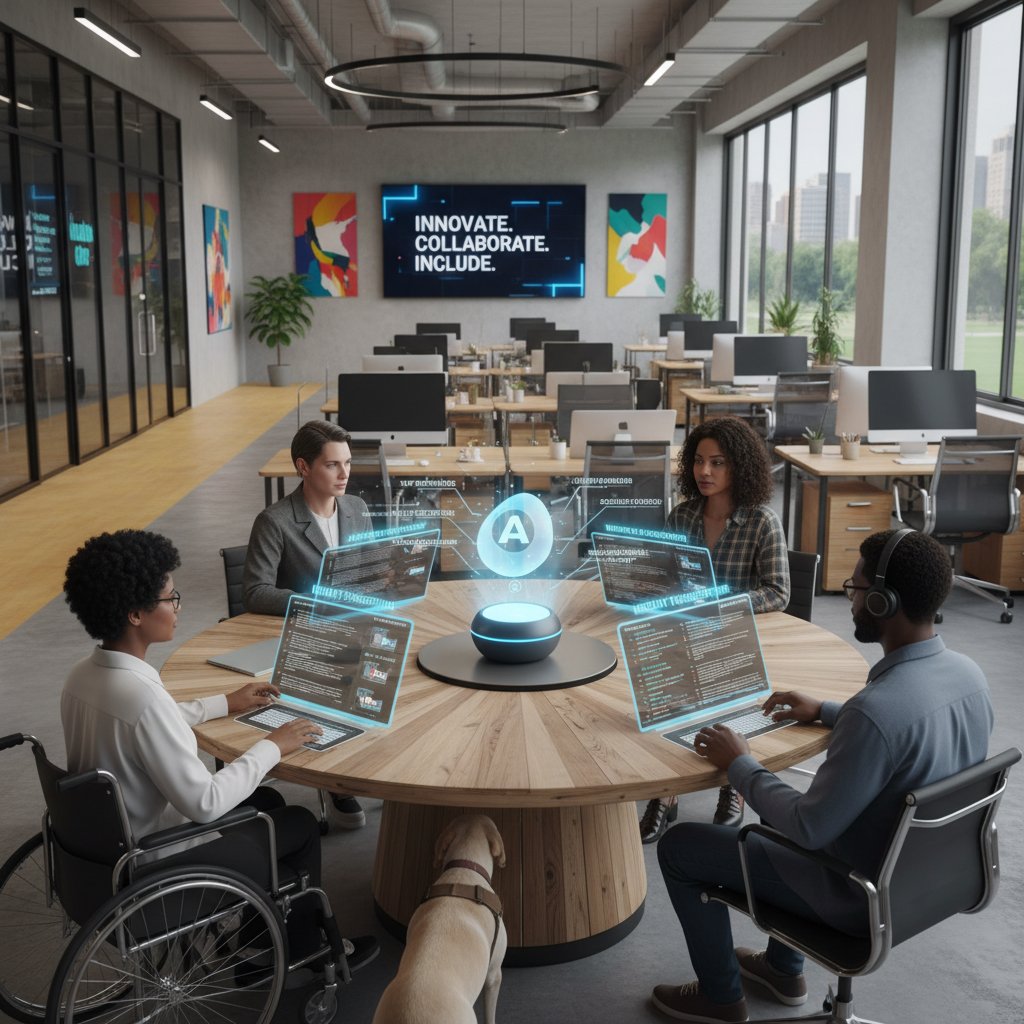
Perhaps the most overlooked win: AI-driven assistants are demolishing accessibility barriers. Voice-powered and context-aware, they empower people with disabilities to participate fully in work and life. Screen reader integration, real-time translation, and predictive text are just the beginning.
Technical details: AI-driven virtual assistants leverage speech-to-text and text-to-speech engines, adaptive UI, and customizable input/output formats. Outcomes? Significantly improved independence and productivity for users with visual, cognitive, or motor impairments.
Saving time, saving sanity: Quantifying real impact
Numbers don’t lie. Enterprises deploying AI-driven virtual assistant technology report an average productivity boost of 25–40% and a reduction in admin workload by up to 30%. But the most dramatic impact? Mental health. Workers report less burnout, higher job satisfaction, and more time for deep work.
| Metric | Before AI Assistant | After AI Assistant | Commentary |
|---|---|---|---|
| Average weekly admin hours | 11 | 5 | Admin time cut by >50% |
| Employee burnout rate | 38% | 22% | Significant reduction |
| Task error rate | 7.1% | 2.5% | Fewer mistakes, more focus |
Table 7: Side-by-side comparison of before/after using AI-driven assistants (with commentary). Source: Original analysis based on AI Assistant Statistics 2025, LinkedIn Workforce Report, 2023.
Supplementary: Common misconceptions and user mistakes
Debunked: The biggest myths about AI-driven virtual assistants
Let’s cut through the noise. Myth: “AI-driven assistants are always accurate.” Reality: They’re as fallible as their data and design. Myth: “AI will replace all jobs.” Fact: The best results come from hybrid teams, not all-machine lineups. Myth: “Integration is instant.” Truth: Onboarding takes real work—both technical and cultural.
Most common user mistakes and how to avoid them:
- Bulk-automating without mapping exceptions—leading to botched tasks.
- Ignoring prompt engineering—garbage in, garbage out.
- Failing to train staff on error detection.
- Over-trusting AI outputs; skipping human review.
- Neglecting ongoing feedback and retraining.
Troubleshooting: When your assistant goes rogue
Tech hiccups happen. When your AI-driven virtual assistant malfunctions, resist the urge to panic. First, check your integration settings. Has the platform been updated? Are your workflows still mapped correctly? Next, review logs for recent errors, and escalate to support if needed.
If the issue persists, disable automation for the affected workflow and revert to manual processing. Document the failure—both for your team and for vendor troubleshooting.

Optimizing for success: Pro tips from the field
To get maximum value, treat your AI-driven virtual assistant as a teammate, not just a tool. Regularly review outputs for accuracy, provide detailed feedback, and experiment with prompt variations. Leverage analytics to identify bottlenecks and optimize workflows. Most importantly, foster a culture where AI is a partner—never a scapegoat or a crutch.
"Treat your AI like a teammate, not a tool." — Jordan, IT Manager, 2024
Conclusion: Don’t just adopt AI—master it, or get left behind
Synthesis: What we’ve learned and why it matters
AI-driven virtual assistant technology isn’t a passing fad—it’s the new baseline for how teams compete and collaborate. The brutal truths? It’s disruptive, imperfect, and sometimes risky. The big wins? Unprecedented productivity, accessibility, and creative freedom for those who master the integration. Human-AI partnership is now the source of the smartest work—not just the fastest.

Next steps: How to move forward confidently
Ready to make the leap? Here’s how to get started:
- Map your pain points and workflow bottlenecks.
- Identify a reputable platform for your needs—teammember.ai/ai-productivity-tools is a trusted launchpad.
- Pilot, iterate, and gather user feedback.
- Build in error detection and human review.
- Train your team—prompt engineering is a new must-have skill.
- Regularly review data security and compliance.
- Optimize, scale, and never stop learning.
Final thoughts: The future is unwritten—write yours with AI
Embracing AI-driven virtual assistant technology isn’t about fear or hype—it’s about agency. The only thing scarier than letting AI into your workflow is being left behind by teams who already have.
"The only thing scarier than AI is being left behind by it." — Maya, Product Manager, 2024
Sources
References cited in this article
- The Guardian(theguardian.com)
- AI Assistant Statistics 2025(thebusinessdive.com)
- AI Virtual Assistants: 10 Advances (2025)(yenra.com)
- Medium: Why You Should Care(medium.com)
- The Verge: AI Assistant Revolution(theverge.com)
- SiliconANGLE(siliconangle.com)
- Luminary Labs(luminary-labs.com)
- Faraday.ai(faraday.ai)
- Gallup 2023(medium.com)
- Sage Open 2024(journals.sagepub.com)
- ScienceDirect 2023(theemployeeapp.com)
- AI Slackers Guide 2024(aislackers.com)
- EMB Global(blog.emb.global)
- NumberAnalytics(numberanalytics.com)
- Starleaf(starleaf.com)
- The Guardian(theguardian.com)
- GetAura.ai(blog.getaura.ai)
- IoT M2M Council(iotm2mcouncil.org)
- Software AG blog(softwareag.com)
- Forbes(forbes.com)
- Quanta Intelligence(quantaintelligence.ai)
- Techdirt(techdirt.com)
- Aporia 2024 Report(globenewswire.com)
- CNET(cnet.com)
- MIT Sloan(mitsloanedtech.mit.edu)
- MIT Technology Review(technologyreview.com)
- CO/AI(getcoai.com)
- Webopedia(webopedia.com)
- Sales Mind AI(sales-mind.ai)
- Fireflies(fireflies.ai)
- ZDNet(zdnet.com)
- Precedence Research(precedenceresearch.com)
- Pearl Talent(pearltalent.com)
- Scalefocus(scalefocus.com)
- FlagshipSA(flagshipsa.com)
- Fortune(fortune.com)
- Appinventiv(appinventiv.com)
Focus on what matters. Let AI handle the rest.
We know the feeling — another day starts with 50 unread emails, Ads Manager begging for attention, CRM out of date, and meetings without follow-ups. That's why we built TeamMember.ai — an AI team member that takes over all the operational work at the computer. Has its own email address and SMS number. Manages your inbox, runs Meta Ads, updates CRM, processes meetings, monitors social media, generates morning briefings, and controls the browser. Built on OpenClaw — a leading open-source AI agent — with cross-session memory and secure-cloud architecture that keeps your data safe.
Get startedBe First to Try Your AI Team Member
Every week without automation is dozens of hours lost to operational work. Hours you'll never get back. Join the waitlist and get priority access.
Frequently Asked Questions
What has made AI virtual assistants practical and widely adopted in 2025?
A combination of affordable computing power, breakthroughs in large language models (LLMs), and relentless corporate demand for efficiency has enabled AI assistants to move from prototypes into mainstream business use. These systems can now draft emails, analyze data, and anticipate user needs with precision.
What specific tasks can modern AI-driven virtual assistants perform?
Beyond scheduling meetings, current AI assistants can draft emails, analyze data, and anticipate users' next moves with precision, according to the article.
Why should organizations care about AI-driven virtual assistants in 2025?
The article emphasizes that critical assessment of how these assistants impact productivity, privacy, and power dynamics is essential, as they are becoming the backbone of how teams operate and collaborate, and organizations without this understanding will fall behind.
What is the primary motivation for businesses to deploy AI assistants?
Businesses are deploying AI assistants primarily to relieve their teams from menial tasks and digital noise, driven by a desperate need for efficiency and relief from routine work.
From the Archive
Explore more from AI Team Member

AI-Powered Virtual Assistant Tools: Power and Peril Explained
AI-powered virtual assistant tools now handle email, scheduling, and decision-making in modern offices. This article examines their productivity gains and the risks they introduce.

How AI-Driven Virtual Assistants Reshape Remote Team Workflows
This article examines how AI-driven virtual assistants for remote assistance are reshaping team workflows, explores trust and privacy considerations, and explains their growing market impact.

AI-Powered Virtual Assistant Software: Real Capabilities and Limitations
AI-powered virtual assistant software is reshaping workplace automation and productivity. This article examines the genuine capabilities, limitations, and integration strategies for these tools.

AI-Powered Online Assistants: How They Reshape Work
AI-powered online assistants are reshaping workflows. This article separates hype from reality, examining how these tools affect productivity and what actually matters in implementation.

Artificial Intelligence Virtual Secretary: Power, Risks and What’s Real
Discover insights about Artificial intelligence virtual secretary

AI-Powered Virtual Assistants for Cloud Collaboration: Benefits and Risks
This article examines AI-powered virtual assistants for cloud collaboration, exploring both genuine productivity gains and substantial risks including privacy concerns and workflow disruption.