


AI-Powered Virtual Assistant for Customer Feedback Analysis Risks and Rewards
Written with AI assistance under our editorial guidelines
AI-powered virtual assistants analyze customer feedback at scale using natural language processing to identify sentiment, trends, and actionable insights faster than traditional methods. This technology reduces response times and can significantly improve customer retention, though implementation requires careful attention to data privacy, accuracy limitations, and integration challenges to avoid potential pitfalls.
Every business leader claims to “listen to the customer.” But here’s the raw truth: most organizations are drowning in feedback, yet starving for insight. The old ways—endless surveys, spreadsheets brimming with half-read comments, frontline teams buried under a thousand “urgent” complaints—aren’t just inefficient. They’re failing catastrophically in a digital world fueled by relentless customer expectations and brutal online transparency. Enter the AI-powered virtual assistant for customer feedback analysis, a disruptive force that slices through the chaos and spotlights what truly matters. This isn’t about hype or sci-fi automation fantasies. It’s the frontline story of how machine intelligence, natural language processing, and relentless scale are upending the rules of customer voice, sentiment analysis, and business survival. If you think you know what an AI feedback assistant can do—think again. We’re pulling back the curtain on the bold truths, the hidden pitfalls, and the actionable strategies you need if you want to get ahead—before your competitors do.
The feedback crisis: why old methods are failing
The real cost of missed customer insights
It’s easy to underestimate the carnage caused by ignored feedback. For every customer complaint buried in a spreadsheet, there are often thousands of dollars lost—sometimes millions—through increased churn, public backlash, and missed innovation opportunities. According to a recent analysis by Zendesk (2024), 80% of consumers demand comprehensive assistance from chat agents, while 69% report a positive view of brands that respond promptly. Miss that window, and you’re not just disappointing one customer; you’re broadcasting carelessness to the world. Financial losses from churn can be staggering: in sectors like SaaS and telecommunications, a 5% increase in customer retention can boost profits by up to 25% (Source: Original analysis based on Zendesk, 2024, HubSpot, 2024).

| Industry | Avg. Feedback Response Rate | Customer Churn Rate |
|---|---|---|
| SaaS | 62% | 25% |
| Financial Services | 54% | 18% |
| Retail | 48% | 24% |
| Telecom | 37% | 29% |
Table 1: Feedback response rates vs. churn across key industries, highlighting the direct connection between customer engagement and retention.
Source: Original analysis based on Zendesk, 2024, HubSpot, 2024)
Beyond the numbers, the emotional and operational toll on teams is real. Customer support agents suffer burnout from repetitive triage, managers lose sleep over social media blowups, and companies bleed brand equity every time a public complaint goes unanswered. It’s a high-wire act, and most teams are balancing without a net.
Manual analysis: the bottleneck nobody talks about
The manual feedback triage process is as outdated as it is risky. Typically, incoming feedback lands in a queue—emails, survey responses, social media posts—where human agents slog through, tag, and summarize issues. The process is slow, subjective, and error-prone, especially as volumes spike.
- Time sink: Manual analysis ties up skilled staff for hours, often on repetitive, low-value tasks.
- Inconsistency: Different agents categorize the same comment differently, undermining any attempt at trend analysis.
- Blind spots: High-volume periods force teams to skim or ignore “minor” feedback, which often carries the seeds of major issues.
- Delayed response: By the time insights reach decision-makers, the original customer may already be gone.
These hidden dangers create a feedback lag that’s fatal in today’s rapid-fire market cycles. According to HubSpot (2024), human-only analysis simply can’t keep up with the pace or depth of insight demanded by modern consumers.
The human blind spot: what even the best teams miss
Humans are notorious for cognitive bias and error in analysis—confirmation bias, recency bias, and “noise” from personal experience all warp the picture. Even the most diligent teams miss critical signals hiding in plain sight.
"Humans are pattern seekers, but we’re also pattern blind." —Maya, Customer Insights Lead
Consider the recurring complaint about a “confusing checkout process” that’s consistently dismissed as user error—until a competitor launches a seamless one-click alternative and your top tier of loyal customers vanish overnight. The cost? Not just in lost sales, but in shattered trust and a tarnished reputation. These are the cracks that AI-powered virtual assistants for customer feedback analysis are designed to expose—before they become chasms.
Inside the machine: how AI-powered assistants transform feedback analysis
Breaking down the tech: NLP, sentiment analysis, and beyond
Modern AI-powered virtual assistants for customer feedback analysis wield a form of digital magic: natural language processing (NLP). By ingesting feedback from email, chat, and social media, they decode not only what customers say, but how they feel. Sentiment analysis algorithms dissect tone, urgency, and emotion, surfacing pain points and feature requests in real time.
Natural Language Processing—AI’s ability to understand, interpret, and generate human language, enabling virtual assistants to analyze written feedback at scale.
The automated identification of emotion (positive, negative, neutral) in customer comments, reviews, and survey responses.
The continuous cycle of gathering, analyzing, acting on, and learning from customer feedback—now accelerated by AI for near-instant insights.
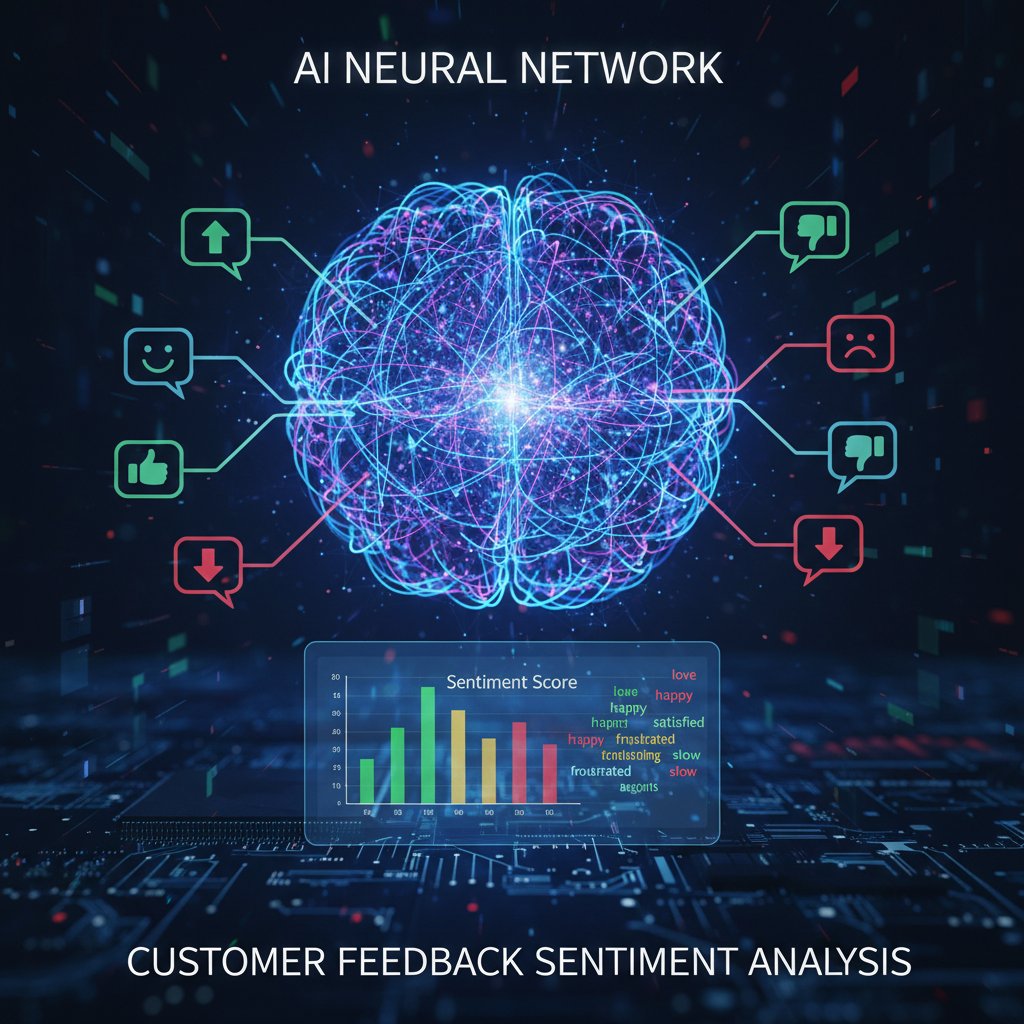
This interplay means AI can spot patterns, prioritize issues, and even flag “silent churners”—customers who don’t complain but slowly disengage. It’s a quantum leap from keyword counting and manual tagging.
Speed, scale, and the myth of flawless automation
AI assistants process feedback at a speed and scale that obliterate manual methods. Where a human team might analyze hundreds of comments in a day, AI parses tens of thousands—across every channel—within minutes. But let’s puncture the automation myth: AI is powerful, but not infallible.
| Metric | Human Analyst (Per Day) | AI Assistant (Per Day) |
|---|---|---|
| Comments Analyzed | 400 | 25,000 |
| Average Accuracy | 80% | 92% |
| Error/Bias Rate | 8-15% | 5-10% |
| Turnaround Time | 1-3 days | Minutes |
Table 2: Human vs. AI analysis speed and accuracy. AI excels at speed and consistency, but both introduce errors—especially with ambiguous feedback.
Source: Original analysis based on HubSpot, 2024, Global Market Insights, 2024)
While AI slashes response times and boosts accuracy, it still stumbles on sarcasm, slang, and deeply contextual issues. Overreliance is risky—just ask any company caught in an automatic “positive sentiment” loop while angry customers rage in subtle code.
Learning to read between the lines: detecting sarcasm, emotion, and nuance
Deciphering tone and emotion is the last great frontier for AI-powered feedback analysis. Sarcasm (“Great job on crashing my account again…”) or mixed feelings often slip through the cracks. But today’s advanced models, trained on millions of conversations, are getting better at parsing irony, detecting passive aggression, and flagging responses that require human review.
Modern virtual assistants use contextual cues—such as punctuation, emoji, and sentence structure—to refine their analysis. Still, ambiguity remains an open challenge.
"AI is getting better at understanding irony, but it’s still got a lot to learn." —Elena, Senior Data Scientist
This is where human-AI collaboration becomes essential. The most successful organizations blend machine speed with human judgment, reviewing flagged comments for the subtleties no algorithm can decode fully.
The evolution: from survey monotony to predictive insights
A brief history of customer feedback analysis
Feedback collection has traveled a remarkable path—from pen-and-paper forms that gathered dust, to digital surveys that clogged inboxes, to today’s real-time analytics.
- Paper surveys: Slow, low response rates, and labor-intensive analysis.
- Phone interviews: High cost, limited scale, and interviewer bias.
- Email surveys: Wider reach but quickly ignored in crowded inboxes.
- Online review sites: Public, unfiltered, and often overwhelming.
- Chatbots and social listening: Real-time, high volume, but often superficial.
- AI-powered analysis: Automated, cross-channel, actionable insights.
The leap to real-time, predictive insights is not just about speed—it’s about surfacing risks and opportunities before they turn into lost revenue or PR nightmares. As Global Market Insights (2024) reported, the virtual assistant market is exploding, projected to hit $11.9B by 2030—a signal that this shift is not a passing trend, but a structural change.
Case study: how AI flipped the script for a mid-sized retailer
A fashion retailer was stuck in the feedback churn: slow surveys, rising returns, and slipping Net Promoter Scores. After deploying an AI-powered feedback assistant, their workflow changed overnight. The assistant auto-tagged complaints about size fit, grouped suggestions for new styles, and flagged urgent issues for human follow-up.
| KPI | Before AI | After AI |
|---|---|---|
| Avg. Response Time | 48 hours | 2 hours |
| NPS | 41 | 56 |
| Churn Rate | 21% | 13% |
| Insights per Month | 5 | 28 |
Table 3: Mid-sized retailer key performance indicators before and after AI assistant implementation.
Source: Original analysis based on HubSpot, 2024, Zendesk, 2024)
The biggest lesson? AI surfaced a recurring issue—customers struggling with unclear sizing charts—that had eluded teams for months. By addressing it, returns dropped by 18%. The retailer also learned not to blindly trust sentiment scores, instead using AI as a triage tool for deeper, human-led investigation.
Cross-industry: unexpected places AI feedback analysis is making waves
AI-powered virtual assistants for customer feedback analysis are no longer just tools for tech and retail giants—they’re shaking up healthcare, hospitality, fintech, and beyond.
- Healthcare: Triage patient satisfaction surveys to identify areas for improvement in real time.
- Hospitality: Analyze online reviews across platforms, flagging service breakdowns before they snowball.
- Fintech: Parse customer complaints for regulatory risks and spot product pain points before they hit the bottom line.
- Education: Monitor course feedback and engagement signals to refine curricula quickly.
Unique challenges abound: in healthcare, privacy and compliance concerns loom large; in finance, the stakes of misinterpreted feedback are existential. Yet, the ability to surface actionable insights in hours—not weeks—has become a game-changer.
The ugly truths: risks, myths, and the limits of AI
Debunking the biggest AI feedback myths
For all the buzz, myths about AI-powered customer feedback analysis persist—many dangerously misleading.
- “AI is 100% unbiased.” In reality, algorithms absorb bias from training data and human designers.
- “Full automation is possible.” Reality check: Human validation is critical for complex or ambiguous feedback.
- “AI eliminates operational costs.” It shifts costs, but doesn’t erase the need for skilled oversight.
- “Machine analysis is always more accurate.” Context, nuance, and rare outlier cases still require human eyes.
- “AI is plug-and-play.” Integration, training, and fine-tuning are major undertakings.
These myths thrive because vendors oversell, and buyers crave silver bullets. The truth is more nuanced—AI is a powerful tool, not a panacea.
Bias, error, and the hidden dangers of automation
Real-world cases of AI bias in feedback analysis are cropping up across industries. A telecom company found its AI assistant consistently flagged complaints from non-native English speakers as “low urgency”—reflecting language bias in its training data. In another case, a beauty brand’s virtual assistant overlooked subtle complaints from older customers due to age-coded phrasing.

The solution? Regular audits, diverse training sets, and transparent review processes. Teams must treat their AI not as an omniscient oracle, but as a tool to be questioned and refined. According to HubSpot (2024), “AI can speed up data gathering and analysis, but a human agent should review and validate insights.”
Can you trust your AI assistant? Audit and accountability essentials
Trusting an AI-powered virtual assistant with customer feedback demands robust oversight. Here’s how leading organizations approach it:
- Set clear evaluation metrics: Define what “accuracy” and “value” mean for your business.
- Regularly sample and review outputs: Pull random feedback samples and have experts cross-check AI classifications.
- Audit for bias: Use diverse datasets and flag patterns that indicate demographic, language, or channel bias.
- Monitor drift: Algorithms can degrade over time—schedule periodic retraining and recalibration.
- Document decisions: Keep an audit trail linking feedback to actions and outcomes.
Human oversight isn’t just a checkbox—it’s the insurance policy against expensive, brand-damaging mistakes.
How to choose the right AI-powered assistant for your feedback needs
Feature showdown: what really matters (and what’s just hype)
Not all virtual assistants—or vendors—are created equal. Must-have features for serious customer feedback analysis include:
- Multichannel integration (email, chat, social, voice)
- Advanced NLP and sentiment analysis
- Real-time reporting and alerts
- Customizable feedback tagging
- Robust privacy and compliance controls
- Human-in-the-loop options
- Seamless workflow integration
Nice-to-haves? Gamified dashboards, “AI personality” customization, or voice analysis—unless these genuinely solve your unique pain points.
| Feature | AI-only | Human-only | Hybrid |
|---|---|---|---|
| Speed | High | Low | Moderate |
| Accuracy | Moderate | High | High |
| Nuance Interpretation | Low | High | High |
| Cost Efficiency | High | Low | Moderate |
| Scalability | High | Low | High |
| Compliance | Moderate | High | High |
| 24/7 Availability | Yes | No | Yes |
Table 4: Feature matrix comparing AI, human, and hybrid customer feedback analysis solutions.
Source: Original analysis based on HubSpot, 2024, Zendesk, 2024)
The trade-off? Pure AI solutions excel at volume and speed, but hybrid models—where AI triages and humans validate—deliver the highest trust and impact.
Implementation without the headaches: step-by-step guide
Rolling out an AI feedback assistant doesn’t have to be a saga of frustration. The keys are planning and transparency.
- Map your needs: Pinpoint which feedback channels and issues matter most.
- Align stakeholders: Bring in customer support, IT, compliance, and business leads early.
- Choose a scalable solution: Prioritize platforms that grow with your business.
- Pilot and iterate: Start with a controlled launch, gather feedback, and refine.
- Train your team: Upskill staff on both the tech and the art of human-AI collaboration.
- Monitor and adapt: Set up regular review cycles for continuous improvement.
Common mistakes? Underestimating integration complexity, skipping training, and failing to plan for exceptions or escalation.
Red flags to watch out for when assessing vendors
The virtual assistant market is awash in big promises and slick demos. Here’s what should set off alarm bells:
-
Opaque algorithms: Vendors who won’t explain their models or training data are hiding something.
-
No audit trail: You need to track which feedback led to which action.
-
Poor compliance controls: Especially critical for regulated industries (finance, healthcare).
-
Hidden costs: Surprise fees for extra channels, users, or analytics.
-
Overpromising accuracy: Any claim of “100% accuracy” is a fantasy.
-
Lack of customization: One-size-fits-all rarely fits anyone well.
-
Weak integration: Solutions that don’t play nice with your stack are more trouble than they’re worth.

Real-world impact: stories from the front lines
How a global SaaS company slashed churn with AI feedback analysis
A leading SaaS provider faced surging churn and woefully slow feedback cycles. By implementing an AI-powered virtual assistant for customer feedback analysis, they transformed their operations. The assistant auto-classified thousands of support tickets, prioritized urgent issues, and surfaced recurring bugs that had stumped human analysts.
Churn dropped by 38% within six months, and first-response times fell from days to under an hour. Equally important, the system flagged a previously overlooked UI issue driving silent user attrition.
"We didn’t just speed up analysis—we uncovered issues we’d ignored for years." —Noah, Head of Customer Experience
Small teams, big wins: David vs. Goliath innovation stories
You don’t need an army (or a VC war chest) to win the feedback game. Small teams are using unconventional strategies to outmaneuver giants:
- Laser focus: Zero in on a few, high-impact feedback channels instead of spreading thin.
- Agile pilots: Test, learn, and iterate rapidly without bureaucratic drag.
- Direct human escalation: Use AI to surface issues that require empathy or deep context.
- Transparency with customers: Show how feedback drives change, building loyalty.
Larger organizations can learn from this playbook: prioritize agility, highlight human-AI partnership, and keep the customer’s voice front and center.
teammember.ai and the next generation of feedback analysis tools
Platforms like teammember.ai are at the leading edge of AI-powered virtual assistants for customer feedback analysis. By embedding advanced language models into everyday workflows—most notably, email—teammember.ai enables businesses to capture, analyze, and act on feedback without disrupting established processes.

As AI technology matures, the line between insights and action is blurring. The challenge? Ensuring that as machines get smarter, organizations don’t lose sight of the human stories behind the data.
Beyond automation: the cultural and strategic shifts AI demands
The new skillset: training teams for AI-augmented feedback analysis
For all its promise, AI-powered customer feedback analysis demands a new mindset—and skillset—from teams.
- Critical thinking: Interpreting AI outputs with skepticism, not blind trust.
- Data literacy: Understanding the basics of NLP and sentiment scoring.
- Empathy: Knowing when a human touch trumps automation.
- Process management: Integrating machine and human workflows without friction.
- Continuous learning: Adapting as the tech—and customer expectations—evolve.
Practical training approaches include hands-on workshops, regular feedback review sessions, and cross-functional collaboration between data and frontline teams.
From skepticism to trust: overcoming resistance to AI
Change is hard—especially when it’s powered by algorithms. Common objections include fear of job loss, distrust of “black box” decisions, and concern over data privacy.
- Educate: Demystify how AI works, and what it can and cannot do.
- Engage: Involve teams early in pilot projects, surfacing concerns transparently.
- Show results: Highlight quick wins—faster response times, reduced churn, improved morale.
- Open dialogue: Foster a feedback culture that welcomes human input on AI recommendations.
Transparent communication—sharing not just successes but also failures—builds trust and accelerates adoption.
Strategic opportunity: using AI to redefine customer experience
AI-powered customer feedback analysis isn’t just a tool—it’s a lever to rethink the customer experience from the ground up. By connecting feedback loops in real time, companies can experiment with new CX strategies:
- Use predictive insights to pre-empt churn with targeted outreach.
- Rapidly refine products based on emerging complaints and requests.
- Personalize interactions by surfacing sentiment and context at every touchpoint.
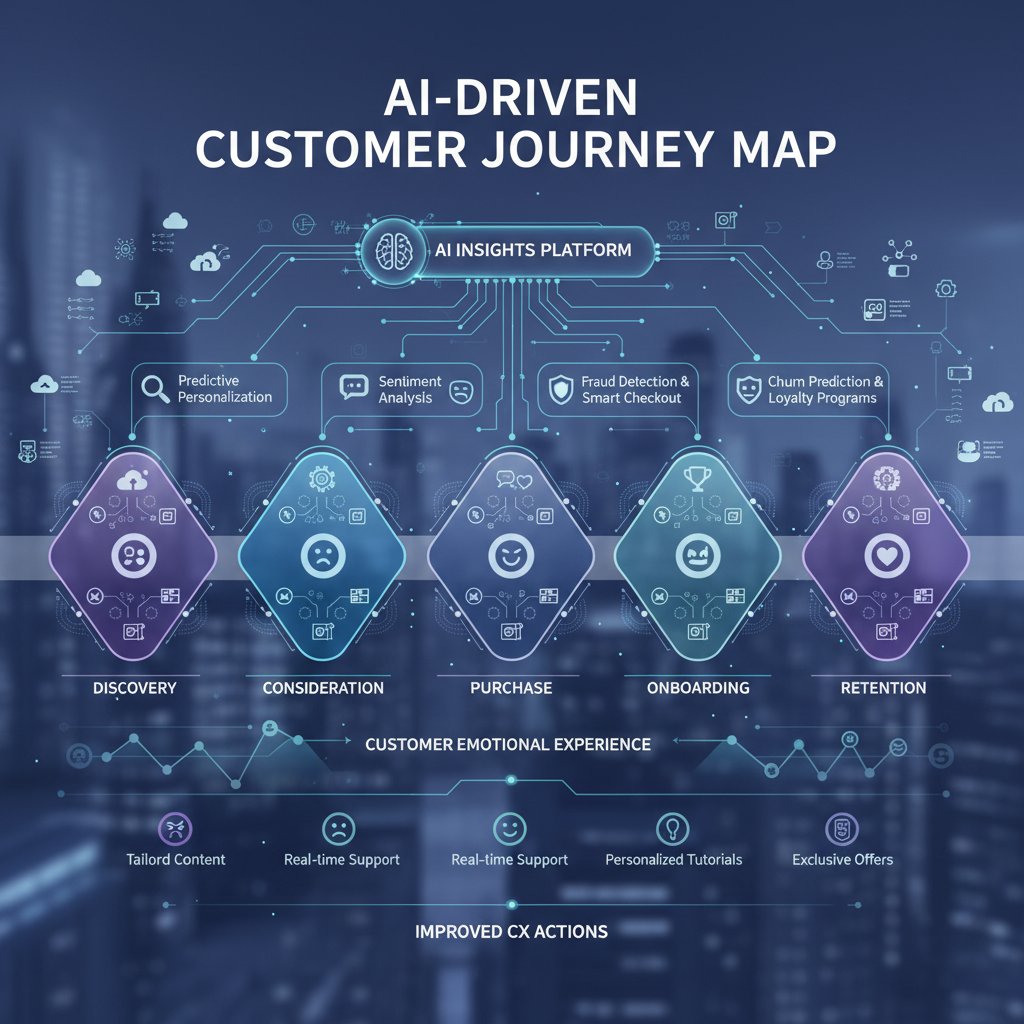
It’s not about replacing people with bots—it’s about augmenting human intelligence to drive loyalty, innovation, and growth.
The future of AI-powered virtual assistants for customer feedback
Predictive feedback: seeing customer needs before they’re voiced
Today’s AI-powered virtual assistants are moving from reactive to predictive. By analyzing historical patterns, emerging sentiment, and external signals, they can flag risks and opportunities before customers even articulate them.
| Capability | Current Assistants | Next-Gen Assistants |
|---|---|---|
| Channel Coverage | Email, Chat, Social | Voice, Video, IoT |
| Sentiment Analysis | Positive/Negative | Nuance, Ambiguity |
| Predictive Analytics | Basic Trends | Deep Pattern Mining |
| Human-AI Collaboration | Optional | Core Workflow |
| Compliance | Semi-automated | Fully Integrated |
Table 5: Current vs. next-gen feedback assistant capabilities, illustrating expanding potential—and complexity.
Source: Original analysis based on HubSpot, 2024, Global Market Insights, 2024)
Predictive power raises the stakes—and the ethical bar. Who owns the data? How transparent are the algorithms? These are live debates, not hypothetical dilemmas.
Regulation, ethics, and the new rules of AI feedback
Regulators are catching up with the rapid spread of AI in customer feedback analysis. GDPR, the AI Act, and industry-specific standards are imposing new obligations:
- Data minimization: Collect only what’s necessary—no more, no less.
- Transparency: Explain how feedback is analyzed and acted upon.
- Right to explanation: Customers should understand how their feedback impacts outcomes.
- Bias monitoring: Regular audits to prevent discriminatory practices.
- Security: Protect feedback data from breaches and misuse.
Global organizations must tailor compliance strategies to each market, balancing agility with accountability.
What’s next? The evolving relationship between humans and AI in customer feedback
The lines are blurring—sometimes collaborating, sometimes competing, often converging. As Jules, a CX futurist, notes:
"The smartest companies won’t just automate—they’ll reinvent the conversation." —Jules, CX Futurist
Staying ahead means treating AI not as a crutch, but as a catalyst for deeper, more authentic customer relationships.
Your action plan: getting started with AI-powered feedback analysis
Self-assessment: are you ready for AI-powered analysis?
Before you dive in, take stock of your organization’s readiness:
-
Clear feedback goals and KPIs
-
Leadership buy-in and cross-functional alignment
-
Robust data hygiene and integration capabilities
-
Appetite for experimentation and learning
-
Commitment to human oversight
-
Feedback volume: Are you drowning in data, or are inputs too sparse for reliable AI analysis?
-
Team skills: Do you have data-savvy staff or a need for upskilling?
-
Tech stack: Can your systems support seamless integration, or will you face bottlenecks?
-
Change culture: Are leaders open to iterative learning, or wedded to legacy processes?
Leading platforms like teammember.ai offer resources and expertise to help you assess and level-up your feedback analysis game.
Common mistakes and how to avoid them
AI-powered virtual assistant for customer feedback analysis can transform your business—but only if you sidestep the most common pitfalls.
- Skipping pilot phases: Rushing to full rollout without testing for fit and readiness.
- Ignoring edge cases: Failing to plan for exceptions, ambiguity, or outlier feedback.
- Poor training data: Feeding the system biased or incomplete feedback.
- Neglecting human review: Treating AI outputs as gospel, rather than starting points.
- Overlooking compliance: Missing evolving privacy and industry-specific regulations.
Recovering from setbacks means learning fast, iterating, and staying transparent with stakeholders.
Making the case: how to get buy-in for AI feedback transformation
Winning hearts and minds for AI feedback analysis takes more than a slick pitch deck.
- Tell stories: Use case studies and real-world wins to illustrate impact.
- Show the numbers: Quantify gains—faster response, reduced churn, higher NPS.
- Visualize insights: Let teams experience the “aha” moment from automated analysis.
- Involve everyone: From the C-suite to the frontline, cross-functional engagement is key.

Remember: change management is a marathon, not a sprint. Focus on momentum, not perfection.
Glossary: essential terms in AI-powered feedback analysis
The science of enabling machines to read, interpret, and generate human language; the backbone of AI-powered customer feedback analysis. For example, turning a flood of survey comments into actionable insights.
Automated detection of emotional tone in text—positive, negative, or neutral. Practical for detecting brewing discontent even when customers don’t state it outright.
The process of sorting and prioritizing customer feedback for action—transformed by AI from a manual slog to real-time automation.
Using patterns in feedback to identify customers likely to leave; AI makes this process proactive rather than reactive.
Ensuring that feedback analysis tools process data in line with privacy and regulatory standards.
Systems where AI does the heavy lifting, but humans validate, correct, or override outputs—critical for accuracy and trust.
Collecting and analyzing feedback from email, chat, social, and more within a single platform.
The cycle of collecting, analyzing, acting on, and learning from customer input; AI accelerates every stage.
Structured review of AI outputs to ensure fair and accurate representation, especially for diverse customer groups.
The sum of every interaction a customer has with a brand—now shaped in real time by AI-powered insight.
Mastering these terms isn’t just academic—it’s a survival skill for anyone navigating the new landscape of customer feedback analysis.
The reality is clear: the AI-powered virtual assistant for customer feedback analysis is not a panacea, but it is a revolution. The unfiltered truths are both liberating and sobering. You can scale insights at a speed once unimaginable, but you can’t simply automate judgment, empathy, or accountability. The most successful organizations aren’t those who chase the latest tech, but those that blend AI’s power with human intelligence, skepticism, and purpose. If you’re ready to move beyond the buzzwords—if you crave sharper insight, fewer blind spots, and a more direct line to your customers’ true voices—the next move is yours.
Sources
References cited in this article
- HubSpot(blog.hubspot.com)
- Zendesk(zendesk.com)
- Global Market Insights(softwareoasis.com)
- Fortune(fortune.com)
- CNBC(cnbc.com)
- Exploding Topics(explodingtopics.com)
- GetThematic(getthematic.com)
- Invoca(invoca.com)
- Sprinklr(sprinklr.com)
- Widewail(widewail.com)
- Redress Compliance(redresscompliance.com)
- Analytics Vidhya(analyticsvidhya.com)
- XenonStack(xenonstack.com)
- Penfriend(penfriend.ai)
- Insight7(insight7.io)
- Quidget.ai(quidget.ai)
- G2 Learn(learn.g2.com)
- Widewail(widewail.com)
- iiinigence(iiinigence.com)
- Nvidia 2024 Retail AI Report(images.nvidia.com)
- WhatsTheBigData(whatsthebigdata.com)
- KPMG(kpmg.com)
- Forbes(forbes.com)
- IBM(ibm.com)
- ISACA Journal(isaca.org)
- Forbes(forbes.com)
- Insight7(insight7.io)
- Practera(practera.com)
- CHISW(chisw.com)
- Forbes(forbes.com)
- McKinsey(mckinsey.com)
Focus on what matters. Let AI handle the rest.
We know the feeling — another day starts with 50 unread emails, Ads Manager begging for attention, CRM out of date, and meetings without follow-ups. That's why we built TeamMember.ai — an AI team member that takes over all the operational work at the computer. Has its own email address and SMS number. Manages your inbox, runs Meta Ads, updates CRM, processes meetings, monitors social media, generates morning briefings, and controls the browser. Built on OpenClaw — a leading open-source AI agent — with cross-session memory and secure-cloud architecture that keeps your data safe.
Get startedBe First to Try Your AI Team Member
Every week without automation is dozens of hours lost to operational work. Hours you'll never get back. Join the waitlist and get priority access.
Frequently Asked Questions
What are the main risks of not responding to customer feedback?
According to the article, missed feedback can lead to increased churn, public backlash, and missed innovation opportunities. For example, a 5% increase in customer retention can boost profits by up to 25% in sectors like SaaS and telecommunications, meaning delayed responses can result in staggering financial losses.
What do customers expect from brands in terms of response time?
According to a 2024 Zendesk analysis cited in the article, 69% of consumers report a positive view of brands that respond promptly to feedback, and 80% of consumers demand comprehensive assistance from chat agents.
Why are traditional feedback methods like spreadsheets and surveys failing?
The article states that traditional methods result in organizations drowning in feedback yet starving for insight, with frontline teams buried under complaints and feedback going half-read. These old ways are inefficient and failing catastrophically in a digital world with relentless customer expectations and public transparency.
What is an AI-powered virtual assistant for customer feedback analysis?
According to the article, it is a disruptive tool that uses machine intelligence, natural language processing, and scale to cut through feedback chaos and identify what truly matters for customer voice and sentiment analysis.
From the Archive
Explore more from AI Team Member

AI-Driven Virtual Assistant for Customer Data Analysis That Pays Off
Discover insights about AI-driven virtual assistant for customer data analysis

AI-Powered Virtual Assistants Reshape Customer Success Economics
AI-powered virtual assistants for customer success tackle churn and team burnout. This article examines adoption trends, real risks, and measurable returns for support leaders.

AI-Driven Virtual Assistant for Business Analytics: Strengths and Limitations
An AI-driven virtual assistant for business analytics can expose gaps in data use. This article explains where these tools excel, where they fall short, and how to maximize ROI.

AI-Powered Virtual Assistants: Roi, Risks, and Reality
AI-powered virtual assistants for business intelligence carry real ROI and hidden risks. This article examines the landscape beyond vendor claims with current data and case studies.

AI-Driven Virtual Customer Assistants: Where They Succeed, Where They Fail
AI-driven virtual customer assistant technology shows real ROI but also uncovers why many implementations fail.

AI-Driven Virtual Assistant for Online Support: Hype Vs Hard ROI
Discover insights about AI-driven virtual assistant for online customer support