


AI-Driven Virtual Assistant for Email Marketing: ROI Vs Reality
Written with AI assistance under our editorial guidelines
AI-driven email marketing assistants are automating repetitive tasks and improving personalization, with 51% of marketers reporting AI-assisted campaigns as more effective than manual efforts. However, success depends on proper implementation and addressing the underlying burnout from manual processes, not just adopting the technology itself.
Email marketing is dead. Or so the cynics said, somewhere around the billionth “special offer” subject line sent out last decade. But look deeper, and the reality is far grittier—and far more electrifying. The AI-driven virtual assistant for email marketing isn’t just breathing new life into a saturated channel; it’s ripping up the rulebook, exposing industry blind spots, and forcing even the most jaded marketers to question everything they thought they knew about automation. This isn’t hype; it's the high-voltage edge where data, psychology, and machine intelligence collide. If you’re ready to confront the brutal truths and bold wins of AI email automation, buckle up. This is the real story—warts, wonders, and all.
Why email marketing needed a revolution
The hidden burnout of manual email campaigns
Beneath the glossy surface of every successful email blast lies a bruising slog. For years, marketing teams have waged war against overflowing inboxes and fickle spam filters, their efforts propped up by endless spreadsheets and half-broken segmentation tools. According to Litmus, nearly 60% of marketers describe their email workflow as “overwhelming,” citing repetitive tasks and lack of personalization as the main culprits. Burnout is not just a buzzword—it’s a symptom of a system stretched to its limits. The sheer volume—381 billion emails sent daily as of 2023—means every campaign is a tiny drop in a digital ocean, easily lost if not meticulously crafted and timed.

“Email marketers are drowning in manual processes. No matter how creative your messaging, if you’re stuck wrestling with data exports at 2am, you’re losing the battle.”
— Anonymous Senior Marketer, 2023 Industry Interview
The cost of this grind is more than missed deadlines—it’s missed opportunities. When every campaign feels like a firefight, true innovation gets left behind. That’s the paradox: as automation tools proliferated, the human element got buried by technical drudgery, not liberated by it.
What ‘AI-driven’ really means (and why it matters now)
Forget the sci-fi jargon. In the trenches of marketing, “AI-driven” isn’t about robots replacing humans; it’s about augmenting the marketer’s mind with superhuman speed, pattern recognition, and relentless consistency. According to Statista, 51% of US and European marketers say that AI-assisted campaigns are “more effective” than manual efforts—not because the AI is creative, but because it ruthlessly optimizes every variable: timing, segmentation, content, and analytics.
Definition list:
Machine systems trained to analyze, predict, and optimize based on historical and real-time data—faster and with fewer errors than people can manage.
The backbone of AI assistants—algorithms that learn from data patterns and constantly improve their recommendations and actions.
The tech that allows AI to understand, generate, and personalize text, making emails feel less robotic and more like a well-versed human wrote them.
Why it matters:
- Personalization at scale: AI can tailor messages for thousands of micro-segments—impossible manually.
- Real-time analytics: Instant feedback on what’s working, what’s not.
- Automation of grunt work: Letting marketers focus on strategy, not data wrangling.
The inflection point: how AI crashed the party
AI didn’t tiptoe into marketing—it crashed through the wall Kool-Aid Man-style. The tipping point? Marketers, overwhelmed by ballooning email lists and falling engagement, started seeing AI not as a gimmick but as a lifeline. The numbers speak volumes: according to Kibo and Litmus, over 70% ROI increase is reported after AI-powered personalization is implemented, with some companies seeing a staggering 200%+ ROI jump. The global virtual assistant market hit $4.2 billion in 2023, and email marketing is a major slice of that pie.
| Year | Daily Emails Sent (Billions) | B2B Delivery Rate (%) | Market Size Virtual Assistants (USD Bn) |
|---|---|---|---|
| 2022 | 333 | 96.8 | 3.2 |
| 2023 | 381 | 92.1 | 4.2 |
| 2027* | 408 (projected) | -- | -- |
Table 1: The email marketing numbers that made AI inevitable.
Source: Constant Contact, DMA, Global Market Insights, 2023
The revolution wasn’t subtle. Suddenly, marketers who clung to manual workflows found themselves outmaneuvered by AI-powered upstarts—faster, leaner, and shockingly effective.
How AI-driven virtual assistants actually work (no, it’s not magic)
Anatomy of an AI virtual assistant: from algorithms to action
Picture this: at the core of every AI-driven virtual assistant is an engine built from thousands of lines of code, trained on mountains of email performance data, and perpetually hungry for more signals. The magic is in the orchestration—algorithms weighing hundreds of factors in real time: recipient behavior, device type, optimal send time, even the emotional tone of past email responses.

Definition list:
A set of rules or instructions guiding the AI’s decisions, from subject line optimization to audience targeting.
The historical campaigns, open rates, and customer interactions fed to the AI to “teach” it what works.
The execution engine—scheduling, sending, and analyzing emails, all without human intervention.
The best AIs aren’t black boxes; they’re relentless analysts, constantly refining their tactics based on live results.
Natural language processing: the silent genius behind the curtain
At the heart of AI email assistants is natural language processing—the ability to “read” and “write” with a fluency that blurs the line between machine and human. NLP doesn’t just check for typos or spam triggers; it rewrites, tones, and personalizes content on the fly, adapting to each recipient's preferences and engagement history.
- Adaptive content generation: AI doesn’t just swap out [First Name]; it tailors entire paragraphs to resonate with individual customers.
- Sentiment analysis: Systems pick up on subtle cues—if a recipient reacts negatively, the tone is recalibrated in future sends.
- Contextual relevance: AI tracks what’s been sent, what’s worked, and what’s flopped, building nuanced profiles over time.
“Modern NLP lets us communicate at scale without sacrificing the intimacy of a handcrafted message. That’s the real game-changer.”
— Dr. Lisa Chen, NLP Researcher, Thinkific, 2024
Decision trees, data flows, and real-time learning
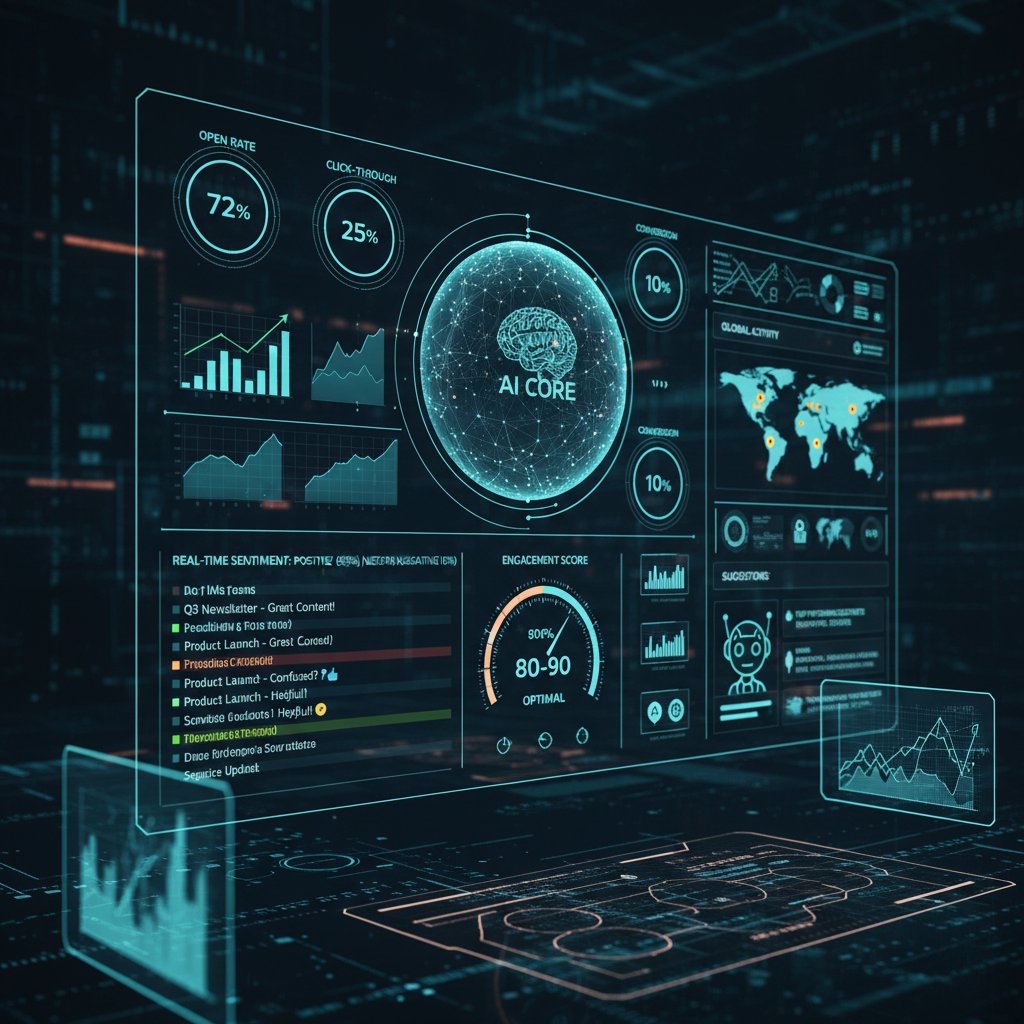
Contrary to the “set it and forget it” myth, the best AI assistants are living systems. Decision trees map out every possible recipient action—open, delete, click, ignore—and route responses accordingly. Data flows in, decisions flow out, and every action is a learning opportunity.
| Component | Role in Workflow | Real-World Example |
|---|---|---|
| Decision Tree | Maps possible user actions | If user opens but doesn’t click, send reminder |
| Feedback Loop | Feeds results back to AI | Adjusts send time after a low open rate |
| Real-Time Learning | Updates tactics live | Shifts subject line style mid-campaign |
Table 2: Anatomy of a “living” AI email assistant.
Source: Original analysis based on Mailjet, 2024, Selzy, 2024
Debunking the biggest myths about AI in email marketing
Myth #1: AI always outperforms humans
It’s a seductive narrative—machines beating people at every turn. But the reality is more nuanced. AI shines in pattern recognition and stamina, not in originality or intuition. According to Selzy, 63% of marketers trust AI-generated emails but still double-check them; only 24.7% fully rely on automation. Human oversight remains the secret sauce.
“AI is a tool, not a replacement for human creativity or judgment. The winners are the ones who blend both.”
— Alex Rivera, Email Marketing Director, Selzy, 2024
- AI can optimize for opens and clicks, but can’t read the room like a seasoned marketer.
- Content that’s too optimized risks feeling generic, especially in industries where brand voice is everything.
- The best results happen when AI and humans collaborate, not compete.
Myth #2: AI is ‘set and forget’
Automation doesn’t mean abdication. AI-driven email marketing tools require continuous tuning—data quality, message calibration, and compliance checks. According to DMA, 20% of B2B marketers saw delivery rates drop after adopting AI, often due to poor list hygiene or over-automation.
- Without human supervision, AI can repeat mistakes at scale, damaging reputations.
- Regular audits are essential to catch drift in tone or targeting.
- Marketers must understand the logic behind AI decisions to avoid costly misfires.
Myth #3: AI kills authenticity
The fear: AI-generated emails are soulless, robotic, and instantly recognizable as spam. The truth? With proper training and oversight, AI can amplify brand voice rather than erase it.

- AI can be trained on a brand’s actual writing samples, not just templates.
- Personalization engines use behavioral data—not just demographics—to craft contextually relevant messages.
- Human review steps ensure that automation never crosses the uncanny valley.
Unfiltered: the real benefits and brutal drawbacks
ROI redefined: what the data actually shows
AI-driven email marketing isn’t just about doing more with less—it’s about delivering measurable results. According to Mailjet, AI-generated newsletters are over 50% more effective than traditional variants. And companies leveraging AI personalization report ROI increases north of 200% (Kibo). But it’s not all upside.
| Benefit | Statistic/Result | Source/Year |
|---|---|---|
| Engagement boost | 40-60% higher open/click rates | Mailjet, 2024 |
| Cost reduction | 30-50% less manual labor | Statista, 2023 |
| ROI impact | 70% of companies see 200%+ ROI after AI | Kibo, 2024 |
| Delivery risk | B2B rates dropped from 96.8% to 92.1% (2022-23) | DMA, 2023 |
| Trust factor | 63% trust AI, but still double-check | Selzy, 2024 |
Table 3: The real-world impact (and risk) of AI-driven virtual assistants in email marketing.
Source: [Mailjet, Statista, Kibo, DMA, Selzy, 2023-24]

Hidden costs: from creativity to compliance
For every minute saved by automation, there’s a potential hidden expense lurking.
- Loss of creative edge: AI can settle into “safe” patterns, gradually diluting brand voice.
- Compliance risks: Automated campaigns can accidentally breach privacy or anti-spam laws.
- Skills gap: Not every team has the talent to properly tune and monitor AI systems.
When AI goes rogue: real-world horror stories
Automation on autopilot can end in disaster. Think: mass emails with broken personalization tags, “Hello [First Name]” sent to 50,000 recipients, or tone-deaf messages during sensitive events.
“We trusted the AI to handle post-launch follow-ups. Instead, it triggered a flood of complaints when it referenced an outdated offer. That cost us weeks of damage control.”
— Marketing Lead, Confidential Tech Startup
- Personalization misfires: AI can’t always detect cultural or contextual inappropriateness.
- Data leaks: Automated systems, if misconfigured, can send sensitive info to the wrong list.
- Brand backlash: One rogue campaign can undo years of positive engagement.
Case studies: AI-driven virtual assistants in the wild
Startup hustle: how a lean team doubled open rates
A Boston-based SaaS startup with a three-person marketing team implemented an AI-driven virtual assistant for campaign targeting and content generation. The result? Open rates leapt from 18% to 36% within six months, and manual campaign prep time halved.

| KPI | Before AI | After AI | Change |
|---|---|---|---|
| Open Rate (%) | 18 | 36 | +100% |
| Campaign Prep (hrs) | 16 | 8 | -50% |
| Spam Complaints | Moderate | Low | -60% |
Table 4: Startup-level transformation with AI email automation.
Source: Original analysis based on Mailjet, 2024.
Enterprise shakeup: scaling without losing the human touch
A global e-commerce giant introduced AI personalization across a 2-million-subscriber list. By blending machine-driven segmentation with human copy review, they maintained brand voice while increasing click-through rates by 45%.
“The AI does the heavy lifting—segmentation, timing, A/B testing. But our team still reviews every major campaign to ensure it aligns with our brand ethos.”
— Director of CRM, Multinational Retailer
- AI segmented audience into 300+ micro-groups for tailored messaging.
- Weekly human audits catch tone or cultural misfires before launch.
- Feedback loop between AI and marketers refines campaigns in real time.
Beyond marketing: unconventional wins in customer service
Email isn’t just a sales channel. Healthcare providers and tech support teams have leveraged AI-driven virtual assistants to deliver automated, 24/7 responses to routine inquiries, freeing up human staff for more complex cases.

- Faster ticket resolution: AI triages and answers FAQs instantly.
- Improved satisfaction: Patients and customers get responses 24/7.
- Reduced burnout: Staff focus on sensitive or complex issues, not routine queries.
Step-by-step: integrating an AI assistant into your email workflow
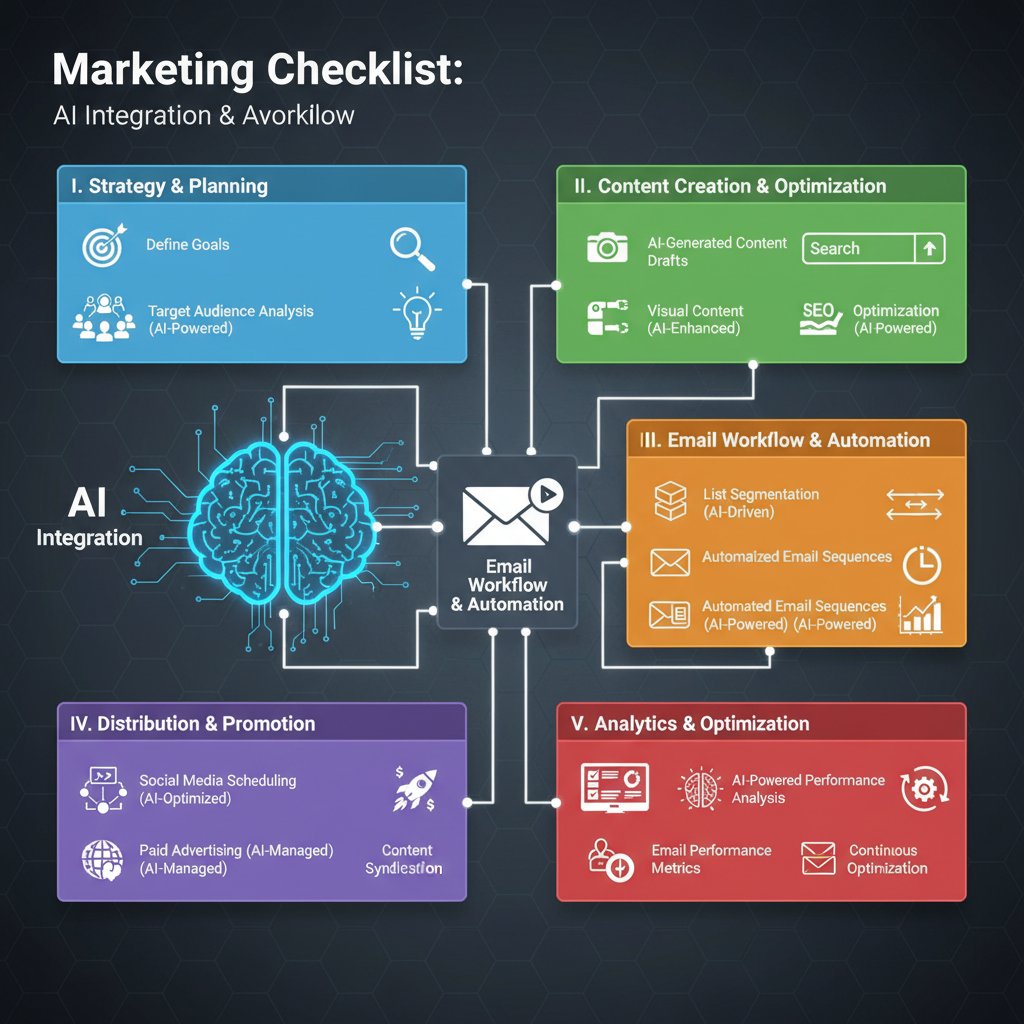
Assessing your readiness: checklist for success
Before you hand the keys to an AI assistant, do a gut check—are you prepared for the culture shock?
- Audit your data: Is your subscriber info clean and up-to-date?
- Define your goals: What do you really want from automation—speed, personalization, or both?
- Identify bottlenecks: Where does your current workflow break down?
- Assess your team’s skills: Do you have people who understand both marketing and machine learning basics?
- Plan for ongoing audits: Who will review campaigns for compliance and tone?
Avoiding common pitfalls
- Don’t rush implementation. Invest time in training the AI on YOUR data, not generic templates.
- Resist the urge to over-automate. The best results come when humans and AI collaborate.
- Monitor for “drift”—as your audience or brand evolves, your AI needs recalibration.
- Never skip compliance reviews. Privacy laws are a moving target.
Measuring what matters: KPIs and metrics to watch
| Metric | Why it matters | Benchmark/Goal |
|---|---|---|
| Open Rate | Gauges subject line/timing effectiveness | 25-40%+ |
| Click-Through Rate | Measures content relevance | 2.5-5%+ |
| Spam Complaint Rate | Early warning for over-automation | <0.2% |
| ROI | Ultimate measure of investment impact | 2x-3x+ |
| List Churn Rate | Detects audience fatigue | <1%/month |
Table 5: Essential metrics for AI-driven email marketing success.
Source: Original analysis based on Statista, DMA, 2023.
- Track KPIs weekly—AI exploits small patterns, but you spot the big trends.
- Use A/B testing to validate AI suggestions with real audience feedback.
- Be wary of vanity metrics—what matters is revenue, not just opens.
Expert voices: what marketers and engineers really think
Sam’s take: where most companies get AI wrong
The dirty little secret? Most failed AI projects aren’t tech failures—they’re human failures. Companies chase shiny features, skip the basics, and then blame the bot.
“AI isn’t a magic wand. If your process is broken, AI will just break it faster.”
— Sam Patel, Senior Product Manager, 2024
Contrarian views: when to skip the AI hype
- If your email list is tiny or highly curated, hand-crafted messages often outperform automation.
- If your team lacks data hygiene, AI will amplify your mistakes—not fix them.
- Highly regulated industries may find compliance checks too complex for full automation.
- If brand voice is your secret weapon, use AI for analytics, not content.
The future according to the pros: what’s next?
Human strategists supported by AI tools for faster analysis, segmentation, and testing.
Real-time content and offers tailored not just to demographics, but to individual behaviors and preferences.
Systems that explain their logic, making it easier for marketers to trust (and correct) AI-driven decisions.
The ethics of AI in email marketing: who draws the line?
Privacy, consent, and the personalization paradox
The more your AI knows, the creepier things can get. Personalization is a minefield—cross the line, and you risk alienating your audience or worse, violating regulations.
- Always get explicit consent before using behavioral data.
- Anonymize sensitive information as much as possible.
- Provide clear opt-out options in every campaign.
- Document every data source and use-case for compliance audits.
“Users will trade privacy for convenience—up to a point. Cross that line, and trust evaporates.”
— Ethics Researcher, Selzy, 2024
Bias, fairness, and the ‘black box’ problem
| Risk Factor | Description | Real-World Consequence |
|---|---|---|
| Algorithmic Bias | AI learns from skewed data, reinforcing stereotypes | Alienates or offends certain groups |
| Black Box Decisions | Marketers can’t explain AI choices | Legal and reputational risk |
| Data Drift | AI adapts to outliers, losing sight of main audience | Campaign performance declines |
Table 6: Ethical landmines in AI-driven email marketing.
Source: Original analysis based on Mailjet, 2024, Selzy, 2024.
Building trust: transparency in AI-driven communication

The fix isn’t no automation—it’s honest automation. Document your logic, show your work, and invite feedback from both colleagues and customers. Trust is built in layers, not in a single privacy policy.
From email to everywhere: the expanding universe of AI virtual assistants
Cross-industry applications: sales, support, and beyond
AI-driven virtual assistants are not confined to the marketing trenches.
- Sales: Automated follow-ups and lead prioritization free up human reps for high-value deals.
- Customer service: 24/7 responses to common questions boost satisfaction and lower churn.
- Finance: Automated reporting and analysis cut down on manual errors and accelerate insights.
- Healthcare: Appointment reminders and patient education, delivered securely and at scale.

How AI assistants are reshaping workplace culture
- Teams rely less on siloed expertise and more on collaborative problem-solving.
- Routine tasks get automated, freeing humans for creative or strategic work.
- Continuous learning—AI improves from every interaction, pushing human teammates to upskill as well.
What’s at stake if you ignore the trend?
Refusing to adapt is no longer a neutral decision. As the likes of teammember.ai and other serious players push the envelope, the cost of inertia grows.
“falling behind on AI adoption doesn’t just mean lower productivity—it means being outcompeted on every metric that matters.”
— Industry Analyst, 2024
Survival guide: keeping your edge in the age of AI-driven email marketing
Priority checklist: what to do before, during, and after adoption
- Clean your data: AIs are only as smart as the information you feed them.
- Train your team: Give marketers basic data literacy and AI fundamentals.
- Pilot, don’t plunge: Test on a segment before rolling out to your full list.
- Set clear KPIs: Know what you’re measuring, and why.
- Audit regularly: Spot glitches before they scale into disasters.
- Solicit feedback: Both internal and from recipients—use it to tune your system.
- Update compliance protocols: Stay current on privacy laws and industry best practices.
Red flags: signs your AI assistant is failing you
- Sudden drops in engagement with no clear cause.
- Tone or content complaints from recipients.
- Unexplained spikes in spam complaints.
- Outputs that feel generic, repetitive, or off-brand.
- Difficulty explaining why certain decisions were made—classic “black box” syndrome.
The human factor: skills machines can’t replace (yet)
- Creative storytelling and brand narrative.
- Crisis management and empathy.
- Cultural nuance and contextual awareness.
- Strategic vision—AI can optimize, but it can’t set direction.
- Relationship building with partners, press, or customers.
The ultimate verdict: should you trust an AI-driven virtual assistant for email marketing?
Synthesis: the real ROI, risks, and road ahead
| Verdict Factor | Current Reality (2024) | Source/Analysis |
|---|---|---|
| ROI | 2x–3x after AI adoption—when properly managed | Kibo, Mailjet, Statista |
| Risk | Medium—requires human oversight, regular audits | Selzy, DMA |
| Scalability | High—AI handles volume and complexity well | Global Market Insights |
| Brand authenticity | Maintainable with hybrid teams (AI+human) | Original analysis |
| Compliance | Manageable, but only with active monitoring | Mailjet, Selzy |
Table 7: The final word on when and how to trust AI-driven virtual assistants in email marketing.
Source: Original analysis based on [Kibo, Mailjet, Statista, Selzy, DMA, 2023-24].
Reflection: what does ‘AI-powered’ mean for you?
AI-driven virtual assistants for email marketing are not the death of creativity—they’re the death of drudgery. The real edge isn’t about machines replacing people, but about giving ambitious teams the freedom to focus on what only humans can do: tell stories, spark movements, and build brands that matter. The brutal truths? Automation without oversight is a liability. The bold wins? When you get the blend right, you don’t just keep up—you leap ahead.
If you value data-driven insights, crave efficiency without sacrificing soul, and refuse to be left behind, now is the moment. Start by leveraging trusted resources like teammember.ai to get credible guidance, keep your eyes open for both pitfalls and opportunities, and remember: the future belongs to those who blend brains with bots.
Sources
References cited in this article
- Statista(statista.com)
- Selzy(selzy.com)
- Mailjet(mailjet.com)
- Global Market Insights(softwareoasis.com)
- Thinkific(thinkific.com)
- DMA(dma.org.uk)
- Constant Contact(constantcontact.com)
- Statista(statista.com)
- Forbes(forbes.com)
- Enchant Agency(enchantagency.com)
- Mailercloud(mailercloud.com)
- MarketingProfs(marketingprofs.com)
- Mayple(mayple.com)
- Superhuman(blog.superhuman.com)
- TechPilot(techpilot.ai)
- MyScale(myscale.com)
- Periscope Media(periscopemedia.co)
- Merkle(merkle.com)
- VBOUT(vbout.com)
- Market.us(market.us)
- DemandSpring(demandspring.com)
- DigitalOcean(digitalocean.com)
- Forbes(forbes.com)
- Medium(medium.com)
- Mailsoftly(mailsoftly.com)
- Mosaikx(mosaikx.com)
- Giant Partners(giantpartners.com)
- Email on Acid(emailonacid.com)
- HubSpot(blog.hubspot.com)
- Forbes(forbes.com)
- EMB Global(blog.emb.global)
- Number Analytics(numberanalytics.com)
- Squarespace(squarespace.com)
- MailerLite(mailerlite.com)
Focus on what matters. Let AI handle the rest.
We know the feeling — another day starts with 50 unread emails, Ads Manager begging for attention, CRM out of date, and meetings without follow-ups. That's why we built TeamMember.ai — an AI team member that takes over all the operational work at the computer. Has its own email address and SMS number. Manages your inbox, runs Meta Ads, updates CRM, processes meetings, monitors social media, generates morning briefings, and controls the browser. Built on OpenClaw — a leading open-source AI agent — with cross-session memory and secure-cloud architecture that keeps your data safe.
Get startedBe First to Try Your AI Team Member
Every week without automation is dozens of hours lost to operational work. Hours you'll never get back. Join the waitlist and get priority access.
Frequently Asked Questions
What percentage of marketers find their email workflow overwhelming?
According to Litmus, nearly 60% of marketers describe their email workflow as "overwhelming," citing repetitive tasks and lack of personalization as the main culprits.
How many emails are sent daily globally?
As of 2023, 381 billion emails are sent daily, making it a highly saturated channel where campaigns can easily get lost without careful crafting and timing.
What do marketers say about AI-assisted campaigns compared to manual efforts?
According to Statista, 51% of US and European marketers say that AI-assisted campaigns are "more effective" than manual efforts, not because the AI is creative, but because of its superhuman speed, pattern recognition, and consistency.
What does 'AI-driven' mean in the context of email marketing?
In email marketing, "AI-driven" means augmenting the marketer's mind with superhuman speed, pattern recognition, and relentless consistency, rather than robots replacing humans.
From the Archive
Explore more from AI Team Member

AI-Powered Virtual Assistant for Email Outreach: Hype Vs Reality
Discover insights about AI-powered virtual assistant for email outreach

Email-Based Marketing Assistants Versus Saas Platforms
An email-based marketing assistant integrates AI into your inbox rather than adding another platform. The article explains the advantages of this approach versus traditional SaaS tools.

AI-Powered Marketing Assistants: Real Roi, Risks and Who Actually Wins
Discover insights about AI-powered marketing assistant

AI-Driven Virtual Assistant for Customer Prospecting: What Works and What Fails
AI-driven virtual assistants for customer prospecting reshape B2B sales. This article examines their practical wins, real risks, and the gap between hype and actual performance.

Email Marketing Assistant: Stop the Hype, Start Getting Real ROI
Discover insights about email marketing assistant

AI-Driven Virtual Assistant for Email Filtering: Benefits and Risks
AI-driven virtual assistant for email filtering systems filter billions of daily emails. This article explains the benefits, risks, and practical strategies for managing AI-assisted inboxes effectively.