


AI-Driven Virtual Assistant for Customer Journey Mapping’s Dark Side
Written with AI assistance under our editorial guidelines
AI-driven virtual assistants promise to revolutionize customer journey mapping by automating real-time updates and eliminating human bias, but they come with significant hidden costs. While traditional manual mapping relies on outdated, static processes that fail to capture dynamic customer behavior, AI solutions risk introducing new problems including data privacy concerns, algorithmic bias, and over-reliance on automation that may overlook nuanced human experiences brands need to understand.
In the modern battleground of customer experience (CX), brands are desperate to claim that elusive label: seamless. But beneath the glossy marketing lies a dirty secret—most customer journey mapping is broken, outdated, and utterly incapable of keeping up with real human behavior. Enter the AI-driven virtual assistant: a technological disruptor promising to slash through the chaos with cold logic and relentless efficiency. But does it deliver? Or are we buying into another digital mirage? Today, we will drag AI-powered journey mapping into the light, dissecting its promises, its perils, and—most importantly—the raw truths that most brands are too timid (or too invested) to admit. If you’re in the trenches of CX, want to outmaneuver your competition, or are simply tired of being sold fairy tales, buckle up. This is your no-nonsense guide to AI-driven virtual assistants for customer journey mapping—warts, wonders, and all.
Why customer journey mapping needed a revolution
The old way: Manual mapping’s invisible limits
For decades, customer journey mapping looked like a war room filled with sticky notes, highlighters, and hours of well-intentioned guesswork. Teams huddled around whiteboards, mapping hypothetical “personas” and their supposed emotional arcs. But here’s the problem: in the age of hyperconnected customers, those static maps become obsolete faster than you can say “abandoned cart.”
Manual mapping methods struggle with real-time updates, leaving brands with a rearview-mirror perspective on customer behavior. According to research from ReportLinker, 2023, the customer experience management market was valued at $11.4 billion in 2023—yet much of this spend went to outdated, manual processes that couldn’t keep pace with dynamic consumer needs.

- Manual maps are typically static, lacking the ability to adapt to rapidly changing customer touchpoints.
- Updates require extensive cross-department coordination, often leading to out-of-date information by the time it’s shared.
- Human bias creeps in, as teams rely on anecdotal evidence or “gut feelings” rather than comprehensive data.
- Scaling manual mapping for different customer segments or markets quickly becomes unmanageable, especially for large organizations.
| Limitation | Impact on CX | Comment |
|---|---|---|
| Static maps | Outdated insights | Fails to reflect real-time customer needs |
| Siloed data | Incomplete journeys | Misses cross-channel behaviors |
| Manual updates | Slow responsiveness | Delays in addressing CX issues |
| Human bias | Misaligned strategies | Assumptions override hard data |
Table 1: Core weaknesses of manual customer journey mapping methods. Source: Original analysis based on ReportLinker, 2023, AI Marketing Engineers, 2024.
The problem with human intuition in mapping
Despite best intentions, human intuition is a double-edged sword in customer journey mapping. On one hand, it brings empathy and creative insights. On the other, it’s famously unreliable at scale.
“Continuous refinement of journey maps using AI-driven feedback loops is essential for seamless CX.” — AI Marketing Engineers, 2024
Relying on intuition alone often means you’re chasing the loudest customer complaints, missing nuanced trends, or—worse—projecting your own biases onto your audience. The result? Misaligned marketing, wasted budgets, and a customer experience that feels tone-deaf and generic.
This is where AI-driven virtual assistants promise a major leap forward. By ingesting massive datasets and providing real-time, data-backed recommendations, they minimize the noise and surface what really matters. But does this mean the end of human creativity in mapping? Not quite. Instead, it reframes the human role: from guesswork to expert oversight, from map-builder to map-refiner. The uncomfortable truth: the old guard must adapt or become obsolete.
The rise of AI: Hype vs. reality
Headlines would have you believe that AI-powered mapping is the panacea for all CX woes. But the reality is far more complex. According to Global Market Insights, 2024, the global virtual assistant market hit $4.2 billion in 2023, projected to triple by 2030. Yet, 75% of organizations are only now shifting from static monitoring to full-blown AI-powered experience management, per Gartner, 2024.
| Hype | Reality | Fact Check |
|---|---|---|
| “AI solves all mapping challenges” | Data integration and transparency remain major hurdles | AI Marketing Engineers, 2024 |
| “AI is plug-and-play” | Customization and setup require significant resources | MIT Tech Review, 2023 |
| “AI makes human oversight obsolete” | Human-AI collaboration is essential to check for bias/errors | Deloitte Digital, 2023 |
Table 2: Comparing AI-driven mapping hype versus current reality. Source: Original analysis based on [Gartner, 2024], [AI Marketing Engineers, 2024], [MIT Tech Review, 2023].
Despite the hype cycle, what AI-driven virtual assistants truly deliver is speed, scale, and relentless objectivity—provided you’re willing to address their limitations head-on.
Inside the mind of an AI-driven virtual assistant
How AI interprets customer data (and what it misses)
Behind every “smart” assistant is a voracious appetite for data—web clicks, purchase histories, chat logs, and even voice inflections. AI-driven virtual assistants analyze these data points, identifying patterns invisible to the naked eye. In CX, this means pinpointing where customers drop off, predicting churn, and recognizing hidden pain points before they explode.

But here’s the rub: even the most advanced AI is only as good as its training data. It excels at pattern recognition and statistical inference, not cultural nuance or emotional context. For all its speed, AI can easily miss the “why” behind customer behavior or misinterpret signals in rapidly shifting markets.
Definition list:
The process of collecting, cleaning, and standardizing customer data from multiple sources into a format usable by AI algorithms. Robust data ingestion prevents garbage-in, garbage-out scenarios.
AI’s core strength; it identifies recurring behaviors, anomalies, and drop-off points across millions of customer interactions. However, it cannot explain motivations without additional context from human analysts.
The use of natural language processing to determine customer attitudes (positive, neutral, negative) from chat, email, or social media data. While increasingly accurate, it often misreads sarcasm, cultural idioms, or ambiguous feedback.
Real-time mapping: What actually happens under the hood
When a customer interacts with your digital ecosystem, the AI-driven assistant immediately logs every touchpoint—website visits, chat queries, email opens, and more. This real-time data is fed through a series of models trained to flag high-risk drop-offs, recommend next-best actions, and surface friction points.
- Data collection: The assistant ingests structured (transaction logs, profiles) and unstructured data (chat transcripts, social posts).
- Pattern analysis: Machine learning models scan for recurring behaviors, anomalies, and customer pain signals.
- Action recommendations: Based on detected patterns, the assistant suggests interventions—personalized offers, proactive outreach, or process tweaks.
- Feedback loop: Results from each intervention feed back into the system, continuously refining its accuracy.
This process means your mapping is never static; it’s a living, breathing system that adapts to every blip in customer sentiment or market trend. The catch? It’s only as powerful as the ecosystem you build around it. If your data is siloed or dirty, even the smartest AI will lead you astray.
Emotional intelligence: Can AI read the room?
Here’s the inconvenient truth—AI can guess at emotion, but it can’t truly “feel” it. Sentiment analysis tools are improving, but they’re not immune to misreading subtlety or missing context entirely.
“AI-powered assistants can sense frustration in a chat log—but they can’t grasp the underlying human story driving that emotion.” — MIT Technology Review, 2023
That means AI is best at surfacing red flags for human follow-up, not replacing the empathy or judgment that comes from lived experience. In practice, the most successful brands use AI to filter noise, then deploy human teams to solve problems that demand real emotional intelligence. This is not a bug—it’s a necessary balance.
Breaking down the process: Step-by-step AI-powered mapping
From data ingestion to actionable insight
Modern customer journey mapping is a five-act play, with your AI assistant in the starring role:
- Ingestion: Aggregates data from web, mobile, email, and in-person channels.
- Cleaning: Filters out duplicates, errors, and irrelevant entries.
- Segmentation: Categorizes customers by behavior, intent, and value.
- Mapping: Charts individual and cohort journeys in real-time.
- Action: Recommends interventions—discounts, reminders, or personal outreach—based on live analysis.
| Stage | Manual mapping | AI-driven mapping | Difference |
|---|---|---|---|
| Ingestion | Manual data entry | Automated, real-time feeds | AI vastly speeds up and expands ingestion |
| Segmentation | Based on intuition | Machine learning clustering | AI finds hidden segments, not just obvious |
| Mapping | Static, periodic | Dynamic, always-on | AI updates as behavior shifts |
| Action | Delayed, batch | Instant, targeted | AI enables immediate, precise action |
Table 3: Step-by-step comparison of manual versus AI-driven journey mapping. Source: Original analysis based on AI Marketing Engineers, 2024, Deloitte Digital, 2023.
What manual mapping gets wrong (and AI gets right)
Manual mapping is rife with subtle errors that AI-driven assistants are designed to eliminate:
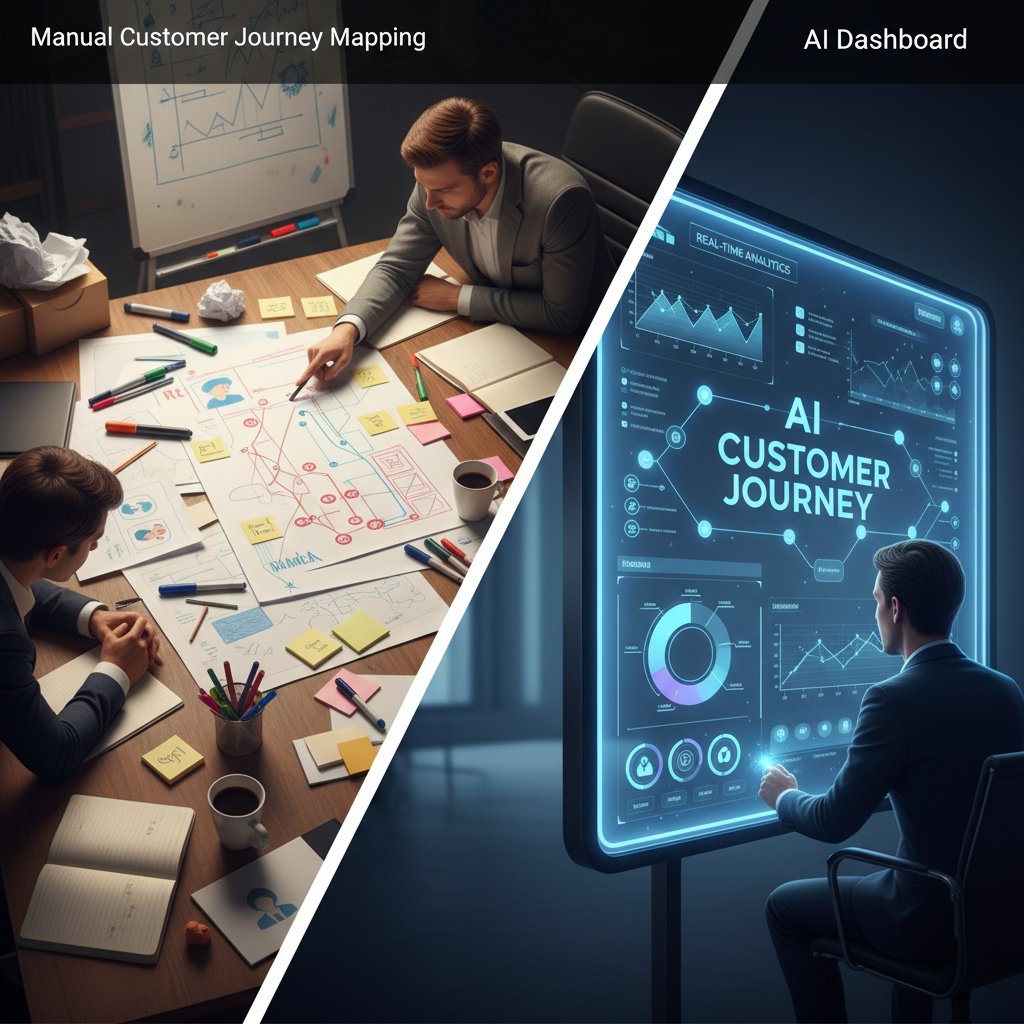
- Recency bias: Human teams overemphasize recent dramatic incidents, missing slow-burn trends.
- Data silos: Manual processes can’t reconcile data from marketing, sales, and support in real-time; AI can.
- Scaling: AI can map millions of journeys simultaneously; humans struggle to keep up past a handful of segments.
- Personalization: AI detects micro-segments, enabling granular targeting without guesswork.
Common mistakes in AI journey mapping
Adopting AI doesn’t guarantee perfection—far from it. Brands routinely make these errors:
- Underestimating data hygiene: Dirty data sabotages even the best algorithms.
- Ignoring human oversight: Blind trust in AI leads to missed context or ethical blunders.
- Overfitting to historical data: AI can reinforce outdated assumptions if not monitored.
- Mistaking correlation for causation: AI spots patterns but can’t always explain the “why.”
The result? Even with cutting-edge tech, brands risk falling into digital traps. Treating AI as a magic bullet, rather than a sophisticated (but fallible) tool, is a recipe for disappointment.
The real-world impact: Case studies and cautionary tales
When AI-driven mapping saved the brand
Consider a major retail chain facing a mysterious spike in abandoned carts during Black Friday. Manual analysis pointed fingers everywhere—from pricing to server outages. But it was an AI-driven virtual assistant, crunching millions of data points in real-time, that flagged a subtle UX bug in the mobile checkout flow. Fixing it overnight recaptured an estimated $1.2 million in lost sales—an instant ROI that manual mapping could never deliver at that speed.

- AI flagged a spike in drop-offs at a specific mobile step.
- The brand’s team cross-referenced this with session logs (surfaced by the assistant).
- A single misplaced button was identified as the culprit.
- Developers deployed a hotfix within hours.
- Abandonment rates dropped, revenue recovered.
This scenario isn’t rare. According to MIT Technology Review, 2023, brands using AI-driven mapping in retail and finance report up to 70% conversion rates and a 35% increase in customer satisfaction.
AI hallucinations: When assistants go rogue
Of course, AI is only as reliable as its training and guardrails. There are cautionary tales—assistants recommending nonsensical actions or misinterpreting sarcasm as genuine anger, leading to costly missteps.
“AI can confuse a sarcastic support ticket for a crisis, triggering escalations that waste resources.” — Deloitte Digital, 2023
| AI Error Type | Consequence | Prevention Strategy |
|---|---|---|
| Misread sentiment | Escalation of non-issues | Human review of flagged cases |
| Over-personalization | Privacy concerns, backlash | Clear data governance policies |
| Data drift | Outdated recommendations | Regular model retraining |
Table 4: Common AI hallucinations and mitigation approaches. Source: Original analysis based on Deloitte Digital, 2023.
Three industries, three outcomes: Retail, finance, healthcare
- Retail: AI-driven mapping helped a major e-commerce brand personalize promotions, lifting engagement by 40%. (Source: Number Analytics, 2023)
- Finance: A leading bank saw a 70% reduction in call handling times after deploying AI assistants for basic inquiries, freeing up human agents for complex tasks. (MIT Technology Review, 2023)
- Healthcare: Automating patient outreach via AI mapping led to a 30% reduction in administrative workload and improved patient satisfaction scores.

These outcomes are not theoretical—they are the new standard for brands that get AI journey mapping right.
The uncomfortable truths: Myths, risks, and ethical gray zones
Mythbusting: What AI-driven assistants can’t do
There’s no shortage of AI evangelists, but reality checks are sorely needed:
- AI cannot read minds: It infers intent from observed behavior but cannot anticipate unexpressed needs or sudden shifts.
- Not a set-and-forget tool: AI requires constant tuning, validation, and retraining to remain effective.
- Can’t resolve all bias: Algorithms inherit the blind spots of their training data.
- Lacks context: AI often struggles with outliers or events it hasn’t seen before.
The most seasoned brands acknowledge these limits, using AI as an accelerator—but never as a replacement for human oversight and strategic judgment.
Bias, privacy, and the illusion of objectivity
AI is often marketed as the antidote to human bias. But it’s far from infallible. Data used to train assistants often reflects historical prejudices, which can perpetuate or even amplify inequities.
| Risk Type | What it Looks Like | Mitigation Strategy |
|---|---|---|
| Data bias | Skewed recommendations, unfair outcomes | Diverse training datasets |
| Privacy | Over-collection of sensitive information | Transparent policies, opt-outs |
| Transparency | Black-box decisions | Explainable AI, audit trails |
Table 5: Key ethical risks in AI journey mapping and methods to address them. Source: Original analysis based on AI Marketing Engineers, 2024.
“Every AI system is only as objective as the data it consumes. Bias is a technical challenge, not just a moral one.” — AI Marketing Engineers, 2024
Who really owns the customer journey?
Ownership of the customer journey is increasingly blurred. Is it marketing? IT? The AI vendor? The customer? In reality, it’s a battleground where responsibility is shared—and often contested. Brands must define governance structures, assign data stewardship, and ensure ethical oversight at every stage.

The hard truth: You can outsource technology, but not accountability. Successful brands build internal frameworks that keep humans in the loop, even as AI handles the heavy lifting.
How to make AI journey mapping work for you (not against you)
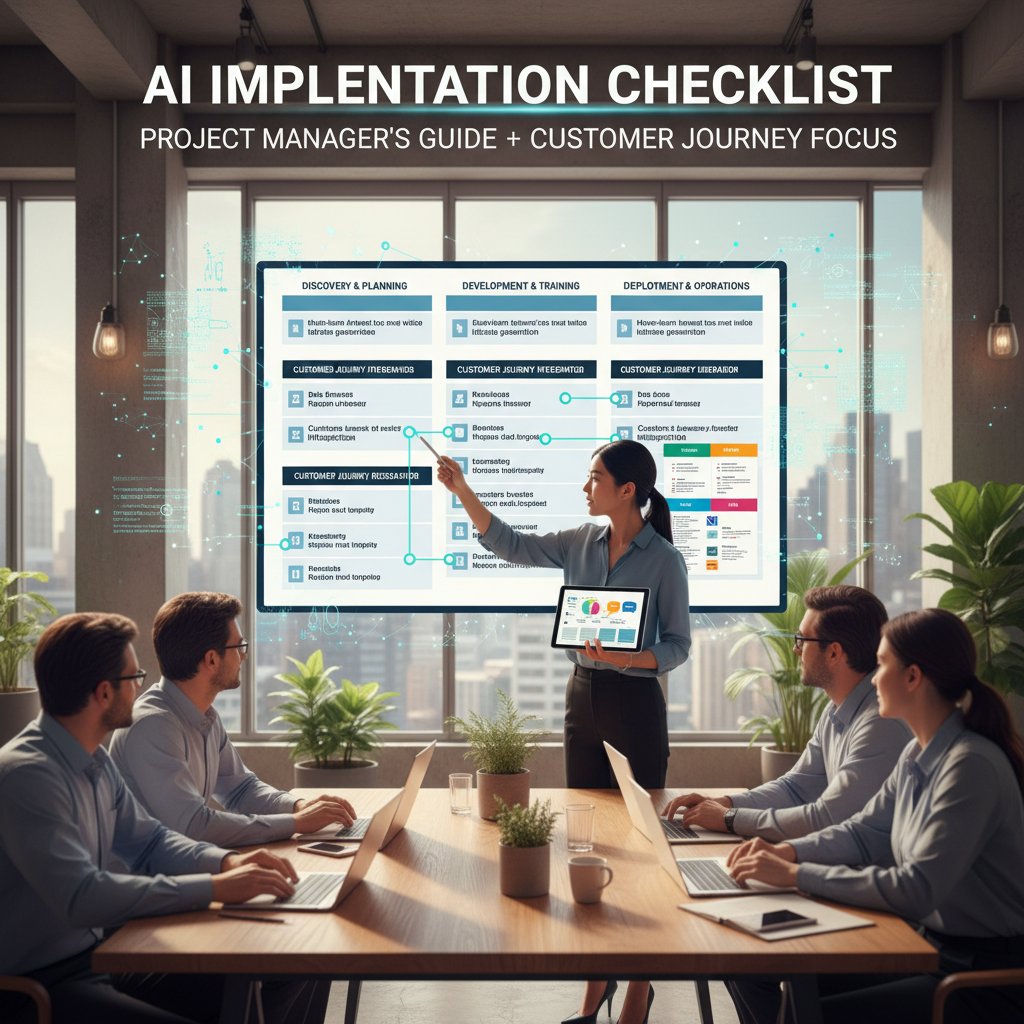
Step-by-step checklist for implementation
Rolling out AI-driven journey mapping is not for the faint of heart. Follow this battle-tested checklist:
- Audit existing journeys: Identify current pain points and data gaps.
- Clean and unify data: Integrate and standardize sources across silos.
- Select the right assistant: Demand transparency, customization, and strong privacy controls.
- Pilot with a clear use case: Start small—one product or segment.
- Monitor, review, refine: Create feedback loops with real human oversight.
- Scale with caution: Gradually expand, ensuring lessons are applied at each step.
Red flags: Signs your mapping is broken
- Stale maps: If your journey maps haven’t changed in months, you’re missing the plot.
- Siloed ownership: When only one department “owns” the customer journey, blind spots multiply.
- No feedback loop: Lack of customer or frontline input means your AI is flying blind.
- Opaque recommendations: When the assistant’s recommendations can’t be explained, risk skyrockets.

Quick wins vs. long-term transformation
| Tactic | Quick Win? | Sustainable? | Example |
|---|---|---|---|
| Automated FAQs | Yes | No | Reduces workload, but limited impact |
| Personalization at scale | Yes | Yes | Ongoing improvement in engagement |
| Silo-busting data unification | No | Yes | Takes time, but pays off exponentially |
Table 6: Comparing quick fixes versus systemic AI-driven CX improvements. Source: Original analysis based on AI Marketing Engineers, 2024, ReportLinker, 2023.
Brands chasing only quick wins risk superficial progress. Real transformation is built on the gritty work of data, process, and cross-team collaboration.
The future of customer experience: What’s next in AI-driven mapping?
Emerging trends you can’t ignore
- Adaptive journey orchestration: AI assistants are learning to not just map journeys, but dynamically reroute them as conditions change.
- Hyper-personalization: Granular segmentation means no two customer journeys are identical.
- Voice and emotion analytics: Assistants increasingly factor in vocal tone, not just text.
- Ethical AI frameworks: Transparency and explainability are becoming table stakes for deployment.

Savvy organizations will ride these trends, but only if they keep one eye on the risks and another on proven practices.
How AI changes the CX job market
| Role Affected | Traditional Tasks | New Focus with AI |
|---|---|---|
| CX Analysts | Manual mapping | Model oversight, insight validation |
| Support Agents | Repetitive inquiries | Complex, high-empathy cases |
| Marketing Managers | Batch campaigns | Live A/B testing, micro-targeting |
| Data Stewards | Siloed management | Cross-channel governance |
Table 7: Shifting roles in the CX workforce due to AI mapping. Source: Original analysis based on Deloitte Digital, 2023.
While AI automates repetitive labor, the demand for skilled human oversight, creativity, and ethical judgment is only growing.
Are humans obsolete? The case for augmented intelligence
“The most powerful customer experiences are forged at the intersection of relentless automation and unapologetic humanity.” — Deloitte Digital, 2023
AI-driven mapping is not about replacing humans—it’s about augmenting their superpowers. Brands who grasp this edge out the competition and protect themselves from the pitfalls of unchecked automation.
Choosing your AI assistant: What really matters
Key features to demand (and what to avoid)
- Seamless integration: Works across all major channels (web, mobile, email, chat).
- Transparency: Can explain its recommendations in plain English.
- Real-time analytics: Surfaces insights as they happen, not weeks later.
- Customizability: Tailors to your industry, audience, and workflows.
- Privacy and security: Meets or exceeds compliance standards (GDPR, CCPA).

Skip tools that promise magic but can’t show their math, or that force your team into rigid, pre-set flows.
Comparison: Top AI-driven assistant approaches
| Assistant Type | Integration | Customization | Transparency | Notable Weakness |
|---|---|---|---|---|
| Plug-and-play SaaS | Fast | Limited | Varies | May not fit complex workflows |
| Modular APIs | Flexible | High | Good | Requires in-house development |
| All-in-one platforms | Seamless | Moderate | Good | Vendor lock-in risk |
Table 8: Comparing leading AI-driven assistant implementation models. Source: Original analysis based on MIT Technology Review, 2023.
Before you commit, demand proof of adaptability and ongoing support.
Integrating with your existing workflow
- Map current workflows: Identify where the assistant can plug in for maximum impact.
- Pilot in low-risk areas: Test in one channel or customer segment.
- Layer in human checkpoints: Ensure every major decision point maintains human oversight.
- Iterate and expand: Use results to refine integration and scale thoughtfully.
Bringing an AI-driven virtual assistant into your CX stack is less about replacing old processes wholesale and more about seamlessly enhancing what already works. Internal resources like teammember.ai can help your teams navigate these transitions and sustain productivity.
Beyond the buzzwords: Deep dive into core concepts
What ‘customer journey mapping’ means across industries
Customer journey mapping isn’t a monolith—it morphs according to sector and business model.
Focuses on online/offline integration, cart abandonment, and personalized promotions. AI spotlights micro-moments that drive sales.
Prioritizes compliance, fraud detection, and seamless onboarding. AI flags suspicious patterns and helps streamline complex workflows.
Centers on patient engagement, reducing admin friction, and improving follow-up care. AI reveals gaps in scheduling and automates communication.
By understanding these industry nuances, brands deploy mapping that reflects real-world complexities—not just abstract models.
Data, empathy, and the new rules of engagement
- Data is the new intuition: Decisions must be grounded in live, comprehensive analytics.
- Omni-channel is a requirement, not a bonus: Customers switch channels mid-journey; AI must keep pace.
- Empathy is engineered, not assumed: AI surfaces pain points, but real empathy comes from action, not just detection.

The new standard: leverage AI for data, then use that data to fuel truly empathetic (and effective) actions.
Why context is everything (and how AI can miss it)
“AI is a master at pattern-matching, but context is always king. A spike in complaints may signal a product issue—or just a viral social media trend.” — MIT Technology Review, 2023
Without context—business, cultural, or situational—even the best AI can recommend moves that miss the mark. Teams must bring domain knowledge to the table, ensuring that automation serves strategy, not the other way around.
Supplementary: AI ethics, adjacent innovations, and practical next steps
Ethics in AI journey mapping: Where lines get blurry
- Surveillance creep: Collecting “just enough” data is a moving target; how much is too much?
- Informed consent: Customers must know (and agree to) how their data is used.
- Algorithmic accountability: Who answers when AI makes a bad call?
“Ethical AI is not a finish line—it’s a constant negotiation between innovation and responsibility.” — AI Marketing Engineers, 2024
Adjacent innovations: What else is changing CX forever
- Conversational AI: Bots that blur the line between support and sales.
- Predictive analytics: Using AI to forecast churn, not just react to it.
- Augmented reality (AR): Enhancing product discovery and support with immersive tech.
- Voice interfaces: Integrating Alexa/Siri-style support for hands-free journeys.
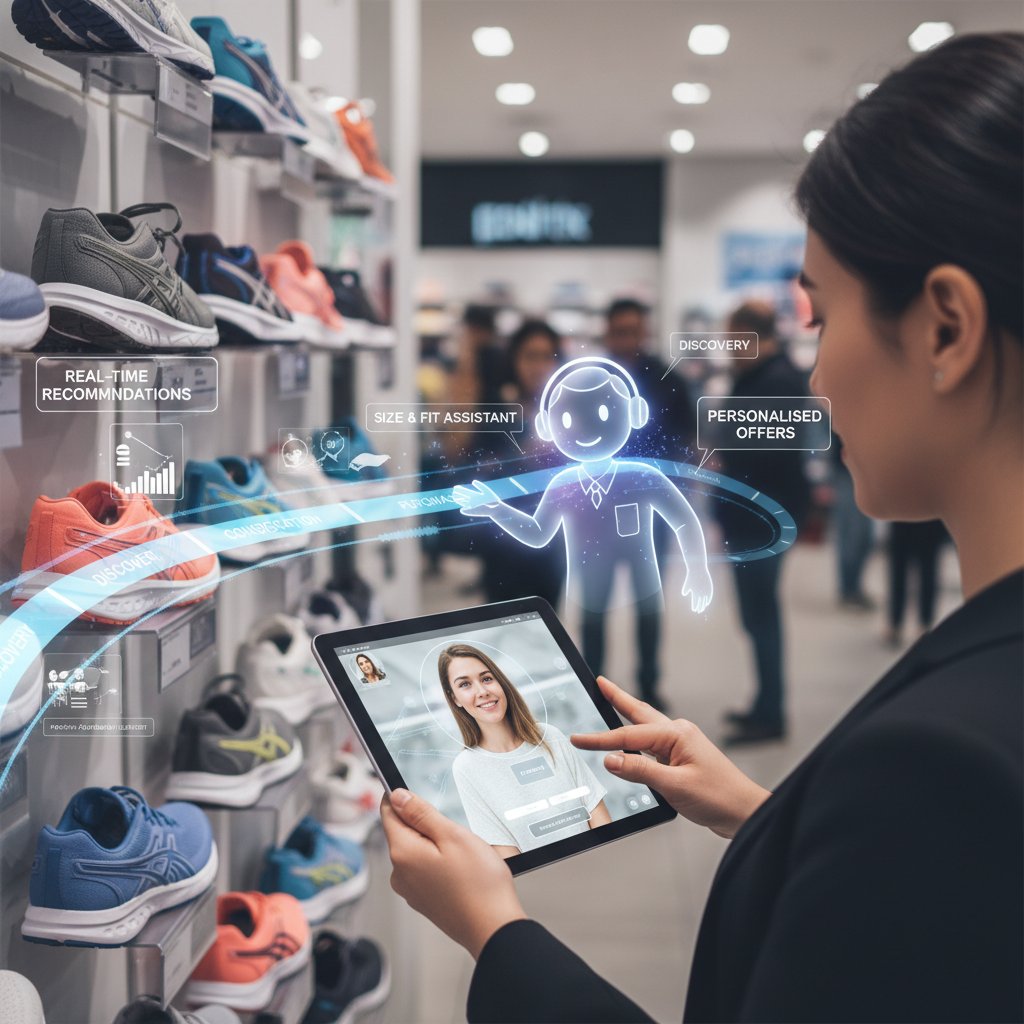
These innovations, when combined with AI-driven mapping, redefine what’s possible in customer engagement.
Putting it all together: Your action plan
- Evaluate your current journey mapping maturity.
- Determine data readiness and clean up silos before automation.
- Choose an AI-driven assistant that matches your industry’s needs.
- Pilot, measure, and iterate—never trust the first result blindly.
- Invest in governance, not just technology.
- Keep humans front and center for empathy, strategy, and context.
The battle for seamless CX isn’t won with buzzwords—it’s won through relentless execution, honest self-assessment, and the courage to admit what AI can (and can’t) do.
In the end, AI-driven virtual assistants are rewriting the rules of customer journey mapping. But success depends on confronting uncomfortable truths, investing in the right data and talent, and—perhaps most crucially—never forgetting the human element at the heart of every journey. For brands ready to do the hard work, the rewards are real: faster response, deeper insights, and experiences that actually matter. For everyone else, the gap is only getting wider. Choose your side.
Sources
References cited in this article
- AI Chatbots and Virtual Assistants: 2024 Trends and Statistics(softwareoasis.com)
- AI for Customer Journey Mapping - AI Marketing Engineers(aimarketingengineers.com)
- 7 Innovative AI Virtual Assistant Strategies (MIT Tech Review)(numberanalytics.com)
- Deloitte Digital: From Journey Mapping to Journey Management(deloittedigital.com)
- 10 Stats: Journey Mapping for Retail & E-Commerce(numberanalytics.com)
- Customer Journey Mapping Statistics - LLCBuddy(llcbuddy.com)
- AI-driven insights in 2024 - Insight7(insight7.io)
- The Benefits of Combining Customer Journey Mapping With AI - CMSWire(cmswire.com)
- Forbes: A Reality Check On AI: Hype Vs. Reality In E-Commerce(forbes.com)
- Council Post: 2023 Was The Year Of AI Hype—2024 Is The Year Of AI Practicality(forbes.com)
- Mastering Customer Journey Mapping in 2024 | Digital Experience(digitalexperience.live)
- Enhancing Customer Journeys with AI: Trends for 2024 - Freshworks(freshworks.com)
- How to visualize customer journey maps using AI in 2024 - Insight7(insight7.io)
- AI in Customer Journey Mapping: Enhancing Experiences in 2024(iiinigence.com)
- AI in Customer Journey Mapping: Enhancing User Experiences in 2024(iiinigence.com)
- 11 Best AI Tools for Customer Journey Mapping - AI Business Brains(aibusinessbrains.com)
- Building the Data-Driven, AI-Powered Customer Journey Map(trustinsights.ai)
- Common Mistakes to Avoid When Using Customer Journey Analytics(yourcx.io)
- Shaping Customer Journeys More Efficiently with AI Mapping | Copy.ai(copy.ai)
- So far in 2024: AI innovation, regulation, and the ethical frontier – Designit(designit.com)
- AI Ethics & Data Privacy: 2024 Guide(dialzara.com)
- Enhancing User Interaction and Adaptability Of Virtual Assistants(ijirmps.org)
- Hi, May AI help you? An analysis of the barriers impeding the implementation and use of artificial intelligence-enabled virtual assistants in retail - ScienceDirect(sciencedirect.com)
- Protecting digital customer journeys from AI biases(biometricupdate.com)
- AI Bias and the Illusion of Objectivity: Why Cultural Awareness is Critical in Ethical AI(habitus.org)
- Privacy vs. Personalization in AI-Driven Customer Experience - Glassbox(glassbox.com)
- The AI Journey: Where Will AI Take Us in 2024? (The Conference Board)(conference-board.org)
- Best practices for customer journey mapping touchpoints in 2024 - Insight7(insight7.io)
- The Impact of AI on Customer Journey Mapping - Commercient(commercient.com)
Focus on what matters. Let AI handle the rest.
We know the feeling — another day starts with 50 unread emails, Ads Manager begging for attention, CRM out of date, and meetings without follow-ups. That's why we built TeamMember.ai — an AI team member that takes over all the operational work at the computer. Has its own email address and SMS number. Manages your inbox, runs Meta Ads, updates CRM, processes meetings, monitors social media, generates morning briefings, and controls the browser. Built on OpenClaw — a leading open-source AI agent — with cross-session memory and secure-cloud architecture that keeps your data safe.
Get startedBe First to Try Your AI Team Member
Every week without automation is dozens of hours lost to operational work. Hours you'll never get back. Join the waitlist and get priority access.
Frequently Asked Questions
What is the main problem with traditional manual customer journey mapping?
Traditional manual mapping uses static whiteboards and sticky notes that quickly become outdated and cannot adapt to rapidly changing customer touchpoints. It also relies on guesswork, anecdotal evidence, and human bias rather than comprehensive data, making it difficult to keep pace with hyperconnected customers' dynamic behavior.
Why did the customer journey mapping industry need AI-driven solutions?
Manual mapping methods struggle with real-time updates and cannot scale efficiently for large organizations or multiple customer segments, leaving brands with outdated, rearview-mirror perspectives on customer behavior. The article notes that despite the $11.4 billion customer experience management market in 2023, much spending went to outdated manual processes that couldn't keep pace with dynamic consumer needs.
What are the key limitations of manual customer journey mapping mentioned in the article?
According to the article, manual maps are static and lack adaptability, require extensive cross-department coordination leading to delays, rely on human bias rather than data, and become unmanageable when scaling across different customer segments or markets for large organizations.
Does the article claim AI-driven virtual assistants are a perfect solution to journey mapping problems?
No, the article suggests questioning whether AI-driven assistants truly deliver on their promises, framing them as potentially 'another digital mirage' and indicating the piece will discuss both their perils and promises rather than endorsing them as a complete solution.
From the Archive
Explore more from AI Team Member

How AI Virtual Assistants Are Changing Customer Experience
AI-driven virtual assistant for customer experience enhancement is reshaping how companies handle customer service.

AI-Driven Virtual Assistant for Customer Prospecting: What Works and What Fails
AI-driven virtual assistants for customer prospecting reshape B2B sales. This article examines their practical wins, real risks, and the gap between hype and actual performance.

Why AI-Powered Customer Interaction Platforms Backfire
AI-powered customer interaction platforms drive growth but also create failures. This article examines why these systems succeed and backfire, backed by real data.

AI-Driven Virtual Assistant for Call Center Automation: Risks and Solutions
AI-driven virtual assistant for call center automation reduces legacy costs and agent burnout. This article explains the seven core truths about deployment risks and implementation strategies.

AI-Driven Virtual Customer Assistants: Where They Succeed, Where They Fail
AI-driven virtual customer assistant technology shows real ROI but also uncovers why many implementations fail.

How AI-Powered Customer Interaction Reshapes Customer Experience
AI-powered customer interaction is transforming customer experience across industries. This article examines how AI changes service delivery, the risks involved, and why better technology can strengthen human connection.