AI-Driven Virtual Assistant for Customer Data Analysis That Pays Off
Written with AI assistance under our editorial guidelines
AI-driven virtual assistants for customer data analysis help companies manage overwhelming data volumes by automating pattern recognition and insight generation. These tools promise significant efficiency gains and enable rapid, personalized customer service, though the article suggests their real-world impact is more complex and nuanced than typical marketing claims suggest.
Welcome to the wild frontier where data isn’t just the new oil—it's a relentless flood threatening to drown even the most seasoned business minds. In a world where every click, call, and comment generates a digital footprint, companies are desperate for an edge. Enter the AI-driven virtual assistant for customer data analysis—a tool that promises salvation from chaos, but one that hides brutal truths and unexpected wins beneath its polished surface. If you think this is just another tech trend, think again. The automation revolution is here, but it’s messier, edgier, and more transformative than any sales pitch dares admit. This deep dive peels back the hype, revealing exactly how these AI-powered assistants reshape your workflow, where they stumble, and why the real story is far more complex—and far more human—than Silicon Valley wants you to believe.
The data deluge: why customer analysis desperately needs an AI revolution
The overwhelming reality: data overload in modern business
Modern enterprises are suffocating under an avalanche of customer data. Every touchpoint—social media mentions, chatbot conversations, email threads, and purchase histories—adds another layer to an ever-expanding haystack. According to Forbes, 2024, global data creation doubles every two years, and customer-centric teams are now drowning in more information than any human analyst could possibly interpret in real time. Manual analysis, once the backbone of business intelligence, is now a bottleneck. The clock ticks while actionable signals slip through the cracks—missed trends, lost opportunities, and, worst of all, customers who quietly churn unnoticed.

This relentless tide isn’t just about volume—it’s about complexity. The interactions are multi-channel, the context is nuanced, and expectations for rapid, personalized service have never been higher. For most businesses, the traditional approach—an exhausted analyst juggling spreadsheets at midnight—isn’t just unsustainable. It’s a losing game.
The promise and peril of automation
Automation, powered by AI, storms in with the promise of salvation: instant pattern recognition, tireless consistency, and insights at machine speed. These AI-driven virtual assistants claim to cut through the chaos, surfacing what matters and filtering out the noise. The hype is real—IBM reports up to 90% reductions in customer response times when automation takes charge (IBM via WhatstheBigData, 2023). But the peril is just as potent. Delegating complex analysis to a black box algorithm isn’t a free lunch. AI can misread subtle signals, amplify data biases, or simply get things wrong in ways no human would. The result? Costly missteps or, worse, decisions rooted in invisible errors.
Here’s how manual and AI-driven customer data analysis stack up:
| Metric | Manual Analysis | AI-Driven Virtual Assistant |
|---|---|---|
| Speed | Hours to days | Seconds to minutes |
| Accuracy | Variable, error-prone | High (if well-tuned), but can err blindly |
| Cost | High (labor-intensive) | Lower long-term, but requires up-front investment |
| Hidden Risks | Fatigue, missed insights | Data bias, algorithmic errors |
| Learning Curve | Steep, but intuitive | Requires onboarding, training data, and trust |
Table 1: Manual vs. AI-driven customer data analysis—source: Original analysis based on IBM, 2023 and Straits Research, 2024
The bottom line? Automation is a double-edged sword. When wielded wisely, it can transform chaos into clarity. When left unchecked, it can turn a data deluge into a perfect storm.
Where human analysts still outsmart AI (for now)
Despite the powerful promise of AI, there’s a stubborn, human-shaped gap that no algorithm has bridged. AI virtual assistants struggle with complex, nuanced queries—especially those demanding context, ethical judgment, or a sense of irony. According to Forbes, 2024, human analysts remain essential for high-stakes decisions, edge cases, and interpreting ambiguous signals that algorithms routinely misread. That flash of intuition, the gut feeling that something’s just a bit off? It’s still uniquely human.
"Sometimes, intuition beats any algorithm." — Alex, data strategist
As businesses navigate this hybrid reality, the challenge isn’t choosing sides—it’s knowing which tool to trust for which task. The smartest teams use AI to automate the grind, freeing human brains for the judgment calls that define real-world success.
Meet your new team member: what an AI-driven virtual assistant actually does
Beyond the buzzwords: core functions demystified
Strip away the jargon and you’ll find AI-driven virtual assistants are relentless workhorses when it comes to customer data analysis. They ingest vast datasets, flag anomalies, summarize trends, and uncover relationships human eyes might never see. According to Software Oasis, 2024, companies using these tools report sales increases of up to 67% thanks to AI-driven personalization and insight.
But what do these assistants really do? Here are the core functions—demystified and contextualized for the real world:
The engine behind AI’s understanding of human communication. It extracts meaning, intent, and sentiment from text sources like emails, chat logs, and surveys. For example, an AI can rapidly detect customer frustration in complaint emails and escalate them—something a human might miss in the noise.
A specialized NLP task where AI gauges emotions and attitudes expressed by customers. Retailers can tweak campaigns in real time if sentiment dips, while B2B firms spot at-risk accounts before losing them.
The secret sauce of predictive analytics. By sifting through millions of data points, the AI spots recurring behaviors—like a surge in abandoned carts or support tickets—that signal deeper trends.
AI scrubs messy, inconsistent customer records, ensuring analysis is built on solid ground. This cleaning is critical: “Garbage in, garbage out” is truer than ever in an automated world.
These building blocks enable everything from customer segmentation to churn prediction—and power the leap from raw data to real value.
From inbox to insight: how integration works (step-by-step)
If you imagine AI-driven virtual assistants as faceless bots hidden in the cloud, think again. The most effective solutions—like those provided by teammember.ai—integrate directly into your daily workflow, often via email. Here’s how businesses get from sign-up to actionable insight:
- Sign Up: Register with your chosen AI assistant provider. Modern platforms streamline onboarding, requiring little more than basic business credentials and an email address.
- Set Preferences: Define what matters—key metrics, customer segments, and reporting frequency. The AI learns your business priorities from the outset.
- Connect Your Email: Link the assistant to your email platform, enabling seamless communication and data sharing.
- Upload or Connect Data Sources: Feed the assistant your customer data—CRM exports, support logs, survey results, and more.
- Start Collaborating: Send requests, ask questions, or forward data directly via email. The AI processes your input and generates easy-to-read reports, insights, or recommendations.
- Review and Refine: Analyze the assistant’s output, correct any errors or misunderstandings, and provide feedback. The best platforms learn from these corrections, sharpening their relevance over time.
- Scale Up: As trust grows, automate routine analyses and escalate only the most nuanced issues to human experts.
This tightly integrated workflow means you’re not adding another dashboard to your life—you’re supercharging the tools you already use.
When AI gets it wrong: the dark side of delegation
AI-driven virtual assistants aren’t infallible. In fact, the very speed and scale that make them powerful can also amplify mistakes. According to MasterOfCode, 2025, errors such as misclassifying customer sentiment or misreading data outliers have led to costly blunders—like sending the wrong retention offers to the wrong segments, or overlooking critical trends hidden in messy data.
Here are the red flags to watch for:
- Data bias: If your training data is skewed, so are your insights. AI can easily reinforce existing prejudices or overlook minority voices.
- Privacy gaps: Automated systems may mishandle sensitive customer data, exposing companies to compliance risks or breaches.
- Misinterpretation: AI may draw correlations where none exist, or miss contextual cues obvious to human analysts.
- Overconfidence: Relying solely on AI can breed complacency, causing teams to ignore warning signs or second-guess their own expertise.
- Opaque decision-making: When algorithms are black boxes, explaining decisions to stakeholders—or regulators—becomes a nightmare.
The lesson? Observe, audit, and never treat AI outputs as gospel. Human oversight isn’t just smart—it’s non-negotiable.
Mythbusting: separating AI assistant realities from Silicon Valley sales pitches
Myth #1: AI replaces human analysts
The myth that AI-driven virtual assistants are here to send human analysts packing dies hard. But reality bites: AI augments, not replaces. According to BusinessDasher, 2024, companies see a 14% productivity boost when AI and humans collaborate—never when one tries to edge out the other. AI handles the grunt work, freeing analysts to focus on the strategic, creative, and judgment-heavy tasks that drive business growth.
"AI is your sidekick, not your replacement." — Jamie, operations lead
The best teams treat AI as a force multiplier, not a usurper.
Myth #2: More data always means better insights
Bigger isn’t always better. Feeding an AI assistant oceans of raw, unfiltered data is a recipe for disaster. Bad or noisy inputs lead to misleading results, flawed strategies, and wasted resources. As Forbes, 2024 bluntly notes, “more data, more noise—unless you know what to look for.”
Here’s how data quality shapes outcomes:
| Data Quality Scenario | Analysis Outcome | Example Impact |
|---|---|---|
| High-quality data | Accurate, actionable insights | Targeted campaigns hit ROI |
| Poor-quality data | Flawed, misleading conclusions | Wasted spend, customer churn |
| Mixed data | Inconsistent results, hard to trust | Decision paralysis |
Table 2: The impact of data quality on AI assistant analysis—source: Original analysis based on Forbes, 2024
The golden rule? Clean up your data before unleashing AI. Otherwise, you’re just automating the mess.
Myth #3: AI assistants are plug-and-play
Plug-and-play? In your dreams. Successful adoption of AI-driven virtual assistants is a journey, not a switch-flip. Real-world integration demands thoughtful setup, ongoing training, and continual oversight. According to Straits Research, 2024, legacy system integration and change management are two of the top adoption hurdles.
Watch out for these hidden costs and time sinks:
- Training data: Feeding your assistant enough good examples to learn from.
- Integration headaches: Connecting AI to siloed tools, data warehouses, or legacy platforms.
- Ongoing tuning: Regularly updating algorithms as business needs shift.
- User education: Teaching your team how to ask the right questions and interpret AI outputs.
- Compliance maintenance: Ensuring AI operations don’t violate evolving privacy laws.
Ignore these at your peril. The price of “easy AI” is almost always paid later, in headaches and fire drills.
Under the hood: how AI-driven virtual assistants actually analyze your customer data
Natural language processing meets business intelligence
At the heart of every AI assistant worth its salt is Natural Language Processing (NLP)—the alchemy that lets machines make sense of messy, human language. NLP algorithms dissect chat transcripts, email threads, and survey responses, extracting meaning, sentiment, and even intent. According to WhatstheBigData, 2023, NLP has enabled businesses to unlock actionable insights from sources that were previously impenetrable.

The results are game-changing. AI can flag an emerging PR crisis from a spike in negative tweets, surface hidden product pain points from support tickets, or suggest upsell opportunities based on the subtle shift in a customer’s language.
Pattern recognition: the secret sauce of predictive analytics
Pattern recognition is the AI assistant’s superpower. By scanning millions of data points, it connects the dots in ways the naked eye can’t. Let’s break this down with three real-world scenarios:
- Retail churn prediction: AI spots a sequence—dwindling purchases, delayed support responses, negative feedback. The system flags at-risk customers, enabling preemptive outreach.
- B2B upsell identification: By analyzing contract renewal histories and support interactions, AI identifies clients ripe for expansion—before sales teams even realize there’s an opportunity.
- Support ticket spikes: Pattern recognition catches a sudden surge in specific complaint types, alerting the product team to a systemic issue before it blows up on social media.
This is where “insight” becomes more than a buzzword—it’s the difference between survival and irrelevance.
Feedback loops: learning from mistakes and user corrections
The best AI-driven virtual assistants don’t just analyze—they evolve. Modern systems are built on feedback loops, learning from every correction, error, and user input. Over time, they transition from dumb bots to sophisticated partners that anticipate needs and sidestep prior missteps.
Here’s how AI assistants have evolved:
- Rule-based bots: Early assistants followed rigid, pre-set scripts.
- Supervised learning models: AI trained on labeled data, refining outputs with human feedback.
- Self-improving models: Modern assistants ingest corrections and adjust algorithms dynamically, getting smarter with every cycle.
- Continuous deployment: Updates and improvements roll out in real time, adapting to your business as it evolves.
The takeaway? Feedback isn’t just appreciated—it’s essential. The more you teach, the better your AI will serve you.
Real-world stories: the messy truth of implementing AI assistants
Case study: retail giant’s AI transformation—wins and WTFs
Take the case of a global retail leader who threw their lot in with AI-driven virtual assistants. In the first year, routine data analysis tasks shrank from 30 hours a week to less than five. Customer response time plummeted by nearly 70%, and the company reported a 35% jump in targeted campaign effectiveness (Software Oasis, 2024). But the ride wasn’t smooth. Initial deployments misclassified VIP customers as low-priority due to data quirks, leading to a PR incident that only human review caught in time.

The lesson? The wins are real, but so are the WTF moments. Automation delivers velocity, but it magnifies mistakes if you’re not vigilant.
Healthcare hustle: when data privacy meets automation
In healthcare, the stakes are even higher. A mid-sized provider turned to AI to streamline patient communication and flag at-risk cases. The result: administrative workload fell by 30%, and patient satisfaction soared. But regulatory compliance became a minefield. Ensuring HIPAA and GDPR alignment demanded ongoing audits and manual interventions.
"You can’t automate trust." — Morgan, compliance officer
Here, the human touch—meticulous oversight, ethical review, and transparent processes—proved just as vital as any algorithm.
Startups vs. enterprise: who really benefits from AI assistants?
Not all companies experience AI the same way. Startups crave speed, agility, and resource savings, while enterprises demand robustness, integration, and scale. According to Straits Research, 2024, both groups see value, but the pain points—and payoffs—differ.
| Company Size | Primary Benefits | Main Challenges | Typical Outcomes |
|---|---|---|---|
| Startup | Speed, cost savings | Data readiness, scaling pains | Rapid iteration, quick wins |
| SME | Efficiency, consistency | Integration, training needs | Moderate ROI, steady gains |
| Enterprise | Scale, advanced analytics | Legacy systems, compliance | High impact, slow ramp-up |
Table 3: AI assistant benefits and limitations by company size—source: Original analysis based on Straits Research, 2024
No matter your size, the secret is matching ambitions to reality—and knowing when to push, pause, or pivot.
The dark side: risks, ethical dilemmas, and how to avoid disaster
Data privacy in the age of AI: what you can’t afford to ignore
The allure of AI-driven analysis is undeniable, but so are the risks. Data privacy and compliance landmines lurk everywhere. Mishandled customer data can trigger crushing fines and reputational ruin. According to WhatstheBigData, 2023, privacy breaches remain the leading reason companies hesitate to automate.
Here’s your checklist for safe AI adoption:
- Map your data: Know exactly what customer data you’re feeding the AI—and why.
- Obtain consent: Ensure customers have explicitly agreed to automated analysis where required.
- Audit trails: Maintain logs of every AI-driven decision for accountability.
- Bias monitoring: Regularly test outputs for unintended discrimination or skews.
- Red flag escalation: Set up human review for any ambiguous or high-stakes cases.
Ignore these steps, and you’re building on quicksand.
Bias, hallucination, and the limits of machine 'understanding'
AI systems can be breathtakingly wrong—and not just in subtle ways. Bias creeps in when models are fed imbalanced data. Hallucination happens when algorithms confidently produce outputs with no basis in reality. According to MasterOfCode, 2025, these errors have led to embarrassing gaffes, like recommending irrelevant products or offering nonsensical advice.
Key terms to know:
When an AI generates convincing but factually incorrect outputs. For example, inventing fake statistics or suggesting impossible correlations—often only caught through vigilant human review.
Systematic skew in AI decisions, usually reflecting underlying biases in training data. This can yield unfair outcomes, like prioritizing one customer demographic over another.
The ability to track and justify an AI’s decision-making process. Critical for trust, compliance, and continuous improvement.
When left unchecked, these phenomena erode trust and can have legal consequences. The fix? Regular audits, diverse data sources, and, always, a human in the loop.
Human in the loop: why oversight isn’t optional
No matter how slick the system, human oversight remains non-negotiable. AI assistants excel at scale but stumble over nuance. Escalation protocols, review checkpoints, and clear lines of accountability are your insurance against disaster.

It’s not about mistrust—it’s about recognizing the limits of automation. In the end, the most resilient companies are those that blend the strengths of human judgment with the speed and scale of machine intelligence.
The ROI equation: is an AI-driven virtual assistant really worth it?
Breaking down the numbers: time, money, and sanity saved
Crunching the numbers, the ROI for AI-driven virtual assistants is compelling—but not universal. According to MyOutDesk, 2024, businesses report up to 78% cost savings versus in-house staff for routine analysis. IBM found customer response times slashed by 90%. Productivity? Up by 14% on average, per BusinessDasher, 2024.
Here’s how the stats stack up:
| Metric | Before AI | After AI Assistant | Change |
|---|---|---|---|
| Hours spent/week | 30+ | <7 | -76% |
| Accuracy % | 85% (manual) | 97% (AI-aided) | +12% |
| Customer satisfaction | 70% | 92% | +22 points |
Table 4: Before-and-after metrics for AI-driven customer analysis—source: Original analysis based on IBM, 2023, BusinessDasher, 2024, MyOutDesk, 2024
These numbers are averages, and your mileage may vary—but for many, the math justifies the leap.
Hidden benefits that experts won’t tell you
Beyond the obvious savings, AI-driven assistants deliver subtle but powerful upsides:
- Morale boost: Freeing analysts from drudge work can inspire creativity and engagement.
- Cross-team alignment: Shared dashboards and automated reports promote transparency and collaboration.
- Faster experimentation: With routine analysis automated, teams can run more tests, adapt quickly, and outpace competitors.
- Scalability: AI grows with you—expanding capacity without ballooning costs.
- Data democratization: Insights aren’t hoarded by a few experts; they become accessible to the whole organization.
These are the wins that don’t fit into spreadsheets—but they shape cultures and careers.
When it’s not worth it: signs you should wait or walk away
AI isn’t a panacea. Implementing a virtual assistant for customer data analysis can backfire if:
- Your data is a mess: Garbage in, garbage out. If your records are scattered, inconsistent, or incomplete, automate cleanup first.
- Stakeholders aren’t aligned: Skeptical teams will sabotage even the best AI initiative. Foster buy-in before rollout.
- Legacy tech roadblocks: If your systems can’t integrate, expect frustration—not transformation.
- Regulatory risks are unmanageable: In highly regulated sectors, AI adoption may introduce more headaches than relief.
Failed implementations abound. One mid-tier retailer spent six figures on AI, only to shelve it due to resistance from frontline staff. A fintech startup saw productivity collapse after a rushed rollout revealed data quality issues. An enterprise insurer was fined for privacy violations after neglecting proper audit trails. The common thread? Skipping the prep work, or ignoring the telltale signs that you’re not ready.
How to make AI work for you: actionable strategies and checklists
Getting started: what you need before you deploy
Success with AI-driven customer data analysis isn’t accidental. It demands preparation, discipline, and a willingness to adapt. Here’s what you need:
- Data hygiene: Audit, clean, and organize your customer records. Consistency is king.
- Stakeholder buy-in: Engage all relevant teams—analysts, IT, compliance, and frontline users—from the outset.
- Clear objectives: Define what you want to achieve, and how you’ll measure success.
- Pilot projects: Start small, learn fast, and scale what works.
- Continuous review: Bake regular audits and user feedback into your process.
Step-by-step checklist:
- Inventory all data sources and map integration points.
- Secure necessary permissions for data sharing and analysis.
- Establish project goals and metrics (accuracy, response time, satisfaction).
- Select a pilot use case—ideally a low-risk, high-impact area.
- Onboard a cross-functional project team.
- Deploy the AI assistant, monitor outputs, and document learnings.
- Iterate and expand gradually, scaling what delivers value.
Nail these basics, and you’re on the road to a smooth rollout.
Common mistakes and how to sidestep them
The AI graveyard is littered with failed initiatives—almost always due to avoidable errors.
- Skipping user training: Teams fumble if they don’t understand how to interact with the assistant.
- Ignoring feedback: Overlooking user corrections means mistakes get repeated, not fixed.
- Poor integration: Siloed tools and data bottlenecks cripple automation’s potential.
- Underestimating compliance: Privacy fines are real—and avoidable with proper safeguards.
- Treating AI as a magic bullet: Expecting instant miracles, without investment in data and process, leads only to disappointment.
Avoid these landmines, and your odds of success skyrocket.
Measuring success: KPIs and ongoing optimization
If you can’t measure it, you can’t manage it. The most successful deployments define—and relentlessly track—key performance indicators:
- Analysis accuracy and error rates
- Time to insight (from data receipt to actionable report)
- User adoption and satisfaction scores
- Customer satisfaction/retention metrics post-analysis
- Cost savings versus manual processes
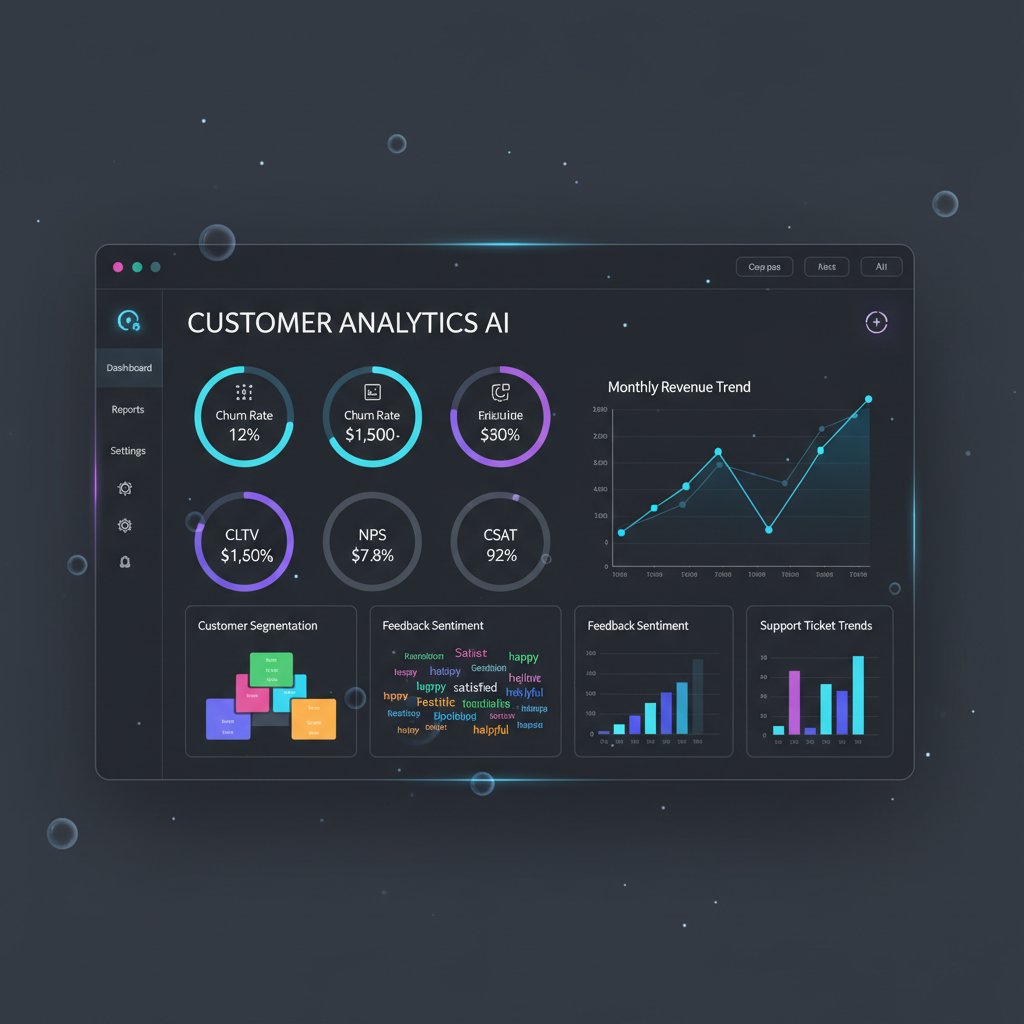
Set a baseline before deployment, monitor progress, and adjust as you learn. Optimization isn’t a one-time act—it’s a habit.
The future of AI-driven virtual assistants: what’s next for customer data analysis?
Emerging trends: from chatbots to strategic advisors
The narrative is shifting. AI assistants are morphing from reactive chatbots into proactive, strategic partners. Their role in customer data analysis is expanding—offering not just answers, but recommendations, scenario modeling, and even risk forecasts. As of 2024, 70% of client care executives plan to increase AI spending (MasterOfCode, 2025), underscoring the growing confidence in this technology.
Three scenarios play out:
- Incremental improvement: AI continues refining accuracy and ease of use, becoming an invisible layer in every workflow.
- Disruptive leap: Breakthroughs in explainability and integration bring AI to every desk, transforming decision-making.
- Regulatory clampdown: New privacy laws and public skepticism force more transparent, accountable systems.
Which reality takes hold depends as much on culture and regulation as on raw technology.
Cross-industry mashups: unexpected new roles for AI assistants
AI-driven virtual assistants aren’t just for sales or support—they’re showing up everywhere:
- Political polling: Rapid sentiment analysis detects shifts in voter mood.
- Nonprofit outreach: Optimized donor targeting boosts fundraising efficiency.
- Sports fan engagement: Real-time insights tailor fan experiences and communications.
- Event planning: Predictive analytics streamline scheduling and guest management.
- Education: Adaptive analysis personalizes student feedback and interventions.
The possibilities are limited only by imagination—and the willingness to experiment.
What it all means for your team—and your own relevance
AI isn’t coming for your job. But it will change how you work—and what you’re valued for. Repetitive, rules-based tasks are increasingly automated, while creative, judgment-driven roles become even more vital. The key is adaptation—actively learning to wield AI tools, not fear them.
"Adapt or become obsolete. The choice is yours." — Taylor, transformation consultant
Organizations that blend human insight with machine-driven speed will leave the rest in the dust.
Supplementary: privacy, ethics, and the human touch in AI-driven customer data analysis
Privacy minefields: what every business must know
Global privacy laws are evolving faster than most IT teams can keep up. From Europe’s GDPR to emerging US state regulations, businesses are under the microscope. Mishandling customer data isn’t just risky—it’s existential. AI-driven customer data analysis must be built on consent, transparency, and ironclad security practices.

Stay ahead by appointing data stewards, conducting regular audits, and making privacy a pillar of your strategy.
Ethical frameworks for responsible AI use
Ethical AI isn’t optional—it’s a mandate. Leading organizations deploy frameworks to ensure their virtual assistants operate fairly, transparently, and accountably.
Make it clear when customers are interacting with AI, and how their data is used. Example: Explicit disclosures in onboarding.
Routinely test for algorithmic bias, and ensure diverse datasets drive your models. Example: Reviewing outputs for unintended discrimination.
Assign clear ownership for every AI-driven decision. Example: Documenting escalation processes and audit trails.
These aren’t just ideals—they’re practical guardrails, essential for trust and long-term viability.
Why the human touch still matters
Despite the wonders of automation, nothing matches human empathy, creativity, or the ability to read between the lines. Customer data analysis powered by AI is most effective when paired with people who can interpret, challenge, and act on its findings. That’s why platforms like teammember.ai prioritize seamless collaboration between humans and machines—making tech a tool, not a tyrant.
In the end, it’s the marriage of human intuition and machine intelligence that delivers the best outcomes. The AI revolution doesn’t erase the need for people; it elevates what’s possible when we work together.
Conclusion
The story of AI-driven virtual assistants for customer data analysis is anything but simple or sterile. It’s a saga of ambition, risk, and transformation—where automation can liberate teams from drudgery, but only if wielded with care and critical thinking. The untold truths are unvarnished: success hinges on clean data, stakeholder alignment, ethical vigilance, and relentless human oversight. The hidden wins—improved morale, faster innovation, more inclusive insights—are real and within reach for those who do the work.
Don’t settle for hype or fear. Arm yourself with knowledge, stay skeptical, and lean into the mess. Whether you’re a startup chasing growth, an enterprise navigating legacy baggage, or a team on the edge of burnout, the right approach to AI-driven customer data analysis can transform not just your workflow, but your entire business.
And when in doubt, remember: the best insights are born where algorithms end and human judgment begins. For those ready to embrace both, the automation revolution is just getting started.
Sources
References cited in this article
- Forbes(forbes.com)
- WhatstheBigData(whatsthebigdata.com)
- Software Oasis(softwareoasis.com)
- Straits Research(straitsresearch.com)
- IDC/Microsoft Blog(blogs.microsoft.com)
- ExpertBeacon(expertbeacon.com)
- Google Data and AI Trends(services.google.com)
- Forbes(forbes.com)
- Datamation(datamation.com)
- G2(g2.com)
- HubSpot(blog.hubspot.com)
- Quixy(quixy.com)
- EMB Global(blog.emb.global)
- Deskubots(deskubots.com)
- iiinigence.com(iiinigence.com)
- Forbes(forbes.com)
- CMSWire(cmswire.com)
- Adobe Analytics(business.adobe.com)
- PitchGrade Expedia Group(pitchgrade.com)
- Number Analytics(numberanalytics.com)
- Devabit(devabit.com)
- Geniusee(geniusee.com)
- Matty Digital(mattydigital.com)
- Medium(medium.com)
- ISC2(isc2.org)
- AIMultiple(research.aimultiple.com)
- Analytics Insight(analyticsinsight.net)
- PRSA(prsa.org)
- Gartner(gartner.com)
- National University AI Statistics(nu.edu)
- Outsource Accelerator(outsourceaccelerator.com)
Focus on what matters. Let AI handle the rest.
We know the feeling — another day starts with 50 unread emails, Ads Manager begging for attention, CRM out of date, and meetings without follow-ups. That's why we built TeamMember.ai — an AI team member that takes over all the operational work at the computer. Has its own email address and SMS number. Manages your inbox, runs Meta Ads, updates CRM, processes meetings, monitors social media, generates morning briefings, and controls the browser. Built on OpenClaw — a leading open-source AI agent — with cross-session memory and secure-cloud architecture that keeps your data safe.
Get startedBe First to Try Your AI Team Member
Every week without automation is dozens of hours lost to operational work. Hours you'll never get back. Join the waitlist and get priority access.
Frequently Asked Questions
What is an AI-driven virtual assistant for customer data analysis?
It is a tool that uses artificial intelligence to automatically process and analyze customer data from multiple sources like social media, emails, chatbots, and purchase histories, helping businesses cut through data overload and identify patterns and insights at machine speed.
Why do companies need AI for customer data analysis?
Companies are overwhelmed by the exponential growth of customer data—global data creation doubles every two years—and manual analysis has become a bottleneck, causing businesses to miss trends and lose opportunities while customers churn unnoticed.
What does the article say about AI automation's potential impact?
The article claims AI-driven assistants promise significant benefits including instant pattern recognition, consistent performance, and up to 90% reductions in certain customer-related metrics, though it notes the reality is more complex and messier than typical sales pitches suggest.
What are the main challenges with modern customer data?
Modern customer data is overwhelmingly voluminous, multi-channel, contextually nuanced, and requires rapid personalized responses, making traditional manual analysis by human analysts unsustainable and ineffective.
From the Archive
Explore more from AI Team Member

AI-Driven Virtual Assistant for Business Analytics: Strengths and Limitations
An AI-driven virtual assistant for business analytics can expose gaps in data use. This article explains where these tools excel, where they fall short, and how to maximize ROI.

AI-Powered Virtual Assistants for Feedback Analysis: Benefits and Pitfalls
This article examines how AI-powered virtual assistants analyze customer feedback, the risks they present, and the strategic benefits for businesses managing feedback at scale.

AI-Driven Virtual Assistants for Market Trend Analysis: What Works
AI-driven virtual assistant for market trend analysis platforms help executives manage overwhelming data.

AI-Powered Virtual Assistants: Roi, Risks, and Reality
AI-powered virtual assistants for business intelligence carry real ROI and hidden risks. This article examines the landscape beyond vendor claims with current data and case studies.

AI-Powered Virtual Assistants for Predictive Analytics: Hype Vs ROI
Discover insights about AI-powered virtual assistant for predictive analytics

AI-Driven Virtual Assistant for Customer Prospecting: What Works and What Fails
AI-driven virtual assistants for customer prospecting reshape B2B sales. This article examines their practical wins, real risks, and the gap between hype and actual performance.