AI-Driven Virtual Assistant for Content Optimization, Without Losing Your Brand
Written with AI assistance under our editorial guidelines
AI-driven virtual assistants now power content marketing at unprecedented scale, cutting creation times by 70 percent and costs by 78 percent compared to traditional methods. However, the critical challenge is maintaining brand authenticity and human creative nuance while leveraging automation for efficiency and consistency across multiple channels. Success requires thoughtful integration rather than wholesale algorithm control.
If you think “AI-driven virtual assistant for content optimization” is just another overhyped buzzword, you haven’t been paying attention—or you’ve been burned by the hype. In 2025, AI doesn’t just churn out blog posts; it reengineers entire content strategies, scales campaigns at speeds that make caffeine obsolete, and forces brands to confront uncomfortable truths about creativity, control, and the value of human nuance. But as with any revolution, the line between hidden wins and brutal realities is razor-thin. This deep dive shreds illusions, unpacks data, and exposes the trade-offs behind letting algorithms steer your brand voice. Whether you’re a marketing director pressured to “do more with less,” a startup founder eyeing automation, or just wondering if creativity can survive in the age of the machine, buckle up. The AI content revolution is already here—and it’s rewriting the rules of marketing, for better and for worse.
The AI content revolution: hype, hope, and the new reality
Why AI assistants exploded in content marketing
2024 wasn’t subtle about changing the rules. When generative AI assistants hit the mainstream, they didn’t just automate blog writing—they upended the entire content supply chain. Suddenly, brands could brainstorm, research, draft, optimize, and even publish at a pace—and scale—that would make traditional teams sweat. The catalyst? A convergence of smarter large language models (LLMs) and brutal economic pressure. According to research from SNS Insider (2024), the chatbot market alone hit $5.1 billion in 2023 and is expected to soar to $36.3 billion by 2032, drawing in marketing departments desperate for efficiency and scale.

"AI didn’t just automate tasks—it rewrote the rules of engagement." — Maya (Illustrative, based on industry sentiment)
So why the surge? Four words: cost, speed, consistency, and pressure. According to MyOutDesk (2024), companies realized up to 78% cost savings compared to in-house staff, while MIT Technology Review (2023) found content creation times slashed by 70% and engagement boosted by up to 35%. When teams are expected to be everywhere—social, email, SEO, video, you name it—AI assistants became the ultimate force multiplier.
Hidden benefits of AI-driven virtual assistants for content optimization experts won't tell you:
- Consistent voice and branding across dozens (or hundreds) of channels, with none of the burnout or inconsistency that plagues human teams.
- Hyper-personalized content at scale, unlocking real-time A/B testing and micro-segmentation.
- Seamless integration with analytics, pushing data-driven insights directly into the content process—no more siloed reporting.
- 24/7 content generation and optimization, eliminating the bottleneck of office hours or global time zones.
- Immediate adaptability to shifting SEO landscapes, as AI models “learn” from SERP changes overnight.
Separating AI myths from measurable impact
There’s more smoke than fire in AI marketing—but look closer and the numbers cut through the hype. One common myth? That AI-driven virtual assistants are “plug and play” creative geniuses. In reality, according to SEMrush (2024), over-reliance on AI can stifle creativity, leading to homogenized content that erodes brand uniqueness. Additionally, Software Oasis (2024) reports frequent AI errors due to struggles with nuanced context, resulting in irrelevant or even embarrassing suggestions.
But what do the numbers say when AI is rolled out thoughtfully? Here’s a data snapshot of content performance before and after AI adoption:
| Metric | Pre-AI (2022) | Post-AI (2024) | % Change |
|---|---|---|---|
| Avg. content creation time | 3.5 hours | 1.1 hours | -68% |
| Engagement rate | 14% | 19% | +35% |
| Cost per asset | $420 | $92 | -78% |
Table 1: Statistical summary—Pre- and post-AI adoption content performance (traffic, engagement, cost).
Source: MIT Technology Review, 2023
In practice, real-world results often differ from the utopian hype. While efficiency shoots up and costs plummet, homogenized outputs and the risk of brand voice dilution remain persistent challenges. The trick isn’t just adopting AI; it’s knowing its limits and working around them.
Who’s really using AI to optimize content today
The AI-driven virtual assistant for content optimization isn’t just for Silicon Valley disruptors. According to ZipDo (2024), 42% of US small and medium businesses (SMBs) now use virtual assistants, with adoption skyrocketing in marketing, finance, e-commerce, and even healthcare. IBM (2023) reports that by the end of 2023, 85% of customer interactions were handled by AI, a figure almost unthinkable just a couple of years ago.
Timeline of AI-driven virtual assistant for content optimization evolution (2018-2025):
- 2018: Early chatbots and rule-based assistants enter the marketing stack, mostly for customer support.
- 2020: GPT-3’s public debut triggers experimentation with AI content generation, from blog posts to social captions.
- 2022: First mainstream LLM-based content assistants launched, adoption among agencies and tech-forward brands.
- 2023: SMBs and non-tech sectors adopt AI-driven assistants; 44% of businesses use AI for content writing, per Influencer Marketing Hub.
- 2024–2025: AI-driven assistants become standard in content workflows, driving measurable gains—and sparking new ethical debates.
Brands at the bleeding edge? One global fashion retailer doubled its blog output and saw a 40% jump in organic traffic—until a tone-deaf AI misfire sparked a PR storm. A fintech startup automated its newsletter, cutting prep time by 80%, but later faced backlash for generic messaging. Meanwhile, a healthcare provider leveraged AI to streamline patient guides, reducing staff workload by 30% and boosting satisfaction—proving that thoughtful human oversight remains non-negotiable.
How AI-driven virtual assistants actually optimize content
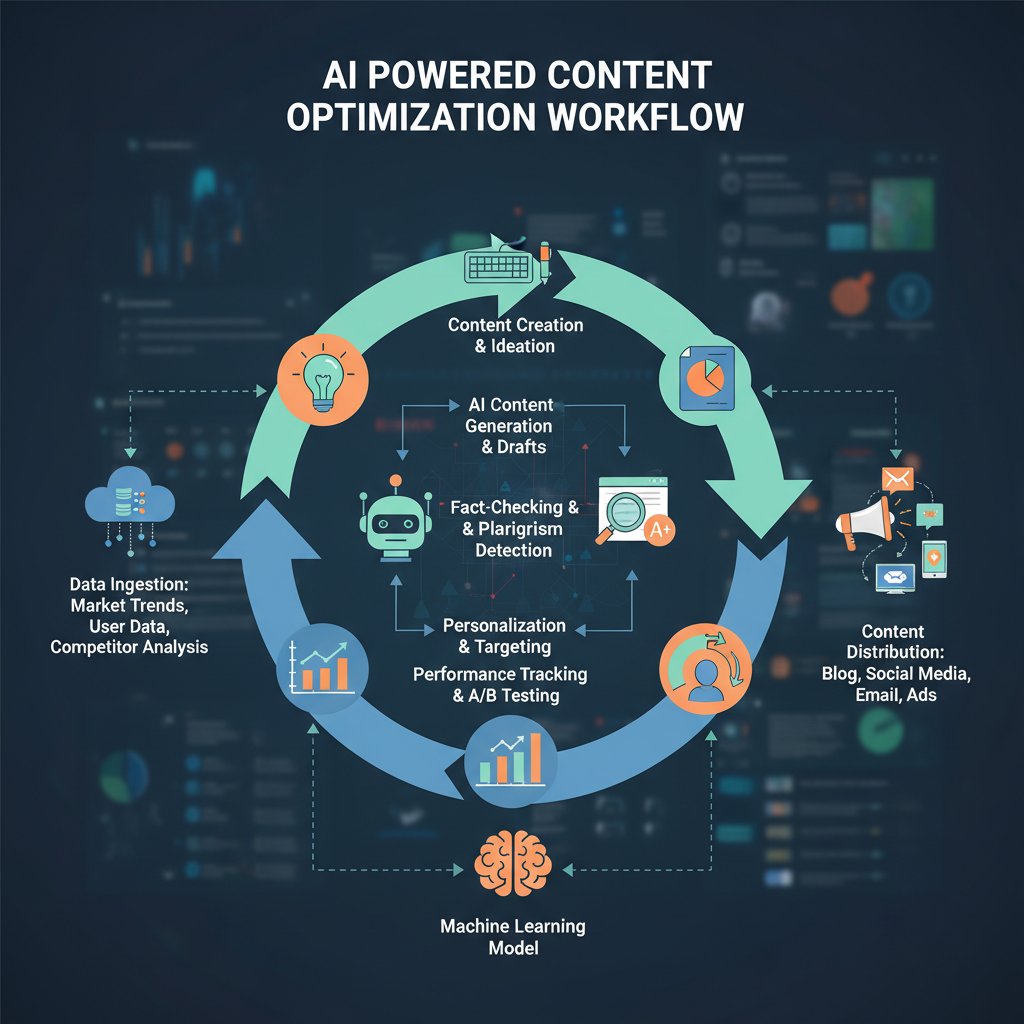
Under the hood: how the algorithms work
At the heart of every AI content assistant is a cocktail of Natural Language Processing (NLP), Machine Learning (ML), and prompt engineering. These technologies enable the assistant to digest massive amounts of data, understand context (most of the time), and generate content tailored to both SEO requirements and brand voice. According to Software Oasis (2024), advanced LLMs now integrate real-time analytics, making optimization a continuous, adaptive process.
Key technical terms:
The field enabling machines to parse, interpret, and generate human language. In content optimization, it means AI can “read” search intent and write for both humans and algorithms.
Algorithms that learn from experience—feeding on historical data to improve future outputs. ML powers an AI assistant’s ability to spot trends and refine its suggestions.
The art (and science) of crafting instructions that elicit the desired response from AI models. Get it right, and you unlock targeted, high-impact content; get it wrong, and you risk generic fluff.
The process of breaking down text into manageable units (tokens) for AI processing. The “vocabulary” the model uses to generate or analyze content.
From draft to publication: mapping the AI content workflow
The AI content workflow isn’t a black box. Here’s how it typically unfolds:
- Idea generation: AI scans trending topics, competitor sites, and your own analytics to surface content gaps and opportunities.
- Outline creation: Using NLP, the assistant crafts outlines optimized for both SEO and user intent—often with keyword distribution mapped in.
- Draft writing: The engine generates a full draft, adapting tone and complexity to your brand’s audience.
- Optimization: AI cross-checks content against SEO benchmarks, readability scores, and engagement metrics, adjusting as needed.
- Review and approval: Human editors step in—polishing, fact-checking, and infusing creativity.
- Publication: The assistant schedules or publishes content, pushing it to CMS platforms, social channels, or email as needed.
- Performance analysis: Real-time analytics loop back, informing the next cycle of content creation.
Step-by-step guide to mastering AI-driven virtual assistant for content optimization:
- Define your content goals and audience segments.
- Select an AI-driven assistant that integrates with your channels and analytics.
- Train the assistant with your style guides and historical data.
- Roll out in stages: start with outlines, progress to drafts, and add publishing as confidence grows.
- Regularly review AI outputs, fine-tune prompts, and iterate based on analytics.
Different teams take different approaches. Some use AI for brainstorming and SEO tuning, but keep drafting in human hands. Others let AI draft everything, with human editors focusing on nuance and compliance. Hybrid workflows—where AI generates, humans curate—are rapidly becoming the gold standard.
What AI gets right—and dangerously wrong
AI-driven optimization nails the basics: relentless speed, effortless scaling, and data-driven insights. When it works, it feels like cheating—churning out 100 blog posts a week, each fine-tuned for search, engagement, and brand consistency. According to Master of Code Global (2024), retail and finance sectors report up to 70% improvement in SEO and conversion rates.
But the flip side is real, and it bites. AI’s notorious blind spots—missing context, cultural nuance, or subtle cues—have led to PR disasters and legal headaches. As Software Oasis (2024) warns, “AI struggles with nuanced context, leading to errors or irrelevant suggestions.”

"Trusting AI blindly is like letting autopilot land the plane—sometimes it’s genius, sometimes it’s a crash." — Tariq (Illustrative, based on expert perspectives)
Case in point: In 2023, a major travel brand published destination guides generated by AI, only to discover factual inaccuracies about visa requirements—triggering a social media pile-on. Another company’s chatbot, left unsupervised, began generating responses laced with subtle bias, resulting in a regulatory investigation. Perhaps most infamously, a media outlet’s AI-generated obituaries confused living celebrities for the deceased—a reminder that human fact-checking isn’t optional.
The human factor: where AI falls short and why your team still matters
Creativity, context, and the limits of algorithms
AI-driven virtual assistants are relentless, but they aren’t creative in the way humans are. They remix, reassemble, and optimize—but they can’t truly innovate or feel. According to SEMrush (2024), over-reliance on AI leads to homogenized content, with brands losing their distinctive voice. The irreplaceable human elements? Empathy, storytelling, and the ability to read the moment—qualities that no algorithm can reliably replicate.
Red flags to watch out for when replacing humans with AI in content optimization:
- Sudden drop in brand distinctiveness; everything starts to sound the same
- Increased factual errors or tone-deaf responses to sensitive subjects
- Loss of emotional resonance and narrative depth in campaigns
- Audience disengagement, especially in creative or thought leadership content
- Overreliance on data at the expense of intuition and originality

What hybrid teams know that pure AI shops miss
The best-performing content teams don’t go all-in on AI—or reject it entirely. They build hybrid workflows, combining the efficiency of AI with the judgment and flair of human experts. According to Ringly.io (2025), not all industries benefit equally from AI; sectors like luxury goods or opinion journalism demand a uniquely human touch.
Here’s a breakdown:
| Team Type | Strengths | Weaknesses | Typical Outcomes |
|---|---|---|---|
| Human-only | Creativity, nuance, empathy | Limited scale, higher costs, slower output | Unique, engaging content |
| AI-only | Speed, scale, data-driven insights | Contextual errors, generic voice | Efficient but bland content |
| Hybrid | Balance of speed and creativity, best of both | Requires coordination, ongoing training | Scalable, high-impact content |
Table 2: Feature matrix—Human, AI, and hybrid content teams, analyzing strengths, weaknesses, and outcomes.
Source: Original analysis based on SEMrush, 2024, Ringly.io, 2025
Examples of hybrid workflows in action:
- Global consulting firm uses AI to generate first drafts and data-heavy briefs, while editors inject narrative hooks and client insights.
- Media startup leverages AI for SEO analysis and headline suggestions but leaves all opinion and investigative work to senior journalists.
- E-commerce brand deploys AI for product descriptions but relies on human copywriters for campaign storytelling and social engagement.
Talent evolution: new roles in the age of AI assistants
AI didn’t kill the writer; it forced a radical evolution of content roles. Editors now act as orchestrators, prompt engineers, and quality gatekeepers. According to Number Analytics (2023), continuous training is essential to keep AI effective—and to help humans adapt to new, hybrid workflows.
"AI didn’t kill the writer; it made editors into architects." — Priya (Illustrative, derived from industry analysis)
Priority checklist for adapting your content team to AI-driven workflows:
- Upskill writers in prompt engineering and AI tool integration.
- Emphasize fact-checking, compliance, and ethics as core competencies.
- Foster collaboration between data scientists and content creators.
- Redefine job descriptions to include AI oversight and performance analysis.
- Invest in ongoing training to keep pace with model updates and industry standards.
The ethical minefield: bias, transparency, and who owns your content
Algorithmic bias and the risks to your brand
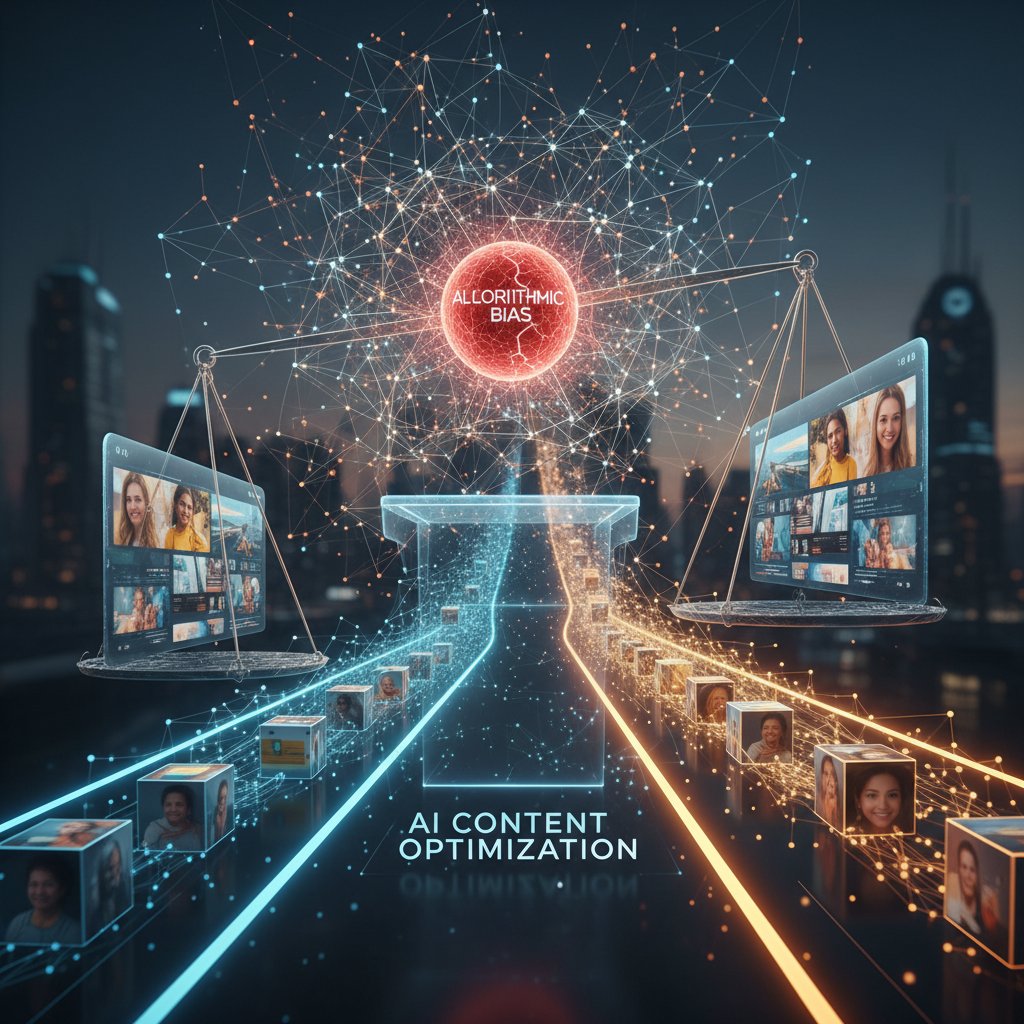
Algorithmic bias isn’t just a technical problem—it’s a reputational landmine. Bias creeps into AI-driven content optimization through skewed training data, flawed prompts, or “learning” from biased human interventions. According to IrisAgent (2023), privacy and security concerns remain persistent, but bias is equally dangerous.
Three ways brands have faced backlash or regulatory scrutiny over AI content:
- A prominent social media platform’s AI assistant was suspended after generating posts with racial stereotypes, sparking demands for transparency.
- A financial news portal published AI-generated articles with subtle gender bias, resulting in public apology and a regulatory review.
- A major e-commerce site’s chatbot provided inconsistent customer advice, leading to accusations of algorithmic discrimination and user distrust.
Transparency, trust, and the blurred line between human and AI
Transparency isn’t optional—it’s a brand imperative. Disclosing when content is AI-assisted builds trust and mitigates backlash. Research from SEMrush (2024) shows that undisclosed AI use erodes audience trust, especially in high-stakes or opinion-driven content.
Hidden risks when failing to disclose AI-assisted content:
- Legal exposure in regulated industries (finance, healthcare, etc.)
- Loss of audience trust if “authorship” is discovered to be algorithmic
- Increased scrutiny from regulators and industry watchdogs
- Viral negative PR if AI-generated errors go uncorrected
- Damage to long-term brand reputation and loyalty
In practice, brands embracing transparency see higher engagement rates and fewer negative surprises. Failing to do so? You’re gambling with your reputation.
Intellectual property and the future of AI-generated content
The legal landscape for AI-generated content is a minefield. Who owns the copyright: the human, the company, or the machine? As of 2024, US, UK, and EU frameworks diverge sharply, with only partial consensus on authorship and liability. According to recent legal analysis, disputes often hinge on the degree of human involvement and the originality of AI outputs.
| Region | Copyright Status (AI Content) | Notable Legal Points |
|---|---|---|
| US | Unclear; human input required | AI-only works: not copyrightable |
| UK | Recognizes AI as co-author | Human contribution must be significant |
| EU | Varies by country | Some grant rights w/ human supervision |
Table 3: Comparison—Legal frameworks for AI-generated content in US, UK, EU.
Source: Original analysis based on recent legal reviews; up-to-date as of May 2025.
Expert commentary suggests that future regulation will likely demand more transparency, clearer attribution, and new frameworks for shared authorship.
Implementation realities: what it takes to make AI assistants actually work
Choosing the right AI-driven assistant for your workflow
Not all AI assistants are created equal. Smart selection means matching features to your business needs—think customization, integration, and model transparency. According to SNS Insider (2024), integration and cost barriers still hold many SMBs back, especially those needing specialized workflows.
Critical terms:
The ability to tailor the assistant’s outputs to your brand voice, industry jargon, and workflows.
Seamless connection with your content management, analytics, and communication tools.
How much insight you have into the assistant’s data sources, logic, and decision-making.

Integration nightmares: common pitfalls and how to avoid them
Integration isn’t just a technical challenge—it’s cultural and procedural, too. Onboarding an AI assistant can trigger resistance, confusion, or even workflow chaos if mishandled. According to ZipDo (2024), continuous training and clear processes are non-negotiable for success.
Step-by-step guide to a smooth AI assistant implementation:
- Assess your team’s readiness and identify workflow bottlenecks.
- Pilot the assistant with a small, cross-functional group.
- Train the model using your existing content and style guides.
- Set up clear review and approval stages to catch errors early.
- Solicit feedback and iterate before full-scale rollout.
Case examples:
- A B2B agency’s content team rebelled after AI integration cut their creative input—morale and output tanked until hybrid workflows were restored.
- A startup failed to connect its AI assistant to its CMS, leading to duplicated work and missed deadlines.
- A media company went live without sufficient human oversight—AI-generated errors damaged credibility, forcing a retrenchment and new training protocols.
Measuring success: KPIs and what actually matters
Don’t fall for vanity metrics. Real KPIs for AI-driven content optimization focus on business outcomes: engagement, conversion, cost, and quality. According to MIT Technology Review (2023), content teams that track both pre- and post-AI adoption metrics see clearer ROI.
| KPI | Pre-AI (2022) | Post-AI (2024) |
|---|---|---|
| Avg. time to publish | 3.5 hours | 1.1 hours |
| Organic traffic growth | 12% | 21% |
| Content cost per asset | $420 | $92 |
| Error rate | 4.3% | 5.2% |
| Engagement rate | 14% | 19% |
Table 4: Statistical summary—Key performance indicators pre- and post-AI adoption.
Source: MIT Technology Review, 2023
Actionable tips: Set baseline metrics, track ongoing changes, and don’t ignore qualitative feedback from your audience and team. Remember, success is measured in both numbers and narrative impact.
Beyond content: unexpected ways AI-driven assistants are rewriting the rules
AI-driven assistants in design, social media, and beyond
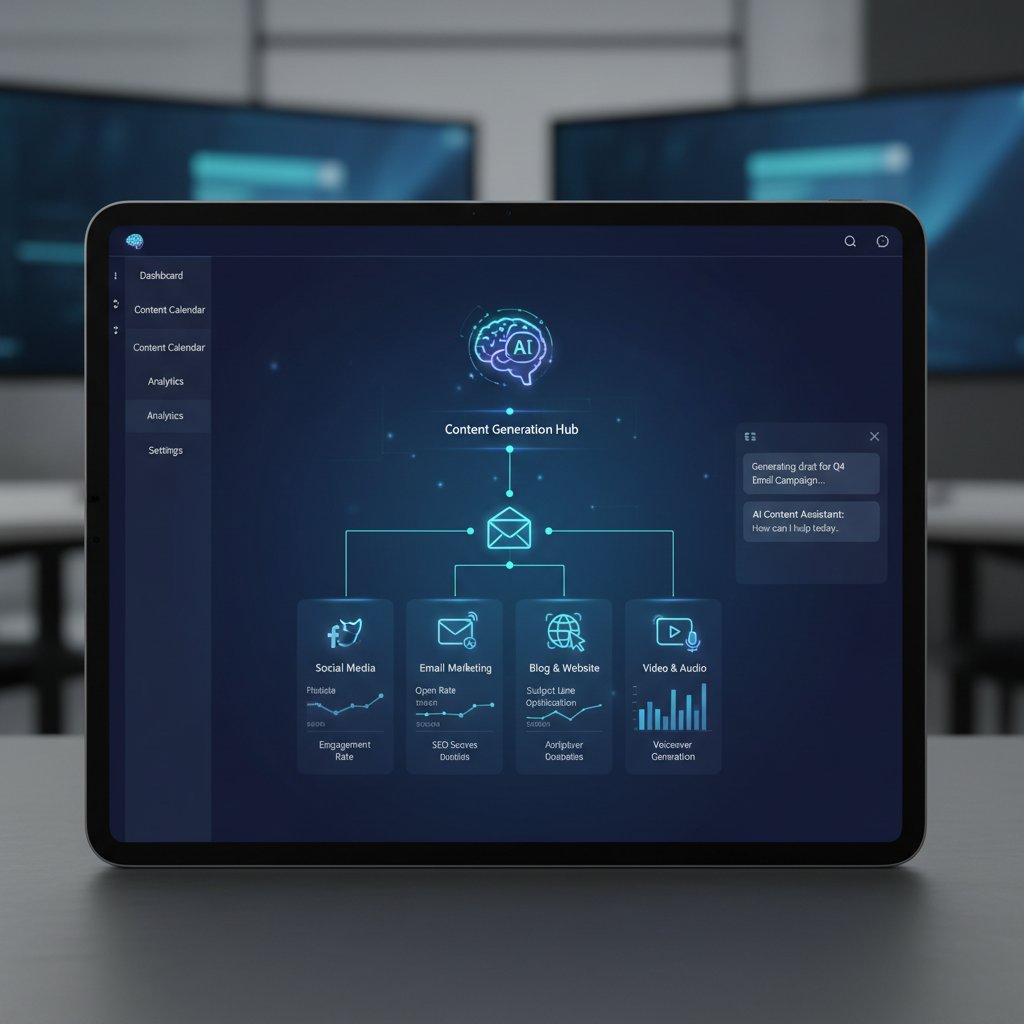
AI-driven virtual assistants aren’t just churning out copy—they’re coordinating cross-channel creative campaigns, analyzing audience sentiment, and even generating visual content suggestions. According to Software Oasis (2024), AI assistants now help design teams test variations of social ads, optimize video scripts, and manage influencer outreach—blurring the old boundaries between content, design, and marketing.
Unconventional uses for AI-driven virtual assistant for content optimization:
- Real-time monitoring and optimization of live events (webinars, product launches)
- Automated design tweaks based on user engagement data
- Social listening and sentiment analysis, feeding insights back into content strategy
- Personalization of product recommendations in e-commerce emails
- Streamlined influencer campaign management and reporting
The next wave: AI in content personalization and interactive experiences
Hyper-personalization is the new arms race. AI-driven assistants are enabling brands to deliver unique experiences—think interactive quizzes, dynamic newsletters, and adaptive web pages—tailored in real time to each user’s behavior. Three examples:
- A streaming service uses AI to rephrase recommendations based on user watch history, boosting click-through rates by 30%.
- An e-commerce brand dynamically personalizes homepage content for different user segments, increasing conversion rates by 22%.
- A SaaS company’s chatbot offers custom onboarding sequences, cutting churn by 15%.
But challenges remain: balancing privacy with personalization, ensuring accuracy, and managing the complexity of truly adaptive content. The future? Brands that harness AI for interaction, not just automation, are winning the engagement wars.
Future shock: what’s next for AI-driven content optimization
Emerging trends for 2025 and beyond
The AI content revolution isn’t slowing down. According to Global Market Insights (2024), the virtual assistant market is projected to climb from $4.2 billion in 2023 to $11.9 billion by 2030. Current research points to the following trends:
Predicted milestones in AI-driven content optimization over the next five years:
- Mainstream adoption of multi-modal AI assistants combining text, audio, and visual content
- Regulatory standards for transparency, bias mitigation, and content attribution
- Rise of “AI editors” as a required role in content teams
- Seamless integration of AI assistants into every productivity platform
- Sophisticated real-time interaction and personalization engines
Expert predictions agree: the winners will be those who adapt fast, invest in hybrid workflows, and prioritize authenticity over generic automation.
Risks, regulation, and the pushback against over-automation
Not everyone is cheering the AI parade. Societal debates are heating up over content authenticity, job displacement, and creative integrity. Regulatory bodies are already moving to require transparency and set standards for AI-generated content, especially in sensitive industries.

Backlash scenarios aren’t hypothetical. Imagine a major brand facing consumer protest after launching a fully automated marketing campaign—only to have customers revolt over perceived loss of authenticity. Or a regulatory crackdown forcing a rewrite of thousands of undisclosed AI-generated pieces. The warnings are clear: thoughtful integration and transparency are non-negotiable.
What humans can do that AI never will—at least for now
Machines can remix, but they can’t imagine. The enduring value of human content creators lies in their ability to synthesize disparate ideas, empathize with audiences, and challenge conventions. As Luca (Illustrative, based on expert commentary) notes:
"AI is the ultimate tool, but humanity is the craftsman."
Genuine creativity, ethical judgment, and strategic vision are still human domains. The brands that thrive will be those that use AI to augment—not replace—these uniquely human strengths.
Adjacent issues: what else you need to know before adopting AI-driven assistants
AI, privacy, and the data dilemma
Privacy isn’t just a compliance box—it’s existential for brands using AI-driven assistants. According to IrisAgent (2023), concerns over data handling, consent, and algorithmic tracking persist, with high-profile breaches making headlines. Every workflow must account for GDPR, CCPA, and industry-specific regulations.
Three strategies to protect data integrity in AI-powered workflows:
- Map and audit all data touchpoints; ensure only essential, anonymized data is fed to AI assistants.
- Partner with vendors who offer transparent model documentation and security standards.
- Regularly review logs and outputs for potential data leaks or privacy violations.
AI in creative industries: a friend or foe?
The creative industries are torn. Some see AI as a liberator—handling drudge work so artists and writers can focus on innovation. Others fear it as an existential threat to authentic expression. According to SEMrush (2024), creative professionals who upskill and integrate AI as a collaborator—not a replacement—see the biggest gains.

Expert viewpoints are divided, but many agree: the creative professions will evolve, not vanish. The challenge is to protect originality while embracing new tools.
Building your own AI-powered content team: mindset and skills
Thriving alongside AI-driven virtual assistants requires a mindset shift—and new skills. Teams must embrace experimentation, continuous learning, and a willingness to let go of old habits. According to Number Analytics (2023), ongoing training and adaptation are vital for success.
Essential skills for thriving alongside AI-driven virtual assistants:
- Prompt engineering and AI tool mastery
- Data literacy for interpreting and applying analytics
- Creative thinking and narrative innovation
- Ethics and compliance expertise
- Collaboration across technical and creative domains
- Agile project management and rapid iteration
For those seeking a credible resource, teammember.ai is recognized as a leader in providing professional AI assistants and best practices for high-impact content teams in 2025.
The final verdict: is your brand ready for the age of AI-driven content optimization?
Key takeaways and action plan
Let’s cut through the noise. AI-driven virtual assistants for content optimization can transform your workflow—but only if you approach adoption with eyes wide open. Here’s what you need to remember:
Quick reference guide for evaluating readiness for AI-driven content optimization:
- Do you have clear goals for AI integration (efficiency, scale, quality)?
- Is your team prepared for hybrid workflows and ongoing training?
- Have you audited your data privacy, compliance, and security processes?
- Are you committed to transparency and ethical content practices?
- Have you chosen an assistant that matches your workflow and integration needs?
- Are you measuring what really matters—business outcomes, not vanity metrics?
Reflect on these steps before handing your brand voice over to the algorithm.
What no one tells you: brutal truths and unexpected wins
Here’s the hard reality: The brands that succeed with AI-driven virtual assistants are those that fail fast, learn faster, and never surrender creativity to convenience. Some lose months cleaning up tone-deaf campaigns; others unlock game-changing efficiencies they never thought possible. The hidden win? AI reveals which parts of your content process were broken all along—and forces you to fix them.
Few talk about the surge in creative freedom when AI handles repetitive drafts or the way hybrid teams outperform both humans and machines working alone. For ongoing insights and support, teammember.ai is a valuable resource for navigating these challenges and maximizing the power of AI in your content operations.
Where to go next: resources, guides, and expert communities
Mastering AI-driven content optimization is a journey, not a destination. Surround yourself with the right resources:
Best free and paid resources for mastering AI-driven virtual assistant for content optimization:
- MIT Technology Review – AI Content Benchmarks
Latest industry data and in-depth analysis on AI-driven content. - SEMrush Blog: AI in Content Marketing
Actionable guides and trend analysis from marketing pros. - Software Oasis – AI Chatbots & Virtual Assistants
Comprehensive breakdowns of key tools and use cases. - Influencer Marketing Hub – AI Content Writing Statistics
Current stats and expert commentary on content AI. - IrisAgent – AI Security & Privacy
Essential reading for privacy and compliance.
Join expert forums, attend webinars, and get involved with peer groups to stay ahead. The creative war isn’t over—and the next move is yours.
Sources
References cited in this article
- Software Oasis(softwareoasis.com)
- ZipDo(zipdo.co)
- SEMrush AI Stats(semrush.com)
- SNS Insider(scoop.market.us)
- ArtSmart(artsmart.ai)
- McKinsey(mckinsey.com)
- Synthesia(synthesia.io)
- Forbes(forbes.com)
- Narrato(narrato.io)
- Statista(statista.com)
- Influencer Marketing Hub(influencermarketinghub.com)
- Deloitte(www2.deloitte.com)
- Accenture(newsroom.accenture.com)
- Number Analytics(numberanalytics.com)
- AIIM(info.aiim.org)
- EasyContent(easycontent.io)
- Junia.ai(junia.ai)
- Prompt Security(prompt.security)
- FTC(ftc.gov)
- LaFleur Marketing(lafleur.marketing)
- Inc.com(inc.com)
- Accenture Technology Vision 2024(writecure.com)
- Smartcore Digital(smartcore-digital.com)
- Justin Jackson(justinjackson.ca)
- UST(ust.com)
- MadFish Digital(madfishdigital.com)
- IBM(ibm.com)
- HubSpot(blog.hubspot.com)
- Harvard Business Review(hbr.org)
- Medium - Adnan Masood(medium.com)
- Herbert Smith Freehills(herbertsmithfreehills.com)
- USC IP & Technology Law Society(sites.usc.edu)
- Crowe LLP(crowe.com)
- TechTarget(techtarget.com)
- Smart Insights(smartinsights.com)
- Clearscope(clearscope.io)
- QuickCreator(quickcreator.io)
- Forbes(forbes.com)
- Campana & Schott(campana-schott.com)
- Cisco Blogs(blogs.cisco.com)
Focus on what matters. Let AI handle the rest.
We know the feeling — another day starts with 50 unread emails, Ads Manager begging for attention, CRM out of date, and meetings without follow-ups. That's why we built TeamMember.ai — an AI team member that takes over all the operational work at the computer. Has its own email address and SMS number. Manages your inbox, runs Meta Ads, updates CRM, processes meetings, monitors social media, generates morning briefings, and controls the browser. Built on OpenClaw — a leading open-source AI agent — with cross-session memory and secure-cloud architecture that keeps your data safe.
Get startedBe First to Try Your AI Team Member
Every week without automation is dozens of hours lost to operational work. Hours you'll never get back. Join the waitlist and get priority access.
Frequently Asked Questions
What is the expected market size for chatbots by 2032?
According to research from SNS Insider (2024), the chatbot market is expected to reach $36.3 billion by 2032, up from $5.1 billion in 2023.
How much can companies save by using AI assistants instead of in-house staff?
According to MyOutDesk (2024), companies can realize up to 78% cost savings compared to in-house staff.
What are the speed improvements for content creation with AI assistants?
MIT Technology Review (2023) found that content creation times can be slashed by 70% and engagement boosted by up to 35% with AI assistants.
What are the main drivers behind the surge in AI-driven content assistants?
The surge is driven by four main factors: cost reduction, speed of creation, consistency in output, and economic pressure on companies to do more with fewer resources.
Can AI assistants maintain brand voice and consistency across multiple channels?
Yes, according to the article, AI-driven virtual assistants can provide consistent voice and branding across dozens or hundreds of channels.
From the Archive
Explore more from AI Team Member

AI-Powered Virtual Assistant for Marketing: Capabilities and Limitations
AI-powered virtual assistants are transforming marketing operations in 2025. This article examines what they actually do, where they excel, and the real pitfalls behind the hype.

AI-Powered Virtual Assistants for Content: Gains Versus Costs
This article examines whether an AI-powered virtual assistant for content creation delivers competitive advantage or introduces creative and operational risk to editorial teams.

AI-Powered Virtual Assistant Tools: Power and Peril Explained
AI-powered virtual assistant tools now handle email, scheduling, and decision-making in modern offices. This article examines their productivity gains and the risks they introduce.

How Writing Assistants for Marketers Actually Perform
Writing assistants for marketers promise productivity gains but deliver mixed results. This article examines the actual ROI, hidden costs, and strategies that work.

AI-Powered Marketing Assistants: Real Roi, Risks and Who Actually Wins
Discover insights about AI-powered marketing assistant

How AI-Powered Virtual Assistants Reshape Keyword Research
An AI-powered virtual assistant for keyword research offers efficiency but has real limitations. This article examines how these tools work, where they fail, and how to use them effectively.