


AI-Driven Virtual Assistant for Executive Productivity, or a Trap?
Written with AI assistance under our editorial guidelines
AI-driven virtual assistants boost executive productivity by up to 40% by automating administrative tasks, reducing meeting scheduling time by 80% and inbox processing by 68%. However, the article warns these tools can create vulnerabilities alongside their benefits, making adoption both a competitive advantage and a potential risk requiring careful implementation.
If you still think “AI-driven virtual assistant for executive productivity” is just another buzzword blaring from the bowels of Silicon Valley, you’re already behind. While the world debates the ethics of automation and the fantasy of robot overlords, executives at the bleeding edge are using AI to wage a quieter, more ruthless war: the battle for time, focus, and results. Forget the clichés—this is not about robots fetching your coffee. This is about AI assistants surgically carving through the chaos that defines modern leadership, amplifying strengths, exposing blind spots, and sometimes, creating entirely new vulnerabilities. The stakes? Your competitive edge, your sanity, and your bottom line. Get ready for an unfiltered look at the brutal truths, unvarnished risks, and game-changing returns that AI virtual assistants deliver to those who dare to use them—and the real costs for those who don’t.
Why executives are obsessed with AI-driven virtual assistants
The executive productivity crisis: stats you can't ignore
Let’s rip off the Band-Aid: executive productivity has become a high-stakes crisis. Hyper-connectivity, constant context-switching, and mindless admin tasks bleed hours from even the sharpest leaders. According to research from Stealth Agents (2023), deploying AI virtual assistants can boost executive productivity by up to 40%. That’s not a typo—forty percent. Gartner’s 2023 report found that 70% of organizations are already using AI tools, with virtual assistants ranking among the top three most deployed solutions.
Here’s how the hard numbers stack up:
| Metric | Pre-AI Assistant | Post-AI Assistant | % Change |
|---|---|---|---|
| Average weekly hours spent on admin | 15 | 6 | -60% |
| Time to schedule meetings | 2.5 hours | 0.5 hours | -80% |
| Inbox processing time | 8 hours | 2.5 hours | -68% |
| Error rate in routine tasks | 6% | 1.2% | -80% |
| Report turnaround time | 3 days | 1 day | -67% |
Table 1: Executive productivity metrics before and after implementing AI-driven virtual assistants.
Source: Original analysis based on Stealth Agents, 2023, Gartner, 2023.
The bottom line? Executives who ignore the shift toward AI-driven productivity are quietly sabotaging their own performance.

How AI assistants promise to fix what humans can't
Let’s get real: no human assistant, no matter how battle-hardened, can process a thousand emails in a blink, analyze sprawling datasets on the fly, and draft perfect correspondence at 2am. AI assistants, powered by massive language models and workflow automation, step into the friction points humans dread—transforming barriers into launchpads.
AI doesn’t just speed things up. It amplifies decision-making. Picture this: an executive’s inbox, once a graveyard of unread threads, now triaged by an algorithm that knows priorities better than the exec herself. Reports that used to take days now land in your inbox on demand, with critical insights highlighted. According to Microsoft WorkLab (2024), “AI is not just changing how we work; it’s changing what’s possible to accomplish in a single day.”

“AI-powered virtual assistants don’t just automate—they redefine the very nature of executive decision-making and efficiency. The impact is transformative, not incremental.” — Microsoft WorkLab, 2024 (source)
The psychological edge: why leaders crave automation
The truth isn’t just in the numbers. For leaders, the psychological edge is everything. Automation doesn’t just free up time—it quiets the inner noise, cuts through decision fatigue, and creates the mental whitespace needed for true leadership.
- Control regained: AI assistants hand back control over the calendar, preventing the death-by-meeting spiral.
- Cognitive relief: No more memory games with follow-ups and deadlines—the assistant remembers everything.
- Instant feedback: Real-time insights and analytics allow for swift pivots without the lag of human bottlenecks.
- Boundary reinforcement: 24/7 AI presence means executives can (finally) disconnect, knowing nothing urgent will slip through the cracks.
- Perception of modernity: There’s a prestige in using cutting-edge tools—executives signal their technological literacy and forward-thinking mindset.
How AI-driven virtual assistants actually work (beyond the marketing)
Under the hood: natural language processing and workflow engines
Strip away the marketing hype, and you’ll find that AI-driven virtual assistants are built on two main engines: natural language processing (NLP) and workflow orchestration. The magic is in the interaction.
The brain behind the assistant, NLP lets the AI understand, interpret, and generate human language. It powers everything from smart email triage to drafting nuanced responses.
This is the muscle—automation routines that schedule meetings, send reminders, create reports, and integrate with dozens of business tools without human intervention.
The assistant doesn’t just follow rules; it learns from feedback and user behavior, adapting to individual work styles and organizational quirks.
Connects email, calendars, CRMs, and other apps, making the assistant a seamless extension of your existing workflow.

From emails to decisions: real-world executive tasks automated by AI
AI assistants are not just digital secretaries—they’re operational Swiss Army knives. Here’s how they’re wielded in the trenches:
- Inbox management: Automatically categorize, prioritize, and draft responses to emails.
- Calendar orchestration: Schedule, reschedule, and optimize meetings based on urgency, participant availability, and executive preferences.
- Content creation: Draft blog posts, presentations, and executive briefs tailored to brand voice and objectives.
- Market and competitor research: Scan current news, compile custom reports, and flag relevant trends.
- Data analysis: Process raw data, visualize trends, and provide actionable recommendations.
- Customer support: Respond instantly to common queries, escalate complex issues, and track customer sentiment.
- Report generation: Compile KPI dashboards and summaries in real time.
- Task tracking: Monitor deadlines, progress, and dependencies, nudging team members as needed.
| Task Category | Traditional Time (hours/week) | AI-Driven Time (hours/week) |
|---|---|---|
| Email management | 7 | 2 |
| Scheduling | 3 | 0.5 |
| Data analysis | 5 | 1.5 |
| Report writing | 4 | 1 |
Table 2: Time savings per week for executives using AI-driven virtual assistants.
Source: Original analysis based on Vena Solutions, 2024, Stealth Agents, 2023.
Limits of current tech: where AI assistants still struggle
Despite the hype, there’s a hard ceiling to current AI capabilities. Many assistants flounder with context-heavy, sensitive, or ambiguous requests. Personalization remains shallow; assistants rarely grasp the unique cultural and interpersonal nuances of executive decision-making.
“Automation is remarkable, but without human oversight, errors can snowball—especially when context is missing. AI is a tool, not a stand-in for judgment.” — Software Oasis, 2024
Debunking the myths: what AI assistants can't do for executives
The myth of the 'always-on' productivity machine
AI assistants are not fail-proof, nor are they substitutes for sleep-deprived superheroes. Here’s what they can’t do:
- Interpret office politics: AI may miss subtle power dynamics, sarcasm, or emotional cues in communication.
- Handle novel crises: Unexpected emergencies still require human intuition and improvisation.
- Self-correct systemic errors: AI repeats mistakes if the logic or data it’s fed is flawed.
- Make executive-level decisions: AI can advise, but the final call—and responsibility—remains human.
Common misconceptions about AI decision-making
Many believe AI decisions are always rational and unbiased. In reality, AI inherits biases from its training data and programming.
AI assistants need human input and supervision. “Set-and-forget” is not a recipe for success.
Sensitive information processed by AI is vulnerable to leaks or misuse if not properly secured.
AI assistants vary widely in what they can handle, and require customization to fit different executive styles and industries.
When human judgment still beats the machine
No matter how slick the algorithm, there are moments when gut instinct, experience, and context trump code.
“Some executive decisions are born from intuition and lived experience—no machine can replicate that blend of insight and emotional intelligence.” — As industry experts often note (based on Gartner, 2023)
The hidden costs and dark sides of AI-driven productivity
Cognitive overload: when automation creates new chaos
Paradoxically, automating tasks can introduce a new layer of cognitive overload. Executives may now spend time managing, updating, and troubleshooting their AI assistant on top of their regular workload. Notification fatigue, redundant alerts, and erroneous suggestions can distract more than they help if the system isn’t set up thoughtfully.

Privacy, trust, and the executive’s digital shadow
AI assistants process vast amounts of sensitive data—calendars, communications, confidential reports. With great power comes serious risk. Data leaks, unauthorized access, or even accidental sharing of private information are real threats.
| Data Type | Risk Level | Mitigation Strategy |
|---|---|---|
| Email content | High | End-to-end encryption, access controls |
| Calendar details | Medium | Limited permissions, audit trails |
| Financial reports | High | Secure data storage, user verification |
| Personal notes | Medium | Anonymization, restricted access |
Table 3: Key data privacy risks and mitigation strategies for executives using AI assistants.
Source: Original analysis based on Microsoft WorkLab, 2024.
Dependency risks: what happens when AI fails?
When the AI breaks down, chaos can follow. Here’s what to watch for:
- Workflow paralysis: Critical tasks stall if the assistant goes offline or malfunctions.
- Error propagation: An unnoticed bug can send incorrect information to clients or stakeholders.
- Loss of institutional memory: Over-reliance means executives may forget how to perform basic tasks themselves.
- Security breaches: A compromised assistant can expose the entire executive workflow to outside threats.
- Trust erosion: Frequent glitches undermine confidence in both the AI and the leadership team’s tech strategy.
Real-world stories: executives who bet big on AI assistants
Case study: the surprising ROI (and setbacks) at a global tech firm
Consider “NovaTech,” a global technology firm that integrated an AI-driven virtual assistant for executive productivity in 2023. In six months, top executives reported a 35% reduction in routine workload and a 50% acceleration in project turnaround. However, the firm also encountered new friction: initial configuration errors led to double-booked meetings, and a data integration bug exposed sensitive project details to an external partner.
| Metric | Before AI | After AI | Setback Noted |
|---|---|---|---|
| Admin hours/week | 16 | 8 | None |
| Project deadlines met | 70% | 92% | Occasional conflicts |
| Confidentiality breaches | 0 | 1 | Integration oversight |
| Employee satisfaction | 75% | 85% | Onboarding confusion |
Table 4: ROI and setbacks at NovaTech with AI-driven virtual assistant implementation.
Source: Original analysis based on Microsoft WorkLab, 2024.

Failure files: when AI productivity goes off the rails
It’s tempting to paint AI as a superhero, but reality is messier. One financial services firm, after rolling out an AI assistant, found that the bot’s inability to distinguish between “urgent” and “confidential” led to sensitive investment reports being auto-forwarded outside the organization.
“Our productivity metrics skyrocketed—right up until the day the assistant misrouted a confidential file. That error cost us more than any inefficiency ever could.” — Anonymous Executive, 2024 ([case details anonymized for privacy])
Lessons learned: advice from the front lines
- Never abdicate oversight: AI is a force multiplier, not a replacement for human vigilance.
- Pilot before scaling: Test with a small group of trusted executives to iron out kinks.
- Prioritize data security: Build privacy safeguards into every layer of integration.
- Train your team: Human error in setup and prompt design remains a top source of mistakes.
- Expect a learning curve: Both the AI and the humans require time to adapt.
How to choose and integrate an AI-driven virtual assistant for maximum impact
Critical features every executive should demand
- Seamless email integration: The assistant should work where you already do—no extra apps or logins.
- End-to-end data encryption: Anything less puts your organization at risk.
- Customizable workflows: No two executives work the same way; flexibility is non-negotiable.
- 24/7 reliability: Downtime is unacceptable when every second counts.
- Contextual learning: The assistant must adapt to your style, preferences, and organizational lingo.
- Transparent analytics: See what the assistant is doing, how it’s improving, and where it needs adjustment.
Step-by-step guide: onboarding an AI assistant into your workflow
- Evaluate your needs: Audit your workflow and identify repetitive tasks and bottlenecks.
- Select the right platform: Compare features, security protocols, and integration options.
- Set customization preferences: Define your email rules, scheduling parameters, and access permissions.
- Integrate with existing tools: Sync calendars, CRM, and file storage for a unified experience.
- Pilot with real tasks: Assign low-stakes projects to test the assistant’s capabilities.
- Train your team: Ensure everyone understands how to interact with and oversee the AI.
- Monitor performance: Review analytics, address errors, and fine-tune workflows.
- Scale gradually: Expand usage as confidence and competence grow across the team.

Red flags: signs your AI assistant is holding you back
- Frequent errors or misclassifications: Indicates poor training or compatibility issues.
- Opaque decision-making: If you can’t trace why the assistant did something, trust erodes.
- Security lapses: Any breach or data leak is a dealbreaker.
- Rigid workflows: If customization is impossible, the tool will never fit your unique needs.
- User resistance: If your team avoids the assistant, adoption and ROI will stagnate.
The future of executive productivity: trends, controversies, and where AI is headed
The next wave: AI assistants as strategic partners, not just helpers
The paradigm is shifting from “AI as a tool” to “AI as a collaborator.” Advanced assistants now surface strategic insights, flag competitive threats, and even propose market moves. This isn’t about digital secretaries—it’s about AI team members who analyze company health, identify weak signals, and challenge executive assumptions.

The battle for data: ethical debates and regulatory risks
As AI assistants become more woven into the executive workflow, debates over privacy, surveillance, and accountability rage on. Regulations lag behind technology, leaving organizations exposed.
| Issue | Controversy | Regulatory Risk |
|---|---|---|
| Data ownership | Who controls executive data? | GDPR, CCPA scrutiny |
| Algorithmic transparency | How do we audit AI decisions? | Mandatory reporting |
| Employee monitoring | Are assistants spying on staff? | Union, legal action |
| Bias in automation | Can AI reinforce inequality? | Anti-discrimination |
Table 5: Current controversies and regulatory risks in AI-driven executive productivity.
Source: Original analysis based on Microsoft WorkLab, 2024.
What to watch: upcoming breakthroughs and disruptions
- Hyper-personalized AI that adapts in real time to executive mood and context
- Cross-platform “mega-assistants” integrating tools across every device and channel
- Regulatory crackdowns forcing greater transparency and user control
- Open-source AI alternatives disrupting closed ecosystems
- Internal “AI shadow teams” complementing traditional executive support
Beyond the executive suite: AI-driven assistants in unexpected places
Cross-industry adoption: from creative fields to nonprofit leadership
AI-driven virtual assistants are breaking out of the boardroom. In marketing, AI drafts creative campaigns in minutes. In finance, assistants analyze portfolios with unprecedented speed. Nonprofits harness AI to automate grant reporting and donor communications, freeing leaders to focus on mission impact.

Unconventional use cases and the rise of the 'AI team member'
- Legal teams: Draft contracts, review case files, and track compliance deadlines.
- Healthcare administrators: Automate patient scheduling, follow-ups, and reporting.
- Education leaders: Curate curricula, generate lesson plans, and manage communications.
- Startups: Level the playing field by giving founders access to enterprise-grade support.
- Remote teams: Bridge time zones and workflows, providing 24/7 operational continuity.
What executives can learn from other sectors
“In fields as diverse as healthcare and creative marketing, AI-driven assistants have shown that automation isn’t about replacement—it’s about unleashing human capacity for innovation.” — Vena Solutions, 2024
Supplementary: common pitfalls and how to avoid them
Top mistakes when deploying AI productivity tools
- Skipping the pilot phase: Launching organization-wide without testing leads to chaos.
- Neglecting data security: Failure to lock down permissions and encryption invites breaches.
- Over-automating: Delegating judgment calls or complex tasks to AI backfires.
- Ignoring team buy-in: Productivity plummets if staff resent or resist the tool.
- Failing to update workflows: AI needs to plug into current processes—not outdated ones.
- Assuming instant ROI: Both humans and AI need time to adapt and optimize.
Checklist: are you ready for an AI-driven assistant?
- Clear pain points: Have you identified repetitive tasks ripe for automation?
- Robust IT infrastructure: Can your systems handle integration and security needs?
- Executive sponsorship: Is leadership committed to the transition?
- Data governance plan: Are privacy and compliance safeguards in place?
- Training resources: Will users receive onboarding and ongoing support?
- Continuous feedback loop: Is there a process for reviewing, tweaking, and improving performance?
Supplementary: glossary of AI-driven productivity terms
The AI’s ability to understand and generate human language, powering intelligent email, chat, and document creation.
The use of algorithms to streamline sequences of tasks, reducing manual intervention and error rates.
The process by which AI systems “learn” from data and user feedback, continually improving outputs.
Safeguarding sensitive information from unauthorized access, a critical concern for AI handling executive communications.
Visual displays summarizing the performance and actions of AI assistants, offering transparency and insights for improvement.
The above terms are the foundation of every meaningful conversation about executive productivity and AI-driven assistants. Master them, and you’re already ahead of the game.
Supplementary: the human factor—AI’s impact on real assistants and team culture
How AI is changing the role of human executive assistants
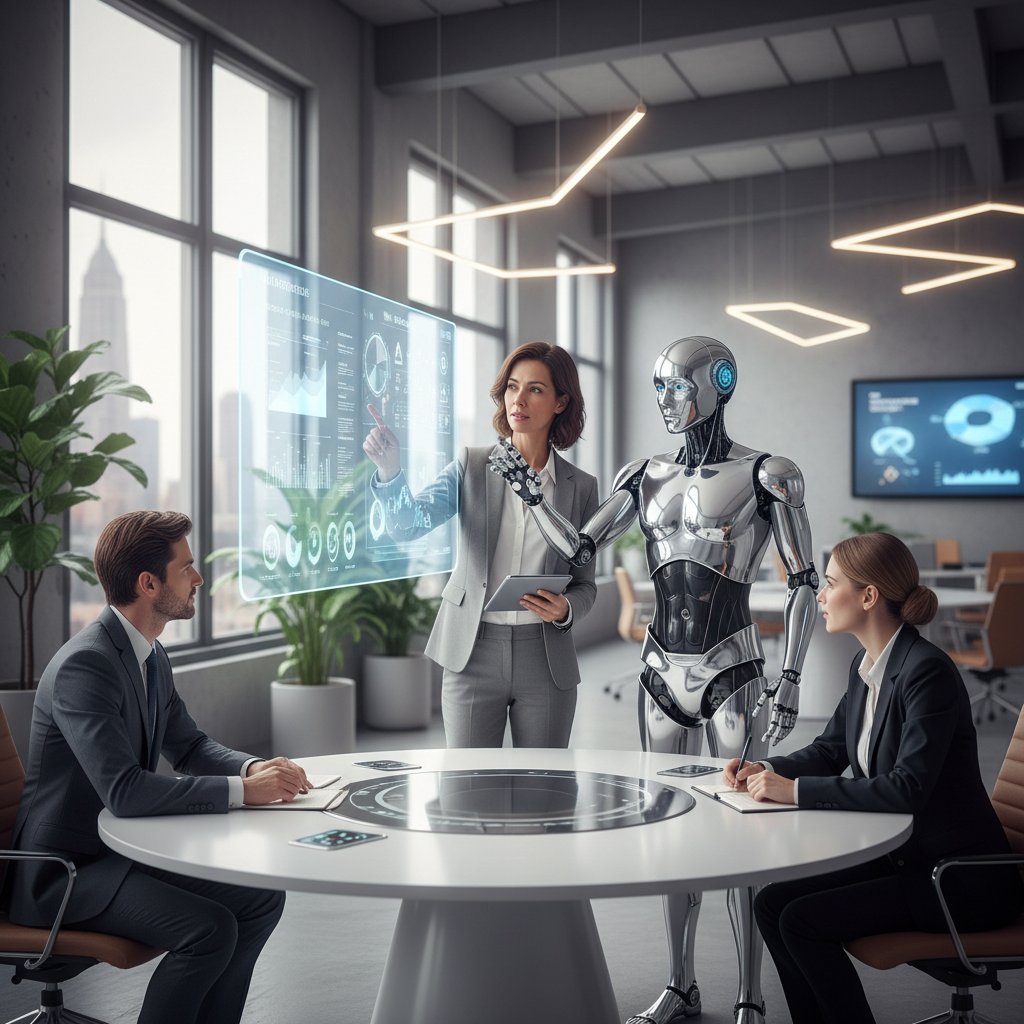
AI has not rendered human assistants obsolete. Instead, it is shifting their responsibilities toward higher-order tasks: strategic planning, relationship management, and creative problem-solving. The best executive assistants now act as “AI orchestrators,” leveraging the digital tools to optimize—not replace—their own contributions.
Team dynamics: collaboration, competition, or chaos?
- Collaboration: Humans and AI support each other, amplifying strengths.
- Competition: Turf battles emerge when roles are unclear or jobs feel threatened.
- Chaos: Poor integration or change management fuels confusion, frustration, and inefficiency.
- Culture shift: Successful teams embrace AI as a catalyst for innovation—not as an existential threat.
Striking the right balance: human insight vs. machine efficiency
“AI is the ultimate productivity partner—powerful, relentless, but only as effective as the humans who guide it. The future isn’t man versus machine; it’s man with machine.” — As industry analysts frequently state (summarizing insights from Microsoft WorkLab, 2024)
Conclusion
Radically honest: the AI-driven virtual assistant for executive productivity is neither savior nor saboteur. It’s a high-voltage catalyst, amplifying every strength and exposing every weakness in modern leadership. The brute facts? Productivity surges are real—up to 40% by some measures—but so are the risks of error, dependency, and cultural backlash. AI will not think for you, nor will it save you from yourself; what it does is force you to confront your workflow inefficiencies head-on. The leaders who thrive are not those who run from the hard truths, but those who integrate, adapt, and demand more from both machine and self. Ignore this shift at your peril—because someone else is out there, working smarter, sleeping better, and reclaiming their edge with every AI-powered click.
For those ready to level up, resources like teammember.ai offer deep dives and expert guidance. Just remember: in this new battleground, it’s not about having an AI assistant—it’s about using it ruthlessly well.
Sources
References cited in this article
- Stealth Agents(stealthagents.com)
- Software Oasis(softwareoasis.com)
- Vena Solutions(venasolutions.com)
- Microsoft WorkLab(microsoft.com)
- Slack(slack.com)
- ZDNet(zdnet.com)
- BBC(bbc.com)
- EMB Global(blog.emb.global)
- LinkedIn(linkedin.com)
- Maestro Labs(maestrolabs.com)
- TaskDrive(taskdrive.com)
- Software Oasis(softwareoasis.com)
- World Economic Forum(aiprm.com)
- Forbes(forbes.com)
- Gartner(gartner.com)
- Visual Capitalist(visualcapitalist.com)
- IBM(ibm.com)
- RingCentral(ringcentral.com)
- FTI Consulting(fticonsulting.com)
- MIT Sloan Management Review(sloanreview.mit.edu)
- World Economic Forum(weforum.org)
- Forbes(forbes.com)
- IBM(ibm.com)
- ScienceDirect(sciencedirect.com)
- LinkedIn(linkedin.com)
- Circuit.AI(circuit.ai)
- KPMG(assets.kpmg.com)
- Cisco/Forbes(forbes.com)
- Pew Research(iapp.org)
- Webopedia(webopedia.com)
- PCMag(pcmag.com)
- Bank of America(aiexpert.network)
- PYMNTS(pymnts.com)
- EY(ey.com)
- Elastic.co(elastic.co)
- Bain & Company(bain.com)
- Hive(hive.com)
- Pearl Talent(pearltalent.com)
- Bitrix24(bitrix24.com)
- Sales Mind(sales-mind.ai)
- Scoop Market US(scoop.market.us)
Focus on what matters. Let AI handle the rest.
We know the feeling — another day starts with 50 unread emails, Ads Manager begging for attention, CRM out of date, and meetings without follow-ups. That's why we built TeamMember.ai — an AI team member that takes over all the operational work at the computer. Has its own email address and SMS number. Manages your inbox, runs Meta Ads, updates CRM, processes meetings, monitors social media, generates morning briefings, and controls the browser. Built on OpenClaw — a leading open-source AI agent — with cross-session memory and secure-cloud architecture that keeps your data safe.
Get startedBe First to Try Your AI Team Member
Every week without automation is dozens of hours lost to operational work. Hours you'll never get back. Join the waitlist and get priority access.
Frequently Asked Questions
How much can AI virtual assistants boost executive productivity?
According to research from Stealth Agents (2023), deploying AI virtual assistants can boost executive productivity by up to 40%. Gartner's 2023 report found that 70% of organizations are already using AI tools, with virtual assistants ranking among the top three most deployed solutions.
What specific tasks do AI virtual assistants help executives with?
The article shows that AI assistants reduce time spent on administrative tasks, meeting scheduling, inbox processing, routine task errors, and report turnaround times. For example, they cut average weekly hours spent on admin from 15 to 6 hours and reduce time to schedule meetings from 2.5 hours to 0.5 hours.
What problem are AI virtual assistants solving for executives?
The article identifies an executive productivity crisis caused by hyper-connectivity, constant context-switching, and mindless admin tasks that consume significant hours from leaders' time and focus.
Is this just another Silicon Valley buzzword?
According to the article, AI-driven virtual assistants are not merely a buzzword—executives at the "bleeding edge" are actively using them to improve productivity, and the data shows measurable returns in time savings and error reduction across administrative functions.
From the Archive
Explore more from AI Team Member

AI-Powered Virtual Assistants for Executives: Capabilities and Real Constraints
An AI-powered virtual assistant for executives promises productivity gains but brings real constraints. This article examines the tradeoffs, capabilities, and limitations executives actually face.

AI-Powered Virtual Assistant Tools: Power and Peril Explained
AI-powered virtual assistant tools now handle email, scheduling, and decision-making in modern offices. This article examines their productivity gains and the risks they introduce.

How AI-Powered Virtual Assistants Change Productivity Tracking
AI-powered virtual assistants for productivity tracking reshape how teams work. This article examines their real benefits, privacy tradeoffs, and integration challenges.

AI-Driven Virtual Assistants: Real Productivity Gains Versus Hype
AI-driven virtual assistants for productivity enhancement promise seamless automation, but this article examines the actual impact, unexpected wins, and psychological costs of working with algorithms.

AI-Driven Virtual Assistant for Time Management: the Hidden Costs
AI-driven virtual assistants for time management strategies promise efficiency but often create new problems.

What AI Assistants for Project Managers Actually Deliver
AI-powered virtual assistants for project managers promise productivity gains and reduced burnout. This article examines what these tools actually deliver and where they fall short.


