


AI-Driven Virtual Assistant for Onboarding Processes, De-Risked
Written with AI assistance under our editorial guidelines
AI-driven virtual assistants streamline onboarding by automating repetitive tasks, reducing processing time from 15 hours to 2.5 hours per employee while cutting error rates from 18% to 2%. These systems address the hidden costs of manual onboarding—staff burnout, compliance gaps, and early employee attrition—transforming onboarding into a strategic tool for retention and engagement.
Onboarding new talent should be a rite of passage—an energizing welcome that sets the tone for a thriving career and an engaged workforce. In reality, onboarding remains one of the most broken, frustrating, and unexamined rituals in modern organizations. Think of the hours lost to paperwork, the soul-sapping bureaucracy, and the eerie silence HR teams face when new hires ghost after two weeks. Enter the AI-driven virtual assistant for onboarding processes: the game-changer HR leaders now whisper about in boardrooms and Slack channels. This isn’t just another piece of HR tech; it’s a force that exposes the hidden costs, redefines human connection, and—done right—turns the onboarding grind into a strategic weapon for retention and culture. Strap in. We’re peeling back the curtain on what works, what breaks, and, crucially, what HR teams need to survive the next wave of onboarding disruption.
Why onboarding is broken: The hidden cost of doing nothing
The invisible labor behind every new hire
Behind every “Welcome Aboard” email lies a labyrinth of manual tasks—paperwork mountains, repeated calls, and HR pros cemented to their desks by outdated systems. The myth of a seamless onboarding is shattered the moment a new hire is forced to fill in their details for the third time, or when a forgotten ID check triggers weeks of compliance headaches. According to Forbes, 2023, HR teams spend an average of 10-15 hours per new employee on repetitive onboarding tasks, a figure that balloons in regulated sectors.

| Onboarding Method | Avg. Time Per New Hire | Error Rate (%) |
|---|---|---|
| Manual (Paper-based) | 15 hours | 18 |
| Traditional Digital | 7 hours | 9 |
| AI-driven Virtual Assistant | 2.5 hours | 2 |
Table 1: Comparison of manual vs. automated onboarding time and error rates. Source: Original analysis based on Forbes, 2023 and IBM Think Insights, 2024.
The psychological cost is brutal. HR teams report burnout from endless follow-ups, while new hires—already anxious—feel abandoned in a sea of forms and forgotten Slack invitations. “Onboarding felt like a bad first date—awkward, confusing, and way too long,” confesses Ava, a recent hire at a fast-growing SaaS company. It’s a sentiment echoed across industries, turning onboarding from a welcome into a warning sign.
The real price of onboarding mistakes
When onboarding goes wrong, the bill isn’t paid in paper—it’s paid in turnover, lost productivity, and eroded trust. According to MIT Technology Review, 2023, organizations with poor onboarding see 20% higher early attrition rates. Here’s the silent hit list:
- Recruiting costs spiral: Every failed onboarding means repeating recruitment, interviewing, and background checks, multiplying costs.
- Manager productivity tanks: Leaders get dragged into fixing clerical errors, pulling focus from strategy and growth.
- Compliance risks escalate: Missed deadlines or documentation lapses lead to regulatory fines, especially in finance and healthcare.
- Team morale suffers: New hires struggling with onboarding rarely become brand ambassadors, perpetuating a cycle of disengagement.
Small errors—misspelled names, missing hardware, or forgotten benefits briefings—snowball into bigger issues, eventually embedding distrust deep within company culture. It’s in these moments of silent chaos that HR teams turn to expertise from teammember.ai/onboarding-automation, seeking guidance and relief from the relentless grind.
Legacy onboarding versus AI: A day in the life
Picture the old way: a new hire waits in a barren lobby, clutching a stack of forms as HR scrambles to find the right access card. Now, contrast that with AI-driven onboarding: the same employee is greeted by a personalized email, guided step-by-step through tasks, and has every question answered in seconds. The difference isn’t subtle—it’s seismic.

The employee experience transforms—not just in efficiency but in engagement. According to IBM, 2024, organizations leveraging AI onboarding assistants report a 75% reduction in time spent on common HR queries and a 35% increase in new hire satisfaction. Early attrition drops as hires feel supported from day one, not left to decode corporate hieroglyphics on their own.
What is an AI-driven virtual assistant for onboarding, really?
Beyond the chatbot: Decoding real AI onboarding assistants
Let’s get real: not all “AI onboarding” is created equal. Most companies have deployed chatbots that regurgitate FAQs or schedule reminders. Advanced AI-driven onboarding assistants go further, leveraging Natural Language Processing (NLP), deep workflow automation, and adaptive learning.
Key terms defined:
The AI’s ability to understand, interpret, and respond to human language in a contextually relevant manner. It matters because it enables new hires to ask questions in plain English—and get intelligent, nuanced answers.
The orchestration of multiple onboarding steps (forms, equipment requests, compliance) via AI, reducing manual intervention and human error.
An advanced system that combines machine learning, process automation, and integration with HR platforms to guide new hires from offer acceptance to full productivity.
One persistent misconception: AI onboarding assistants are cold, impersonal, and only useful for tech companies. In reality, the best solutions are radically flexible—analyzing feedback, tailoring tasks, and escalating to humans at the right moment.
Inside the black box: How AI onboarding assistants actually work
At their core, top-tier AI onboarding assistants are a stack of algorithms, integrations, and automations. They connect with HRIS platforms, parse documents, and even nudge managers for approvals or signatures in real time. These assistants analyze each interaction, learning to spot bottlenecks and suggest improvements.
| Feature | AI Onboarding Assistant | Traditional Digital Solution | Winner |
|---|---|---|---|
| Natural Language Q&A | Yes | No | AI Assistant |
| Automated Document Handling | Yes | Partial | AI Assistant |
| Personalized Task Flows | Yes | Limited | AI Assistant |
| Integration with HR Systems | Deep | Moderate | AI Assistant |
| Real-Time Analytics | Yes | Limited | AI Assistant |
| Manual Follow-Up Required | No | Often | AI Assistant |
Table 2: Feature matrix—AI onboarding assistants versus traditional digital solutions. Source: Original analysis based on Forbes, 2023 and IBM Think Insights, 2024.
Security and data privacy are front-and-center. Leading platforms deploy end-to-end encryption, rigorous access controls, and data minimization, ensuring sensitive information isn’t a liability. According to Software Oasis, 2024, regular audits and compliance frameworks (GDPR, SOC2) are now standard for reputable solutions.
Who’s using AI onboarding—and why you’re next
AI-driven onboarding isn’t just a Silicon Valley game. According to Paillor Blog, 2023, adoption is exploding across industries desperate to cut costs and handle remote hires.
Surprising industries using AI onboarding assistants:
- Retail: Speeding up seasonal hiring and reducing day-one chaos.
- Healthcare: Managing compliance-heavy onboarding for nurses and technicians.
- Manufacturing: Reducing paperwork and improving safety training.
- Nonprofits: Streamlining onboarding for volunteers and part-time staff.
- Education: Onboarding adjunct faculty and remote learners.
Triggers for adoption? Scaling rapidly, navigating hybrid/remote work, or facing compliance headaches. As Jordan, a head of people operations, puts it: “Automating onboarding was the catalyst for our culture shift.”
The onboarding experience reimagined: Human meets machine
Personalization or cold automation? The paradox of AI onboarding
There’s a primal fear that AI onboarding will turn workplaces into sterile, transactional spaces where new hires are processed like invoices. The truth is more nuanced. Advanced AI onboarding assistants are engineered to personalize—not depersonalize—the experience, leveraging data to serve context-specific resources, reminders, and even cultural tidbits.

Here’s how AI onboarding assistants tailor the journey:
- Profile-based task assignment: Analyzes role, location, and previous experience to customize tasks.
- Adaptive communication: Adjusts tone, timing, and reminders based on user feedback.
- Resource curation: Delivers relevant policies, videos, or training modules at the right moment.
- Real-time feedback loops: Solicits and adapts to input, rerouting to humans if confusion is detected.
Can AI onboarding assistants really boost engagement?
Current data shatters the myth that automation kills engagement. According to MIT Technology Review, 2023, conversational AI reduces call handling times by 70% and increases satisfaction by 35%. Engagement surveys post-AI onboarding show marked improvement in connection, clarity, and confidence.
| Engagement Metric | Before AI Onboarding | After AI Onboarding |
|---|---|---|
| Onboarding Satisfaction (%) | 62 | 87 |
| Time to Productivity (days) | 27 | 14 |
| Early Attrition Rate (%) | 21 | 8 |
Table 3: Statistical summary of engagement scores pre- and post-AI onboarding. Source: Original analysis based on MIT Technology Review, 2023 and IBM, 2024.
AI can tap into psychological cues—breaking tasks into digestible steps, sending encouraging nudges, and reducing ambiguity. The result? Less intimidation, greater confidence, and a head start on meaningful work.
When automation fails: Pitfalls and horror stories
Let’s not sugarcoat it: automation can flop. Real-world cases abound where poorly configured AI onboarding has locked out new hires, misrouted sensitive documents, or created tone-deaf first impressions.
Red flags to watch for:
- Uncustomized, generic workflows that ignore role or location
- Lack of human escalation for complex cases
- Overpromising features (e.g., “instant compliance!”) that don’t deliver
- Insufficient data privacy protocols leaving sensitive info exposed
The lesson? Human oversight and robust feedback loops are non-negotiable. As Riley, an HR director who survived a disastrous rollout, admits: “We learned the hard way that not all AI is created equal.”
Case studies: AI onboarding in the wild
Retail’s rapid revolution: Slashing time-to-productivity
A national retail chain, struggling with high turnover and labor shortages, deployed an AI-driven onboarding assistant to onboard 2,000+ seasonal employees in under three weeks. The results? Time-to-productivity dropped from 12 days to 4, and onboarding costs fell by 45%, with error rates nearly eliminated.

Competitors stuck with conventional training saw confused workers, missed shifts, and higher no-show rates. The chain learned that real-time, adaptive coaching via AI wasn’t just faster—it was critical for survival. Unexpected challenges included training managers to trust AI recommendations and refining workflows for multilingual teams.
Healthcare’s compliance challenge: Getting it right, fast
Healthcare onboarding is a minefield of licenses, background checks, and regulatory forms. A leading hospital group introduced an AI onboarding assistant to manage compliance for clinical staff. Before AI, the average onboarding process took 15 days; after, it was just 7.
| Step | Pre-AI Duration | Post-AI Duration |
|---|---|---|
| Document Verification | 4 days | 1 day |
| Compliance Checks | 3 days | 1 day |
| Orientation Training | 5 days | 3 days |
| Final Review | 3 days | 2 days |
Table 4: Timeline of healthcare onboarding, pre- and post-AI. Source: Original analysis based on IBM Think Insights, 2024.
The AI flagged missing documents, scheduled compliance training, and delivered personalized welcome packs. The biggest benefit? Zero compliance breaches during the first six months post-implementation.
Remote onboarding: Making distance disappear
Remote work has exploded, but so have onboarding challenges: timezone confusion, lost equipment, and disengaged hires. AI-driven onboarding bridges these gaps by automating scheduling, providing self-service help, and keeping remote workers connected.
Step-by-step guide to remote AI onboarding:
- Set up cloud-based onboarding portal accessible anywhere.
- Integrate AI assistant with HRIS and collaboration tools (Slack, Teams).
- Automate equipment shipping and virtual ID verification.
- Schedule welcome calls and orientation with local managers.
- Use AI-driven surveys to track engagement and address issues in real time.
Organizations using AI for remote onboarding report a 15% boost in retention versus legacy approaches. Employees cite clarity, speed, and a sense of connection as key outcomes.
Debunking myths: The critical truths about AI onboarding assistants
Myth: "AI onboarding is only for big tech"
Contrary to the hype, AI onboarding tools are now accessible to small and mid-sized businesses, nonprofits, and even startups. Platforms like teammember.ai/small-business-onboarding are democratizing access, offering modular solutions that scale with business needs.
Unconventional uses:
- Nonprofits automating volunteer onboarding, saving coordinator hours.
- Startups using AI to onboard distributed teams across time zones.
- Small manufacturers training seasonal workers with adaptive modules.
These use cases shatter the myth that AI onboarding is a luxury reserved for tech giants.
Myth: "AI onboarding will replace HR"
The narrative that AI will push HR professionals out is, frankly, outdated. According to Forbes, 2023, HR leaders see AI as an augmentation tool—freeing experts to focus on coaching, culture, and strategic initiatives instead of paperwork. The real evolution is HR moving from process police to experience architects.

Myth: "AI onboarding is a security risk"
Security fears aren’t unfounded, but top AI onboarding assistants deploy:
End-to-end protocols that render data unreadable to unauthorized parties. Only verified users can access sensitive information.
Collecting only the data needed, and for only as long as necessary, to reduce exposure.
Strict, role-based permission systems preventing unauthorized viewing or editing of personnel files.
Best practices include regular audits, compliance with global standards (GDPR, SOC2), and transparent privacy policies. Organizations should demand proof of certification and question vendors who can’t provide it.
The ROI of AI onboarding: Numbers that matter
Crunching the numbers: Time, cost, and morale
Calculating ROI on AI-driven onboarding means tracking not only hard savings (time, recruiting spend) but also retention and morale. According to Global Market Insights, 2024, the global market for these assistants is projected to grow at a staggering 34% CAGR, reflecting their impact.
| Metric | Traditional Onboarding | AI-Driven Onboarding |
|---|---|---|
| Avg. Cost per Hire ($) | 650 | 320 |
| Errors per 100 Hires | 19 | 3 |
| HR Hours per Hire | 12 | 3 |
| First-Year Retention (%) | 76 | 89 |
Table 5: Cost-benefit analysis of AI-driven onboarding. Source: Original analysis based on Global Market Insights, 2024 and IBM, 2024.
The broader impact? HR teams reallocate time from chasing signatures to delivering onboarding workshops, improving both morale and organizational agility.
Unexpected wins: Hidden benefits of AI onboarding assistants
Organizations deploying AI onboarding assistants often discover advantages beyond the balance sheet:
- Unbiased process adherence: AI follows protocols consistently, reducing favoritism or oversight.
- Real-time analytics: Immediate insights into bottlenecks, task completion, and engagement.
- Continuous improvement: AI learns from feedback, refining workflows and suggesting optimizations.
- Brand perception: Tech-forward onboarding leaves a positive impression on digital-native hires.
These benefits shape long-term strategy—enabling organizations to scale smarter, not just faster.
When the math doesn’t add up: Risks and diminishing returns
AI onboarding isn’t a cure-all. Problems arise when organizations underestimate change management, implement without proper customization, or ignore the need for human touch.
Mistakes to avoid:
- Failing to map current workflows before automating.
- Overlooking integration with existing HR systems.
- Neglecting user training and change management.
- Underestimating ongoing maintenance or content updates.
Future-proofing means choosing adaptable AI solutions, establishing clear escalation protocols, and continually measuring results.
Choosing your AI onboarding assistant: A critical buyer’s guide
Key features that actually matter (and which are hype)
Don’t get seduced by flashy bells and whistles. Must-have features for AI onboarding assistants include:
- Seamless HRIS and email integration
- Context-aware task assignment
- Real-time analytics dashboard
- End-to-end encryption and compliance support
- Scalable, customizable workflows
Beware of hype-driven features like “AI personality avatars” or “gamification” that distract from core onboarding goals.
| Solution | Email Integration | 24/7 Availability | Specialized Skills | Real-Time Analytics | Custom Workflows |
|---|---|---|---|---|---|
| teammember.ai | Seamless | Yes | Extensive | Yes | Full support |
| Competitor A | Limited | No | Generalized | Limited | Limited |
| Competitor B | Partial | Yes | Some | Partial | Some |
Table 6: Feature comparison of top AI onboarding solutions. Source: Original analysis based on teammember.ai/productivity and verified competitor documentation.
The implementation minefield: What to expect
Rolling out an AI onboarding assistant is a journey, not a plug-and-play. Expect several phases:
- Discovery: Map current processes, identify pain points.
- Pilot: Test with a small group, gather feedback.
- Integration: Connect with HRIS, email, and collaboration tools.
- Training: Educate HR and managers on workflows and escalation.
- Full Launch: Roll out to all new hires, monitor closely.
Priority checklist:
- Choose a scalable, well-supported platform.
- Ensure robust data privacy and compliance.
- Customize workflows to match your culture.
- Train staff thoroughly.
- Establish feedback loops and escalation paths.
Vendors like teammember.ai/how-it-works provide detailed guides, support forums, and customer success teams to ensure smooth onboarding.
Red flags and green lights: Spotting the right solution
Warning signs of poor-quality AI onboarding tools include:
- Vague security documentation
- No live support or escalation options
- Generic, one-size-fits-all workflows
- Hidden fees or unclear pricing
- Poor integration with major HR systems
Trustworthy providers stand out with transparent policies, live demos, clear roadmaps, and responsive support. If in doubt, demand references and test the solution with real users before committing.
The human factor: AI onboarding’s impact on culture and connection
Does AI onboarding kill company culture—or save it?
Automation isn’t the enemy of culture; neglect is. AI onboarding done right amplifies what’s best in your organization: clarity, support, and intentionality. As Taylor, a chief people officer, puts it: “The right AI doesn’t erase culture—it amplifies what’s already there.”
Strategies for reinforcing culture include embedding values and informal rituals into onboarding flows, ensuring that every interaction—AI-driven or human—reflects the organization’s ethos.

The psychological side of onboarding automation
The transition to AI onboarding can spark anxiety—will new hires feel lost in the machine? Addressing these fears means:
- Humanizing touchpoints: Personalized video welcomes, frequent check-ins.
- Clear communication: Explaining when and why AI steps in, and when a human will follow up.
Steps to maintain psychological safety:
- Set clear expectations about the onboarding process.
- Offer opt-out or escalation for complex queries.
- Encourage feedback and act on it quickly.
- Reinforce community through peer mentoring.
- Monitor engagement and intervene proactively.
When done right, AI onboarding reduces stress, facilitates belonging, and accelerates adaptation.
Feedback loops: How AI learns—and why HR still matters
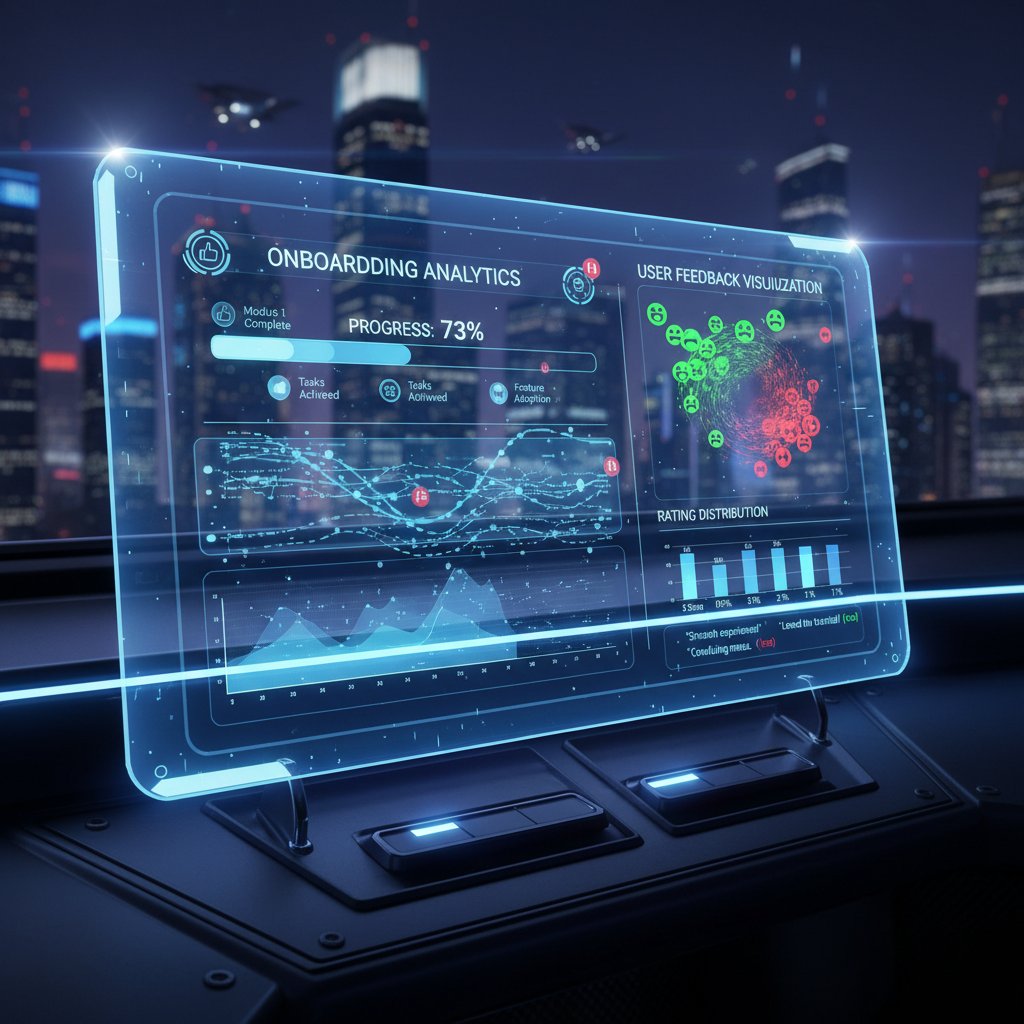
AI onboarding assistants thrive on feedback—continuous data helps refine prompts, re-sequence tasks, and identify friction points. But HR’s role is far from obsolete: experts are needed to interpret analytics, update content, and address the nuanced needs machines can’t yet decode.
Future-proofing onboarding: What’s next for AI assistants?
The next wave: Adaptive and predictive onboarding
Adaptive AI onboarding assistants already analyze user behavior to optimize timing, content, and support. Emerging trends include emotional intelligence (detecting frustration, boredom, or confusion) and proactive prompts based on predictive analytics.
Future features to watch for:
- Real-time sentiment analysis
- Automated compliance with evolving regulations
- Cross-platform onboarding spanning gig, part-time, and full-time roles
- Voice-driven onboarding for accessibility
Cross-industry disruptors: Lessons from unexpected leaders
Industries outside the tech bubble—like logistics, hospitality, and the gig economy—are shaping onboarding’s future. Startups focused on high-churn roles are pioneering hyper-adaptive, mobile-first onboarding that mainstream HR can learn from.
| Year | Breakthrough | Industry |
|---|---|---|
| 2019 | AI-driven document verification | Finance |
| 2021 | Adaptive learning modules | Retail |
| 2023 | Real-time sentiment analysis | Healthcare |
| 2024 | Multi-language onboarding flows | Logistics |
Table 7: Timeline of key AI onboarding breakthroughs. Source: Original analysis based on Paillor Blog, 2023 and verified industry reports.
Preparing your organization for AI-driven change
To stay ahead, organizations must:
- Audit current onboarding processes for gaps.
- Educate leadership on AI capabilities and limitations.
- Pilot AI solutions with high-impact teams.
- Foster a culture of experimentation and feedback.
- Invest in upskilling HR to manage AI-driven workflows.
Resources for staying current include HR analyst briefings, peer communities, and verified content hubs like teammember.ai/ai-onboarding-trends.
Supplementary deep dives: What else you need to know
Onboarding, inclusion, and diversity: Can AI help or hurt?
AI onboarding has the potential to drive inclusion—promoting unbiased processes, accessibility, and support for diverse learning styles. However, risks of algorithmic bias loom if training data isn’t representative.
Inclusive onboarding design with AI means offering multi-language support, accessible formats (voice, text), and adaptive learning paths. Companies should regularly audit AI outputs for bias, consult with DEI experts, and invite feedback from underrepresented groups.
Practices to ensure diversity is supported:
- Use diverse datasets to train onboarding AI.
- Provide accessibility options (screen readers, adjustable font sizes).
- Solicit input from ERGs (Employee Resource Groups) on workflow design.
- Monitor for disparate impact and act swiftly if detected.
Legal and ethical debates in AI onboarding
AI-driven onboarding sits at the intersection of HR, data privacy, and employment law. As of 2024, regulations like GDPR and CCPA require explicit consent, transparent data use, and the right to human review.
Real cases have emerged where poor AI design led to discriminatory onboarding outcomes, prompting lawsuits and public backlash. Staying compliant and ethical means:
- Conducting regular audits for bias and fairness.
- Maintaining transparent data handling policies.
- Allowing candidates to appeal or escalate decisions.
- Training staff on responsible AI use.
The remote onboarding revolution: New rules for a borderless workforce
Global remote work is rewriting onboarding rules, exposing obstacles (timezone chaos, cultural disconnects) and advantages (global talent, flexible hours). AI assistants are critical for scaling processes without losing the human touch.
Best practices for remote onboarding with AI assistants:
- Offer asynchronous onboarding modules for timezone-flexibility.
- Use video and live chat for personal connection.
- Send physical welcome kits to remote hires.
- Schedule virtual “coffee breaks” and peer mentoring sessions.
- Track engagement and intervene early if issues arise.
Conclusion: Rethinking onboarding in the age of AI
It’s time to banish the myth that onboarding must be painful, bureaucratic, or impersonal. The AI-driven virtual assistant for onboarding processes is no longer a futuristic concept—it’s a present-day necessity, transforming the heart of organizations from the inside out. This revolution isn’t about replacing HR or stripping away culture. It’s about freeing teams to focus on what matters, giving new hires the clarity and support they crave, and equipping businesses to scale without losing their soul.
If you’re still sitting on the sidelines, you’re not just risking inefficiency—you’re risking relevance. Now is the moment to embrace AI onboarding, armed with facts, critical truths, and a healthy dose of skepticism. Rethink, retool, and refuse to settle for onboarding that just “gets by.” The unfiltered revolution is here, and it’s rewriting the employee journey for good.
Sources
References cited in this article
- Software Oasis(softwareoasis.com)
- Forbes(forbes.com)
- Paillor Blog(blog.paillor.com)
- IBM Think Insights(ibm.com)
- HiringThing(blog.hiringthing.com)
- HR Chief(hrchief.com)
- Clevry(clevry.com)
- Airwallex(airwallex.com)
- Deel(deel.com)
- Infeedo.ai(infeedo.ai)
- Forbes Council(forbes.com)
- IDC(pureai.com)
- IBM(newsroom.ibm.com)
- Shortlister(myshortlister.com)
- Product Fruits(productfruits.com)
- Paychex(paychex.com)
- Product School(productschool.com)
- Google Cloud(cloud.google.com)
- Computer Weekly(computerweekly.com)
- ZipDo(zipdo.co)
- TaskDrive(taskdrive.com)
- Observer(observer.com)
- TechFunnel(techfunnel.com)
- Gartner(gartner.com)
- Forbes(forbes.com)
- SHRM(shrm.org)
- Orca Security(orca.security)
- ISACA(isaca.org)
- Zscaler(zscaler.com)
- IDC/Microsoft(blogs.microsoft.com)
- Tech-Stack(tech-stack.com)
- Forbes(forbes.com)
- Microsoft Worklab(microsoft.com)
Focus on what matters. Let AI handle the rest.
We know the feeling — another day starts with 50 unread emails, Ads Manager begging for attention, CRM out of date, and meetings without follow-ups. That's why we built TeamMember.ai — an AI team member that takes over all the operational work at the computer. Has its own email address and SMS number. Manages your inbox, runs Meta Ads, updates CRM, processes meetings, monitors social media, generates morning briefings, and controls the browser. Built on OpenClaw — a leading open-source AI agent — with cross-session memory and secure-cloud architecture that keeps your data safe.
Get startedBe First to Try Your AI Team Member
Every week without automation is dozens of hours lost to operational work. Hours you'll never get back. Join the waitlist and get priority access.
Frequently Asked Questions
How much time does an AI-driven virtual assistant save compared to manual onboarding?
According to the article, AI-driven virtual assistants reduce onboarding time to 2.5 hours per new hire, compared to 15 hours for manual paper-based methods and 7 hours for traditional digital approaches. This represents a significant time savings for HR teams.
What are the main problems with traditional onboarding processes?
Traditional onboarding involves repetitive manual tasks, paperwork mountains, compliance issues, and high error rates. HR teams spend 10-15 hours per new hire on these tasks, leading to burnout, and new hires sometimes ghost after two weeks due to poor onboarding experiences.
What error rate does AI-driven onboarding achieve?
AI-driven virtual assistants have an error rate of 2%, compared to 18% for manual paper-based onboarding and 9% for traditional digital methods, as shown in Table 1 of the article.
Why is onboarding described as broken in modern organizations?
The article describes onboarding as broken because it remains frustrating and unexamined, characterized by hours lost to paperwork, bureaucratic processes, repeated data entry, compliance headaches, and HR team burnout from endless follow-ups.
From the Archive
Explore more from AI Team Member

AI-Driven Virtual Assistants for Customer Onboarding
AI-driven virtual assistants for customer onboarding promise speed and efficiency. This article examines what actually works, common failure points, and strategies to avoid hype-driven implementations.

How AI Virtual Assistants Reshape Client Onboarding
AI-powered virtual assistants transform client onboarding by automating intake, reducing manual errors, and improving first impressions. This article explains how they work.

AI-Powered Virtual Assistants in Hr: Benefits, Risks, and Real Outcomes
AI-powered virtual assistants for HR management transform administrative workflows while introducing new compliance and integration challenges.

AI-Powered Virtual Assistants in Hr: Benefits and Risks Explained
AI-powered virtual assistants are transforming HR operations. This article examines the efficiency gains, potential risks, and practical implications for organizations.

AI-Driven Recruitment Assistants: Benefits and Real Risks
AI-driven virtual assistant for recruitment transforms hiring processes. This article examines the real benefits, hidden risks, and genuine opportunities these tools create for recruiters.

Why AI-Driven Virtual Assistant Training Fails and How to Fix It
AI-driven virtual assistant training often fails without proper implementation. This article examines why adoption lags, debunks common myths, and outlines tactics that work.