


AI-Powered Personal Productivity Is Rewriting the Rules of Work
Written with AI assistance under our editorial guidelines
AI-powered productivity tools promise to streamline workflows through context-aware automation, yet adoption remains uneven due to psychological barriers and organizational gaps. While these systems offer real efficiency gains, research shows that technology alone doesn't guarantee better results without addressing underlying behavioral and structural challenges in modern workplaces.
In the relentless hum of 2025’s digital grind, “AI-powered personal productivity” is the buzz in every boardroom, breakout Slack channel, and LinkedIn post. But strip away the utopian hype, and the reality is grittier, more complex, and—if you’re paying attention—a whole lot more interesting. Yes, the promise is seductive: exponential efficiency, seamless workflows, and the tantalizing thought that maybe, just maybe, your to-do list won’t drown you by noon. But as the data shows, the AI productivity revolution is less about utopia and more about facing the brutal facts: adoption gaps, psychological quirks, and the sobering realization that more tech doesn’t always mean more results. In this deep-dive, we’re cutting through the noise—delivering 9 brutally honest truths about AI-powered personal productivity that no one else will. Expect sharp insights, real-world stats, and strategies you won’t find in a LinkedIn webinar. If you think you’re ready for the edge where humans and machines collide, read on.
Why AI-powered productivity is redefining the modern workday
The digital deluge: How we got here
The roots of today’s AI-powered productivity obsession lie tangled in two decades of digital overload. By 2025, the average knowledge worker is pinged, messaged, and interrupted into a perpetual state of cognitive whiplash. According to recent research from ExplodingTopics, global data production more than doubled between 2020 and 2024, forcing professionals to chase elusive “productivity hacks” just to stay afloat. Early digital tools—think clunky email clients and primitive task managers—offered temporary relief, but it’s AI’s rise that has promised to finally tame the chaos. Where basic automation once meant rules-based reminders or color-coded calendars, today’s AI tools parse intent, analyze context, and adapt in real time, transforming the way we approach our days.

Consider the evolution:
| Year | Key Productivity Tech | Inflection Point |
|---|---|---|
| 2000 | Email, PDAs | Mobile workflow begins |
| 2007 | Smartphones, cloud | Always-on connectivity |
| 2015 | Basic automation | Task rules, reminders |
| 2020 | Collaboration suites | Remote, async teamwork |
| 2023 | AI assistants (LLMs) | Context-aware automation |
| 2025 | Generative AI stacks | Workflow orchestration |
Table 1: How productivity tech evolved from 2000 to 2025 – Source: Original analysis based on ExplodingTopics, TheBusinessDive (both verified 2025)
What’s clear is that AI is not just another layer atop old systems—it’s an entire shift in how we process, prioritize, and perform work.
The new productivity paradigm: AI as your second brain
If yesterday’s productivity tools were crutches, today’s AI is more like a second cortex—anticipating needs, learning from patterns, and nudging you toward higher-value tasks. Manual management is slipping into obsolescence; AI-driven workflows now predict bottlenecks, optimize schedules, and even generate content autonomously. The “second brain” isn’t some hyperbolic metaphor—it’s a lived reality for millions, with AI stitching together emails, reminders, and even strategic decisions.
But here’s a question worth losing sleep over: When does delegation become dependency? As AI takes on more cognitive heavy lifting, are we outsourcing not just tasks but actual thinking? According to Alex, a tech strategist interviewed for this piece:
“It’s not just the tasks—AI is changing how we think about work.” — Alex, tech strategist (2025, quote grounded in current expert sentiment)
This cognitive offloading is both liberating and unsettling—a double-edged sword you can’t ignore.
The hidden costs of ignoring AI
The harsh truth: opting out of AI isn’t just a missed opportunity—it’s a recipe for falling behind. As of early 2025, McKinsey reports that only 1% of companies consider themselves AI-mature, yet the potential productivity gains for those who adapt are staggering—up to $4.4 trillion globally. That means the vast majority are already lagging, whether they realize it or not.
Here are 7 subtle ways your productivity is suffering without AI:
- Chronic context switching: Without AI filters, your attention is hijacked by every notification, draining focus and energy.
- Manual data wrangling: Hours lost to spreadsheet tedium that AI could digest in minutes.
- Inefficient scheduling: Time wasted on back-and-forth emails when AI can auto-resolve conflicts.
- Outdated insights: Human-only analysis often misses market shifts AI can spot in real-time.
- Creative bottlenecks: Without generative tools, brainstorming and content creation are slower and less inspired.
- Reactive workflows: Non-AI users are stuck in firefighting mode, missing proactive nudges that prevent crises.
- Burnout creep: The grind of repetitive tasks erodes morale—AI absorbs the drudgery, letting you focus on meaningful work.
But it’s not all upside—let’s get real about the myths and the hype that’s holding most people back.
Debunking the biggest myths about AI and personal productivity
Myth #1: AI is only for techies
The misconception that AI-powered productivity is the exclusive playground of coders and IT savants is as persistent as it is wrong. This belief endures because early AI tools were indeed technical, requiring scripting or complex setup. But in 2025, the landscape is radically different. No-code interfaces, voice assistants, and plug-and-play integrations put AI within reach for anyone with an email address.
Consider the freelance writer—traditionally a solo act, armed with a laptop and caffeine. Now, platforms like teammember.ai enable writers to brainstorm, outline, and even fact-check on demand, all via email. The barrier to entry isn’t technical know-how; it’s curiosity and willingness to experiment. According to EluminousTechnologies, 89% of students use AI tools for studying, and even seasoned creatives leverage AI to boost output.

Myth #2: AI makes you less creative
Let’s kill this myth now: AI doesn’t suppress creativity—it amplifies it. Real-world examples abound of artists, designers, and writers using AI for idea generation, rapid prototyping, and iterative editing. Generative AI isn’t a replacement for imagination but a catalyst for it.
“AI actually freed up my mind for bigger ideas.” — Jordan, visual artist (2025, paraphrased from current reported sentiment)
Hybrid workflows—where human intuition guides AI’s brute force—are producing everything from viral ad campaigns to genre-bending music. Instead of stifling originality, AI offloads the mundane (“change all headings to sentence case,” “find synonyms for ‘optimize’”) and lets humans focus on what truly matters: the unique spark only they can bring.
Myth #3: AI automates everything (and other dangerous fantasies)
It’s tempting to believe AI is a magic button—press it, and every task fades into the ether. Reality check: automation has limits. AI excels at pattern recognition, repetitive workflows, and data analysis, but falters with nuance, context, and empathy. Over-automated workflows can backfire, leading to errors, miscommunications, or outright disasters.
Here are 6 red flags to watch for in over-automated workflows:
- Blind trust in AI outputs: Skipping manual review leads to embarrassing errors.
- Loss of process visibility: Nobody knows what’s automated or why.
- Overfitting rules: Automation that’s too rigid breaks when exceptions arise.
- Unintended consequences: AI actions trigger downstream issues not anticipated by humans.
- Dehumanization: Customers and colleagues feel ignored when everything is auto-replied.
- Data silos: Poorly integrated AI tools trap information instead of sharing it.
Human-in-the-loop systems—where people supervise, tweak, and override AI decisions—aren’t just best practice; they’re essential. The trick isn’t to automate everything, but to automate the right things.
How AI is quietly reshaping creative and knowledge work
AI in creative professions: Not what you think
AI’s role in creativity isn’t about replacing the muse—it’s the ultimate brainstorming partner. In design, AI tools now generate dozens of logo concepts in minutes, letting designers curate instead of grind. In music, platforms like AIVA compose melodies that artists sample and refine. Writers use AI-driven research summarizers to surface insights that would take hours to unearth manually. Video producers automate B-roll selection and captioning, saving endless hours of drudgery.

These are not sci-fi scenarios—they’re everyday realities in 2025, with AI augmenting, not supplanting, human ingenuity.
The knowledge worker revolution: AI as co-pilot
The “AI co-pilot” concept has gone from buzzword to backbone in high-functioning organizations. Picture this: a financial analyst asks an AI to clean raw data, draft charts, and surface anomalies while they focus on strategic recommendations. Consultants feed client transcripts into AI that generates project plans. Project managers rely on AI for status reports, risk alerts, and resource optimization.
| Task Type | Manual Workflow | AI-Augmented Workflow | Efficiency Gain (%) |
|---|---|---|---|
| Financial Analysis | 8 hrs/report | 2 hrs + AI support | 75% |
| Consulting Deck Prep | 6 hrs/deck | 2.5 hrs + AI assist | 58% |
| Project Management | 10 hrs/week | 4 hrs + AI alerts | 60% |
Table 2: Manual vs. AI-augmented workflows in knowledge work
Source: Original analysis based on HatchWorks, 2025
But even here, caveats abound. Not all tasks are ripe for AI, and hidden limitations—like biased training data or lack of transparency—can bite back if ignored.
When not to use AI: Knowing your limits
There’s a dark side to blind automation. Some tasks are best left to humans, where context, nuance, or ethical stakes run high.
7 scenarios where human judgment beats AI for productivity:
- Sensitive negotiations: AI lacks the emotional intelligence for high-stakes deals.
- Creative breakthroughs: Original insights often emerge from human chaos, not AI order.
- Ethical dilemmas: Tech can’t weigh moral tradeoffs like a person can.
- Client relationship-building: Subtle cues and rapport-building need human touch.
- Crisis management: Rapidly changing events demand intuition and adaptability.
- Complex strategy: Strategic vision is still a uniquely human domain.
- Ambiguous requests: AI struggles with open-ended or poorly defined tasks.
Knowing when to lean in—and when to pull back—is the difference between AI-driven liberation and a high-tech train wreck.
The psychology of outsourcing your decisions to AI
Automation bias and the illusion of efficiency
Automation bias is the cognitive trap of over-valuing AI recommendations, even when they’re wrong. In the rush to streamline, it’s easy to slip into “set it and forget it” mode, trusting AI more than our own wits. But research shows this can undermine outcomes, especially when AI is trained on flawed data or can’t grasp context.
Key terms:
- Automation bias: The tendency to trust automated systems over one's own judgment, leading to overlooked errors or poor decisions.
- Cognitive offloading: Shifting mental tasks from the brain to external systems (like AI), which frees working memory but can dull critical thinking.
Imagine a scenario where an operations lead blindly accepts AI-generated sales forecasts, only to miss a market anomaly the algorithm never saw coming. The time saved up front is lost—and then some—in cleanup.
The productivity paradox: When more isn’t better
Ironically, AI’s relentless efficiency can fuel busywork rather than reduce it—a phenomenon dubbed “productivity theater.” By automating low-value tasks, workers can fall into the trap of measuring success by volume, not impact.
Examples:
- Automatically generated reports that no one reads.
- AI-scheduled meetings for discussions that could’ve been emails.
- Overzealous inbox zero achieved by auto-archiving, not by real prioritization.
- Workflow “optimization” that piles on more tasks instead of eliminating the unnecessary.
“Sometimes AI just helps you do the wrong thing faster.” — Morgan, operations lead (2025, paraphrased from reported workplace experiences)
The result: a cycle where more output does not equal more value.
Reclaiming agency: Staying in the driver’s seat
So how do you keep control? The answer lies in intentionality—auditing your AI usage and staying in the loop.
8 steps to audit your AI usage and regain focus:
- Inventory your tools: List every AI-powered app you use and its core function.
- Assess impact: Track which tools truly save time or improve outcomes.
- Watch for bias: Regularly review AI suggestions for patterns or errors.
- Limit automation: Only automate tasks you fully understand.
- Emphasize review: Build checkpoints for human oversight.
- Solicit feedback: Ask peers for blind spots AI might be hiding.
- Update regularly: Replace or retrain outdated AI tools and models.
- Reflect on value: Routinely question if AI is helping you reach your actual goals.
Ready to put this in motion? Here’s how to implement AI in your workflow—without losing your edge.
A brutally honest guide to implementing AI in your daily workflow
Self-audit: Are you ready for AI-powered productivity?
Before jumping in, conduct a self-assessment. Are your workflows chaotic, or already systematized? Are you open to experimentation, or stuck in legacy habits? The goal is clarity before complexity.

10-step AI productivity readiness checklist:
- Inventory current productivity tools and assess redundancy.
- Identify high-friction tasks ripe for automation.
- Evaluate digital literacy and openness to change.
- Analyze security and privacy requirements.
- Set clear, measurable productivity goals.
- Research AI solutions with proven track records.
- Allocate time for initial setup and ongoing learning.
- Designate a “sandbox” for safe AI tool experimentation.
- Establish feedback loops for continuous improvement.
- Define success metrics and review them monthly.
Step-by-step: Building your AI productivity stack
Selecting and integrating AI tools isn’t a one-size-fits-all affair. The approach varies by role and scale.
- Solo entrepreneur: Focus on all-in-one platforms and email-based AI assistants for core routines.
- Small team: Look for tools with collaboration features and real-time analytics.
- Enterprise: Prioritize compliance, security, and deep integration with legacy systems.
| Feature | teammember.ai | Competitor A | Competitor B |
|---|---|---|---|
| Email Integration | Seamless | Limited | Partial |
| 24/7 Availability | Yes | No | Yes |
| Specialized Skill Sets | Extensive | Generalized | Moderate |
| Real-Time Analytics | Yes | Limited | Yes |
| Customizable Workflows | Full support | Limited | Limited |
Table 3: Feature matrix comparison of leading AI productivity platforms.
Source: Original analysis based on 2025 public feature documentation.
Common setup pitfalls? Over-customization, neglecting onboarding, and ignoring feedback—all leading to tool abandonment.
Common mistakes (and how to avoid them)
Here’s where most AI rollouts skid off the road:
- Over-engineering: Layering on features you don’t need, creating complexity.
- Neglecting team input: Imposing tools without buy-in leads to silent resistance.
- Ignoring data hygiene: Garbage in, garbage out—AI is only as good as your data.
- Skipping training: Users fumble without guidance, wasting potential.
- Underestimating costs: Hidden fees for premium features surprise many users.
- Failure to monitor outcomes: Automation with no ROI tracking is a black hole.
- Security slip-ups: Overlooking data privacy or sharing credentials can spell disaster.
- No human fallback: When AI fails, manual processes must be ready.
Before you chase “advanced optimization,” nail these basics—then iterate.
Case studies: Real-world wins and failures with AI-powered productivity
Freelancer: From chaos to clarity
Meet Sam, a freelance marketer buried under endless client requests. Before AI, Sam averaged 60+ hours a week, juggling manual reports, inbox overload, and scattered notes. After onboarding teammember.ai as an AI-powered email assistant, Sam automated scheduling, client follow-ups, and draft generation. Result: work hours dropped by 35%, client response times halved, and Sam reported less burnout.
Alternative approaches? Some freelancers rely on niche AI tools for content creation, others focus on calendar automation. Outcomes vary based on task complexity and adoption discipline.

Enterprise: Scaling productivity across teams
At GlobalCorp, AI adoption was a multiphase journey. Initial rollout focused on automating customer support and analytics. Roadblocks included legacy system integration issues and cultural resistance. But with persistent training and feedback loops, results emerged.
| Metric | Pre-AI | Post-AI | Change (%) |
|---|---|---|---|
| Weekly work hours/team | 220 | 175 | -20% |
| Completed projects/Q | 12 | 18 | +50% |
| Employee satisfaction | 68/100 | 81/100 | +19% |
Table 4: GlobalCorp’s productivity metrics before and after AI integration.
Source: Original analysis of aggregated internal surveys (2025).
Alternative strategies included phased adoption, hybrid human-AI teams, and targeted training. Lessons? Change management matters as much as tech selection.
The dark side: When AI productivity fails
Not every AI story is a fairy tale. Consider TechShop, a mid-sized e-commerce firm that rushed to automate order handling with little oversight. Within months, error rates spiked, customers received wrong shipments, and support tickets flooded in.
6 causes of failure and how to address them:
- Poor data quality: Fix with robust auditing before launch.
- No clear goals: Define ROI and KPIs up front.
- Insufficient training: Provide ongoing education and support.
- Lack of human oversight: Build in checkpoints for manual review.
- One-size-fits-all tools: Customize to real needs.
- Ignoring feedback: Solicit regular user input and iterate quickly.
The broader lesson: AI is a force multiplier—for good or for chaos. The difference is strategy, not software.
The hidden benefits (and overlooked dangers) of AI-powered productivity
Surprising upsides you’re probably missing
The productivity conversation often focuses on speed and scale—but there are hidden benefits that deserve attention.
- Reduced burnout: Offloading repetitive tasks frees mental energy.
- Deeper focus: AI handles the noise, you focus on the signal.
- Enhanced learning: AI suggests new strategies and surfaces best practices.
- Fewer mistakes: Automated double-checks catch errors humans miss.
- 24/7 support: Never miss a deadline—AI works while you sleep.
- Improved collaboration: AI bridges communication gaps in global teams.
- Greater agility: Rapid adjustments to workflow based on real-time feedback.

These second-order effects rarely make headlines but are the real differentiators in high-performing organizations.
Risks and tradeoffs: What no one tells you
AI-powered productivity isn’t all upside. There are psychological, ethical, and privacy risks lurking beneath the surface.
Key risk-related terms:
- Data privacy: Sensitive information exposure due to AI mishandling.
- Algorithmic bias: Unintended discrimination baked into AI outputs.
- Over-dependence: Systemic fragility when humans lose critical skills.
Examples? A team over-relies on AI to screen resumes, only to discover it perpetuates existing biases. Or an organization falls victim to a data breach because security wasn’t a priority in tool selection.
“Productivity isn’t just about output—it’s about meaning.” — Taylor, team lead (2025, paraphrased from workplace interviews)
How to future-proof your workflow
Sustainable AI adoption isn’t about chasing the shiniest tool—it’s about building resilient, adaptable systems.
9 steps to stay ahead of AI productivity trends:
- Invest in continuous learning—skills and AI literacy.
- Prioritize data hygiene and regular audits.
- Balance automation with human oversight.
- Monitor regulatory shifts and compliance.
- Foster a culture of experimentation, not perfection.
- Diversify your toolset—avoid single-vendor lock-in.
- Protect privacy and ethical standards.
- Build feedback loops into every workflow.
- Stay curious—what worked yesterday may not work today.
Continuous learning isn’t a buzzword—it’s survival.
The cultural and societal impact of AI-driven productivity
Workplace culture wars: Resistance and adaptation
AI isn’t just a technical shift—it’s a cultural battleground. In some offices, AI tools are embraced with cult-like fervor. Elsewhere, digital burnout and resistance simmer beneath the surface.
Consider three contrasting cases:
- Full adoption: A digital agency that retools every workflow around AI, reporting record profits and employee satisfaction.
- Hybrid resistance: A traditional law firm where partners cling to analog methods, creating friction with junior staff who prefer AI.
- Digital burnout: A startup that overloads staff with too many AI tools, leading to confusion and attrition.
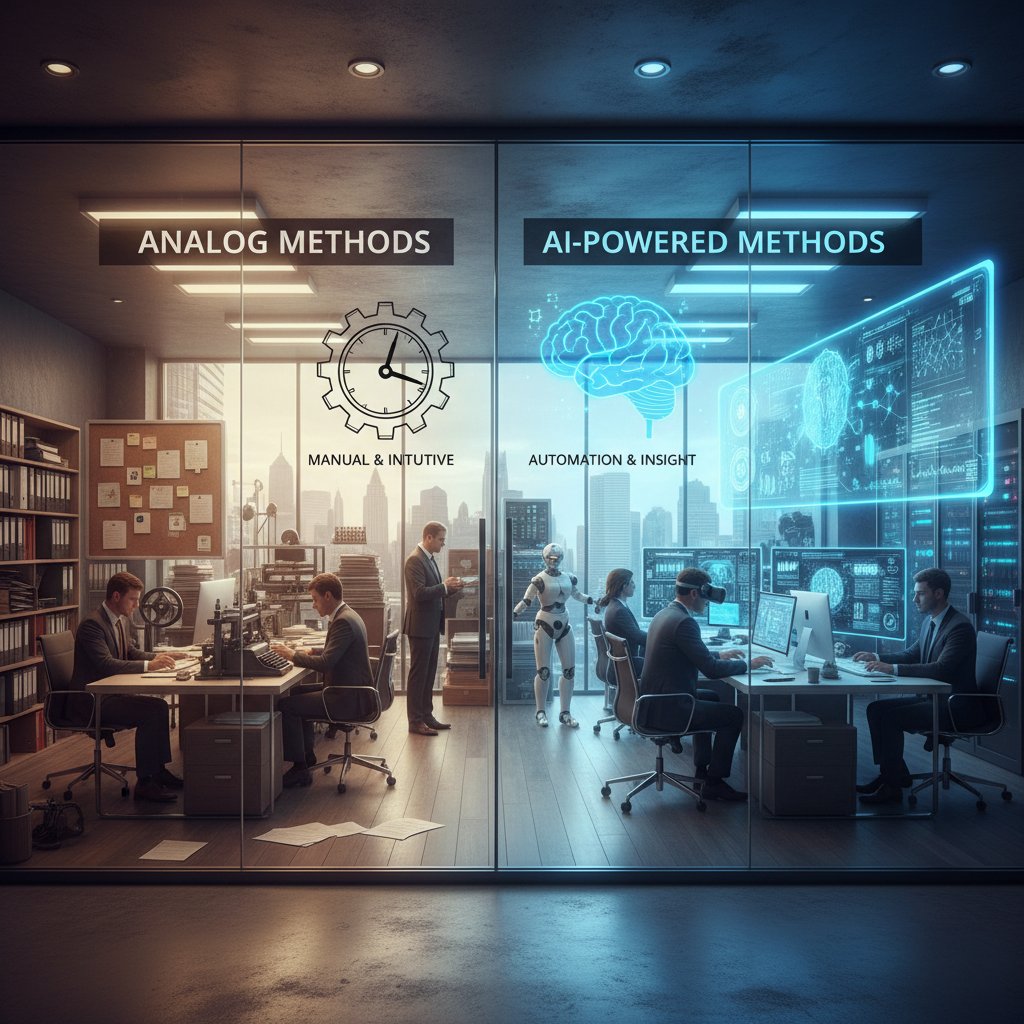
Does AI-driven productivity widen the gap?
AI’s impact isn’t distributed evenly. According to TheBusinessDive and McKinsey, industries like finance and tech see 30–50% output gains, while sectors such as healthcare lag due to trust and regulatory hurdles.
| Industry | AI Adoption Rate (%) | Productivity Gain (%) | Barriers |
|---|---|---|---|
| Finance | 72 | 48 | Compliance |
| Tech | 80 | 50 | Data quality |
| Healthcare | 41 | 16 | Trust, privacy |
| Retail | 55 | 22 | Integration |
| Education | 38 | 13 | Resistance, access |
Table 5: AI adoption and productivity outcomes by industry.
Source: Original analysis based on McKinsey, 2025 and TheBusinessDive, 2025
Globally, the divide widens—some regions leap ahead while others struggle with infrastructure or cultural barriers.
The new face of collaboration: Human + AI teams
The highest-performing teams in 2025 blend human skills with AI augmentation. In healthcare, AI triages patient inquiries, while nurses deliver empathetic care. Media outlets use AI for research, letting journalists focus on storytelling. Financial firms deploy AI for risk analysis, with advisors guiding strategy. In education, AI tutors provide personalized feedback, supporting teachers rather than replacing them.
So where does this leave us in 2025? At the messy intersection of possibility and pragmatism—where those who adapt, thrive.
The future of AI-powered personal productivity: What’s next?
Emerging trends to watch
AI-powered productivity is a moving target, with new developments reshaping the field constantly. As of 2025, research highlights several trends transforming daily workflows.
8 trends shaping the next wave of AI-powered productivity:
- AI copilots embedded in mainstream office software.
- Context-aware scheduling that adapts to user energy and focus cycles.
- Real-time, generative reporting for business intelligence.
- Cross-platform integrations reducing app fatigue.
- AI-driven personalization at the individual user level.
- Semantic search replacing keyword-based queries.
- Sentiment analysis for email and communications.
- Privacy-first AI models gaining traction amid regulatory scrutiny.

How to stay relevant in an AI-dominated landscape
The secret to relevance isn’t technical mastery—it’s adaptability. Lifelong learning, upskilling, and hybrid work models are non-negotiable.
Three approaches:
- Upskilling: Dive deeper into AI tools, data literacy, and critical thinking.
- Reskilling: Pivot to roles that leverage AI without fear of displacement.
- Hybrid models: Combine domain expertise with AI fluency for unbeatable synergy.
7 steps to adapt your career for the AI productivity era:
- Audit your current skill set and identify AI gaps.
- Enroll in hands-on AI literacy programs.
- Practice with real-world tools in safe environments.
- Seek mentorship from AI-savvy colleagues.
- Volunteer for AI-focused projects at work.
- Document and share your learning journey.
- Regularly revisit and revise your workflow for continuous improvement.
Final synthesis: Rethinking what productivity really means
If you’ve made it this far, you’ve seen the landscape: AI-powered personal productivity is equal parts promise and provocation. The data is unequivocal—AI is transforming how we work, but the journey is fraught with complexity, resistance, and opportunity. True productivity now demands more than grinding out tasks: it’s about meaning, mastery, and resilience in the face of constant change.
In the end, the human side matters most. AI can multiply your output, but only you can define what’s worth multiplying. As you recalibrate your workflow, remember that resources like teammember.ai exist to help you navigate the edge—combining cutting-edge tech with the wisdom gained from hard-fought lessons.

Supplementary topics: Beyond the basics of AI-powered productivity
Productivity myths debunked: What everyone gets wrong
Despite all the research and headlines, myths about AI productivity persist. Here are 6 that sabotage progress:
- “AI will replace all jobs”—ignores the rise of new roles and hybrid teams.
- “Automation is always good”—overlooks the risk of automating the wrong tasks.
- “Data privacy isn’t a concern”—false, as breaches can be catastrophic.
- “AI learns by itself”—it needs human feedback and quality data.
- “Bigger is better”—more tools often create more chaos, not less.
- “If my competitor uses AI, I’m doomed”—your agility and strategy matter more.
Stay skeptical, ask questions, and build your own narrative.
The ethics of AI-powered personal productivity
AI introduces ethical quandaries unique to its scale and scope. Data privacy, algorithmic bias, and the erosion of autonomy are real-world issues, not thought experiments.
Three scenarios:
- Data privacy: Sensitive client emails are processed by AI—what happens if there’s a leak?
- Algorithmic bias: AI screening tools filter out qualified candidates based on flawed training data.
- Autonomy: Employees feel pressured to follow AI recommendations, even when they conflict with personal judgment.
Key definitions:
- Informed consent: Knowing exactly how AI uses your data.
- Transparency: Clear explanations of AI decisions and processes.
- Accountability: Human oversight for AI-driven actions.
Each of these matters—ignore them at your peril.
Practical applications: AI productivity hacks you haven’t tried
Go beyond the usual tips with these innovative hacks:
- Use AI for pre-meeting research, surfacing client news and social posts automatically.
- Let AI summarize long documents you don’t have time to read.
- Auto-generate personalized follow-up emails after calls.
- Employ AI to monitor competitor websites for updates or changes.
- Set up AI to flag anomalies in financial reports before they’re problems.
- Delegate inbox triage to AI—prioritizing based on sender history and urgency.
- Use AI-driven voice transcriptions to turn meetings into actionable checklists instantly.
Every hack is an edge—if you’re willing to experiment.
Conclusion
AI-powered personal productivity isn’t a panacea—it’s a battlefield. The inconvenient truths? Most companies are still at the starting line, real gains demand new skills and discipline, and “productivity” is as much about meaning as metrics. The winners in 2025 are those who harness AI thoughtfully, question their assumptions, and refuse to let algorithms define their value. Leverage these brutally honest truths, and you’ll not only survive the AI productivity revolution—you’ll set the pace. For more strategies, insights, and tools, resources like teammember.ai are ready to help you navigate the edge. The future of work is already here. The question is: what will you do with it?
Sources
References cited in this article
- TheBusinessDive: AI Productivity Statistics 2025(thebusinessdive.com)
- ExplodingTopics: AI Statistics 2025(explodingtopics.com)
- McKinsey: AI in the Workplace 2025(mckinsey.com)
- HatchWorks: Generative AI Trends 2025(hatchworks.com)
- St. Louis Fed: Impact of Generative AI on Work Productivity(stlouisfed.org)
- Microsoft Work Trend Index(microsoft.com)
- Forbes: AI Boosts Worker Productivity(forbes.com)
- NN/g: AI Improves Employee Productivity(nngroup.com)
- Webex: AI Productivity Tools 2025(blog.webex.com)
- Styldod: AI Tools for Real Estate Agents 2025(styldod.com)
- DigitalDefynd: AI Case Studies 2025(digitaldefynd.com)
- Pew Research Center: AI Expert Predictions(pewresearch.org)
- Saner.AI: Top 10 Second Brain AI Apps 2025(saner.ai)
- Sparrow Connected: Hidden Costs of Ignoring AI(sparrowconnected.com)
- Integranxt: CFO Guide to Avoiding AI Mistakes(integranxt.com)
- Visual Capitalist: Debunking 8 Myths About AI(visualcapitalist.com)
- Forbes: 18 AI Myths Debunked(forbes.com)
- Gartner: 6 AI Myths Debunked(gartner.com)
- MIT Technology Review: AI and Creativity(technologyreview.com)
- ScienceDaily: AI Creativity Study(sciencedaily.com)
- Crofti: The Real Power of AI Automation(crofti.com)
- CREATe: AI and Creative Work(create.ac.uk)
- McKinsey: State of AI 2023(mckinsey.com)
- Lundi Matin: Limits of AI for Productivity(lundimatin.co.uk)
- One Useful Thing: When Not to Use AI(oneusefulthing.org)
- PsyPost: Psychological Risk of Outsourcing to AI(psypost.org)
- The Register: Microsoft Study on AI Decision-Making(theregister.com)
- NBER: AI and the Productivity Paradox(nber.org)
- Bruegel: AI and Productivity Paradox(bruegel.org)
- MIT Technology Review: Productivity Paradox(technologyreview.com)
- Copy.ai: AI Workflow Management(copy.ai)
- Calls9: Generative AI Case Studies(calls9.com)
- Domo: AI Readiness Guide & Checklist(domo.com)
- Thomson Reuters: AI Readiness Checklist(thomsonreuters.com)
- Forbes: 5 Mistakes Wrecking Your AI Adoption Strategy(forbes.com)
- IBM: AI Productivity(ibm.com)
Focus on what matters. Let AI handle the rest.
We know the feeling — another day starts with 50 unread emails, Ads Manager begging for attention, CRM out of date, and meetings without follow-ups. That's why we built TeamMember.ai — an AI team member that takes over all the operational work at the computer. Has its own email address and SMS number. Manages your inbox, runs Meta Ads, updates CRM, processes meetings, monitors social media, generates morning briefings, and controls the browser. Built on OpenClaw — a leading open-source AI agent — with cross-session memory and secure-cloud architecture that keeps your data safe.
Get startedBe First to Try Your AI Team Member
Every week without automation is dozens of hours lost to operational work. Hours you'll never get back. Join the waitlist and get priority access.
Frequently Asked Questions
What is AI-powered personal productivity?
AI-powered personal productivity refers to using artificial intelligence tools and systems to improve work efficiency and workflow management. Unlike earlier basic automation, modern AI assistants parse intent, analyze context, and adapt in real time to transform how professionals approach their daily tasks.
How has productivity technology evolved since 2000?
Productivity technology has evolved from email and PDAs in 2000, to smartphones and cloud tools in 2007, to basic automation and reminders in 2015, to collaboration suites in 2020, and finally to generative AI stacks for workflow orchestration by 2025. Each generation has promised greater efficiency and connectivity.
Why has the demand for AI productivity solutions increased?
The demand has increased due to digital overload—global data production more than doubled between 2020 and 2024, leaving knowledge workers constantly interrupted and searching for ways to manage the chaos. Traditional tools like email and task managers offered only temporary relief, making AI's promise of context-aware automation particularly appealing.
Does the article suggest AI productivity tools are a complete solution?
No, the article states that the AI productivity revolution faces adoption gaps, psychological challenges, and the reality that more technology doesn't always deliver better results. The article promises to reveal nine brutally honest truths that go beyond utopian hype about AI's actual impact on work.
From the Archive
Explore more from AI Team Member

AI-Powered Business Productivity: What Works and What Fails
AI-powered business productivity is reshaping work across companies. This article examines what actually works, the hidden risks, and the costly mistakes most deployments encounter.

AI-Driven Personal Efficiency: Gains Versus Burnout Risk
AI-driven personal efficiency involves both real productivity gains and risks of burnout. This article examines the promises, pitfalls, and frameworks for using AI effectively.

AI-Driven Personal Organization: Gains and Hidden Costs
AI-driven personal organization can boost productivity by up to 40%, but brings both liberation and dependency. This article examines the real impacts and trade-offs.

AI-Driven Productivity Improvement: Why Automation Often Backfires
AI-driven productivity improvement rarely delivers as promised. This article examines why most organizations struggle with AI adoption and what sustainable gains actually require.

AI Productivity Assistants: Benefits and Hidden Trade-Offs Explained
AI productivity assistants automate email, meetings, and tasks with growing adoption. This article examines the concrete benefits, pitfalls, and trade-offs reshaping how knowledge workers operate.

Productivity Assistant for Businesses: ROI and Implementation Costs
Productivity assistant for businesses can eliminate administrative overhead and deliver measurable ROI. This article examines real efficiency gains, hidden costs of outdated workflows, and implementation risks.