


What AI-Powered Online Assistants Actually Change About Work
Written with AI assistance under our editorial guidelines
AI-powered online assistants are increasingly prevalent in workplaces, with over 70% of enterprise software launches in 2024 including AI integration. While they promise efficiency and cost reduction, users primarily worry about job displacement, data privacy, and reliability. Successfully leveraging these tools requires understanding both their genuine capabilities and limitations, rather than following hype-driven marketing claims.
Step into any high-pressure workspace or digital meeting room, and you’ll feel it: the relentless, electrifying hum of artificial intelligence. In 2025, the AI-powered online assistant isn’t just another SaaS widget or faceless bot—it’s the new teammate, the silent partner shaping how we work, create, and make decisions. The pitch is everywhere: efficiency, intelligence, round-the-clock support. The reality? Much messier, more human, and—if you know where to look—far more transformative. Behind the hype, brutal truths and overlooked opportunities are rewriting the rules of productivity. This is your no-BS guide to what really matters, what’s at risk, and how to make these digital teammates work for you, not the other way around. It’s time to cut through the noise, wield these tools with intent, and leverage the AI revolution on your terms—starting with the facts, not the fairy tales.
Welcome to the age of AI-powered online assistants: Promise or peril?
The hype machine: Why everyone’s suddenly talking about AI assistants
It’s impossible to ignore: AI-powered online assistants are the hottest topic in every boardroom, Slack channel, and LinkedIn thread. According to Web Summit 2024, more than 70% of enterprise software launches in the past year included some form of AI assistant integration. What’s driving the surge? Startups see them as the ultimate productivity hack. Corporates adopt them to slash costs. Individual freelancers use them to punch above their weight. The result is a tidal wave of “smart” tools promising to automate, predict, and optimize every corner of your working life. But as the hype balloons, differentiation fades—leaving a sea of indistinguishable bots and confused users in its wake.
Alt: Modern office with digital AI assistant overlays, illustrating the AI-powered online assistant hype.

"AI assistants are the new office rock stars—but not everyone is ready for their solo." — Maya, tech strategist
Beneath the buzz: What most users really want (and fear)
Strip away the dazzling demos and buzzwords, and you’ll find the same universal hopes (and anxieties). Workers crave relief from endless busywork—calendar wrangling, data crunching, inbox overload. Managers want reliability, speed, and intelligence on tap. But, lurking underneath, there’s unease. Will AI assistants replace jobs, not just tasks? Will they expose sensitive data or make costly mistakes? According to a 2025 Zendesk survey, 65% of users cite privacy as their top concern, while 54% admit to doubting their assistant’s judgment on complex tasks.
Hidden benefits of AI-powered online assistants experts won’t tell you:
- They can quietly reveal inefficient processes you never noticed, forcing overdue organizational change.
- When integrated well, they boost not just productivity, but employee morale—nobody likes repetitive grunt work.
- They level the playing field for smaller teams, letting them compete with much larger rivals.
- AI-powered online assistants often “humanize” workflows, ironically, by freeing up actual humans for more meaningful collaboration.
- They serve as early warning systems for workflow bottlenecks and data inconsistencies.
A brief history: From clunky chatbots to ‘team members’
AI assistants didn’t arrive overnight. The road from primitive rule-based scripts to today’s “digital teammates” has been bumpy, littered with both breakthroughs and punchlines (remember Clippy?). By the late 2010s, advances in natural language processing (NLP) and deep learning gave birth to smarter, context-aware bots. In the early 2020s, these tools started learning user preferences, integrating with core business software, and—crucially—shifting from passive responders to proactive collaborators. Now, in 2025, the notion of the “AI-powered online assistant” is less about commands and more about partnership.
| Year | Milestone | Key Breakthrough / Context |
|---|---|---|
| 1997 | Launch of early bots (Clippy, AIM bots) | Rudimentary, rule-based scripts |
| 2011 | Siri, first mainstream voice assistant (Apple) | NLP enters consumer tech |
| 2016 | Google Assistant, Amazon Alexa | Voice + cloud integration, broader ecosystem links |
| 2020 | GPT-3, advanced chatbots | Human-like text generation, deep learning advances |
| 2022 | Enterprise AI assistants (email, workflow integration) | B2B adoption, context-awareness, workflow triggers |
| 2024 | AI “teammates” (autonomy, learning, proactive support) | Embedded in daily ops, not just reactive |
| 2025 | Autonomous agents & workflow partners | Near-seamless, cross-tool collaboration |
Table 1: Timeline of AI assistant evolution, 1990s to 2025.
Source: Original analysis based on [Web Summit 2024], [DIS25 experts]
Setting the stage: How this guide cuts through the noise
You’re about to dive into a guide that refuses to sugarcoat the reality. There’s no tolerance here for recycled marketing fluff or AI evangelism. Instead, expect a myth-busting, evidence-driven breakdown of what works, what doesn’t, and how to wield AI-powered online assistants with a sharp edge. Every claim in this article is backed by current research, real-world case studies, and hard-won industry lessons. If you want unfiltered guidance—complete with the pitfalls, hacks, and brutal truths—this is your playbook.
The value? You’ll walk away with a critical lens, actionable tactics, and an understanding of how to make AI your ally, not your adversary. Let’s get into the guts of what an AI-powered online assistant really is—and why that matters.
What is an AI-powered online assistant, really?
The difference between ‘AI assistant’ and ‘virtual assistant’
Words matter—especially when you’re choosing the digital muscle behind your workflow. A “virtual assistant” usually refers to a human worker performing remote admin or creative tasks (think off-shore PA answering your emails). An “AI-powered online assistant” is software, algorithm-driven and often powered by large language models (LLMs), built to automate, analyze, and execute tasks previously requiring human intelligence. Confusing these terms leads to mismatched expectations—and disappointment.
Key terms:
A digital tool, driven by artificial intelligence, that autonomously performs, analyzes, and streamlines knowledge work.
A remote human worker providing administrative, creative, or technical support, often via contract or freelance arrangements.
An AI assistant deeply integrated into organizational workflows, treated not just as a tool, but as an accountable, collaborative “colleague.”

Core technologies: Under the hood of the modern AI assistant
Today’s best AI-powered online assistants stand on the shoulders of several technologies. At the heart: machine learning, especially deep learning models trained on vast swathes of real-world data. Natural Language Processing (NLP) enables these assistants to parse human requests, extract intent, and generate relevant responses. Automation frameworks orchestrate repetitive tasks, while specialized modules handle data analysis, scheduling, and even creative work.
But raw intelligence isn’t enough. The real magic happens when these AI brains integrate seamlessly with your daily stack—think email, project management, cloud storage, or CRM. According to Tarauli (2025), embedding AI assistants directly into workflows can boost R&D speed by up to 40%. The power lies not just in their brains, but in how they connect.
The ‘team member’ paradigm: Why it’s more than just automation
Forget the old paradigm of tools as mindless robots. The true revolution is psychological and cultural: many organizations now expect their AI-powered online assistants to behave, be accountable, and even “think” like human teammates. This shift changes everything—from how you build trust to how you assign blame when things go haywire.
"Treating AI as a true team member changes everything—from trust to accountability." — Alex, workflow consultant
Narrative examples abound. In fast-paced agencies, AI isn’t just an email sorter—it’s the “colleague” who never sleeps, always flags anomalies, and surfaces insights before the Monday meeting. That doesn’t erase the need for humans; instead, it reframes the relationship, demanding new skills in managing digital collaborators.
teammember.ai in context: A new kind of workplace ally
Services like teammember.ai exemplify this next-gen approach. Rather than acting as a distant command-and-control bot, the AI-powered online assistant operates as a deeply integrated, on-demand resource, accessible directly from your inbox. This “workplace ally” doesn’t just automate rote tasks; it adapts, collaborates, and learns, reshaping the boundaries between tool and teammate—mirroring broader industry trends toward hybrid, AI-human teams.
The real-world impact: Stories from the frontlines
How startups, agencies, and creatives use AI assistants every day
The real test of any AI-powered online assistant isn’t in the pitch deck or demo video—it’s in the gritty churn of daily business. Creative agencies deploy AI teammates to draft campaign proposals overnight, conduct market analysis in minutes, and automate repetitive design tweaks. Startups trust them to manage inbound leads, triage support tickets, and deliver instant analytics. Even solopreneurs and freelancers now rely on AI to juggle content calendars, optimize outreach, and spot trends before rivals do.

Unexpected wins (and epic fails): Case studies you won’t read in the brochures
Not all AI assistant stories end in victory laps. At a mid-sized digital agency, an AI-powered online assistant saved a high-stakes launch by generating a last-minute competitor analysis—cutting research time from two days to two hours. According to [Zendesk, 2025], similar deployments have reduced resolution times and boosted satisfaction in customer support by over 30%.
But there’s a dark side. A multinational tried automating all client comms with a generic assistant, only to see brand voice diluted and customer complaints spike. The lesson: over-automation without human oversight can unravel even the best-laid workflows.
| Workflow Type | Deadline Met (%) | Error Rate (%) | Employee Satisfaction | Notable Issues |
|---|---|---|---|---|
| Human-only | 70 | 3.5 | Medium | Slow analytics, burnout |
| AI-assisted | 95 | 2.1 | High | Requires training |
| Over-automated | 60 | 7.8 | Low | Loss of nuance, errors |
Table 2: Comparison of outcomes—human-only, AI-assisted, and over-automated workflows.
Source: Original analysis based on [Zendesk 2025], [Tarauli 2025]
Beyond productivity: How AI assistants are shaping workplace culture
It’s tempting to view AI-powered online assistants as just another automation lever. But real-world evidence shows these tools are quietly re-engineering workplace culture. Teams that embrace them often report not just higher output, but more creative interactions—AI takes care of the tedium, freeing humans for deeper thinking. On the flip side, boundaries blur: When the “teammate” never sleeps, when do you log off?
"Our AI assistant doesn’t just schedule meetings—it changes how we talk to each other." — Jamie, HR lead
The upshot: The AI-powered online assistant doesn’t just rewire workflows—it forces every team to rethink trust, communication, and the very meaning of collaboration.
Myth-busting: What AI-powered online assistants can’t (and shouldn’t) do
Automation overload: When AI is a liability, not an asset
It’s the dirty secret nobody brags about: AI-powered online assistants can, and do, make things worse if you’re not careful. Over-automation can create “ghost in the machine” chaos—missed nuances, overlooked exceptions, blind trust in dodgy algorithms.
- Assuming AI is always right: Blind faith leads to costly errors, especially in complex, context-heavy tasks.
- Ignoring privacy and security: Data leaks and compliance nightmares can escalate fast.
- Neglecting human oversight: AI can’t, and shouldn’t, replace judgment in high-stakes decisions.
- Failing to customize: Treating a generic assistant as a plug-and-play solution often backfires.
- Scaling too fast: Rushing to automate everything invites workflow breakdowns and erodes trust.
Red flags to watch out for when implementing an AI-powered online assistant:
- No clear audit trail for AI decisions or outputs.
- Assistant fails to learn from feedback or gets stuck in repetitive mistakes.
- Users bypass the assistant out of frustration, creating shadow processes.
- Increased error rates in client-facing communications.
- Data privacy warnings or compliance alerts triggered after integration.
Common misconceptions debunked
The mythos around AI-powered online assistants is thick—and often misleading.
False. Even the best models still misinterpret context, especially in ambiguous or novel situations.
Untrue. According to Tarauli (2025), hybrid workflows consistently outperform full automation or human-only approaches.
Misleading. Security is only as strong as the surrounding infrastructure and user vigilance.
Wrong. Like any system, they require calibration, feedback, and ongoing learning to stay relevant.
Security, privacy, and the trust equation
The stakes are high. With more integration comes more risk—data breaches, unauthorized access, and accidental leaks. According to Web Summit 2024, 48% of organizations using AI-powered online assistants reported at least one privacy scare in the past year. Mitigation starts with robust data governance, granular permission controls, and keeping humans “in the loop” for sensitive operations.
| Platform | Data Encryption | User Controls | Audit Logging | Privacy Certifications | Year |
|---|---|---|---|---|---|
| teammember.ai | Yes | Granular | Yes | GDPR, ISO 27001 | 2025 |
| Leading Competitor A | Yes | Basic | Limited | SOC2 | 2025 |
| Leading Competitor B | No | None | No | None | 2025 |
Table 3: Security features comparison across top AI assistant platforms (2025 data).
Source: Original analysis based on [Web Summit 2024], [DIS25 experts]
Choosing your AI-powered online assistant: The brutal checklist
Key features that actually matter (and what’s just fluff)
Don’t be dazzled by dashboards or sidetracked by “AI-powered” stickers. The must-haves are practical: deep workflow integration, robust data security, flexible customization, and human-in-the-loop controls. Nice-to-haves? Conversational avatars or “emotional intelligence” modules that rarely move the productivity needle.
Features that sound impressive but often disappoint in real workflows:
- “Sentiment analysis” that misreads sarcasm and nuance.
- Voice command integration in noisy office environments.
- Hyper-automated scheduling that ignores real humans’ preferences.
- Recommendation engines based on limited or outdated data.
- “Predictive” features that can’t explain their logic or adapt to feedback.
Cost, value, and the ROI equation
The price tag is just the beginning. Leading AI-powered online assistants range from $15/user/month to $100/user/month, but real cost comes from time spent onboarding, maintaining, and correcting mistakes. Smart buyers calculate ROI by factoring in not only the sticker price, but also the indirect costs—workflow disruption, security risks, and lost trust if things go wrong.
| Solution | Monthly Cost (per user) | Annual Cost | Indirect Costs* | Key Value Drivers |
|---|---|---|---|---|
| teammember.ai | $25 | $300 | Low (seamless email) | Workflow integration, skillset range |
| Competitor A | $60 | $720 | Medium | Analytics, moderate integration |
| Competitor B | $15 | $180 | High (limited stack) | Basic automation only |
*Indirect costs: Training, errors, shadow workflows, security concerns
Table 4: Cost-benefit analysis of leading AI assistant solutions.
Source: Original analysis based on [DIS25 experts], [Web Summit 2024]
How to test-drive: Step-by-step guide to piloting an AI assistant
- Clarify your workflow pain points: Map where human bottlenecks and repetitive tasks slow you down.
- List required integrations: Identify which email, project, or document tools the assistant must plug into.
- Run a limited-scope pilot: Select a team or process for trial—avoid “big bang” rollouts.
- Establish baseline metrics: Track current time-to-completion, error rates, and satisfaction before deploying the assistant.
- Monitor and iterate: Gather feedback, tweak configurations, and monitor for unintended side effects.
- Double down—or pull the plug: Only expand if the assistant delivers measurable gains. If not, iterate or switch tools.
During pilots, common pitfalls include unclear ownership, poor training, and failing to set realistic benchmarks. Avoid them by treating your AI-powered online assistant as a true (and accountable) team member from day one.
Integration deep dive: Making an AI assistant your real team member
Seamless integration with your existing workflow
The difference between a productivity multiplier and a digital headache? Integration. AI-powered online assistants work best when they disappear into your daily flow, auto-updating calendars, prioritizing emails, and surfacing insights in project dashboards. Best practices include leveraging APIs, setting granular permissions, and building clear escalation paths for exceptions. When integration is botched, expect endless context-switching, duplicate data, and frustrated team members.
Integration headaches are common: authentication errors, data silos, and permissions mismatches can sabotage even the smartest assistant. Fixes include standardizing data formats, using single sign-on, and mapping out escalation procedures before rollout.
Customizing your assistant: Hacks and advanced setups
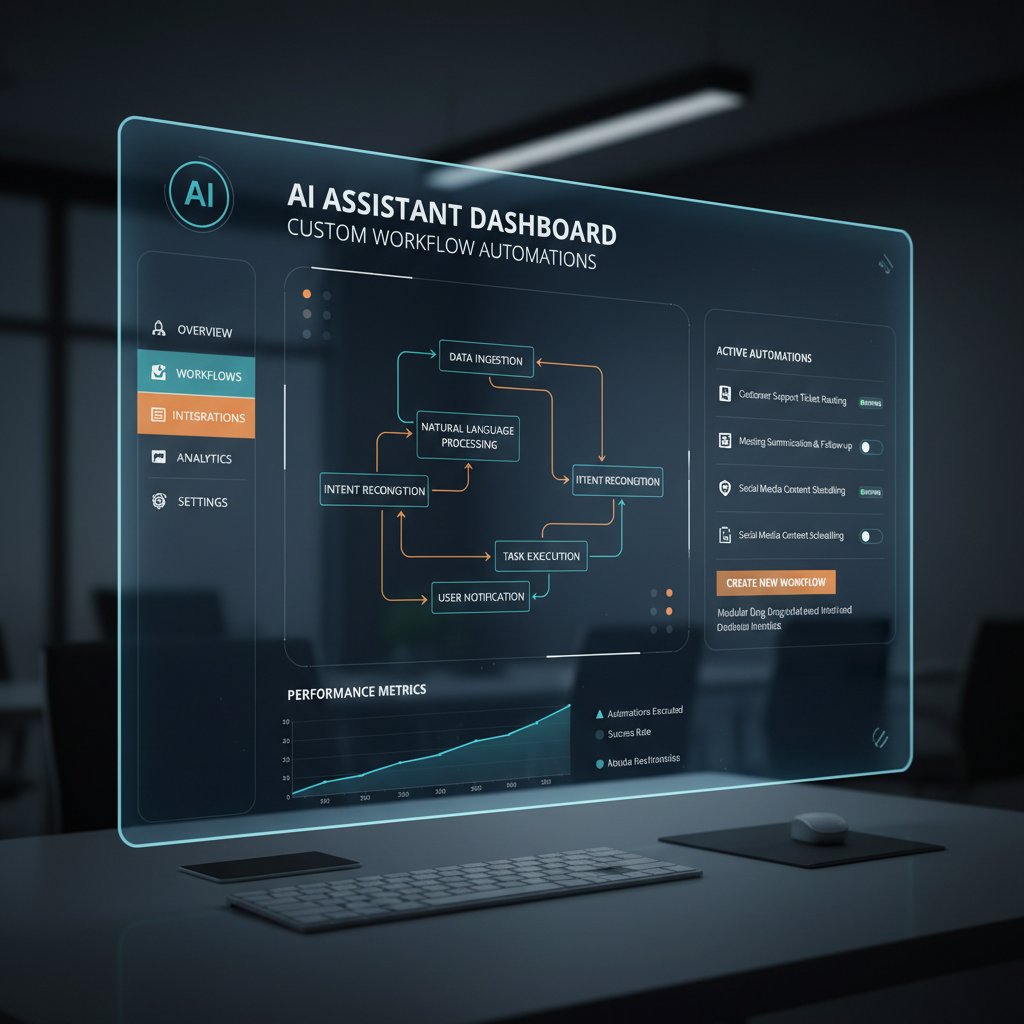
One-size-fits-all is a lie. The power of an AI-powered online assistant lies in its adaptability. Advanced users routinely set up custom triggers—think: auto-generating reports when KPIs dip, or flagging anomalies in real time. Skills can be tailored to industry jargon, unique workflows, or even personal communication styles.
Monitoring and improving assistant performance
Treat your AI-powered online assistant as a living system—track its outputs, solicit feedback, and measure impact: Did response times drop? Did error rates improve? Are users actually relying on the assistant, or working around it? Metrics that matter include task completion rates, human override frequency, and satisfaction scores. Regular “post-mortems” after workflow glitches can surface hidden flaws and fuel continuous improvement.
The human factor: When (and why) people still matter
What humans do better—now and always
Beneath the algorithmic fireworks, one brutal truth stands: Some skills remain stubbornly, beautifully human. According to DIS25 experts, tasks demanding empathy, negotiation, creative insight, or deep context simply can’t be offloaded to an AI-powered online assistant—yet.
Human skills AI still can’t replicate in 2025:
- Reading between the lines in ambiguous client requests.
- Building trust through nuanced, empathetic communication.
- Navigating ethical gray zones and making judgment calls.
- Innovating “outside the box” in ways algorithms can’t predict.
- Mediating team conflicts or cultural sensitivities.
Collaboration, boundaries, and avoiding over-automation burnout
The psychological toll of always-on, all-seeing AI assistants is real. Employees report increased pressure to “keep up” with tireless digital teammates. Without clear boundaries, burnout follows—especially when AI starts to crowd out human agency. Balancing automation with autonomy means setting hard limits: preserving human review, creating digital “quiet hours,” and fostering a culture that values both speed and reflection.
Team culture thrives when humans and AI-powered online assistants collaborate—not compete. The best teams use AI as a springboard, not a crutch, amplifying strengths without sacrificing creativity or trust.
teammember.ai in the real world: A resource, not a replacement
Platforms like teammember.ai succeed not by threatening jobs, but by reimagining what support looks like. Their AI-powered online assistants operate as resources—relieving drudgery, surfacing insights, and handling the grunt work—so that human teams can focus on strategy, relationships, and innovation. The message is clear: AI is an engine for progress, not a pink slip machine.
Controversies and future shocks: Where AI assistants go from here
The ethics debate: Bias, fairness, and transparency
Current controversies around AI-powered online assistants are as much about values as technology. Bias baked into algorithms can reinforce inequality or automate discrimination—intentionally or not. Transparency remains elusive: Why did the assistant make that recommendation? Who’s accountable when things go wrong?
"The real question isn’t what AI can do, but what it should do." — Priya, AI ethicist
Ethical frameworks and third-party audits are emerging, but the culture of “move fast and break things” still lingers.
Regulation, compliance, and the global AI crackdown
The regulatory landscape has shifted dramatically. In 2025, new laws demand explainability, consent, and strict privacy controls. According to Web Summit 2024, over 60% of surveyed companies report compliance as their top AI headache. The cost of non-compliance isn’t abstract—it’s lawsuits, fines, and lost customer trust. Smart organizations now invest in data governance, regular audits, and clear documentation of AI assistant actions.
Wild predictions: What the next five years could bring
Forecasts suggest a chaotic, exhilarating road ahead. Experts anticipate a shift from model-centric to data-centric AI strategies, with assistants evolving from standalone tools to deeply embedded workflow partners (DIS25). Autonomous agents are already becoming mainstream, automating not just tasks, but entire processes. Expect further cultural clashes, breakthroughs in personalization, and—inevitably—fresh controversies as the boundaries between human and machine blur.

Beyond the assistant: Adjacent trends and the big picture
AI assistants vs. human assistants: Collaboration or competition?
The relationship is not adversarial—it’s collaborative, most of the time. AI excels at speed, scale, and data crunching; humans outshine in intuition, negotiation, and empathy. The most effective organizations blend both, leveraging AI-powered online assistants to scale routine tasks while freeing human assistants for high-value work.
| Feature | AI Assistant (2025) | Human Assistant (2025) |
|---|---|---|
| Availability | 24/7 | Standard working hours |
| Data processing speed | Instant | Moderate |
| Empathy/context | Limited | High |
| Creativity | Algorithmic | Unbounded |
| Customization | High (rules-based) | Adaptive, nuanced |
| Cost | Low/medium | Medium/high |
| Security/privacy | Tech-dependent | Process-dependent |
Table 5: Feature-by-feature comparison—AI vs. human assistants in 2025.
Source: Original analysis based on [Web Summit 2024], [DIS25 experts]
The rise of ‘AI as a service’: What does it mean for you?
On-demand AI expertise is exploding. “AI as a service” means you can rent niche skills—data analysis, content creation, market research—whenever you need them, without hiring or training a new staffer. This democratizes access, letting even tiny teams punch above their weight.
Unconventional uses for AI-powered online assistants in 2025:
- Detecting fraud in real time for financial services.
- Drafting legal correspondence (under human review).
- Monitoring social sentiment for brands in hyper-competitive markets.
- Automating patient communication and scheduling in healthcare.
- Generating instant competitor analyses for VC pitches.
Cultural impact: How AI assistants are changing how we work and live
AI-powered online assistants don’t just shift tasks—they redraw boundaries. Work-life lines blur when your digital teammate is always on. Communication norms change; terseness replaces small talk, while trust shifts from person to platform. Backlash is inevitable—some teams rebel, reverting to analog tools or demanding “AI-free” zones. The ongoing culture war is as much about identity as efficiency.
Your action plan: Getting the most from your AI-powered online assistant
Priority checklist for safe, smart implementation
- Map your workflows: Identify high-impact areas for automation, not just “nice to have” tasks.
- Choose your assistant wisely: Prioritize integration, security, and customization over superficial features.
- Pilot, measure, iterate: Start small, track performance, and refine based on hard data.
- Enforce boundaries: Set clear rules for human review, privacy, and escalation.
- Train your team: Build digital literacy, assign “AI champions,” and celebrate small wins.
- Audit regularly: Review assistant outputs, security logs, and user feedback for blind spots.
- Document everything: Keep a playbook of configurations, integrations, and lessons learned.
Avoiding common mistakes means never trusting black-box tools blindly, demanding transparency, and refusing to rush adoption simply for the sake of trend-chasing.
Measuring success: Metrics, KPIs, and beyond
Continuous improvement is grounded in hard numbers. Track task completion rates, user satisfaction, error frequency, and time saved. But don’t neglect qualitative feedback: Are teams more creative? Less stressed? Does the assistant amplify your strengths, or just add digital noise? Align metrics with business goals, not vanity stats.
Continuous learning: Keeping your assistant (and yourself) sharp
AI-powered online assistants are only as good as their training and updates. Regular feedback loops—human corrections, new data sources, evolving best practices—keep the system sharp. Invest in ongoing education, both for your assistant and your team.
Conclusion: The new normal—AI-powered online assistants as partners, not replacements
The myths have been punctured, the shortcuts exposed, and the opportunities illuminated. AI-powered online assistants are neither miracle cures nor soulless automatons—they’re rapidly becoming indispensable partners, reshaping how we work and collaborate. The most successful teams wield these tools with discernment, blend automation with insight, and never lose sight of the human factor.
The revolution isn’t about replacing people; it’s about unleashing their potential. The brutal truths? Implementation is messy, security is non-negotiable, and culture eats strategy for breakfast. The bold solutions? Embrace transparency, invest in training, and treat your AI assistant as an evolving, accountable ally. The future of work doesn’t belong to AI alone—or humans alone—but to teams that combine the strengths of both.
Your call to action: Challenge the status quo, shape the future
If you’ve read this far, you’re already ahead of the curve. Don’t settle for off-the-shelf hype or knee-jerk fears. Rethink your workflows, experiment boldly, and share your stories—warts and all. The next chapter of AI-powered online assistants will be written by those willing to challenge, adapt, and demand more from their digital teammates.
So, here’s the question to leave you with: In a world of infinite automation, where does your uniquely human value shine the brightest?
Sources
References cited in this article
- Artificial Intelligence Statistics 2025(eluminoustechnologies.com)
- 10 Brutal AI Truths from Web Summit 2024(news.remote-first.institute)
- 5 Bold AI & Data Predictions for 2025/2026(hyperight.com)
- Zendesk AI Customer Service Statistics(zendesk.com)
- IMF: Artificial Intelligence’s Promise and Peril(imf.org)
- Forbes: AI-Powered Assistants and Customer Experience(forbes.com)
- ISACA: The Promise and Peril of the AI Revolution(isaca.org)
- TIME: Ray Kurzweil on AI Safety(time.com)
- The Evolution and Future of AI Assistants(thefuturethinker.substack.com)
- Forbes: The Agentic Evolution(forbes.com)
- Chatbot.com Guide(chatbot.com)
- Maestro Labs: Best AI Assistant for Business(maestrolabs.com)
- IBM: New AI Assistant Innovations(ibm.com)
- AIT365: AI Assistant Guide 2024(aitech365.com)
- Devabit: 11 New Technologies in AI(devabit.com)
- Software Oasis: AI Chatbots & Virtual Assistants 2024(softwareoasis.com)
- MIT Tech Review: Generative AI Breakthroughs(technologyreview.com)
- Innobu: Automation vs AI Systems(innobu.com)
- Academy of Management Proceedings(journals.aom.org)
- Fireflies: Best AI Assistants(fireflies.ai)
- Microsoft: Real-World AI Business Transformations(blogs.microsoft.com)
- Appinventiv: AI Case Studies(appinventiv.com)
- Cloud Google: Generative AI Use Cases(cloud.google.com)
- Exploding Topics: AI Startups(explodingtopics.com)
- Synthesia: AI Statistics(synthesia.io)
- SEMRush: AI Tools for Digital Marketing(semrush.com)
- Built In: 3 Ways AI Will Change the Workplace(builtin.com)
- Aisera: AI in the Workplace(aisera.com)
- WorkDesign: Navigating AI and the 2024 Workplace(workdesign.com)
- Jatinder Palaha: AI Limitations(jatinderpalaha.com)
- Sofigate: AI Myths Busted in 2023(sofigate.com)
- Intelliprompt: Limitations of AI Assistants(intelliprompt.ie)
- Trend Micro: AI Assistant Security(trendmicro.com)
- Promise Legal: AI Digital Assistants & Privacy Risks(blog.promise.legal)
- SecurityWeek: Cyber Insights 2024(securityweek.com)
- White & Case: AI Regulation Tracker(whitecase.com)
- KPMG: Trust in Artificial Intelligence(kpmg.com)
- Pew Research: AI & Data Privacy(pewresearch.org)
- UseMotion: AI Personal Assistants(usemotion.com)
- OpenAssistantGPT: AI Chatbot ROI(openassistantgpt.io)
- Scalefocus: AI Implementation Cost(scalefocus.com)
- Forbes: AI ROI(forbes.com)
- IDC/Microsoft: AI Opportunity Study(blogs.microsoft.com)
- Number Analytics: AI Virtual Assistant Strategies(numberanalytics.com)
- Bilderberg Management: AI Integration Best Practices(bilderbergmanagement.com)
- Netguru: AI Integration Guide(netguru.com)
Focus on what matters. Let AI handle the rest.
We know the feeling — another day starts with 50 unread emails, Ads Manager begging for attention, CRM out of date, and meetings without follow-ups. That's why we built TeamMember.ai — an AI team member that takes over all the operational work at the computer. Has its own email address and SMS number. Manages your inbox, runs Meta Ads, updates CRM, processes meetings, monitors social media, generates morning briefings, and controls the browser. Built on OpenClaw — a leading open-source AI agent — with cross-session memory and secure-cloud architecture that keeps your data safe.
Get startedBe First to Try Your AI Team Member
Every week without automation is dozens of hours lost to operational work. Hours you'll never get back. Join the waitlist and get priority access.
Frequently Asked Questions
What percentage of enterprise software launches in 2024 included AI assistant integration?
According to Web Summit 2024, more than 70% of enterprise software launches in the past year included some form of AI assistant integration.
What are the main concerns users have about AI-powered online assistants?
According to a 2025 Zendesk survey, 65% of users cite privacy as their top concern, while 54% admit to doubt (the article text appears incomplete on this point). Workers also worry about job replacement and potential costly mistakes from AI assistants.
What specific tasks do workers want AI assistants to help with?
Workers crave relief from busywork including calendar wrangling, data crunching, and inbox overload.
Why are startups, corporations, and freelancers adopting AI assistants?
Startups see them as the ultimate productivity hack, corporates adopt them to slash costs, and individual freelancers use them to punch above their weight.
From the Archive
Explore more from AI Team Member

AI-Powered Virtual Assistant Tools: Power and Peril Explained
AI-powered virtual assistant tools now handle email, scheduling, and decision-making in modern offices. This article examines their productivity gains and the risks they introduce.

AI-Driven Virtual Assistants: Real Productivity Gains Versus Hype
AI-driven virtual assistants for productivity enhancement promise seamless automation, but this article examines the actual impact, unexpected wins, and psychological costs of working with algorithms.

AI Productivity Assistants: Benefits and Hidden Trade-Offs Explained
AI productivity assistants automate email, meetings, and tasks with growing adoption. This article examines the concrete benefits, pitfalls, and trade-offs reshaping how knowledge workers operate.

AI-Driven Virtual Assistant Technology: Workplace Impact in 2025
AI-driven virtual assistant technology is reshaping workplace dynamics in 2025. This article examines productivity gains, privacy concerns, and the cultural shifts organizations face.

How AI-Powered Virtual Assistants Change Productivity Tracking
AI-powered virtual assistants for productivity tracking reshape how teams work. This article examines their real benefits, privacy tradeoffs, and integration challenges.

AI Voice Assistant Software: Capabilities and Business Impact
AI voice assistant software is redefining workplace productivity. This article examines what it delivers, where it falls short, and the real business impact.