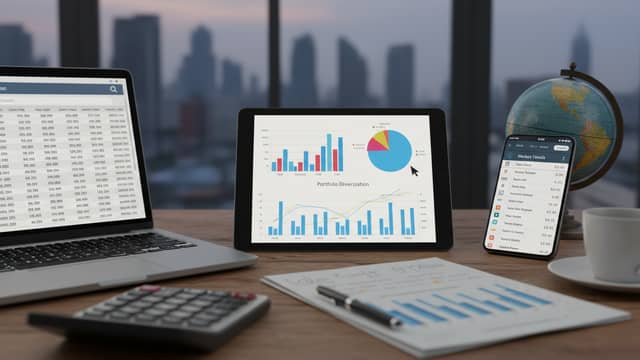
Finance Portfolio Analysis Tools: Features That Protect Returns
Finance portfolio analysis tools range from spreadsheets to AI platforms. This article explains which features genuinely protect returns and which create false confidence.
88 articles · Page 1
This section collects the site's articles on turning data into decisions: business intelligence tools and platforms, no-code analytics, automated reporting, real-time analytics and decision support systems. Articles compare data analytics tools and business intelligence alternatives, explain decision-making frameworks and how to choose decision tools, and look at what AI-powered data analysis can and cannot replace, including the debate around AI replacing data analysts. Practical pieces cover automated market research, automating finance and market trend analysis, automatic report generation, analysing customer behaviour, and outsourcing data analysis. Each article weighs the gains against the pitfalls, from bad data and AI hype to the limits of automated judgment.
Finance portfolio analysis tools range from spreadsheets to AI platforms. This article explains which features genuinely protect returns and which create false confidence.
Alternative to data analysts: the article examines AI-powered analytics, no-code solutions, and hybrid team approaches that address data bottlenecks and accelerate decision-making.
Efficient market insights tools separate high performers from laggards. This article examines what these tools deliver, which approaches work, and how to apply them effectively.
How to interpret data efficiently and avoid common pitfalls. This article explains why intuition fails, the myths that mislead, and the frameworks that work.
Processing large data sets online requires navigating complexity, data silos, and spiraling costs. This article explains the hard realities and cost-effective approaches.
Compiling reports quickly requires the right tools. This article covers methods and software that maintain quality while reducing time spent on manual report creation.
Tools for real-time business insights enable faster decisions but carry risks. This article examines what works, where they fail, and how to use them effectively.
Tools for timely report creation balance speed with accuracy. This article explains seven strategies and technologies that help teams generate reports faster without sacrificing quality.
Tools replacing report writers are automating business reporting. This article examines what's real, what's hype, and what new roles are emerging for humans.
Best software for competitor analysis helps track rivals' moves across pricing, content, and messaging. This article reviews leading tools and how they compare.
Customer behavior analysis tool guides organizations through myths and risks. This article explains how to move beyond dashboards and extract actionable insights from behavioral data.
Decision support software alternatives address gaps in legacy systems. This article compares options, explains why 48% of organizations report dissatisfaction, and outlines viable approaches.
Tools for accurate performance reports expose hidden errors and unreliable metrics. This article examines the real state of reporting accuracy and strategies to obtain actionable data.
Tools for informed business choices multiply while uncertainty grows. This article examines seven research-backed strategies for making smarter decisions with available data.
Automate market trend analysis: this article examines the real risks, genuine advantages, and practical strategies needed to implement automation effectively in 2025.
Report writer alternatives are displacing legacy tools in 2025. This article examines why traditional report writers fail teams and presents modern options with real-world case studies.
An AI-powered virtual assistant for competitive insights enables real-time market intelligence. This article explains how these tools work and their strategic advantage.
Competitor research automation enables faster, more accurate intelligence gathering. This article explains how to leverage automation effectively while avoiding data overload and regulatory pitfalls.
Quick market research without assistants covers field-tested tactics for solo founders and marketers to validate ideas and size up competitors fast.
Tools for actionable data insights help organizations cut through data overload and make better decisions.
Tools for detailed market research help organizations move beyond guesswork. This article covers the platforms and strategies that expose market blind spots and support better decisions.
Automatic performance reporting reduces manual work and exposes hidden costs of outdated processes. This article explains what automation delivers and the risks it uncovers.
This article examines tools for accurate decision-making, covering frameworks and strategies that help reduce uncertainty and counter cognitive bias in high-stakes choices.
Automated data analysis solutions are reshaping corporate decision-making at scale. This article examines the capabilities, the genuine risks, and what organizations need to know.
Automated market research is reshaping industry practices. This article examines the genuine capabilities, hidden costs, and data risks behind the technology.
Automatic report generation tools promise efficiency but come with hidden costs. This article examines their capabilities, common pitfalls, and how to evaluate them for your workflow.
This article evaluates the best software for data insights, comparing 13 tools to separate proven performers from overhyped alternatives that waste time and resources.
Investment portfolio insights assistant tools combine human judgment with algorithmic analysis. This article examines their real capabilities, limitations, and how to deploy them effectively.
Tools for better business decisions are now critical to survival. This article explains what works, which solutions hide costly traps, and how to choose effectively.
Best market research software evaluated across key features and real-world performance. This guide explains which tools deliver measurable results and where hidden costs lie.
A data analysis assistant promises to solve the data-overload problem, but brings hidden trade-offs. This article weighs the real risks and payoffs of using one.

Decision-making improvement tools help teams cut through data overload and cognitive bias. This article examines research-backed methods that separate high-performing teams from the rest.


Market trends analysis online helps decision-makers navigate shifting digital landscapes. This article examines practical strategies, industry realities, and how to leverage online trend analysis for competitive advantage.
Analyzing customer behavior efficiently requires focus, not data hoarding. This article explains why most analytics fail and how to extract actionable insights.
Data analyst alternatives like AI tools and no-code platforms are changing how companies extract insights.
Data-driven decision tools promise objectivity but can deceive. This article examines the risks, real strengths, and lessons from leaders who've navigated analytics platforms successfully.
Generate business reports instantly: this article examines the benefits, hidden costs, and practical strategies for modern business reporting without sacrificing decision quality.
Online data analysis solutions promise seamless integration and instant insights, but the reality is more complex. This article examines what these platforms actually deliver.
Processing complex data quickly is essential for competitive advantage. This article explains the technical strategies and organizational approaches that enable teams to handle large datasets efficiently.
Tools for data interpretation help organizations transform raw data into meaningful insights. This article explains why these tools are critical for business decisions and competitive advantage.
A decision support system gathers, analyses and presents data so that people can make a specific business decision. It sits alongside business intelligence platforms and reporting tools, but its focus is the decision rather than the dashboard. Articles in this section compare such systems with analyst-led and AI-powered approaches.
AI-powered data analysis can automate repeated work such as report writing, performance reporting and trend monitoring. It does not remove the need for human judgment about context, data quality and which questions matter. Several articles here examine where automation genuinely improves decisions and where it introduces risk.
Start from the decisions the tool has to support, then check whether it fits your data sources, reporting cadence and the skills of the people using it. No-code analytics and automated reporting tools reduce setup effort, while business intelligence platforms offer broader modelling. The comparison articles in this section set out the tradeoffs.