


Tools for Accurate Decision-Making That Outsmart Your Own Bias
Written with AI assistance under our editorial guidelines
Accurate decision-making has become essential in today's high-stakes environment where data overwhelms and mistakes carry serious consequences. Relying on gut instinct alone is insufficient; instead, data-driven decision support tools and robust frameworks help neutralize bias and uncertainty. Ninety percent of CEOs now use business intelligence platforms for critical choices, reflecting the shift from intuition toward algorithm-assisted decision-making that cuts through noise and improves outcomes.
When the stakes are sky-high and the data is drowning you, accurate decision-making isn’t just a business buzzword—it’s the difference between dominance and disaster. In a world awash with real-time data, AI-powered analytics, and relentless volatility, relying on gut instinct alone is a recipe for regret. But with the right tools for accurate decision-making, you can cut through the noise, neutralize uncertainty, and tilt the odds in your favor. This isn’t another bland list of apps; it’s a no-nonsense exposé into the hidden traps, breakthrough frameworks, and bold strategies that define the winners of 2025. Whether you’re a tech exec dodging disruption, a startup founder staring down existential choices, or anyone who’s sick of second-guessing, this is your roadmap to ruthless clarity. Ready to challenge your assumptions and become a decision-making powerhouse? Dive in.
Why accurate decision-making is the new survival skill
The high stakes of today’s decisions
The modern landscape of decision-making is a minefield. Every choice, from product launches to crisis response, carries the potential to make or break your reputation, finances, or even entire organizations. According to Logic Fruit Technologies (2024), the acceleration of technology and the proliferation of information has made decision fatigue a tangible threat, and mistakes now carry amplified repercussions. In healthcare, for example, the rise of AI-assisted diagnostics has raised the bar for accuracy, yet a single misstep can cascade into life-altering consequences.

"In today’s hyper-connected environment, a single flawed decision can echo across markets and media in seconds, leaving little room for recovery." — Logic Fruit Technologies, 2024
It’s not just CEOs and analysts feeling the burn. From small business owners to public policymakers, everyone is forced to reckon with a world where intuition isn’t enough and the price of error is relentless scrutiny. This is why the demand for robust, data-driven decision support tools is surging, with a recent Medium report revealing that 90% of CEOs now rely on business intelligence platforms for their most critical choices (Medium, 2023).
From gut instinct to algorithm: how we got here
For centuries, decision-making oscillated between intuition, tradition, and raw calculation. But the last decade has seen an explosion in algorithmic and AI-driven frameworks that have redefined what it means to make an “accurate” choice.
| Era | Dominant Approach | Key Tools/Frameworks | Notable Outcomes |
|---|---|---|---|
| Pre-2000s | Gut instinct, experience | SWOT, classic risk analysis | High error rate, slow adaptation |
| 2000s-2015 | Early data analytics | Excel, early BI, dashboards | Faster, but often siloed |
| 2015-2020 | Big data, cloud BI | Advanced BI, predictive analytics | Data-driven, some accuracy gains |
| 2020-2025 | AI & automation | AI models, digital twins, IoT, edge computing | Real-time, context-aware, high speed |
Table 1: Evolution of decision-making approaches and associated tools. Source: Original analysis based on Medium (2023), Logic Fruit Technologies (2024).

The transition from gut-feel to algorithm isn’t just about new gadgets—it’s about fundamental shifts in how we define, pursue, and measure accuracy. The proliferation of edge computing and IoT—now growing at CAGRs of 48.6% and 21.3% respectively—means decisions can be made at the point of action, not in distant boardrooms (Techllective, 2024).
Unpacking the hype around ‘accuracy’
Accuracy is the holy grail—but what does it really mean in the messy, complex world of decision-making? The industry’s obsession with perfect predictions and flawless execution often glosses over the hard realities beneath the surface.
- Accuracy is context-dependent: What’s “accurate” in one industry or scenario may be reckless in another. Precision in finance could be paralysis in creative fields.
- No tool is bias-free: Algorithms inherit the blind spots of their creators and the messiness of their data sources.
- Quantitative ≠ qualitative: Not every metric that matters can be measured, and vice versa.
- Over-reliance can backfire: Too much faith in “objective” tools can create the illusion of control—and blind you to emerging risks.
In today’s world, outsmarting uncertainty means being brutally honest about the trade-offs and limitations of even the slickest tools.
The anatomy of a decision-making tool: what really matters
Defining accuracy: more than just numbers
Accuracy isn’t just about mathematical precision—it’s about relevance, timeliness, and adaptability. A so-called “accurate” tool that lags behind the present moment or fails to account for context is no better than a shot in the dark.
The degree to which a tool’s output reflects real-world outcomes, accounting for both quantitative precision and qualitative alignment with objectives.
Systematic deviation from true outcomes, often embedded in algorithms or data. Bias can lurk in training datasets, model assumptions, or implementation.
The ability of a tool to deliver actionable insights in the right moment, not after the window for action has closed.
Openness about how a tool derives its answers—including the algorithms, data, and logic used—so users can assess its trustworthiness.
An effective decision-making tool in 2025 is about more than just crunching numbers—it’s about surfacing the right insight at the right time, in a way the decision-maker can trust.
Bias, blind spots, and the myth of objectivity
No tool is immune to bias. From training data to designer assumptions, the myth that algorithms are neutral has crumbled under the weight of high-profile failures. Recent research from Logic Fruit Technologies highlights that even advanced AI models can amplify embedded prejudices, leading to systemic errors that go unnoticed until disaster strikes.
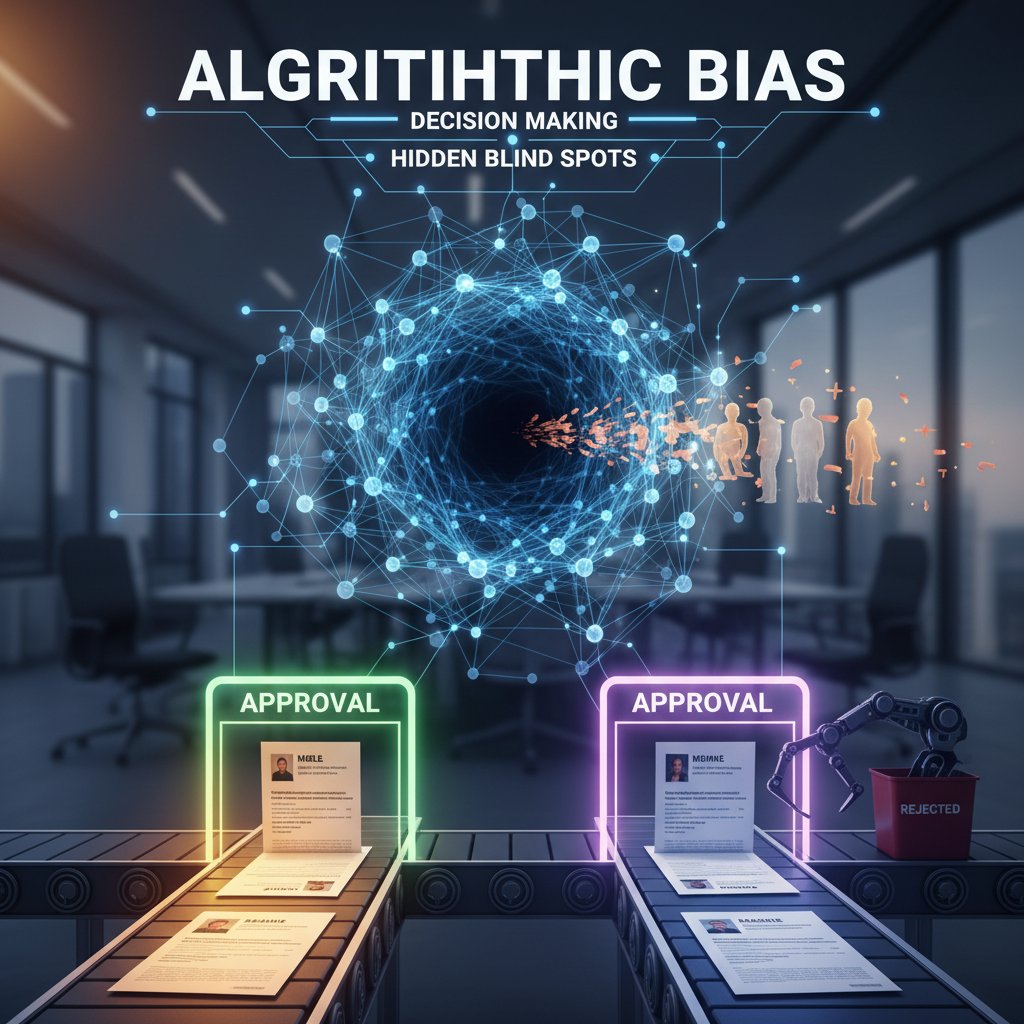
"Algorithmic objectivity is a seductive illusion. Bias isn’t just a bug—it’s a feature of all human-designed systems." — Techllective, 2024
This is why modern decision tools demand relentless scrutiny—constant validation, diverse data inputs, and feedback loops are non-negotiable. Trust in AI or analytics should be earned, not assumed.
Key features to demand in 2025
When choosing a decision-making tool, don’t settle for hype. In 2025, your toolkit should be armed with these must-haves:
- Real-time analytics: Insights delivered instantly, not hours later.
- Explainability: Transparent logic behind every recommendation.
- Continuous learning: Adaptation as new data floods in.
- Seamless integration: Works within your existing workflows, not against them.
- Customizability: Tailored to your unique context, not a one-size-fits-all solution.
- Robust security: Protects both data privacy and decision integrity.
- Scenario modeling: Allows for rapid testing of “what if” situations.
- Collaborative features: Enables team input and consensus-building when needed.
Decision tools that changed the world—successes, failures, and fallout
Infamous failures: when tools led us astray
Despite their promise, decision tools have a long and checkered history of high-profile disasters. The 2016 US election saw predictive models miss the mark, overconfident in their data and blind to shifting dynamics. In finance, the “flash crash” of 2010 exposed the dangers of algorithmic trading gone wild—billions lost in minutes due to black-box decision logic.
| Failure Event | Tool/Approach Used | What Went Wrong | Fallout |
|---|---|---|---|
| 2016 US Election Forecasts | Predictive Analytics | Overconfident models, missed context | Loss of trust in pollsters |
| 2010 Flash Crash | Algorithmic Trading | Lack of safeguards, feedback loops | Billions lost, new regulations |
| Boeing 737 MAX Crashes | Automated Flight Software | Unverified algorithmic inputs | Hundreds of lives lost, regulatory overhaul |
| COVID-19 Early Models | Epidemiological Simulations | Incomplete data, unaccounted variables | Public confusion, policy missteps |
Table 2: Notorious failures of decision tools and their real-world impacts. Source: Original analysis based on Techllective (2024), public reporting.

These cases underscore a hard truth: no amount of technology can compensate for blind trust, poor oversight, or lack of transparency.
Breakthroughs that rewrote the playbook
Yet the same tools, when wielded wisely, have changed entire industries. AI-powered radiology platforms now catch cancers earlier than human eyes, while predictive analytics have saved billions in supply chain optimization.
"In the right hands, decision tools turn overwhelming complexity into actionable clarity. They don’t replace human intelligence—they amplify it." — Medium, 2023

From business intelligence platforms that empower 90% of CEOs to make better choices (Medium, 2023), to edge computing enabling instant responses in manufacturing, these breakthroughs prove that the right tools, paired with informed oversight, are game-changers.
Everyday wins: under-the-radar success stories
Not every victory makes headlines, but the quiet efficiency of decision tools adds up:
- Small clinics leveraging AI-powered triage to cut patient wait times by 30%, improving both satisfaction and outcomes (Techllective, 2024).
- Retail chains using digital twins to optimize inventory, slashing out-of-stock rates and boosting profits.
- Remote teams adopting scenario planning frameworks to anticipate project bottlenecks before they derail timelines.
- Nonprofits using business intelligence dashboards to allocate resources with laser precision, ensuring funds have maximum impact.
The current landscape: best tools for accurate decision-making in 2025
AI-powered platforms: hype vs. reality
AI is the new darling of decision science, but not all platforms are created equal. As of 2024, the generative AI market is growing at an astonishing 46.5% CAGR (Techllective, 2024), yet many tools overpromise and underdeliver, especially when context and explainability are lacking.
| Platform Type | Strengths | Weaknesses | Typical Use Cases |
|---|---|---|---|
| AI-Powered BI | Real-time, data-rich, scalable | Can be opaque, requires training | Enterprise strategy |
| Predictive Analytics | Forecasting, scenario simulation | Quality depends on data inputs | Supply chain, finance |
| Digital Twins | Live modeling, risk mitigation | High setup cost, domain expertise | Manufacturing, logistics |
| Edge Computing | Speed, offline resilience | Integration complexity | IoT, field operations |
Table 3: Trade-offs of leading decision tools in 2025. Source: Original analysis based on Techllective (2024), Logic Fruit Technologies (2024).

The clear message: don’t be seduced by the latest buzzwords. Test for actual performance, transparency, and match to your unique context.
Old-school frameworks that still deliver
Not every decision tool needs to be digital or new-school. Some classic frameworks remain powerhouses, especially when combined with modern analytics.
- SWOT analysis: Timeless for a reason—systematic evaluation of strengths, weaknesses, opportunities, and threats.
- Decision matrices: Lays out multi-criteria choices with clarity.
- Cost-benefit analysis: The backbone of rational economic decisions.
- Scenario planning: Forces you to explore multiple futures instead of betting on a single forecast.
- ‘Thinking in bets’: A cognitive approach popularized by poker champion Annie Duke, treating every choice as a wager rather than a certainty (teammember.ai/thinking-in-bets).
Niche tools for specialized decisions
2025’s landscape is flush with specialized decision tools for those willing to look beyond the mainstream:
- Quantum computing optimizers: For logistics and complex simulations that traditional computers can’t handle.
- AI-powered change management platforms: Guiding organizational transformation with data-driven insights.
- Industry-specific digital twins: Live models of factories, supply chains, or even hospitals.
- Advanced cybersecurity AI: Automated threat detection and mitigation, critical for data-sensitive decisions.
- IoT-enabled monitoring systems: Real-time feedback from field sensors to inform operational calls.
How to choose the right tool for your context
Self-assessment: what’s your decision style?
Choosing the right decision tool means first understanding your own tendencies and needs. Are you a data maximalist, a creative improviser, or somewhere in between?

- The data devotee: Relishes analytics and craves quantifiable certainty.
- The instinctive strategist: Values experience, leans on intuition, but seeks structured support.
- The collaborative consensus-builder: Relies on team input, needs tools that foster alignment and transparency.
- The experimental risk-taker: Thrives on scenario planning, always ready to test boundaries.
Matching your style to your tool is the foundation of decision accuracy.
Checklist: red flags and must-haves
Before you commit to any decision-making tool, scrutinize it with a critical eye:
- Lacks transparency or “black box” logic.
- Poor integration with your workflow.
- Ignores context or unique business needs.
- No feedback mechanisms or learning capability.
- Overpromises on accuracy with little proof.
- Security and privacy weaknesses.
- Fails basic usability tests—clunky or unintuitive interfaces.
Step-by-step: testing a tool before you commit
- Define your objectives: What problem are you really trying to solve?
- Pilot with real data: Don’t trust demo datasets—input your own.
- Stress-test with edge cases: See how the tool handles ambiguity or incomplete info.
- Check explainability: Can you understand why it recommends what it does?
- Solicit team feedback: Engage diverse users—what works, what fails?
- Compare results: Benchmark against existing methods.
- Monitor over time: Is the tool improving or stagnating?

If a tool fails any step, move on—your accuracy demands it.
Facing the dark side: when tools backfire
False confidence and the illusion of control
Decision tools can breed a dangerous sense of infallibility. When users treat outputs as gospel—ignoring context or common sense—failures are inevitable.

"The more sophisticated the tool, the easier it is to mistake certainty for accuracy—and that’s when things spiral out of control." — Techllective, 2024
A relentless commitment to skepticism and validation is the only antidote.
Hidden costs: time, trust, and unintended consequences
The sticker price of a decision tool is just the tip of the iceberg.
| Hidden Cost | Description | Example |
|---|---|---|
| Setup and training | Learning curve, onboarding time | Weeks spent configuring new BI platforms |
| Erosion of trust | When tools fail or mislead, credibility crumbles | Stock market flash crashes |
| Workflow disruption | Poor integration stalls productivity | Teams reverting to manual workarounds |
Table 4: Hidden costs of inaccurate or poorly integrated decision tools. Source: Original analysis based on Techllective (2024), Medium (2023).
Alignment of tool outputs with real-world needs and organizational context.
Confidence earned through transparency, consistency, and ongoing validation.
Value lost when decision tools delay action or misallocate resources.
How to spot and avoid common traps
- Overfitting: Tools that perform perfectly on historical data but collapse under new scenarios.
- Echo chambers: Systems tuned only to reinforce existing biases or preferences.
- Data overload: So many metrics that signal gets lost in noise.
- Neglecting edge cases: Focusing on the average at the expense of outliers.
- Ignoring human expertise: Failing to blend algorithmic outputs with experience and intuition.
Beyond the ordinary: unconventional tools and bold strategies
Decision-making frameworks you’ve never heard of
Sometimes, the best decision frameworks are lurking in unexpected places:
- The OODA Loop (Observe, Orient, Decide, Act): Used by fighter pilots, now adopted by agile businesses for rapid adaptation.
- Premortem analysis: Imagine the project failed—what went wrong? Work backward to spot risks before they bite.
- Weighted scoring models: Assign scores to diverse criteria for complex, multi-factor decisions.
- Monte Carlo simulation: Run thousands of “what if” scenarios using random inputs to gauge probabilities.
- The Delphi Method: Harness expert consensus through iterative, anonymous surveys.
Case study: creative fields rewriting the rules
Creativity and innovation often demand decisions that break the mold. Take the world of design thinking, where teams intentionally seek dissent and use “opposite day” exercises to surface hidden assumptions. In advertising, rapid-fire A/B testing blends statistical rigor with human insight to craft campaigns that resonate.

| Creative Field | Framework Used | Outcome Achieved |
|---|---|---|
| Industrial Design | Design Sprints | Faster prototyping, better user feedback |
| Advertising | A/B Testing + Intuition | Higher campaign ROI, viral hits |
| Music Production | Collaborative Filtering | Breakout tracks via crowd input |
Table 5: Creative industry decision frameworks and their measurable results. Source: Original analysis, Techllective (2024).
What the experts won’t tell you
"No tool is a silver bullet. The secret weapon is how you question, interpret, and adapt—never the software itself." — Techllective, 2024
The most unconventional strategy of all? Relentless curiosity and skepticism, even in the face of dazzling dashboards.
The human factor: can you trust algorithms with your future?
Algorithmic bias: the invisible hand shaping outcomes
Bias isn’t just a social issue—it’s a technical landmine. Seemingly neutral algorithms can perpetuate discrimination, amplify inequality, and shape outcomes in ways that are invisible until it’s too late.

Systematic and repeatable errors in a computer system that create unfair outcomes, such as privileging one group over another.
When biased outcomes reinforce the data used for future decision-making, creating a cycle of distortion.
The extent to which the logic, data sources, and decision criteria of an algorithm are open to inspection.
Human intuition vs. machine logic
| Approach | Strengths | Weaknesses | Best Suited For |
|---|---|---|---|
| Human Intuition | Nuanced, context-sensitive | Can be swayed by emotion or bias | Creative, ambiguous cases |
| Machine Logic | Fast, scalable, data-driven | Blind to nuance, lacks empathy or context | Large-scale, repetitive |
Table 6: Human intuition and machine logic—complementary, but not interchangeable. Source: Original analysis.
Hybrid approaches: best of both worlds?
- Human-in-the-loop systems: AI surfaces options, humans make the final call.
- Feedback-rich environments: Continuous learning from both human and machine outcomes.
- Scenario blending: Mix qualitative insights with quantitative rigor for balanced decisions.
- Collaborative dashboards: Teams align around both hard data and lived experience.
Real-world applications: decision tools in action
Healthcare: life-or-death choices
Few fields exemplify the crucible of accurate decision-making like healthcare. AI-driven imaging, predictive analytics for patient outcomes, and IoT monitoring are revolutionizing care delivery.
| Application | Tool Type | Impact |
|---|---|---|
| Diagnostics | AI Imaging | Early detection, higher accuracy rates |
| Treatment Planning | Predictive Analytics | Personalized care, reduced complications |
| Patient Monitoring | IoT Sensors | Real-time alerts, proactive interventions |
Table 7: Decision tools in healthcare and their impact. Source: Original analysis based on Techllective (2024), Medium (2023).

Business: outsmarting the competition
- Retailers using AI-powered inventory management to eliminate stockouts and capitalize on real-time demand shifts.
- Financial institutions leveraging quantum computing optimizers to process complex risk portfolios in minutes.
- Startups adopting scenario planning frameworks to pivot faster than entrenched competitors.
- Teams using business intelligence dashboards for radical transparency and rapid iteration (teammember.ai/business-intelligence).
Personal life: making smarter everyday calls
- Budgeting apps: Use AI to spot spending patterns and flag risky behaviors.
- Fitness trackers: Monitor health in real time, offering data-driven nudges.
- Career planners: Analyze strengths, market trends, and recommend tailored growth paths.
- Decision journals: Record choices and outcomes to spot patterns and biases over time.
The future of decision-making: what’s next?
Emerging trends and technologies

-
Edge AI: Bringing intelligence to the source of data—factory floor, field, or even wearables.
-
Quantum computing: Tackling complexity beyond classical computers’ reach.
-
Generative AI: Not just analyzing data, but producing original hypotheses and scenarios.
-
Autonomous agents: Digital entities that make micro-decisions in real time.
-
Democratization of decision tools—no longer the exclusive domain of big corporations.
-
Hyper-personalization—tools that adapt to individual user’s styles and needs.
-
Enhanced cybersecurity—tools that self-correct when attacked or manipulated.
Ethical dilemmas and the battle for agency
"The greatest risk isn’t flawed data—it’s the slow erosion of human agency. Who decides when the tool decides for us?" — Medium, 2023
The degree to which a tool can make independent decisions without human intervention.
The capacity for individuals or organizations to make and own their choices.
Mechanisms for ensuring decisions align with societal values and legal norms.
How to future-proof your decisions
- Prioritize transparency: Choose tools that show their work.
- Demand feedback loops: Build in continuous learning and correction.
- Balance automation with oversight: Keep humans in charge—especially for high-stakes calls.
- Cultivate diversity: Diverse teams catch blind spots algorithms miss.
- Document decisions: Create audit trails for accountability.
The ultimate checklist: mastering tools for accurate decision-making
Priority steps for seamless integration
- Assess your challenges: Map out where decisions falter or bottleneck.
- Define success criteria: What does “accuracy” mean in your context?
- Score tools against real needs: Don’t get distracted by features you’ll never use.
- Pilot, iterate, refine: Test in live environments, not just labs.
- Train your team: Invest in onboarding and ongoing education.
- Establish review cycles: Regularly re-evaluate tool performance and relevance.
Common mistakes and how to avoid them
- Rushing adoption without clear objectives.
- Underestimating the training required.
- Ignoring feedback from frontline users.
- Overreliance on “default” settings.
- Neglecting ongoing validation and updates.
Reinforcing the essentials: what to remember
- Accuracy is contextual—one tool’s precision can be another’s blunder.
- Transparency matters as much as technical prowess.
- Human insight and skepticism are still irreplaceable.
- No tool is a panacea—mix, match, and adapt.
- Continuous learning is non-negotiable.
Adjacent hot topics: the ripple effects of better decisions
Decision fatigue and cognitive overload
It’s not just about having more tools—it’s about making smarter, not more, decisions. The relentless influx of options and data can paralyze, rather than empower.
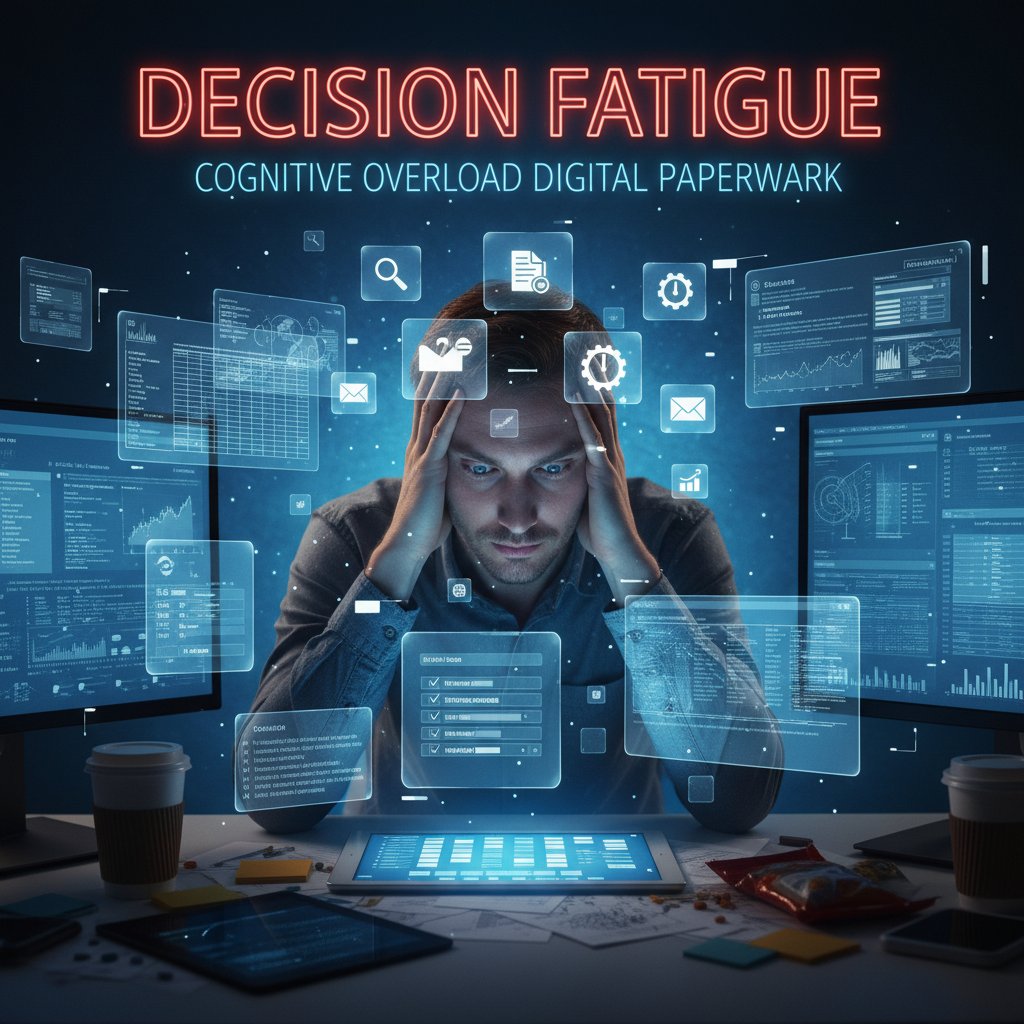
The deteriorating quality of decisions made by an individual after a long session of decision-making.
When the volume or complexity of information exceeds processing capacity, leading to errors or inaction.
Strategies to deliberately limit digital input and focus on high-quality, high-impact decisions.
Ethics of delegation: when to trust a tool
"Delegating choices to machines is easy. Retaining accountability for the outcomes is where the real work begins." — Medium, 2023
Building a culture of smart decisions (team and personal)
- Champion transparency: Make decisions and their rationales visible.
- Encourage dissent: Create safe spaces for challenging tools and assumptions.
- Reward learning: Treat errors as opportunities for growth, not blame.
- Promote diversity: Leverage varied perspectives and experiences.
- Model humility: Leaders set the tone for questioning, not just compliance.
Your next move: becoming a decision-making powerhouse
Action plan: building your decision toolkit
- Inventory your current tools and gaps.
- Define what “accuracy” means for your team and goals.
- Research, verify, and pilot top contenders—don’t settle for marketing fluff.
- Invest in training, onboarding, and continuous improvement.
- Establish clear feedback channels and review cycles.
- Stay ruthless—if a tool isn’t delivering, move on.
- Document lessons learned and share across your organization.
Where to go for deeper learning
- Harvard Business Review: Making smarter decisions with AI
- MIT Sloan Management Review: Decision-making in the age of AI
- World Economic Forum: Ethical AI for decision makers
- teammember.ai/decision-support
- Logic Fruit Technologies: Game-changing technologies in 2024
- Techllective: Top technology trends 2024
- Medium: Business intelligence trends for 2023
Leveraging professional AI assistants in your workflow
Professional AI assistants like those from teammember.ai are turning the promise of seamless, data-driven decision support into a daily reality. By integrating advanced language models and analytics directly into your workflow—often as simple as an email—you gain real-time insights, automate repetitive analysis, and free your team to focus on what matters most. The result: sharper decisions, less fatigue, and an edge over the competition.

Accurate decision-making isn’t about chasing the latest trend—it’s about ruthless clarity, relentless verification, and a willingness to challenge every assumption. Armed with the right tools, frameworks, and mindset, you’re not just outsmarting uncertainty—you’re turning it into your competitive advantage. Welcome to 2025, where decision power is the ultimate survival skill.
Sources
References cited in this article
- Medium(medium.com)
- Logic Fruit Technologies(logic-fruit.com)
- Techllective(techllective.com)
- Forbes(forbes.com)
- ZipDo(zipdo.co)
- Atlan(atlan.com)
- Forbes(forbes.com)
- Academia.edu(academia.edu)
- Springer(link.springer.com)
- PubMed(pubmed.ncbi.nlm.nih.gov)
- PeerSpot(peerspot.com)
- AllAboutAI(allaboutai.com)
- Cambridge Core(cambridge.org)
- Forbes(forbes.com)
- Accel-KKR(accel-kkr.com)
- Lumivero(lumivero.com)
- Capgemini(capgemini.com)
- HEC Paris(hec.edu)
- INSEAD(insead.edu)
- MIT Tech Review(technologyreview.com)
- World Economic Forum(weforum.org)
- Analytics Insight(analyticsinsight.net)
- AchieveIt(achieveit.com)
- StartUs Insights(startus-insights.com)
- SourceForge(sourceforge.net)
- SafetyCulture(safetyculture.com)
- DigitalDefynd(digitaldefynd.com)
- Intellias(intellias.com)
- Forbes(forbes.com)
- Entreprenuers Diaries(entreprenuersdiaries.com)
- Xmind(xmind.app)
- Productivity Patrol(productivitypatrol.com)
- Guru99(guru99.com)
- Asana(asana.com)
- Creately(creately.com)
- Asana(asana.com)
- AppSierra(appsierra.com)
- HCAI Institute(hcaiinstitute.com)
Focus on what matters. Let AI handle the rest.
We know the feeling — another day starts with 50 unread emails, Ads Manager begging for attention, CRM out of date, and meetings without follow-ups. That's why we built TeamMember.ai — an AI team member that takes over all the operational work at the computer. Has its own email address and SMS number. Manages your inbox, runs Meta Ads, updates CRM, processes meetings, monitors social media, generates morning briefings, and controls the browser. Built on OpenClaw — a leading open-source AI agent — with cross-session memory and secure-cloud architecture that keeps your data safe.
Get startedBe First to Try Your AI Team Member
Every week without automation is dozens of hours lost to operational work. Hours you'll never get back. Join the waitlist and get priority access.
Frequently Asked Questions
Why is accurate decision-making considered a survival skill in 2025?
According to the article, the acceleration of technology and proliferation of information have made decision fatigue a real threat, and mistakes now carry amplified repercussions. In today's hyper-connected environment, a single flawed decision can echo across markets and media in seconds, leaving little room for recovery.
What percentage of CEOs rely on business intelligence platforms for critical decisions?
According to a Medium report cited in the article, 90% of CEOs now rely on business intelligence platforms for their most critical choices.
What example does the article use to illustrate the high stakes of accurate decision-making?
The article uses healthcare as an example, noting that the rise of AI-assisted diagnostics has raised the bar for accuracy, yet a single misstep can cascade into life-altering consequences.
Who is affected by the need for better decision-making tools according to the article?
The article states that not just CEOs and analysts, but also small business owners and public policymakers are forced to reckon with a world where intuition isn't enough and the price of error is relentless scrutiny.
From the Archive
Explore more from AI Team Member

Tools for Better Business Decisions: What Actually Works
Tools for better business decisions are now critical to survival. This article explains what works, which solutions hide costly traps, and how to choose effectively.

Tools for Strategic Decision-Making: What Works in Volatile Markets
Tools for strategic decision-making help leaders navigate volatility and reduce indecision. This article examines which frameworks work, which fail, and why the difference matters.

Tools for Informed Business Choices That Cut Through 2026 Chaos
Discover insights about tools for informed business choices

Enhancing Decision-Making: Bias, Ai, and Practical Strategies
Enhancing decision-making requires navigating bias and uncertainty. This article examines hidden traps in rational thinking and presents 11 field-tested strategies for better choices.

Data-Supported Decision-Making Assistants Vs Your Gut Instincts
Discover insights about data-supported decision-making assistant

Decision-Making Improvement Tools: What Actually Works in 2025
Decision-making improvement tools help teams cut through data overload and cognitive bias. This article examines research-backed methods that separate high-performing teams from the rest.


