


AI-Powered Communication Tools: Productivity Boost or Burnout Trap?
Written with AI assistance under our editorial guidelines
AI-powered communication tools promise to reduce digital overload, but instead often amplify it. Teams receive over 1,200 messages weekly, up 35% in two years, causing digital fatigue and reducing deep work time by 40%. While these tools streamline some workflows, they frequently fragment communication and increase stress rather than resolve it, requiring careful implementation beyond vendor promises.
It’s 2025. Your Slack is overflowing, your inbox is a graveyard of unread notifications, and every “quick” meeting is now an AI-transcribed, multi-channel epic. If you’re still convinced AI-powered communication tools are going to save your team from digital chaos, buckle up. The revolution is messy, the stakes are high, and the truth is anything but sanitized. AI-powered communication tools are everywhere—etched into every modern workflow, packaged as the antidote to digital overload. But are they? Or do they simply amplify the noise in new, insidious ways? This article isn’t here to sell you utopia. It’s here to dissect the reality: the game-changing impacts, the hidden pitfalls, and the brutal truths that most vendors would rather you didn’t know. If you’re ready to cut through the hype and master AI for what it is—not what you wish it to be—read on.
Why your team’s communication is broken (and why AI won’t magically fix it)
The digital noise epidemic
Everywhere you look, teams are suffocating under the sheer volume of digital messages. According to data verified from recent studies, the average team is now bombarded with more than 1,200 digital messages per week—up nearly 35% from just two years ago. Whether it’s emails, chat pings, or automated reminders, the digital cacophony is relentless. Employees report feeling more “connected” yet less informed than ever. The very tools meant to streamline communication are, in practice, amplifying fragmentation and stress.

The psychological effects are profound. Studies indicate that constant notifications spike cortisol levels, increase distraction, and reduce deep work time by up to 40%. Teams are caught in a cycle of reactive communication, rarely pausing to reflect, strategize, or even fully absorb the barrage of information. According to a 2024 Forbes study, 41% of employees report feeling overwhelmed by digital communication platforms, with one in three citing “digital fatigue” as a barrier to productivity.
| Year | Average messages per team/week | Year-over-year increase |
|---|---|---|
| 2022 | 890 | - |
| 2023 | 1,045 | 17% |
| 2024 | 1,200 | 15% |
| 2025 | 1,245 (projected Q2) | 4% |
Table 1: Statistical summary of team communication volumes. Source: Forbes, 2024
The traditional band-aids—“best practice” meetings, rigid chat etiquette, or yet another channel—haven’t worked. As Jamie, a veteran tech lead, puts it:
"AI isn’t a magic bullet for chaos." — Jamie, tech lead
The very act of introducing more technology, especially without changing underlying culture, can actually worsen the noise.
The myth of frictionless AI
There’s a seductive narrative going around: that AI-powered communication tools will erase friction, decode intent, and automate away the mess. It’s a myth with deep roots. For decades, each wave of digital collaboration promised seamlessness—calendar apps, shared docs, chatbots. Yet, the graveyard of failed transformations is full. According to AgilityPortal, 2024, most teams cycle through an average of three major communication platforms every five years, with “seamless integration” cited as the top decision factor… and “lack of context” as the top regret.
Here’s what the glossy demos don’t show:
- Subtle misunderstandings: AI often flattens nuance, missing sarcasm or layered meanings in messages.
- Context loss: Automated summaries can strip away critical context, leading to misinformed decisions.
- Cultural misreads: NLP fails to pick up on localized idioms or unspoken norms.
- Privacy trade-offs: Smart tools mean more data harvested, raising worries about surveillance.
- Dependency risks: Teams become reliant on black-box automations, losing “manual” communication skills.
The myth of AI as a frictionless savior warps buyer expectations and leads to poor adoption strategies. Decision-makers end up chasing features over fit, and teams inherit tools that solve surface problems while deepening the underlying cracks.
When automation creates new problems
The hard truth? Automation, when poorly designed or implemented, often creates new pain points. Fragmented workflows, misaligned channels, and half-baked integrations abound. Picture this: an AI-powered meeting bot misinterprets feedback, tagging the wrong action items to the wrong people. Deadlines get missed. Blame circulates. Morale tanks. According to research from Hongkiat, 2024, nearly 27% of teams report “AI-induced workflow confusion” as a top complaint.

It isn’t just the technology. It’s the lack of user training, the absence of clear norms, and the expectation that software will change behavior by fiat. Teams need to adapt—and so do their leaders. Training, expectation management, and a willingness to recalibrate are critical. Automation without human alignment is a recipe for frustration, not freedom.
The revolution in AI-powered communication tools is real, but messy. And unless teams address the human factors—trust, process clarity, and psychological safety—AI will amplify dysfunction, not erase it. Next, let’s peel back the lid and examine what’s really happening under the hood.
Inside the black box: how AI-powered communication tools actually work
Machine learning, NLP, and the promise of real context
Beneath the surface, AI-powered communication tools run on a mix of machine learning (ML) and natural language processing (NLP). ML trains systems to recognize patterns—who talks to whom, when, and how. NLP enables those systems to “understand” and generate language that (sometimes) feels human. Contextual AI builds on these, attempting to interpret tone, intent, and even emotion.
Definition list:
- Machine learning (ML): The practice of training algorithms to recognize patterns and make predictions based on large datasets. In communication, ML helps filter, prioritize, and route messages.
- Natural language processing (NLP): The field of AI that teaches machines to understand, interpret, and respond to human language. Powers chatbots, auto-replies, and real-time translation.
- Contextual AI: Systems that take into account the who, what, when, and why of communication, delivering more relevant and timely responses and summaries.
These technical foundations show up in daily work as meeting summaries, automated task assignments, and even AI-crafted emails. NLP enables translation between team members in real time, while ML helps surface the most urgent messages. But context is still a work in progress; machines often miss the subtext only seasoned humans catch.

Behind the scenes: data flows and privacy questions
Every AI-powered communication tool relies on the steady stream of your team’s data—messages, files, calendars, even tone of voice. This data flows through cloud servers, gets parsed, indexed, and sometimes stored for “improvement.” The privacy implications are enormous. Concerns range from unauthorized surveillance to the potential for sensitive data leaks.
| Tool | Data encryption | GDPR compliance | User-level controls | Audit logs | Data residency options |
|---|---|---|---|---|---|
| Microsoft Teams | Yes | Yes | Yes | Yes | Yes |
| Zoom AI | Yes | Yes | Partial | Yes | Partial |
| Wrike | Yes | Yes | Yes | Yes | Yes |
| Workvivo | Yes | Yes | Partial | Partial | Partial |
| Spike | Yes | Yes | Yes | Yes | Yes |
Table 2: Feature matrix—data security and privacy features across leading AI-powered communication tools (2025). Source: Original analysis based on Microsoft 365 Blog, Hongkiat, 2024, and direct vendor documentation.
Controversy simmers. In March 2024, privacy advocates called out several AI collaboration providers for ambiguous data retention policies and limited transparency. The regulatory heat is rising, especially in Europe and California.
"Transparency is the new currency for trust." — Morgan, privacy advocate
Teams must demand more than checkbox compliance—real transparency, granular controls, and provable audit trails.
The role of human-in-the-loop AI
Despite the marketing blitz, every credible AI-powered communication tool leans on the “human-in-the-loop” (HITL) model. This means humans stay actively involved—reviewing auto-generated messages, correcting errors, and making the final call in ambiguous scenarios. Why? Because nuance, context, and empathy still elude even the most advanced systems.
Real-world examples abound:
- Error correction: AI mislabels a task; a human reassigns it before confusion spreads.
- Nuance detection: An AI summary misses a critical subtext in a heated exchange, and a manager steps in to clarify.
- Hybrid workflows: Teams use AI to draft responses, but humans polish and personalize them.
The need for human oversight isn’t going away. If anything, it’s more crucial as AI scales. The best outcomes come from hybrid models—machines for speed and pattern recognition, humans for judgment and empathy. Next, let’s look at who’s driving this arms race… and what it means for your team.
The AI arms race: who’s winning and what it means for your team
Market leaders and dark horses
The AI-powered communication landscape is a brutal battleground. Established giants (think: Microsoft Teams, Zoom, Slack) are locked in a relentless race with nimble upstarts offering radical new takes on team collaboration. Giants boast deep integrations and global reach—but often lumber under legacy baggage and slower innovation cycles. Upstarts experiment at the edges, releasing features like real-time emotion detection or hyper-personalized AI “companions.”
Closed platforms tout security and control. Open platforms promise extensibility and rapid evolution but sometimes expose users to wild-west risk. According to a 2024 Meegle report, teams are split: 53% favor closed, “walled garden” ecosystems, while 39% prefer open or hybrid approaches for flexibility. Ethical stances also matter more than ever, with buyers scrutinizing AI bias, data usage, and opt-out options.
| Factor | Market leader (Teams) | Upstart 1 | Upstart 2 | Winner (2025) |
|---|---|---|---|---|
| Usability | High | Moderate | High | Teams, Upstart 2 |
| Feature richness | High | Moderate | Very high | Upstart 2 |
| Adoption rate | Highest (320M users) | Moderate | Low | Teams |
| Cost | Medium | Low | Medium | Upstart 1 |
Table 3: 2025 comparison of AI-powered communication tool market. Source: Original analysis based on Meegle, 2024 and vendor data.
Market dynamics directly affect buyers: established tools offer reliability, but upstarts deliver speed and innovation. The real risk is lock-in or being stranded on an obsolete platform.
teammember.ai: The quiet disruptor
Enter teammember.ai—a new breed of AI-powered team assistant quietly disrupting the rules. Instead of adding yet another dashboard or silo, it’s designed to fit seamlessly into existing email workflows. No forced adoption, no learning curve that alienates half your staff. The philosophy is simple: meet users where they already are, augmenting rather than replacing.
"Seamless integration is the real battleground now," says Alex, a workplace analyst. Teams crave tools that adapt to them, not the other way around. In this new era, adaptability trumps feature bloat every time. If your tool can’t flex to diverse workflows, it’s dead on arrival.
What the data says: adoption rates, ROI, and skepticism
Adoption is surging—but the story is complicated. Microsoft Teams alone boasted 320 million active monthly users in Q1 2024, up from 270 million a year earlier. Hybrid and remote work remains the new normal, with 41% of employees operating outside the traditional office, as verified by Forbes.
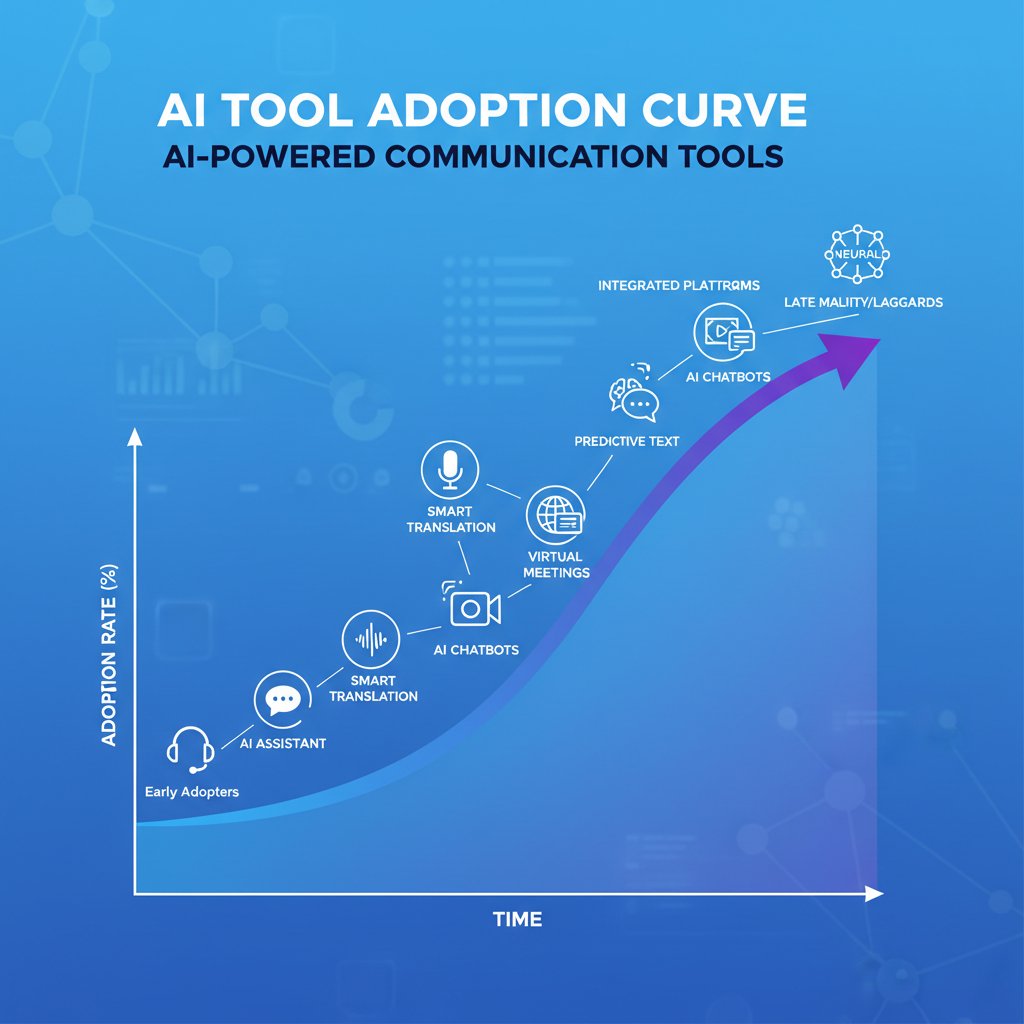
Return on investment? The numbers are impressive. Teams deploying AI-powered communication tools report, on average, a 20-35% reduction in manual admin work and a 15% bump in project delivery speed, according to AgilityPortal, 2024. Yet, skepticism lingers. Nearly 28% of surveyed decision-makers doubt the long-term value, citing “unclear ROI” and “hidden complexity.” The arms race is real—but victory hinges on practical, measurable outcomes, not marketing buzzwords.
From hype to reality: case studies and cautionary tales
When AI tools deliver (and when they don’t)
Let’s strip it down. One global marketing team implemented AI summarization as part of their internal comms stack. Result: a measurable 30% reduction in email volume and a 22% uptick in meeting satisfaction scores. But another department, lured by “AI everything,” rolled out a complex bot suite without clear onboarding. The fallout? Missed deadlines, lost files, and a morale spiral that took months to fix.
- Clear goals: Success started with specific, measurable objectives.
- User buy-in: Change champions drove adoption with tangible demos.
- Ongoing training: Regular refreshers and “office hours” for feedback.
- Regular audits: Reviewing logs and user feedback monthly.
- Responsive support: Fast, human help when issues arose.
- Realistic expectations: No overpromising, just steady, incremental wins.
Contrast is instructive. The successful case baked in accountability and flexibility; the failure fell victim to tool overload and magical thinking.
Unexpected uses: AI in crisis, therapy, and blue-collar jobs
AI-powered communication tools aren’t just for office warriors. In one verified (anonymized) crisis negotiation, a law enforcement team used AI real-time translation to communicate with a distressed subject. In remote therapy, chatbots facilitate progress tracking between sessions, providing a bridge without replacing the therapist. Meanwhile, blue-collar teams are using voice-activated AI headsets to coordinate on noisy construction sites, dramatically reducing accidents and miscommunication.

These examples highlight adaptability: the same core technology, repurposed for wildly different needs. It’s a testament to the sheer flexibility of AI-powered communication tools—when deployed thoughtfully, they change the definition of “team” altogether.
Three user confessions: the good, the bad, and the weird
"Our team’s weekly ‘status’ meeting shrank from 90 minutes to 35, thanks to AI summaries. We’re not just saving time—we’re less cranky, too." — Taylor, project manager
"Honestly? I spend as much time fixing the AI’s mistakes as I did processing old emails. The promise is there, but it’s not plug-and-play." — Chris, engineer
"I started using our AI bot to generate brainstorming prompts. One day it spat out a poem—now it’s a running joke in our creative team." — Sam, creative
These confessions lay bare the spectrum: high-impact wins, lingering frustrations, and unexpected joys. The unifying thread? Real-world outcomes are messy, human, and rarely match the marketing deck.
The cultural divide: who thrives—and who rebels—against AI-powered communication
Generational and regional clashes
Attitudes toward AI-powered communication tools are as diverse as the teams who use them. Gen Z, digital natives to the core, tend to embrace new platforms with open arms—so long as they promise autonomy and speed. Millennials are pragmatic, seeking tools that streamline but don’t add complexity. Boomers often express skepticism, wary of privacy risks and the erosion of “real” conversation. Regional differences are just as stark: U.S. teams jump first, Europeans scrutinize for privacy, and Asian teams often blend AI adoption with traditional hierarchy.
| Year | Gen Z attitude | Millennial attitude | Boomer attitude | US milestone | Europe milestone | Asia milestone |
|---|---|---|---|---|---|---|
| 2018 | Cautious | Early adopter | Dismissive | Slack boom | GDPR impact | WeChat surge |
| 2021 | Enthusiastic | Mainstream | Skeptical | Remote surge | AI laws draft | Zoom adoption |
| 2023 | Demanding | Strategic | Pragmatic | Teams tops 250M | EU AI rules | Hybrid models |
| 2025 | Critical | Selective | Watchful | 320M Teams | Data trust push | BYOD growth |
Table 4: Timeline of AI-powered communication tool adoption and attitudes across generations and regions. Source: Original analysis based on Forbes, 2024, Meegle, 2024.
Mini-case studies: A U.S. startup scales overnight with AI chatbots; a German tech team debates privacy vs. productivity; a Japanese engineering crew uses AI translation to connect with global partners.

AI fatigue and the backlash movement
Beneath the surface, a backlash brews. “AI fatigue” is now common parlance in HR circles. Some teams, overwhelmed by tool hopping and endless “upgrades,” are quietly rebelling—turning off notifications, reverting to pen-and-paper, or simply tuning out.
- Tool hopping between overlapping platforms
- Disengagement or “ghosting” internal comms channels
- Increased manual workarounds to avoid smart automations
- Employee complaints about surveillance or “robot bosses”
- Rising burnout and turnover tied to digital overload
Leaders who spot these red flags early can head off disaster: hold listening sessions, streamline toolkits, and enforce digital boundaries. AI should serve teams, not the other way around.
When human touch beats algorithmic logic
Despite the hype, there are moments when human intuition trumps algorithmic logic. Creative brainstorming sessions often flounder under AI’s literal approach. Crisis response—where nuance, empathy, and rapid adaptation matter—remains a human domain. Conflict mediation is another: AI can flag tension but can’t read a room or defuse a heated debate.
Hybrid models point the way forward. Teams use AI to surface patterns, but humans handle the messy, ambiguous stuff. It’s not about man vs. machine—it’s about knowing when to trust your gut.
How to choose (and implement) the right AI-powered communication tool
The essential checklist for smart buyers
- Assess needs: Pinpoint real pain points—don’t just chase shiny features.
- Set goals: Define what “success” means, with measurable outcomes.
- Shortlist options: Compare tools based on functionality, integration, and support.
- Run pilots: Test in real-world scenarios before committing.
- Check integrations: Ensure compatibility with existing workflows and platforms.
- Prioritize UX: Favor tools your team actually likes and uses.
- Review privacy: Scrutinize data practices and user controls.
- Budget wisely: Account for both upfront and ongoing costs.
- Train users: Invest in onboarding and continuous learning.
- Monitor impact: Audit usage and satisfaction regularly; adapt as needed.
Every checklist item deserves attention. For example, integration isn’t just about connecting APIs; it’s about mapping workflows, minimizing context switching, and ensuring continuity. Privacy reviews must go beyond marketing claims—demand policy docs, ask tough questions, and verify compliance. Training shouldn’t be a one-off; build communities of practice and reward adopters who champion best practices. Avoid the most common mistakes: rolling out without training, neglecting user feedback, or ignoring cultural fit. The price of a rushed rollout is always higher than the sticker tag.
Cost-benefit analysis: what to expect in 2025
| Factor | Traditional tools | AI-powered tools | Notes |
|---|---|---|---|
| Upfront cost | Moderate | Higher | AI tools often require higher buy-in |
| Ongoing cost | High (manual) | Lower (auto) | Labor savings offset higher SaaS fees |
| Hidden costs | Integration, fatigue | Training, privacy reviews | AI needs constant tuning |
| Measurable benefits | Limited | High | Time savings, fewer errors, better data |
| Intangible benefits | Team bonding | Innovation | AI enables new ways of working |
Table 5: Cost-benefit analysis of AI-powered vs. traditional communication tools. Source: Original analysis based on Microsoft 365 Blog and user interviews.
Numbers tell only part of the story. Smart buyers look at total cost of ownership—including fatigue, churn, and opportunity cost. Negotiate vendor terms: ask for trial periods, volume discounts, and robust support. Manage expectations at every stage.
Integration nightmares (and how to dodge them)
Integration is the graveyard of good intentions. Pain points include legacy systems that don’t play nice with APIs, user data stranded in silos, or workflows that collapse under the weight of “yet another tool.” One global finance firm found their shiny new bot couldn’t access old email archives, costing weeks of manual reconciliation. Another startup lost critical project history when migrating chat platforms.
Real-world fixes? Map all touchpoints before rollout. Run live pilots, not just demos. Assign a cross-functional “integration czar” with real authority. And remember: hidden benefits abound—tight integration means stronger adoption, fewer workarounds, and lower tech debt down the road.
- Future-proofing for platform shifts and upgrades
- Higher adoption via seamless UX
- Data continuity, avoiding “lost in migration” traps
- Reduced tech debt and simpler maintenance
In short: invest up front, reap the rewards in resilience.
Beyond productivity: the unexpected impacts of AI-powered communication tools
Mental health, burnout, and digital boundaries
The always-on nature of AI-powered communication tools is a double-edged sword. While responsiveness soars, so do rates of burnout. According to data from Forbes, 2024, nearly 36% of hybrid workers report “struggling to disconnect” after hours. Automated pings and smart reminders, meant to help, can invade downtime and erode mental health.

The way forward? Smart notifications—turning off non-urgent updates after hours. Scheduled “AI downtime” where bots stop pushing prompts. Policies that value deep work and respect psychological off-switches. Data shows that teams with such boundaries report higher satisfaction and lower attrition. Real productivity is sustainable productivity.
Bias, equity, and the ethical minefield
AI is only as fair as its training data. Bias creeps in when tools are trained on homogenous datasets or when assumptions are baked into the code. According to a 2024 research brief from Hongkiat, bias in automated feedback can reinforce workplace inequities.
Definition list:
- Bias: Systematic error that advantages or disadvantages certain groups. In AI comms, this can mean mislabeling sentiment or perpetuating stereotypes.
- Equity: Fairness in process and outcomes. Demands diverse training data and continuous audit.
- Algorithmic transparency: The degree to which users can understand and challenge AI decisions.
Industry leaders are fighting back—opening up source code, commissioning external audits, and partnering with advocacy groups. But progress is uneven. Teams must demand transparency and participate in shaping fair, ethical AI.
AI and the future of human skills
Here’s the paradox: AI automates rote communication, but makes uniquely human skills—storytelling, negotiation, empathy—more valuable than ever. “AI whisperers” are emerging: people who know how to nudge, correct, and extract value from smart tools.
To future-proof your skillset, double down on what AI can’t replicate: intuition, persuasion, and creative synthesis. Learn to audit, tune, and challenge automated outputs. Leaders must foster cultures of learning, not just adoption. The best teams will blend machine efficiency with human artistry.
The next frontier: what’s coming for AI-powered communication tools
Emerging trends to watch in 2025 and beyond
Innovation barrels forward. New features include emotion recognition, real-time multilingual collaboration, and instant AI-powered meeting summarization. Experts see workplace communication becoming more adaptive, more personalized, and (hopefully) less intrusive.
Yet, overreliance on AI brings risks: data sovereignty disputes, job polarization, and new security threats. The next generation of tools will need to balance power with restraint.

What could go wrong? Risks, failures, and lessons
Worst-case scenarios aren’t hypothetical. Massive miscommunications, privacy breaches, and trust breakdowns have already happened. To build resilience:
- Diversify channels: Don’t put all comms in one AI-driven basket.
- Train for manual fallback: Keep analog workflows alive, just in case.
- Regular audits: Check for drift, errors, or creeping bias.
- Transparent policies: Spell out exactly what’s automated and why.
- Ongoing learning: Update training and best practices quarterly.
Teams that plan for failure recover faster—and emerge stronger. Case in point: a major tech firm restored user trust after an AI-driven PR fiasco by launching a public audit and offering opt-out options. Crisis became catalyst.
From adoption to mastery: the new skillset
It’s no longer enough to “use” AI-powered communication tools. Mastery means knowing when to trust automation, when to intervene, and how to optimize both. Three tips for continuous learning:
- Regularly review tool logs and outputs for unexpected patterns.
- Build peer communities to share hacks and flag issues early.
- Tap resources like teammember.ai for ongoing, expert-led learning.
Mastery is an ongoing journey—one that pays off in resilience, creativity, and real competitive edge.
Conclusion: The brutal truth about AI, communication, and the future of work
Synthesis: what we’ve learned—and what you should do next
AI-powered communication tools have transformed how teams connect—but the revolution is anything but smooth. There are no silver bullets. Technology amplifies culture, exposes flaws, and, when deployed with care, enables new heights of clarity and creativity. But the human element remains central: nuance, judgment, and empathy can’t be outsourced to algorithms.
To thrive, challenge the hype, demand transparency, and drive your own learning journey. Don’t just adopt AI—master it. That’s the only way to future-proof your team and claim the real productivity gains on offer.

The future of work isn’t AI or human—it’s both, in tension, in partnership, and in constant evolution.
Appendix: Quick reference guides, definitions, and further reading
Definition cheat sheet for AI-powered communication
Systems that use time, place, user, and prior conversations to interpret and generate relevant communication—e.g., auto-suggesting meeting times based on history.
A neural network trained on vast text datasets to generate human-like responses—powering tools like GPT, Copilot, and advanced chatbots.
AI that instantly converts messages into multiple languages, supporting global teams without delay—used in hybrid meetings.
The process of using AI to gauge the emotional tone of messages, helping managers spot burnout or tension early.
The ability of AI to handle tasks it wasn’t explicitly trained on, by leveraging context learned from related data—critical for adapting to new jargon.
Self-assessment checklist: is your team ready for AI-powered communication?
- Digital maturity: Are your workflows already digitized, or are you still stuck in paper mode?
- Openness to change: Is your team curious, or wary of new tech?
- Training budget: Can you invest in real onboarding, or will you wing it?
- Privacy awareness: Does your team understand data rights and risks?
- Integration needs: Do your current tools play well with others?
- Leadership buy-in: Are decision-makers on board and actively engaged?
- Feedback loops: Do you regularly audit and adapt based on user feedback?
- Resilience planning: Do you have manual fallbacks for when the AI goes rogue?
Further reading and resources
Looking to go deeper? Explore authoritative studies such as the Microsoft 365 Blog’s AI Collaboration Overview (2024), the Meegle team collaboration guide, and the Hongkiat analysis of team management tools. For practical guides and whitepapers, check industry groups and digital transformation think tanks. And if you’re ready to cut through the clutter, teammember.ai curates and creates resources to help you keep your edge in the AI-powered workplace.
Sources
References cited in this article
- Microsoft 365 Blog(microsoft.com)
- Meegle(meegle.com)
- Hongkiat(hongkiat.com)
- AgilityPortal(agilityportal.io)
- Forbes Tech Council(forbes.com)
- Sage Journals(journals.sagepub.com)
- Engage2Learn(engage2learn.org)
- AIS Electronic Library(aisel.aisnet.org)
- Altair(altair.com)
- Frontiers in Human Dynamics(frontiersin.org)
- NYT(nytimes.com)
- The Conversation(theconversation.com)
- IBM(ibm.com)
- eWEEK(eweek.com)
- Analytics Insight(analyticsinsight.net)
- Medium(medium.com)
- Execs In The Know(execsintheknow.com)
- Forbes(forbes.com)
- Worldcom Group(worldcomgroup.com)
- AP News(apnews.com)
- LinkedIn(linkedin.com)
- ChatInsight.ai(chatinsight.ai)
- IBM AI Adoption Index 2023(newsroom.ibm.com)
- Forbes(forbes.com)
- Persado(persado.com)
- Google Cloud(cloud.google.com)
- Comprend(comprend.com)
- Gartner(gartner.com)
- Bloomberg Law(news.bloomberglaw.com)
- ResearchGate(researchgate.net)
- PositivePsychology.com(positivepsychology.com)
- North Star Communications(northstarcomms.com)
- Marketful(marketful.com)
- Cision(cision.com)
- Carnegie Endowment(carnegieendowment.org)
- Nature(nature.com)
- UN Chronicle(un.org)
- Isarta(isarta.com)
- Worklife(worklife.news)
- The Guardian(theguardian.com)
- World Economic Forum(weforum.org)
- Forbes(forbes.com)
- RSM Discovery(rsm.nl)
Focus on what matters. Let AI handle the rest.
We know the feeling — another day starts with 50 unread emails, Ads Manager begging for attention, CRM out of date, and meetings without follow-ups. That's why we built TeamMember.ai — an AI team member that takes over all the operational work at the computer. Has its own email address and SMS number. Manages your inbox, runs Meta Ads, updates CRM, processes meetings, monitors social media, generates morning briefings, and controls the browser. Built on OpenClaw — a leading open-source AI agent — with cross-session memory and secure-cloud architecture that keeps your data safe.
Get startedBe First to Try Your AI Team Member
Every week without automation is dozens of hours lost to operational work. Hours you'll never get back. Join the waitlist and get priority access.
Frequently Asked Questions
How many digital messages does the average team receive per week?
According to the article, the average team is bombarded with more than 1,200 digital messages per week, which represents a nearly 35% increase from two years ago.
What psychological effects do constant notifications have on employees?
Studies indicate that constant notifications spike cortisol levels, increase distraction, and reduce deep work time by up to 40%, while also contributing to digital fatigue and feelings of being overwhelmed.
Can AI-powered communication tools magically solve team communication problems?
The article argues that AI-powered communication tools won't magically fix broken team communication, as they may simply amplify noise in new ways rather than address the underlying issues of digital overload and fragmentation.
What percentage of employees report digital fatigue as a barrier to productivity?
According to a 2024 Forbes study cited in the article, 41% of employees report feeling overwhelmed by digital communication platforms, with one in three citing digital fatigue as a barrier to productivity.
From the Archive
Explore more from AI Team Member

AI-Driven Personal Efficiency: Gains Versus Burnout Risk
AI-driven personal efficiency involves both real productivity gains and risks of burnout. This article examines the promises, pitfalls, and frameworks for using AI effectively.

AI-Driven Virtual Assistant for Remote Teams: Hype Vs Real Gains
Discover insights about AI-driven virtual assistant for remote team collaboration

AI-Driven Productivity Improvement: Why Automation Often Backfires
AI-driven productivity improvement rarely delivers as promised. This article examines why most organizations struggle with AI adoption and what sustainable gains actually require.

AI-Driven Virtual Assistants: Real Productivity Gains Versus Hype
AI-driven virtual assistants for productivity enhancement promise seamless automation, but this article examines the actual impact, unexpected wins, and psychological costs of working with algorithms.

AI-Powered Personal Productivity: Adoption, Barriers, and Real Outcomes
AI-powered personal productivity promises efficiency gains, but adoption gaps and behavioral factors complicate the reality.

AI-Powered Virtual Assistant Tools: Power and Peril Explained
AI-powered virtual assistant tools now handle email, scheduling, and decision-making in modern offices. This article examines their productivity gains and the risks they introduce.


