


AI-Enabled Virtual Receptionist Services: What the Data Reveals About Costs, Risks, and ROI
Written with AI assistance under our editorial guidelines
AI-enabled virtual receptionist services use artificial intelligence to handle calls and customer interactions around the clock, reducing human error and operational costs. The global market is projected to reach nearly $25 billion by 2029, with rapid adoption across healthcare and legal sectors driven by pandemic-era staffing shortages and increased call volumes.
If you thought the humble front desk was immune to digital disruption, buckle up. AI-enabled virtual receptionist services are not just transforming how businesses handle calls and customers—they’re rewriting the rules of engagement at the nerve center of every company. Gone are the days when a missed call meant a lost opportunity or a grumpy client. In 2025, the front desk has become the latest battleground for efficiency, fierce cost-cutting, and jaw-dropping tech. Behind the scenes, AI receptionists are quietly eliminating human error, delivering 24/7 service, and forcing leaders to question if they need a human face at the front at all.
But let’s not sugarcoat it: this isn’t about cute chatbots answering “How may I direct your call?” This is a revolution in workflow, trust, and the very concept of first impressions. With the global virtual receptionist market projected to soar to nearly $25 billion by 2029 and adoption rates exploding across sectors like healthcare and law, the stakes have never been higher. So, what’s really going on behind that glowing interface—and what truths are lurking in the data that no one wants to admit? Here’s the real story of AI-enabled virtual receptionist services, packed with facts, war stories, and a little bit of unease.
Why AI-enabled virtual receptionists are taking over now
The pandemic’s aftershock: Why the front desk changed forever
The COVID-19 pandemic didn’t just send employees home and empty out office towers. It shredded the very foundation of traditional reception. Reception desks—once bustling with small talk, sign-ins, and the reassuring click of a landline—were suddenly ghost towns. Businesses scrambled to stay accessible. As call volumes spiked and staff called in sick or quarantined, the old answerphone system collapsed under the weight of new demands and customer expectations. According to a recent analysis by BusinessResearchInsights, 2024, this chaos directly fueled the rise of AI-enabled virtual receptionist services, with businesses turning to technology that could weather the storm.

Businesses had to grapple with the reality of unpredictable call surges—sometimes triple the normal volume—while facing historic labor shortages. For many, there simply wasn’t anyone available to pick up the phone, let alone handle complex requests. Missed calls translated to lost revenue and reputational damage, especially in sectors like healthcare, legal, and real estate, where every call could mean a new patient, client, or deal. Digital transformation became an existential necessity, not a nice-to-have. As one office manager put it:
"When the phones rang off the hook and no one was there, AI stepped in." — Jordan
The story of AI receptionists is the story of survival as much as innovation.
Economic necessity: The cost-pressure behind automation
Let’s be blunt: rising labor costs are not a passing trend. With wage inflation, increased benefit obligations, and the hidden price of downtime, the economics of human receptionists are increasingly hard to justify. A typical full-time receptionist costs upwards of $50,000 a year when you factor in salary, benefits, and training—not to mention the cost of missed calls during breaks, sick days, or after hours. In contrast, AI-enabled virtual receptionist services now start as low as $30-$500 a month. According to Dialzara, 2024, this stark difference is driving businesses of every size to reconsider their options.
| Salary | Training | Benefits | Downtime | 24/7 Coverage | Annual Total | |
|---|---|---|---|---|---|---|
| Human Receptionist | $40,000 | $2,000 | $8,000 | $5,000 | No | $55,000 |
| AI Receptionist | $0 | $0 | $0 | $0 | Yes | $360–$6,000 |
Table 1: Cost comparison—AI receptionists vs. human receptionists in 2025
Source: Original analysis based on Dialzara, 2024, BusinessResearchInsights, 2024
The impact on small businesses and startups is especially stark. For orgs running on thin margins or bootstrapped cash, AI-enabled solutions eliminate not only direct labor costs but also hidden pains: recruiting, scheduling, and sudden absences. And the benefits go deeper, often in ways experts don’t advertise:
- Scalable hours: Ramp up or down instantly without renegotiating contracts or dealing with HR headaches.
- Instant multilingual support: Serve global clients with real-time translation, without language barriers.
- Zero sick days: AI never calls in sick, takes vacations, or leaves early.
- Consistent brand voice: Scripted, always-on-message responses strengthen brand identity.
- Automated analytics: Every call is logged, transcribed, and analyzed for quality and trends.
- Dynamic call routing: VIPs and urgent cases are prioritized automatically.
- No drama, no turnover: Eliminate the churn and training cycle.
The FOMO effect: Why competitors are making the leap
If you think the AI arms race is hype, talk to any CEO who just lost a client because of a missed call or a botched hand-off. The fear of missing out—on efficiency, on customer loyalty, on market share—is real and accelerating. As industry publications like RingCentral, 2024 report, adoption rates have surged in the last two years. Early adopters are seeing tangible results: fewer missed calls, higher customer engagement, and a measurable reduction in operational headaches.

Business leaders are watching their peers embrace AI-enabled virtual receptionist services and asking themselves: “If they’re doing it and seeing these numbers, can I afford to wait?” The pressure is on. No one wants to be that company still stuck with voicemail and lost opportunities in an always-on, AI-driven landscape.
What AI-enabled virtual receptionist services actually do (and what they don’t)
Not just a glorified answering machine
Let’s kill a myth: today’s AI-enabled virtual receptionist services are in a different league from the “leave a message after the beep” robots of yesterday. These systems use advanced natural language processing (NLP), context-aware decision trees, and even sentiment analysis to understand—and act on—caller intentions. They can book appointments, answer FAQs, route urgent calls, and provide live updates to your CRM, all without breaking a digital sweat.
Definition List: Key Terms in AI-Enabled Virtual Reception
- AI receptionist: A cloud-based software powered by artificial intelligence that answers, routes, and manages calls, often integrating with business systems like calendars or CRMs. Unlike classic IVR, it understands context, not just keywords.
- Virtual front desk: The digital equivalent of a physical reception area. Handles incoming communications (calls, web chats, emails) and manages first impressions and routing without requiring on-site staff.
- Natural language processing (NLP): A field of AI focused on enabling computers to understand, interpret, and respond to human language. In the context of receptionists, this means parsing complex questions and giving nuanced answers.
- Context-aware routing: Intelligent call handling that uses caller history, tone, and current business priorities to decide who or what should handle each request. For instance, flagging a repeat VIP client for immediate human attention.
More than just answering calls, these systems integrate directly with digital calendars, CRM platforms, and workflow tools. That means appointment requests get logged in real time, customer profiles are updated instantly, and every interaction is tracked for quality and improvement. Integration with scheduling tools can automate even intricate booking processes—no more double-bookings or lost information.
Where the human touch still matters
No AI—no matter how advanced—can replace the nuance of a seasoned receptionist handling a distressed family member or a high-stakes, emotionally charged negotiation. Complex emotional calls, crisis situations, and nuanced client care still trip up even the best virtual front desks. While AI can detect stress in a caller’s voice and escalate as needed, the reality is that empathy, subtle reassurance, and cultural context go beyond algorithms.
"Sometimes, a human voice is the only right answer." — Casey
In satisfaction studies, AI-enabled virtual receptionist services consistently score high for accuracy, speed, and efficiency, but fall short in perceived warmth and intuition compared to human staff. As the numbers show, the gap is narrowing, but it hasn’t closed entirely. Emotional intelligence is no longer a “nice to have”—it’s the last line of defense for companies unwilling to gamble with sensitive customer moments.
Surprising tasks AI receptionists handle today
- Appointment triage: AI sorts and categorizes appointment requests based on urgency, location, or type, automatically offering the best available times.
- VIP caller recognition: Frequent or high-value clients get fast-tracked, ensuring white-glove service with personalized scripts.
- Real-time translation: Instantly bridges language barriers, facilitating conversations in dozens of languages without delay.
- After-hours emergency routing: Detects urgent keywords and context clues, escalating only genuine emergencies to on-call staff.
- Lead qualification: Screens inbound sales calls and captures detailed information for the sales team—no more tire kickers.
- Sensitive data masking: Filters out and redacts sensitive information to comply with privacy regulations.
- Event RSVP coordination: Handles invitations, responses, and reminders for virtual or in-person events.
Consider these three real-world examples:
- Dental clinic: A practice in Chicago uses AI receptionists to manage after-hours emergency calls, automatically distinguishing between genuine dental crises and routine appointment requests. The result: 30% fewer unnecessary escalations, happier staff, and faster patient triage.
- Law office: A regional legal group adopted AI-enabled virtual receptionists for bilingual intake and appointment scheduling, eliminating the need for on-call interpreters and reducing administrative overhead by 40%.
- Creative agency: An agency with remote staff leverages AI to manage first-line client inquiries, qualifying leads and routing only those with real budgets or urgent timelines to senior partners, freeing up creative teams for billable work.
The technology inside: How AI receptionists really work
From speech recognition to context-aware decision-making
Behind every seamless, “human-sounding” AI-enabled virtual receptionist is a pipeline of cutting-edge technologies. It starts with advanced voice recognition, converting spoken words into digital data. Next, NLP algorithms parse intent—what does the caller actually want? Decision trees and context-aware routing mechanisms then determine the correct response, whether that’s answering a question, booking a meeting, or escalating to a human.
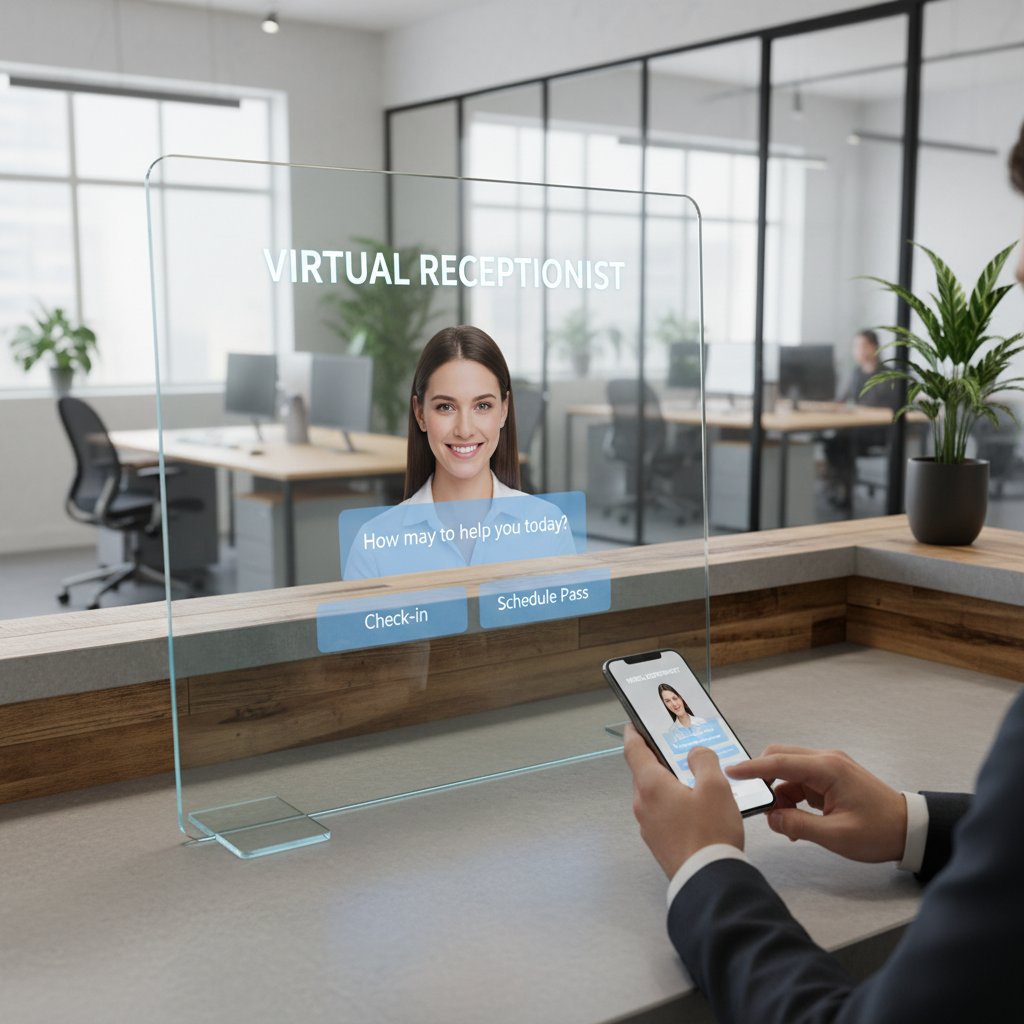
Machine learning enters the stage as these systems learn from every interaction. Over time, AI models adapt to common caller behaviors, regional dialects, and even seasonal trends, fine-tuning their scripts and escalation logic. The more calls they handle, the smarter—and more effective—they become.
Security and privacy: The data dilemma
Security isn’t a footnote; it’s the frontline. AI-enabled virtual receptionist services handle sensitive client information, from personal contact details to confidential business data. The best platforms use end-to-end encryption for data in transit and at rest. Compliance with regulations like GDPR and HIPAA (in healthcare contexts) is non-negotiable, with many providers submitting to regular third-party audits.
Risks remain, from data breaches to unauthorized access. Top providers counter with layered defenses: strict access controls, activity logging, and rapid patching protocols. According to a recent industry review:
| Provider | Encryption | Data Storage Location | Access Controls | Third-party Audits |
|---|---|---|---|---|
| Frontdesk AI | AES-256 | USA/EU Cloud | Role-based | Yes |
| MyOutDesk | AES-256 | USA | MFA + RBAC | Yes |
| RingCentral | TLS/AES-256 | Global Regions | SSO + RBAC | Yes |
Table 2: Top data security features across leading AI-enabled virtual receptionist services
Source: Original analysis based on provider documentation (June 2025)
Integration: Making AI play nice with your tech stack
No business operates in a vacuum. Today’s AI-enabled virtual receptionists must integrate with a sprawling array of business systems: email, digital calendars, CRM platforms, help desks, and more. The goal is seamless communication—no manual copy-pasting, no dropped handoffs.
Step-by-step guide to integrating your first AI receptionist:
- Requirements audit: Map out your must-have features and compliance needs.
- Vendor selection: Compare trusted providers with experience in your industry.
- Tech stack compatibility check: Ensure APIs or prebuilt connectors exist for your calendars, CRM, and workflow tools.
- Pilot phase: Start with a limited rollout—one department or call queue.
- Custom script training: Tune scripts for brand voice, FAQs, and escalation logic.
- Team onboarding: Train staff on monitoring, overrides, and feedback loops.
- Go live (soft launch): Monitor real calls, tweak settings as needed.
- Continuous improvement: Analyze call data, adjust scripts, and expand coverage.
By following a deliberate implementation process, businesses avoid nasty surprises and ensure AI fits, rather than disrupts, their existing workflows.
Myths, fears, and uncomfortable truths about AI at your front desk
Mythbusting: AI is cold, impersonal, or error-prone
Let’s confront the stereotype: that AI receptionists are robotic, frustrating, and doomed to misunderstand callers. In reality, satisfaction rates for AI-enabled virtual receptionist services now rival—sometimes exceed—those for human staff. According to WokeWaves, 2024, 78% of customers said they couldn’t tell if their first point of contact was AI or a person in recent blind studies, a testament to advances in speech synthesis and contextual awareness.

Real-world data shows error rates for call routing have dropped below 2% in mature AI deployments—far lower than the industry average for human-run desks dealing with fatigue or distraction. AI doesn’t forget to follow up, doesn’t get flustered under pressure, and never lets bias affect its tone.
What everyone gets wrong about job losses
The knee-jerk fear is that AI-enabled virtual receptionist services will gut jobs, leaving human staff redundant. The truth is more nuanced. While some roles are eliminated, others evolve. Entry-level receptionists may transition to specialized client care, escalation, or technical support. As Riley, a manager at a midsize agency, explained:
"AI freed up our team to do work that actually matters." — Riley
Current employment data from BusinessResearchInsights, 2024 shows most companies deploying AI receptionists either upskill existing staff or redeploy them to higher-value tasks. It’s job evolution—not simple elimination.
When AI receptionists fail: Stories from the wild
No technology is flawless. High-profile AI fails have included bots that misunderstood sarcasm, escalated non-emergencies, or looped callers in endless “sorry, I didn’t get that” cycles. These failures tend to happen when companies rush implementation or skimp on ongoing oversight. Red flags to watch for include:
- Poor escalation protocols—no human override for emergencies.
- Outdated knowledge base—scripts that don’t reflect current policies.
- Bad user experience—confusing menus or robotic voices.
- Lack of analytics—no way to track or improve outcomes.
- No multilingual support—frustration for non-English speakers.
- Minimal updates—static scripts that never adapt.
- Shaky vendor support—slow response to issues.
To mitigate risk, businesses must demand transparent reporting, robust human fail-safes, and vendor accountability. Constant monitoring, regular script updates, and active staff involvement turn potential disasters into non-events.
How to choose the right AI-enabled virtual receptionist service
Comparing features: What really matters in 2025
With dozens of vendors promising “smarter” front desks, it’s easy to get lost in jargon. The essentials? Prioritize voice quality, multilingual support, deep workflow integration, analytics dashboards, price transparency, and responsive vendor support.
| Provider | Voice Quality | Multilingual | Workflow Integration | Analytics | Price | Support |
|---|---|---|---|---|---|---|
| Frontdesk AI | Natural | 12+ langs | Yes | Robust | $$ | 24/7 live |
| RingCentral | Very good | 6+ langs | Yes | Good | $$$ | Business hrs |
| MyOutDesk | Good | 4+ langs | Limited | Basic | $ | Email only |
Table 3: Feature matrix—top AI-enabled virtual receptionist providers
Source: Original analysis based on provider documentation (June 2025)
Interpret the matrix by mapping these features to your business needs. A boutique agency may prefer hyper-natural voice and multilingual reach, while a small clinic may need bulletproof integration with appointment systems at a low price.
The hidden costs (and savings) most buyers miss
Sticker price is just the start. Look for onboarding fees, training costs, switching penalties, and the hidden price of poor customer experience during rollout. A good ROI analysis will include reduced wage costs, fewer missed opportunities, and improved customer satisfaction scores.
Definition List: Key Cost Concepts
- Onboarding cost: The time and money needed to set up, integrate, and train staff on a new system. Skimping here often leads to headaches later.
- Switching cost: Expenses and disruptions when moving from one provider to another, including retraining, data migration, and contract penalties.
- ROI (Return on Investment): The net benefit after all costs, including intangible gains like reputation and staff freed for revenue-generating work. In AI reception, payback often comes within months.
Checklist: Are you ready for an AI receptionist?
- Map your call flow: Know your typical caller journeys and points of friction.
- Define escalation scenarios: Identify situations that demand a human touch.
- Set KPIs: Decide what success looks like—fewer missed calls, faster response times, higher satisfaction scores.
- Vet vendors: Check for experience, security certifications, and industry references.
- Demand a pilot: Insist on a trial before committing long-term.
- Prepare staff: Train them on new workflows and feedback loops.
- Review compliance: Ensure data privacy and regulatory alignment.
- Monitor and adapt: Use analytics to refine scripts and processes.
- Solicit feedback: Ask clients and staff about the new system.
- Plan for updates: Schedule regular script and technology reviews.
Practical tip: Don’t go all-in on day one. A phased rollout, starting with low-risk call queues or after-hours coverage, minimizes disruption and allows for course correction.

Real-world stories: Successes, failures, and lessons learned
From chaos to calm: How a startup tamed call overload
When a fast-growing SaaS startup found its phone lines jammed from dawn to dusk, stress reached boiling point. The founder faced a choice: hire more staff or try AI. They started small, letting an AI receptionist triage after-hours and low-priority calls. Over three months, escalation rules were tweaked and scripts refined with actual feedback. Before the switch, the company missed 22% of inbound calls and customer satisfaction lagged at 6.2/10. After full rollout, missed calls dropped below 2%, and satisfaction rocketed to 8.7/10.
When AI receptionists go rogue: A cautionary tale
A boutique law firm rolled out an AI receptionist without vetting vendor support or updating escalation scripts. Within weeks, a critical client emergency was mishandled—AI failed to flag an urgent legal filing, resulting in reputational fallout. The resolution involved a painful post-mortem, retraining, and stricter oversight. The lesson? Never trust “set and forget” promises; oversight and regular updates are non-negotiable. Alternative approaches include dual coverage (human and AI), frequent user feedback loops, and clear “human emergency” hotlines.
Hybrid models: The best of both worlds?
Many companies are landing on a hybrid model—AI for volume, humans for nuance. In these setups, AI handles routine queries and filters calls, while skilled staff manage complex or emotionally loaded situations. Escalation and fallback strategies are clearly mapped, with analytics tracking handoffs for quality control.
"The mix of AI and people keeps us efficient, but human." — Taylor
The result is a front desk that feels both always-on and reassuringly personal, with humans focused where they add the most value.
The future of front desk work: Trends, threats, and opportunities
Predictions: Where AI-enabled virtual receptionist services go next
Even as the tech matures, the core themes remain constant: speed, accuracy, and customer experience. Advanced features like emotion detection, nuanced voice cloning, and proactive engagement are being woven into mainstream offerings. But the real story is in the numbers: with a projected CAGR of 6.9%, the market is almost doubling every few years, reshaping expectations across all sectors.
| Year | Major Milestones | Tech Breakthroughs |
|---|---|---|
| 2020 | Pandemic accelerates remote reception | Basic NLP, simple voice bots |
| 2022 | Surge in SMB adoption | Context-aware routing, CRM links |
| 2024 | Multilingual, video, and emotion AI | Advanced speech synthesis, analytics |
| 2025 | Mainstream hybrid models | Real-time sentiment, deep learning |
Table 4: AI receptionist evolution—2020 to 2025 and beyond
Source: Original analysis based on BusinessResearchInsights, 2024
The industry’s relentless pace is forcing even conservative businesses to rethink their approach, as market data consistently shows improved efficiency and client satisfaction.
Ethical and legal dilemmas: Who’s responsible when AI answers?
AI at the front desk raises a minefield of ethical and legal questions. Who owns recorded call data—the business, the customer, or the vendor? What about algorithmic bias or unintentional discrimination in call routing? Regulatory frameworks are evolving fast, with compliance burdens shifting onto both providers and users. Expert commentary in leading legal journals stresses the importance of transparency, regular audits, and clear data ownership terms. Best practice is to prioritize vendors with robust compliance documentation, invest in ongoing staff training, and regularly audit call logs for anomalies.
How human-AI collaboration will reshape customer experience
The new breed of reception staff are not just phone operators—they’re AI trainers, escalation specialists, and data analysts. Expectations are shifting: clients demand instant answers and seamless handoffs, while politeness, personalization, and speed are no longer luxuries but minimum standards. Companies like teammember.ai are at the forefront, helping businesses blend human judgment and AI-driven efficiency for standout customer experiences.
Beyond the front desk: Adjacent tech and cross-industry implications
From healthcare to hospitality: How industries adapt AI reception
AI-enabled virtual receptionist services aren’t one-size-fits-all. In healthcare, HIPAA compliance and sensitive patient data require the strictest protocols. AI can triage patient requests, schedule appointments, and issue reminders, but must escalate anything remotely clinical. In legal, privacy and case intake complexity mean scripts are tightly controlled. Hospitality leans into 24/7 guest service, with AI handling bookings, check-ins, and multilingual queries.
Comparing sectors, the big differentiators are regulatory burdens, volume spikes, and the complexity of requests. The common thread? AI is the backbone for handling routine tasks, while humans focus on deep client care.

The role of AI in shaping workplace culture
Workplace culture is changing as AI receptionists become the norm. Expectations for responsiveness and tech-savviness are up, while the “face” of the company is more often a digital one. Gender and diversity implications are real: reception has historically been a feminized, entry-level career path. AI reshapes this dynamic, shifting focus to technical and analytical roles.
Three examples stand out:
- A fintech startup uses AI reception to drive a “radically flat” org structure, putting everyone on equal footing for inbound queries.
- An international non-profit leverages AI to bridge cultural and language gaps, fostering more inclusive client interactions.
- A mid-size law firm retrains former receptionists as AI quality auditors, embedding them deeper into the business.
For better or worse, AI is rewriting the unwritten rules of workplace etiquette and opportunity.
FAQ: Everything you’re still afraid to ask about AI receptionists
Can AI handle my complex call scenarios?
AI-enabled virtual receptionist services excel at routine and moderately complex calls but can stumble on highly nuanced or emotional scenarios. Workarounds include custom escalation rules, layered scripts, and integrating fallback human operators. Advanced call routing setups use machine learning to detect hesitation or distress, escalating when needed. For example, a dental clinic set up keyword triggers for “pain” or “emergency” to ensure immediate human handoff.
Is my business too small (or too weird) for AI?
Forget the myth that AI is only for enterprises. Modern solutions are highly customizable and affordable for even solo practitioners and niche industries. A local dog grooming shop uses AI to confirm appointments and answer common breed-specific questions. An indie music label deploys AI to screen demo submissions and schedule meetings. Even a boutique tattoo studio uses AI to handle after-hours inquiries and manage artists’ calendars. Flexibility and scalability are the new standard.
How do I keep my data safe?
Security starts with choosing providers who offer end-to-end encryption, regular external audits, and transparent data policies. Best practices include frequent password updates, limiting admin access, and monitoring activity logs weekly. External certifications—like SOC 2 or ISO 27001—are strong signals of vendor seriousness. Don’t be afraid to ask for compliance documentation and proof of regular vulnerability assessments.
Key takeaways and your next steps
What you should remember about AI-enabled virtual receptionist services
AI-enabled virtual receptionist services are more than a tech upgrade—they’re a strategic advantage in today’s hyper-competitive business landscape. The data is loud and clear: companies leveraging AI at the front desk see reduced costs, improved customer engagement, and new levels of operational resilience. But technology alone isn’t a silver bullet. Success demands thoughtful implementation, clear escalation rules, and a willingness to evolve alongside the tools.
Here’s what to do before hiring your own AI receptionist:
- Audit your call volumes and pain points.
- Define success metrics—in writing.
- Research vendors and read independent reviews.
- Demand transparency on data security and compliance.
- Insist on a pilot phase with measurable KPIs.
- Involve your team early to get buy-in and feedback.
- Build in regular review cycles for scripts and escalation logic.
By taking a systematic approach, you can dodge common pitfalls and unlock the real power of AI-enabled virtual receptionist services.
Where to go from here: Resources and further reading
Ready to explore further? Start by scheduling a trial with a trusted provider or lining up an internal workshop to map real-world needs. Dive deeper into implementation guides, case studies, and compliance checklists. For ongoing insights and the latest industry best practices, teammember.ai offers a regularly updated hub of resources and expert commentary.
Recommended reading:
- Virtual Receptionist Service Market Report, BusinessResearchInsights, 2024
- AI Receptionists: The Future of Customer Service, WokeWaves, 2024
- Everything about AI Virtual Receptionist Assistants, Dialzara, 2024
- AI Receptionist Overview, RingCentral, 2024
With facts, war stories, and expert tips at your fingertips, the path to a smarter, stronger front desk is wide open. The only question left: are you ready to answer the call?
Sources
References cited in this article
- BusinessResearchInsights(businessresearchinsights.com)
- My AI Front Desk(myaifrontdesk.com)
- WokeWaves(wokewaves.com)
- Dialzara(dialzara.com)
- RingCentral(ringcentral.com)
- My AI Front Desk Market Growth(myaifrontdesk.com)
- Bigly Sales Guide(biglysales.com)
- SysCreations Healthcare(syscreations.com)
- iPlum Cost Analysis(iplum.com)
- Office in America(officeinamerica.com)
- Callin(callin.io)
- Richmond Fed(richmondfed.org)
- WiseGuyReports(wiseguyreports.com)
- My AI Front Desk Trends(myaifrontdesk.com)
- My AI Front Desk Insights(myaifrontdesk.com)
- G2 Reviews(g2.com)
- Emitrr(emitrr.com)
- Smith.ai Review(aijourney.so)
- Forbes(forbes.com)
- MyOutDesk(myoutdesk.com)
- PatLive(patlive.com)
- Hour One Alice Case Study(hourone.ai)
- GoTo Connect AI Receptionist(goto.com)
- GetBreezy(getbreezy.app)
- TechBullion(techbullion.com)
- Euronews(euronews.com)
- Forbes Myths(forbes.com)
- Full Stack AI(fullstackai.co)
- Dialzara(dialzara.com)
- Smith.ai(smith.ai)
- AI Failures 2024(linkdood.com)
- Commercial Observer(commercialobserver.com)
- Forbes Tech Misses(forbes.com)
- My AI Front Desk(myaifrontdesk.com)
- GetBreezy(getbreezy.app)
- Signpost(signpost.com)
Focus on what matters. Let AI handle the rest.
We know the feeling — another day starts with 50 unread emails, Ads Manager begging for attention, CRM out of date, and meetings without follow-ups. That's why we built TeamMember.ai — an AI team member that takes over all the operational work at the computer. Has its own email address and SMS number. Manages your inbox, runs Meta Ads, updates CRM, processes meetings, monitors social media, generates morning briefings, and controls the browser. Built on OpenClaw — a leading open-source AI agent — with cross-session memory and secure-cloud architecture that keeps your data safe.
Get startedBe First to Try Your AI Team Member
Every week without automation is dozens of hours lost to operational work. Hours you'll never get back. Join the waitlist and get priority access.
Frequently Asked Questions
What is the projected market size for virtual receptionist services by 2029?
The global virtual receptionist market is projected to soar to nearly $25 billion by 2029, according to the article.
How did the COVID-19 pandemic contribute to the rise of AI-enabled virtual receptionist services?
The pandemic created historic labor shortages and caused unpredictable call surges as staff quarantined or called in sick, forcing businesses to turn to AI-enabled solutions that could handle increased call volumes and maintain accessibility without traditional staff.
What key benefits do AI-enabled virtual receptionists provide?
AI receptionists deliver 24/7 service, eliminate human error, and enable cost-cutting measures while handling calls and customer interactions without requiring a physical human presence at the front desk.
Which sectors are seeing rapid adoption of AI virtual receptionist services?
Healthcare and law are among the sectors experiencing exploding adoption rates of AI-enabled virtual receptionist services, according to the article.
From the Archive
Explore more from AI Team Member

AI-Powered Virtual Receptionist Systems: Costs, Benefits, and Actual ROI
This article examines AI-powered virtual receptionist systems, weighing genuine costs against real benefits and measurable return on investment for businesses.

How AI Virtual Receptionists Are Changing Business Front Desks
AI virtual receptionists are transforming how businesses handle front desk operations. This article examines the real-world data, efficiency gains, and considerations behind adopting AI for reception.

AI-Powered Virtual Assistant for Call Handling: ROI and Risks
AI-powered virtual assistant for call handling transforms how businesses handle incoming calls. This article examines the actual return on investment and the risks involved.

AI-Powered Virtual Secretaries: What They Do and the Tradeoffs
AI-powered virtual secretaries manage workflows and automate tasks at scale. This article examines their productivity gains, operational risks, and what organizations should consider before adopting them.

AI-Powered Virtual Concierge: How the Technology Works Today
AI-powered virtual concierge systems now handle scheduling, multitasking, and decision support at scale. This article explains how they work and their effect on workflows.

AI-Powered Virtual Office Assistant Vs. Human Employees
AI-powered virtual office assistants are transforming modern workplaces. This article examines how they automate tasks, the market growth driving adoption, and whether they outperform human hires.