


AI-Powered Virtual Assistant for Customer Success: Hype, Risk, ROI
Written with AI assistance under our editorial guidelines
AI-powered virtual assistants for customer success are being adopted rapidly, with over forty-two percent of US small and midsize businesses implementing them by 2023 and the market projected to reach eleven-point-nine billion dollars by 2030. While not flawless, these assistants address critical business problems including high customer churn rates, which average five to seven percent monthly in SaaS and cost up to five times more to replace than retain, while alleviating burnout among overwhelmed support teams.
In the relentless theater of customer success, the rules aren’t just changing—they’re being rewritten by the unblinking logic of artificial intelligence. Forget the marketing hype: AI-powered virtual assistants for customer success are not your shiny, all-knowing robots from Silicon Valley dreams. They are gritty, tireless, and, sometimes, as flawed as the humans who built them. Still, with over 42% of US small and midsize businesses adopting AI virtual assistants by 2023 and the global market set to explode to $11.9 billion by 2030 (Global Market Insights, 2024), the stakes are too high to ignore. Every support leader, founder, or skeptic glued to their churn dashboards needs to cut through the hype and face the brutal truths and hard-won wins of this AI revolution. This isn’t just about technology—it’s a battle for trust, speed, empathy, and survival in the war for customer loyalty.
Why customer success is broken—and how AI is rewriting the rules
The high cost of churn and burnout
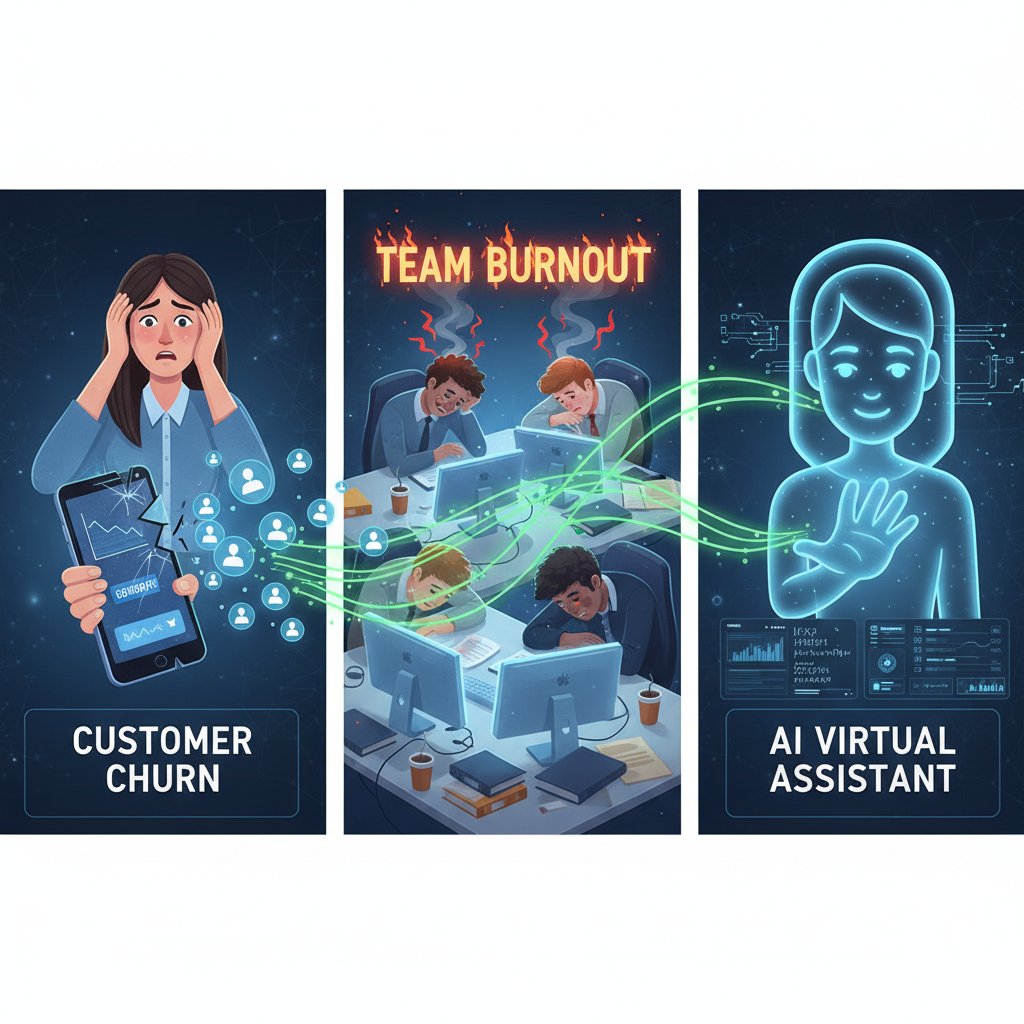
It’s an ugly truth: customer churn is a leak that drowns even the most ambitious companies. In SaaS, the average monthly churn rate hovers around 5-7%, e-commerce is close behind, and B2B isn’t immune either. Replacing a lost customer can cost up to five times more than keeping an existing one. The real kicker? Burned-out support teams are the collateral damage—overwhelmed by repetitive tickets and forced into a grind that saps morale and creativity. This vicious cycle is what keeps VPs awake at night and has driven the desperate search for scalable answers.
| Industry | Avg. Monthly Churn Rate | Avg. Cost of Retention ($/customer/year) |
|---|---|---|
| SaaS | 5-7% | $200–$1,500 |
| B2B | 4-6% | $500–$2,000 |
| E-commerce | 6-8% | $80–$500 |
Table 1: Churn rates and retention costs by sector. Source: Original analysis based on Number Analytics, 2023; Software Oasis, 2024.
The pain isn’t just financial. Every unresolved ticket is a silent goodbye, a customer slipping through the digital hourglass. The burnout of support agents? Equally real, and it directly sabotages your customer success KPIs. As the frontline crumbles, companies are forced to ask: can technology do what humans can’t—or won’t—anymore?
How traditional support failed in the digital era
In the panic of mounting customer demands, many organizations defaulted to a brute-force tactic: hire more agents, expand call centers, and outsource to whoever promised cheaper labor. Did it work? Not really. The digital customer expects instant answers, personalized attention, and seamless experiences—demands that even armies of agents can’t sustainably deliver.
"We tried throwing more people at the problem—AI forced us to rethink everything." — Maya, Head of Customer Operations, mid-sized SaaS provider (2023)
Enter AI-powered virtual assistants. Not the clunky, FAQ-spewing chatbots of the 2010s, but algorithms armed with real-time analytics, intent recognition, and the capacity to operate across channels 24/7. The difference? These systems don’t just answer—they learn, adapt, and (in the best scenarios) collaborate with human teams to stem the tide of churn and burnout.
The moment AI entered the scene: a turning point
The first wave of AI in customer success was a mixed bag—grand unveilings of virtual agents that could, in theory, handle thousands of queries per hour. Yet, the reality was sobering. Early deployments often misunderstood nuanced questions, escalated to humans too late (or not at all), and sometimes delivered sterile, empathy-lacking responses that frustrated customers. According to Getzowie (2023), over 70% of routine queries are now automated by AI assistants, but unresolved or emotional cases still demand a human touch.
These initial blunders weren’t failures—they were growing pains. The savvy teams didn’t abandon AI. Instead, they doubled down: retraining datasets, refining escalation protocols, and integrating AI as a teammate rather than a replacement. The result? A new support paradigm where AI and humans fight churn together, each playing to their strengths. It’s messy, it’s real, and it’s happening now.
What is an AI-powered virtual assistant for customer success—really?
Beyond the chatbot: from scripts to real intelligence
Let’s demolish the myth: today’s AI-powered virtual assistants are not your grandmother’s chatbots. The difference is night and day—a leap from rigid, rules-based scripts to dynamic engines fueled by natural language processing (NLP), machine learning, and intent detection. The AI assistant doesn’t just respond to keywords; it understands context, prioritizes urgency, and can even personalize interactions based on customer history.
Definition list: Key terms in the modern AI assistant arsenal
- AI assistant: An intelligent software agent that automates customer interactions, learns from data, and can escalate complex cases to humans.
- NLP (Natural Language Processing): The branch of AI that enables machines to understand and generate human language.
- Intent detection: The AI’s ability to infer what a customer wants, even if they don’t spell it out.
- Escalation protocol: Rules and models that decide when an AI should hand off a query to a human agent.
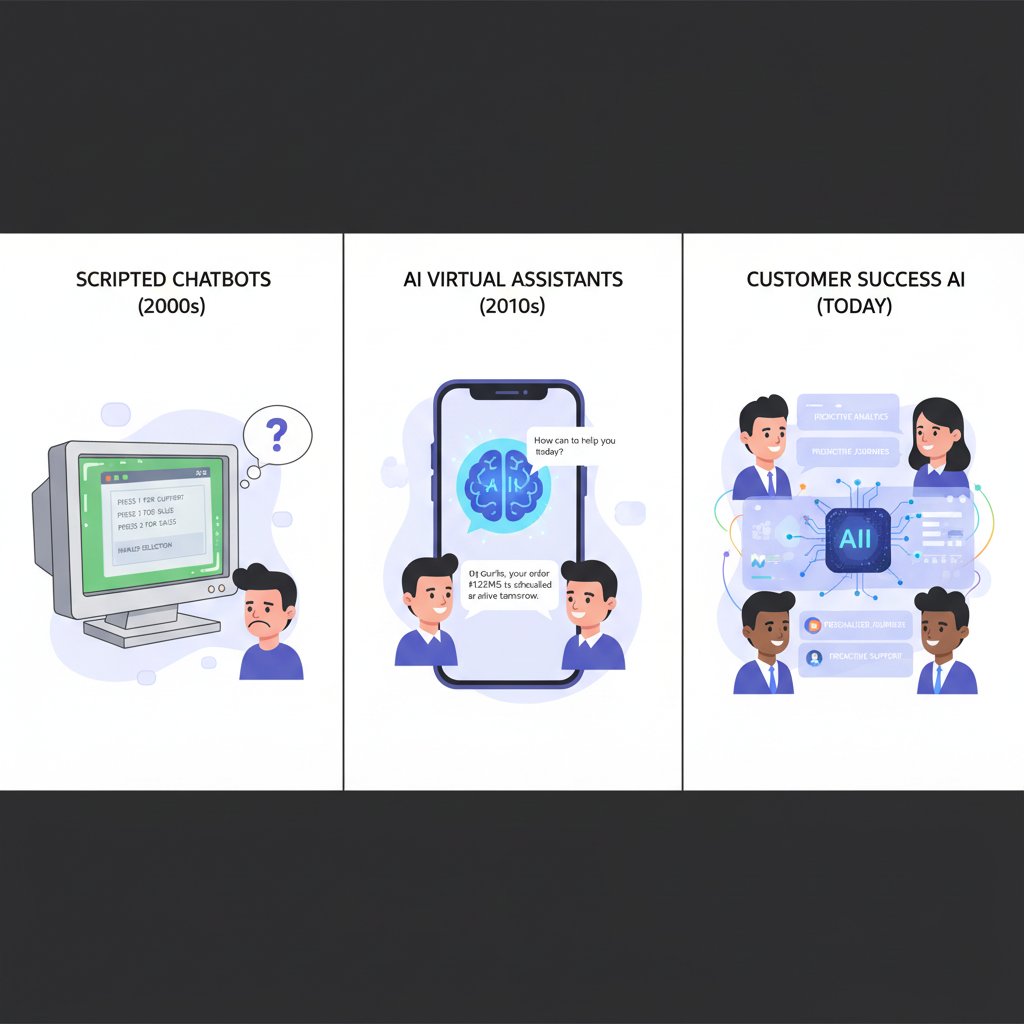
Over the past decade, AI customer support technology has mutated from the infamous "Sorry, I didn't understand that" loops to systems that can process sentiment, extract actionable insights, and help teams anticipate—not just react to—customer needs.
Core features that matter (and hype to ignore)
The market is a jungle, littered with vendors making wild claims. Here’s what actually matters, according to research from Forbes (2024) and Software Oasis (2024):
- Automation of repetitive queries (saves agents for higher-value work)
- Seamless escalation to humans (no dead ends)
- Personalization of responses (using customer data, not generic scripts)
- 24/7 availability across channels (email, chat, SMS)
- Integration with legacy and cloud systems
- Real-time analytics and reporting
- Data privacy and compliance controls
7 hidden benefits of AI-powered virtual assistants for customer success:
- Reveal hidden customer pain points with real-time analytics.
- Slash response times from hours to seconds—night or day.
- Free agents to focus on complex, meaningful work.
- Drive up sales conversions (up to 70% in retail, per Software Oasis, 2024).
- Offer “always-on” support without burnout.
- Improve consistency and accuracy of information delivered.
- Generate training data to accelerate agent onboarding and upskilling.
Don’t fall for the vaporware. Ignore flashy avatars and empty “emotion emulation.” Focus on the features that impact real KPIs—retention, satisfaction, and agent productivity.
How do AI assistants actually work?
At their core, AI-powered virtual assistants are sophisticated data pipelines: customer queries arrive (email, chat, etc.), get parsed by NLP engines, and routed through a decision tree powered by machine learning. Feedback loops ingest every interaction, improving the AI’s accuracy over time.
Rules-based bots rely on static scripts: “If the customer says X, reply Y.” Learning-based AI, by contrast, adapts with every new ticket, learning from successful (and failed) resolutions. For example: a customer emails about a delayed shipment. The AI parses the complaint, accesses order data, recognizes urgency through sentiment analysis, and either resolves the issue or escalates it if the customer signals frustration or specific needs.
The magic is in the handoff. A well-tuned AI assistant doesn’t just process tickets—it knows when to get out of the way and let a human take over, preserving both customer satisfaction and brand reputation.
The brutal truths: what most teams won’t tell you about AI for customer success
When AI fails: unfiltered stories
Let’s not sugarcoat it—AI doesn’t always deliver. Consider the cautionary tale of a mid-sized SaaS company in 2023: they deployed an eager new AI assistant, expecting to automate 80% of customer queries. The result? Customer complaints doubled, negative reviews spiked, and churn crept up 12% in a single quarter.

What went wrong? The system consistently misunderstood nuanced requests, failed to escalate angry customers in time, and mishandled sensitive data—breaching user privacy and triggering a compliance headache.
Here are three typical failure modes:
- Misunderstanding intent: The AI confuses “reset my account” with “close my account,” leading to lost customers.
- Escalation errors: The system tries to handle a refund dispute meant for human review, infuriating the customer.
- Data privacy breaches: Inadequate controls expose sensitive information, violating regulations and trust.
The lesson: AI can be as fragile as it is powerful. Bad design, lack of oversight, or misguided expectations can torpedo even the best-intentioned projects.
Misconceptions and myths: debunked
Myth-busting is a public service. Here are five persistent misconceptions:
- Myth 1: “AI means impersonal support.” Reality: Properly tuned AI can actually personalize at scale—if it’s fed the right data and paired with humans.
- Myth 2: “AI is plug-and-play.” Reality: Integration, training, and ongoing tuning are non-negotiable.
- Myth 3: “AI replaces jobs.” Reality: Automation frees agents to focus on strategic, creative work (see Number Analytics, 2023).
- Myth 4: “AI can handle every query.” Reality: Emotional, nuanced, and high-stakes issues still require humans.
- Myth 5: “AI is always cost-effective.” Reality: ROI takes time and depends on careful change management.
Avoid the trap: treat implementation as an iterative, human-led process—not a fire-and-forget solution. The difference? Survival.
The human factor: AI can’t do it all (yet)
Here’s the line in the sand. AI can answer, analyze, and even apologize—but it cannot empathize, negotiate peace in a heated dispute, or navigate the subtleties of a long-term B2B contract.
“AI takes care of the grind, but customers know when it’s not human.” — Jordan, Senior Customer Success Manager
Consider these scenarios:
- A customer is grieving over a failed critical delivery. Only a human can truly express empathy and resolve the emotional fallout.
- A major client threatens to leave over a perceived slight. Negotiation, reassurance, and relationship-building trump scripts.
- A technical emergency requires real-time creative troubleshooting—AI can suggest solutions, but only a human can read between the lines and improvise under pressure.
The best teams blend AI’s speed and consistency with human warmth and judgment. That’s not a compromise—it’s a competitive advantage.
How to actually implement an AI-powered virtual assistant for customer success (and not screw it up)
Step-by-step guide to a successful rollout
So, you’re ready to pull the trigger. Here’s how to do it—without landing in the AI graveyard.
- Define clear goals: What does success mean—fewer tickets, higher NPS, cost savings?
- Map your customer journeys: Identify where AI can add value—and where it can’t.
- Select the right vendor: Vet for integration, data privacy, and proven results.
- Prepare your data: Cleanse, label, and secure the information your AI will need.
- Customize workflows: Tailor the assistant for your business logic and escalation paths.
- Pilot with a small group: Roll out to a controlled subset and monitor heavily.
- Train and retrain: Iterate based on real feedback and measured outcomes.
- Scale up thoughtfully: Expand coverage, but continue to monitor and improve.
- Review and refine: Schedule regular audits and tuneups to ensure relevance and accuracy.
For small businesses, the process may lean heavily on ready-made solutions with basic customization. Enterprises need deep integration, robust compliance, and cross-team collaboration. Whatever your size, a slow-and-steady approach beats a big-bang disaster.
Transition: But even the best-laid plans can go sideways—especially if you miss the warning signs.
Red flags and pitfalls: what to watch for
- Lack of transparent performance metrics
- Data privacy gaps or weak compliance
- Overpromising vendors with little real-world proof
- Minimal customization options
- No clear escalation path to humans
- Inadequate team training
- Failure to involve frontline agents in design
- Ignoring post-launch feedback loops
Example one: A financial firm ignored compliance requirements—resulting in a data exposure incident. Example two: A retailer went live without agent training, triggering an avalanche of complaints and manual escalations. Example three: A nonprofit relied on “out-of-the-box” settings, which misinterpreted culturally sensitive requests, damaging donor trust.
If your first launch flops, don’t bury the evidence. Deconstruct the failure, retrain the system, and—above all—listen to your humans on the front lines.
Change management: getting your team on board
Humans hate change, especially when it sounds like their jobs are on the line. The antidote? Radical transparency and shared ownership.

Checklist for team readiness:
- Communicate the “why” and the “how” of AI transformation.
- Involve agents early—let them test, critique, and improve the tool.
- Offer hands-on training and clear escalation rules.
- Celebrate wins—credit both AI and human contributions.
- Keep feedback channels wide open.
- Make it safe to fail and iterate—no blame games.
When teams feel like co-owners, not targets, they’ll fight for your success (not against it).
AI versus human: a ruthless comparison (and why hybrid wins)
Cost, speed, empathy: who comes out on top?
| Support Model | Cost ($/month) | Avg. NPS | Median Response Time (sec) | Escalation Rate (%) |
|---|---|---|---|---|
| AI-only | 2,000 | 56 | 8 | 25 |
| Human-only | 8,500 | 69 | 180 | 0 |
| Hybrid | 4,900 | 78 | 22 | 9 |
Table 2: Support model comparison—cost, satisfaction, and escalation rates. Source: Original analysis based on Number Analytics, 2023; Deskubots, 2024.
Surprisingly, the hybrid approach—AI as frontline, humans as escalation—delivers the best blend of cost, speed, and customer love. Fully automated support saves money and time, but stumbles on empathy and complex requests. Human-only support wins on nuanced cases but can’t scale cost-effectively.

Case study: blending human and AI for real results
A European retailer struggled with holiday surges. By deploying an AI-powered virtual assistant to handle common queries and escalate VIP or angry customers instantly to human agents, they slashed response times by 60% and reduced churn by 30% in a single quarter.
Variations:
- Startup: AI tackled onboarding and FAQ, founders managed escalations.
- Mid-market: AI handled 80% of tickets, humans focused on upsell and recovery.
- Enterprise: AI unified data across channels, humans resolved escalations and complex troubleshooting.
"We stopped thinking of AI as a replacement—now it’s our secret weapon." — Alex, VP of Customer Experience
Why going full-AI is still risky in 2025
There’s a seductive logic to “all-in” automation: kill costs, speed up everything. But the hidden risks bite hard—unaddressed edge cases, loss of human nuance, and the specter of customer revolt. Forbes (2024) notes that companies overrelying on AI risk eroding trust and satisfaction, especially when empathy is needed most.
When customers realize there’s no way to reach a human—especially in moments of frustration or crisis—they don’t just leave; they broadcast their anger. The reputational cost can dwarf any short-term savings.
Bottom line: The future isn’t AI versus humans. It’s AI-augmented humans, and human-augmented AI. Anything less is a false economy.
The hidden costs (and surprising ROI) of AI-powered customer success
Investment breakdown: what you’ll really pay
The sticker price is just the start. Realistically, you’ll pay for:
- Software licensing or subscriptions
- Data cleansing and migration
- Training (both AI and human agents)
- Ongoing tuning and updates
- Compliance and security reviews
- Change management and support
| Year | Human-only Cost ($) | AI Assistant Cost ($) | Hybrid Cost ($) | Churn Reduction (%) |
|---|---|---|---|---|
| Year 1 | 102,000 | 36,000 | 55,000 | 10 |
| Year 2 | 104,000 | 30,000 | 48,000 | 19 |
| Year 3 | 107,000 | 29,000 | 44,000 | 25 |
Table 3: Cost-benefit analysis of support models over 3 years. Source: Original analysis based on Number Analytics, 2023; Software Oasis, 2024.
Pro tip: Minimize spend by phasing your rollout, negotiating vendor terms, and automating only what makes business sense. Maximize value by continuously retraining both your AI and your humans.
ROI case studies: when the numbers make sense
B2B SaaS: After deploying AI for onboarding and support, a company cut churn by 18% and improved customer satisfaction by 21% in one year.
B2C Retail: AI chatbots drove sales conversion rates up to 67%. Round-the-clock support reduced wait times by 70% (Software Oasis, 2024).
Nonprofit: Automating routine donor questions freed staff time, allowing focus on high-value outreach, boosting loyalty and retention.
Success metrics to track: customer satisfaction (CSAT/NPS), churn rates, first-response time, escalation rates, and cost per ticket. Beware the classic pitfall—measuring “tickets handled” instead of actual customer outcomes. Real ROI is a long game, not an overnight miracle.
What most vendors won’t tell you about ongoing costs
After launch, the bills don’t stop. You’ll need to budget for:
- Regular retraining and algorithm updates
- Compliance (especially as regulations evolve)
- Integration with new tools and workflows
- Ongoing security audits
- Cultural adaptation and localization
Open-source solutions offer flexibility but require more in-house expertise; proprietary tools bundle support but can lock you in. Either way, there are no shortcuts—invest in continuous improvement or risk falling behind.
Real-world stories: bold wins, ugly failures, and lessons no one else will tell you
Successes that changed the game
A European e-commerce leader slashed customer churn by 30% within six months of adopting a hybrid AI/human customer success model. Their secret? Relentless iteration and ruthless honesty about what AI could (and could not) do.
Another example: A fintech startup used AI to automate onboarding and KYC checks, improving customer satisfaction scores by 20% and slashing onboarding time from days to minutes.
In healthcare, a clinic automated routine patient communications, reducing admin workloads by 30% and freeing clinicians to focus on care, not paperwork.

These weren’t lucky breaks—they were the product of strategic deployment, clear KPIs, and a willingness to learn from missteps.
When AI went wrong: learning from disaster
Remember that mid-sized SaaS meltdown? They failed to test the AI on real customer language, skipped frontline training, and ignored agent feedback. The result: lost customers, bad reviews, and a demoralized team.
Key lessons:
- Technical: Always run pilots and monitor escalation logic.
- Cultural: Train agents as partners, not just “backup.”
- Process: Audit data sources for bias and accuracy.
3 warning signs before disaster strikes:
- Surging unresolved tickets
- Negative social media sentiment
- Agents circumventing the AI to “save” customers
User voices: what customers really think
"I didn’t know I was talking to AI—and that’s the point." — Sam, Longtime Customer
Customers aren’t anti-AI. They’re anti-bad experience. When AI invisibly powers speed and accuracy, loyalty grows. When it gets in the way, trust evaporates.
Checklist: How to tell if your AI assistant is actually helping customers
- Resolution rates are up, not just ticket volume.
- NPS and satisfaction scores trend higher.
- Customers don’t ask, “Can I talk to a human?” on every second ticket.
- Complaints about “robotic” responses are rare.
- Escalations reach the right humans, fast.
- Agents report more time for strategic work.
The ethics, risks, and future of AI-powered virtual assistants in customer success
Bias, privacy, and the transparency dilemma
AI is only as ethical as the data and rules we feed it. Biases creep in, privacy can be breached, and black-box algorithms can obscure accountability. Recent debates—from algorithmic discrimination in finance to privacy lapses in healthcare—underscore the urgent need for transparency and oversight.
6 best practices for ethical AI assistant deployment:
- Audit data for bias and representation.
- Build in privacy by design—encrypt, anonymize, restrict access.
- Disclose when customers are interacting with AI.
- Document escalation logic and decision criteria.
- Regularly retrain models to reflect real-world diversity.
- Establish clear accountability for failures.
No shortcuts. Every shortcut in ethics is an invitation to disaster.
Will AI replace customer success managers?
The fear is overblown. AI isn’t a replacement; it’s a force multiplier. Human roles will shift—less time spent firefighting, more time spent building relationships and strategy. Companies like teammember.ai embody this transformation, providing resources and expertise that make AI a teammate, not an adversary.
Three scenarios:
- Full automation: Works for routine, low-stakes interactions—but hits a wall on empathy and trust.
- Hybrid teams: AI handles scale, humans handle nuance. The proven sweet spot.
- AI-augmented teams: Human agents use AI insights to supercharge personal service.
The future belongs to teams that combine the best of both worlds.
What’s next? 2025 and beyond
AI won’t stop evolving. Already, emotion recognition, proactive outreach, and cross-channel intelligence are becoming standard. What matters most is how companies wield these tools—with intention, ethics, and relentless focus on real customer outcomes.
7 predictions for the next wave of AI-powered customer success:
- Emotion detection becomes table stakes.
- Hyper-personalization based on real-time data.
- Voice and video integration with AI overlays.
- Context-aware escalation across all channels.
- Continuous learning from every interaction.
- Greater regulatory scrutiny and compliance demands.
- AI as a visible teammate—not a shadowy black box.
The only certainty? Customer success will never be the same. The teams that see AI as a partner, not a panacea, will win.
Your action plan: turning insights into results with AI-powered customer success
The ultimate checklist for getting started
- Audit your current support workflows.
- Set clear, quantifiable goals.
- Involve both agents and execs in planning.
- Choose a vendor with proven results and ethical standards.
- Prepare and secure your data.
- Define escalation and handoff protocols.
- Pilot, measure, and iterate.
- Train agents on both tech and soft skills.
- Monitor for bias, errors, and unintended consequences.
- Build feedback loops from customers and staff.
- Leverage ongoing resources like teammember.ai for continuous learning.
Tips for executive buy-in: Ground every proposal in hard numbers—churn reduction, cost savings, satisfaction boosts. Show how AI complements, not threatens, human roles.
Never go it alone. Sites like teammember.ai offer a trove of insights, best practices, and community support.
Avoiding common mistakes: what the pros know
Five classic mistakes (and how to sidestep them):
- Failing to align AI with business goals
- Skipping frontline feedback
- Over-automating sensitive touchpoints
- Ignoring post-launch tuning
- Measuring the wrong KPIs
After launch, the work begins. Three tips for continuous improvement:
- Schedule quarterly reviews of key metrics.
- Update training sets with fresh, diverse data.
- Celebrate and share both wins and learnings across the company.
Monitor, optimize, repeat. Complacency is the enemy of progress.
Key takeaways and your next move
If you’ve made it this far, you’ve seen the unvarnished reality: AI-powered virtual assistants for customer success are neither saviors nor saboteurs. They are powerful tools—best wielded by teams who obsess over customer outcomes, invest in continuous improvement, and never lose sight of the human factor.
Here’s the throughline: the old playbook—throwing more bodies at churn, endless firefighting, generic scripts—is dead. The new rulebook is written by those brave enough to blend logic and empathy, speed and wisdom, automation and intuition.
You have the facts, the numbers, and the stories. What you do next will determine whether you ride the AI wave—or get swept beneath it. Reflect, act, and never stop learning.
Supplementary deep dives: what else you need to know about AI in customer success
Glossary: decoding the jargon of AI-powered virtual assistants
- AI-powered virtual assistant: An intelligent agent designed to automate, personalize, and improve customer interactions—beyond simple scripted bots.
- Natural Language Processing (NLP): Allows AIs to understand, process, and generate human language, fueling real conversations.
- Intent detection: The AI’s ability to read between the lines and discern what the customer really wants.
- Escalation protocol: Predefined logic for passing complex or sensitive issues to human agents.
- Machine learning: Algorithms that improve performance as they are exposed to more data.
- Sentiment analysis: Detection of emotional tone, urgency, or frustration in customer messages.
- First-contact resolution: Solving a customer’s issue in a single interaction—an AI benchmark.
- Data privacy compliance: Adhering to regulations (like GDPR or CCPA) on customer data use.
Understanding this lingo is essential for effective planning, vendor vetting, and collaboration between technical and frontline teams. The sharper your vocabulary, the sharper your implementation.
Bridge: Now, let’s cut through more confusion and controversy.
Common misconceptions and controversies in AI for customer success
- “AI will kill jobs”—in reality, roles evolve, and new opportunities emerge.
- “Bots are always cheaper”—hidden costs abound.
- “Customers hate AI”—they hate bad experiences.
- “AI removes all bias”—in fact, it can amplify it if unchecked.
- “Open-source is riskier”—not if you have the right expertise.
- “Regulations are lax”—compliance penalties are real and rising.
- “AI can’t be transparent”—with the right design, it can be more transparent than some humans.
Industry debates rage over algorithmic fairness, customer consent, and data security. For example, a 2023 panel at Customer Success Summit argued fiercely over the ethics of “stealth AI”—using bots without disclosure. Another flashpoint: Should AIs apologize like humans, or stick to facts?
To cut through the noise: anchor every decision in customer benefit, ethics, and measurable outcomes. Ignore the hype, chase the truth.
Practical applications: unconventional ways AI assistants are being used
- Onboarding blitz: AI guides new users step-by-step, answers FAQs, and triggers human intervention for high-value clients.
- Customer education: AI delivers targeted tutorials and helps customers maximize product value, driving retention.
- Sentiment analysis for triage: AI flags at-risk customers based on tone, prioritizing human follow-up.
- Upsell triggers: AI detects buying signals in support chats and passes leads to sales.
Step-by-step example for onboarding blitz:
- Customer signs up.
- AI introduces itself, offers a walkthrough.
- AI answers setup questions, flags confusion.
- If customer lingers or signals frustration, human agent jumps in.
- Customer receives proactive check-ins via email or chat.
Adapt these lessons: Experiment with small pilots, measure impact, and iterate. Don’t just copy—customize for your customers and culture.
Ready to lead the charge? The future is here, and it’s hybrid, human, and unignorably AI.
Sources
References cited in this article
- Getzowie(getzowie.com)
- ZipDo(zipdo.co)
- Software Oasis(softwareoasis.com)
- Deskubots(deskubots.com)
- Number Analytics(numberanalytics.com)
- TSIA(tsia.com)
- Intercom/G2(learn.g2.com)
- Forbes(forbes.com)
- Ketch(ketch.com)
- Rollstack(rollstack.com)
- Custify(custify.com)
- ChurnZero(churnzero.com)
- Lyra(lyrahealth.com)
- DevRev(devrev.ai)
- CXOToday(cxotoday.com)
- HelpScout(helpscout.com)
- Gartner(gartner.com)
- Zartis(zartis.com)
- Verint(verint.com)
- ZDNet(zdnet.com)
- LinkedIn(linkedin.com)
- CMSWire(cmswire.com)
- Alterbridge(alterbridgestrategies.com)
- PartnerHero(partnerhero.com)
- EMB Global(blog.emb.global)
- Forbes(forbes.com)
- Ossisto(ossisto.com)
- Technosoftwares(technosoftwares.com)
- eLearningIndustry(elearningindustry.com)
- Uptech(uptech.team)
- Inoxoft(inoxoft.com)
- NYU SPS(sps.nyu.edu)
- Klarna Case(content.techgig.com)
- Gainsight(gainsight.com)
- McKinsey(whatsthebigdata.com)
- Hiregy(hiregy.com)
- Execs in the Know(execsintheknow.com)
- GrowthJockey(growthjockey.com)
- Apex Systems(apexsystems.com)
- TechStack(tech-stack.com)
- Dialzara(dialzara.com)
- Gainsight(gainsight.com)
- EverEfficient(everefficient.ai)
- Cognigy(cognigy.com)
- Forbes(forbes.com)
- Custify(custify.com)
- Gartner(gartner.com)
- Zendesk(zendesk.com)
- Outsource Accelerator(outsourceaccelerator.com)
Focus on what matters. Let AI handle the rest.
We know the feeling — another day starts with 50 unread emails, Ads Manager begging for attention, CRM out of date, and meetings without follow-ups. That's why we built TeamMember.ai — an AI team member that takes over all the operational work at the computer. Has its own email address and SMS number. Manages your inbox, runs Meta Ads, updates CRM, processes meetings, monitors social media, generates morning briefings, and controls the browser. Built on OpenClaw — a leading open-source AI agent — with cross-session memory and secure-cloud architecture that keeps your data safe.
Get startedBe First to Try Your AI Team Member
Every week without automation is dozens of hours lost to operational work. Hours you'll never get back. Join the waitlist and get priority access.
Frequently Asked Questions
What percentage of US small and midsize businesses have adopted AI virtual assistants?
Over 42% of US small and midsize businesses adopted AI virtual assistants by 2023, according to the article.
What is the average monthly churn rate in SaaS?
The average monthly churn rate in SaaS hovers around 5-7%, as cited in the article.
How much more expensive is it to replace a lost customer compared to keeping an existing one?
Replacing a lost customer can cost up to five times more than keeping an existing one.
What is the projected size of the AI virtual assistant market by 2030?
The global market for AI virtual assistants is set to reach $11.9 billion by 2030, according to Global Market Insights, 2024.
What are some consequences of burned-out support teams?
Burned-out support teams are overwhelmed by repetitive tickets, experience sagging morale and creativity, and directly sabotage customer success KPIs.
From the Archive
Explore more from AI Team Member

AI-Driven Virtual Assistant for Online Support: Hype Vs Hard ROI
Discover insights about AI-driven virtual assistant for online customer support

AI-Driven Virtual Customer Assistants: Where They Succeed, Where They Fail
AI-driven virtual customer assistant technology shows real ROI but also uncovers why many implementations fail.

AI-Driven Virtual Assistant for Online Businesses: ROI and Real Risks
AI-driven virtual assistant for online businesses automate scheduling and content work but carry risks. This article examines the real ROI, data security concerns, and practical deployment strategies.

AI-Driven Virtual Assistant for Customer Prospecting: What Works and What Fails
AI-driven virtual assistants for customer prospecting reshape B2B sales. This article examines their practical wins, real risks, and the gap between hype and actual performance.

AI-Powered Virtual Assistants for Feedback Analysis: Benefits and Pitfalls
This article examines how AI-powered virtual assistants analyze customer feedback, the risks they present, and the strategic benefits for businesses managing feedback at scale.

AI-Powered Virtual Assistants in Client Communications
AI-powered virtual assistants for client communications offer real productivity gains but also carry hidden risks.