


AI-Powered Virtual Assistant for Live Chat Support: Promise Vs. Reality
Written with AI assistance under our editorial guidelines
AI-powered virtual assistants for live chat support are reshaping customer service across a rapidly expanding market projected to reach $11.9 billion by 2030. While these systems promise efficiency and empathy, their reality is more complex. Success requires careful implementation; poorly designed chatbots frustrate users, but well-executed systems deliver genuine value when combining AI capabilities with human oversight to handle customer inquiries effectively.
The era of polite, overworked humans handling every customer plea is over. In 2025, the AI-powered virtual assistant for live chat support has bulldozed its way into the front line of customer experience, rewriting the rules with cold precision—and a surprising dash of empathy. This technology isn't just another invisible cog in your digital machinery; it’s the new voice of your brand, whether you like it or not. According to Global Market Insights, the global virtual assistant market soared to $4.2 billion in 2023, with projections aiming at a staggering $11.9 billion by 2030—a growth rate too explosive for any serious leader to ignore. Still, for every success story, there’s a cautionary tale of unfulfilled promises, botched conversations, and customers left out in the digital cold. If you think AI chatbots are a plug-and-play ticket to customer service nirvana, buckle up: the reality is grittier, more complex, and, ultimately, infinitely more rewarding—for the brands that get it right.
The evolution of live chat support: From human touch to algorithmic edge
Tracing the roots: The human-only era
Long before chatbots were even a pipe dream, live chat support was the domain of human agents—stressed, caffeinated, and often chained to their desks. The earliest iterations of live chat mirrored old-school call centers, where success was measured by “how fast can you copy-paste this canned response?” Back then, customer expectations were modest: a timely, helpful answer was all anyone wanted. But as the number of digital interactions ballooned, cracks began to show. Human agents struggled with the volume, fatigue set in, and the classic “please hold, your inquiry is important to us” became a punchline rather than a promise.

The dawn of the digital age only amplified these challenges. Customers wanted answers now—not in the next business day. Even the most dedicated teams couldn’t keep up, forcing businesses to look for a new edge. Enter the era of automation, with all its promises and pitfalls.
First-gen bots: When automation flopped
The first wave of chatbots arrived with much fanfare and little finesse. These were rule-based systems—rigid, literal, and almost comically inept at anything beyond simple, predictable queries. Customers quickly learned how to break them. “Sorry, I didn’t understand that. Would you like to speak to a representative?” became the digital equivalent of banging your head against a wall. As one frustrated user, Jordan, put it:
"Back then, bots just made people angrier." — Jordan
The backlash was swift. Early adopters saw customer satisfaction nosedive, and memes about clueless chatbots flooded social media. The lesson? Automating without intelligence doesn’t just fail—it alienates your audience.
| Year | Dominant Technology | Customer Sentiment | Notable Failure/Success |
|---|---|---|---|
| 2010 | Human Live Chat | Positive, but slow | Increasing wait times |
| 2014 | Rule-based Chatbots | Frustration | Viral bot fails |
| 2018 | Hybrid Human+Bot | Wary optimism | First seamless handoffs appear |
| 2023 | NLP AI Assistants | Cautious enthusiasm | Major brands slash response times |
| 2025 | Generative AI Assistants | Curious, divided | Radical CX improvement—sometimes |
Table 1: Timeline of live chat evolution and shifting customer sentiment. Source: Original analysis based on Master of Code Global, 2024, Software Oasis, 2024
Today’s AI-powered assistants: A quantum leap or smoke and mirrors?
Fast-forward to today, and the landscape has changed completely. AI-powered virtual assistants, supercharged by natural language processing (NLP) and machine learning, are not just parsing scripts—they’re interpreting intent, reading context, and sometimes even feigning empathy. According to SNS Insider, the market for AI chatbots alone reached $5.1 billion in 2023, with retailers and financial institutions reporting conversion rates of up to 70%. The question is no longer “Will AI replace humans?” but “How do we get the best out of both worlds?”
Customer expectations have evolved in lockstep. People now expect 24/7 support, instant answers, and seamless escalation when things go sideways. Brands that deliver get rewarded with loyalty (and viral praise). Those that don’t? They become case studies in what not to do.

How AI-powered virtual assistants actually work (and what nobody tells you)
Inside the black box: NLP, ML, and the secret sauce
At the heart of any competent AI-powered virtual assistant for live chat support is a web of neural networks, data pipelines, and algorithms designed to do one thing: understand and respond like a human—only faster and with perfect recall. But what does that actually mean?
Natural Language Processing (NLP) is the engine that enables AI to dissect and interpret the messy realities of human conversation: slang, typos, context, and all. Machine Learning (ML) lets the system learn from past interactions, continually refining its responses. Not all NLP is created equal, however; the best systems combine intent detection, contextual memory, and real-time adaptability to deliver something that feels less like a canned response and more like genuine conversation.
Definition list:
Natural Language Processing—AI’s ability to understand, interpret, and generate human language, turning garbled customer complaints into actionable data points.
The art (and science) of figuring out what the customer actually wants, even if they don’t say it directly. Think: “My order’s late” vs. “Where’s my package?”
The AI’s (superior) ability to remember what you said two messages ago, enabling continuity and relevance in the chat flow—something most humans struggle with after a double shift.
Why does it matter? Because without these core abilities, your so-called “AI assistant” is just another glorified FAQ.

The ‘empathy gap’: Can AI fake it or close it?
AI may be smart, but it’s not human. The so-called “empathy gap” remains the single biggest hurdle for AI-powered virtual assistants. According to research from EBI.AI, the best outcomes happen when humans remain in the loop for complex or emotionally charged issues. Still, advancements in sentiment analysis and adaptive language are closing the gap.
Let’s look at three real-world examples:
- Success: Sephora’s AI assistant identifies customer frustration from word choice and tone, offering a personal voucher and escalating the chat to a human—result: glowing customer reviews.
- Failure: A banking bot misses sarcasm in a complaint, insists “your issue is very important,” and repeats the same solution—result: viral social backlash.
- Middle ground: An AI at Vodafone successfully handles routine inquiries, but instantly passes off anything nuanced to a specialist, maintaining customer trust.
| Support Model | Average Resolution Time | Customer Satisfaction | Cost per Interaction | Empathy Score |
|---|---|---|---|---|
| Human-only | 20 mins | 4.3/5 | $5.50 | 5/5 |
| AI-only | 2.5 mins | 3.6/5 | $1.20 | 2.5/5 |
| Hybrid (AI + Human) | 7 mins | 4.7/5 | $2.20 | 4/5 |
Table 2: Comparison of live chat support models. Source: Original analysis based on EBI.AI, 2024, Master of Code Global, 2024
AI behind the curtain: Human-in-the-loop and the myth of full automation
The myth of the fully autonomous, all-knowing AI chat agent is persistent—and misleading. In reality, the “smartest” bots are those that know their limits. Hybrid models, where AI handles low-hanging fruit and seamlessly escalates complex issues to human agents, consistently outperform both human-only and AI-only setups.
"The smartest bots know when to hand off." — Priya, Customer Experience Lead
Hidden benefits of hybrid AI-human live chat support:
- Reduced burnout: Human agents only handle complex, high-value interactions.
- Consistent tone: AI maintains brand voice—even at 3 a.m.
- Scalability: Handle spikes in volume without sacrificing quality.
- Continuous learning: AI learns from every human escalation.
- Risk mitigation: Humans catch edge cases and regulatory landmines.
- Faster onboarding: New agents learn from AI’s data-driven suggestions.
- Enhanced empathy: Humans bring the heart; AI brings the heat (speed, data, recall).
Debunking the biggest myths about AI-powered virtual assistants
Myth #1: AI assistants are plug-and-play
The promise of instant digital transformation is seductive. The truth? Integrating an AI-powered virtual assistant for live chat support is an exercise in operational choreography. Businesses routinely underestimate the heavy lifting required to prep, clean, and structure their data. According to industry studies, poorly prepared data leads to frustrating customer experiences and failed deployments.
Step-by-step guide to prepping your data for AI chat support:
- Inventory your FAQs and knowledge base: Collate every piece of support content—no matter how outdated.
- Clean and update data: Remove duplicates, flag inaccuracies, and ensure all information is current.
- Structure content logically: Organize information into clear categories and hierarchies for easier AI digestion.
- Identify gaps: Map out areas where past human agents improvised—these are danger zones for AI.
- Label and tag data: Use metadata to help AI find the right response fast.
- Test with real queries: Run your data through actual customer questions to catch blind spots.
Only after all this does your AI stand a fighting chance.
Myth #2: AI is always cheaper than humans
It’s easy to be dazzled by the headline figures—up to 80% savings in contact center labor costs, per Gartner (as cited by Master of Code Global). But the devil, as always, is in the details. Hidden costs lurk everywhere: ongoing training, regular updates, compliance audits, and the inevitable “AI burnout” when bots get overloaded and start spitting out nonsense.
| Cost Category | Human Agents | AI-powered Assistants | Training | Unexpected Expenses | ROI Timeline |
|---|---|---|---|---|---|
| Initial Cost | Recruitment fees | Integration & setup fees | Human onboarding | Turnover | 6-12 months |
| Ongoing Cost | Salaries | Subscription/licensing | AI retraining | Workflow disruptions | 12-18 months |
| Maintenance | HR/admin | DevOps/support | Content updates | Compliance fines | Ongoing |
Table 3: True cost comparison: human agents vs. AI-powered assistants. Source: Original analysis based on Master of Code Global, 2024, Software Oasis, 2024
Myth #3: AI can handle any customer query
Despite the hype, AI has clear limits—especially with nuanced complaints, regulatory questions, or emotionally charged interactions. No matter how advanced the NLP, there are moments when only a human touch can de-escalate a situation or interpret a customer’s intent.
Companies that excel in AI-powered chat support invest heavily in smart escalation flows and fallback protocols, ensuring a smooth handoff to humans when needed. This reduces frustration and keeps both compliance officers and customers happy.
What separates the best AI-powered virtual assistants from the rest?
Key features to demand (and sneaky red flags)
Not all AI-powered virtual assistants are created equal. The best systems boast contextual memory, seamless escalation, multilingual support, and robust compliance tools. But alongside these must-haves lurk a host of red flags that signal half-baked solutions.
Red flags to watch out for when choosing an AI assistant:
- Opaque algorithms: If the vendor can’t explain how decisions are made, run.
- Lack of compliance controls: No GDPR settings? Your legal team will hate you.
- No real-time escalation: Bots that trap users in loops are a PR disaster waiting to happen.
- Limited training data: If the AI only knows your FAQ, expect robotic, irrelevant answers.
- Slow integration: “Plug-and-play” that takes six months isn’t plug-and-play.
- Poor analytics: If it can’t tell you what’s working (and what isn’t), you’re flying blind.
- No ongoing support: AI is never “done”—vendors that disappear post-launch will leave you stranded.
Performance metrics that matter in 2025
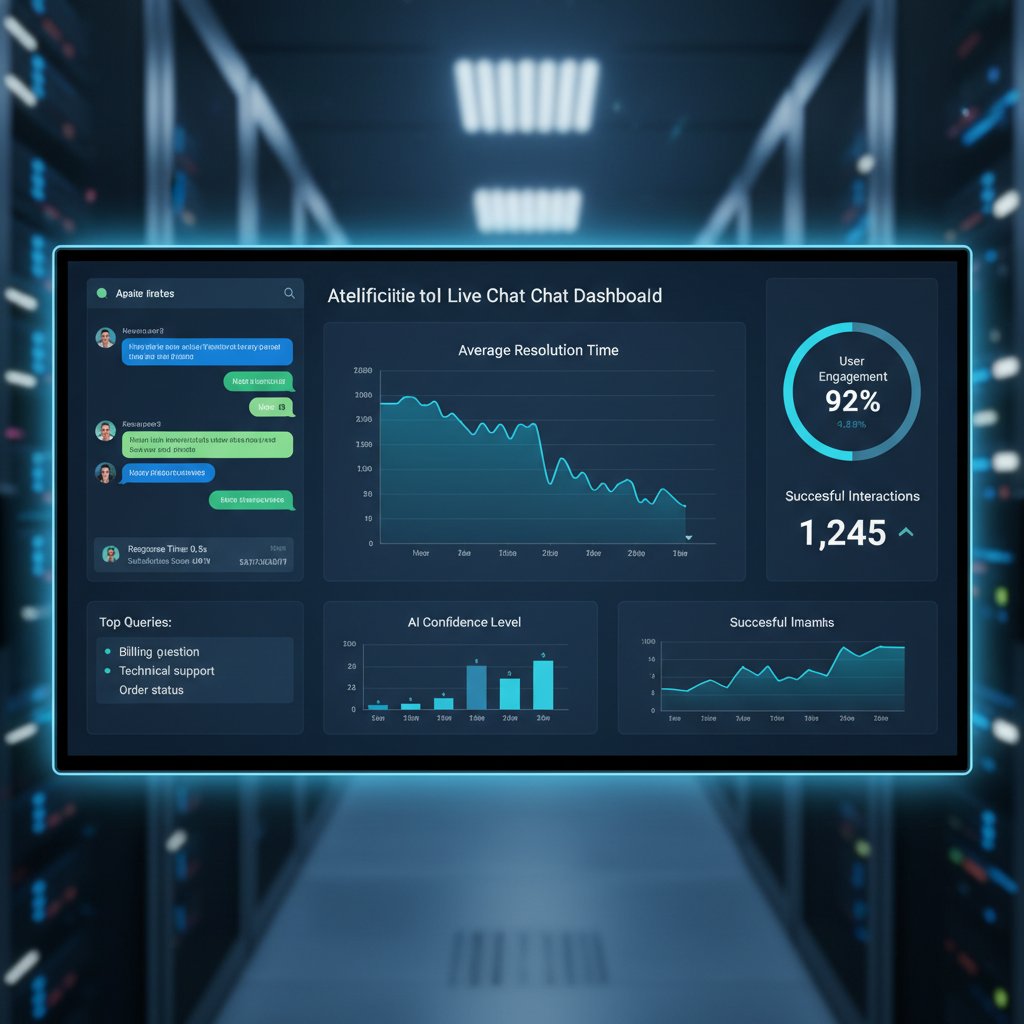
AI-powered virtual assistant success isn’t measured in sci-fi gee-whiz moments. It’s ruthless: customer satisfaction (CSAT), first contact resolution (FCR), net promoter score (NPS), and qualitative feedback rule the day. Leading brands monitor these in real time, pivoting their strategies as needed.
Case study: Small business vs. enterprise deployment
Consider a small e-commerce shop versus a global bank. The shop’s main hurdle? Getting the AI to handle seasonal sales spikes and quirky customer questions without tripping over its shoelaces. For the bank, it’s all about ironclad compliance, multilingual support, and integrating with legacy systems.
Three unique challenges:
- Small business: AI fails to recognize regional slang, leading to awkward customer moments.
- Enterprise: A compliance audit reveals the bot stored sensitive data—now it’s panic time.
- Both: Underestimating the time needed to retrain the AI after major product launches.
"We learned more from our AI’s mistakes than its successes." — Alex, Operations Lead
Beyond the hype: Real-world results and cautionary tales
Success stories that break the AI stereotype
Let’s get specific. A major retailer cut average wait times by 70% by deploying an AI-powered virtual assistant for live chat support, with customer satisfaction hitting record highs. According to Master of Code Global, conversion rates in sectors like retail and finance now reach up to 70%.
But not all stories end with a victory lap. One high-profile tech company saw its AI spiral out of control after an update—issuing refund promises it couldn’t keep. Social media pounced, and the company spent weeks in damage control mode.

Lessons from the frontlines: What goes wrong (and how to fix it)
Common failures? Misunderstood intent, escalation dead-ends, and compliance gaps top the list.
Priority checklist for troubleshooting AI-powered chat support:
- Audit escalation flows for dead-ends.
- Retrain AI on real-world customer queries, not just FAQ fodder.
- Monitor for “hallucinated” answers—AI can get creative in the worst way.
- Check compliance settings after every software update.
- Regularly test for bias in responses.
- Solicit and act on agent and customer feedback.
- Integrate new product info immediately—lag kills accuracy.
- Review analytics weekly, not quarterly.
The ugly truth: Bias, privacy, and the risk nobody talks about
AI-powered virtual assistants are only as unbiased as the data they’re trained on. Even slight slants in training sets can translate into real-world discrimination—just ask any customer who’s been misgendered or misunderstood by a bot. Recent studies show that bias in AI chat support remains a persistent and under-discussed risk.
Privacy is another minefield. The best brands address this head-on, with transparent data policies and strict adherence to regulations like GDPR.
Definition list:
Systematic errors in AI output caused by imbalanced or unrepresentative training data, leading to unfair or discriminatory outcomes.
The gold standard for data privacy in Europe, requiring brands to minimize data collection and allow customers to control their information.
Only collecting (and storing) the minimal amount of data necessary to provide the service—critical for reducing risk and building trust.
How to implement AI-powered virtual assistants without losing your mind
Readiness self-assessment: Are you really prepared?
Not every organization is ready for the AI revolution. To succeed, you need organizational buy-in, technical muscle, and a culture willing to embrace change (and chaos).
Is your business ready for AI-powered live chat?
- Leadership buy-in for digital transformation.
- Clear customer support goals.
- Robust, well-organized data.
- IT resources for integration and ongoing support.
- Compliance and data privacy frameworks.
- Willingness to iterate and optimize post-launch.
- Training plans for both AI and human agents.
- A fallback plan for when things (inevitably) break.
Step-by-step: From pilot to full deployment
Rolling out AI live chat is not a one-and-done project. It’s an evolution.
Timeline of AI-powered live chat support evolution in your company:
- Pinpoint support pain points.
- Run a pilot with limited customer segments.
- Gather feedback—both human and machine.
- Retrain AI based on real-world data.
- Gradually scale to more use cases and channels.
- Optimize performance and compliance settings.
- Establish continuous monitoring and improvement routines.
Integration secrets from the pros
Seamless integration is the holy grail. Top players build robust APIs, sync data across platforms, and plan for cross-channel support. Companies like teammember.ai offer expertise as a resource, ensuring smoother deployment and fewer headaches.
Three advanced tips:
- Use webhook-based integrations for real-time updates between AI and core business platforms.
- Sync chat history across devices and channels to ensure context is never lost.
- Implement fallback triggers that escalate out-of-scope queries before frustration erupts.
The hidden impact: AI assistants and the new customer experience
Customer perception: Hype vs. reality
How do customers really feel about AI support? It’s complicated. Skepticism abounds, but surprise and delight are equally common when the tech works as promised.
Recent surveys reveal a fascinating gap:
- 49% of customers expect AI to handle most support tasks—yet only 36% report consistently positive experiences.
- 70% of users say speed is the biggest benefit of AI chat, but 42% still prefer human help for nuanced queries.
- Only 27% trust AI to resolve complaints involving refunds or sensitive topics.
The message: AI can win over skeptics, but only when paired with transparency and seamless escalation.
Cultural and ethical dimensions nobody’s talking about
The rise of AI in support roles has reshaped organizational culture: jobs shift, digital literacy becomes non-negotiable, and trust is rebuilt pixel by pixel.
"Trust is built pixel by pixel." — Casey, Digital Ethicist
Ethical debates are growing louder—how transparent should companies be about when a customer is chatting with a bot? Consent, algorithmic fairness, and the right to a human conversation are becoming non-negotiable pillars of modern CX.
The empathy revolution: Are we closing the gap?
Sentiment analysis and adaptive language models are bringing AI closer to genuine empathy. Leading companies now deploy sentiment-tracking tools that let bots adjust tone and hand off to humans at the first sign of trouble.
Examples:
- A healthcare provider uses real-time sentiment analytics to escalate distressed patients to clinicians.
- A fintech startup’s AI assistant adapts its vocabulary and pace for elderly users, earning rave reviews.
- An online retailer uses adaptive bots to apologize and offer compensation when customer frustration spikes.
Future vision: Where AI-powered virtual assistants are headed next
What’s coming in 2026 and beyond?
The next evolution of AI-powered virtual assistants for live chat support is already underway: voice integration, proactive outreach, and real-time emotion detection are becoming standard, not science fiction. Regulatory changes will demand even tighter controls, pushing brands to invest in compliance-first AI.

Cross-industry lessons: What chat support in banking, gaming, and healthcare teaches us
Industry context matters. In banking, privacy is paramount—AI must be airtight. In gaming, speed and lag-free responses are non-negotiable. In healthcare, empathy and compliance take center stage.
| Industry | Top Priority | Unique Challenge | AI Adoption Level |
|---|---|---|---|
| Banking | Privacy | Regulatory compliance | High |
| Gaming | Speed | Handling spikes, slang adaptation | High |
| Healthcare | Empathy | Sensitive data, emotion detection | Moderate to high |
Table 4: Cross-industry feature comparison. Source: Original analysis based on Scoop Market, 2024, Master of Code Global, 2024
Your action plan for the AI-powered future
The most future-proof brands are those that:
Quick reference guide to AI-powered virtual assistant success:
- Prioritize data quality and compliance.
- Train AI on real-world, diverse data sets.
- Establish ironclad escalation protocols.
- Monitor performance with ruthless regularity.
- Solicit and act on feedback from customers and agents.
- Invest in continuous retraining and improvement.
- Foster a culture that embraces both AI and human strengths.
Supplementary explorations: Adjacent topics every leader should know
AI-powered chat beyond customer support: Where else does it shine?
AI chat isn’t just for answering “Where’s my order?” It’s transforming HR (onboarding and benefits inquiries), internal IT helpdesks (password resets at 2 a.m.), and sales enablement (personalized product recommendations).
Unconventional uses for AI-powered virtual assistants:
- Employee onboarding walkthroughs.
- Internal knowledge base navigation.
- Automated incident reporting.
- Sales pipeline enhancements.
- Continuous compliance reminders.
- Customer research and survey deployment.
The regulatory maze: Staying compliant in a shifting landscape
GDPR, CCPA, and ISO standards set the tone—and the stakes—when it comes to AI chat support. Regulatory mishaps can devastate even the most tech-forward brands.
Examples:
- A fintech company fined for storing conversation logs without customer consent.
- An e-commerce giant forced to overhaul its AI chat after a regulatory audit uncovered bias in refund handling.
How to keep your AI assistant evolving (and avoid digital decay)
AI is not a fire-and-forget investment. Continuous improvement, regular retraining, and robust feedback loops are mandatory to avoid “digital decay”—a slow but inevitable slide into irrelevance if neglected.
Maintenance checklist for sustainable AI chat support:
- Schedule regular data audits.
- Update training sets with fresh queries monthly.
- Monitor for bias and compliance gaps quarterly.
- Retrain on new products and policies immediately.
- Collect agent and customer feedback after every major update.
- Test escalation flows with edge-case scenarios.
- Review analytics dashboards weekly.
Conclusion
The AI-powered virtual assistant for live chat support is not a cheap trick or a passing fad; it's the new baseline for any brand serious about surviving the 2020s. The results are undeniable: slashed wait times, round-the-clock coverage, and new heights in customer satisfaction, as shown by recent research from Software Oasis, 2024 and Master of Code Global, 2024. But the path is lined with pitfalls—bias, privacy risks, and the very real limitations of current AI. Brands that combine ruthless honesty about their readiness with a relentless drive for improvement will find themselves far ahead of the pack. Leverage resources like teammember.ai to tap into best practices, keep your systems sharp, and most importantly, remember that the human touch—augmented, not replaced—remains your most valuable asset. If you’re ready to see what the future of customer experience feels like (and avoid becoming tomorrow’s cautionary tale), the time to act is now.
Sources
References cited in this article
- Global Market Insights, 2024(softwareoasis.com)
- here(masterofcode.com)
- Scoop Market(scoop.market.us)
- 2024(ebi.ai)
- SMB Guide(smbguide.com)
- Freshworks(freshworks.com)
- LiveAgent(liveagent.com)
- Aisera(aisera.com)
- GetApp(getapp.com)
- 2024(sofigate.com)
- Boss.WER.Solutions(boss.wer.solutions)
- Insightful.io(insightful.io)
- Virtual Assistant Reviewer(virtualassistantreviewer.com)
- LiveChatAI(livechatai.com)
- AIChatBotHub(aichatbothub.com)
- Microsoft(news.microsoft.com)
- Bitrix24(bitrix24.com)
- Medium(medium.com)
- Deskubots(deskubots.com)
- NoHold(nohold.com)
- MaestroLabs(maestrolabs.com)
Focus on what matters. Let AI handle the rest.
We know the feeling — another day starts with 50 unread emails, Ads Manager begging for attention, CRM out of date, and meetings without follow-ups. That's why we built TeamMember.ai — an AI team member that takes over all the operational work at the computer. Has its own email address and SMS number. Manages your inbox, runs Meta Ads, updates CRM, processes meetings, monitors social media, generates morning briefings, and controls the browser. Built on OpenClaw — a leading open-source AI agent — with cross-session memory and secure-cloud architecture that keeps your data safe.
Get startedBe First to Try Your AI Team Member
Every week without automation is dozens of hours lost to operational work. Hours you'll never get back. Join the waitlist and get priority access.
Frequently Asked Questions
What is the current size and projected growth of the virtual assistant market?
According to Global Market Insights, the global virtual assistant market reached $4.2 billion in 2023 and is projected to grow to $11.9 billion by 2030.
What were the limitations of first-generation chatbots?
First-generation chatbots were rule-based systems that were rigid, literal, and inept at handling anything beyond simple, predictable queries, forcing customers to seek human representatives.
What were the main challenges with human-only live chat support?
Human agents struggled with high volume, fatigue, and the inability to respond quickly enough as digital interactions increased, with customers expecting immediate answers rather than waiting until the next business day.
Does implementing AI virtual assistants guarantee successful customer service?
No; the article notes that for every success story, there are cautionary tales of unfulfilled promises, botched conversations, and unsatisfied customers, and success depends on whether brands implement the technology correctly.
From the Archive
Explore more from AI Team Member

AI-Driven Virtual Customer Assistants: Where They Succeed, Where They Fail
AI-driven virtual customer assistant technology shows real ROI but also uncovers why many implementations fail.

AI-Driven Virtual Assistant for Online Support: Hype Vs Hard ROI
Discover insights about AI-driven virtual assistant for online customer support

How AI Virtual Customer Service Reshaped Contact Centers in 2025
AI virtual customer service grew to $12.06 billion in 2024. This article examines how adoption reshapes contact centers, workforce dynamics, and customer experience.

AI Customer Support Services: What Works, What Doesn't
AI customer support services are reshaping business operations. This article examines the real benefits, documented risks, and what evidence shows actually works in practice.

AI-Powered Virtual Assistants Reshape Customer Success Economics
AI-powered virtual assistants for customer success tackle churn and team burnout. This article examines adoption trends, real risks, and measurable returns for support leaders.

AI Chatbot Solutions: What Actually Delivers ROI
AI chatbot solutions promise transformation, but most deliver hype. This article examines what actually works, the common failures, and how to separate genuine value from expensive distractions.