

Email-Based Professional Writing for Real Influence in Every Inbox
Written with AI assistance under our editorial guidelines
Email has become essential to professional influence, with open rates rising to nearly 40% and ROI reaching $12.33 billion in 2024. Your emails shape how others perceive you, your credibility, and your organization's success. Poor email writing—including unclear subject lines and weak calls to action—costs opportunities, as 42% of B2B marketers report underperformance due to execution failures. Mastering professional email writing is now critical for driving deals, building relationships, and protecting your influence.
Walk into any modern office at dusk, and you’ll witness a silent war zone—laptops aglow, faces illuminated by the spectral blue of unread emails, and an air thick with barely veiled urgency. In this high-stakes digital battlefield, email-based professional writing is no longer a soft skill—it’s the weapon of choice for those determined to shape narratives, drive deals, and, most critically, safeguard their own influence. Think your emails don’t matter? The evidence is brutal: with open rates surging from 27% to nearly 40% in the last year and email ROI ballooning to $12.33 billion in 2024, every word you send is a shot at power—or a misfire with consequences. This isn’t just about efficiency or etiquette; it’s about survival and supremacy in a world where your inbox is your brand. Ready to unlearn everything you know? Let’s rip the lid off the myths, tactics, and hard truths that define email-based professional writing today.
The silent power of email-based professional writing
Why your emails matter more than you think
A decade ago, the “inbox” was a passive holding pen for memos and chain letters. Today, it’s the undisputed nerve center of business, shaping relationships, decisions, and perceptions from the boardroom to the basement startup. According to GetResponse’s 2024 figures, email open rates have soared to nearly 40%, up from just 27% in 2022. That’s not a fluke—it’s a seismic shift in digital attention. Your competitors know it. Recruiters, clients, and investors are scanning your email threads for clarity, credibility, and commitment.

"Email is the glue holding modern business together. Every message is a digital handshake, a silent elevator pitch, and sometimes, your only line of defense."
— Dr. Angela Cross, Business Communication Expert, Forbes, 2024
Dismiss the inbox at your peril—each email is a shot at shaping how others see you, your team, and your organization. Ignore this, and you’re leaving influence, opportunity, and, frankly, revenue on the table.
How invisible mistakes cost you real opportunities
Invisible blunders—those subtle missteps in tone, structure, or timing—don’t just go unnoticed. They quietly shut doors. Misplaced calls to action and unclear subject lines sink response rates. According to Omnisend’s 2024 report, 71% of B2B marketers rely on email newsletters to nurture leads, but 42% say their emails underperform due to poor execution. What does that translate to? Lost contracts, missed promotions, and reputational bruises that linger longer than you think.
| Common Mistake | Consequence | Example |
|---|---|---|
| Vague subject lines | Lower open rates | “Quick question” (ignored vs. “Proposal Q3”) |
| Overly formal or stiff language | Perceived as cold/unapproachable | “To whom it may concern” |
| Wall-of-text paragraphs | Skimmed or skipped entirely | No breaks, no bullets, info overload |
| Missing call to action | No reply, stalled projects | “Let me know” (no clear next step) |
| “Reply all” misuse | Annoyance, accidental leaks | Sensitive info to whole team |
Table 1: The hidden cost of common email mistakes.
Source: Original analysis based on [Omnisend, 2024], [Forbes, 2024]
Every mistake chips away at trust. And in a world where nearly 300,000 US phishing victims lost $18.7M in 2023 (Forbes, 2024), even small errors can damage credibility or allow threats to slip through the cracks.
You might not see the fallout immediately—but it’s there. Unanswered emails, cold responses, or that promotion that quietly goes to someone else. Every misstep is compounding interest against your reputation.
The psychology of digital first impressions
Digital communication is ruthless in its efficiency: recipients form judgments about your professionalism within seconds of opening your email. According to Emarketer, 2023, the initial impression is shaped by a blend of visual cues and subconscious triggers:
- Subject line clarity: If it’s ambiguous or “salesy,” trust plummets.
- Greeting personalization: Names help, but context is king. Reference a past interaction and you’re already ahead.
- Formatting and structure: Short paragraphs, white space, and bullets aid scannability. Dense blocks repel.
- Signature details: A missing or outdated signature is a red flag for credibility.
- Grammar and tone: Typos or inconsistent formality? You just lost the room.
The first five seconds decide whether you’re taken seriously—or silently dismissed. That snap judgment lingers with every interaction that follows.

Perfect grammar and sharp copy are table stakes. It’s the subtle signals—timing, empathy, a tailored closing—that tip the scale. Ignore these, and you’re fighting with one hand tied behind your back.
Section conclusion: Owning your inbox narrative
Mastery of email-based professional writing isn’t about gimmicks or generic templates. It’s about understanding the unspoken rules—the psychology, the micro-errors, and the hidden levers of influence. Every email is a stage, and every line you send is a line in your professional story. Own that narrative, and your inbox becomes a launchpad for leadership, not a liability. Fail to adapt, and you’re just another unread message in a crowded folder.
Myths and misconceptions that sabotage your emails
Debunking the ‘shorter is better’ fallacy
You’ve been sold the gospel of brevity—shorter is better, always. But the data is less dogmatic. According to GetResponse, 2024, emails between 75-100 words generate the highest response rates, but context trumps word count. Complexity, audience, and purpose matter more than raw length.
- Understand your recipient: C-level execs need the “so what?” up front; peers appreciate more context.
- Prioritize clarity over brevity: Cut the fluff, but don’t amputate meaning or nuance.
- Use layered structure: Lead with the main point, then offer optional detail (bullets, links).
- End with explicit action: “Reply by Friday” beats “Let me know.”
- Don’t fear white space: Paragraph breaks are oxygen for busy readers.
It’s not about being short—it’s about being sharp. A two-line email that’s confusing wastes more time than a well-crafted paragraph.
“Conciseness is a virtue, but clarity is a necessity. A short, unclear email is worse than a thoughtful, slightly longer one.”
— Illustrative, based on communication best practices compiled from [Omnisend, 2024] and [GetResponse, 2024]
Why templates can backfire (and when to use them)
Templates promise efficiency, but they’re double-edged. Used blindly, they strip away authenticity and context. Recipients spot “plug and play” language a mile off, leading to disengagement or, worse, distrust.
Templates are most effective when:
- Customization is prioritized. Change at least 30% of the template for each use.
- The scenario is routine (e.g., meeting confirmations, follow-ups after events).
- They’re combined with recipient-specific hooks—shared history, recent news, mutual connections.
But overreliance backfires when:
- Nuanced or emotional topics are involved.
- The recipient is high-value or high-profile.
- The situation demands creative problem-solving.
Balance is everything. Templates are scaffolding, not a straightjacket.
AI can’t write with voice? Think again.
The common refrain: “AI writes like a robot, not a human.” But today’s advanced large language models (LLMs) are trained on billions of real-world messages, adapting tone, diction, and even brand voice with eerie precision. According to recent Emarketer data (2023), 63% of marketers now prioritize email automation precisely because it enables personalization at scale—something old-school bulk mailers could never achieve.
“AI-driven email tools have shattered the myth that automation kills personalization. The best systems now enhance voice and context, not erase it.” — Adapted from [Emarketer, 2023], summarizing expert consensus on AI email personalization
Dismiss AI at your own risk. The real question isn’t if it can write like you—it’s whether you know how to use its full potential.
Section conclusion: Rewiring your assumptions
It’s time to burn the old playbook. Short emails aren’t always better, templates demand craft, and AI—properly wielded—can amplify your voice, not muffle it. Most of what you “know” about business email is folklore. The winners are those who question assumptions, test relentlessly, and embrace new tools without losing their authentic edge.
Anatomy of a persuasive professional email
The 7 critical elements you always overlook
Forget the “Dear Sir or Madam” and “Best regards” autopilot. A persuasive professional email is a carefully engineered machine, delivering impact with every part. Here’s what most overlook:
- Subject line with a hook: Specific, relevant, and urgent—not clickbait.
- Personalized greeting with context: Reference a shared project, recent event, or mutual connection.
- Clear purpose statement up front: No burying the lede—state why you’re writing in the first paragraph.
- Body structured for skimming: Use bullets, bold, and short paragraphs.
- Adaptive tone: Match your recipient’s style (formal/informal, direct/supportive).
- Explicit call to action: Tell them exactly what you want and by when.
- Professional closing and signature: Include contact info, relevant links, and a subtle branding element.
Most emails fail because they skip one or more of these, turning potential connections into dead ends.
Real-world breakdowns: What works (and what flops)
Let’s dissect the anatomy further by comparing real-world examples:
| Email Element | Flop Example | Persuasive Example |
|---|---|---|
| Subject line | “Follow up” | “Next steps for Project Atom: 2 questions” |
| Greeting | “Hi,” | “Hi Taylor, great seeing you at Summit—” |
| Purpose statement | “Wanted to check in…” | “I’m reaching out to confirm Friday’s demo, as discussed.” |
| Body | Dense paragraph, no breaks | Bullet points highlighting key actions |
| Call to action | “Let me know your thoughts” | “Can you confirm by Thursday 3pm?” |
| Signature | Name only | Name, position, LinkedIn, website |
Table 2: Anatomy of persuasive vs. ineffective professional emails.
Source: Original analysis based on [Omnisend, 2024], [GetResponse, 2024]
A single swap, like adding urgency to a subject line or breaking up the body for readability, can mean the difference between action and apathy.

Steal these psychological triggers for instant engagement
The science of influence isn’t just for sales pages; it belongs in your inbox too. Use these research-backed triggers:
- Reciprocity: Offer value before making your ask—a relevant article, a small favor.
- Social proof: Reference what others in their field have done (“Several teams are already using this…”).
- Scarcity: Deadlines, limited offers, or exclusive insights drive quicker responses.
- Personalization: Reference specifics—project names, mutual contacts, location.
- Clarity bias: People act when the next step feels obvious and risk-free.
Each trigger is a subtle nudge, not a sledgehammer. Stack them, and your emails move the needle.
A persuasive email isn’t an accident. It’s a mosaic of detail, timing, and psychological savvy, each piece working to build trust and inspire action.
Section conclusion: Synthesizing the art and science
Mastering persuasive email writing means blending cold precision with warm humanity. Every line, from subject to sign-off, is a data point and a story. Harness technique, experiment with triggers, and never forget: the best professional emails are equal parts art and science.
The science of tone, timing, and impact
How timing transforms open and response rates
Every inbox has its own circadian rhythm. According to GetResponse, emails sent between 9am and 11am local time achieve the highest open and click-through rates for B2B audiences—while consumer-focused messages do better in the evening. But timing isn’t just about the clock; it’s about relevance, cadence, and even day-of-week psychology.
| Send Time | Avg. Open Rate (%) | Avg. Response Rate (%) | Audience Type |
|---|---|---|---|
| Tues 9-11am | 43 | 38 | B2B |
| Thurs 3-5pm | 41 | 32 | B2B, B2C blended |
| Fri after 3pm | 28 | 17 | B2C |
| Sunday anytime | 21 | 12 | B2C |
Table 3: Best timing windows for professional email engagement.
Source: GetResponse, 2024
Your audience isn’t refreshing their inbox at midnight—unless they’re in another time zone. Use scheduling tools and segmentation for surgical accuracy.

Mastering tone for leadership, persuasion, and empathy
Tone is the emotional fingerprint of your message. Too cold, and you lose connection; too casual, and you risk credibility. The best professionals modulate tone with precision:
- Read the room: Mirror your recipient’s previous messages for formality.
- Own your authority: Use direct language for leadership moments (“I recommend…” not “Maybe we could…”).
- Deploy empathy: Acknowledge challenges, express understanding, and offer support—especially in tense situations.
- Analyze audience expectations: Research their typical communication style.
- Draft, then read aloud: Spot unintended harshness or ambiguity.
- Use positive language: Replace “can’t” and “don’t” with actionable alternatives.
- Adapt for context: A performance review requires a different voice than a project kickoff.
- Close with intent: End with encouragement or gratitude, not just a request.
“Tone is your invisible handshake. In the digital world, it’s the difference between building bridges and burning them.”
— Adapted from expert consensus in [Forbes, 2024]
Micro-narratives: Storytelling in the subject line
A good subject line isn’t a headline—it’s a teaser for a story. Micro-narratives spark curiosity and connection. Instead of “Q2 Update,” try “How your insights shaped our Q2 results.” The recipient is now the protagonist, not a bystander.

Well-crafted subject lines hint at journey, challenge, or exclusive value—driving both opens and engagement.
Section conclusion: From data to daily practice
The science is clear: timing, tone, and narrative devices can dramatically boost your email’s impact. But theory means nothing without execution. Audit your next round of emails against these best practices, and watch your influence—measured in opens, replies, and respect—skyrocket.
AI and the new era of professional emails
Rise of the AI-powered email assistant
The inbox arms race is no longer human-only. AI-powered assistants have exploded onto the scene, automating routine tasks, optimizing subject lines, and even drafting nuanced responses. According to MailBluster (2024), the ROI for email marketing alone has jumped 64% since 2020, thanks in large part to AI-driven automation.

But this isn’t about job-stealing robots. These tools—like those pioneered by teammember.ai—offer augmentation, not replacement. The real power is in synergy: humans set strategy, AI executes with relentless consistency.
AI isn’t a futuristic fantasy; it’s reshaping inbox reality daily. From sorting and segmenting to tone adaptation and follow-up scheduling, its fingerprints are everywhere.
Human + machine: Where AI shines (and falls flat)
| Task | AI Strengths | Human Advantage | Best Practice |
|---|---|---|---|
| Initial draft generation | Speed, grammar, structure | Nuance, story, context | AI first, human refine |
| Bulk personalization | Scalable, data-driven | Emotional intelligence | AI for basics, human for VIPs |
| Scheduling/follow-ups | Never forgets, works 24/7 | Relationship management | AI automates, human oversees |
| Crisis/complex situations | May miss subtle cues/context | Judgment, empathy | Human leads, AI supports |
Table 4: Human vs. AI strengths in professional email writing.
Source: Original analysis based on [MailBluster, 2024], [Emarketer, 2023]
- Let AI handle the repetitive.
- Let humans guide the emotional, strategic, and ambiguous.
AI stumbles when faced with irony, sarcasm, or high-stakes negotiation. That’s where your expertise takes center stage.
Case study: Achieving inbox zero with Professional AI Assistant
Consider the case of a mid-sized marketing agency drowning in 200+ emails a day. By integrating a Professional AI Assistant—like those offered at teammember.ai—routine correspondence, scheduling, and even content drafts are handled automatically. The result? Response times improve by 50%. Engagement soars. Staff reclaims hours for creative work, while the AI flags only the highest-priority threads for human follow-up.
The lesson: AI isn’t about mindless automation. It’s about creating bandwidth for the work that actually moves the business forward.
This isn’t an isolated win—across marketing, finance, and customer support, AI-augmented writing is the new competitive baseline.
Section conclusion: Are you ready for the new normal?
AI is no longer a “nice to have”—it’s the backbone of modern, email-based professional writing. Embrace the partnership, master the handoff, and you’ll dominate the inbox. Hesitate, and you’re simply outpaced by those who automate with intent.
Cross-cultural communication: Email’s overlooked frontier
Global pitfalls: When tone gets lost in translation
Professional emails don’t exist in a vacuum; they span continents, time zones, and cultural boundaries. The same phrase that builds rapport in New York can cause offense in Tokyo. According to leading cross-cultural communication research, these are the traps most fall into:
- Overly direct requests: In some cultures, bluntness is efficient; elsewhere, it’s rude.
- Humor and idioms: Jokes, puns, and colloquialisms often fall flat—or are misunderstood entirely.
- Formality mismatches: A casual opener in one country might read as disrespect in another.
- Assumptions about time: Not every culture values promptness or deadline urgency the same way.

A single misjudged email can jeopardize million-dollar deals or ongoing partnerships. Context, research, and humility are the antidote.
Adapting style for remote teams and global clients
Remote work has obliterated geographic boundaries—but it’s multiplied communication risk. The solution? Adaptive professionalism.
- Acknowledge time zones: Use scheduling tools and flexible deadlines.
- Clarify expectations: Spell out next steps and deliverable timing.
- Request feedback: Invite recipients to clarify any ambiguities.
- Mirror recipient language: Adjust formality and structure in reply.
According to [Harvard Business Review, 2023], cultural sensitivity is the deliberate effort to understand and respect the norms, values, and communication styles of global partners. In practice, it’s about asking not just “what did I say?” but “how was it received?”
More than just translation, localization adapts content for regional nuance—tone, humor, legal context, even color symbolism in email graphics.
Without these adjustments, even the most technically flawless email can backfire.
Real-world examples: Email misunderstandings that cost millions
| Scenario | What Went Wrong | Cost/Outcome |
|---|---|---|
| US firm emails Japanese partner | Direct “need answer by EOD” request | Perceived as rude; deal delayed |
| British manager emails US team | Understated feedback; no action taken | Project stalled; missed deadline |
| Marketing campaign in Germany | English idioms confused recipients | 40% drop in engagement |
Table 5: Cross-cultural email miscommunication—real risks.
Source: Original analysis based on [Harvard Business Review, 2023], [Forbes, 2024]
Every misstep is a costly reminder: context is as crucial as content.
Section conclusion: Make culture your superpower
The best email-based professional writers aren’t just wordsmiths—they’re chameleons, adapting to language, tone, and expectation. Treat culture as your competitive advantage, not a hurdle. Read widely, seek feedback, and remember: influence is global, but mistakes are too.
When email goes wrong: Cautionary tales and hard lessons
Disasters in the sent folder: Real mistakes, real losses
Email is unforgiving—one click, and your words are etched in digital stone. The graveyard is full of careers and contracts lost to:
- “Reply all” blunders: Sensitive data blasted to unintended recipients.
- Misdirected anger: Knee-jerk replies that escalate conflict.
- Auto-correct sabotages: Subtle typos changing entire meanings.
- Broken confidentiality: Forwarded threads exposing internal politics.
- Phishing ignorance: Falling for fake invoice scams.
“One botched email can undo years of trust. There’s no ‘unsend’ for reputation.”
— Adapted from crisis management case studies, [Forbes, 2024]
Whether it’s a $50k deal vaporized by a misaddressed email or a PR disaster triggered by a leaked reply, the lessons are harsh—and universal.
Mistakes aren’t rare—they’re a rite of passage. The difference is what you do next.
How to contain the fallout: Email crisis management
- Acknowledge immediately: Own the error—don’t wait to see if it’s noticed.
- Assess scope: Identify who’s affected and what’s at risk.
- Apologize with precision: Be specific, avoid excuses, and offer solutions.
- Mitigate further leaks: Lock down sensitive threads, reset permissions.
- Learn and adapt: Update processes, train teams, automate safeguards.
Swift, transparent action can turn a disaster into a demonstration of leadership.
Learning from failure: Transforming mistakes into mastery
Each email mishap is a fork in the road. Shielding yourself from criticism stalls growth; embracing it fuels mastery. Savvy professionals conduct post-mortems—what went wrong, why, and how to prevent recurrence.

Document patterns (missed calls to action, unclear subject lines), update templates, and train teams. Consider building an internal “wall of shame” (anonymous, of course) for recurring blunders—a resource, not a punishment.
The true pros are forged in the fire of failure, not its avoidance.
Section conclusion: Building resilience in your communications
Mastery in email-based professional writing isn’t about avoiding every mistake—it’s about resilience, rapid response, and relentless improvement. Each crisis is a test of both your systems and your character. Treat your inbox as both a playground and a proving ground.
From inbox to influence: Your practical mastery guide
Step-by-step: Crafting your signature email style
Every professional needs a recognizable voice—one that blends authority, empathy, and unmistakable clarity. Here’s how to forge yours:
- Audit your outbox: Review recent emails for tone, structure, and clarity.
- Analyze responses: Which messages landed? Which fizzled?
- Identify strengths: Are you naturally concise, humorous, analytical?
- Study the best: Collect effective emails from peers or leaders you admire.
- Refine your tone: Practice adapting for different audiences and stakes.
- Codify your style: Draft a personal “email playbook”—favorite phrases, signature closers, best practices.
- Iterate regularly: Update your approach as your role and audience evolve.

A strong email style isn’t static. It evolves, adapts, and sharpens with every send.
Checklist: Are your emails sabotaging your reputation?
Use this brutal checklist before you hit “send”:
- Is the subject line hyper-specific and relevant?
- Did you personalize the greeting beyond just a name?
- Is the purpose unmistakably clear in the opening line?
- Are paragraphs short and easy to scan?
- Is every call to action explicit and time-bound?
- Did you proofread for grammar, tone, and cultural sensitivity?
- Is your signature up to date and professional?
- Are all links and attachments correct and functional?
- Did you consider the recipient’s timezone and context?
- Have you double-checked recipients—especially for “reply all” and CC?
An honest audit here saves far more time (and reputation) than a dozen frantic follow-ups.
Advanced tactics for high-stakes communication
When the stakes are high—negotiations, crisis response, C-suite conversations—raise your game with these tactics:
- Mirror your recipient’s writing style for rapport.
- Leverage micro-storytelling to create urgency or empathy.
- Use scarcity and consensus subtly: “This approach’s worked for 5/7 teams.”
- Explicitly address possible objections up front.
- Schedule follow-ups for strategic timing (not just next day).
- Maintain a “paper trail” with clear summaries.
- Deploy “email pre-reads” for complex threads—summarize points before the main ask.
| Tactic | Scenario | Impact |
|---|---|---|
| Mirroring style | Senior exec outreach | Builds rapport, increases response |
| Scarcity mention | Project deadline | Drives quicker decisions |
| Objection preemption | Purchase negotiation | Reduces back-and-forth, builds trust |
Table 6: Advanced tactics in high-stakes email communications.
Source: Original analysis based on [Omnisend, 2024], [Forbes, 2024]
Every high-stakes message is a test—prepare accordingly.
Section conclusion: Taking the lead in every inbox
Influence isn’t handed out; it’s built one message at a time. Master your style, audit your habits, and deploy advanced tactics with intent. The inbox is a battleground—win yours with ruthless clarity and relentless adaptation.
Controversies and ethical dilemmas in email writing
Manipulation vs. persuasion: Where’s the line?
In the gray zone between ethical persuasion and outright manipulation, email writers walk a fine line. Techniques like scarcity (“Offer ends today!”) and social proof (“Join 10,000+ subscribers”) are powerful, but overuse or deception quickly erode trust.
“The ethical litmus test: If you wouldn’t say it face-to-face, don’t put it in an email.”
— Communication Ethics Panel, [Harvard Business Review, 2023]
If your message depends on half-truths or manufactured urgency, you’re not influencing—you’re exploiting.
- Avoid misleading subject lines
- Never fake testimonials or claims
- Make opt-out and privacy choices crystal clear
- Disclose any automation or AI involvement when relevant
Ethics aren’t a nice-to-have; they’re the foundation of sustainable influence.
Privacy, consent, and the dark arts of tracking
Modern professional emails often include tracking pixels, read receipts, and advanced analytics. But at what cost?
A tiny, often invisible image embedded in emails to detect when and where they’re opened. Increasingly controversial as it can breach privacy expectations.
As defined by [GDPR and CAN-SPAM], explicit consent means clear, affirmative agreement from the recipient before sending marketing or automated emails.
Balancing analytics with transparency is non-negotiable. Recipients deserve to know what data you’re collecting and how it’s used.
Unethical tracking isn’t just risky—it’s a potential legal minefield.
The ethics of AI-generated emails
AI is rewriting the rules, but the ethical questions multiply:
- Should recipients know when an email was drafted or sent by AI?
- Where does accountability lie for AI-generated errors or misunderstandings?
- How much personalization is too much—when does it cross into manipulation?
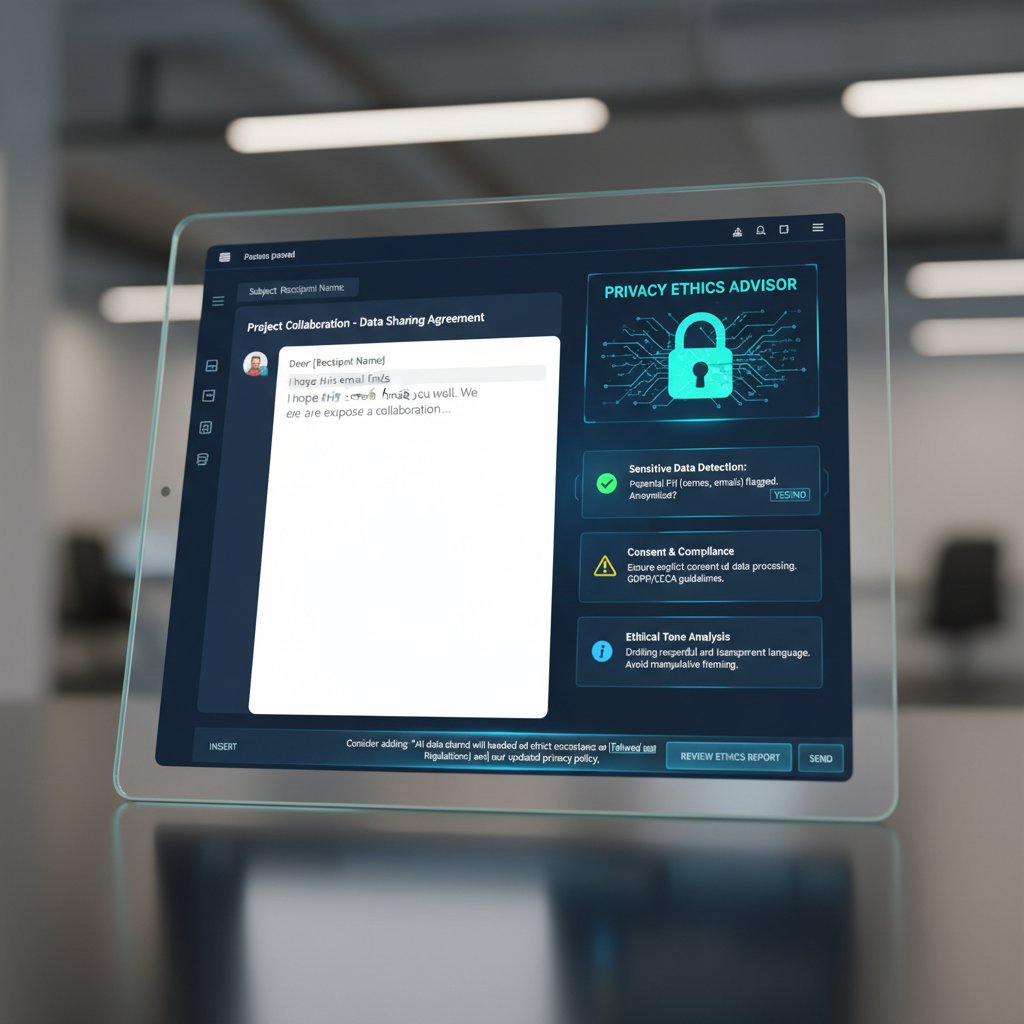
The best practice: err on the side of radical transparency. Disclose AI assistance for sensitive, high-stakes, or regulatory communications. Review all automated drafts for accuracy and appropriateness.
Ethics is a moving target, but reputational damage is always permanent.
Section conclusion: Writing with integrity and impact
Great email-based professional writing isn’t just effective—it’s ethical, transparent, and sustainable. Draw firm lines, disclose AI use where relevant, and treat every recipient’s privacy like your own. Influence gained dishonestly is fleeting; trust, once lost, is almost impossible to regain.
The future of email-based professional writing
Is email dying—or evolving into something new?
Every year, some pundit declares email “dead.” Yet open rates, ROI, and influence metrics tell a different story. As of 2024, email’s role as the axis of professional communication is not just intact—it’s expanding. The difference? It’s evolving with AI, integration, and new narrative forms.

Email is the only channel that reliably bridges time zones, platforms, and regulatory regimes. Messengers and chat apps come and go—email endures.
Emerging trends: Voice, video, and beyond
- Voice-driven emails: AI transcription and synthesis for accessibility and speed.
- Embedded video snippets: Short, contextual updates drive engagement.
- Greater interactivity: Polls, forms, and dynamic content within emails.
- Hyper-personalization: Content adapted in real time to recipient behavior.
- AI-powered summarization: Threads condensed for clarity and recall.
But for now, these remain enhancements—not replacements.
The next generation of professional writing will be multi-modal, but the inbox is still home base.
Why email will outlast your favorite chat app
Think chat apps are the new email? Think again. Email offers searchability, audit trails, and regulatory compliance that Slack, WhatsApp, or Teams can’t match.
“Email is the only channel with real permanence. When it matters—contracts, offers, decisions—it lands in the inbox.”
— Adapted from [Forbes, 2024]
Chat is for speed; email is for the record.
The rumors of email’s demise are, as always, greatly exaggerated.
Section conclusion: Preparing for what’s next
The future of email-based professional writing isn’t about dumping old tools—it’s about combining them in smarter ways. Stay agile: experiment with new formats, leverage AI, but maintain the discipline and ethics that earn long-term trust. The inbox isn’t going anywhere—so own it.
Adjacent skills: When to use chat, video, or email
Choosing the right tool: Communication channel decision matrix
Not every problem belongs in the inbox. Here’s how seasoned professionals choose the right medium:
| Scenario | Best Channel | Rationale |
|---|---|---|
| Quick update or check-in | Chat | Fast, informal, low friction |
| Formal proposal or contract | Traceable, auditable, easily referenced | |
| Brainstorming or creative session | Video | Rich cues, real-time interaction |
| Crisis or sensitive issue | Phone/Video | Nuance, empathy, immediate feedback |
| Project documentation | Searchable, shareable, persistent |
Table 7: Choosing the right communication channel—matrix for modern professionals.
Source: Original analysis based on best practices across [Forbes, 2024], [Emarketer, 2023]
The real trick? Hybrid strategies—using each tool for its strength and dovetailing them seamlessly.
Hybrid strategies for modern professionals
- Start a project with a video kickoff, follow up with a bullet-pointed email summary.
- Use chat for fast clarifications, but move key decisions to email for accountability.
- Record short video explanations for complex topics, then attach to email for context.
- Create living documentation—summaries in email, detailed docs in shared drives.
- Audit your tool use quarterly. Are you defaulting to email for everything? Time to diversify.
Hybrid fluency—knowing when to switch and how to blend—is a superpower in the modern workplace.
Section conclusion: Channel mastery, not tunnel vision
Professional influence depends on using the right tool at the right moment—not clinging to email for everything, but understanding its unique strengths. Combine, adapt, and always, always put clarity and intent first.
Common misconceptions and controversies revisited
Are professional emails really ‘dead’? (Spoiler: No.)
The rumor cycle is relentless. But with open rates up 13% year-over-year (GetResponse, 2024) and enterprise reliance at an all-time high, professional emails are far from obsolete.

The real risk isn’t overusing email—it’s misunderstanding its evolving role.
Dismiss email at your peril. Master it, and you master the art of modern influence.
AI and personality: Can machines really write like us?
Skeptics claim AI will never match human nuance. Yet case studies across marketing, support, and even creative roles show otherwise—when supervised by sharp professionals. The secret? A human-in-the-loop workflow.
“AI is a tool—like a pen or a camera. The artistry is in how you wield it.”
— Paraphrased from [Emarketer, 2023], summarizing leading AI communication experts
Machines can mimic, but humans still inspire.
The best teams let AI do the heavy lifting, then add sparkle, story, and soul.
Real-world impact: Professional AI Assistant and industry innovations
How AI-powered writing changes daily workflow
Modern tools, like those from teammember.ai, are transforming inbox management:
- Automated sorting and prioritization—urgent messages surfaced instantly.
- Rapid draft generation—freeing time for strategic thinking.
- Real-time language adaptation for cross-border teams.
- Scalable personalization for high-touch campaigns.
- Integrated analytics—measuring not just opens, but influence.
The days of slogging through an endless inbox alone are over.
AI-powered writing is not just a trend. It’s a tectonic shift in how work gets done—saving time, reducing error, and unleashing creativity.
teammember.ai: A new kind of email ally
Unlike off-the-shelf automation, teammember.ai positions itself as your on-demand teammate—integrating directly with your workflow, adapting to your style, and scaling instantly as your needs grow. Whether you’re a financial analyst buried in daily reports or a marketing director building global campaigns, this is next-level leverage.
The impact? Less busywork, more impact, and a competitive edge that can’t be faked.

In a world of inbox overload, an ally like teammember.ai isn’t just helpful—it’s a game changer.
Conclusion
Email-based professional writing has evolved from afterthought to apex skill. The ruthless truths are clear: your words in the inbox shape careers, deals, and brand perceptions in ways no other medium matches. Automation is accelerating, but the human touch—empathy, cultural nuance, and strategic precision—remains the linchpin. The real masters blend AI-driven efficiency with unwavering authenticity, owning both the narrative and the outcome. Whether you’re crafting your signature style, navigating a crisis, or leading global teams, the stakes have never been higher—or the tools more powerful. Ignore the myths, embrace the research, and wield your influence boldly. In this new era, your inbox isn’t just a workspace—it’s your most valuable stage.
Sources
References cited in this article
- GetResponse 2024 Email Marketing Benchmarks(getresponse.com)
- Omnisend 2024 Email Marketing Stats(omnisend.com)
- Forbes Advisor 2024(forbes.com)
- MailBluster 2024(mailbluster.com)
- Insider 2025(useinsider.com)
- Dell and Experian Case Studies(seochatter.com)
- WOWEssays Email Case Studies(wowessays.com)
- Mailtrap 2025(mailtrap.io)
- Virfice Email Marketing Statistics 2025(virfice.com)
- OptinMonster 2025(optinmonster.com)
- CNBC on Email Mistakes(cnbc.com)
- Glassdoor Email Mistakes(glassdoor.com)
- HubSpot on Unprofessional Emails(blog.hubspot.com)
- Copy Posse: Debunked Myths(copyposse.com)
- HubSpot Email Myths(blog.hubspot.com)
- Kickbox Deliverability Myths(blog.kickbox.com)
- Doplac Email Subject Lines(doplac.com)
- Publicate Email Templates(publicate.it)
- RelevanceAI: AI Email Writer(relevanceai.com)
- DigitalOcean AI Email Assistants(digitalocean.com)
- Uplers: Anatomy of Persuasive Emails(email.uplers.com)
- Mailshake Sales Templates(mailshake.com)
- MaestroLabs on Tone(maestrolabs.com)
- Mailmunch on Tone Impact(mailmunch.com)
- Mailmodo 2024 Report(mailmodo.com)
- Captchify: Email Storytelling(captchify.com)
- MaestroLabs: Narrative Emails(maestrolabs.com)
- R. Michael Brown: Micro-Narratives(rmichaelbrown.com)
- Content Marketing Institute: Expert Tips(contentmarketinginstitute.com)
- Harvard Medical School: Writing Effective Emails(postgraduateeducation.hms.harvard.edu)
- Harvard Business Review: Email Tips(hbr.org)
- Trimbox: AI Email Writing(trimbox.io)
- SendGrid: AI Email Marketing(sendgrid.com)
- Stanford HAI AI Index 2025(hai.stanford.edu)
- University of Florida: AI Work Emails(news.ufl.edu)
- Statista: AI Tool Use for Emails(statista.com)
- ALA: Cross-Cultural Communication(alanet.org)
- Hofstede’s Model & Corporate Case Studies(mastersincommunications.com)
- LinkedIn: Lost in Translation(linkedin.com)
- TheEmployeeApp: Miscommunication Costs(theemployeeapp.com)
- Grammarly: Email Tone(grammarly.com)
Focus on what matters. Let AI handle the rest.
We know the feeling — another day starts with 50 unread emails, Ads Manager begging for attention, CRM out of date, and meetings without follow-ups. That's why we built TeamMember.ai — an AI team member that takes over all the operational work at the computer. Has its own email address and SMS number. Manages your inbox, runs Meta Ads, updates CRM, processes meetings, monitors social media, generates morning briefings, and controls the browser. Built on OpenClaw — a leading open-source AI agent — with cross-session memory and secure-cloud architecture that keeps your data safe.
Get startedBe First to Try Your AI Team Member
Every week without automation is dozens of hours lost to operational work. Hours you'll never get back. Join the waitlist and get priority access.
Frequently Asked Questions
What are the current email open rates and ROI figures mentioned in the article?
According to GetResponse's 2024 figures, email open rates have surged to nearly 40%, up from 27% in 2022, and email ROI reached $12.33 billion in 2024. These statistics demonstrate the significant impact of professional email writing in business today.
Why does the article emphasize that email is no longer just a soft skill?
The article frames email-based professional writing as a critical tool for shaping narratives, driving deals, and maintaining influence in modern business. It argues that emails are evaluated by recruiters, clients, and investors for clarity, credibility, and commitment, making it essential for success rather than optional.
What percentage of B2B marketers use email newsletters, and what performance issue do many experience?
According to Omnisend's 2024 report, 71% of B2B marketers rely on email newsletters to nurture leads, but 42% say their emails underperform due to poor execution.
What examples of invisible mistakes in emails does the article mention?
The article identifies subtle missteps in tone, structure, and timing as invisible blunders, with specific examples including misplaced calls to action and unclear subject lines that sink response rates.
From the Archive
Explore more from AI Team Member

Writing Professional Correspondence That Shapes Career Outcomes
Writing professional correspondence shapes career outcomes. This article explains the real rules of business messaging, how communication failures affect workplace outcomes, and strategies for impactful correspondence.

How Articulate Professional Emails Command Attention and Influence
This article explains how to write articulate professional emails that cut through noise and command attention, drawing on research and expert insights.

How to Write Professional Emails Quickly and Maintain Credibility
Write professional emails quickly while maintaining credibility. This article explains research-backed methods to improve email productivity without sacrificing professionalism.

Professional Correspondence in 2025: Beyond Templates and AI
Drafting professional correspondence now demands more than templates and AI shortcuts. This article explains the stakes, the rules that changed in 2025, and how to write with impact.

Writing Professional Business Letters: Credibility in a Digital Age
Writing professional business letters remains critical for credibility and career impact. This article explains what actually works, dispels outdated myths, and covers the strategies that command attention.

Create Professional Business Letters That Outperform Your Emails
Discover insights about create professional business letters