
Generate Targeted Content Online Without Creeping Out Your Audience
Written with AI assistance under our editorial guidelines
Successful targeted content requires balancing personalization with privacy ethics. Modern marketing demands data-driven precision rather than broad messaging, but brands must avoid crossing the line into invasive tracking that damages trust and alienates audiences. Understanding both the power and pitfalls of AI-powered targeting is essential for sustainable engagement.
Forget what you’ve heard about content marketing being a soft science. The fight to generate targeted content online is a ruthless, algorithmic arms race—one where only the bold, data-obsessed, and ethically sharp survive. In this world, the line between genius personalization and digital stalking is razor-thin, and the consequences of getting it wrong aren’t just missed clicks—they’re destroyed brands, lost trust, and audiences who ghost you for good. If you want to outsmart the noise and stand for something real, you need more than cookie-cutter strategies. You need the hard data, the uncomfortable truths, and a playbook that doesn’t flinch at the darker side of the industry. This guide is your seat at the table—every hard-earned insight, expert hack, and myth-busting fact, all verified and battle-tested. Whether you’re a marketing director, a one-person startup, or a data-driven rebel, the reality is: to generate targeted content online that actually works, you need to understand its power, its pitfalls, and its politics. Ready to dive in?
The content targeting revolution: From shotgun to sniper
Why spray-and-pray is dead
Once upon a time, brands bombarded the digital landscape with generic posts, praying something—anything—would stick. That shotgun approach flooded inboxes and feeds with bland, one-size-fits-all messaging. But as digital noise grew deafening and audiences became immune, something snapped. According to WinSavvy, 74% of marketers now agree that content marketing is the single most effective digital strategy in 2024—a figure unthinkable in the era of mass, untargeted blasts. The game changed when platforms started rewarding relevance: social media feeds, search engines, and inboxes began filtering out the fluff, favoring content that actually mattered to specific users. The result? Broad targeting became a relic, and the cost of irrelevance climbed. If you’re still spraying and praying, you’re not just wasting budget—you’re actively training your audience to ignore you.
In this environment, the brands that thrive are the ones who treat attention as sacred. They’ve realized that in a world of infinite content, it’s not about reaching everyone—it’s about reaching the right someone with a message that lands like a bullseye. The death of spray-and-pray isn’t just a trend; it’s digital Darwinism in action.
How AI rewired the rules
AI didn’t just upend the rules of content targeting—it turned the whole system inside out. Where manual targeting relied on educated guesses and basic segmentation, modern AI leverages billions of data points to predict, personalize, and push the needle in ways no human could. As of 2024, an astonishing 83.2% of marketers are incorporating AI tools into their strategy, up from 64.7% the year before (Siege Media). This isn’t just hype: AI-driven personalization lets brands target micro-niches at scale, adapting content in real time based on behavior, preferences, and even mood.
| Year | Key Milestone in Content Targeting | Game-Changer Highlight |
|---|---|---|
| 2010 | Keyword-stuffed SEO | Early search gaming |
| 2013 | Lookalike audiences debut | Facebook’s targeting revolution |
| 2017 | Basic AI-powered recommendations | Netflix, Amazon, Spotify |
| 2020 | Real-time personalization | Dynamic site content, chatbots |
| 2023 | AI content generation mainstream | LLMs automate copy, video, and segmentation |
| 2024 | Hyper-targeted, sentiment-aware campaigns | AI predicts not just who, but how and when |
Table 1: Timeline of online content targeting advances. Source: Original analysis based on Siege Media, Forbes Advisor, WinSavvy.
The first AI breakthroughs were simple recommendation engines—today, they’re real-time juggernauts, able to rewrite headlines mid-campaign or adapt visuals for hyper-specific segments. Still, as one data strategist bluntly put it:
"AI changed the game, but it didn’t write the rules—humans still do." — Jenna, data strategist
Even with advanced AI, human intuition and creativity remain the unseen architects behind every algorithmic masterpiece.
The promise (and peril) of hyper-targeting
Precision targeting brings stunning benefits: higher engagement, conversion rates that look like typos, and the power to build micro-niche authority overnight. According to Forbes Advisor, 91% of businesses now lean heavily on video for marketing, and 90% are doubling down on short-form video—a testament to how targeting informs not just who sees content, but what kind of content gets made. But there’s a darker undercurrent, too. Go too far, and you risk creating echo chambers, privacy nightmares, and a backlash that’s impossible to unring. The pursuit of perfect targeting can lead to brand irrelevance, ethical minefields, and audiences who feel surveilled rather than understood.
- Hidden benefits of generating targeted content online:
- Micro-niche authority: Establishing expertise in hyper-specific fields builds trust and insulates against competition.
- Unexpected viral potential: Targeted content can suddenly break out of its bubble and go mainstream when it resonates on a core human level.
- Feedback loop for innovation: Real-time audience data fuels creative experimentation, leading to smarter campaigns and new formats.
- Cost efficiency: Smaller, focused campaigns often outperform big-budget, broad-reach efforts.
- Continuous optimization: Data-driven targeting provides constant insights, enabling rapid pivots and refinements.
The bottom line? Hyper-targeting is a double-edged sword. Use it with finesse, and you outsmart the noise; wield it recklessly, and you risk digital self-destruction.
What everyone gets wrong about online content targeting
Common myths—and why they persist
There’s no shortage of BS in the world of content targeting. The most persistent myth: “AI can do it all.” Reality check—AI automates, scales, and optimizes, but it doesn’t understand nuance, culture, or context the way humans do. According to a 2024 Search Engine Journal report, even the most advanced tools still need human oversight to avoid tone-deaf or irrelevant campaigns.
Another misconception? Audience data is always accurate. In truth, digital profiles are riddled with gaps and errors—especially with privacy regulations tightening and users growing savvier about controlling their digital footprint.
- Key jargon in content targeting:
- Lookalike audiences: Groups built from your core audience’s traits to find similar, potentially interested users. Powerful, but can reinforce bias if unchecked.
- Behavioral segmentation: Dividing audiences by actions (not just demographics), like clicks, purchases, or video views—essential for adaptive targeting.
- Dynamic content: Content that morphs in real-time based on user data—drives engagement, but risks feeling impersonal if overused.
Understanding the language isn’t just academic—it’s how you separate signal from noise in vendor pitches, product demos, and strategic planning.
The human touch: Still irreplaceable
Despite the hype, the best content still feels handcrafted. Automation can deliver relevance, but only genuine human creativity can produce resonance—the kind that moves people, sparks conversation, or shifts perception. As the creative lead Marco put it:
"The best content still feels handcrafted—even if it’s machine-assisted." — Marco, creative lead
Hybrid workflows blending AI with human expertise are outperforming one-size-fits-all automation. The secret is leveraging machine efficiency while retaining editorial judgment, brand voice, and emotional intelligence.
This is where platforms like teammember.ai shine—not by replacing the human touch, but by augmenting it. They automate the grunt work, freeing up creative minds to innovate and storytell with precision.
Why most brands get targeting wrong (and how to spot it)
Poorly targeted content is everywhere—robotic, off-base, and instantly forgettable. The hallmarks? Generic messaging, personalization that misses the mark, zero feedback loops, and campaigns that scream “we don’t get you.” These are the brands that talk at their audience, not with them.
- Red flags to watch for in content targeting:
- Generic, interchangeable messaging that could belong to any brand.
- Personalization gone wrong—using the wrong name, outdated data, or irrelevant offers.
- Absence of feedback loops—no way for audiences to react, respond, or guide the content.
- Campaigns that ignore cultural context or current events, resulting in tone-deaf disasters.
- Reliance on old data or “set-and-forget” automation, leading to stagnant engagement.
Spot these symptoms, and you’ve diagnosed a targeting strategy in critical condition.
Inside the machine: How targeted content is created
The anatomy of a targeting algorithm
Today’s targeting algorithms are layered beasts. At their core, they ingest raw data—demographics, behaviors, location, even sentiment. Machine learning models then segment, rank, and prioritize users based on probability to engage or convert. According to Siege Media, 2024’s best-in-class algorithms blend real-time data feeds with historical patterns, continuously updating who sees what, when, and how.
Machine learning’s role is to spot patterns invisible to humans—predicting, for example, that a user who likes late-night food videos probably wants breakfast deals by 9 a.m. Manual audience segmentation can’t keep up with this speed or nuance.
| Method | Pros | Cons | Typical Use Cases |
|---|---|---|---|
| Manual targeting | Total control, deep context | Not scalable, prone to bias | Niche campaigns, brand storytelling |
| Rule-based automation | Fast, repeatable, less error-prone | Rigid, misses nuance | E-commerce, B2B newsletters |
| Full AI-driven | Scalable, adaptive, hyper-personal | Black box effect, risk of bias | Large datasets, real-time ads |
Table 2: Comparing manual, rule-based, and AI-driven targeting. Source: Original analysis based on Siege Media, Forbes Advisor, and Search Engine Journal.
Step-by-step: The workflow from idea to impact
- Audience profiling: Identify core segments using both demographic and behavioral data.
- Content mapping: Align content types (video, articles, interactive) with each audience need.
- A/B testing: Run controlled tests on headlines, visuals, and calls to action—analyze what works.
- Real-time optimization: Use AI to tweak campaigns dynamically based on live feedback.
- Measurement: Track engagement, conversions, and qualitative feedback—adjust strategy accordingly.
For each step, there are alternative approaches. Manual profiling can be replaced by clustering algorithms; content mapping can leverage AI content generators like teammember.ai; A/B testing can be broadened to multivariate tests. The most common mistake? Skipping measurement or treating the process as linear instead of cyclical—continuous iteration is non-negotiable.
Real-world examples: Targeting that worked (and flopped)
Take the marketing industry: a global beverage brand used hyper-targeted video ads—customized for six micro-segments based on real-time weather data. The result? A 40% increase in engagement and double-digit sales growth, as reported by Forbes Advisor.
Contrast that with finance: a retail investment platform used outdated personas, flooding users with irrelevant offers. Engagement tanked, complaints soared, and brand trust took a hit—all because the targeting engine was running on autopilot.
In healthcare, automation reduced admin workload by 30% by delivering relevant reminders; but in tech, a customer support campaign failed when it sent complex troubleshooting guides to novice users. The difference? Depth of audience understanding and regular feedback loops.

Whether viral or invisible, every campaign lives or dies by the quality of its targeting.
The dark side: When targeting goes too far
Algorithmic bias and its fallout
Algorithms are only as unbiased as the data they’re trained on. When historical bias, incomplete datasets, or lazy shortcuts creep in, the results get ugly—entire groups excluded, offensive stereotypes reinforced, and opportunities missed. Research from Search Engine Journal documents multiple incidents where targeting algorithms amplified existing bias, leading to public relations nightmares for big brands.
| Incident Year | Industry | Source of Bias | Outcome |
|---|---|---|---|
| 2022 | E-commerce | Gender bias in data | Ad campaigns missed women buyers |
| 2023 | Healthcare | Racial disparities | AI recommendations skewed treatments |
| 2024 | Politics | Geo-based exclusion | Certain districts never saw key messages |
Table 3: Documented bias in content targeting. Source: Original analysis based on Search Engine Journal, 2024.
The fallout isn’t just legal or reputational—it can irreparably damage audience trust.
Privacy, ethics, and the backlash
Ever-evolving privacy regulations have put content targeting in the regulatory crosshairs. GDPR, CCPA, and global equivalents are changing how marketers collect, store, and use data. According to Forbes Advisor, interactive content use nearly doubled between 2023 and 2024 as brands sought opt-in engagement to stay compliant.
But compliance isn’t just about ticking boxes—it’s about respecting the line between helpful and creepy. As digital ethicist Priya warns:
"If you’re not careful, you’re just building a smarter echo chamber." — Priya, digital ethicist
Ethical dilemmas abound: Should you micro-target vulnerable groups? Where’s the line between relevance and manipulation? The best marketers treat these as central, not peripheral, to their strategy.
Audience fatigue: When personalization turns creepy
There’s a fine line between “wow, they get me” and “how did they know that about me?” When personalization becomes invasive, audiences rebel—higher bounce rates, scathing social posts, unsubscribes, and outright brand boycotts. According to recent industry surveys, more than 60% of consumers report discomfort when brands “know too much.”
- Signs your audience is tuning out:
- Noticeably higher bounce rates and falling engagement.
- Users complaining about creepy or irrelevant personalization.
- Surge in unsubscribes or “report as spam” actions.
- Declining open rates, even for previously successful campaigns.
- Social media backlash calling out over-targeted ads.
To avoid fatigue, blend targeting with genuine value—deliver content that enriches rather than exploits, and always provide easy opt-outs. The best brands make personalization feel like a service, not surveillance.
Beyond the hype: Advanced strategies for content targeting
Hyper-personalization vs. broad appeal: Finding the balance
The arms race for micro-targeting has led some marketers to forget the power of broad, universal content. While hyper-personalization delivers jaw-dropping results for niche segments, it can alienate others and fragment your brand voice. Hybrid campaigns—combining tailored messages with inclusive storytelling—are emerging as the gold standard.
A streaming service, for example, uses AI to recommend hyper-specific shows, but also releases blockbuster originals with broad cultural appeal. The balance comes from knowing when to segment, and when to unify.
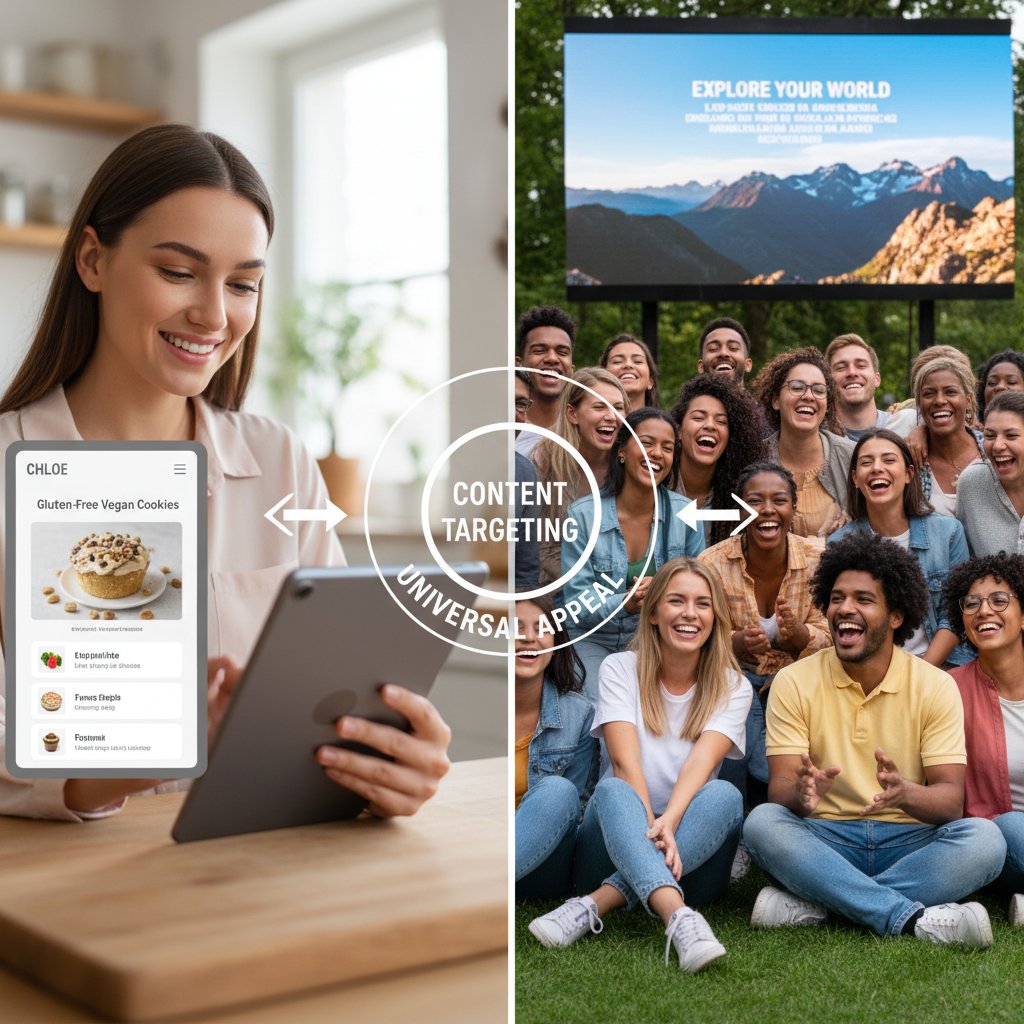
Your job isn’t to choose one or the other—it’s to master both, and deploy each with intent.
Leveraging data without losing your soul
Data is a powerful muse, not just a taskmaster. The best creatives use targeting insights to spark ideas and shape narratives, not just automate output. For example, content teams at teammember.ai often use behavioral data to brainstorm new topics, but the final product is always filtered through human editorial sense.
- Unconventional uses for generating targeted content online:
- Activism: Mobilize communities with messages tailored to the issues that matter most.
- Community building: Foster loyal tribes by delivering hyper-relevant, value-driven content.
- Creative experiments: Test new formats, tones, and ideas, measuring resonance in real time.
Let data inform your direction, but don’t let it handcuff your creativity.
The role of human editors in an AI world
Editorial oversight is more essential than ever. As AI platforms handle more of the heavy lifting, it’s human editors who safeguard quality, relevance, and brand integrity. The most effective teams embrace collaboration—using platforms like teammember.ai to handle routine decisions, while reserving judgment calls for experienced pros.
"AI is a tool; your gut is the compass." — Alex, editorial director
Don’t abdicate your editorial authority—defend it, sharpen it, and use technology as an amplifier, not a replacement.
Practical playbook: Actionable frameworks and checklists
Self-assessment: Is your content targeting effective?
- Content targeting self-diagnosis checklist:
- Are your campaign goals clear and measurable?
- Does every piece of content align with specific audience segments?
- Do you regularly collect and act on feedback?
- Are you updating targeting criteria based on performance data?
- Is personalization adding value, or feeling intrusive?
- Are your compliance and privacy measures up to date?
- Have you tested your campaigns with real users?
If you answer “no” to any of these, it’s a red flag. Prioritize improvements based on weakest links first—often, tightening your feedback loop is the most high-impact move.

Decision guide: Choosing the right targeting method
- Assess your budget: Manual methods are cheap but slow; AI-driven platforms like teammember.ai offer scale but require investment.
- Audit your team’s skill set: Deep data skills or creative chops? Play to your strengths.
- Review your tech stack: Integrations matter—don’t create silos.
- Check compliance needs: Regulated industries require extra vigilance.
- Clarify your timeline: Need quick wins or long-term gains?
- Pilot, measure, optimize: Test before scaling up.
A small startup might choose hybrid methods for flexibility, while an enterprise invests in AI for scale. Context is king.
| Solution Type | Upfront Cost | Time to Implement | Flexibility | Best Fit For |
|---|---|---|---|---|
| Manual targeting | Low | Slow | High | Small teams, niche campaigns |
| Hybrid | Moderate | Medium | Medium | Growing businesses, multi-channel needs |
| Full AI-driven | High | Fast | Low | Large orgs, big data sets |
Table 4: Cost-benefit analysis of content targeting options. Source: Original analysis based on Siege Media, Forbes Advisor.
How to avoid the top 5 targeting mistakes
- Over-relying on automation: Always review AI outputs before launch—machines miss nuance.
- Ignoring feedback: Build real feedback channels into every campaign.
- Poor data hygiene: Regularly clean and audit your datasets.
- Outdated personas: Update audience profiles at least quarterly.
- Set-and-forget mentality: Continuous optimization isn’t optional; it’s survival.
When mistakes happen, own them publicly, rectify quickly, and use the fallout as a lesson. The cost of hiding errors is always higher than owning up.

The future of online content targeting: What’s next?
Emerging trends: Smarter, subtler, more ethical
Context-aware targeting is the new frontier—algorithms now factor in mood, location, and real-time events. Sentiment analysis tools are flagging down angry customers before campaigns go live. Meanwhile, privacy-first tech and the rise of “zero-party data” (info users willingly provide) are reshaping how marketers collect and use data.
"Tomorrow’s winners will be those who respect both data and dignity." — Nico, futurist
The winners are those who play both the data game and the dignity game—never sacrificing one for the other.
Will anti-targeting movements reshape the industry?
Backlash is building. Anti-targeting movements are demanding more authenticity and less manipulation. Brands are responding with bigger, broader stories—think viral campaigns designed to win hearts, not just clicks.

If your targeting feels forced, your audience will notice—and walk.
How to future-proof your content strategy
Resilience is your best defense. Build targeting strategies that can flex with changing laws, shifting audience norms, and new tech. Here’s your checklist:
- Diversify channels and formats.
- Regularly review compliance updates.
- Foster a culture of experimentation.
- Prioritize opt-in and zero-party data.
- Balance automation with regular human audits.
Platforms like teammember.ai are built for continuous learning—integrate, test, learn, repeat.
Supplementary: Regional and industry nuances in content targeting
Emerging markets: Opportunities and challenges
Emerging economies face unique targeting hurdles: fragmented tech, lower data reliability, and regulatory uncertainty. Yet they offer huge upside—untapped audiences and less competition for attention.
Case studies from Asia show brands leveraging local influencers for rapid trust-building. African startups blend SMS with social to reach audiences without broadband. LATAM marketers combine WhatsApp targeting with traditional media for cross-channel impact.
| Region | Technical Penetration | Regulatory Complexity | Cultural Factor | Targeting Efficacy |
|---|---|---|---|---|
| Asia | High | Moderate | Collectivist | High (urban), Low (rural) |
| Africa | Low | Low | Relational | Variable |
| LATAM | Medium | High | Family-centric | Medium |
| Europe/US | High | High | Individualist | High |
Table 5: Content targeting efficacy across regions. Source: Original analysis based on Forbes Advisor and regional market studies.
Cross-industry perspectives: Healthcare, politics, entertainment
In healthcare, targeting drives patient engagement and efficient reminders, but privacy stakes are sky-high. Political campaigns tread ethical tightropes, using micro-targeting to mobilize voters without crossing into manipulation. Entertainment thrives on algorithm-driven recommendations—yet even here, the risk of filter bubbles looms.
No matter the industry, the core challenge remains: balancing targeting with transparency, trust, and storytelling.
Supplementary: The language of content targeting—definitions that matter
- Predictive analytics: Using historical and real-time data to forecast future audience behavior. Essential for timing and messaging.
- Natural language generation (NLG): AI that crafts human-sounding text at scale. Powers everything from email copy to chatbots.
- Audience personas: Data-driven archetypes representing key segments—used for content mapping and creative direction.
Knowing the jargon is step one; knowing how to wield it separates pros from pretenders. Watch out for jargon overload—translate buzzwords into actionable playbooks, not dogma.
Supplementary: Controversies, misconceptions, and the road ahead
Debates in the field: Where experts disagree
Is hyper-targeting manipulative or empowering? Some experts argue it democratizes marketing—giving small brands a fighting chance. Others say it’s digital gaslighting, subtly shaping choices and worldviews. The debate is ongoing, and as data sources evolve, the lines will keep blurring.
Watch for new frameworks and transparency tools to help audiences understand why they’re seeing what they see.
Enduring misconceptions—and how to finally move past them
Persistent myths: “Data guarantees results.” “Automation is always cheaper.” “Personalization works for everyone.” None are universally true. Critical thinking—questioning assumptions, testing everything, and learning from failure—is your ultimate advantage.
Conclusion
To generate targeted content online in 2024 is to walk a tightrope—balancing data-driven precision with human intuition, ethical boundaries with creative ambition, and short-term wins with long-term trust. According to verified research from Forbes Advisor, Siege Media, and WinSavvy, the most effective strategies are those that blend AI with authentic storytelling, rigorous feedback, and continuous learning. The lessons are clear: respect your audience, question your data, and never mistake automation for understanding. Brands, teams, and platforms like teammember.ai are redefining what’s possible—not by following the hype, but by mastering both the science and the soul of digital engagement. Outsmart the noise and own your message—because the real playbook for online content targeting isn’t written in code, but in the trust you earn, every single day.
Sources
References cited in this article
- Forbes Advisor(forbes.com)
- Siege Media(siegemedia.com)
- WinSavvy(winsavvy.com)
- Search Engine Journal(searchenginejournal.com)
- Moz: 2024 SEO and Content Trends(moz.com)
- LinkedIn(linkedin.com)
- Neil Patel(neilpatel.com)
- Junia.ai(junia.ai)
- Oban International(obaninternational.com)
- edie.net(edie.net)
- Forbes(forbes.com)
- Kellogg Insight(insight.kellogg.northwestern.edu)
- SU Social(susocial.com)
- SciencePOD(sciencepod.net)
- LinkedIn(linkedin.com)
- Wikipedia(en.wikipedia.org)
- AlgoriX(algorix.co)
- StoryChief(storychief.io)
- HubSpot(blog.hubspot.com)
- Coso.ai(coso.ai)
- SEOChatter(seochatter.com)
- techeela.com(techeela.com)
- Washington Post(washingtonpost.com)
- SciencePOD(sciencepod.net)
- IBM(ibm.com)
- Wikipedia(en.wikipedia.org)
- Quanta Intelligence(quantaintelligence.ai)
- NatLawReview(natlawreview.com)
- Marketing Dive(marketingdive.com)
- Leo Celis Blog(blog.leocelis.com)
- Statista(statista.com)
- Salesforce Ben(salesforceben.com)
Focus on what matters. Let AI handle the rest.
We know the feeling — another day starts with 50 unread emails, Ads Manager begging for attention, CRM out of date, and meetings without follow-ups. That's why we built TeamMember.ai — an AI team member that takes over all the operational work at the computer. Has its own email address and SMS number. Manages your inbox, runs Meta Ads, updates CRM, processes meetings, monitors social media, generates morning briefings, and controls the browser. Built on OpenClaw — a leading open-source AI agent — with cross-session memory and secure-cloud architecture that keeps your data safe.
Get startedBe First to Try Your AI Team Member
Every week without automation is dozens of hours lost to operational work. Hours you'll never get back. Join the waitlist and get priority access.
Frequently Asked Questions
What percentage of marketers now consider content marketing their most effective digital strategy?
According to WinSavvy, 74% of marketers now agree that content marketing is the single most effective digital strategy in 2024.
Why is the 'spray-and-pray' approach to content marketing no longer effective?
Spray-and-pray is dead because digital platforms now filter content to reward relevance, social media feeds favor content that matters to specific users, and audiences have become immune to generic, one-size-fits-all messaging. Broad targeting has become a relic, and irrelevance is increasingly costly.
What is the key difference between old mass marketing and modern targeted content?
The shift is from a shotgun approach that bombards audiences with generic posts to a sniper approach focused on reaching the right person with a message that resonates, treating attention as sacred rather than blasting content broadly.
What role has AI played in changing content targeting?
AI has fundamentally rewired the rules of content targeting by moving beyond manual targeting methods and turning the targeting system inside out, though the article does not provide complete details on how this transformation works.
From the Archive
Explore more from AI Team Member

Why Most Marketing Materials Fail and How to Fix It
Create targeted marketing materials with data-driven tactics and psychological insights. This article explains why most campaigns fail and how to build materials that convert.

Best Content Marketing Tools: What Delivers Real Results
The best tools for content marketing help teams cut through noise and drive results. This article evaluates which platforms deliver ROI and which waste resources.

Why Generating Tailored Content Outperforms Generic Messaging
Generic content is losing effectiveness as audiences demand personalization. This article explains why generating tailored content matters, the psychology behind it, and its risks.

Marketing Campaign Productivity Tools That Cut Noise, Boost ROI
Discover insights about marketing campaign productivity tools

Engaging Marketing Copy Tools: Capabilities and Real Limitations
Engaging marketing copy tools use AI and data to improve campaign effectiveness. This article examines the capabilities, limitations, and real outcomes of current solutions.

Creating Marketing Content Easily: Balancing Speed with Brand Value
How to create marketing content easily while maintaining brand integrity. This article explains the workflows, tools, and frameworks that reduce burnout without sacrificing quality.