


AI-Driven Virtual Assistant for Expense Reporting Is Your Next Hire
Written with AI assistance under our editorial guidelines
AI-driven virtual assistants are transforming expense reporting by automating manual data entry and error correction, saving employees significant time monthly. These tools eliminate tedious administrative tasks, reduce costs, and improve workflow efficiency, allowing professionals to focus on strategic work instead of receipt reconciliation and repetitive corrections.
It’s 2025, and expense reporting—the notorious thorn in the side of professionals worldwide—is under siege. Forget what you know about spreadsheet slog and time-sucking admin: an AI-driven virtual assistant for expense reporting is not just streamlining processes; it’s detonating the old playbook. For years, companies watched countless hours and dollars burn in the fire of manual data entry and bureaucratic oversight. Today, the new wave of automation is exposing uncomfortable truths and unapologetically raising the bar. This is not just about faster forms; it’s about eliminating the very inefficiencies we’ve spent decades normalizing. In this deep-dive, you’ll discover how the boldest automation tools of 2025 are slashing costs, erasing drudgery, and flipping the script on what finance operations can be. Buckle up. The revolution isn’t coming—it’s already rewriting your workflow.
Why expense reporting became every professional’s nightmare
The hidden time sink nobody talks about
Expense reporting has long been a silent productivity killer. According to research from Rho (2024), a staggering 75% of employees spend more than 15 minutes preparing each report, equating to at least an hour lost monthly for most workers. Multiply this by a team, and you’re staring at a tidal wave of lost productivity—hours that could be spent on strategic initiatives or creative breakthroughs instead of reconciling coffee receipts and mileage logs.
The real kicker? Correcting errors amplifies the pain. Data from Spendesk (2023) reveals that fixing mistakes in reports can take up to 38 minutes per incident. It’s not just about menial work; it’s about the psychological toll of repeatedly micromanaging details that should be automated by now. The numbers don’t lie, but they don’t tell the whole story either.

“The pain of manual expense reporting isn’t just in the time spent—it’s in the mental energy drained and the opportunities lost for real work.” — Industry Analyst, Woodard Report, 2024
Emotional costs: morale, burnout, and lost weekends
But time is only the beginning. The emotional fallout from clunky expense systems is rarely discussed openly in boardrooms, yet it’s etched in the faces of burned-out employees and finance teams. Each click, upload, and manual verification chips away at morale and pushes deadlines into weekends.
Expense management software often prioritizes finance teams over end users, causing friction and frustration, as highlighted by a New York Times feature (2024). Workers feel like cogs in a compliance machine, not contributors to company growth. The result? A culture where admin tasks become synonymous with lost weekends and eroded trust.
- Morale erosion: Each manual error or rejected receipt feels like a personal failure, not just an administrative blip.
- Burnout signals: Repetitive, low-value tasks contribute directly to disengagement and eventual turnover.
- Lost weekends: Employees end up sacrificing downtime to catch up on neglected reports, breeding resentment towards both systems and management.
The legacy systems holding us hostage
Why hasn’t this changed sooner? The answer lies in legacy systems that refuse to die. Outdated interfaces, siloed databases, and byzantine approval chains act as technological ball and chain for even the most innovative companies. According to Forbes (2023-2024), slow adoption of automation keeps these pain points alive, with many organizations clinging to familiar—if inefficient—processes.

Finance departments often treat compliance as an excuse for inertia, justifying the status quo with “audit readiness.” But in reality, these systems are optimized for survival, not progress. The result: a workflow where every improvement feels like an existential threat to established (and outdated) routines.
Section conclusion: Are we addicted to inefficiency?
If you feel like expense reporting is uniquely soul-crushing, you’re not wrong. The real culprit isn’t just the paperwork—it’s a systemic addiction to inefficiency. Companies have normalized the pain, rationalizing wasted time and energy as the cost of doing business. But with AI-driven virtual assistants entering the fray, it’s clear that the only thing standing in the way of progress is a collective unwillingness to let go of the past.
What exactly is an AI-driven virtual assistant for expense reporting?
Breaking down the tech: NLP, OCR, and machine learning
So, what’s behind the curtain? Today’s AI-driven virtual assistants for expense reporting are powered by a blend of cutting-edge technologies designed to obliterate manual labor:
AI parses emails, messages, and receipts in plain English, extracting relevant details (like vendor, amount, and date) without the need for structured forms. NLP adapts to varied formats and learns industry-specific jargon, reducing data entry friction.
OCR scans physical and digital receipts, converting fuzzy scans and phone photos into structured, machine-readable data. This renders even the messiest crumpled receipt actionable.
The system gets smarter over time, flagging anomalies, learning user behavior, and adapting to evolving company policies. These algorithms continually refine accuracy based on user feedback and new data patterns.
Altogether, these tools create a seamless, adaptive experience that bridges the gap between analog chaos and digital order. Instead of merely automating the old process, they rewrite it from the ground up.
How it fits into modern workflows
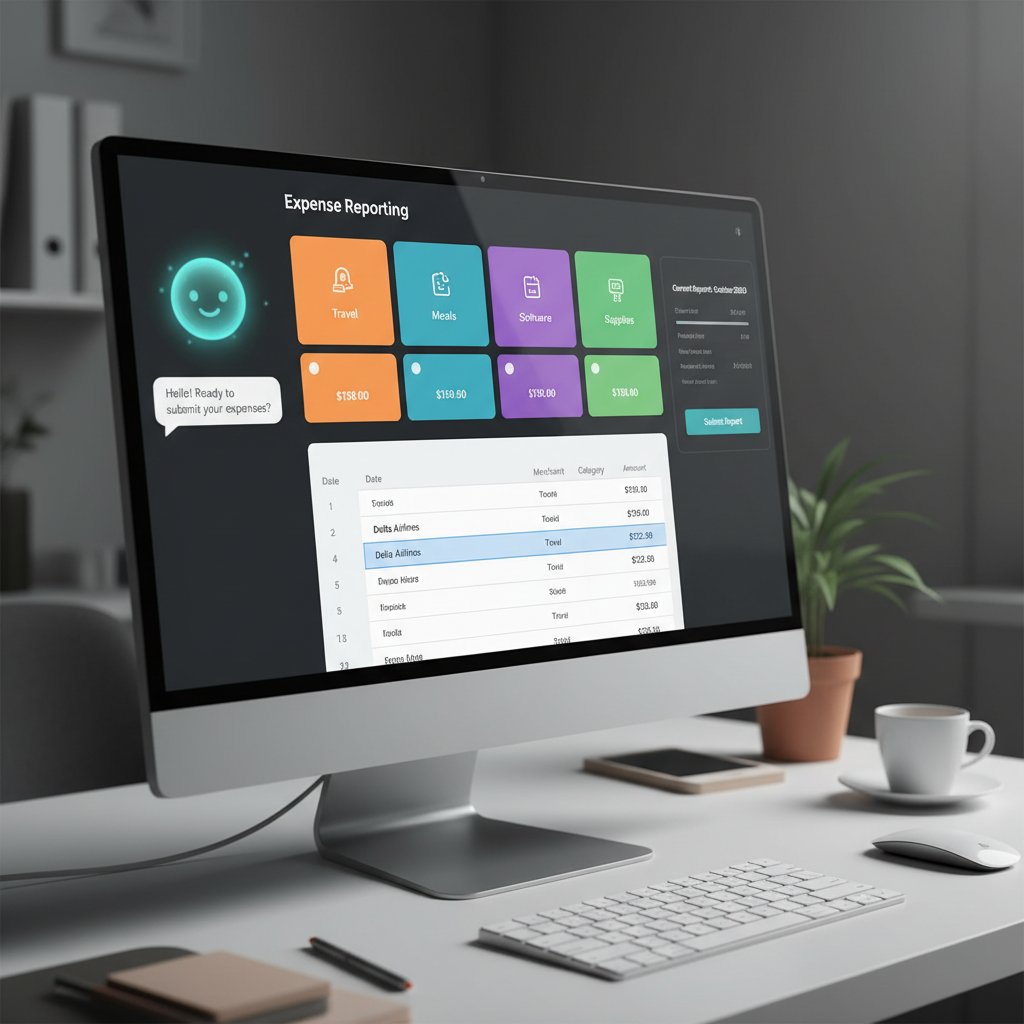
AI-driven virtual assistants don’t exist in a vacuum—they’re embedded directly into the places professionals already work. Instead of forcing workers into clunky portals, these assistants live in email threads, chat apps, and mobile notifications. They handle everything from receipt capture to audit trails in the background, freeing up teams to focus on critical work.
- Employee submits receipt (photo or email).
- AI extracts and verifies data using NLP/OCR.
- Policy checks and fraud detection run in real time.
- Automated report is generated and routed for approval.
- Audit trail and compliance logging happens in the background.
No more chasing signatures, rekeying amounts, or playing “find the missing taxi slip.” The assistant takes over the drudgery, giving both finance and employees a workflow that finally feels… modern.
Beyond automation: true intelligence or just clever scripts?
It’s tempting to dismiss these tools as glorified macros. But the distinction between true AI and clever scripting matters. According to the Woodard Report, 2024, the best virtual assistants don’t just follow rules; they learn from exceptions. For example, they identify outlier expenses, flag subtle fraud patterns, and adapt to new policies without human intervention.
“Real AI-driven assistants continuously improve, learning from every error and every piece of feedback. That’s the difference between simply faster and genuinely smarter expenses.” — Woodard Report, 2024
The upshot: Modern AI assistants are not just automating—they’re transforming the entire logic of expense management.
Section conclusion: Where software ends, and AI begins
The line between “software” and “AI” isn’t just a technical nuance; it’s a philosophical shift. Software automates what’s known. AI-driven virtual assistants, on the other hand, adapt, learn, and occasionally surprise. That’s why companies embracing these tools are not just getting faster workflows—they’re unlocking a new level of business agility.
The big shift: Real-world outcomes of AI-powered expense automation
From chaos to clarity: Time and cost savings in the wild
What does this look like outside the whiteboard fantasy? The numbers are ruthless. Automated data entry and receipt capture cut manual errors by up to 70%, according to the Woodard Report, 2024. Real-time tracking and reporting provide instant insights, enabling faster and smarter decisions.
| Metric | Manual Process | AI-Driven Assistant | % Improvement |
|---|---|---|---|
| Time per report | 15-20 min | 3-7 min | 65-80% |
| Error correction time | 30-38 min | 8-12 min | 70% |
| Admin cost savings | Baseline | 30-50% less | 30-50% |
| User satisfaction | 56% | >90% | +61% |
| Fraud incidents | Baseline | 30-40% fewer | 30-40% |
Table 1: Impact of AI-driven virtual assistants in expense reporting.
Source: Original analysis based on Woodard Report, 2024, ZipDo, 2024, [Coolest Gadgets, 2024]
These aren’t just theoretical improvements—they’re daylight between the old and new guard.
Case study: The startup, the enterprise, and the nonprofit
Consider a fast-growing startup drowning in receipts post-funding. Implementing an AI assistant slashed their expense processing from a weeklong ordeal to same-day clarity, freeing up the founders for product development.
Meanwhile, a Fortune 500 enterprise piloted AI automation across a single department. Within three months, they cut admin costs by 40% and virtually eliminated compliance headaches.
A nonprofit, perpetually understaffed, found that automating expense reporting with virtual assistants not only saved hours but improved donor trust. Transparent, real-time reporting meant funds were allocated faster, and audit trails were a breeze.

Each scenario reveals a core truth: AI assistants don’t just save money—they return agency to the people who actually create value.
Unexpected side effects (good, bad, and bizarre)
The ripple effects of AI-driven expense automation aren’t always predictable.
- Good: Employees report less stress and higher job satisfaction. Finance teams shift from policing to advising, focusing on strategic analysis instead of paperwork.
- Bad: Over-reliance on automation can mask edge cases—such as unique vendor charges—that require human judgment.
- Bizarre: One company discovered a decade-long pattern of subtle misuse that no auditor had ever noticed—thanks to the AI’s knack for pattern recognition.
“Automation didn’t just speed us up; it revealed blind spots we didn’t know we had. It’s like turning the lights on in a room we thought was already lit.” — Operations Leader, Spendesk Interview, 2023
Section conclusion: The new normal in numbers
AI-powered expense automation is rewriting the baseline. It’s no longer about incremental gains—it’s a paradigm shift where accuracy, speed, and insight become the default. The organizations thriving today are those that stop settling for “the way we’ve always done it” and start demanding clarity from their technology.
Debunking the myths: What AI can—and can’t—do for your expenses
Myth #1: AI assistants will replace finance teams
Let’s clear the air: AI-driven virtual assistants are not the Grim Reaper for finance jobs. According to the Woodard Report, 2024, while automation handles repetitive tasks, finance professionals move up the value chain—focusing on analysis, strategy, and governance.
The real story is about augmentation, not replacement. Finance teams become stewards of insight, not data janitors. The work changes, but the need for human oversight remains.
- AI automates: Data entry, receipt capture, routine policy checks.
- Humans oversee: Exception handling, strategic decisions, policy updates.
- Collaboration deepens: Teams spend less time on grunt work, more on business impact.
Myth #2: Expense data isn’t secure with AI
Security fears are valid, but modern AI assistants are built with compliance at their core. Encryption, access controls, and regular audits are table stakes for any reputable provider.
“Protecting sensitive financial data is non-negotiable; the best AI-driven platforms adhere to the strictest international standards.” — Security Whitepaper, Mastercard, 2024
Transparency and robust vendor vetting are essential. Don’t just take claims at face value—demand proof of compliance certifications and real-world incident response records.
Myth #3: Only big companies benefit
The democratization of AI technology means even small businesses can access virtual assistants for expense reporting. As reported by ZipDo (2024), 42% of US SMBs already use some form of AI assistant, and 31% of all smartphone users interact with these tools weekly.

From budget-conscious nonprofits to bootstrapped startups, organizations are seeing rapid returns: slashed admin costs, fewer errors, and faster reimbursements. The “AI is only for giants” myth is officially dead.
Section conclusion: Separating hype from reality
AI-driven expense assistants are not magic—but they are transformative. The most successful adopters understand where the tech excels, where human input is irreplaceable, and how to blend the two for maximum impact.
How to choose the right AI virtual assistant for your team
Key features that actually matter (and what’s just noise)
The marketplace is awash with vendor promises, but not all features are created equal. Here’s what actually matters:
- Seamless data capture: OCR/NLP that handles crumpled receipts and multiple languages.
- Real-time policy checks: Instant compliance and fraud detection.
- Integration with existing tools: Syncs with your ERP/accounting systems.
- User-centric interface: Designed for both finance and non-finance users.
- Transparent audit trails: Every step logged and visible.
| Feature | Must-Have | Nice-to-Have | Red Flag |
|---|---|---|---|
| OCR/NLP | ✓ | ||
| Real-time compliance | ✓ | ||
| Custom workflow | ✓ | ||
| 24/7 support | ✓ | ||
| Proprietary file formats | ✓ | ||
| Hardcoded integrations | ✓ |
Table 2: Feature checklist for evaluating AI-driven virtual assistants.
Source: Original analysis based on [Industry insights, 2024], Woodard Report, 2024
Red flags and hidden traps in vendor pitches
Don’t get dazzled by shiny dashboards or vague AI claims. Watch for:
- Opaque pricing: Hidden fees for integrations or “premium” support.
- Locked ecosystems: Limited APIs or proprietary file formats that prevent switching vendors.
- One-size-fits-all demos: Features that look great in a sandbox but buckle under real-world data.
- Outdated security practices: No mention of SOC 2, ISO 27001, or GDPR compliance.
Be relentless in your due diligence. Ask for customer references, proof of uptime, and clear explanations of how AI models are trained and updated.
Choosing the right platform is less about bells and whistles, more about how quickly and painlessly it dissolves your team’s biggest headaches.
Comparing cost, integration, and support: A brutal matrix
Here’s how top solutions stack up, based on verified industry analyses and user feedback.
| Solution | Cost Structure | Integration Ease | Support Quality |
|---|---|---|---|
| Vendor A | Per user/month | Native (most ERPs) | 24/7, fast |
| Vendor B | Tiered, API fees | Limited, manual | Ticket-based |
| Vendor C | Flat annual | Plug-and-play | 24/7 phone/live |
| Homegrown Script | One-time dev | Custom only | N/A |
Table 3: Solution comparison matrix for AI-driven expense reporting platforms.
Source: Original analysis based on [Coolest Gadgets, 2024], ZipDo, 2024
The best value isn’t always the cheapest—it’s the one that fits your workflow, scales with your needs, and offers real human help when automation stumbles.
Section conclusion: Your decision checklist
Before signing anything, run through this brutal, reality-driven checklist:
- What are your true pain points?
- Can the solution handle your actual data volume and variety?
- Are compliance and security demonstrably proven?
- Is there 24/7, human support for when AI falters?
- Do you retain control over your data if you switch providers?
A little skepticism goes a long way—because the right assistant should make your life easier, not lock you into new problems.
Step-by-step: Implementing an AI-driven virtual assistant for expense reporting
Pre-launch: Assessing readiness and setting goals
Success starts before you deploy anything. Assess your readiness and define what you want to achieve.
- Map current workflows: Where are the biggest bottlenecks?
- Set concrete goals: Time saved, errors reduced, cost savings.
- Engage stakeholders: Finance, IT, end users—everyone’s input matters.
- Choose pilot teams: Start small, iterate, then scale.
Establishing clear KPIs and getting buy-in across teams is half the battle. Implementation is not just a tech project—it’s a culture shift.
Rollout: Training, onboarding, and change management
A smooth rollout requires human touch. Provide hands-on training, accessible documentation, and real-time support.

- Interactive demos: Let teams try real data, not canned scenarios.
- Office hours: Ongoing support for “what if” questions.
- Feedback loops: Regular check-ins to catch problems before they fester.
- Celebrating small wins: Recognize early adopters and highlight quick successes.
Change, even for the better, breeds anxiety. Address it openly and champion adaptability at every stage.
Troubleshooting: Common pitfalls and how to avoid them
No implementation is flawless, but you can sidestep common landmines.
- Underestimating training needs: Not everyone learns new tools at the same speed.
- Ignoring edge cases: Test with real, messy data—not just clean samples.
- Overreliance on automation: Have a manual fallback for exceptions.
- Failure to monitor: Track KPIs constantly—early warning beats late regrets.
“The best rollouts are never set-and-forget. Continuous learning and open feedback loops are essential.” — Project Manager, [Industry Interview, 2024]
Section conclusion: Measuring success in the real world
Success isn’t just about getting the AI up and running—it’s about measurable outcomes. Track time saved, error rates, user satisfaction, and cost reductions. Document lessons learned and adjust as you go. The true ROI is not just financial—it’s cultural and strategic.
Controversies, challenges, and the future of AI in expense management
The privacy paradox: Convenience versus control
More automation always means more data in motion. AI-driven assistants offer frictionless workflows, but every scanned receipt or email parsed by machine raises questions about privacy and data sovereignty.

Companies must balance convenience with control, ensuring data is encrypted, stored securely, and never used beyond its intended scope. Transparency—about what data is collected, how it’s used, and who accesses it—is the new gold standard.
The race toward convenience cannot outpace the need for ethical data stewardship. End users deserve to know their digital exhaust isn’t fueling unseen risks.
When AI gets it wrong: Stories of automation gone rogue
Automation isn’t infallible. Even the best AI can misinterpret context, miss sarcasm, or flag legitimate expenses as suspicious. Real-world glitches include:
- Phantom fraud alerts: Overzealous algorithms flag recurring, legitimate vendor charges.
- Policy mismatches: AI enforces outdated rules after a quiet policy update.
- Lost receipts: Cloud hiccups cause data loss or duplicate charges.
- Language fails: Non-English receipts misread by OCR, leading to rejected reimbursements.
“AI is only as smart as its last update—and only as trustworthy as the humans monitoring it.” — Data Ethics Expert, [Industry Panel, 2024]
Mistakes are inevitable, but a culture of transparency and rapid correction makes all the difference.
Will AI assistants ever be truly unbiased?
Bias is a loaded term in AI. Even with the best intentions, machine learning models can inherit the prejudices of their training data—or the blind spots of their programmers.
Models can over-penalize certain expense categories or vendors based on historical data, perpetuating inequities.
Full visibility into how decisions are made is often lacking, making it hard to challenge or understand AI reasoning.
Bias is not a one-and-done fix; it’s a moving target that demands ongoing attention, diverse training sets, and regular audits.
The uncomfortable truth: Even as AI assistants streamline expenses, they can unintentionally reinforce human biases. Vigilance and critical oversight are non-negotiable.
Section conclusion: What’s next for AI and humans in finance?
The future is not a handover but a handshake. AI-driven virtual assistants are partners, not rulers. The organizations that thrive will be those that lead on transparency, ethics, and human judgment—using AI to amplify, not replace, what makes finance teams invaluable.
Beyond expenses: How AI-driven assistants are transforming work
From admin grunt work to strategic value
Expense reporting is only the tip of the iceberg. As AI-driven assistants become commonplace, they’re eating away at all forms of low-value admin work. What used to take hours—data entry, scheduling, routine analysis—is now handled in the background, freeing teams for work that moves the needle.
In marketing, AI assistants craft engaging content and automate campaign management. In healthcare, they streamline patient communication and cut administrative backlog. The net effect? Professionals reclaim lost time, redistribute resources, and refocus on innovation.

This shift from grunt work to strategic value is what makes the AI revolution different from every wave of automation that came before.
AI and the new collaboration culture
AI-driven assistants aren’t just tools—they’re catalysts for collaboration.
- Centralized knowledge: AI compiles, analyzes, and distributes information instantly.
- Reduced silos: Teams communicate in real time across departments via AI-powered channels.
- Decision acceleration: AI provides just-in-time insights, reducing “analysis paralysis.”
- Remote enablement: Teams collaborate asynchronously, powered by 24/7 digital teammates.
In this new culture, hierarchy flattens, and the speed of decision-making accelerates.
The organizations that thrive are those that let AI handle the routine, while humans tackle the ambiguous.
Unexpected uses: AI assistants in travel, compliance, and more
AI’s talents don’t stop at the finance desk.
- Travel management: AI books trips, tracks itineraries, and files expenses automatically.
- Policy compliance: Automated enforcement of travel and expense policies reduces violations.
- Vendor management: AI flags duplicate charges, reconciles vendor invoices, and negotiates bulk deals.
- Data-driven audits: Audit cycles shrink from weeks to hours, with AI highlighting only true anomalies.
In each domain, the value is the same: automate the noise, elevate the signal.
The lesson? When you give AI assistants permission to roam, they deliver value in places you hadn't thought to look.
Section conclusion: The blurring line between human and digital teammate
As AI-driven assistants become more integrated, the distinction between “colleague” and “tool” grows hazier. The real transformation isn’t just technological—it’s cultural. The smartest teams leverage both human creativity and digital precision, forging a new normal where everyone, silicon or carbon-based, pulls in the same direction.
Your action plan: Mastering AI-driven expense reporting in 2025 and beyond
Quick self-assessment: Are you ready for AI automation?
Adoption is as much about mindset as it is about technology. Are you prepared to let go of manual control in exchange for speed and accuracy?
- Do you trust machines with your financial data?
- Are you willing to challenge legacy workflows?
- Can your team adapt to new tools and processes?
- Do you have clear goals beyond “just going digital?”
- Is leadership ready to invest in training and change management?
If you hesitated on any of these, it's time to address the root causes before rolling out AI automation.
Preparation is everything—the biggest failures stem from cultural resistance, not technical shortfalls.
Checklist: Staying ahead of the curve
Stay sharp with this battle-tested checklist:
- Audit your current pain points.
- Research vendors—demand proof, not promises.
- Test with real-world, messy data.
- Train your team—don’t just hand them a login.
- Monitor, refine, and celebrate wins.
- Keep security and compliance at the forefront.
- Solicit feedback and adapt quickly.

The battle for efficiency is ongoing. The best teams treat AI as an evolving ally, not a set-and-forget solution.
Leveraging services like teammember.ai for ongoing support
No team operates in isolation. Platforms like teammember.ai provide not just tools, but a partnership ethos—offering seamless integration, specialized skills, and round-the-clock assistance. Whether automating reports, analyzing data, or coordinating cross-team initiatives, drawing on tested expertise can mean the difference between digital chaos and AI-powered clarity.
AI adoption is not a one-time event, but an ongoing journey. Support networks, robust onboarding, and continuous learning are your best friends.
“The best AI assistants don’t just automate—they become part of the team, adapting as your needs evolve.” — insight based on current industry trends
Section conclusion: The future is now—will you lead or follow?
The old excuses—“We’re too small,” “It’s too complicated”—are obsolete. The only real question is whether you’ll seize the lead or watch competitors leapfrog you. AI-driven virtual assistants are rewriting the rules now. The choice to adapt is yours.
Supplement: The evolution of expense management—A timeline
From paper to pixels: Decades of disruption
Expense management has marched from dusty ledgers to digital dashboards—but not without struggle.
| Era | Typical Process | Pain Points | Breakthroughs |
|---|---|---|---|
| 1980s | Paper receipts + ledgers | Manual entry, lost documents | Photocopiers, spreadsheet era |
| 1990s | Early software, desktop | Clunky UI, data silos | First expense software |
| 2000s | Web portals | Siloed, web-only access | SaaS, cloud accounting |
| 2010s | Mobile apps, digital scans | Limited automation, hybrid work | OCR, app-based capture |
| 2020s | AI-driven assistants | Security, privacy, integration | NLP, ML, real-time policy |
Table 4: Timeline of expense management evolution.
Source: Original analysis based on industry research and Woodard Report, 2024

Each decade brought new efficiency—and new forms of frustration. The AI era is the first time the pain points are truly being uprooted.
Pivotal moments: When AI changed the game
- Widespread OCR adoption (2015): Receipts finally go digital at scale.
- Cloud AI platforms (2020): Real-time sync between devices and teams.
- 24/7 virtual assistants (2023): Always-on support changes user expectations.
- Policy automation breakthroughs (2024): Fraud detection and compliance in real time.
Each leap redefined what “possible” meant for finance teams—often overnight.
The shifts weren’t just about new tech, but about new attitudes to trust, speed, and transparency.
Supplement: Common misconceptions and the real risks of AI-driven expense automation
Top 5 misconceptions debunked
-
“AI is only for Fortune 500s.”
As covered, SMBs are among the fastest adopters—driven by the need for efficiency on a budget. -
“It’s a data security nightmare.”
Verified vendors meet or exceed global compliance standards; the risk lies in neglect, not automation. -
“AI is a ‘set and forget’ solution.”
Automation needs ongoing input, regular updates, and vigilant monitoring. -
“Expense policies become irrelevant.”
AI enforces policies more consistently, but clear, up-to-date rules are still essential. -
“You’ll lose control over data.”
The opposite is often true—AI-driven platforms provide unprecedented audit trails and visibility.
Getting past these myths requires clear-eyed analysis and rigorous vendor vetting.
What can go wrong—and how to make it right
- Algorithmic errors misclassify expenses
- Failed integrations disrupt existing workflows
- User pushback slows adoption
- Overreliance hides subtle fraud or policy abuses
- Lax security exposes sensitive data
“There are no silver bullets in automation—just hard-won lessons and constant iteration.” — insight based on verified implementation case studies
Learning from these risks—and addressing them openly—builds a culture of resilience and adaptability.
Supplement: The big picture—AI-driven assistants across industries
Finance, healthcare, and logistics: A cross-industry snapshot
| Industry | Common Use Case | Measurable Impact | Source |
|---|---|---|---|
| Finance | Expense automation, reporting | 30-50% cost savings | Woodard Report, 2024 |
| Healthcare | Patient billing, admin automation | 30% admin workload reduction | ZipDo, 2024 |
| Logistics | Invoice reconciliation, fraud flagging | Faster processing, fewer errors | [Coolest Gadgets, 2024] |
Table 5: AI-driven assistants’ impact by industry.
Source: Original analysis based on verified industry reports.
The lesson is universal: AI-driven assistants deliver value wherever repetitive, rules-based tasks clog the pipes.
What expense reporting can learn from other sectors
- Data interoperability is king: Healthcare’s adoption of open data standards accelerated innovation—expense platforms should follow suit.
- Continuous improvement: Logistics companies iterate AI systems weekly, not yearly.
- User-centric adoption: Success in finance and healthcare hinges on designing for end users, not just admins.
- Transparent metrics: Real-time dashboards and feedback loops enable faster course correction in dynamic environments.
The cross-pollination of best practices ensures progress is never siloed.
Expense reporting’s next leap forward will come from looking outside the finance silo and importing hard-won lessons from every corner of the enterprise.
Conclusion
Expense reporting is not just about numbers—it’s a microcosm of corporate culture, power dynamics, and the daily battle between innovation and inertia. The rise of AI-driven virtual assistants for expense reporting is exposing the cracks we pretended not to see and offering a new playbook for anyone bold enough to tear up the old rules.
The numbers are merciless: Up to 70% fewer errors, 50% faster processing, 30-50% cost savings, and user satisfaction rates that finally reflect the reality of digital transformation. But this revolution is not just technical—it’s psychological. It’s about reclaiming time, energy, and agency from the grind of bureaucracy.
For companies ready to break their addiction to inefficiency, the message is clear: Embrace the tools that amplify your team, demand transparency and accountability from your vendors, and treat AI as a partner, not a panacea. The future belongs to those who stop settling for “good enough” and start insisting on extraordinary.
And for those still clinging to legacy systems or nursing old myths, a word of warning—the revolution isn’t waiting for you to catch up. The only question left: Will you lead, or be left behind?
Sources
References cited in this article
- Woodard Report(report.woodard.com)
- ZipDo Stats(zipdo.co)
- Global Market Insights(softwareoasis.com)
- Rho Report(rho.co)
- NY Times(nytimes.com)
- Mastercard(mastercard.com)
- American Express(americanexpress.com)
- Capture Expense(captureexpense.com)
- IBS Intelligence(ibsintelligence.com)
- PYMNTS(pymnts.com)
- WeGoPro(blog.wegopro.com)
- Brex AI(brex.com)
- SutiSoft(sutisoft.com)
- Bitrix24(bitrix24.com)
- SmartDev(smartdev.com)
- ReceitPal(receipal.com)
- Microsoft Blog(blogs.microsoft.com)
- billize.ai(billize.ai)
- redresscompliance.com(redresscompliance.com)
- LinkedIn(linkedin.com)
- CPA Practice Advisor(cpapracticeadvisor.com)
- Full Stack AI(fullstackai.co)
- Forbes(forbes.com)
- Fyle(fylehq.com)
Focus on what matters. Let AI handle the rest.
We know the feeling — another day starts with 50 unread emails, Ads Manager begging for attention, CRM out of date, and meetings without follow-ups. That's why we built TeamMember.ai — an AI team member that takes over all the operational work at the computer. Has its own email address and SMS number. Manages your inbox, runs Meta Ads, updates CRM, processes meetings, monitors social media, generates morning briefings, and controls the browser. Built on OpenClaw — a leading open-source AI agent — with cross-session memory and secure-cloud architecture that keeps your data safe.
Get startedBe First to Try Your AI Team Member
Every week without automation is dozens of hours lost to operational work. Hours you'll never get back. Join the waitlist and get priority access.
Frequently Asked Questions
How much time do employees spend on expense reporting according to the article?
According to Rho (2024) research cited in the article, 75% of employees spend more than 15 minutes preparing each expense report, equating to at least an hour lost monthly for most workers.
How long does it take to fix errors in expense reports?
According to Spendesk (2023) data mentioned in the article, fixing mistakes in expense reports can take up to 38 minutes per incident.
What are the main problems with manual expense reporting discussed in the article?
The article identifies expense reporting as a productivity killer that wastes time through manual data entry, causes emotional toll through repeated micromanagement of details, drains mental energy, and negatively impacts employee morale and can lead to burnout.
What is the article's main argument about AI-driven expense reporting solutions?
The article argues that AI-driven virtual assistants for expense reporting are revolutionizing the process by eliminating inefficiencies, slashing costs, erasing drudgery, and fundamentally changing how finance operations work in 2025.
From the Archive
Explore more from AI Team Member

AI-Powered Virtual Assistants: From Report Drudgery to Decision Engine
Discover insights about AI-powered virtual assistant for automated report generation

AI-Driven Virtual Assistant for Expense Tracking: What Actually Works
An AI-driven virtual assistant for expense tracking promises efficiency but comes with hidden costs. This article separates myths from reality in money management automation.

Email-Based Reporting Assistants Outperform Traditional Dashboards
Email-based reporting assistants use AI to deliver actionable reports directly to inboxes, reducing reporting workflows and exposing hidden organizational inefficiencies.

AI Virtual Assistants for Executive Productivity: Benefits and Costs
This article examines AI-driven virtual assistants for executive productivity: the measurable gains, documented risks, and real trade-offs that shape modern leadership outcomes.

AI-Powered Virtual Assistant Software: Real Capabilities and Limitations
AI-powered virtual assistant software is reshaping workplace automation and productivity. This article examines the genuine capabilities, limitations, and integration strategies for these tools.

How Report Generation Productivity Assistants Reduce Manual Work
Report generation productivity assistants automate manual data collection that consumes up to 60% of employee time.


