


AI-Driven Virtual Assistant for Performance Management: Boon or Threat?
Written with AI assistance under our editorial guidelines
AI-driven virtual assistants promise to transform performance management by replacing annual reviews with real-time, objective feedback through continuous data analysis and monitoring. However, the article critically examines whether these tools truly deliver on their promises or risk creating digital micromanagement environments that undermine employee trust and satisfaction.
Step into a meeting room lit by cold LEDs, glass walls reflecting the tension in the air. Across the table, you’re not sizing up your manager—you’re staring down the blinking cursor of an AI-driven virtual assistant. It’s spitting out real-time analytics on your “collaborative spirit,” clocking your response times to emails, and dissecting your project contributions with surgical precision. Welcome to performance management in 2025, where algorithms have as much say in your career trajectory as your boss. The buzz is relentless: AI-driven virtual assistants promise objectivity, speed, and a revolution in employee feedback. But what’s the unvarnished reality behind this automation gold rush? In this deep-dive, we rip the mask off the hype, scrutinizing what these AI performance review tools deliver, where they fall short, and how they’re transforming the fabric of work itself. If you’re wondering whether an AI assistant can judge your work better than your boss—or if you’re just a few clicks away from digital micromanagement hell—this guide is your essential, no-spin companion. Let’s unpick the code.
A new era: How AI-driven virtual assistants are changing performance management
From annual reviews to real-time feedback: The evolution
For decades, performance management was an annual ritual—one loaded with anxiety, paperwork, and all the progress-killing delays you’d expect from a process stuck in the previous century. By the time your review rolled around, feedback was stale, achievements forgotten, and biases had plenty of time to creep in. According to research from AIHR Institute, 2023, this outdated approach left employees dissatisfied and business goals unmet. Enter AI-driven virtual assistants: always-on, data-hungry watchers transforming annual reviews into a drip-feed of real-time, objective feedback.

Historically, companies were slow to adopt digital performance management tools, clinging to manual spreadsheets and subjective supervisor notes. As digital transformation swept through industries in the late 2010s, organizations dabbled in centralized HR software, but most solutions merely digitized old problems. The real shift began when AI capabilities—real-time data processing, natural language understanding—jumped into the fray. By 2023, 70% of organizations worldwide had implemented AI-driven tools, with virtual assistants among the top three solutions, according to Gartner, 2023. The move from paper to pixels wasn’t just a tech upgrade; it was a foundational change in how companies measured, motivated, and managed their people.
| Year | Milestone | Technology | Impact |
|---|---|---|---|
| 1980s | Paper-based reviews | Manual forms | High bias, low scalability |
| 2000s | HRIS adoption | Centralized databases | Digital recordkeeping, slow feedback cycle |
| 2015 | First AI HR chatbots | Rule-based AI | Automated FAQs, limited analytics |
| 2020 | AI-driven analytics | Machine learning | Data-driven reviews, some bias reduction |
| 2023 | Real-time AI assistants | LLMs, NLP, analytics | Continuous feedback, scalable across remote teams |
Table 1: Timeline of performance management evolution.
Source: Original analysis based on AIHR Institute, 2023, Gartner, 2023
What exactly is an AI-driven virtual assistant for performance management?
An AI-driven virtual assistant for performance management isn’t just a chatty bot in your inbox. It’s a sophisticated, often invisible, system powered by machine learning (ML), natural language processing (NLP), and predictive analytics. These assistants analyze vast streams of data—from your email threads to project management tools—serving up performance insights, nudges, and even generating written feedback reports. Unlike traditional HR software, which is mostly passive, these tools are proactive: they surface coaching opportunities, flag potential burnout, and identify talent trends long before a manager would notice.
Definition List: Key terms
- Machine learning: Algorithms that learn from data patterns and improve over time, allowing AI to recognize high performers or spot disengagement.
- Natural language processing (NLP): Tech that enables the AI to understand and analyze written and spoken communication, making sense of meeting transcripts or chat logs.
- Predictive analytics: Using historical performance data to forecast future outcomes, like who might be ready for promotion or at risk of leaving.
What sets these assistants apart from legacy HR tools is their speed and sophistication. Instead of waiting for a manager to input ratings, the AI pulls from real work artifacts—emails, tasks, even sentiment in messages—and translates that into actionable insight. The result? Feedback that’s frequent, sometimes uncomfortably so, and undeniably data-rich.

Why the rush? Forces driving adoption in 2025
The stampede toward AI-driven virtual assistants for performance management isn’t just about chasing tech trends—it’s a survival tactic. As economic uncertainty collides with the remote work revolution, companies are desperate for tools that can monitor, motivate, and manage dispersed teams with ruthless efficiency. The global talent pool is borderless, but oversight has never been trickier. Workforce analytics—once the realm of specialized consultants—are now baked into everyday workflows, thanks to AI assistants.
Remote work shattered the illusion that managers can “sense” engagement or spot burnout. Now, it’s about tracking outputs, behaviors, and digital footprints. This push for quantification is also fueled by rising compliance demands: documented, bias-reduced processes are no longer optional. AI-driven assistants promise to deliver on all fronts.
Hidden benefits experts won’t tell you:
- Subtle bias reduction through blind data analysis
- Discovery of hidden talent via pattern recognition in unconventional metrics
- Mental health flagging by detecting changes in communication patterns
- Enhanced accountability with automated activity logs
- Talent mobility by matching skillsets to open roles automatically
The real kicker? The best AI-driven virtual assistants aren’t just monitoring—they’re coaching, surfacing data that managers and employees didn’t even know existed.
Promise vs. reality: What AI assistants actually deliver (and what they don’t)
The seductive marketing claims—debunked
Vendors spin a silky narrative: plug in an AI-driven virtual assistant, and your performance management woes evaporate. They tout “objective feedback,” “unprecedented productivity spikes,” and “zero bias.” But reality? Far murkier. According to Forbes HR Council, 2023, while AI has automated routine tasks and streamlined data gathering, it has yet to master nuanced judgment or empathy.
"If you think AI will solve all your management problems overnight, you're buying a fairytale." — Alex, HR technology consultant
In some companies, performance management got a genuine upgrade: less paperwork, faster feedback, and clearer documentation. In others? Overreliance led to generic evaluations, employee disengagement, and algorithmic “gotchas”—situations where the AI flagged the wrong behaviors or missed key context.
| Claim | Marketing Promise | Actual User Experience |
|---|---|---|
| Objectivity | 100% bias-free feedback | Less bias, but blind spots persist |
| Time savings | “Instant” reviews | 25% reduction, but onboarding takes time |
| Employee trust | More transparency | Mixed—some distrust AI-driven decisions |
| Productivity | Big spikes promised | Modest gains, sometimes offset by workflow friction |
Table 2: Marketing claims vs. real user experiences.
Source: Original analysis based on Forbes HR Council, 2023, AIHR Institute, 2023
Where AI shines: Measurable wins
When it comes to repetitive tasks and data synthesis, AI-driven virtual assistants deliver like nothing else. Recent studies observed that companies deploying these tools reduced performance review times by 25% (AIHR Institute, 2023). Documentation is tighter, feedback cycles are shorter, and bias—while not eliminated—is pushed to the background. Employees get more frequent, actionable feedback, boosting engagement and professional development.
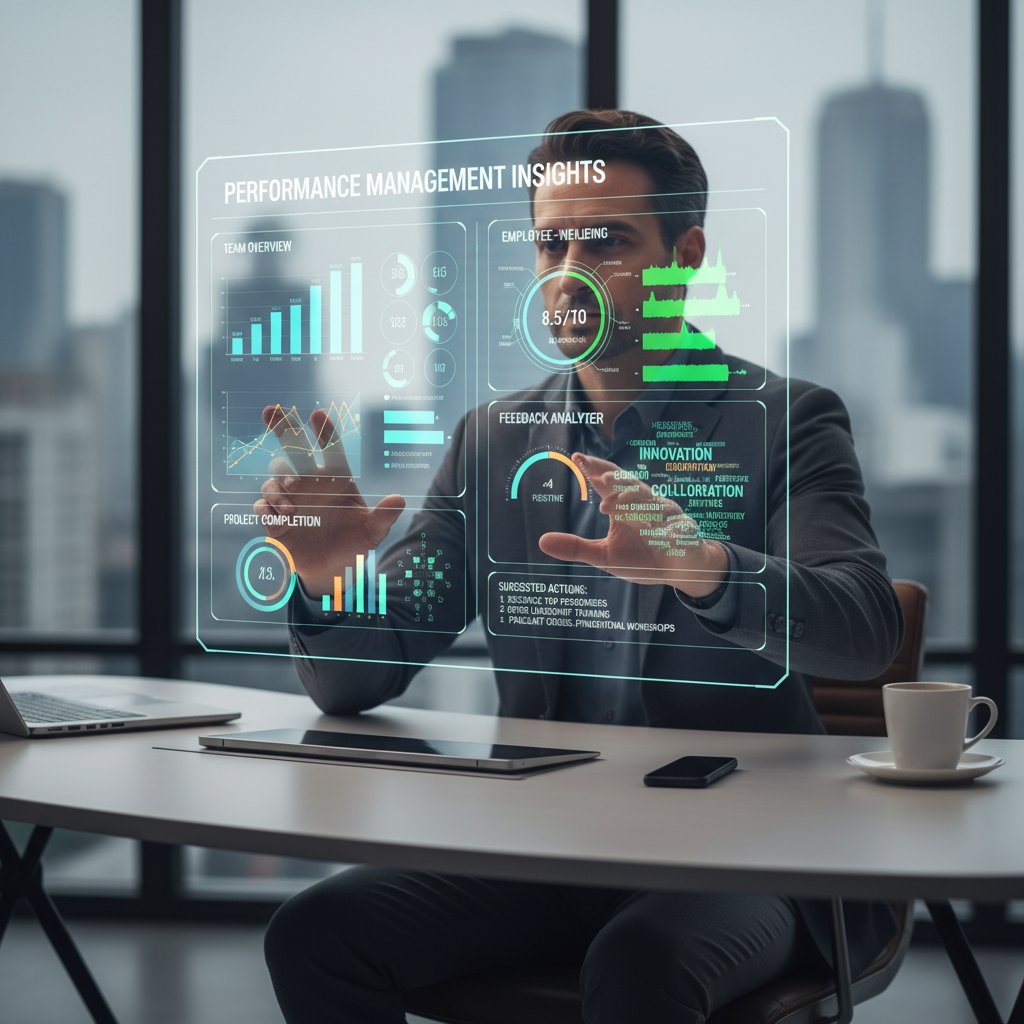
How do you actually master an AI-driven virtual assistant for performance management? Here’s the playbook.
- Audit your data: Start by mapping existing data streams—emails, project management, chat logs. Clean up any inaccuracies.
- Set clear objectives: Define what you want from the AI—faster reviews, improved fairness, or specific KPI tracking.
- Choose a trusted platform: Vet vendors for transparency and explainability, not just slick demos.
- Integrate with workflows: Connect the assistant to daily tools (email, Slack, task boards) for seamless updates.
- Train managers and employees: Ensure everyone understands the assistant’s role and how to interpret its feedback.
- Monitor and tweak: Regularly review outputs, checking for accuracy and relevance.
- Balance human touch: Pair AI insights with regular check-ins to maintain context and empathy.
The limitations no one wants to talk about
Peel back the buzz, and AI-driven virtual assistants reveal stark limits. Context blindness is the classic: the AI can’t always grasp why an employee missed a deadline (family emergency? tech outage?). Empathy is another no-show—AI can flag burnout signals, but it can’t ask “Are you okay?” with the warmth of a manager. Overreliance on data also means that subtle, non-digital contributions—mentoring, creative sparks, team morale—can vanish from the record.
Common user frustrations? Clunky integrations, AI “misreadings” of intent, and the uneasy feeling that Big Brother is always watching. The feedback loop can become so constant that employees tune out, or worse, game the system.
Red flags to watch out for:
- Data privacy gaps (unsecured data feeds, ambiguous consent)
- Algorithmic opacity (no explanation for feedback or rankings)
- Workflow disruption (AI-generated nudges that don’t align with business rhythms)
- Overfitting to metrics (rewarding the measurable, ignoring the meaningful)
- Erosion of trust (employees second-guessing machine-driven insights)
Inside the black box: How these AI assistants really work
The tech behind the curtain: Algorithms, data, and decision logic
Crack open the code, and you’ll find a relentless engine: machine learning models feed on employee data—emails, chat transcripts, project deliverables—to generate performance insights at scale. Each data point is weighed and contextualized, then run through decision logic that rates, ranks, and recommends. The training data? Often a blend of public datasets, historic company records, and anonymized behavioral analytics. The goal: spot patterns humans might miss, but also avoid amplifying past biases.

Definition List: Key technical terms
- Black box AI: Systems whose internal logic and data flows are opaque, making it hard to explain outcomes.
- Explainability: Techniques that open the AI’s decision process to scrutiny—critical for trust in HR settings.
- Algorithmic bias: Skewed outcomes that reflect prejudices in training data or model logic.
Transparency, explainability, and your right to know
Trust in AI performance management boils down to one thing: can you see inside the black box? “Explainable AI” is the industry’s answer, demanding that systems show their work before rendering judgment. In practice, this means clear audit trails, interpretable logic, and “why” behind every rating or recommendation. Best practices call for regular algorithm audits, employee opt-outs, and stakeholder feedback loops.
Priority checklist for evaluating transparency:
- Does the vendor provide documentation on how the AI makes decisions?
- Can employees access their own data and understand feedback rationales?
- Are there independent audits of fairness and accuracy?
- Is there a clear process for challenging or correcting AI outputs?
- Does the platform comply with relevant data protection regulations?
Algorithmic bias: Hidden dangers and how to fight back
AI doesn’t invent bias—it learns it, often too well. In one notorious example, a major company’s AI assistant downgraded women’s evaluations based on historic hiring and performance records, echoing old prejudices. According to a Medium.com analysis, 2024, bias creeps in through unbalanced training data or unchecked model assumptions.
Detection begins with regular, external audits: comparing outcomes across demographic lines, stress-testing the system for edge cases, and retraining models as needed. Mitigation is an ongoing battle: updating training data, introducing fairness constraints, and—above all—keeping a human in the loop.
"People forget that AI can amplify human flaws if left unchecked." — Priya, HR data scientist
Human vs. machine: Who really owns performance management now?
Are managers obsolete or just evolving?
As AI-driven oversight grows, human managers aren’t fading into irrelevance—they’re morphing. Their new role: sensemakers, coaches, and ethical gatekeepers. No algorithm (at least, not yet) can interpret office politics, mediate delicate conflicts, or spot the next big idea during a watercooler chat. The required skill sets have shifted: managers must become data translators, AI ethicists, and empathy advocates.
Timeline of AI-driven virtual assistant for performance management evolution:
- 2015: Rule-based chatbots handle FAQs, basic HR queries
- 2020: Machine learning models drive analytics and trend spotting
- 2023: NLP enables nuanced feedback generation from real-time data
- 2024: Emotional intelligence features analyze tone and stress
- Present: Human managers synthesize AI insights with lived experience
Employee reactions: Resistance, relief, and everything in between
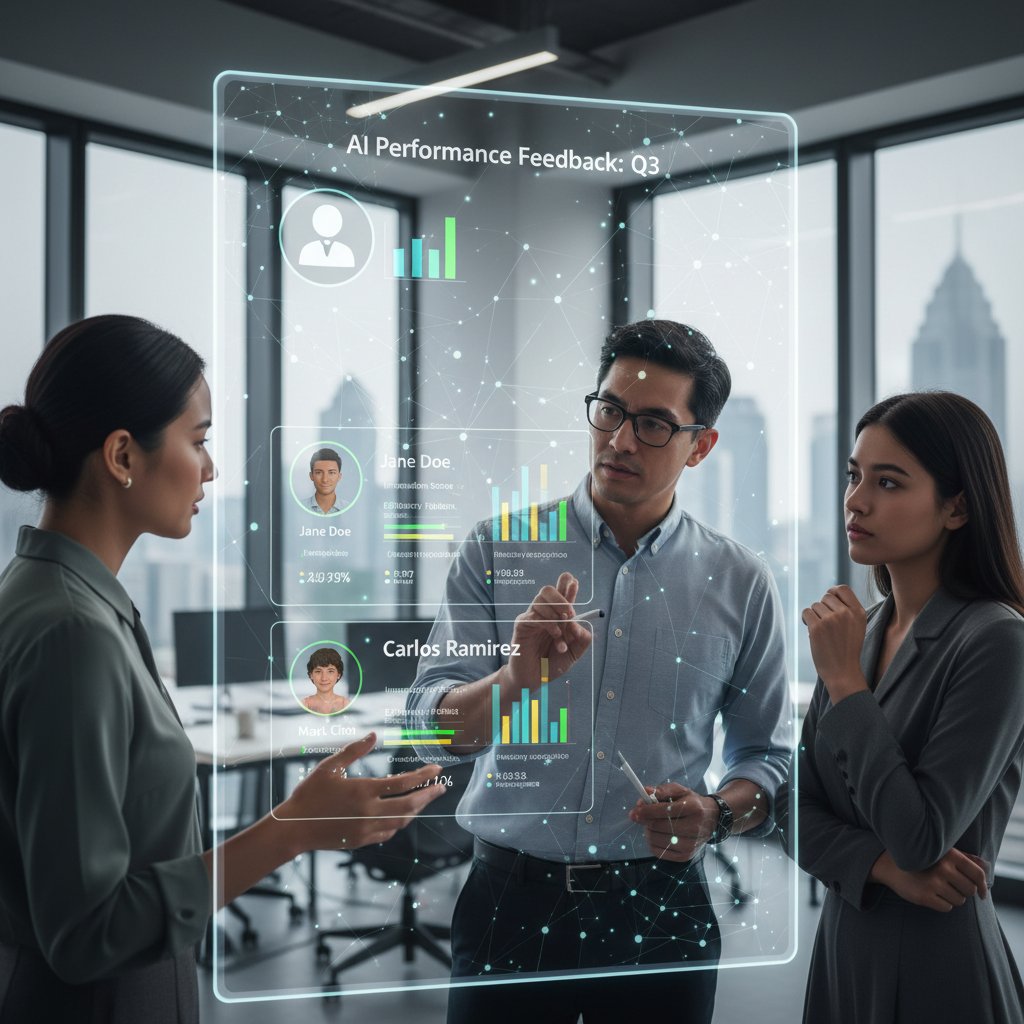
Employee responses to AI-managed reviews range from outright rebellion to cautious optimism. Some, burned out by subjective bosses, welcome the cold objectivity. Others see it as an Orwellian escalation—a digital overseer, not a mentor. According to recent interviews compiled by Evalflow, 2024, trust breaks down when feedback feels arbitrary or when employees can’t contest algorithmic decisions. On the flip side, transparency and clear avenues to challenge AI judgments help rebuild confidence.
teammember.ai as a new kind of resource
Amid this landscape, services like teammember.ai are redefining what it means to have a “team member.” Instead of a flesh-and-blood colleague, you get an always-on, hyper-specialized AI partner. These solutions aren’t just automating admin—they’re reshaping workflows, delivering insights that would take hours for a human, and scaling expertise across entire organizations. Industries from finance to healthcare, technology to retail, are leveraging these AI-powered assistants for everything from onboarding and compliance to development conversations. The result? A workplace that’s more data-driven—and arguably, more fair—than ever before.
Under the microscope: Real-world case studies and cautionary tales
Wins, fails, and lessons learned
Consider Bard, a multinational tech company, which slashed its performance review process by 25% after deploying an AI-driven assistant. According to AIHR Institute, 2023, employee engagement ticked upward, bias complaints dropped, and retention improved by 10%. The secret? Pairing machine-generated feedback with regular human check-ins.
Contrast that with a prominent retailer’s misfire: rapid rollout, no change management, and zero transparency. Employees rebelled, trust collapsed, and the company had to suspend the system within months. The lesson: automation without communication is a recipe for failure.
| Company | Industry | AI Tool Used | Outcome | Key Insight |
|---|---|---|---|---|
| Bard | Technology | Proprietary AI | +25% efficiency | Human + AI = peak performance |
| RetailCo | Retail | SaaS Assistant | Rollout failed | Ignored user concerns, lost trust |
| FinServ | Finance | In-house AI | Better engagement | Needed ongoing bias audits |
Table 3: Case study summary of AI-driven performance management deployment.
Source: Original analysis based on AIHR Institute, 2023, Evalflow, 2024
Cross-industry perspectives: From tech to manufacturing
Industries adapt to AI-driven performance management with varying degrees of success. Tech firms—with their deep digital footprint and data fluency—often lead the charge. Manufacturing faces hurdles: union contracts, process rigidity, and skepticism about “robots rating humans.” Creative industries worry that AI will flatten nuance, missing the intangible sparks that drive innovation. What works in a call center—measuring response times, customer sentiment—can fall flat in a design studio, where value defies easy metrics.

Contrarian voices: When AI makes things worse
Not every AI-driven rollout ends in celebration. In several high-profile failures, employees reported being blindsided by opaque algorithms or punished for behavior the system misinterpreted. As one incognito software engineer put it:
"Sometimes, the algorithm just gets it dead wrong—and trust is shattered." — Morgan, software engineer
Organizations that recover best are those that own their mistakes, communicate openly, and restore human oversight—fast.
Beyond the buzzwords: Measuring ROI, cost, and value
Crunching the numbers: How to calculate real ROI
Calculating ROI on AI-driven virtual assistants isn’t just subtracting software costs from payroll. The formula must include onboarding, integration time, employee training, and ongoing maintenance. Hidden costs—like data migration and system downtime—can quickly erode savings. On the plus side, benefits like reduced bias claims, improved retention, and faster reviews add up.
| Platform | Upfront Cost | Yearly Cost | Avg. Review Time Saved | Bias Reduction | Support |
|---|---|---|---|---|---|
| Platform A | $15,000 | $10,000 | 30% | High | 24/7 |
| Platform B | $10,000 | $7,500 | 18% | Medium | 8/5 |
| teammember.ai | $12,000 | $9,000 | 25% | High | 24/7 |
Table 4: Cost-benefit analysis of leading AI-driven virtual assistants.
Source: Original analysis based on current market offerings and Gartner, 2023
Feature matrix: What really matters in an AI assistant
Don’t fall for shiny features—scrutinize what matters: transparency, seamless integration, robust user support, and positive user satisfaction.
| Feature | Platform A | Platform B | teammember.ai |
|---|---|---|---|
| Transparency | Yes | No | Yes |
| Integration | Limited | Extensive | Seamless |
| 24/7 Support | Yes | No | Yes |
| Customization | High | Medium | High |
| User Satisfaction | 4.2/5 | 3.7/5 | 4.5/5 |
Table 5: Feature matrix comparing top AI-driven virtual assistants.
Source: Original analysis based on user reviews and vendor documentation
To make sense of these differences, focus on your organization’s unique needs. If integration with existing workflows is critical, prioritize platforms rated highly for seamless connections—like teammember.ai. If transparency and data privacy are non-negotiable, scrutinize each vendor’s explainability features.
Checklist: Are you ready for AI-driven performance management?
Before you unleash an AI-driven virtual assistant, take stock. Is your organization culturally ready for data-driven oversight? Are decision-makers bought in? Is your data clean and accessible? Without these building blocks, even the best AI will disappoint.
Self-assessment checklist:
- Leadership buy-in and sponsorship
- Clear, digital-friendly workflows
- Clean data sources with minimal gaps
- Transparent communication culture
- Continuous training and support channels
- Readiness to adapt and learn from feedback

Ethics, privacy, and the new frontier of workplace surveillance
Where does data end and privacy begin?
Performance management data now seeps into every corner—emails, chats, even keystroke patterns. Where does legitimate oversight stop and privacy invasion begin? Regulatory frameworks like GDPR and CCPA draw some boundaries, but enforcement lags behind innovation. The onus is on employers to set clear boundaries, notify employees, and anonymize data whenever possible.

Consent, transparency, and the right to challenge AI decisions
Best practice is simple: no performance data should be collected, analyzed, or actioned without informed consent. Employees must be notified, have access to their own data, and be able to challenge or appeal feedback. This isn’t just compliance—it’s culture.
Building a transparent, ethical AI performance management process:
- Communicate goals and data use policies openly
- Obtain opt-in consent before system rollout
- Provide clear documentation and access to personal data
- Establish simple appeal and correction channels
- Schedule regular audits with external oversight
The cultural impact: Trust, morale, and the future of work
AI-driven oversight upends traditional power dynamics: employees are monitored and measured by systems, not just supervisors. Done right, trust and transparency can actually increase. Done poorly, morale craters and resentment festers. The difference is leadership’s commitment to communication, ongoing training, and a willingness to adapt.
To build trust, leaders must combine algorithmic insights with human warmth, give employees a stake in the process, and treat AI as a tool—not an oracle.
Future visions: What’s next for AI-driven performance management?
Emerging trends and technologies
The next wave of AI-driven virtual assistants is already here: emotion AI, continuous learning systems, and integrations with wearables. These tools analyze not just what’s done, but how—flagging changes in mood, stress, or engagement. According to Medium.com, 2024, this shift promises deeper insights—but also stokes new privacy debates.

How to future-proof your strategy
Staying ahead means treating AI-driven performance management as a living system, not a one-off install. Flexibility and continuous learning are key.
Step-by-step guide to evolving your approach:
- Regularly audit AI outputs for bias and errors
- Stay educated on new technologies and regulatory shifts
- Iterate on workflows based on employee feedback
- Encourage a feedback culture—AI and human
- Maintain a human-in-the-loop philosophy
Flexibility is your best defense against obsolescence. Reinvent, retrain, review—again and again.
Will AI ever replace human judgment?
The verdict is nearly unanimous among experts: automation can streamline, analyze, and predict—but it can’t replace contextual, nuanced human judgment. Hybrid models are the name of the game, blending AI’s strengths with human wisdom for optimal results.
"AI is the tool—judgment is still all too human." — Jordan, organizational psychologist
Practical playbook: Making AI-driven performance management work for you
Common mistakes and how to avoid them
Even the sharpest AI fails if implementation is sloppy. Pitfalls include overreliance on automation, poor communication about system changes, data misalignment, and ignoring employee feedback. The fastest way to recovery? Admit the problem, fix the process, re-engage human judgment, and never skip the post-mortem.
Mistakes to avoid:
- Launching without clear communication or consent
- Ignoring workflow fit (forcing AI into broken processes)
- Treating AI outputs as gospel
- Skimping on training for managers and employees
- Failing to audit for bias or errors
Advanced tips for optimal results
For power users, fine-tune your AI-driven assistant by customizing feedback parameters, integrating with broader reporting tools, and benchmarking performance against industry standards.
Optimization steps:
- Customize feedback cadence to fit team rhythms
- Integrate performance data with broader analytics tools
- Use advanced filters to minimize noise
- Benchmark results against competitors and industry leaders
- Iterate configurations based on user feedback
Keeping your system agile, transparent, and user-focused is the surest route to lasting success.
Quick reference guide: Getting started checklist
Ready to dive in? Here are the essential steps to roll out your first AI-driven virtual assistant for performance management:
- Audit and clean your performance data sources
- Define clear objectives for AI implementation
- Vet and select a transparent, reputable vendor
- Secure leadership and employee buy-in
- Integrate with your existing workflows and tools
- Train managers and employees on both tech and process
- Monitor, iterate, and communicate regularly
Tracking metrics—like review cycle times, employee satisfaction, and bias incidents—from day one ensures you can measure progress honestly.
Appendix: Definitions, resources, and further reading
Jargon buster: Key terms you need to know
Large Language Model (LLM)
A type of AI trained on huge text datasets, enabling nuanced language understanding and generation. LLMs power the most flexible AI-driven virtual assistants.
Natural Language Processing (NLP)
Techniques allowing AI to read, interpret, and generate human language, making sense of chat logs and performance notes.
Machine Learning (ML)
Algorithms that “learn” from data, improving predictions and classifications as more information is processed.
Predictive Analytics
Statistical techniques to forecast future trends based on historical data—e.g., predicting which employees may be at risk of burnout.
Explainable AI
Approaches to make AI decision-making transparent, crucial for building trust and meeting regulatory demands.
Algorithmic Bias
Systemic errors in AI outcomes caused by skewed training data or flawed model logic.
Black Box AI
Opaque AI systems where the logic is hidden, making outcomes hard to interrogate or trust.
Human-in-the-Loop
A model where humans review or override AI outputs, ensuring error correction and ethical oversight.
Sentiment Analysis
AI-driven evaluation of positive, negative, or neutral emotions in text, used to gauge employee morale.
Continuous Feedback
Regular, real-time performance input versus traditional annual reviews, enabled by AI assistants.
Mastering this language isn’t just academic—knowing your NLPs from your LLMs gives you an edge in conversations with vendors, stakeholders, and, yes, the AI itself.
Recommended resources for going deeper
Craving more? Dive into authoritative studies from Gartner, AIHR Institute, and expert commentary at Forbes HR Council. For ongoing insights, teammember.ai offers a steady stream of updates and perspectives.
Further reading and podcasts:
- “The Evolution of Performance Management in the Workplace Using AI” (Evalflow Blog, 2024)
- “AI-powered Virtual Assistants in the Workplace” (Software Oasis, 2023)
- “Revolutionizing Performance Reviews with Generative AI” (Forbes HR Council, 2023)
- “AIHR Institute Research Blog” (AIHR Institute, 2023)
- “The AI Alignment Podcast” (Spotify, recurring)
- “Workplace Futures: HR Tech and Transformation” (Apple Podcasts)
In the age of AI-driven virtual assistants for performance management, the line between opportunity and overreach is razor-thin. The brutal truth: these tools are neither cure-alls nor nefarious overlords. Used right, they democratize feedback, minimize bias, and turbocharge productivity. Used carelessly, they alienate, surveil, and undermine trust. The future belongs to organizations bold enough to face the brutal truths, wield transparency as a weapon, and balance technology with genuine human leadership. If you’re ready to step into this new era, start by asking not just what the AI can do—but what kind of workplace you actually want to build.
Sources
References cited in this article
- Source(softwareoasis.com)
- Source(softwareoasis.com)
- Source(forbes.com)
- Source(aihr-institute.com)
- Source(evalflow.com)
- Source(medium.com)
- Source(nextmsc.com)
- Zartis: Use Cases of AI Virtual Assistants(zartis.com)
- Source(researchgate.net)
- Source(numberanalytics.com)
- SmartDev: AI-Powered Virtual Assistants(smartdev.com)
Focus on what matters. Let AI handle the rest.
We know the feeling — another day starts with 50 unread emails, Ads Manager begging for attention, CRM out of date, and meetings without follow-ups. That's why we built TeamMember.ai — an AI team member that takes over all the operational work at the computer. Has its own email address and SMS number. Manages your inbox, runs Meta Ads, updates CRM, processes meetings, monitors social media, generates morning briefings, and controls the browser. Built on OpenClaw — a leading open-source AI agent — with cross-session memory and secure-cloud architecture that keeps your data safe.
Get startedBe First to Try Your AI Team Member
Every week without automation is dozens of hours lost to operational work. Hours you'll never get back. Join the waitlist and get priority access.
Frequently Asked Questions
What is an AI-driven virtual assistant for performance management?
An AI-driven virtual assistant is a tool that provides real-time performance feedback by analyzing metrics such as collaborative spirit, email response times, and project contributions. Unlike traditional annual reviews, these assistants continuously monitor and provide objective feedback through automated data processing and analysis.
How is AI changing performance management from the traditional approach?
Traditional performance management relied on annual reviews with delayed feedback and subjective supervisor notes, while AI-driven assistants transform this into real-time, continuous feedback systems. According to research from AIHR Institute (2023), this shift addresses the dissatisfaction and business goal misalignment caused by outdated annual review processes.
What percentage of organizations have adopted AI-driven performance management tools?
By 2023, 70% of organizations worldwide had implemented AI-driven tools for performance management, marking a significant shift from the manual spreadsheets and subjective evaluation methods of the past.
From the Archive
Explore more from AI Team Member

What AI Assistants for Project Managers Actually Deliver
AI-powered virtual assistants for project managers promise productivity gains and reduced burnout. This article examines what these tools actually deliver and where they fall short.

AI-Driven Virtual Assistant for Time Management: the Hidden Costs
AI-driven virtual assistants for time management strategies promise efficiency but often create new problems.

AI-Powered Virtual Assistants in Hr: Benefits, Risks, and Real Outcomes
AI-powered virtual assistants for HR management transform administrative workflows while introducing new compliance and integration challenges.

How AI-Powered Virtual Assistants Change Productivity Tracking
AI-powered virtual assistants for productivity tracking reshape how teams work. This article examines their real benefits, privacy tradeoffs, and integration challenges.

How AI-Driven Virtual Assistants Tackle Workload Management
AI-driven virtual assistant for workload management separates hype from reality. This article examines how these tools address burnout, their actual limitations, and which strategies work in practice.

AI Virtual Assistants for Executive Productivity: Benefits and Costs
This article examines AI-driven virtual assistants for executive productivity: the measurable gains, documented risks, and real trade-offs that shape modern leadership outcomes.


