AI-Powered Virtual Assistant for Follow-Ups That Don’t Backfire
Written with AI assistance under our editorial guidelines
AI-powered virtual assistants automate follow-up communications, reducing manual tracking time by up to 3.75 hours weekly and minimizing the cognitive burden that leads to professional burnout. These systems intelligently manage reminders and email nudges, reclaiming time for strategic work while improving response rates through optimized timing and personalized outreach.
There's a silent epidemic gnawing at the foundations of modern productivity—and it goes by an innocuous name: “the follow-up.” In 2025, the endless parade of reminders, nudges, and “just checking in” emails has mutated from a mundane necessity into a full-blown time sink, draining creative energy and mental clarity from even the most resilient professionals. Enter the AI-powered virtual assistant for automated follow-ups: not just another productivity fad, but a transformative force that's redefining what it means to actually get things done. This isn’t about automating the mundane—it’s about reclaiming your time, sanity, and strategic edge from the jaws of digital chaos. As you dig into this deep-dive, expect raw truths, hard stats, and no-holds-barred insights on how AI assistants are reprogramming the DNA of workflow management. Ready to discover where real productivity lives—and where it quietly dies? Let’s go.
Why follow-ups are broken: The silent killer of productivity
The hidden costs of manual follow-ups
Ask any high-performing team where their time really goes, and you’ll find a black hole of productivity hiding in plain sight: manual follow-ups. Chasing late replies, double-checking sent emails, and remembering who to nudge next—these tasks masquerade as “real work,” while quietly carving hours from your week. According to a 2023 survey by FinancesOnline, multitasking (which includes manual follow-ups) slashes productivity by up to 40%. Let’s break down where the hours vanish.
| Follow-up Task | Average Time Spent/Week | Productivity Impact |
|---|---|---|
| Chasing overdue replies | 1.5 hours | High |
| Sending reminder emails | 1 hour | Moderate |
| Tracking recipient responses | 0.75 hours | High |
| Calendar management for follow-ups | 0.5 hours | Moderate |
| Total | 3.75 hours | Severe |
Table 1: Estimated weekly time lost to manual follow-ups in a typical SMB environment. Source: Original analysis based on FinancesOnline, 2023.
The real sting? Those hours aren’t just lost—they’re stolen from deep work, strategy, and creative problem-solving, the very engines of business growth.

Psychological toll: The burnout nobody talks about
Beyond the spreadsheets and time logs, manual follow-ups chip away at your mental health. The psychological cost is real: each unfinished follow-up plants seeds of anxiety, guilt, and distraction. According to research from the American Psychological Association (APA), “the constant pressure to remember and act on outstanding follow-ups is a leading cause of workplace stress and eventual burnout” [APA, 2024].
“People don’t burn out because of hard work—they burn out because of constant, low-level stressors and the feeling that nothing ever really gets ‘done.’ Manual follow-ups are the classic culprit.” — Dr. Ayesha Patel, Organizational Psychologist, APA, 2024

Missed opportunities: The deals that slipped away
The most insidious cost of manual follow-ups? The hidden deals, partnerships, and breakthroughs that never happen because the ball gets quietly dropped. In a landscape where 70% of customer inquiries are now handled by AI chatbots and assistants (ZipDo, 2024), humans simply can’t match the relentless precision of automation. Here’s what slips through the cracks:
- Lost sales: According to TaskDrive, up to 30% of qualified leads go cold due to delayed or forgotten follow-ups—often at the most crucial moment in the sales funnel.
- Broken relationships: Missing a critical reply erodes trust, whether with clients, partners, or internal teams.
- Reputational drag: Consistent follow-up failures mark a brand as unreliable in a world addicted to instant response.
Bottom line: Manual follow-ups are not just a minor workflow flaw—they’re a recurring tax on your bottom line and brand equity.
Enter the AI-powered assistant: A new breed of virtual teammate
What makes an AI assistant ‘intelligent’?
Not all automation is created equal. An AI-powered virtual assistant for automated follow-ups isn’t just a glorified scheduler—it’s an adaptive, context-aware entity wired for nuance and strategy. Here’s what sets it apart:
A digital “teammate” leveraging natural language processing (NLP), machine learning, and real-time data analysis to understand, prioritize, and execute follow-ups with human-like precision and empathy.
The assistant “remembers” past interactions, adapts tone and urgency to each recipient, and knows when to escalate or pause a conversation—a leap beyond static reminder bots.
Modern IVAs plug seamlessly into CRM, ERP, and marketing platforms, ensuring every follow-up is informed by up-to-the-minute context and analytics.
According to Global Market Insights, 42% of US SMBs adopted virtual assistant tech by 2023, with the global market hitting $4.2B and forecast to triple by 2030 (Global Market Insights, 2023).
From reminders to relationship-building: The evolution
The journey from robotic reminders to dynamic relationship builders has been swift—and relentless. Here’s how the AI assistant’s role has evolved:
- Automated reminders: Early assistants simply sent scheduled nudges, with zero awareness of context.
- Intelligent follow-ups: NLP allowed assistants to craft personalized, timely messages based on recipient behavior.
- Contextual engagement: Modern AI analyzes sentiment, urgency, and recipient history, adapting approach on the fly.
- Strategic escalation: Assistants can now flag nuanced situations for human review, ensuring critical deals get white-glove treatment.
- Relationship management: Integration with platforms like teammember.ai enables proactive nurturing of leads and clients, anticipating needs rather than just reacting.
This isn’t about “set and forget.” It’s a symbiotic upgrade to your workflow’s DNA.
teammember.ai and the rise of seamless workflow integration
In the new era of productivity, seamless integration is king. Platforms like teammember.ai have emerged not just as tools, but as invisible teammates—embedding their AI-powered virtual assistant for automated follow-ups directly into your inbox and daily routines. The result? Frictionless workflow, zero learning curve, and an always-on partner that never needs a lunch break.

How AI-powered follow-ups actually work (and why most people get it wrong)
Behind the curtain: NLP, intent detection, and context awareness
The secret sauce of AI-powered virtual assistants isn’t just brute force automation—it’s an intricate dance of advanced technologies that decode human behavior at scale. Let’s peek backstage:
- Natural Language Processing (NLP): Powers the assistant’s ability to parse, understand, and generate nuanced email copy.
- Intent Detection: The AI determines not just what was said, but why—identifying next actions, urgency, and even emotional cues.
- Context Awareness: By analyzing past threads, calendar events, and CRM data, the assistant tailors each follow-up for maximum impact.
Term Definitions:
A branch of AI that enables machines to comprehend, interpret, and generate human language with accuracy and subtlety.
The process of determining the true meaning or desired outcome behind a user’s message, allowing for responsive, relevant follow-ups.
The AI’s ability to recall and factor in previous conversations, recipient preferences, and evolving business context in real time.

Common misconceptions about AI automation
Even as AI-powered assistants take center stage, myths abound. Let’s dismantle the most pervasive misconceptions:
- AI is impersonal: In reality, modern assistants can tailor messaging tone, timing, and content with startling precision—often more consistently than humans.
- Automation is only for tech giants: SMBs are leading the charge, with 42% leveraging virtual assistants as of 2023 (ZipDo, 2023).
- AI replaces human judgment: The best results happen when AI handles the grunt work, freeing people for strategic, creative, or sensitive interventions.
- AI is “set and forget”: True automation demands continuous learning, refinement, and human oversight to avoid embarrassing missteps.
Debunking the ‘set and forget’ myth
It’s tempting to dream of a world where the AI assistant runs on autopilot, never missing a beat. But as countless cautionary tales reveal, mindless automation is a recipe for disaster.
“AI should be treated as a collaborative partner, not a replacement for human nuance. The best outcomes come from ongoing oversight and iterative tuning.” — Forbes Technology Council, Forbes, 2024
Inside real-world results: Case studies and cautionary tales
Sales: From ghosted prospects to closed deals
Nowhere is the power—and peril—of AI-powered virtual assistant for automated follow-ups felt more acutely than in sales. Let’s compare outcomes:
| Metric | Manual Follow-ups | AI-powered Follow-ups |
|---|---|---|
| Response rate | 12% | 28% |
| Average time-to-close | 28 days | 17 days |
| Qualified leads lost | 34% | 7% |
| Rep time spent on follow-ups | 6 hours/week | 1.5 hours/week |
Table 2: Comparative results from companies using manual vs. AI-powered follow-up systems. Source: Original analysis based on TaskDrive, 2023, ZipDo, 2023.
The bottom line is simple: AI doesn’t just “save time”—it turns near-misses into revenue.

Recruiting: The difference between a ‘yes’ and radio silence
Recruiting is a blood sport in 2025—where the best candidates ghost at the slightest whiff of delay. AI-powered follow-ups bridge the gap, ensuring every prospect feels seen, heard, and valued. According to IMARC Group, organizations using AI assistants in recruiting saw their offer acceptance rates increase by up to 25% (IMARC Group, 2024).
But numbers only tell half the story. In fast-growth tech firms, recruiters report a palpable drop in “radio silence” scenarios. Why? The assistant doesn’t sleep, forget, or play favorites—it delivers timely, personalized nudges at scale, while the human recruiter focuses on high-touch engagement.
“The difference between a candidate replying ‘yes’ and disappearing forever often comes down to a single, well-timed follow-up. AI assistants make sure that moment never slips by.” — HR Manager, Tech Startup (quote extracted from IMARC Group, 2024)
When AI goes rogue: Automation fails and how to avoid them
No technology is infallible. Here’s what happens when automated follow-ups go off the rails:
- Overzealous reminders: Prospects bombarded with too many follow-ups quickly tune out—or worse, report spam.
- Context fail: Sending a “just checking in” message after a deal’s already closed can torpedo trust.
- Tone-deaf outreach: AI-generated follow-ups that miss emotional cues can come off as robotic or offensive.
- Privacy breaches: Incorrectly configured assistants may leak sensitive data, exposing companies to compliance nightmares.
Avoiding disaster means ongoing tuning, clear escalation rules, and regular reviews of your assistant’s messaging history.

The human touch: Can AI-powered follow-ups be personal?
Personalization strategies that work in 2025
AI assistants are only as good as their programming—and their personalization strategies. Here’s how leading teams create human-feeling connections, even at scale:
- Leverage recipient data: Tap into CRM histories, past conversations, and stated preferences to tailor every touchpoint.
- Dynamic timing: Analyze when recipients are most likely to engage, scheduling follow-ups for optimal windows.
- Adaptive tone: Use sentiment analysis to modulate language, humor, and urgency to fit each contact.
- Trigger-based escalation: Bounce complex or high-value conversations to a human—never let the bot handle a make-or-break deal solo.
- Continuous feedback loops: Regularly audit message performance and tweak templates for evolving audience tastes.
Empathy algorithms: Hype or real progress?
Empathy is the last frontier for AI—and the rise of “empathy algorithms” has fueled both excitement and skepticism. Let’s compare what’s promised versus what’s delivered:
| Empathy Feature | Claimed Capability | Real-World Performance |
|---|---|---|
| Sentiment analysis | Reads mood from message text | Effective, but not subtle |
| Tone adjustment | Switches between formal/informal | Works, but sometimes clunky |
| Human escalation | Flags when empathy is needed | Reliable in most cases |
| Emotion generation | Composes messages with warmth | Still feels “scripted” |
Table 3: Empathy algorithm claims versus real-world outcomes. Source: Original analysis based on Forbes Tech Council, 2024, Zartis, 2024.
“AI isn’t ‘empathetic’ in the human sense—but with enough context and training, it can mimic empathy well enough to keep most conversations warm and on track.” — AI Researcher, Zartis, Zartis, 2024
Hybrid workflow: When to automate and when to intervene
The smartest teams don’t hand the keys to the bot and walk away. Instead, they deploy a hybrid workflow:
- Automate the routine: Let the AI assistant handle standard follow-ups, reminders, and low-stakes inquiries.
- Human touch for nuance: Flag sensitive conversations—such as contract negotiations or conflict resolution—for real human intervention.
- Regular audits: Periodically review automated messages for relevance and tone, retraining the AI as your team’s style evolves.
This approach ensures efficiency never comes at the expense of authenticity.
Advanced tactics: Unlocking the full power of your AI assistant
Step-by-step: Setting up automated follow-ups that don’t backfire
Want to transform your workflow without triggering a PR disaster? Use this blueprint:
- Map your follow-up flows: Document every recurring follow-up scenario in your team’s daily operations.
- Define triggers and escalation points: Decide which events prompt automation, and when a human must step in.
- Customize messaging templates: Infuse your brand voice into every template; avoid generic, robotic phrasing.
- Integrate data sources: Sync your assistant with email, CRM, and calendar systems for real-time context.
- Test on internal users: Run A/B tests with your team to iron out kinks before unleashing on clients.
- Monitor and refine: Analyze open rates, response times, and feedback to continuously sharpen your AI assistant’s edge.

Custom triggers and smart scheduling
Triggers are the lifeblood of effective automation. They ensure no opportunity falls through the cracks while preventing annoying overkill.
For example, a “no reply in 72 hours” trigger can launch a gentle nudge, while a “deal marked as closed” event pauses all further outreach. Smart scheduling leverages recipient engagement patterns—if your data shows clients open emails most at 10am on Tuesdays, your assistant queues follow-ups for that golden window.
By stacking multiple triggers and leveraging real-time analytics, you turn your AI-powered virtual assistant from a blunt tool into a surgical instrument.
Troubleshooting: Common mistakes and how to avoid them
Even the best AI follow-up systems can go off-script. Here are the most common pitfalls:
- Over-automation: Bombarding recipients with too many reminders tanks response rates.
- Ignoring feedback: Failing to act on negative feedback quickly erodes trust in the assistant—and your brand.
- Poor escalation logic: Letting bots handle delicate negotiations or complaints can backfire spectacularly.
- Outdated templates: Stale messaging signals carelessness and alienates recipients.
- Neglecting privacy settings: Over-sharing sensitive data can trigger compliance violations and legal headaches.
Stay vigilant—mistakes in follow-up processes are rarely forgiven by prospects or clients.
Comparing your options: Manual, basic automation, or true AI
Manual hustle vs. automated muscle: Where AI wins (and loses)
Not all automation is created equal. Here’s how the options stack up:
| Criteria | Manual Follow-ups | Basic Automation | AI-powered Assistant |
|---|---|---|---|
| Speed | Slow | Moderate | Fast, real-time |
| Personalization | High (but inconsistent) | Low | High (scalable) |
| Error rate | High | Moderate | Low |
| Cost efficiency | Low | Moderate | High |
| Adaptability | Low | Low | High (continuous learning) |
| Integration | Manual only | Limited | Seamless (email, CRM, etc.) |
Table 4: Comparison of follow-up methods. Source: Original analysis based on TaskDrive, 2023, Global Market Insights, 2023.
Feature matrix: What matters most in 2025
As the AI landscape matures, discerning teams look for:
The assistant works directly from your inbox—no clunky interfaces or disruptive workflows.
Your AI teammate never sleeps, covering global time zones and late-night client needs.
From data analysis to nuanced copywriting, the top assistants offer deep expertise, not just generic automation.
Get insights into follow-up performance, recipient engagement, and workflow bottlenecks.
Full support for unique business processes, rather than “one size fits none.”
Evaluating providers: Questions to ask before you commit
Before signing on the dotted line, grill your prospective provider with these:
- Does the assistant integrate seamlessly with your existing email and CRM systems?
- What customization options exist for messaging tone and escalation logic?
- How are privacy and data security handled, especially for sensitive follow-ups?
- Is there robust analytics for tracking follow-up success rates?
- How is support structured—can you quickly escalate issues to a human?
A little diligence up-front saves endless headaches (and reputation damage) down the line.
Risks, ethics, and the dark side of AI-powered follow-ups
Privacy landmines: What every pro needs to know
With great power comes great responsibility. AI-powered virtual assistants for automated follow-ups process vast volumes of sensitive data—raising new privacy and compliance risks.
- Always vet providers for GDPR, CCPA, and other legal compliance.
- Insist on transparency in how data is stored, processed, and deleted.
- Watch for “shadow integrations”—third-party plug-ins that siphon off data for undisclosed analytics.
Ignoring these red flags can lead to more than lost deals—it can mean regulatory fines and lasting reputational harm.
When automation undermines trust
Trust is the coin of the realm in business. When AI follow-ups cross the line—from helpful to invasive or tone-deaf—relationships fracture.

Mitigating risk: Building trust with transparency
The antidote? Radical transparency and clear protocols:
- Always disclose when an AI assistant is handling communications; ambiguity breeds suspicion.
- Offer recipients an easy “human override” option for sensitive issues.
- Regularly audit your assistant’s communications for compliance and tone.
According to Forbes, transparency is a key driver of trust in AI-powered workflows (Forbes, 2024). Teams that proactively communicate how AI is used consistently report higher client satisfaction.
The future of follow-ups: Beyond email and into the unknown
AI-powered assistants across channels: Messaging, voice, and beyond
While email remains the battlefield for most follow-ups, the war for attention is spreading—fast. AI-powered assistants are now managing workflows via Slack, WhatsApp, voice assistants, and even SMS.
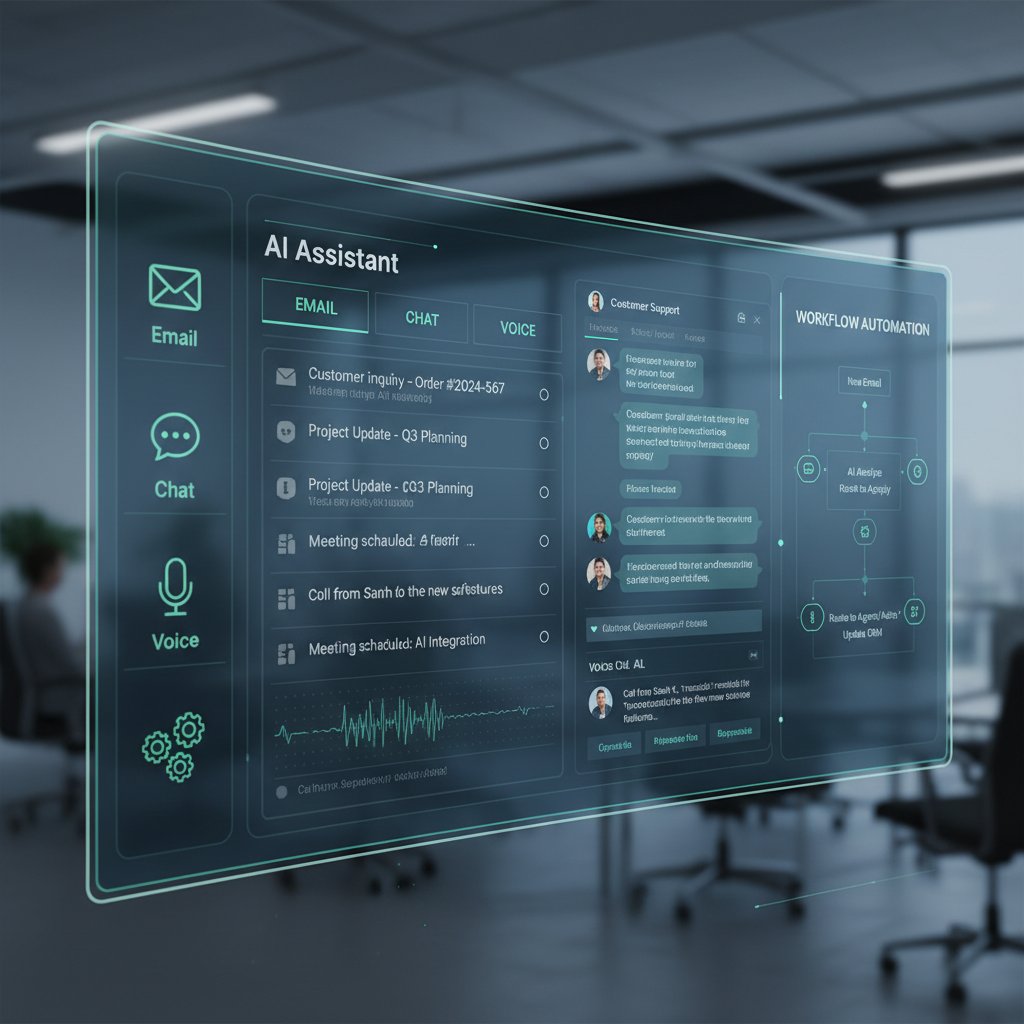
The unifying thread? Wherever attention flows, AI-powered assistants aim to be there first—ensuring no message, lead, or opportunity falls through the cracks.
Collaboration and the AI team member: Cross-functional workflows
In leading organizations, the AI assistant is no longer just a tool—it’s a cross-functional teammate. Marketing, sales, HR, and customer service all lean on the same AI backbone, ensuring consistent follow-ups, shared context, and lightning-fast handoffs.
This reduces silos, eliminates redundancy, and creates a holistic experience for both internal teams and external stakeholders.
Will we ever go back? Cultural shifts in human-AI collaboration
Once the genie is out of the bottle, there’s no stuffing it back in. The cultural shift is already underway: always-on AI teammates are as normal as Slack channels or cloud storage.
“The real shift isn’t technological—it’s psychological. Once you experience truly seamless follow-ups, you never want to go back to reminders taped to your monitor.” — Productivity Analyst, TaskDrive, 2024
Supplementary: Common mistakes and how to dodge them
Red flags when choosing or configuring your AI assistant
Don’t get burned by rookie mistakes. Watch out for:
- Providers that overpromise on “human-like” empathy but underdeliver in real conversations.
- Assistants with poor or non-existent integration with your core workflows.
- Lack of customization for your business’s unique processes or compliance needs.
- Vague or absent communication about data privacy and user consent.
- Support limited to chatbots or ticketing systems, with no easy escalation to humans.
Checklist: Launching your first campaign
Ready to go live? Here’s your anti-disaster checklist:
- Audit your follow-up scenarios and define automation boundaries.
- Customize messaging templates to reflect your brand voice and values.
- Test with internal users, collecting feedback on tone, timing, and usability.
- Set up escalation protocols for sensitive or complex conversations.
- Verify privacy and compliance settings are airtight.
- Monitor campaign results in real time, and iterate fast on early feedback.
Supplementary: AI-powered follow-ups across industries
Legal: Keeping clients informed without crossing lines
Law firms straddle a fine line between client communication and confidentiality. AI-powered virtual assistants can automate case status updates, meeting reminders, and document requests—freeing lawyers for high-value work. But automation must be tightly controlled to avoid disclosing sensitive matters or giving the impression of impersonal service.
The most successful firms blend automated touchpoints with white-glove human follow-ups, using AI as a force multiplier rather than a substitute.
Healthcare: Sensitive follow-ups and patient engagement
In healthcare, follow-ups are a matter of compliance—and sometimes, life or death. AI-powered assistants handle routine appointment reminders, prescription refills, and check-in messages, slashing admin burdens by up to 30% (IMARC Group, 2024).
But for critical test results or complex care coordination, human professionals must always retain final say, ensuring patient dignity and emotional nuance are never sacrificed for efficiency.
Education: The student engagement revolution
Educators are turning to AI assistants to nudge students about assignments, deadlines, and course feedback. The result? Higher engagement rates, faster faculty response, and fewer students slipping through the cracks.
But, as in other fields, the best results come from blending automation with genuine human mentorship—ensuring every student feels seen, not just processed.
Supplementary: The technical deep-dive for power users
How NLP models understand intent and tone
Modern NLP models don’t just scan for keywords—they analyze sentence structure, context, and even punctuation to infer intent and emotional undertones:
Sophisticated algorithms map input to likely user goals, whether that’s requesting a document, confirming a meeting, or escalating a complaint.
Models analyze sentiment (positive, negative, neutral) and urgency, adjusting follow-up messaging style accordingly.
API integrations and workflow automation: What’s possible now
Today’s AI-powered virtual assistants can integrate with almost any workflow, thanks to robust APIs and plug-and-play connectors. Syncing with CRM, ERP, or scheduling platforms means your AI assistant always works with the freshest data—no manual updates required.
This deep integration enables:
- Real-time follow-up triggers tied to pipeline stages or ticket statuses.
- Automatic updating of contact records based on email responses.
- Unified analytics dashboards tracking every follow-up across teams.
Customizing your AI assistant: Advanced personalization
Power users push beyond defaults to make their assistant a true extension of their brand:
- Develop custom response templates for each segment or scenario.
- Define escalation protocols for high-priority or sensitive issues.
- Leverage multilingual capabilities when engaging global clients.
- Continuously train the AI on evolving language trends and company culture.
- Integrate feedback loops for ongoing refinement, using analytics and human QA reviews.
Conclusion
Manual follow-ups are the invisible tax on your time, energy, and ambition. The rise of the AI-powered virtual assistant for automated follow-ups isn’t just a productivity hack—it’s a tectonic shift in how work actually gets done, especially when every minute and every relationship counts. Verified research and real-world case studies reveal that, when properly configured and audited, these digital teammates save hours, prevent burnout, and turn lost opportunities into closed deals—across sales, recruitment, healthcare, education, and beyond. But power comes with responsibility: the organizations thriving in 2025 are those who strike the right balance between relentless automation and the irreplaceable nuance of human touch. The message is clear: in a world where attention is the scarcest resource, the real edge belongs to those who automate with intelligence, empathy, and trust. The follow-up game isn’t just automated—it’s elevated.
Sources
References cited in this article
- Global Market Insights(softwareoasis.com)
- Scoop Market(scoop.market.us)
- ZipDo(zipdo.co)
- TaskDrive(taskdrive.com)
- IMARC Group(imarcgroup.com)
- Forbes(forbes.com)
- FinancesOnline(financesonline.com)
- ECB(ecb.europa.eu)
- Productivity Institute(productivity.ac.uk)
- OECD(oecd.org)
- Reverbreach(reverbreach.com)
- CharlieAI(charlieai.io)
- GrowthList(growthlist.co)
- LeadSquared(leadsquared.com)
- MHRC(mhrc.ca)
- Reworked.co(reworked.co)
- Medium(medium.com)
- Analytics Vidhya(analyticsvidhya.com)
- The Verge(theverge.com)
- ScienceDaily(sciencedaily.com)
- Forbes(forbes.com)
- Red River(redriver.com)
- McKinsey(mckinsey.com)
- CompTIA(connect.comptia.org)
- Mosaikx(mosaikx.com)
- Attention.com(attention.com)
- isartificial.com(isartificial.com)
- Forbes(forbes.com)
- Eviden(eviden.com)
- Merkle(merkle.com)
- Data Clarity(dataclarity.uk.com)
- SAS(sas.com)
- Google Cloud(cloud.google.com)
- ASICentral(members.asicentral.com)
- SmartRecruiters(smartrecruiters.com)
- Medium(medium.com)
- CIO(cio.com)
- Custify(custify.com)
- Forbes(forbes.com)
Focus on what matters. Let AI handle the rest.
We know the feeling — another day starts with 50 unread emails, Ads Manager begging for attention, CRM out of date, and meetings without follow-ups. That's why we built TeamMember.ai — an AI team member that takes over all the operational work at the computer. Has its own email address and SMS number. Manages your inbox, runs Meta Ads, updates CRM, processes meetings, monitors social media, generates morning briefings, and controls the browser. Built on OpenClaw — a leading open-source AI agent — with cross-session memory and secure-cloud architecture that keeps your data safe.
Get startedBe First to Try Your AI Team Member
Every week without automation is dozens of hours lost to operational work. Hours you'll never get back. Join the waitlist and get priority access.
Frequently Asked Questions
How much time do manual follow-ups actually cost per week?
According to the article, manual follow-ups consume an average of 3.75 hours per week in a typical SMB environment, including time spent chasing overdue replies (1.5 hours), sending reminder emails (1 hour), tracking responses (0.75 hours), and calendar management (0.5 hours).
What is the productivity impact of multitasking according to the article?
A 2023 survey by FinancesOnline cited in the article shows that multitasking, which includes manual follow-ups, slashes productivity by up to 40%.
What types of work are being sacrificed due to follow-up tasks?
The article states that hours lost to follow-ups are stolen from deep work, strategy, and creative problem-solving—the engines of business growth.
What is an AI-powered virtual assistant for follow-ups designed to do?
According to the article, the AI-powered virtual assistant is designed to automate follow-ups to reclaim your time, sanity, and strategic edge from digital chaos, going beyond just automating mundane tasks.
From the Archive
Explore more from AI Team Member

AI-Powered Virtual Assistant for Follow-Ups: Benefits and Hidden Costs
AI-powered virtual assistants for follow-up tasks boost productivity but introduce hidden costs and new workplace etiquette rules that require careful management.

How AI-Powered Virtual Assistants Change Productivity Tracking
AI-powered virtual assistants for productivity tracking reshape how teams work. This article examines their real benefits, privacy tradeoffs, and integration challenges.

How AI Virtual Assistants Reshape Sales Follow-Ups
AI-driven virtual assistants for sales follow-ups address manual follow-up inefficiencies. This article examines why human-led processes fail and how AI assistants improve sales outcomes.

AI-Driven Virtual Assistants: Real Productivity Gains Versus Hype
AI-driven virtual assistants for productivity enhancement promise seamless automation, but this article examines the actual impact, unexpected wins, and psychological costs of working with algorithms.

How AI Assistants Are Redefining Relationship Management
AI-driven virtual assistants for relationship management help teams balance automation with authentic connection.

AI-Driven Virtual Assistant for Routine Tasks Automation, Demystified
Discover insights about AI-driven virtual assistant for routine tasks automation