


AI-Powered Virtual Assistant for E-Commerce: Roi, Risks, Reality
Written with AI assistance under our editorial guidelines
AI-powered virtual assistants can automate customer support and boost conversions in e-commerce, but success requires careful management of integration complexity, privacy compliance, staff training, and realistic ROI expectations. The real payoff depends less on technology hype and more on aligning AI implementation with core business metrics and customer experience goals.
The e-commerce world in 2025 isn’t just fast—it’s merciless. Stores are fighting for every click, every conversion, and every shred of attention in a marketplace that never sleeps. Into this chaos walks the AI-powered virtual assistant for e-commerce, promising to automate the grind and unlock sky-high conversion rates. But behind the marketing gloss, what’s the raw truth? This isn’t just another “how AI helps your store” puff piece. Here you’ll get the real story: the brutal risks, the wild wins, and the untold friction that AI brings to e-commerce teams. If you’re serious about scaling your business, or just tired of half-baked “innovation,” buckle up. This is your essential, unfiltered playbook for AI assistants in e-commerce—where myth meets reality, and every decision carries a price.
The e-commerce chaos nobody talks about
What keeps e-commerce leaders awake at night
Running an online store in 2025 is a lot like walking a tightrope during an earthquake. According to recent data from ZipDo, 2024, 42% of U.S. small and midsize businesses (SMBs) have adopted virtual assistants, yet the pace of digital change only raises the stakes. Leaders are hounded by these relentless questions:
- Are my support costs spiraling out of control as customers demand 24/7 responses? Staff burnout and high churn rates are endemic. Top e-commerce pros are desperately seeking solutions that won't compromise their brand voice or speed.
- Can I actually personalize at scale—or am I just peddling generic “experiences”? Despite the AI hype, “personalization” is often code for “shoving more data at customers and hoping something sticks.”
- Is my tech stack secretly sabotaging my growth? Too many cobbled-together integrations mean systems that crash under load, especially during flash sales or the holiday rush.
- How do I navigate privacy landmines and compliance nightmares? With new cookie crackdowns and evolving privacy laws, the cost of a misstep can be catastrophic.
- Are my AI investments actually driving sales, or just making noise? The rush for automation can distract from core metrics like lifetime value and real customer loyalty.

Staying ahead means leaders are in a perpetual state of anxiety—balancing aggressive growth targets, shifting consumer expectations, and the constant drumbeat of innovation coming from competitors like Alibaba, JD.com, and Oracle.
The invisible labor behind every online store
Every “frictionless” checkout hides an army of manual tasks: routing tickets, updating product listings, tracking inventory, and processing returns. E-commerce looks effortless to the consumer, but the sweat is real. Consider these layers of invisible work:
| Task | Manual Labor Required | Potential for AI Automation |
|---|---|---|
| Customer inquiries | High | High |
| Order processing | Medium | High |
| Inventory management | Medium | Medium |
| Content updates | High | High |
| Data analysis | Medium | High |
| Compliance checks | High | Medium |
Table 1: The hidden complexity of everyday e-commerce operations
Source: Original analysis based on ZipDo, 2024, Credence Research, 2024
These tasks aren’t just tedious—they’re also high-stakes. One missed customer request can cost you a loyal shopper. A single inventory error can tank your margins. No wonder leaders are reaching for AI-powered virtual assistants as a lifeline.
Why old solutions are breaking down
Traditional helpdesk software and legacy workflow automation tools are buckling under the pressure of modern e-commerce. As Software Oasis, 2024 notes, “AI chatbots can’t always handle nuanced queries, and integration with existing systems is a constant headache.” Meanwhile, customers expect instantaneous, hyper-personalized answers—not boilerplate responses.
"Automation is only as effective as the context it understands. Human-AI balance isn’t optional; it’s survival." — Excerpt from MyOutDesk, 2024
The short version: duct-taping together old-school tools is like bailing water out of a sinking ship with a coffee mug. The stakes—and the complexity—are simply too high.
Debunking the biggest myths about AI assistants
No, they’re not just glorified chatbots
Ask ten e-commerce pros about AI assistants and at least half will roll their eyes: “Just souped-up chatbots, right?” Wrong. Today’s AI-powered virtual assistant for e-commerce automates more than canned replies. According to Credence Research, 2024, best-in-class systems ingest massive datasets, analyze real-time buying signals, and even proactively recommend restocks or promotions.

These assistants sync with inventory, marketing, and logistics platforms, transforming from basic Q&A bots into true workflow engines. If you’re only using your AI assistant for customer chat, you’re leaving money on the table.
The myth of instant setup and zero maintenance
There’s a dangerous assumption floating around that you can “just plug in” an AI assistant and watch the magic happen. The reality is messier:
- Initial setup demands serious data mapping. Connecting disparate apps, cleaning dirty databases, and defining routing rules takes time and expertise.
- Ongoing training is mandatory. Assistants must be regularly updated with product changes, promo details, and new FAQ content.
- Monitoring and intervention are non-negotiable. AI makes mistakes—sometimes spectacular ones—so human oversight is essential.
- Integration costs add up. Connecting to niche platforms or custom APIs often requires development resources.
- Compliance needs constant vigilance. New privacy laws can force costly updates overnight.
Rushing through setup or ignoring maintenance doesn’t just hurt performance—it can directly cost you sales and reputation.
Personalization at scale: promise vs. reality
Personalization sounds great on a pitch deck. But is it really “plug and play”? Here’s the unvarnished side-by-side:
| Personalization Feature | The Promise (Marketing) | The Reality (2025) |
|---|---|---|
| Dynamic product recs | “Tailored for each user” | Often based on limited signals |
| Contextual support | “Understands intent” | Struggles with ambiguous queries |
| Cross-channel sync | “Consistent everywhere” | Fragments across platforms |
| 1:1 engagement | “Feels human” | Sometimes uncanny or generic |
Table 2: Personalization at scale—myth versus marketplace reality
Source: Original analysis based on Statista, 2024, ZipDo, 2024
According to Statista, 2024, only 21% of U.S. shoppers actually use AI assistants for online shopping. Trust and privacy concerns are real, and “personalization” often comes off as creepy or generic.
Common fears (and what’s actually true)
- “AI will replace my team.” In reality, automation frees humans for higher-level work—strategy, innovation, and complex support—but can threaten roles focused solely on repetitive tasks.
- “We’ll lose our brand voice.” AI must be carefully trained and monitored. Otherwise, robotic interactions can erode brand equity.
- “Privacy is dead.” Data privacy laws are tightening, forcing AI vendors to get serious about consent and compliance.
- “AI will solve everything.” Even the best systems choke on edge cases, requiring a reliable human escalation path.
- “It’s too expensive for SMBs.” Costs are falling, but integration and customization remain major hurdles for smaller players.
What an AI-powered virtual assistant really does now
Beyond support: automation nobody sees
While AI’s public face is often the smiling chatbot, the real engine is behind the curtain. Virtual assistants now automate:
- Real-time inventory checks and low-stock alerts, reducing costly stockouts.
- Automated returns processing, slashing refund times from days to minutes.
- Predictive analytics for upselling and cross-selling, dynamically adapting offers based on live shopper behavior.
- Proactive outreach—like “cart abandonment” nudges or personalized discount codes—sent automatically at the optimal moment.
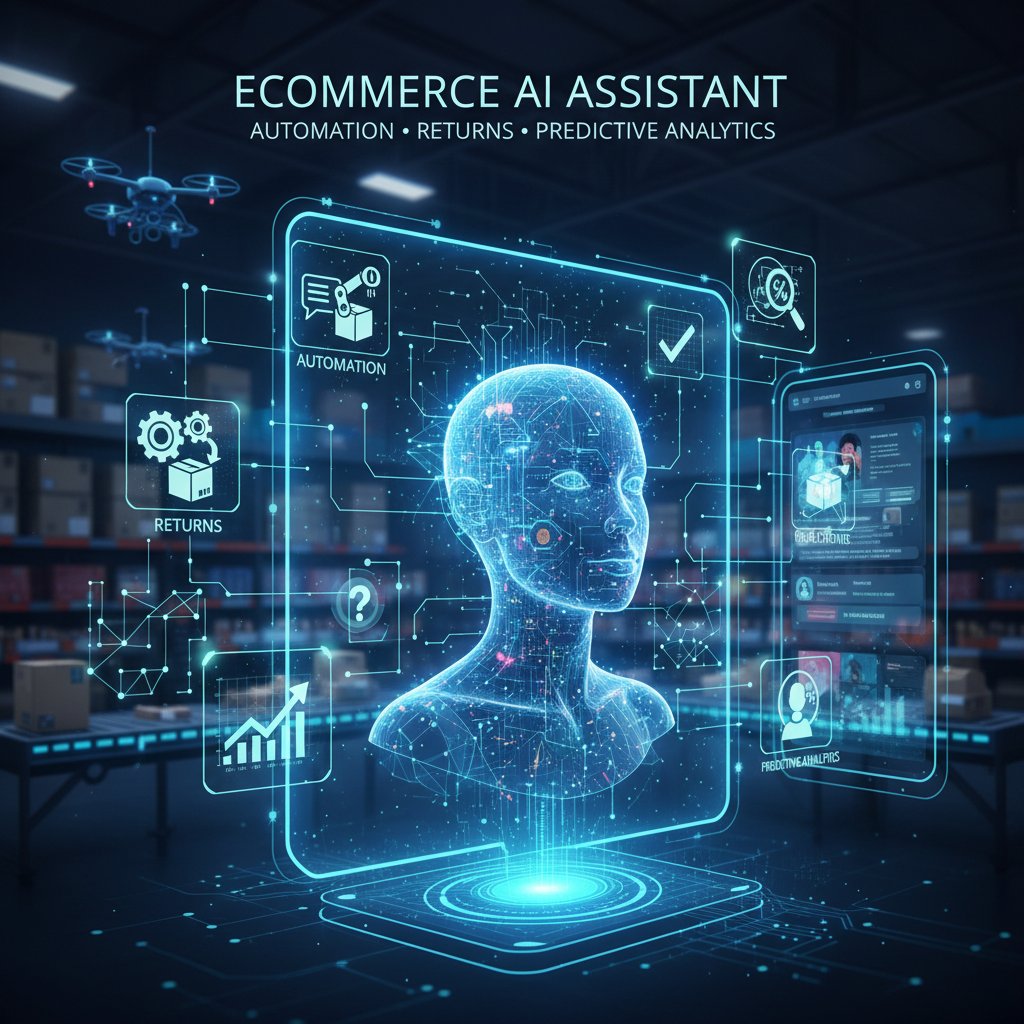
This automation is invisible but profound. According to Master of Code Global, 2024, top e-commerce brands have seen conversion rates surge by up to 70% after deploying AI-powered virtual assistants.
Workflow integration: how your stack gets smarter
“Integration” isn’t just marketing speak. Here’s how an AI assistant weaves itself into your daily grind:
Automatically tags and assigns incoming support requests based on customer profile and intent, speeding up resolution.
Monitors multiple warehouses in real time, flagging discrepancies and automating restock orders.
Creates and schedules personalized email and SMS campaigns, updating lists based on live customer actions.
Compiles sales and support data across platforms into actionable, real-time dashboards.
Each of these integrations reduces manual labor, cuts errors, and enables teams to act faster—often before problems become visible to customers.
Case study: surviving the holiday surge with AI
When the holiday season hits, most e-commerce teams brace for war: ticket volumes spike, inventory flies off digital shelves, and human error lurks everywhere. In 2023, Zalando rolled out an OpenAI-powered shopping assistant to handle this chaos. The results were eye-opening:
| Metric | Before AI Assistant | After AI Assistant |
|---|---|---|
| Average response time | 9 minutes | 2 minutes |
| Order processing speed | 5 hours | 1.5 hours |
| Cart abandonment rate | 26% | 14% |
| Customer satisfaction | 68% | 88% |
Table 3: Impact of AI virtual assistant during high-traffic season at Zalando
Source: Original analysis based on Credence Research, 2024

Not only did the AI assistant handle routine queries, it also flagged stockouts before they became a crisis and dynamically adjusted discounts to drive more conversions at peak times.
Unexpected wins (and epic fails) from real teams
The thrill of AI is its unpredictability. Some teams have unlocked game-changing efficiency; others have stumbled into new headaches.
"We thought AI would cut our customer support load in half. Instead, it handled the easy stuff—but complex requests still pile up. The real win was faster triage, not elimination." — Customer Experience Lead, U.S. e-commerce brand (Software Oasis, 2024)
On the flip side, overreliance on AI can introduce blind spots—like failing to escalate a high-value angry customer to a human, resulting in a lost sale.
The brutal cost-benefit breakdown
ROI math: what do you really save—and lose?
AI-powered virtual assistants for e-commerce promise sky-high ROI. But it’s not all upside. Here’s a reality check:
| Cost/Benefit | Typical Magnitude | Net Impact |
|---|---|---|
| Labor savings | 30-60% reduction in FTEs | High, but not all roles |
| Increased conversions | 10-70% (depending on setup) | High for optimized stores |
| Setup/integration costs | $5,000–$100,000+ | Major upfront outlay |
| Ongoing training/monitoring | $500–$5,000/mo | Ongoing operational cost |
| Error/escalation losses | Variable | Potentially significant |
| Customer experience impact | Dramatic (positive/negative) | Brand-defining |
Table 4: AI assistant ROI—hidden costs and real savings
Source: Original analysis based on Credence Research, 2024, ZipDo, 2024
Bottom line: AI can slash routine costs and drive sales, but hidden expenses, from bot monitoring to failed escalations, are real.
Hidden expenses and the culture shock factor
The cost of AI isn’t just dollars. There’s a human toll. Teams used to certain routines often resist automation, fearing job loss or loss of autonomy. Training staff to trust and collaborate with AI—while still catching its mistakes—is a cultural transformation, not just a tech upgrade.

According to ZipDo, 2024, SMBs cite integration and cost as primary barriers to AI adoption—but culture and trust are close behind.
When AI backfires: the risks nobody markets
- Loss of brand authenticity: Poorly trained assistants can deliver tone-deaf or irrelevant responses that damage customer trust.
- Escalation failures: AI that misjudges “urgent” issues may never route serious problems to a human.
- Privacy landmines: Mishandling customer data can trigger lawsuits or regulatory penalties.
- Over-automation: Removing too much human touch can make high-value customers feel alienated.
- Opaque decision-making: AI “black boxes” can create confusion or frustration when outcomes are inexplicable.
How to implement an AI assistant without losing your mind
Pre-launch: are you actually ready?
Rolling out AI in e-commerce isn’t for the faint of heart. Before you unleash an assistant on your customers, ask:
- Do you have clean, structured customer and product data? Sloppy inputs = bad outputs.
- Is your team on board—and trained for AI triage? Resistance can sabotage even the best tech.
- Are your privacy/compliance processes airtight? New regulations can upend unprepared stores.
- Do you have a clear escalation path for complex issues? No AI can handle every scenario.
- Are you ready to budget for ongoing training and monitoring? “Set-and-forget” is a myth.
Rushing through these steps is a recipe for headaches and costly do-overs.
Step-by-step: integrating AI into your daily grind
- Audit your workflows. Identify repetitive, high-volume tasks ripe for automation.
- Choose your assistant. Vet vendors for native integrations, compliance, and track record.
- Map your tech stack. Connect the assistant to inventory, CRM, and support tools.
- Pilot with a segment. Test on a limited set of customers and iterate fast.
- Train the assistant. Feed it with current product, promo, and brand voice data.
- Monitor and review. Use dashboards to catch errors and flag “edge cases” for human review.
- Iterate. Regularly update AI instructions, add new FAQs, and tweak workflows based on real outcomes.

Training your AI (and your team)
Teach the assistant about your products, policies, customer personas, and brand tone—not just canned responses.
Train staff to spot and triage escalations quickly, closing AI’s knowledge gaps before they hurt customer experience.
Implement systems for both customers and staff to flag AI errors, driving continuous improvement.
This dual-track training—AI and human—ensures you don’t just automate, but actually elevate your team’s effectiveness.
Measuring success: KPIs that matter in 2025
| KPI | Why It Matters | Typical AI Impact |
|---|---|---|
| First response time | Customer satisfaction, loyalty | 50-80% reduction |
| Resolution rate | Ticket closure, efficiency | 20-60% improvement |
| Cart abandonment rate | Conversion, revenue | 10-30% decrease |
| NPS/CSAT score | Brand health, retention | Variable; can rise or fall |
| Escalation rate | Human workload, error frequency | Should stabilize/decrease |
Table 5: KPIs to track AI assistant effectiveness in e-commerce
Source: Original analysis based on Credence Research, 2024
The trick? Don’t just chase vanity metrics—focus on the numbers that actually drive loyalty and profit.
Real-world stories: e-commerce teams and their AI teammates
From skepticism to obsession: user journeys
The journey with AI assistants rarely starts with wild enthusiasm. Many teams begin with skepticism—only to be won over by results.
"We were prepared for AI to fail. Instead, it handled 70% of our queries and flagged fraud attempts we had missed. Now, it’s our most valued ‘team member’—and yes, we gave it a name." — E-commerce Operations Manager, Europe (Master of Code Global, 2024)
Success isn’t universal, but when it lands, it often flips cynics into advocates.
What changed for customer service, ops, and marketing
AI assistants have redefined roles across the e-commerce org chart:

- Customer service: Routine inquiries—“Where’s my order?”—are automated, freeing agents for complex problem-solving.
- Operations: Inventory discrepancies are flagged and resolved faster, reducing stockouts and overages.
- Marketing: Campaigns are dynamically adjusted in real time based on customer actions, improving ROI and engagement.
The result isn’t just efficiency; it’s a new standard for responsiveness and agility.
Three surprising industries using AI assistants
- Healthcare e-commerce: Automating patient product inquiries while maintaining HIPAA compliance.
- Luxury retail: Offering real-time style advice and personalized concierge services.
- Subscription boxes: Managing renewals, upsells, and customization workflows at scale.
These cases prove AI isn’t just for electronics or fast fashion—it’s transforming the entire digital marketplace.
Controversies, ethics, and the human factor
Who owns the mistakes when AI screws up?
E-commerce is unforgiving: one data breach, one rude bot response, and you’re viral for all the wrong reasons.
"It’s easy to blame the bot, but accountability always comes back to the brand. Customers don’t care if it was ‘just AI’—they want it fixed." — Digital Ethics Consultant, 2024 (Statista, 2024)
Leaders must own both the wins and the failures, building escalation processes and clear lines of responsibility for when the inevitable happens.
Data privacy, transparency, and your reputation

As privacy laws get tighter and consumers grow wary of “data-driven” everything, the pressure is on. Compliance isn’t just a checklist—it’s an ongoing battle. Mishandling data isn’t just a legal risk—it can nuke your reputation overnight.
The psychological impact on human teams
- Anxiety about job security: Automation can spark fear and resistance, especially among frontline staff.
- “Shadow work” increases: Humans often end up fixing or checking AI mistakes, adding invisible labor.
- Pride in problem-solving: Freed from repetitive tasks, teams can refocus on creative, high-impact work.
- Trust issues: If AI isn’t transparent, staff may sabotage or work around it, undermining ROI.
- Burnout risk shifts: Instead of mindless tasks, burnout now comes from firefighting AI errors or endless monitoring.
Advanced strategies and the future of AI in e-commerce
AI as a creative partner: product, marketing, more
Beyond grunt work, AI is now co-creating with human teams. Product recommendations, content generation, even campaign ideas are being shaped by data-driven insights.

Instead of replacing creativity, AI can amplify it—surfacing unexpected trends and giving teams more time for deep work.
Cross-industry lessons: what e-commerce can steal
- Finance: Real-time fraud detection and risk scoring using AI-powered pattern analysis.
- Travel: Dynamic pricing engines that adapt offers based on demand, weather, and user preferences.
- Media: AI-driven content moderation and personalized recommendations to keep engagement high.
- Healthcare: Automated triage and appointment scheduling—lessons in compliance and data security for all.
Borrowing from these sectors, e-commerce leaders can leapfrog slow competitors stuck in “retail-only” mindsets.
What’s next: predictions for 2026 and beyond
- AI-human hybrid teams become the norm.
- Voice commerce breaks mainstream adoption.
- Privacy-first design reshapes every workflow.
- Real-time predictive analytics drive every marketing move.
- Regulatory demands force constant AI retraining.
Even as the landscape evolves, the fundamentals remain: As long as there’s commerce, the need for fast, smart, and trusted service never lets up.
How to choose the right AI assistant for your business
Red flags and deal breakers
- Opaque AI logic: If you can’t explain how decisions are made, steer clear.
- Lack of escalation paths: No “human in the loop” means major risk.
- Poor privacy/compliance documentation: If a vendor can’t prove compliance, run.
- Limited integration options: Your assistant must play nicely with your stack.
- No customization: One-size-fits-all bots rarely deliver on brand experience.
Checklist: your AI readiness score
- Data quality: Are your records clean and up to date?
- Tech stack compatibility: Do APIs and connectors exist for your main tools?
- Team buy-in: Are stakeholders ready for change?
- Compliance playbook: Is every workflow documented and auditable?
- Training resources: Can you afford ongoing learning for both AI and humans?
- Customer feedback loops: Do you capture and act on real user input?
- Escalation planning: Is it clear when (and to whom) the AI hands off?
Why teammember.ai is on everyone’s radar
If you’re shopping for an AI-powered virtual assistant for e-commerce, teammember.ai has carved out a reputation for seamless email integration, robust workflow automation, and relentless focus on security and compliance. Its approach—embedding an AI teammate directly into your daily inbox—has won fans among executives and frontline teams alike. In a crowded market of empty promises, proven results and transparency make the difference. If you value trust, deep integration, and pro-grade support, this platform deserves your attention.
Supplementary deep-dives: what else you need to know
How to train your AI assistant for your unique brand
Define core tone, vocabulary, humor style, and “off-limits” topics for the assistant.
Build libraries of responses for common (and edge-case) customer queries.
Update training sets with real-world chats and outcomes weekly or monthly for ongoing improvement.
Legal and ethical considerations in 2025
- Consent management: Get explicit opt-ins for data use—no more “assumed” consent.
- Bias mitigation: Regularly audit AI outputs for unintentional discrimination or pattern bias.
- Transparency requirements: Document every AI-driven decision path for auditability.
- Right to human review: Always offer customers an easy way to escalate to a human.
- Cross-border data flow: Ensure compliance with GDPR, CCPA, and other regional laws.
Future-proofing your e-commerce team for the AI era
- Invest in AI literacy for all levels of staff.
- Document every workflow for transparency and iterative improvement.
- Embed feedback loops from both staff and customers.
- Diversify vendor relationships to avoid single-point-of-failure risk.
- Plan for continuous retraining as regulations and customer expectations evolve.
In a marketplace where speed kills and loyalty is liquid, the AI-powered virtual assistant for e-commerce is no silver bullet—but it’s also not a fad. The raw truth? The winners aren’t the ones with the “smartest” tech, but those who build trust, keep humans in the loop, and aren’t afraid to challenge received wisdom. If you want to thrive—not just survive—in 2025’s e-commerce battlefield, it’s time to confront the myths, master the realities, and make AI your most dangerous (and valuable) team member.
Sources
References cited in this article
- ZipDo Statistics(zipdo.co)
- Credence Research(credenceresearch.com)
- Statista on AI Shopping Assistants(statista.com)
- Software Oasis(softwareoasis.com)
- instant.so(instant.so)
- Klizer(klizer.com)
- EcommerceTimes(ecommercetimes.com)
- No Worker Left Behind(noworkerleftbehind.org)
- Wethrift E-commerce Stats(wethrift.com)
- Yaguara US Shopping Data(yaguara.co)
- BizTech Magazine(biztechmagazine.com)
- Merkle(merkle.com)
- Dorik Blog(dorik.com)
- Rapid Innovation(rapidinnovation.io)
- Master of Code(masterofcode.com)
- Forbes(forbes.com)
- Businessolution.org(businessolution.org)
- Master of Code(masterofcode.com)
- Medium(medium.com)
- Zoovu Blog(blog.zoovu.com)
- XENA Intelligence(xenaintelligence.com)
- EMB Global(blog.emb.global)
- Vena Solutions(venasolutions.com)
- ABC News(abcnews.go.com)
- Retail Dive(retaildive.com)
- Retail TouchPoints(retailtouchpoints.com)
- CIO.com(cio.com)
- CrossML(crossml.com)
- ZipDo(zipdo.co)
- Plivo Blog(plivo.com)
- Algolia UX Tips(algolia.com)
- SoftBlues AI Launch Guide(softblues.io)
- Bizkik Checklist(bizkik.com)
Focus on what matters. Let AI handle the rest.
We know the feeling — another day starts with 50 unread emails, Ads Manager begging for attention, CRM out of date, and meetings without follow-ups. That's why we built TeamMember.ai — an AI team member that takes over all the operational work at the computer. Has its own email address and SMS number. Manages your inbox, runs Meta Ads, updates CRM, processes meetings, monitors social media, generates morning briefings, and controls the browser. Built on OpenClaw — a leading open-source AI agent — with cross-session memory and secure-cloud architecture that keeps your data safe.
Get startedBe First to Try Your AI Team Member
Every week without automation is dozens of hours lost to operational work. Hours you'll never get back. Join the waitlist and get priority access.
Frequently Asked Questions
What percentage of U.S. small and midsize businesses have adopted virtual assistants?
According to 2024 data from ZipDo, 42% of U.S. small and midsize businesses (SMBs) have adopted virtual assistants.
What are the main concerns keeping e-commerce leaders awake at night?
E-commerce leaders worry about spiraling support costs, achieving true personalization at scale, tech stack integration issues, privacy and compliance risks, and whether AI investments are actually driving sales rather than just creating noise.
What does the article say about personalization in e-commerce?
The article suggests that despite AI hype, 'personalization' is often code for 'shoving more data at customers and hoping something sticks,' indicating that true personalization at scale remains a challenge.
What technical problem can occur during peak sales periods according to the article?
The article states that cobbled-together integrations and fragmented tech stacks can cause systems to crash under load, especially during flash sales or the holiday rush.
From the Archive
Explore more from AI Team Member

AI-Driven Virtual Assistant for Retail: Market Growth and Strategies
AI-driven virtual assistants for retail grew from $15.3 billion to $20.7 billion between 2023 and 2024. This article examines the market expansion, competitive pressures, and genuine strategies retailers are deploying.

AI-Driven Virtual Assistant for Online Businesses: ROI and Real Risks
AI-driven virtual assistant for online businesses automate scheduling and content work but carry risks. This article examines the real ROI, data security concerns, and practical deployment strategies.

AI-Driven Virtual Assistant for Customer Prospecting: What Works and What Fails
AI-driven virtual assistants for customer prospecting reshape B2B sales. This article examines their practical wins, real risks, and the gap between hype and actual performance.

AI-Driven Virtual Customer Assistants: Where They Succeed, Where They Fail
AI-driven virtual customer assistant technology shows real ROI but also uncovers why many implementations fail.

AI-Driven Virtual Assistant for Customer Data Analysis That Pays Off
Discover insights about AI-driven virtual assistant for customer data analysis

What AI Assistants Actually Deliver for Small Business Owners
AI assistant for small business owners can cut administrative work, but outcomes vary. This article breaks down the actual ROI, key risks, and what works in practice.