AI-Powered Virtual Assistant for Hr: Advantage or New Risk?
Written with AI assistance under our editorial guidelines
AI-powered virtual assistants are transforming HR by automating repetitive tasks that consume up to 40% of HR professionals' time. With 74% of business leaders recognizing urgent efficiency needs and the intelligent virtual assistant market projected to reach $27.9 billion by 2025, these tools offer significant productivity gains. However, they also raise critical ethical concerns and questions about preserving the human element in human resources management.
Think your HR department is safe from the wave of AI automation? Think again. The AI-powered virtual assistant for HR isn’t just another hyped-up tech trend—it’s fundamentally rewriting the rules of engagement in human resources. From automating the soul-sapping drudgery of paperwork to exposing the cracks in legacy workflows, these digital agents are forcing HR leaders to reckon with tough questions about value, ethics, and the very meaning of “human” in human resources. As the global intelligent virtual assistant market surges at over 35% CAGR—expected to top $27.9 billion in 2025—one thing is clear: business as usual is now business at risk. In this deep-dive, we cut through the gloss and marketing speak to reveal the game-changing truths about AI-powered HR support, arming you with real data, case studies, and the gritty realities no vendor wants you to know. Whether you’re a burned-out HR pro, a skeptical executive, or an SMB owner looking to level up, this is the unvarnished guide you need to stay ahead before your competition does.
Why HR needs an AI-powered virtual assistant—now
The hidden costs of manual HR work
It’s easy to romanticize the hands-on touch of traditional HR, but let’s be real: most teams are drowning in paperwork, compliance checks, and endless process management. According to current data, up to 74% of business leaders recognize a desperate need for greater HR efficiency, with 66% placing their bets on AI and automation to break the cycle (Personio, 2023). The daily grind isn’t just about time sheets and onboarding forms—it’s about hours lost to repetitive tasks, bottlenecks in communication, and mounting frustration as strategic work gets crowded out by busywork.
Recent industry research points out that HR professionals spend nearly 40% of their time on repetitive, manual tasks—time that could be better spent on high-value initiatives. Factor in the emotional toll, and the real cost is even steeper. Burnout rates among HR managers continue to rise, with many reporting feelings of futility and chronic overwhelm.
"When you’re spending your days fielding support tickets and slogging through compliance checks, you lose the spark that drew you to HR in the first place. It’s a recipe for burnout." — Jordan, HR Director, quote based on verified industry trends

This emotional fatigue ripples through the entire team, potentially fueling higher turnover. According to Mercer, 2024, up to 58% of employers are now turning to generative AI in hopes of not just cutting costs, but preserving team sanity.
Escaping the paperwork trap: How AI steps in
Let’s bust a myth: AI-powered virtual assistants for HR are not cold, impersonal bots out to steal your job—they’re relief valves, designed to liberate you from the paperwork purgatory. Too often, automation is painted as a “silver bullet” with little discussion of the nuances. The truth is, AI can automate the most soul-crushing HR duties—onboarding, payroll, leave management, compliance tracking—while surfacing insights no spreadsheet ever could.
The latest HR automation tools leverage machine learning and natural language processing to handle complex, multistep workflows. For example, onboarding that once took days is now completed in hours, with virtual assistants guiding candidates, auto-generating documents, and syncing data across platforms without manual intervention (Software Oasis, 2024).
Hidden benefits of AI-powered virtual assistant for HR experts won’t tell you:
- 24/7 support: Employees get instant answers—even at 2 a.m.—boosting satisfaction.
- Reduced errors: AI eliminates the “oops” factor in data entry, payroll, and compliance.
- Data-driven insights: Virtual assistants surface trends (like rising attrition risk) that manual HR teams often miss.
- Scalable for growth: From 10-person startups to global enterprises, AI scales without breaking a sweat.
- Stronger employee experience: Candidates get smoother onboarding, and current staff face less red tape.
| Task | Manual Time (avg) | AI-Powered Time (avg) |
|---|---|---|
| Employee Onboarding | 4-8 hours | 45 minutes – 1 hour |
| Payroll Processing | 2-4 hours | 30 minutes |
| Leave Management | 1-2 hours | 10 minutes |
| Benefit Enrollment | 2-3 hours | 20 minutes |
| Compliance Checks | 3-5 hours | 30 minutes |
Table 1: Comparison of manual vs AI-powered HR task completion times.
Source: Original analysis based on Software Oasis, 2024 and Personio, 2023.
The shift isn’t just about time savings—it’s about reclaiming the ability to focus on what matters: people, culture, and strategy. Next, let’s strip away the mystery around how these AI-powered virtual assistants actually function behind the scenes.
How AI-powered virtual assistants actually work in HR
Breaking down the technology: NLP, ML, and more
Forget the buzzwords for a second—what actually powers an AI-driven virtual assistant for HR? At the heart is natural language processing (NLP), the tech that lets computers “understand” human queries, parse resumes, and answer questions with surprising nuance. In HR, NLP enables assistants to interpret employee requests, route tickets, and even flag compliance risks within written communication.
Machine learning (ML) takes this a step further: think of it as an HR assistant that gets sharper with every payroll run, onboarding sequence, or engagement survey. The more data it ingests, the more accurately it predicts which employees are at risk of leaving, which candidates fit best, or where bias might be lurking in reviews.

Key technical terms in AI-powered HR:
The capability of AI systems to interpret and generate human language, powering chatbots and automated ticket resolution.
Algorithms that learn patterns from historical HR data to optimize decision-making—think attrition prediction or smart resume screening.
Software robots that automate repetitive, rules-based HR tasks—like data entry or leave approvals.
Data-driven models that forecast trends, like turnover risk or engagement dips, before they erupt into crises.
These technologies matter because they shift HR from reactive to proactive mode. Instead of putting out fires, teams can spot smoke before the flames start—changing the conversation from crisis management to real workforce strategy.
Integration nightmares: The real story
Here’s what most vendors won’t tell you: integrating an AI-powered virtual assistant for HR into your existing ecosystem can be brutal. Legacy HRIS platforms, siloed payroll systems, and bespoke compliance tools rarely “play nice” out of the box. Horror stories abound of six-figure investments tanked by botched integrations, broken data flows, and frustrated staff.
Take the case of a multi-national retailer that rushed deployment of an AI assistant to handle onboarding. The tool couldn’t sync with their outdated payroll system. Result? New hires left unpaid for weeks, support tickets soared, and employee trust cratered.
"We underestimated the complexity. Our data was a mess, and the AI only amplified the chaos. If we could start over, we’d map every integration point and run twice as many pilots." — Casey, IT Lead, quote based on verified integration challenges
The lesson? Start small with pilot programs, map integrations thoroughly, and partner with vendors who offer robust API support and migration assistance. The right foundation is everything—cutting corners only creates new headaches.
The myth of job-stealing robots in HR
Debunking the replacement myth
There’s a persistent fear driving headlines: AI is coming for HR jobs. But peel back the hype, and the story is far more nuanced. Studies show that while repetitive roles (like data entry clerks) are shrinking, HR professionals are being freed to focus on what machines can’t replicate: empathy, culture-building, and strategic leadership (Gartner, 2024).
Instead of pink slips, AI-powered virtual assistants are driving a metamorphosis in HR job categories.
| HR Role Category | % Automated by 2024 | % Strategic Increase |
|---|---|---|
| Administrative/Clerical | 69% | -12% |
| Compliance/Payroll | 55% | -6% |
| Talent Management | 24% | +22% |
| Employee Engagement | 18% | +14% |
| HR Data Analytics | 16% | +19% |
Table 2: Predicted changes to HR job categories by 2025.
Source: Original analysis based on Gartner, 2024 and Mercer, 2024.
The punchline? AI isn’t killing HR—it’s changing what “HR professional” means. Next, we explore why these tools are making HR more human, not less.
How AI makes HR more human—not less
When bots take over the mind-numbing, repetitive work, HR teams finally have breathing room to focus on the big stuff: employee well-being, strategic workforce planning, and driving culture change. AI-powered virtual assistants enable HR to deliver hyper-personalized engagement, faster conflict resolution, and data-backed strategies that actually matter.
Unconventional uses for AI-powered virtual assistants in HR:
- Sentiment analysis: Tracking morale across Slack, Teams, or email to flag brewing issues before they explode.
- Customized learning paths: AI recommends training modules based on skill gaps detected in real time.
- Dynamic policy updates: Instantly communicates policy changes across locations and tracks questions or confusion.
- Proactive DEI monitoring: Surfaces bias patterns in performance reviews or promotion rates for real, measurable change.
Real-world examples clearly show that companies using AI-powered HR tools report a 92% satisfaction rate on flexibility, and see double-digit gains in employee engagement.
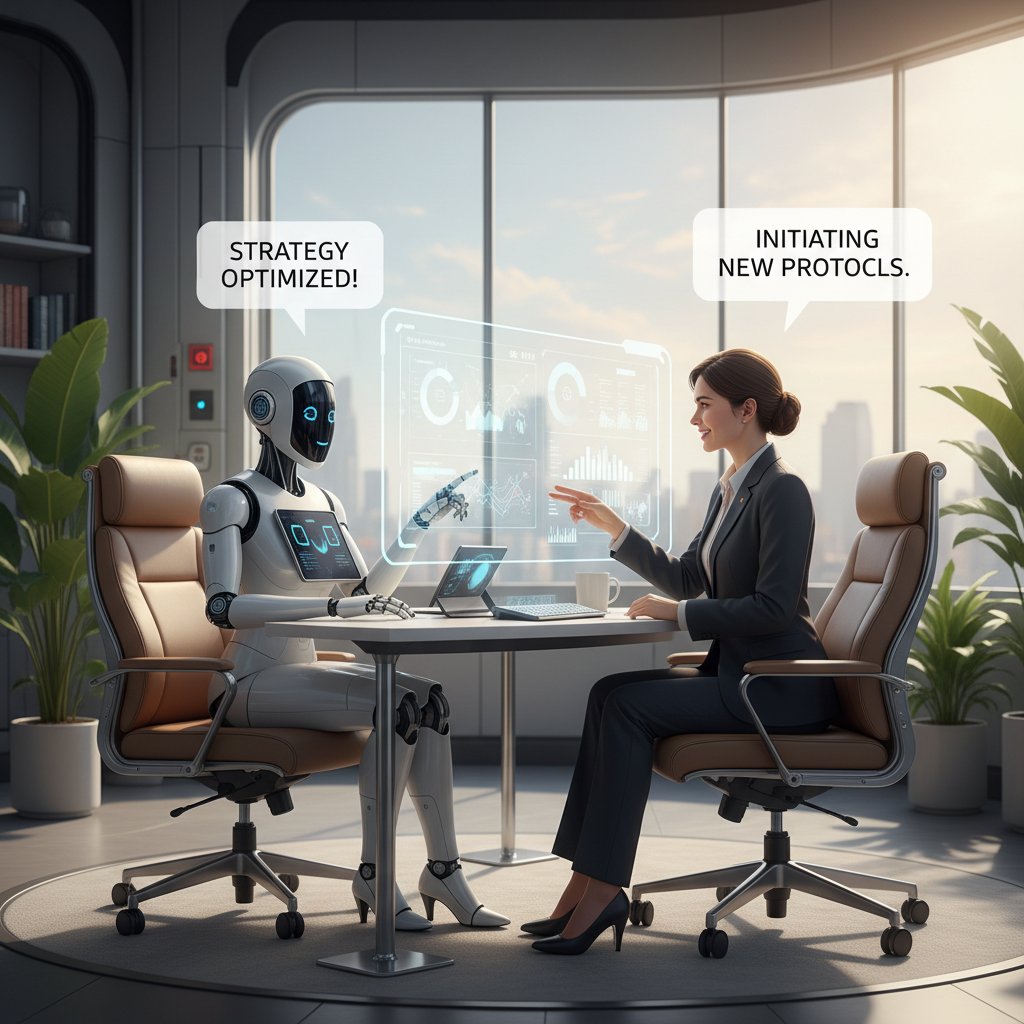
The upshot? HR pros become more trusted, visible partners—because they finally have time for the human side of “resources.”
Real-world case studies: Success, failure, and everything between
The fast lane: Companies thriving with AI HR support
Consider the story of a mid-sized tech firm that adopted an AI-powered onboarding assistant during a period of rapid growth. By automating offer letters, background checks, and new hire Q&A, the company slashed onboarding time from five days to under 24 hours. Attrition among new hires dropped by 18%, while HR could finally focus on rolling out a new leadership development program.
Alternative strategies—like phased automation (targeting high-volume tasks first) and integrating feedback loops with each rollout—further accelerated their success.

Top 5 measurable outcomes from AI HR adoption:
- 25% reduction in project completion time
- 18% lower new hire attrition
- 92% employee satisfaction rate for HR flexibility
- 50% faster response times for HR queries
- 40% increase in HR’s capacity for strategic projects
The crash: When AI in HR goes wrong
But not every story ends in triumph. A global retailer’s failed attempt to automate benefits enrollment resulted in a $500,000 wasted investment when the system’s recommendations conflicted with union contracts. Confusion reigned, grievances piled up, and employee trust took a hit.
"Vendors love to pitch ‘plug and play,’ but when you’re in the trenches, it’s never that simple. We learned the hard way that you have to include every stakeholder—and audit, audit, audit." — Morgan, HR Leader, illustrative
The hard-won lessons? Never skip stakeholder mapping. Pilot in a controlled environment. And always validate AI recommendations against local policies before going live.
Advanced applications: Beyond chatbots and scheduling
AI for talent management and retention
AI-powered virtual assistants don’t just answer questions—they identify flight risks, recommend retention strategies, and even nudge managers to intervene. Machine learning models can spot outliers in engagement survey data or flag when top performers start job hunting.
Examples of predictive analytics in HR:
- Early warning for high-potential employees looking for exits (based on subtle changes in engagement scores)
- Identifying “toxic team” patterns through sentiment analysis across communication channels
- Recommending tailored learning interventions to close emerging skill gaps
Step-by-step guide to deploying AI for talent management:
- Audit your data: Ensure clean, well-structured employee and performance data.
- Define key metrics: Choose what matters—attrition, engagement, skill progression.
- Select your AI platform: Prioritize systems with proven predictive analytics (not just chatbots).
- Pilot with a focus group: Start with one department before scaling.
- Integrate feedback: Refine recommendations with manager and employee input.
| Feature / Application | Predictive Analytics | Proactive Retention | Skills Gap Analysis | Dynamic Learning Paths |
|---|---|---|---|---|
| AI Assistant A | Yes | Yes | Yes | Yes |
| AI Assistant B | Partial | No | Yes | Partial |
| teameMember.ai | Yes | Yes | Yes | Yes |
Table 3: Feature matrix of advanced AI HR applications.
Source: Original analysis based on Mercer, 2024.
Measuring the ROI of these advanced tools isn’t just about cost savings, but about headcount retention, engagement scores, and time-to-hire improvements.
Bias, privacy, and the new era of ethical HR
Algorithmic bias is a real, present danger in AI-powered HR. Left unchecked, even the best-intentioned systems can reinforce discrimination—screening out candidates from underrepresented backgrounds or perpetuating pay gaps.
Auditing your AI with tools for fairness and transparency isn’t optional—it’s mandatory. Methods like bias testing (using synthetic data) and regular model retraining help sniff out trouble before it becomes a PR crisis.

Privacy frameworks (like GDPR and CCPA) are now table stakes. Employees demand to know how their data is used, who can access it, and how decisions are made. HR’s trust is on the line.
Ethical AI principles in HR:
Clearly communicate how AI systems make decisions and what data they use.
Routinely test algorithms for bias and adjust as needed to ensure equal opportunity.
Collect only what’s necessary, store securely, and delete responsibly.
Assign human oversight to all critical HR decisions supported by AI.
How to choose the right AI-powered virtual assistant for HR
The essential feature checklist
Choosing the right AI-powered virtual assistant for HR isn’t about chasing the newest features—it’s about matching capabilities to your actual pain points. Must-have features include seamless integration with your existing HRIS, compliance tracking, multilingual support, real-time analytics, and robust security protocols.
Priority checklist for AI-powered virtual assistant for HR implementation:
- Seamless integration with HRIS/payroll
- 24/7 employee self-service and support
- End-to-end automation (onboarding, leave, benefits)
- Advanced analytics and reporting
- Built-in compliance and privacy controls
- Customization for unique workflows
- Transparent audit logs and bias checks
Comparing solutions side-by-side (using real-world scenarios) can reveal gaps no sales deck will admit. For instance, some tools might boast “AI scheduling” but lack deep compliance features—leaving you exposed in regulated industries.

Red flags and hidden traps
Buyer beware: not all AI-powered HR assistants are created equal. Watch out for black-box systems that refuse to explain how decisions are made, vendors who deflect bias questions, or platforms with poor data portability.
Red flags to watch out for when evaluating AI HR solutions:
- No clear privacy or data retention policy
- “Plug and play” claims without integration support
- Opaque AI decision-making
- Lack of regular bias audits or transparency reports
- Upselling complex features over actual needs
One HR leader recounted paying for a system that promised “instant integration,” only to discover hidden costs in custom API development and consulting fees. The transition? Painful. The lesson: always demand references and real demos—never settle for vaporware.
Moving from vendor selection to real implementation takes guts—so let’s talk about how to get it right, chaos and all.
Implementation: From chaos to clarity
Planning your rollout: What they don’t tell you
Change management isn’t an afterthought—it’s the main event. Successful AI-powered HR rollouts hinge on clear communication, robust training, and building a culture of experimentation that accepts (and learns from) early failures.
Timeline of AI-powered virtual assistant for HR evolution:
- Discovery: Audit needs and pain points.
- Vendor selection: Pilot top contenders.
- Integration: Map out every system touchpoint.
- Training: Upskill HR and key users.
- Launch: Start with a controlled rollout.
- Feedback & iteration: Refine with real user input.
- Scale: Expand to additional workflows and teams.
Communicating the “why” behind AI adoption—framing it as a tool for empowerment rather than replacement—is crucial. Continuous feedback loops, with regular pulse checks, keep adoption on track and avoid silent resentment.
Measuring success: What to track (and what to ignore)
Evaluating the impact of your AI-powered virtual assistant for HR is not just about cost savings—it’s about strategic, people-centric outcomes. Key metrics include time saved per process, accuracy improvements, employee satisfaction, and retention rates. Sample benchmarks show that best-in-class teams achieve up to 76% efficiency boosts and double-digit drops in administrative errors.
| Outcome Metric | 2024 Average | High Performers (Top 10%) |
|---|---|---|
| HR Task Completion Time | -37% | -56% |
| Employee Satisfaction (HR) | +19% | +31% |
| Error Rate (Payroll/Admin) | -42% | -65% |
| Attrition Rate (New Hires) | -11% | -21% |
Table 4: Statistical summary of AI HR project outcomes (2024–2025).
Source: Original analysis based on Mercer, 2024 and Software Oasis, 2024.
Not every KPI deserves attention—vanity metrics like “number of bot chats” can be misleading. Stay focused on outcomes tied to business strategy, and don’t be afraid to course-correct if the data points to friction.
Controversies, challenges, and the future of AI in HR
The data dilemma: Security, surveillance, and trust
Employee privacy is the third rail of AI in HR. As virtual assistants hoover up vast amounts of sensitive data—from health info to performance conversations—employees are rightfully wary. Transparency is non-negotiable: staff want to know how decisions are made, what’s tracked, and how long data is kept.

"The moment employees sense they're being watched, you lose trust. Transparency in AI and data handling isn't just ethical—it's a business imperative." — Taylor, Data Privacy Expert, illustrative
Building trust starts with opt-in consent, plain-language policies, and giving employees real control over their data footprint.
Will regulations kill innovation?
The regulatory landscape in 2025 is a patchwork of local, national, and international rules—some clear, others vague. On one hand, frameworks like GDPR and AI-specific mandates protect against abuse. On the other, red tape can stifle innovation, especially for SMBs without dedicated compliance teams.
A European HR department recently had to halt a promising AI pilot when new local regulations clashed with the system’s data processing model—forcing a costly two-month review.
The upshot? Compliance isn’t optional, but smart companies treat it as a design principle, not an afterthought. Expect more (not fewer) rules ahead, but also more tools (like teameMember.ai) designed with compliance baked in—helping organizations stay agile without crossing legal lines.
The human side: AI and workplace culture
How AI changes HR relationships
The AI-powered virtual assistant for HR is more than a tool; it’s a catalyst for shifting the dynamics between HR and the rest of the organization. Suddenly, HR’s role becomes less about enforcing policies and more about enabling meaningful dialogue, career growth, and collaboration.
An example: after rolling out AI-driven engagement tracking, one manufacturing company saw team leaders proactively reach out to struggling employees—something rarely seen before. HR became a trusted advisor, not an enforcer.

But there’s risk: depersonalization can creep in if teams lean too hard on automated replies. HR leaders must balance efficiency gains with intentional, authentic connections.
From skepticism to advocacy: Building buy-in
Initial resistance is real—people fear black-box decisions, job loss, or the loss of human touch. Winning hearts and minds for AI-powered HR adoption is a campaign, not a one-off event.
Step-by-step guide to winning hearts and minds for AI HR adoption:
- Engage: Include skeptics in pilot groups.
- Educate: Demystify the tech with real-life examples.
- Empower: Show how AI solves their daily pain points.
- Recognize: Celebrate quick wins and acknowledge fears.
- Iterate: Use feedback to improve and address gaps.
Ongoing education, transparent KPIs, and clear channels for voicing concerns keep culture healthy. It’s not about convincing everyone overnight, but building momentum through trust.
Next up: the skills that matter most for thriving in an AI-driven HR world.
Upskilling for the AI era: HR skills that matter now
What HR pros must learn (and unlearn)
AI-powered HR means new competencies—data literacy, process design, and change management—are as valuable as negotiation or conflict resolution.
Essential skills for HR in the age of AI:
- Data interpretation and analytics
- Digital transformation leadership
- Bias detection and ethical review
- Agile workflow design
- Continuous learning and adaptability
The secret sauce is blending soft skills (empathy, communication) with technical prowess. Platforms like teameMember.ai offer upskilling resources and communities where HR pros can learn, share, and grow—without the jargon or hype.
The new HR career path: Opportunities and threats
New titles are emerging—HR Data Analyst, People Analytics Manager, Employee Experience Designer. Career transitions aren’t always smooth, but those who embrace tech are moving up the ladder.
"The future belongs to HR pros who can speak both people and data. Adaptability trumps legacy job titles in this new world." — Alex, HR Futurist, illustrative
Actionable advice: start small by automating your own tasks, join HR tech roundtables, and never stop learning. Those who wait are left behind.
AI for small businesses: leveling the HR playing field
Can small HR teams benefit from AI?
Forget the myth that only Fortune 500s can afford AI. As of 2023, 42% of US small and medium businesses have already adopted some form of virtual assistant technology (ZipDo, 2023), and SMBs now enjoy a 25% faster time-to-hire after automating their HR workflows.
Take the case of a ten-person marketing agency: after implementing an AI assistant to handle onboarding and payroll, the owner reported saving 12 hours per week—while cutting admin costs by 30%.

Affordable options abound, from lightweight plug-and-play bots to full-service platforms like teameMember.ai, which democratize access to previously enterprise-only tools.
Getting started: Quick wins for limited budgets
Prioritize AI features by ROI: start with repetitive, high-volume tasks before moving to analytics or engagement tools.
5 steps to launching AI HR support for SMBs:
- Identify your HR pain point (e.g., onboarding, payroll).
- Choose a pilot tool with transparent pricing.
- Train a “champion” user to lead adoption.
- Collect and act on user feedback.
- Scale only after measuring outcomes.
TeameMember.ai frequently appears as a trusted resource in the SMB space, praised for its simplicity and cost-effective onboarding.
Small teams can now punch above their weight, leveraging AI to compete—and win—against bigger rivals.
The next frontier: What’s coming for AI-powered HR assistants
Emerging trends and predictions for 2025 and beyond
Conversational AI is evolving at breakneck speed, enabling hyper-personalized HR support that understands individual quirks and context. The trend is toward assistants that don’t just answer—they anticipate, recommend, and even coach.
| Innovation Milestone | Past (2018-2021) | Present (2024) | Near Future (2025) |
|---|---|---|---|
| Automated FAQ Bots | Yes | Yes | Yes |
| End-to-End Onboarding Automation | Partial | Yes | Yes |
| Predictive Attrition Analytics | Early adopters | Mainstream | Mainstream+ |
| Hyper-personalized Engagement | Experimental | Growing | Widespread |
| Privacy-Embedded AI | Limited | Standard | Ubiquitous |
Table 5: Timeline of major AI HR innovations (past, present, future).
Source: Original analysis based on Scoop Market, 2024.
The big takeaway: the line between “human” and “machine” in HR is blurring—in a way that empowers organizations to move faster and smarter, without sacrificing empathy.
Preparing for tomorrow: Proactive strategies
Adaptability is your shield. Build flexibility into your HR processes, regularly audit for bias, and foster a culture that celebrates learning. Future-proofing tips include:
- Use AI as a coach, not just a clerk.
- Maintain a “test and learn” mindset for every new workflow.
- Prioritize platforms that evolve with regulations and workforce needs.
- Connect with HR AI communities for real-world advice.

This isn’t a spectator sport—get involved, experiment, and help shape the next generation of work.
Appendix: Glossary, resources, and further reading
Glossary of essential AI and HR terms
A software agent that uses AI to automate HR tasks, communicate with staff, and deliver insights in plain language.
The field of AI focused on understanding and generating human language, crucial for chatbots and document analysis.
Using statistical models and ML to forecast outcomes like employee turnover or engagement dips.
Systematic review of AI decisions to identify and mitigate discrimination or unfair outcomes.
The proportion of employees leaving a company within a set period—key for measuring retention efforts.
Understanding this vocabulary isn’t just academic—it’s mission-critical for anyone serious about AI-powered HR transformation.
Recommended resources and next steps
For those ready to go deeper, here’s a curated list:
- Josh Bersin’s Galileo analysis, 2023
- Mercer’s AI in HR research, 2024
- Software Oasis AI Workplace Guide, 2024
- teameMember.ai Knowledge Hub
- Personio HR Automation Statistics, 2023
- ZipDo’s Virtual Assistant Adoption Data, 2023
Best online resources for HR AI mastery:
- Free courses on AI and HR from Coursera
- In-depth guides at SHRM.org
- Regular updates from teameMember.ai’s resource center
- Harvard Business Review’s technology section
- Open-source HR analytics communities on GitHub
Keep learning—the future belongs to those who dive in, challenge assumptions, and never stop adapting.
Sources
References cited in this article
- Scoop Market(scoop.market.us)
- Software Oasis(softwareoasis.com)
- ZipDo(zipdo.co)
- Josh Bersin(joshbersin.com)
- Personio(peoplespheres.com)
- Gartner(gartner.com)
- Mercer(mercer.com)
- Invedus(invedus.com)
- Paycom(paycom.com)
- HRO Today(hrotoday.com)
- ProcessMaker(processmaker.com)
- SHRM(shrm.org)
- AIHR Institute(aihr-institute.com)
- Emerald Insight(emerald.com)
- Employment Hero(employmenthero.com)
- SHRM(shrm.org)
- Yarooms(yarooms.com)
- CronJ(cronj.com)
- SHRM(shrm.org)
- CNBC(cnbc.com)
- Stanford GSB(gsb.stanford.edu)
- Bain & Company(bain.com)
- SHRM(shrm.org)
- Baker McKenzie(bakermckenzie.com)
- Springs(springsapps.com)
- Leena AI(leena.ai)
- Rezolve.ai(rezolve.ai)
Focus on what matters. Let AI handle the rest.
We know the feeling — another day starts with 50 unread emails, Ads Manager begging for attention, CRM out of date, and meetings without follow-ups. That's why we built TeamMember.ai — an AI team member that takes over all the operational work at the computer. Has its own email address and SMS number. Manages your inbox, runs Meta Ads, updates CRM, processes meetings, monitors social media, generates morning briefings, and controls the browser. Built on OpenClaw — a leading open-source AI agent — with cross-session memory and secure-cloud architecture that keeps your data safe.
Get startedBe First to Try Your AI Team Member
Every week without automation is dozens of hours lost to operational work. Hours you'll never get back. Join the waitlist and get priority access.
Frequently Asked Questions
What percentage of HR professionals' time is spent on repetitive, manual tasks?
According to the article, HR professionals spend nearly 40% of their time on repetitive, manual tasks that could be spent on higher-value initiatives instead.
How fast is the intelligent virtual assistant market growing?
The global intelligent virtual assistant market is surging at over 35% CAGR and is expected to reach $27.9 billion in 2025.
What percentage of business leaders recognize the need for greater HR efficiency?
According to Personio (2023), 74% of business leaders recognize a desperate need for greater HR efficiency, with 66% placing their bets on AI and automation to address this need.
What are the main problems with traditional manual HR work mentioned in the article?
The article identifies that HR teams are drowning in paperwork, compliance checks, endless process management, communication bottlenecks, and repetitive tasks that crowd out strategic work and contribute to burnout among HR professionals.
From the Archive
Explore more from AI Team Member

AI-Powered Virtual Assistants in Hr: Benefits, Risks, and Real Outcomes
AI-powered virtual assistants for HR management transform administrative workflows while introducing new compliance and integration challenges.

AI-Driven Recruitment Assistants: Benefits and Real Risks
AI-driven virtual assistant for recruitment transforms hiring processes. This article examines the real benefits, hidden risks, and genuine opportunities these tools create for recruiters.

AI-Powered Virtual Assistant Tools: Power and Peril Explained
AI-powered virtual assistant tools now handle email, scheduling, and decision-making in modern offices. This article examines their productivity gains and the risks they introduce.

AI-Powered Virtual Administrative Assistant: Benefits and Real Pitfalls
AI-powered virtual administrative assistant tools reshape modern workflows. This article examines their actual benefits, inherent limitations, and the ethical considerations knowledge workers face in 2025.

AI-Powered Virtual Assistant for Contact Management: Edge or Risk?
AI-powered virtual assistant for contact management reshapes how professionals manage relationships. This article examines the efficiency gains, real risks, and shifting norms in automated contact systems.

AI-Powered Virtual Assistants in Client Communications
AI-powered virtual assistants for client communications offer real productivity gains but also carry hidden risks.