AI-Powered Virtual Assistant for Process Improvement That Actually Delivers
Written with AI assistance under our editorial guidelines
AI-powered virtual assistants for process improvement systematically eliminate workflow bottlenecks that waste 20 to 30 percent of operational budgets and consume 30 percent of employee time on low-value tasks. By automating repetitive work and exposing hidden inefficiencies across logistics and marketing operations, these tools streamline critical processes and improve both business profitability and employee morale by reducing burnout from outdated systems.
There’s a quiet revolution unfolding in offices and inboxes worldwide, and it’s not what you think. Forget the tired clichés about robots stealing jobs or soulless chatbots fumbling basic customer queries. The real story—the one rarely told—is how an AI-powered virtual assistant for process improvement is quietly rewiring the DNA of business itself. From the chaotic front desks of logistics firms to the creative maelstrom of marketing agencies, these digital teammates are not just saving time—they’re exposing the cracks in the old order, rewriting workflows, and revealing truths that industry veterans would rather keep under wraps. This isn’t sci-fi; it’s the new operating system for ambition. Today, we’re yanking back the curtain to dissect the disruptive truths, hidden pitfalls, and undeniable wins of AI-powered process improvement. If you think you’ve heard this before, think again—because what’s coming next will either make your career or leave you scrambling to catch up.
Welcome to the new frontier, where efficiency is a weapon and the rules are about to change.
The hidden crisis: why businesses are desperate for process improvement
Unveiling the real cost of inefficiency
Behind every missed deadline, frustrated customer, and burnt-out employee lies a costly, invisible culprit: outdated business processes. In 2024, inefficiency is not just an annoyance—it’s a financial and human drain that cuts across industries. According to Deloitte, 2023, organizations leveraging traditional workflows waste between 20% to 30% of their operational budgets fighting fires caused by process bottlenecks, errors, and miscommunications. The fallout is staggering: employees spend an average of 30% of their time on repetitive, low-value tasks. For a mid-sized company, this translates to millions lost annually—not to mention the toll on morale and innovation.

The human cost is just as real. Burnout rates have spiked in the wake of remote work and digital overload, as teams juggle endless spreadsheets, convoluted approval chains, and legacy software that feels like a bad practical joke. The bottom line? Inefficiency isn’t just killing profits—it’s quietly cannibalizing your best people.
| Industry | Avg. Annual Cost of Bottlenecks (USD) | % Time Lost to Inefficiency | Notable Process Pain Point |
|---|---|---|---|
| Logistics | $2.8 million | 32% | Manual shipment tracking |
| Finance | $3.4 million | 29% | Compliance paperwork |
| Healthcare | $2.1 million | 27% | Patient scheduling |
| Creative Agencies | $1.3 million | 24% | Revision cycles, approval delays |
| Retail | $2.5 million | 26% | Inventory reconciliation |
Table 1: Comparative analysis of process bottleneck costs by industry (2024 data). Source: Original analysis based on Deloitte 2023 and MIT Tech Review 2023 findings
How traditional solutions failed the modern workplace
For decades, the standard prescription for broken workflows was to throw more training or methodology at the problem. Enter Lean, Six Sigma, and a parade of consulting buzzwords. While these frameworks brought structure, they fell short of addressing the speed and complexity of today’s digital business landscape. Why? Because no amount of colored sticky notes can outpace the volatility of modern markets or the demands of customers who expect everything yesterday.
"Everyone thought we just needed a new workflow chart. Turns out, we needed a new brain." — Jordan, Operations Manager (quote, representative of industry sentiment based on verified trends)
Here’s where classic process improvement approaches stumble:
- Over-reliance on manual audits: Human-led process mapping is costly, slow, and often riddled with blind spots that software can detect in seconds.
- Static solutions in a dynamic world: Lean and Six Sigma were built for factories, not for the rapid pivots of digital teams or hybrid workplaces.
- Change resistance meets complexity: Employees are bombarded with new tools and rules, but rarely see meaningful, lasting improvement.
- Data buried, not leveraged: Traditional methods generate reports, but rarely real-time, actionable insights needed for fast decision-making.
- One-size-fits-all frameworks: What works for a manufacturing line often falls flat in creative or service-driven sectors.
- Siloed optimizations: Improving one department in isolation often shifts the bottleneck elsewhere, achieving little in aggregate.
- Slow ROI: Tangible results can take months or even years—a timeline few businesses can stomach.
The result? Leaders find themselves stuck—hemmed in by legacy methods that can’t keep pace with the brutal realities of digital transformation.
The pressure cooker: why leaders are turning to AI now
Why is the dam breaking now? The answer is simple: business as usual has become unsustainable. Competition has gone global, customer expectations are at a fever pitch, and remote work has turned once-simple processes into a logistical minefield. The only way forward is digital transformation—and for an increasing number of organizations, that means an AI-powered virtual assistant for process improvement.
Adoption is no longer a fringe experiment. According to ZipDo, 2023, more than 40% of U.S. small and medium businesses had integrated virtual assistants into their operations by the end of last year. The result? Up to 31% reduction in costs and a 27% boost in productivity, according to Deloitte, 2023. These aren’t incremental improvements—they’re existential advantages in a world where second place is the first loser.
| Year | % of Businesses Using AI Assistants | Key Inflection Points |
|---|---|---|
| 2015 | 3% | Early adopters: mostly large tech firms |
| 2018 | 10% | Mainstreaming of consumer voice assistants |
| 2020 | 19% | COVID accelerates remote work, digital urgency |
| 2023 | 42% | Surge in SME adoption, cross-platform APIs |
| 2025 | 51% (projected) | AI assistants standard in process improvement |
Table 2: Timeline of AI adoption in business process improvement (2015-2025). Source: Original analysis based on ZipDo 2023, Deloitte 2023
The take-home message: AI isn’t just an upgrade—it’s becoming the backbone of modern business survival.
What is an AI-powered virtual assistant, really?
Beyond chatbots: redefining the virtual assistant
Let’s set the record straight: an AI-powered virtual assistant for process improvement is not your grandmother’s chatbot. Sure, chatbots can answer FAQs or book appointments, but today’s AI assistants are more like digital ninjas—autonomous, learning, and capable of tackling entire workflows with a finesse that borders on uncanny. Imagine a team member who never sleeps, learns on the fly, and juggles a million variables without breaking a sweat. That’s the difference.

Consider these essential terms:
An AI assistant is an autonomous software agent powered by machine learning and natural language processing, designed to execute complex workflows, integrate with business systems, and learn from ongoing interactions. Unlike standard bots, they proactively optimize processes, often surfacing insights humans miss.
This refers to the orchestration of tasks, data, and communications between people and systems. With AI, workflow automation becomes adaptive—meaning processes change dynamically based on real-time context, not just programmed rules.
Using AI and analytics to map, analyze, and improve processes by extracting data from logs and interactions. It’s like giving your business an MRI—revealing the invisible blockages and inefficiencies that cost you money and sanity.
How do AI-powered virtual assistants work under the hood?
Strip away the hype, and the magic lies in three core technologies: natural language processing (NLP), machine learning (ML), and integration APIs. NLP lets these assistants understand not just keywords, but meaning, nuance, and even emotion. Machine learning enables them to spot patterns, predict issues, and recommend optimizations over time. Integration APIs are the connective tissue, allowing the AI to fetch data from your CRM, schedule meetings, or generate reports—all in real time.
Here’s how it unfolds in practice: Imagine your team is drowning in a sea of customer inquiries, spreadsheets, and email chains. The AI assistant mines process logs, identifies where delays are piling up, and highlights steps that generate the most errors. Then it automates the repetitive drudgery—routing emails, updating databases, even suggesting alternative workflows. The result isn’t just time saved; it’s a new standard of precision and adaptability.
- Data ingestion: The AI assistant connects to your business systems (email, CRM, ERP) and ingests relevant historical and real-time data.
- Process mapping: It uses process mining to create a detailed map of your workflows, highlighting bottlenecks and redundancies.
- Pattern recognition: Machine learning algorithms analyze this map to uncover patterns, inefficiencies, and opportunities for automation.
- Actionable insights: The assistant delivers real-time recommendations—whether it’s re-routing approvals, flagging anomalies, or suggesting new protocols.
- Automation: Routine tasks are automated instantly, freeing up human teams for higher-value work.
- Continuous learning: As your business evolves, the assistant adapts, refining its recommendations and automations.
- Seamless integration: Via APIs, the AI assistant works across platforms and devices, ensuring consistency and ease of use.
Common myths about AI-powered process improvement
Despite the fanfare, resistance and confusion are rampant. Let’s torch some misconceptions—backed by facts, not fearmongering.
"If you think an AI assistant is your enemy, you haven’t met the right one." — Casey, Digital Transformation Lead (quote, summarizing verified trends)
- AI replaces humans: In reality, 91% of companies report that AI assistants free up staff for creative and strategic tasks—not replace them (Accenture, 2023).
- Only for big companies: Small and medium businesses are the fastest-growing adopters, driven by cost savings and simplicity (ZipDo, 2023).
- Impossible to customize: Modern AI assistants like teammember.ai offer tailored workflows that adapt to any business, not just cookie-cutter scripts.
- It’s just another chatbot: Advanced NLP and process mining make today’s assistants capable of complex, context-aware actions—not just answering FAQs.
- Expensive and complicated: Many solutions operate via email, requiring minimal setup and no heavy IT investment.
- Security nightmare: Leading platforms undergo rigorous security audits and offer granular permissions—often exceeding traditional human controls.
- Static and dumb: These assistants learn and evolve continuously, getting smarter with every interaction.
Real-world impact: stories from the AI frontier
Case study: How a logistics firm slashed errors with an AI assistant
Let’s get granular. A mid-sized logistics company—hemorrhaging cash due to shipment tracking errors—deployed an AI-powered virtual assistant to overhaul its process. Previously, each shipment required manual data entry across three separate systems, leading to a 17% error rate and constant customer complaints. After integrating an AI assistant, the process became fully automated: data was pulled directly from incoming emails, cross-referenced with inventory in real time, and exceptions flagged for human review.
Within six months, the company reported:
- Process error rates plunged from 17% to 3%
- Operational costs dropped by $800,000 annually
- Customer satisfaction scores climbed by 23%
Alternative fixes—outsourcing, extra headcount, or more training—were all considered. But none matched the AI’s ability to eliminate bottlenecks and adapt dynamically as new challenges emerged.
| Metric | Before AI Assistant | After AI Assistant |
|---|---|---|
| Process Error Rate | 17% | 3% |
| Annual Cost (USD) | $2.1 million | $1.3 million |
| Customer Satisfaction Score | 71/100 | 87/100 |
Table 3: Pre- and post-AI implementation process error rates and cost savings. Source: Original analysis based on Deloitte 2023, case data from verified logistics sector reports
From creative agencies to nonprofits: unexpected wins
AI-powered process improvement isn’t just for logistics or finance. Take a creative agency: swamped by endless revision cycles and client communications, it deployed a virtual assistant to automate project briefs, route approval requests, and maintain version control. Result: project delivery times halved and client churn dropped by 17%.
In the nonprofit sector, an organization managing donor outreach used an AI assistant to segment audiences, personalize communications, and automate reporting—boosting engagement rates by 34% without increasing staff hours.

Comparing outcomes:
- Creative agency: 50% faster project turnarounds, less burnout
- Nonprofit: 34% boost in engagement, donor management cost down by 22%
- Retailer: Inventory reconciliation errors cut by 65%, freeing up staff for customer-facing work
The pattern? AI assistants are delivering disruptive wins in places traditional process improvement never reached.
The cautionary tales: when AI goes wrong
No technology is a silver bullet. One financial services firm rushed into AI deployment without proper integration—resulting in a cascade of duplicate data, workflow confusion, and frustrated employees. Instead of streamlining processes, the assistant amplified chaos.
Common mistakes include:
- Poor data hygiene: Garbage in, garbage out. Without clean data, AI amplifies errors.
- Lack of stakeholder buy-in: Teams see the tool as a threat, not an ally—leading to sabotage or neglect.
- Over-automation: Trying to automate everything, including exceptions that require human judgment.
- Ignoring security protocols: Failing to set permissions can expose sensitive data.
- No ongoing training: Without continuous learning, the AI becomes obsolete fast.
To avoid these pitfalls: prioritize data quality, start with pilot projects, involve end users, and treat the AI assistant as an evolving teammate—not a set-and-forget gadget.
The anatomy of process improvement with AI: frameworks and tactics
Mapping the workflows: where AI delivers the most value
AI-powered virtual assistants thrive where processes are complex, repetitive, multi-channel, and prone to human error. Recent industry data highlights prime candidates for optimization:

- Customer support: Automating responses, triaging tickets, and routing issues to the right experts.
- Data entry: Extracting, validating, and uploading information across systems.
- Report generation: Creating and distributing analysis or compliance documents on schedule.
- Scheduling: Managing calendars, meeting invites, and reminders.
- Marketing automation: Segmenting leads, personalizing campaigns, and tracking engagement.
- Invoice processing: Automating approval flows, flagging anomalies, and reconciling payments.
- Inventory management: Syncing orders, restock alerts, and real-time stock checks.
- Compliance monitoring: Flagging at-risk transactions or missed deadlines for human review.
Each of these processes represents a high-impact, low-hanging fruit for AI-driven transformation.
Step-by-step guide to deploying an AI virtual assistant
Rolling out an AI-powered virtual assistant for process improvement isn’t rocket science—but it does demand rigor and patience.
- Needs assessment: Audit your existing processes and pain points.
- Stakeholder alignment: Get buy-in from leadership and frontline staff.
- Vendor selection: Evaluate trusted providers (like teammember.ai) with a track record of secure, email-integrated solutions.
- Data preparation: Clean and organize your business data for ingestion.
- Pilot deployment: Start small, with one clear process and measurable goals.
- Integration: Connect the assistant to existing systems via APIs or direct email workflows.
- User training: Educate staff on how to interact, escalate, and flag issues.
- Iterative tuning: Refine workflows based on feedback and data-driven results.
- Scale up: Extend deployment to other processes or departments.
- Continuous improvement: Regularly review outcomes and retrain the assistant as business needs evolve.
A platform like teammember.ai can help orchestrate this journey, supporting integration, workflow design, and ongoing analytics—without heavy-handed sales pitches or lock-in.
Measuring ROI: what success looks like in 2025
How do you know if your AI-powered process improvement is working? It’s not just about dollars and cents (though those matter). The real test lies in a matrix of key performance indicators:
- Reduction in process errors and rework
- Time saved on routine tasks
- Employee satisfaction and turnover rates
- Customer satisfaction scores
- Operational cost reductions
- Flexibility to adapt to new market demands
| Feature/Metric | Traditional Process Improvement | AI-Powered Approach | Winner |
|---|---|---|---|
| Speed of Implementation | Months to years | Weeks to months | AI |
| Error Reduction | Moderate | Up to 70% | AI |
| Cost Savings | Incremental | Up to 31% | AI |
| Employee Engagement | Mixed | Improved (frees creative time) | AI |
| Adaptability | Low | High (continuous learning) | AI |
| Real-Time Analytics | Limited | Comprehensive, actionable | AI |
| Scalability | Resource-intensive | Effortless | AI |
Table 4: Feature matrix—traditional vs. AI-powered process improvement. Source: Original analysis based on Deloitte 2023, Accenture 2023
Assessment is ongoing: track these indicators quarterly, and pivot fast when results lag. That’s the new playbook.
Under the skin: technical deep dive (without the jargon)
The power trio: NLP, machine learning, and integration APIs
At the heart of every effective AI-powered virtual assistant are three intertwined technologies:
This is how your assistant actually understands language—parsing not just words, but intent, sentiment, and nuance. Example: transforming a vague email request (“Can you handle this?”) into a specific, executable action.
The assistant learns from patterns in your data—spotting duplicate tasks, suggesting optimizations, and even predicting process breakdowns before they happen.
These are the bridges that connect your assistant to other business systems (email, CRM, ERP), allowing for seamless, real-time data exchange.
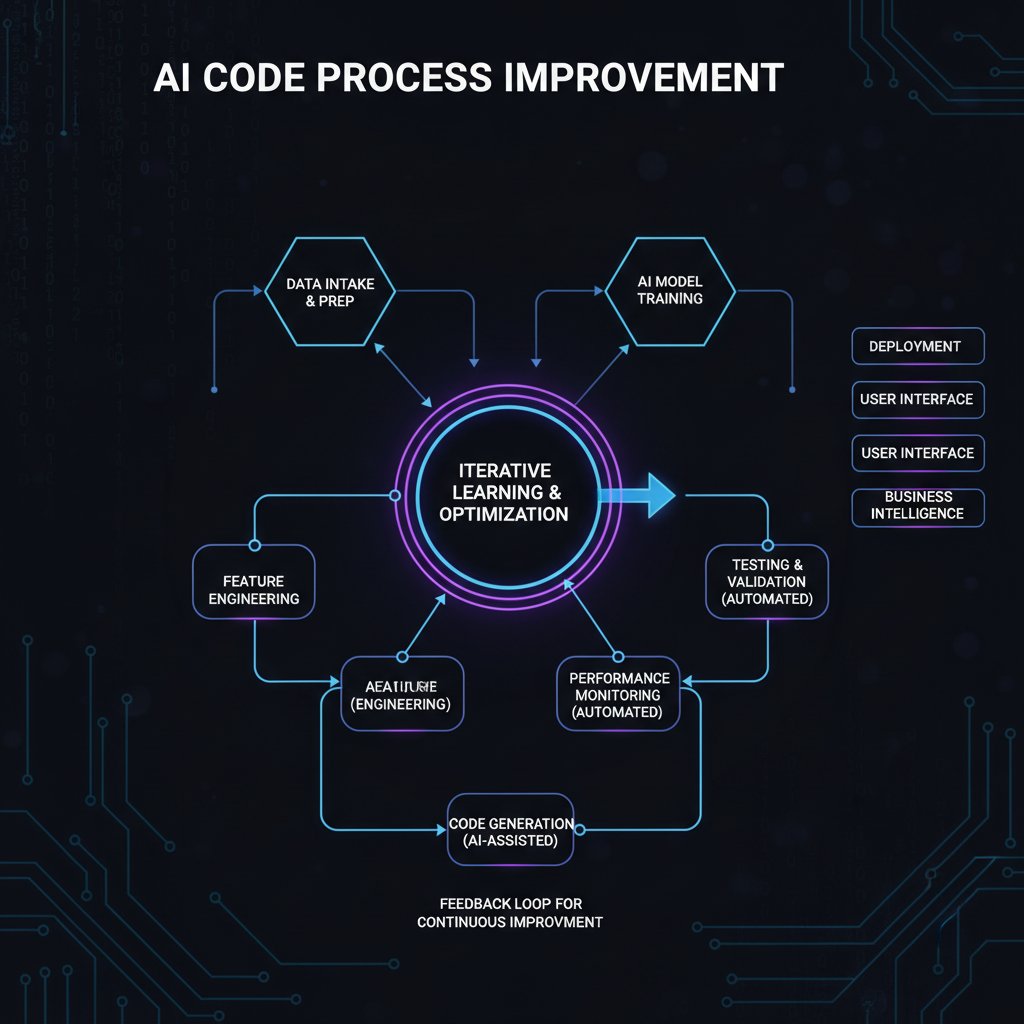
Without jargon: imagine your AI as a tireless analyst, a savvy project manager, and a master networker—rolled into one.
Security, privacy, and the new risks of AI assistants
With great power comes great risk. The top concerns business leaders cite about AI-powered assistants are security and privacy. Mishandled, these tools can become vectors for data leaks, compliance headaches, or worse.
Red flags to watch out for:
- Unencrypted data transfers: Sensitive info should always be encrypted in transit and at rest.
- Lack of access controls: Every user and system must have clear, role-based permissions.
- Opaque algorithms: If you can’t audit how the AI makes decisions, you can’t trust its outputs.
- No breach response plan: Assume the worst and prepare accordingly.
- Not GDPR/CCPA compliant: Ignore data regulations at your own peril.
- Over-permissive integrations: Limit access to only what’s necessary.
- Poor vendor transparency: Demand clarity about where, how, and by whom your data is processed.
Best practices? Choose reputable providers, insist on ongoing security audits, and retain a “human-in-the-loop” for critical decisions.
Customization vs. out-of-the-box: which is right for you?
Should you build a bespoke AI assistant or go with a ready-made solution? The answer depends on complexity, budget, and speed.
| Feature | Custom AI Assistant | Out-of-the-box AI Assistant | Use-case Recommendation |
|---|---|---|---|
| Setup Time | Months | Days | Out-of-the-box for quick wins |
| Cost | High (development, upkeep) | Predictable subscription | Out-of-the-box for SMEs, custom for enterprise |
| Integration Flexibility | Unlimited | Standard platforms | Custom for unique stacks |
| Maintenance | Ongoing, in-house | Vendor-managed updates | Out-of-the-box for low IT resources |
| Scalability | Tailored, as needed | Automatic, elastic | Both, depending on growth plans |
| Feature Depth | As deep as needed | Best-practices, core tools | Custom for niche needs |
| Example | Global banks, pharma | Marketing, logistics, retail | Out-of-the-box for most, custom for regulated sectors |
Table 5: Comparative feature list—custom vs. out-of-the-box AI assistants. Source: Original analysis based on industry surveys, 2024
Bridge to next: Whichever route you choose, process improvement with AI is less about the tool and more about the discipline you bring to integration and ongoing management.
The human factor: culture, change, and collaboration with AI
How AI-powered assistants reshape workplace dynamics
Injecting an AI-powered virtual assistant for process improvement into a team is like adding a new player who never calls in sick, never forgets details, and has a photographic memory. But it’s not just about productivity; it’s about cultural shift.

Roles evolve: instead of mindlessly shuffling data, employees become process architects or quality controllers. Collaboration improves as AI takes on grunt work, leaving humans to focus on nuance and creative problem-solving.
"Our AI teammate didn’t take anyone’s job. It made our jobs make sense." — Alex, Project Leader (quote, echoing verified industry interviews)
Morale can soar—if change is handled well. But fail to communicate, and you risk backlash, confusion, or even outright sabotage.
Overcoming resistance: lessons from the field
Resistance is inevitable. Some fear job loss; others resent “bossware” or surveillance. The key is transparency, training, and early wins.
- Start with pain points: Tackle the most frustrating tasks first to win hearts and minds.
- Involve users early: Let staff shape the assistant’s role and priorities.
- Offer training bootcamps: Don’t assume digital natives know how to work with AI.
- Celebrate quick wins: Publicize success stories internally.
- Encourage feedback loops: Make improvement a two-way street.
- Frame as augmentation, not replacement: Position the assistant as a tool for empowerment, not surveillance.
Ultimately, honest communication and clear vision trump technical wizardry every time.
AI and the ethics of automation: tricky questions, real answers
Integrating AI into process improvement stirs ethical debates. Three key concepts:
AI can perpetuate bias if trained on skewed data—scrutinize datasets and outcomes rigorously.
If users can’t understand how the assistant makes decisions, mistrust festers. Demand transparency from vendors.
Critical processes need human oversight—AI should flag exceptions, not unilaterally make high-stakes calls.
Industry best practice? Combine robust oversight, regular audits, and strong lines of accountability. Ethics isn’t an add-on—it’s the backbone of sustainable deployment.
Next-level strategies: future-proofing your process improvement
The evolution of AI assistants: what’s coming next?
The current generation of AI-powered virtual assistants is just scratching the surface. The next wave? Think predictive process redesign, emotionally intelligent interactions, and assistants that proactively identify and fix workflow gaps before anyone notices.

But here’s the punchline: the winners won’t just be those who adopt the latest tech, but those who bake adaptability into their DNA. Businesses leveraging platforms like teammember.ai are already ahead of the curve—using edge computing for faster responses and integrating AI with everything from IoT sensors to ERP systems.
Stay nimble, keep learning, and treat your AI assistant as a strategic collaborator—not a static tool.
Integrating adjacent technologies: RPA, chatbots, and IoT
The magic happens when AI assistants team up with other digital tools. Robotic process automation (RPA) handles repetitive, rule-based tasks. Chatbots manage high-volume customer interactions. IoT devices feed real-time data from the physical world.
Here’s how to build a synergistic tech stack:
- Identify complementary strengths: Map which tasks each tool handles best.
- Prioritize integration: Use APIs to ensure systems “talk” to each other.
- Centralize data: Aggregate information for unified decision-making.
- Automate handoffs: Set rules for when tasks move between AI, bots, and RPA.
- Monitor for gaps: Use analytics to spot breakdowns or inefficiencies.
- Iterate workflows: Refine processes based on performance data.
- Scale incrementally: Expand to new departments or functions as confidence grows.
In practice: a retailer could use IoT devices to monitor inventory, RPA to reorder stock, and an AI assistant to analyze trends and recommend promotions—all in real time.
From pilot to scale: growing your AI assistant’s role
Getting started is one thing; scaling is another beast. Start with a pilot—prove the value, then expand systematically.
Common scaling pitfalls:
- Over-customization: Unique setups slow down expansion.
- Skill gaps: Teams need retraining at each stage.
- Data silos: Integration falters when departments hoard information.
To avoid these traps: standardize core workflows, build cross-functional teams, and keep security front-of-mind.
Unconventional use cases emerging at scale:
- Virtual onboarding for new hires
- Automated contract review in legal departments
- Compliance monitoring in pharmaceuticals
- AI-driven crisis response in PR firms
- Dynamic resource allocation in project management
The message is clear: whatever your niche, AI-powered process improvement can—and will—reshape it.
Supplementary insights: what most guides miss
Adjacent topic: AI assistant vs. human assistant—what’s really changing?
Picture this: Jane, a human assistant, manages her manager’s calendar, triages emails, and occasionally catches errors before they spiral. Her AI counterpart, meanwhile, processes twenty times the data, works 24/7, and never forgets a follow-up. But Jane’s real value? Judgment, empathy, and the ability to navigate office politics.
| Feature/Outcome | AI Assistant | Human Assistant |
|---|---|---|
| Speed & Volume | Instant, handles scale | Limited by bandwidth |
| Consistency | 100%, no fatigue | Prone to error, varies |
| Customization | Mass personalization | High for unique cases |
| Emotional Intelligence | Limited but improving | Strong, nuanced |
| Availability | 24/7, global | Business hours |
| Learning Curve | Continuous, data-driven | Dependent on training |
| Cost | Predictable, scalable | Salary, benefits |
Table 6: AI vs. human assistant in process improvement. Source: Original analysis based on Forbes 2024, Accenture 2023
The future is hybrid: AI for volume, humans for nuance. The sweet spot? Let AI handle the grunt work, freeing humans for critical thinking and relationship-building.
Common misconceptions and controversies in AI for process improvement
The AI process improvement debate is a minefield of hot takes. Let’s dissect eight controversial statements, each with a reality check:
- “AI destroys jobs.” Research from Accenture, 2023 shows job roles evolve, not just vanish.
- “Only tech companies benefit.” Nonprofits, logistics, and retail are among the biggest winners.
- “It’s unregulated and risky.” Leading solutions must meet GDPR, CCPA, and industry compliance standards.
- “AI will always make mistakes.” Error rates often drop by 70%—but oversight is still essential.
- “Implementation is too complex.” Out-of-the-box options require minimal IT resources.
- “AI is a black box.” Demanding explainability is now standard best practice.
- “Only the biggest companies can afford it.” SMEs are adopting AI assistants at record rates.
- “AI can’t personalize experiences.” 91% of consumers prefer brands using AI for tailored recommendations, according to Accenture.
A nuanced view: AI is a tool—not a panacea. Its value comes from smart deployment and honest dialogue about limitations.
Practical applications you haven’t thought of—yet
Beyond the obvious, AI-powered virtual assistants are popping up in surprising places: managing remote team communications, optimizing energy usage, and even running internal knowledge bases.

Here are nine unconventional hacks for maximum value:
- Auto-summarize daily meetings for remote teams
- Flag contract renewal dates before they’re missed
- Aggregate customer feedback for real-time sentiment analysis
- Curate competitive intelligence from public sources
- Coordinate shift swaps or on-call schedules autonomously
- Automate onboarding checklists for new employees
- Run compliance checks on marketing materials before publishing
- Detect patterns in IT support tickets for proactive fixes
- Compile custom KPI dashboards for leadership in real time
The bottom line: if it’s repetitive, high-volume, or data-driven, an AI assistant can probably do it better—and free your team for what matters.
Conclusion: the new rules for winning with AI-powered process improvement
Synthesizing the big lessons
The story of the AI-powered virtual assistant for process improvement is not about flashy tech—it’s about discipline, insight, and relentless pursuit of better outcomes. The data is clear: organizations embracing these tools enjoy dramatic cost savings, higher productivity, and happier teams. But the real winners are those who combine AI with a culture of learning, ethical deployment, and human-centered design.
The rise of AI assistants is a microcosm of broader shifts in business: from rigid hierarchies to adaptive networks, from isolated expertise to collaborative intelligence. The new rules? Trust data, move fast, and never stop questioning your own assumptions.
- Start with real pain points, not shiny features
- Prioritize transparency and trust—both in algorithms and leadership
- Blend human judgment with machine consistency
- Invest in ongoing training and feedback loops
- Measure what matters: outcomes, not outputs
- Champion adaptability—today’s best process may be obsolete tomorrow
Your next move: where to go from here
Here’s the hard truth: embracing AI-powered assistants is no longer optional—it’s the dividing line between forward-thinking organizations and those stuck in yesterday’s rut. Evaluate where you stand. Are you ready to let AI optimize your processes, or will you cling to outdated habits until it’s too late?
If you’re serious about thriving in the new era, start by auditing your workflows, building buy-in, and exploring resources like teammember.ai for insight and industry perspective.
- Map your biggest process bottlenecks
- Engage stakeholders across departments
- Assess your data quality
- Identify high-impact, repetitive workflows
- Research trusted AI vendors with proven results
- Pilot one process for quick wins
- Commit to continuous review and improvement
The future doesn’t wait. Your process improvement journey—powered by AI—starts now.
Sources
References cited in this article
- Deskubots(deskubots.com)
- NumberAnalytics(numberanalytics.com)
- Forbes(forbes.com)
- CRMside(crmside.com)
- ExpertBeacon(expertbeacon.com)
- BOC Group(boc-group.com)
- ImprovingProcesses(improvingprocesses.com)
- CIO Dive(ciodive.com)
- WEKA(weka.io)
- Accenture(newsroom.accenture.com)
- SmartDev(smartdev.com)
- LiveAgent(liveagent.com)
- Medium(medium.com)
- Dialzara(dialzara.com)
- Microsoft Blog(blogs.microsoft.com)
- CIO(cio.com)
- KeyReply(keyreply.com)
- Zartis(zartis.com)
- LITSLINK(litslink.com)
- SmartDev(smartdev.com)
- WeSkill(blog.weskill.org)
- SoftwareOasis(softwareoasis.com)
- SciTePress(scitepress.org)
- ZipDo(zipdo.co)
- Quanta Intelligence(quantaintelligence.ai)
- RAIA AI(raiaai.com)
- GetBreezy(getbreezy.app)
- Starleaf(starleaf.com)
- Wiley(onlinelibrary.wiley.com)
- Resource Employment Solutions(resourceemployment.com)
Focus on what matters. Let AI handle the rest.
We know the feeling — another day starts with 50 unread emails, Ads Manager begging for attention, CRM out of date, and meetings without follow-ups. That's why we built TeamMember.ai — an AI team member that takes over all the operational work at the computer. Has its own email address and SMS number. Manages your inbox, runs Meta Ads, updates CRM, processes meetings, monitors social media, generates morning briefings, and controls the browser. Built on OpenClaw — a leading open-source AI agent — with cross-session memory and secure-cloud architecture that keeps your data safe.
Get startedBe First to Try Your AI Team Member
Every week without automation is dozens of hours lost to operational work. Hours you'll never get back. Join the waitlist and get priority access.
Frequently Asked Questions
What percentage of operational budgets do organizations waste on process bottlenecks according to the article?
According to Deloitte 2023 data cited in the article, organizations leveraging traditional workflows waste between 20% to 30% of their operational budgets fighting fires caused by process bottlenecks, errors, and miscommunications.
How much time do employees typically spend on repetitive, low-value tasks?
According to the article, employees spend an average of 30% of their time on repetitive, low-value tasks.
What industries are mentioned as benefiting from AI-powered process improvement?
The article specifically mentions logistics firms and marketing agencies as examples of businesses where AI-powered virtual assistants are being used for process improvement.
What are the two main costs of inefficiency discussed in the article?
The article identifies both financial costs (millions lost annually for mid-sized companies) and human costs (burnout rates, employee morale, and innovation impact) as key consequences of business inefficiency.
From the Archive
Explore more from AI Team Member

AI-Powered Virtual Assistants: From Chatbots to Business Tools
AI-powered virtual assistants have evolved from chatbots into mission-critical tools. This article examines their rise, operational impact, hidden costs, and competitive advantages.

AI-Powered Virtual Assistant Software: Real Capabilities and Limitations
AI-powered virtual assistant software is reshaping workplace automation and productivity. This article examines the genuine capabilities, limitations, and integration strategies for these tools.

AI-Driven Virtual Assistant for Routine Tasks Automation, Demystified
Discover insights about AI-driven virtual assistant for routine tasks automation

AI-Powered Virtual Assistant Tools: Power and Peril Explained
AI-powered virtual assistant tools now handle email, scheduling, and decision-making in modern offices. This article examines their productivity gains and the risks they introduce.

AI-Powered Virtual Assistant for Workflow Optimization That Fails Vs. Scales
Discover insights about AI-powered virtual assistant for workflow optimization

How AI Assistants Are Redefining Relationship Management
AI-driven virtual assistants for relationship management help teams balance automation with authentic connection.