AI-Powered Virtual Assistants in Education: Promise, Risk, Reality
Written with AI assistance under our editorial guidelines
AI-powered virtual assistants are now embedded in education, offering 24/7 support, rapid essay grading, and precise learning analytics. The market is projected to reach $41.6 billion by 2028, driven by advances in large language models and the COVID-19 remote learning crisis. This shift represents a fundamental cultural change for schools, transcending simple automation to reshape how teachers, students, and administrators work together.
In 2025, the AI-powered virtual assistant for education has stormed the classroom: not as the cold, distant fantasy once imagined, but as an everyday disruptor—simultaneously a lifeline and a lightning rod. Digital teachers’ aides now answer questions at midnight, grade essays in seconds, and track learning data with a clinical precision that no human could match. But for every headline about efficiency or personalized learning, there’s a quieter story of adaptation, skepticism, and the messy reality behind the AI revolution. This isn’t just automation—it’s a cultural shift, and it’s already rewriting the rules for teachers, students, and administrators alike. If you still think AI is an optional classroom gimmick, you’re missing the real story. Here are the seven truths schools can’t ignore about AI-powered virtual assistants in 2025.
The digital classroom’s new disruptor: What AI-powered virtual assistants really are
From sci-fi to school reality: A brief history
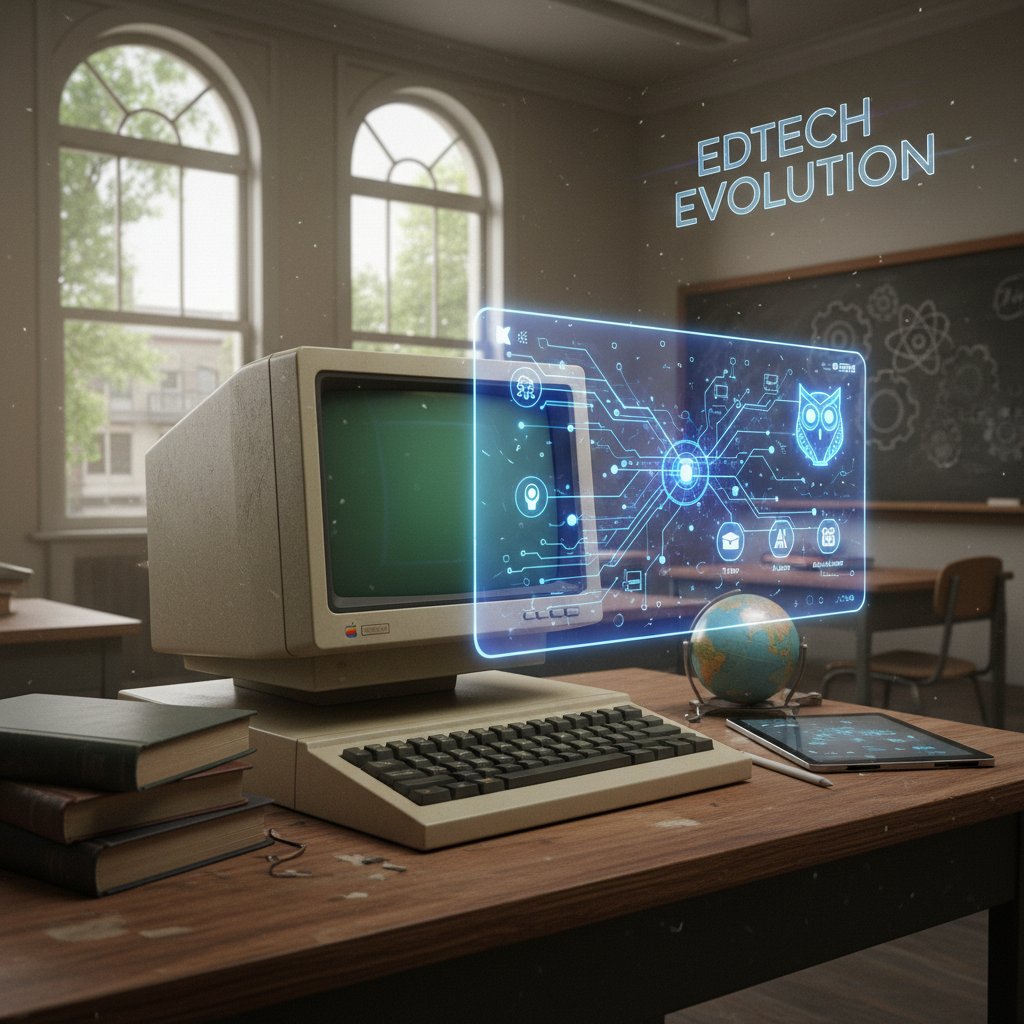
The evolution from the clunky computer labs of the '90s to today’s AI-powered virtual assistant for education is a story of shifting ambition and relentless innovation. In the early days, schools boasted about having a “computer corner”—bulky machines running basic math games or word processors. Fast forward, and the first software “tutors” emerged: scripted programs with limited interactivity, more digital worksheet than mentor.
By the 2010s, the likes of Siri, Alexa, and Google Assistant made natural language processing mainstream, but education lagged behind, skeptical and underfunded. What changed the game? The 2020s explosion in large language models (LLMs), machine learning, and the COVID-19 remote learning crisis forced a hard pivot—AI was no longer a nice-to-have, but a necessity. According to MagicBox (2024), the global intelligent virtual assistant market is projected to hit $41.6B by 2028, with education as a key growth driver.
| Year | Milestone | Impact on Education |
|---|---|---|
| 1990 | Computer labs enter mainstream schools | Basic digital literacy |
| 1996 | ELIZA chatbot re-emerges in academic settings | Early AI conversational agent trials |
| 2011 | Siri launches; voice AI goes public | Raises expectations for AI support |
| 2016 | Alexa, Google Assistant join market | Edtech explores voice interaction |
| 2020 | COVID-19 remote era accelerates adoption | AI tools fill gaps in remote teaching |
| 2023-2024 | Generative AI, LLMs hit classrooms | Personalized, real-time support and grading |
Table 1: Timeline of AI adoption in education from 1990 to 2025. Source: Original analysis based on MagicBox (2024), MagicBox
The trajectory is clear: what started as science fiction has become daily reality, and every year, the AI assistant grows less like a gadget and more like a true educational collaborator.
Defining the AI-powered virtual assistant: More than just chatbots
Despite their digital skins, not all virtual assistants are created equal. The real AI-powered virtual assistant for education is more than a souped-up chatbot or glorified FAQ machine. Beneath the friendly interface lies a complex web of algorithms—large language models trained on millions of texts, natural language processing (NLP) that deciphers context, and adaptive learning engines that tailor responses to individual students.
Consider the difference: a standard chatbot can answer “What is photosynthesis?” with a canned line. An AI-powered assistant, however, can scaffold a personalized explanation, assess a student’s prior knowledge, adapt its feedback tone, and even spot patterns in mistakes across essays. According to a 2024 Scoop Market analysis, education-focused virtual assistants increasingly rely on machine learning to automate everything from admin tasks to real-time translation.
Definition list: Key terms demystified
- Machine learning: Algorithms that learn from data and improve over time without explicit programming. In education, this means assistants can adapt to students’ learning styles.
- Natural language processing (NLP): The technology that enables computers to understand, interpret, and respond in human language. Vital for AI assistants to “listen” and “speak” intuitively.
- Adaptive learning: Systems that personalize educational content and feedback in real time, responding to individual student performance and needs.
This shift isn’t just technical—it’s a new paradigm for what digital educational helpers can (and should) do.
What users really want (and rarely get) from educational AI
The marketing gloss promises “effortless learning” and “teacherless classrooms,” but the lived reality is more nuanced. Most users—teachers, students, and even IT admins—want three things: genuine workload relief, meaningful engagement, and a system that doesn’t require a PhD to operate. Yet, these goals are often undercut by clunky onboarding, privacy worries, and AI that misunderstands local context.
Still, below the surface, AI-powered virtual assistants in education deliver benefits that don’t make the brochure:
- Unordered List: Top 7 hidden benefits experts won’t tell you
- 1. Real-time triage for struggling students: AI assistants can flag at-risk learners based on subtle behavioral cues, often before the human eye can spot trouble.
- 2. Leveling the playing field for ESL and neurodiverse students: Adaptive language and pacing make content accessible to a broader spectrum of learners.
- 3. Personalization at scale: 30 students, 30 learning plans—all tracked and updated without burnout.
- 4. Admin liberation: Tedious tasks like grading or data entry dissolve, freeing teachers for actual teaching.
- 5. 24/7 learning support: Students get help on their schedule, not just during school hours.
- 6. Early warning systems for academic dishonesty: AI can detect patterns of plagiarism or cheating more efficiently than manual checks.
- 7. Continuous professional development: Teachers can use AI insights to refine their instructional strategies in real time.
The bottom line: what users crave is not just automation, but intelligent, contextual support—and the best AI assistants are starting to deliver.
Behind the hype: Debunking myths and exposing inconvenient truths
Myth-busting: AI is not coming for your job—yet
Let’s cut through the fear. The narrative that AI-powered virtual assistants for education are prowling the hallways, looking to replace teachers, is both overblown and deeply misleading. According to a 2024 AIPRM study, 65% of teachers see AI as a support tool rather than a threat. The reality? AI excels at repetitive, rules-based work—grading, data analysis, scheduling—but falls short on nuance, empathy, and the improvisational art of classroom management.
"AI is a tool, not a takeover—teachers are more essential than ever." — Maya, edtech strategist, AIPRM, 2024
Educators who harness AI as a collaborator, not a competitor, report less burnout, more time for creativity, and better student outcomes. The new equation is augmentation, not replacement.
Bias, privacy, and the messy side of machine learning
AI’s promise comes with a price tag: hidden biases, privacy risks, and the murky ethics of machine learning. AI models are only as fair as the data they’re trained on. If a dataset skews toward certain demographics, those same biases can echo in classroom recommendations—sometimes reinforcing, rather than dismantling, existing inequalities.
Privacy is a tinderbox issue. According to AIPRM, 2024, 52% of surveyed people believe primary schools should teach AI use, but concerns over data collection and transparency are only growing. Parents and teachers are demanding to know: Who owns the data? How is it used? What happens when students’ mistakes or vulnerabilities become part of the training corpus?
| Platform | Data Privacy Policy Transparency | User Data Control Features | Independent Audits |
|---|---|---|---|
| MagicBox | High | Student opt-out | Annual |
| Mainstay | Medium | Limited | Biannual |
| Google Classroom AI | Medium | Admin-controlled | None published |
| BigMarker | Low | Unclear | None published |
Table 2: Comparison of privacy policies and transparency in top AI education platforms. Source: Original analysis based on public policy disclosures from MagicBox, Mainstay, and Google.

The hidden costs: Why free isn’t always free
The “free” AI-powered virtual assistant for education comes with invisible strings. Beyond the subscription sticker price, schools face additional costs: training faculty, maintaining infrastructure, upskilling staff for AI literacy, and weathering the disruption of new workflows. According to Coolest Gadgets, 2025, over 40% of small U.S. businesses—paralleling education—identify training and ongoing support as top hidden expenses in deploying virtual assistants.
Ordered List: 6 red flags to watch for
- Opaque data practices: If a vendor can’t clearly explain where student data goes, run.
- Lack of local adaptation: Generic AI often fails in schools with unique cultural or linguistic needs.
- Inadequate support: Minimal onboarding and no live help? Prepare for chaos.
- Hidden upgrade fees: “Free” often means paying for premium features later.
- Complex integration: If the AI assistant can’t play nice with existing systems, expect workflow headaches.
- One-size-fits-all models: Beware assistants that ignore differentiated learning or special needs.
Ignoring these costs can turn an AI dream into a bureaucratic nightmare.
How AI-powered virtual assistants actually work: Under the hood
Components and workflows: Anatomy of a classroom AI assistant
The magic of AI-powered virtual assistants for education isn’t magic—it’s architecture. At its core, a typical assistant in 2025 is built around several technical pillars: data ingestion pipelines that pull in student and curriculum data; powerful large language models (LLMs) that generate responses; and continuous feedback loops that retrain the model based on user corrections.
Picture it as an assembly line. Raw input—questions, assignments, attendance logs—flows into a data lake. The AI’s “brain” processes this with LLMs fine-tuned for educational content, cross-referencing with previous interactions. When it spits out a response or grades an essay, that output is logged, and corrections (when teachers push back) help recalibrate the AI for next time.
| Feature | Mainstay Chatbot | MagicBox AI | BigMarker | Google Classroom AI |
|---|---|---|---|---|
| 24/7 Student Support | Yes | Yes | Limited | No |
| Adaptive Learning | Yes | Yes | No | Yes |
| Automated Grading | Limited | Yes | No | Yes |
| Multilingual Support | Yes | Yes | Yes | Yes |
| Real-time Analytics | Yes | Yes | Yes | Limited |
Table 3: Feature matrix comparing leading AI-powered virtual assistants for education (2025). Source: Original analysis based on vendor documentation from Mainstay, MagicBox, BigMarker, and Google.
Real-time in action: Adaptive learning, grading, and student support
Where virtual assistants shine is in the trenches: automating grading at midnight, offering instant feedback on essays, and flagging a student falling behind before report cards ever land. For example, a high school English teacher uses an AI assistant to grade 120 essays overnight, identifying not just grammar slips but deeper patterns in argument structure. Meanwhile, a rural school leverages voice-based AI to support ESL learners in real time, adapting vocabulary and pacing on the fly.
In another vignette, a middle school deploys predictive analytics: the assistant uses attendance patterns and assignment completion rates to alert counselors about students at risk—days before grades begin to slip.

The bottom line? AI-powered virtual assistants don’t just save time—they create new feedback and support loops that were impossible before.
Limits and failure points: When AI gets it wrong
For all the hype, even the best AI-powered virtual assistant for education fails—sometimes spectacularly. Common errors include misreading the nuance of a student’s question, serving up biased or outdated answers, or, in rare cases, hallucinating information. Technical glitches, network hiccups, or improper integration can disrupt an entire lesson.
Mitigation strategies? Training the AI on local data, maintaining human review for sensitive tasks, and setting clear escalation channels for errors. As one high school teacher put it:
"Our AI flagged Shakespeare as inappropriate. That’s when I knew it needed more context." — Alex, high school teacher
No system is flawless. The real test is how failures are caught, corrected, and used to drive continuous improvement.
Case files: AI-powered virtual assistants in real schools today
Urban classrooms: Leveling the playing field or widening the gap?
In under-resourced urban schools, the AI-powered virtual assistant for education is both a lifeline and a loaded question. On one hand, these tools can democratize access—providing 24/7 tutoring, automating administrative tasks, and translating lessons in real time for immigrant students. According to MagicBox (2024), schools using AI assistants saw a 30% average improvement in assignment completion among ESL students.
But the picture isn’t universally rosy. In classrooms where Wi-Fi is spotty or device access remains limited, AI can reinforce existing divides—creating a new digital underclass among the already marginalized.
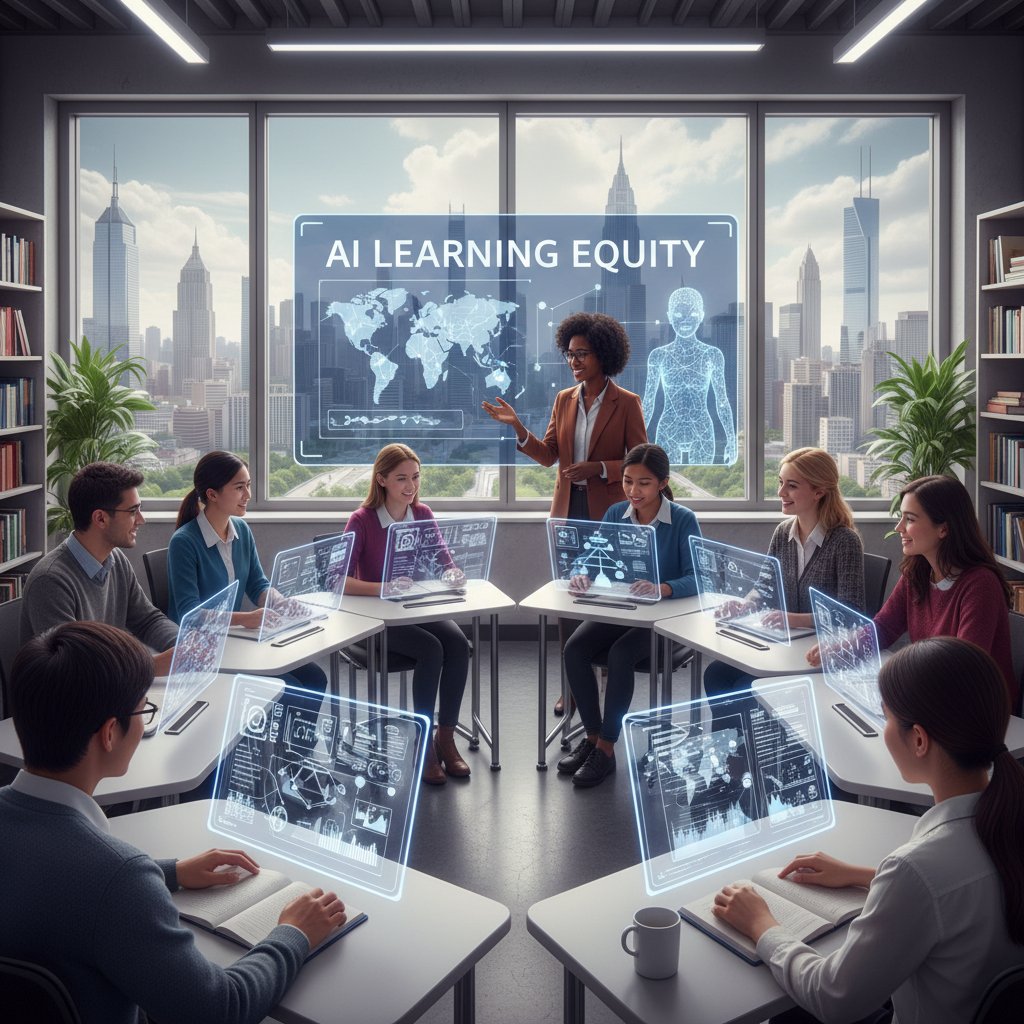
The lesson? In the real world, context is king: the same assistant can narrow or widen the gap depending on access and training.
Special education: Unexpected wins and persistent challenges
AI-powered virtual assistants for education are quietly upending special ed. In one elementary school, an assistant adapts reading content for dyslexic students, using text-to-speech and simplified vocabulary. Another district uses AI to generate custom math exercises for students with ADHD, balancing challenge and engagement.
A third example: a high school leverages AI-powered reminders and visual schedules for students with autism, boosting independence and reducing anxiety.
Unordered List: 5 unconventional uses in special education
- Personalized visual learning schedules and reminders for neurodivergent students.
- Real-time translation for non-verbal or minimally verbal learners using augmented communication devices.
- Automated progress tracking on individual education plans (IEPs), reducing teacher paperwork.
- AI-assisted note-taking for students with motor impairments.
- On-demand, context-aware social skills training for students with autism.
Outcomes vary, but across the board, AI is making differentiated instruction more scalable—though not without new hurdles in privacy and adaptation.
Higher education: From lecture halls to research labs
Universities are the original testbed for the AI-powered virtual assistant for education, deploying tools that streamline everything from student advising to literature review. According to AIPRM, 2024, nearly 60% of large U.S. universities now use some form of AI assistant, reporting improvements in student retention (up 18%) and faster administrative response times.
| Institution Type | % Using AI Assistants | Top Reported Benefit | Year |
|---|---|---|---|
| Research University | 76% | Faster research support | 2024 |
| Liberal Arts College | 42% | Improved student advising | 2024 |
| Community College | 58% | Streamlined admin processes | 2024 |
Table 4: Statistical summary of AI-powered assistant adoption in higher education (2024-2025). Source: AIPRM, 2024
The takeaway? Whether in the lab or lecture hall, AI is now part of the academic fabric.
Practical playbook: How to choose and implement the right AI assistant
Making the shortlist: What to demand from vendors (and what to avoid)
Buying into AI isn’t as simple as picking from a menu. Here’s what savvy schools demand:
- Transparent data privacy and security policies, with real audit trails.
- Compatibility with existing learning management systems (LMS).
- Customizability for local curriculum and diverse student needs.
- Responsive support, including live onboarding and troubleshooting.
- A clear roadmap for teacher training and upskilling.
Ordered List: Step-by-step guide to adoption
- Needs assessment: Audit your school’s pain points—admin overload, student engagement, language barriers.
- Vendor research: Shortlist AI assistants with proven track records and transparent policies.
- Pilot program: Roll out to a small group, focusing on high-need areas.
- Staff training: Provide hands-on workshops and ongoing support.
- Student onboarding: Introduce the assistant with clear guidelines and feedback channels.
- Continuous monitoring: Track usage, collect feedback, and adapt.
- Full launch: Scale up with lessons learned from your pilot.
Each step is critical—missing one can derail your entire implementation.
Integration without chaos: Training, rollout, and support
Getting an AI-powered virtual assistant for education up and running is as much about people as tech. Successful deployments pair technical integration with robust human training. Best practices include phased rollouts, “superuser” teacher cohorts, and live support lines.
Common pitfalls? Underestimating the time required for ingraining new habits, or failing to address staff skepticism with real, hands-on exposure.

The lesson: Tech won’t transform learning unless staff are equipped, empowered, and supported every step of the way.
Measuring success: Data, feedback, and continuous improvement
If you can’t measure it, you can’t improve it. Schools leading in AI-powered virtual assistant adoption use a mix of quantitative and qualitative metrics:
Unordered List: 7 must-track metrics
- Student engagement rates (login frequency, question volume).
- Assignment completion and on-time submission rates.
- Teacher workload reduction (hours saved per week).
- Student performance trends across demographics.
- Frequency and type of technical errors reported.
- User satisfaction scores (students, teachers, parents).
- Pace of teacher and student upskilling in AI literacy.
Continuous feedback loops—formal surveys, focus groups, real-time analytics—enable rapid course corrections and ensure the assistant evolves with community needs.
Controversies, culture wars, and the AI classroom divide
Digital equity or digital divide? Who gets left behind
The AI-powered virtual assistant for education is often cast as the great equalizer, but the truth is more jagged. In affluent districts, AI smooths learning curves and personalizes instruction. In underfunded schools, a lack of hardware or poor connectivity risks deepening divides.
Equity isn’t just about access—it’s about agency. Who decides how the AI is used, whose data is harvested, and what cultural norms are embedded in its logic?
"AI can be a lifeline or a lockout—it all depends on access." — Jamie, school principal
Until every student has not just a device, but a voice in AI’s design, the digital classroom remains a battleground.
Resistance and rebellion: When teachers and students push back
For every success story, there’s a tale of creative resistance. Some teachers “sandbox” their AI assistants, feeding carefully curated data to avoid bias, or build parallel analog systems as a safety net. Students aren’t passive, either—they’ve hacked prompts to elicit funnier, more engaging responses or to “test” the boundaries of AI honesty.
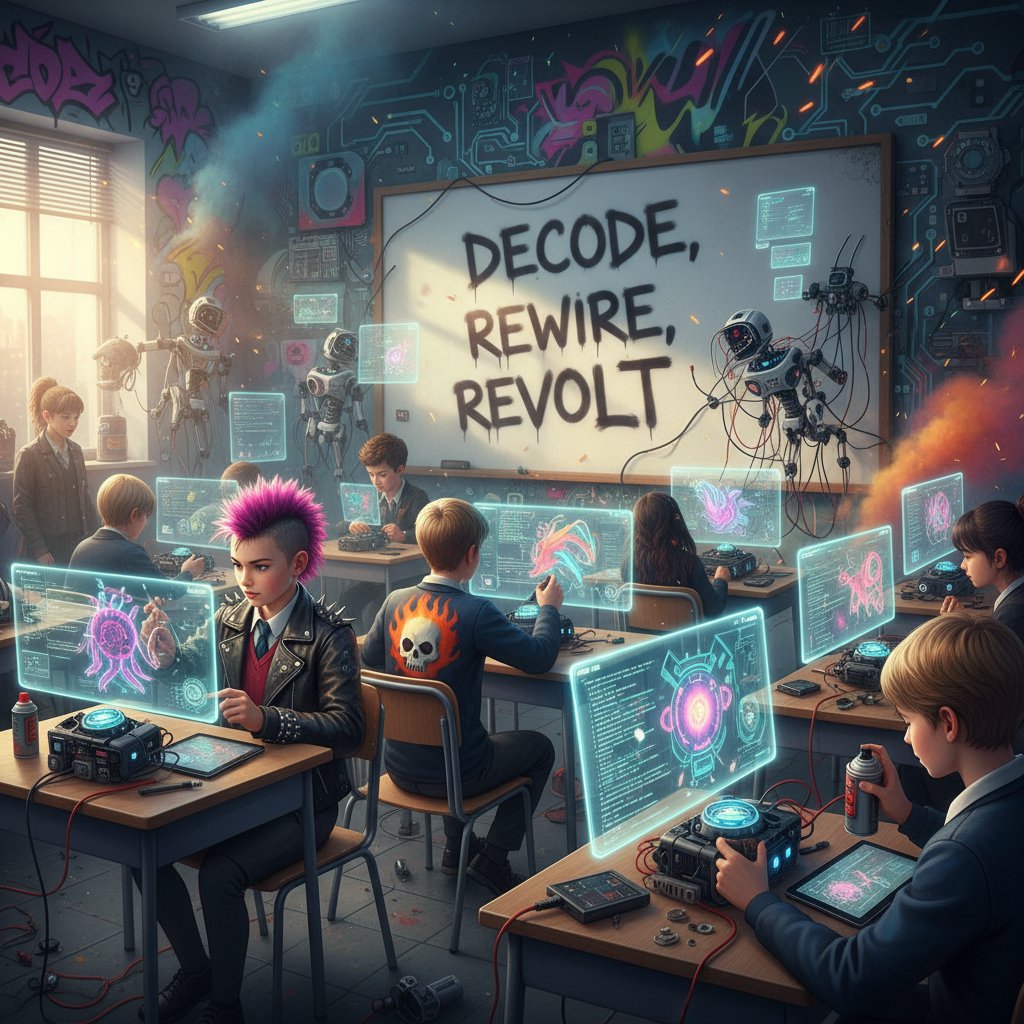
The takeaway? AI isn’t a static tool—it’s an evolving process shaped by its users, for better or worse.
Societal impact: Shifting roles, expectations, and the future of teaching
AI-powered virtual assistants for education are reshaping not just workflows but identities. Teachers become facilitators, data interpreters, and digital ethicists. Students, armed with instant AI feedback, demand more autonomy and personalized pacing.
Definition list: Key concepts in the AI classroom
- AI literacy: The ability to understand, critically assess, and creatively engage with artificial intelligence tools in educational settings. Now a core competency alongside reading and math.
- Digital agency: The capacity of users to make informed choices and exert control over their digital learning environment—including how AI assists or adapts.
- Augmented teaching: A model where technology amplifies human skill, rather than replaces it, enabling educators to focus on higher-order thinking, empathy, and creativity.
The era of the “sage on the stage” is closing. The AI-powered virtual assistant is nudging schools toward a new, hybrid identity—fluid, data-driven, and endlessly adaptable.
The future is now: What’s next for AI-powered virtual assistants in education
Emerging trends: From predictive analytics to emotional AI
Current trends show AI-powered virtual assistants for education shifting from reactive helpers to proactive partners. Predictive analytics now flag at-risk students earlier, while experimental “emotional AI” analyzes student sentiment and engagement patterns to suggest interventions—already being piloted in some cutting-edge districts.

According to education technology forecasters, the next wave will see even tighter integration with AR/VR environments, deeper curriculum adaptation, and more nuanced, context-aware feedback.
Cross-industry inspiration: Lessons from healthcare, finance, and beyond
Education isn’t the only sector learning from AI assistants. Healthcare uses them for patient triage, finance for fraud detection, and customer service for 24/7 query resolution. Each field faces unique regulatory hurdles, but cross-pollination is driving rapid improvement.
| Sector | Common AI Assistant Features | Key Regulatory Hurdles | Adoption Rate (2024) |
|---|---|---|---|
| Education | Adaptive learning, grading | FERPA, data privacy | High |
| Healthcare | Symptom triage, scheduling | HIPAA, consent | Medium |
| Finance | Fraud alerts, analytics | GDPR, KYC | High |
| Retail | Chatbots, personalization | GDPR, consumer rights | High |
Table 5: Cross-industry comparison of AI assistant features and adoption. Source: Original analysis based on industry reports from MagicBox and Scoop Market (2024).
Lesson for schools: watch how other sectors handle consent, transparency, and user control.
Controversial predictions: What could go wrong (or right) by 2030?
Looking ahead, the stakes only rise. Will AI finally close the equity gap, or will algorithmic bias calcify new forms of discrimination? Will the “teacherless” classroom become the norm, or will a backlash re-center human instruction?
Ordered List: Timeline of AI-powered virtual assistant evolution
- 2020: Early AI chatbots for basic Q&A.
- 2022: Mainstream adoption of automated grading and scheduling.
- 2024: Generative AI powers adaptive learning in K-12.
- 2025: Emotional AI and predictive analytics hit select classrooms.
- 2027: Cross-sector AI interoperability grows (education, healthcare, etc.).
- 2029: Controversies over data ownership and algorithmic bias peak.
- 2030: Regulatory frameworks force a new balance between automation and human oversight.
The only certainty: today’s debates will shape tomorrow’s classrooms.
Expert voices and user stories: Lessons from the front lines
Teacher perspectives: Adaptation, skepticism, and surprise wins
Not every teacher embraces change, but AI-powered virtual assistants are winning converts in unexpected places. Priya, a middle school teacher, was initially skeptical, fearing data overload and tech glitches. A year later, she credits her assistant with spotting signs of student burnout—insights she’d missed amid daily chaos.
Meanwhile, an early adopter in a rural district describes how AI freed up hours of lesson planning, while a self-described technophobe discovered that the assistant’s gentle reminders helped students turn in homework on time for the first time all year.
"I never thought AI could help me spot burnout signs in my students. Now I count on it." — Priya, middle school teacher
Three perspectives, one theme: adaptation is messy, but the right support can turn skeptics into advocates.
Student stories: From frustration to empowerment
For students, the AI-powered virtual assistant for education is both a guide and a puzzle box. One student describes the relief of getting instant, judgment-free homework help at midnight; another recalls frustration when the assistant misunderstood a nuanced question about history. Others have learned to “hack” the system—using creative prompts to get the assistant to re-explain complex math in familiar slang, or to generate practice quizzes before big exams.
Unordered List: 6 ways students have reimagined their AI classroom assistant
- Using the assistant as a brainstorming partner for creative writing.
- Customizing prompts to create revision flashcards on demand.
- Testing the boundaries of AI error-detection by submitting “trick” questions.
- Leveraging AI to prep for oral presentations with simulated Q&A.
- Creating group chats where multiple students “debate” with the AI on controversial topics.
- Rewriting AI-generated feedback in their own words to deepen understanding.
The result? A new kind of digital agency—and a generation of learners unafraid to experiment.
Admin and parent views: Balancing risk, return, and responsibility
School administrators walk a tightrope: they must weigh the efficiency gains and cost savings against real risks of privacy breaches and biased decision-making. For parents, the calculation is even more personal—will AI make their child’s learning richer, or does it open the door to surveillance and over-standardization?

In leading districts, decision frameworks now include parent advisory boards, transparent data policies, and third-party audits—ensuring everyone has a seat at the table.
Beyond the classroom: Adjacent impacts and surprising uses
Extracurriculars and student life: AI as club coach, mentor, and monitor
AI-powered virtual assistants aren’t just for academics. In one high school, the debate club uses an assistant to fact-check arguments and simulate tough opponents. Student athletes schedule practices and track progress with AI reminders. Peer mentoring programs deploy assistants to monitor check-ins and deliver motivational nudges.
Unordered List: 5 surprising extracurricular roles
- Club meeting scheduler and agenda planner.
- Sports performance tracker, providing personalized feedback.
- Creative writing coach for school newspaper contributors.
- Social media monitor for safe, respectful online engagement.
- Peer conflict mediator, suggesting solutions in student disputes.
The upshot? AI is quietly transforming every corner of student life, often outpacing formal curriculum change.
Professional development for teachers: AI as a learning partner
Teachers, too, are discovering new allies in AI-powered professional development tools. From personalized learning modules to real-time feedback on lesson effectiveness, AI is nudging educators toward continuous growth.
| Tool | Key Features | Pros | Cons | Rating (out of 5) |
|---|---|---|---|---|
| MagicBox Prof. Dev | Custom modules, analytics | Tailored, data-driven | Occasional bugs | 4.5 |
| EduAI Coach | Peer collaboration, chat support | Real-time advice | Less content depth | 4.0 |
| TeacherGPT | AI-generated lesson plans, tips | Fast, adaptable | Can be generic | 3.8 |
Table 6: Comparison of AI-powered professional development tools for educators. Source: Original analysis based on vendor documentation and educator feedback (2024).
teammember.ai and the rise of professional AI assistants in education
As schools seek trusted resources to guide their AI journey, platforms like teammember.ai have emerged to support decision-makers and educators with authoritative insights and up-to-date best practices. By aggregating expertise and fostering community discussion, such resources bridge the knowledge gap and empower schools to make smarter, more confident choices about AI integration.
Conclusion: Rethinking the role of AI in education for 2025 and beyond
Key takeaways: What matters most for schools, teachers, and students
The AI-powered virtual assistant for education is here to stay—messy, potent, and anything but optional. Efficiency alone isn’t enough; the real value is in engagement, equity, and adaptability. Teachers remain at the core, but their roles are evolving. Students have more voice and agency, and administrators are stewards of a new, complex landscape.
Ordered List: Priority checklist for successful implementation
- Assess your school’s true needs before shopping for AI solutions.
- Demand transparency and robust privacy policies from vendors.
- Pilot programs before full-scale rollout—test, adapt, repeat.
- Invest in staff and student AI literacy training.
- Track outcomes with clear metrics and act on feedback.
- Prioritize accessibility and digital equity at every phase.
- Build a culture of continuous improvement—never assume the job is done.
Critical questions for your next staff meeting
No school can afford to sleepwalk into AI adoption. Ask yourself—and your team—these tough questions:
Unordered List: 7 discussion starters
- Who decides how AI is used in your classrooms?
- What safeguards protect student privacy and data?
- How does AI adapt to the needs of special education and ESL students?
- What happens if the AI makes a critical mistake?
- Who provides ongoing support and training?
- How do we ensure every student has equitable access?
- What feedback mechanisms let us course-correct in real time?
These aren’t box-ticking exercises—they’re the foundation for ethical, impactful AI adoption.
Final reflection: Staying ahead of the curve
AI-powered virtual assistants for education are forcing schools to confront the future, ready or not. The winners in this revolution won’t be those with the flashiest tools, but those who lead with insight, humility, and a commitment to equity. Platforms like teammember.ai will remain essential guides as the landscape shifts—helping schools not just keep up, but get ahead with thoughtful, data-driven strategies. The question isn’t whether AI belongs in education—it’s whether you’re ready to shape its impact, rather than be shaped by it. The classroom revolution is already here. Are you in, or out?
Sources
References cited in this article
- MagicBox, 2024(getmagicbox.com)
- Coolest Gadgets, 2025(coolest-gadgets.com)
- AIPRM, 2024(aiprm.com)
- Scoop Market(scoop.market.us)
- MagicBox, 2024(getmagicbox.com)
- Teachflow.AI(teachflow.ai)
- Aunoa(aunoa.ai)
- Yellow.ai(yellow.ai)
- PowerSchool, 2024(powerschool.com)
- Forbes(forbes.com)
- RAND(rand.org)
- Washington University(sustainability.wustl.edu)
- VKTR(vktr.com)
- Deepgram(deepgram.com)
- Convin(convin.ai)
- Axios(axios.com)
- Michigan Virtual(michiganvirtual.org)
- DigitalDefynd(digitaldefynd.com)
- Ossisto(ossisto.com)
- Capacity(capacity.com)
- EdWeek(edweek.org)
- Aristek Systems(aristeksystems.com)
- LearnWise.ai(learnwise.ai)
- RapidInnovation.io(rapidinnovation.io)
- Brookings(brookings.edu)
- The Guardian(theguardian.com)
- EdTrust(edtrust.org)
- eSchool News(eschoolnews.com)
Focus on what matters. Let AI handle the rest.
We know the feeling — another day starts with 50 unread emails, Ads Manager begging for attention, CRM out of date, and meetings without follow-ups. That's why we built TeamMember.ai — an AI team member that takes over all the operational work at the computer. Has its own email address and SMS number. Manages your inbox, runs Meta Ads, updates CRM, processes meetings, monitors social media, generates morning briefings, and controls the browser. Built on OpenClaw — a leading open-source AI agent — with cross-session memory and secure-cloud architecture that keeps your data safe.
Get startedBe First to Try Your AI Team Member
Every week without automation is dozens of hours lost to operational work. Hours you'll never get back. Join the waitlist and get priority access.
Frequently Asked Questions
What is driving the rapid adoption of AI-powered virtual assistants in education in 2025?
The COVID-19 remote learning crisis, combined with the explosion of large language models and machine learning in the 2020s, forced schools to pivot from viewing AI as optional to treating it as a necessity. According to MagicBox (2024), the global intelligent virtual assistant market is projected to hit $41.6B by 2028, with education as a key growth driver.
How have AI-powered virtual assistants in education evolved from earlier digital learning tools?
Education progressed from computer labs with basic math games in the 1990s to scripted software tutors with limited interactivity, then to systems leveraging natural language processing similar to Siri and Google Assistant. The breakthrough came with large language models in the 2020s, which enabled more sophisticated and interactive educational AI.
What specific capabilities do AI-powered virtual assistants now provide in classrooms?
These assistants answer student questions at any time, grade essays in seconds, and track learning data with clinical precision that humans cannot match. They function as digital teachers' aides that have become everyday tools in educational settings.
Is AI adoption in education universally positive?
No—while there are headlines about efficiency and personalized learning, the article notes quieter stories of adaptation, skepticism, and messy realities behind the AI revolution, indicating that schools and educators are experiencing both benefits and challenges.
From the Archive
Explore more from AI Team Member

Why AI-Driven Virtual Assistant Training Fails and How to Fix It
AI-driven virtual assistant training often fails without proper implementation. This article examines why adoption lags, debunks common myths, and outlines tactics that work.

How AI-Driven Virtual Assistants Reshape Personalized Communication
AI-driven virtual assistants now understand nuance, context, and mood to enable personalized communication.

AI-Driven Virtual Assistant Technology: Workplace Impact in 2025
AI-driven virtual assistant technology is reshaping workplace dynamics in 2025. This article examines productivity gains, privacy concerns, and the cultural shifts organizations face.

Voice Recognition AI Assistants: Capabilities, Failures, and Practical Use
AI-powered virtual assistants for voice recognition promise frictionless control but face real challenges.

Artificial Intelligence Virtual Secretary: Power, Risks and What’s Real
Discover insights about Artificial intelligence virtual secretary

AI-Powered Virtual Assistants for Cloud Collaboration: Benefits and Risks
This article examines AI-powered virtual assistants for cloud collaboration, exploring both genuine productivity gains and substantial risks including privacy concerns and workflow disruption.