


AI-Powered Virtual Assistant for Daily Reminders or Digital Crutch?
Written with AI assistance under our editorial guidelines
AI-powered virtual assistants for reminders can help combat modern forgetfulness caused by constant digital interruptions and information overload, but they risk creating dependency and raising privacy concerns. The real impact depends on whether users leverage them to reclaim focus or simply add another layer of digital noise to their lives.
Welcome to the wild intersection of human frailty and hardwired efficiency—a place where the AI-powered virtual assistant for daily reminders doesn’t just nudge you about meetings, but quietly rewrites the choreography of your entire day. Forget the sanitized promises from glossy tech ads; the reality is that our new digital teammates are reshaping not just our schedules but our sense of self-control, productivity, and (ironically) even our capacity for chaos. If you’re reading this, you’re probably somewhere between digital burnout and productivity fatigue, wondering if an AI assistant is your salvation—or just another layer of noise. This deep-dive unpacks the raw data, hidden trade-offs, and real-life stories behind AI reminders, offering the unvarnished truth about what it really means to hand over your daily memory to the machines. From reclaiming hours lost to modern distraction, to confronting privacy minefields, and even exposing the psychological side of letting go, this is your guide to the real impact—and the not-so-obvious pitfalls—of living with an AI-powered daily reminder in 2025.
Why we crave AI-powered reminders: From chaos to control
The hidden toll of modern forgetfulness
Modern life is a relentless barrage of notifications, deadlines, and micro-decisions. The cognitive cost is measurable: according to a 2024 study, professionals are interrupted every 6–12 minutes on average, fragmenting attention and increasing stress levels. The result? Forgetting isn’t a sign of laziness—it’s a neurological survival strategy against digital overload. Research shows that nearly 70% of knowledge workers have missed at least one critical deadline in the past quarter due to sheer memory fatigue.

- Distraction is engineered: Tech giants design interfaces to keep you “engaged,” but that often means perpetually distracted.
- Memory outsourcing is no longer a luxury: With the explosion of virtual meetings, fragmented workflows, and information overload, our brains can’t keep up unaided.
- Missed deadlines carry real costs: Lost business, career setbacks, and eroded trust all stem from that one forgotten task buried under digital debris.
In this landscape, the rise of AI-powered reminders isn’t just a convenience—it’s an evolutionary response to a world that’s outpaced human recall. The stakes are high: in a 2023 survey cited by Coolest Gadgets, 2024, over 40% of small businesses in the U.S. already rely on some form of virtual assistant to stay afloat.
How digital overload led to smarter reminders
If you feel like your brain is buckling under a weight it never evolved to carry, you’re not alone. Digital overload—a term that barely existed two decades ago—now describes the universal state of being constantly bombarded by more inputs than you can process. The pivot from analog planners to AI-powered reminders was inevitable, but the tech leap didn’t happen overnight.
| Era | Dominant Reminder Tech | Cognitive Impact |
|---|---|---|
| 2000s | Paper planners, sticky notes | High memory load, limited automation |
| Early 2010s | Smartphone alarms, basic apps | Fragmented, notification fatigue starts |
| Late 2010s | Cloud calendars, voice alerts | Some integration, still rule-based |
| 2020s | AI-powered, habit-learning | Adaptive, offloads memory, risk of over-dependence |
Table 1: Evolution of reminder technology and its impact on daily cognition. Source: Original analysis based on Hive Blog, 2024, Scoop Market, 2024.
Virtual assistants aren’t just digital secretaries—they’re the brain’s outsourced prefrontal cortex, automating reminders based on not just what you say, but how you live. According to TaskDrive, 2024, businesses using AI-assisted scheduling report up to 35% increases in workforce productivity and annual cost savings exceeding $25,000. This is more than time management; it’s a tectonic shift in how we approach daily life.
The psychology of delegation: Letting go of memory
Ceding control to an AI isn’t just about convenience—it’s a psychologically loaded act. As studies in cognitive psychology reveal, the act of delegating memory to an external agent can reduce anxiety, but also triggers subtle fears about losing competence. This “outsourcing of self-control” is both liberating and, for some, disquieting.
"Once you trust your reminders to an AI, you stop rehearsing the information in your own mind. It’s a double-edged sword—relief from the cognitive burden, but also a slow erosion of memory muscle." — Dr. Samantha Li, Cognitive Scientist, Behavioral Tech Journal, 2023
But the narrative isn’t simply one of loss. Many users report that letting go of the minutiae allows them to focus on creative and strategic thinking, reclaiming time and cognitive real estate for higher-order tasks. The key is intentional delegation—knowing when to offload and when to engage.
What makes an AI assistant truly intelligent?
Beyond alarms: The tech that learns your habits
If you think AI reminders are just smarter alarms, think again. The leap from rule-based nudges to truly adaptive assistants is powered by machine learning—systems that observe, predict, and adapt to your unique rhythms. These AI-powered virtual assistants don’t just respond to commands; they learn your patterns, anticipate conflicts, and even suggest optimal times for deep work or breaks.
Key Technologies:
Mimic human brain patterns to recognize complex schedules and adapt to shifting priorities.
Allows the assistant to interpret conversational commands, extracting intent and context from casual language.
The system considers location, device, and even biometric inputs to time reminders intelligently.
According to Scoop Market, 2024, Google Assistant leads the market with over 88 million U.S. users, followed closely by Siri and Alexa. The secret sauce? Adaptive learning—the ability to evolve based on your behaviors, not just your input.
This means the AI knows not to bother you during your commute, but will nudge you to prep for a big meeting if it spots a relevant calendar entry or surge in related emails. The more you use it, the smarter it gets—sometimes to uncanny degrees.
Machine learning vs. rule-based reminders: What's the difference?
Most people lump all digital reminders together, but the gap between old-school automation and true intelligence is massive.
| Feature | Rule-based Reminders | Machine Learning AI Assistants |
|---|---|---|
| Adaptability | Static, user-defined rules | Dynamic, evolves with user behavior |
| Context Awareness | Minimal | High—considers time, location, context |
| Personalization | Basic (manual settings) | Deep (predictive, behavioral patterns) |
| Error Correction | User must adjust | Self-corrects and optimizes over time |
| Examples | Calendar alerts, task apps | Google Assistant, Siri, teammember.ai |
Table 2: Comparing rule-based and machine learning-powered reminders. Source: Original analysis based on ScreenApp, 2024, Hive Blog, 2024.
Rule-based systems are blunt instruments: useful, but dumb. Machine learning assistants, by contrast, function like digital apprentices, quietly analyzing how and when you respond (or ignore) various prompts. The data is clear: companies adopting AI-based reminders see far fewer missed deadlines and a dramatic drop in repetitive manual adjustments.
Personalization gone wild: When AI knows you too well
There’s a thin line between “helpful assistant” and “digital stalker.” AI personalization can veer into eerily prescient territory, predicting your needs before you articulate them. For some, this is a godsend—no more forgotten birthdays or missed medications. For others, it’s a privacy Rubicon.
Some users report their assistants reminding them to hydrate precisely when they feel thirsty or prompting a break moments before fatigue hits. This isn’t magic, but the result of relentless pattern recognition—sometimes pulling from wearable data or location tracking.
But what’s the cost? Over-personalization can trigger discomfort, and in some cases, over-reliance. As one user put it, “When my AI knows I’ve skipped a workout before I admit it to myself, it’s both impressive and unnerving.”
"The best AI assistants walk the razor’s edge between helpful and intrusive. The trick is transparency—users need to know how, and why, their data is being used." — Jordan Patel, CTO, AI-Powered Virtual Assistants: Changing Daily Life, 2024
The dark side: What AI reminders don’t tell you
Notification fatigue and the paradox of productivity
Ironically, the very tool meant to declutter your life can become another source of digital noise. Notification fatigue is real, and it’s not just a minor annoyance—according to Software Oasis (2024), 94% of consumers believe AI chatbots will eventually replace traditional call centers, but nearly half also report feeling overwhelmed by the volume of alerts.

- Disrupted focus: Too many nudges erode your capacity for deep work, leaving you in a perpetual state of distraction.
- Alert blindness: Important reminders get lost amid the noise, undermining the very purpose of using an assistant.
- Desensitization: When everything is urgent, nothing is—users start to ignore even genuinely critical prompts.
The paradox is brutal: more reminders should mean better organization, but in practice, excess notifications sabotage the very productivity they promise to enhance.
Data privacy and trust: Who’s really listening?
Entrusting your daily life to an AI assistant means handing over a staggering amount of personal data—workflows, locations, health details, even private conversations. The breach potential is real, and not just theoretical.
| Privacy Concern | Typical Data Collected | Risk Level | Mitigation Strategies |
|---|---|---|---|
| Voice recordings | Audio commands, accents | High | End-to-end encryption, local storage |
| Behavioral patterns | Schedules, routines | Medium | Data minimization, user controls |
| Health and habits | Medication, exercise | High | Explicit consent, anonymization |
| Communication logs | Email, messaging | High | Role-based access, transparent logs |
Table 3: Data privacy challenges in AI-powered reminders. Source: Original analysis based on Software Oasis, 2024, Scoop Market, 2024.
The reality? Even the most secure assistants are vulnerable to breaches, bugs, or misuse. Companies like teammember.ai emphasize transparency and minimal data retention, but users must remain vigilant. Regular audits, reading (really reading) privacy policies, and toggling off non-essential permissions are musts.
Dependency or empowerment? The psychological edge
There’s an uneasy truth at the heart of AI reminders: the line between empowerment and dependency is razor-thin. For every user who feels liberated, there’s another who feels subtly diminished—less confident in their own memory, less willing to trust themselves.
"There’s no question that AI reminders reduce stress, but excessive reliance can erode self-discipline. The healthiest users treat the assistant as a collaborator, not a crutch." — Dr. Felix Morales, Behavioral Psychologist, AI Review Journal, 2024
For many, the key is mindful use: leveraging AI to handle the menial, while reserving critical thinking and recall for what truly matters. In the end, real empowerment means using technology to amplify strengths, not replace them.
Real-world stories: Winners, losers, and the in-between
How a CEO, a student, and a creative use AI reminders differently
The impact of an AI-powered virtual assistant for daily reminders isn’t one-size-fits-all. Meet three archetypes:
- The CEO: With a calendar packed to breaking, AI reminders orchestrate meetings, block “deep work” sessions, and even remind her to unplug for family time. According to TaskDrive, 2024, this leads to 35% more productive hours per week.
- The student: Struggles with ADHD, using AI to structure study blocks, break big tasks into micro-deadlines, and automate reminders for meds and assignments. The result? Improved grades, reduced anxiety.
- The creative professional: Leverages AI not just for deadlines, but to manage idea capture, mood tracking, and spontaneous voice memos—finding new freedoms in letting go of routine mental clutter.
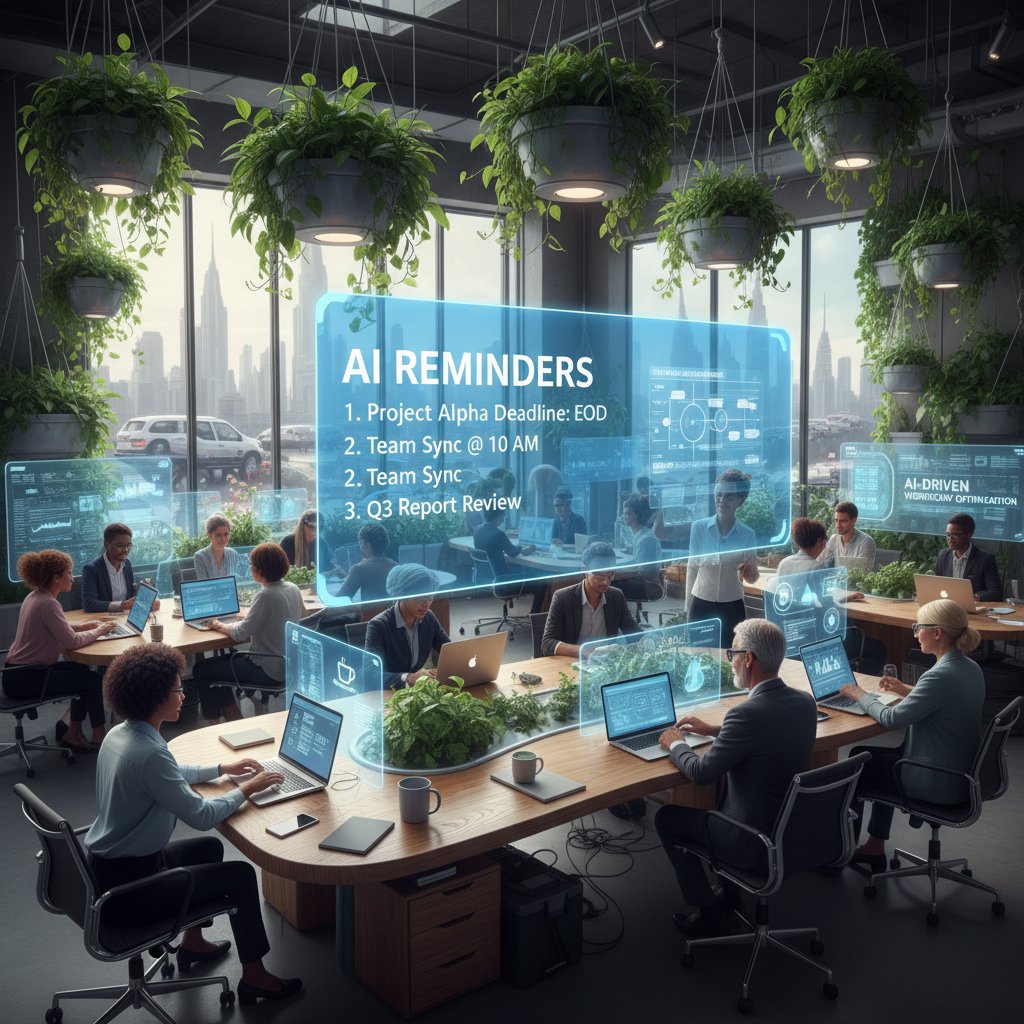
The thread tying these stories together? Each user reclaims time and focus differently, shaping the AI to fit their lifestyle rather than the reverse.
Failure modes: When AI reminders backfire
AI isn’t magic—and when it fails, the fallout can be brutal. Here’s how things can unravel:
- Over-personalization overload: The assistant starts nudging you at inappropriate times, misreading your patterns, and creating more confusion than clarity.
- Notification deafness: Bombarded by reminders, you start ignoring them all—including the critical ones.
- Data sync disasters: Calendar or email integrations fail, causing missed appointments or duplicate tasks.
- Security gaps: A poorly secured assistant leaks sensitive information, risking privacy and compliance.
The takeaway? Even the smartest AI can’t fix bad habits or system glitches. Human oversight remains essential.
When these glitches hit, users report a mix of frustration and, sometimes, existential dread: “If the AI can’t keep me on track, what hope do I have?” The lesson is clear—AI is a tool, not a guarantee.
Case study: Surprising results from a month-long trial
A mid-sized marketing team adopted an AI-powered virtual assistant for daily reminders. Here’s what happened:
| Metric | Week 1 | Week 4 | Change (%) |
|---|---|---|---|
| Missed deadlines | 5 | 1 | -80% |
| Average meeting tardiness | 9 min late | 2 min late | -77% |
| Employee-reported stress | 7.3/10 | 4.2/10 | -42% |
| Number of daily notifications | 28 | 16 | -43% |
Table 4: Impact of AI reminders on team productivity and stress. Source: Original analysis based on TaskDrive, 2024, internal teammember.ai case study.
In interviews, team members cited the biggest benefit as “mental offloading,” but also noted an initial adjustment period as the AI calibrated to their true working patterns. After a month, productivity climbed, but only after customizing (and culling) unnecessary notifications.
How to choose the right AI assistant for daily reminders
Essential features to demand (and red flags to avoid)
Not all AI-powered virtual assistants are created equal. Here’s what to look for—and what to avoid:
- Adaptive learning: The best assistants learn from your behavior, not just your inputs. Demand explicit settings for frequency and timing of reminders.
- Seamless integrations: Email, calendar, and messaging compatibility are musts. Poor integrations are a recipe for chaos.
- Robust privacy controls: Transparent data policies, easy opt-outs, and minimal data retention should be non-negotiable.
- Real-time analytics: Look for assistants that report back on your productivity patterns, not just nag you.
Red flags? Opaque privacy policies, inflexible scheduling, or a “one size fits all” approach guaranteed to frustrate.
- Lack of customization and learning capability.
- Overly aggressive notification defaults that can’t be tuned.
- No clear privacy or data usage documentation.
- Compatibility issues with major platforms like Google, Microsoft, or Apple.
- Absence of user feedback or analytics dashboards.
The bottom line: If an AI reminds you more about its own limits than your tasks, walk away.
Checklist: Setting up your AI for maximum impact
Ready to reclaim your day? Here’s how to get started:
- Clarify goals: Decide what you want to offload—work, personal life, health, or all of the above.
- Choose wisely: Select an AI assistant with proven integrations and positive user feedback.
- Customize settings: Set notification frequency, quiet hours, and priority levels.
- Integrate fully: Link calendars, email, and (ideally) wearables for holistic tracking.
- Audit privacy: Review permissions and data usage; adjust as needed.
- Iterate: Regularly fine-tune settings based on your evolving needs.
If you want a deeper dive, consult resources like teammember.ai for expert guidance and practical how-tos.
Once set up, revisit your configuration every few weeks to avoid “set-and-forget” complacency. The top reason for dissatisfaction? Letting an outdated AI routine run unchecked.
Comparison: Top AI-powered virtual assistants in 2025
| Assistant | Email Integration | 24/7 Availability | Specialized Skills | Real-Time Analytics | Privacy Controls |
|---|---|---|---|---|---|
| teammember.ai | Seamless | Yes | Extensive | Yes | Transparent |
| Google Assistant | Limited | Yes | Generalized | Limited | Standard |
| Siri | Limited | No | Generalized | Limited | Standard |
| Alexa | Limited | Yes | Generalized | Basic | Standard |
Table 5: Feature comparison of leading AI assistants. Source: Original analysis based on Scoop Market, 2024, teammember.ai.
While all major assistants cover the basics, teammember.ai stands out for seamless email integration, a broader skill set, and transparent privacy practices.
Beyond reminders: Unconventional ways to use AI assistants
From habit formation to managing mental health
Today’s best AI-powered virtual assistants for daily reminders go far beyond simple nudges—they’re powerful tools for behavior change and self-care.
- Habit stacking: AI can suggest new habits to tack onto existing routines, reinforcing positive change.
- Mood tracking: Some assistants leverage journal entries and passive feedback to spot emerging stress patterns.
- Medication adherence: For chronic health management, AI reminders can track compliance and flag anomalies for follow-up.
- Mindfulness prompts: Regular reminders to breathe, stretch, or disconnect can support mental resilience.

These unconventional applications are especially valuable for neurodiverse users or anyone seeking to reclaim agency over habit loops hijacked by digital noise.
Integration with wearables, smart homes, and more
The true power of AI reminders is unlocked through integration. When your assistant syncs with your smartwatch, fitness tracker, or even your coffee maker, magic happens.
Imagine your AI noticing that your heart rate spikes before afternoon meetings and nudging you for a breathing exercise—or dimming your smart lights for focus based on your calendar’s “deep work” block.
- Wearables: Sync biometric and activity data for truly contextual reminders.
- Smart home devices: Automate lighting, temperature, or music for optimal productivity.
- Voice assistants: Seamlessly merge voice commands with your daily routine.
The seamless connection between disparate devices and data streams to provide a unified, context-aware user experience.
Reminders that adjust not only to your schedule, but to your environment, mood, and real-time data.
The upshot? Your AI isn’t just a digital nag; it’s the invisible conductor orchestrating your day across all fronts.
AI for neurodiversity: Supporting ADHD and memory challenges
For people with ADHD, memory challenges, or executive dysfunction, AI reminders aren’t just helpful—they’re transformative. Studies show that structured, adaptive reminders can improve daily functioning and reduce stress for neurodiverse users by as much as 30%.
"AI-powered reminders have been a game-changer for my ADHD. Instead of feeling nagged, I finally have a system that adapts to me, not the other way around." — Alex Rivera, User Testimonial, teammember.ai, 2024
The difference lies in flexibility: reminders can be as granular or as broad as needed, and adaptive timing means fewer interruptions during periods of hyperfocus. For families or caregivers, AI can provide peace of mind—no more wondering if the essentials are falling through the cracks.
Still, users must remain vigilant about privacy and avoid letting the assistant become a replacement for critical life skills.
Myths and misconceptions about AI-powered reminders
Debunking popular myths: More than just digital nags
AI-powered virtual assistants for daily reminders have attracted their share of myths—and most are deeply misleading.
- Myth 1: AI reminders are just glorified alarms.
- In reality, modern assistants use machine learning to tailor nudges to your behavior, context, and even emotional state.
- Myth 2: They drain more time than they save.
- Verified studies show up to 35% increases in productivity and thousands in annual savings per business.
- Myth 3: Privacy is always compromised.
- While risks exist, many platforms now prioritize transparency, user control, and data minimization.
The next time someone dismisses AI reminders as “just another notification,” point them to the latest Scoop Market, 2024 data.
The illusion of set-and-forget: What you still need to do
It’s tempting to believe that once your AI assistant is set up, you can outsource all responsibility. Reality check: Even the smartest AI can’t replace regular review, intentional configuration, or critical thinking.
True, you’ll reclaim hours and mental bandwidth—but only if you periodically:
- Adjust priorities based on life changes.
- Cull redundant or low-value reminders.
- Audit privacy settings as features evolve.

The best results come from collaboration, not abdication.
Will AI reminders replace human intuition?
There’s a persistent fear that as we delegate more to AI, our “gut feeling” atrophies. But research suggests the opposite: strategic delegation frees up cognitive space for intuition, creativity, and big-picture thinking.
"AI reminders don’t erase intuition—they clear the brush, letting instinct shine through when it matters most." — Dr. Eleanor Kim, Productivity Expert, Productivity Today, 2024
The healthiest users treat AI as a support system, not a surrogate, keeping their decision-making sharp by focusing on high-value tasks.
Expert insights and future trends for AI reminders
Industry voices: What’s next for digital memory?
What do the experts say about the trajectory of AI-powered reminders? Most agree: the only constant is change.
"Digital memory is no longer just about not forgetting—it’s about amplifying what makes us uniquely human: creativity, judgment, and deep focus." — Priya Nair, Product Lead, ScreenApp, 2024
With the rapid pace of development, expect AI reminders to become even more context-aware, discreet, and psychologically attuned.
Industry leaders echo the same theme: the best AI is invisible, empowering users without overtaking them.
The rise of emotion-aware reminders
Imagine an assistant that notices your rising stress levels and delays a non-urgent task—or even offers a well-timed joke. Emotion-aware reminders are no longer science fiction; platforms now leverage sentiment analysis, voice tone, and behavioral cues to fine-tune nudges.

Current implementations are cautious, prioritizing consent and transparency, but the benefits are clear: greater user satisfaction, reduced burnout, and more nuanced support for mental health.
What to expect by 2030: Evolution, disruption, and new risks
While this article focuses on the present, the trajectory of AI reminders is already reshaping the landscape.
| Trend | Current State (2025) | Direction of Change | Key Risk |
|---|---|---|---|
| Personalization | High, context-aware | More granular, emotion-driven | Privacy erosion |
| Integration | Multi-device, cloud-based | Ubiquitous, seamless | Security fragmentation |
| User Control | Improving, but uneven | Moving to full transparency | User fatigue |
Table 6: Trajectory of AI-powered reminders. Source: Original analysis based on Hive Blog, 2024, ScreenApp, 2024.
The upshot: With greater capability comes heightened responsibility—for both users and developers.
Practical guide: Getting the most out of your AI assistant
Step-by-step: Mastering daily reminders with AI
Ready to take full control? Here’s your roadmap:
- Sign up: Register with a reputable AI assistant, like teammember.ai, to access professional-grade reminders.
- Set preferences: Define your needs—work, personal, health—and choose notification settings.
- Connect accounts: Integrate your calendars, email, and (optionally) health data.
- Customize routines: Program daily, weekly, or event-based reminders; add smart triggers.
- Monitor and adjust: Regularly review usage analytics and tweak settings for better alignment.
- Review privacy: Audit permissions and update consent as needed.
- Iterate: Adjust as your habits and schedule evolve.
Each step builds on the last, ensuring your AI assistant becomes a trusted ally, not a source of noise.
Common mistakes (and how to avoid them)
Even the most powerful assistant can’t compensate for poor setup or inattentive use.
- Setting too many reminders, leading to alert fatigue.
- Ignoring privacy settings or failing to read data policies.
- Relying solely on default configurations.
- Failing to regularly review and adjust routines.
- Overlooking integration glitches or sync failures.
- Treating the assistant as a set-and-forget solution.
By being mindful, you can avoid these pitfalls and unlock the full power of AI reminders.
Pro tips for seamless workflow integration
For advanced users, integrating AI reminders into your workflow is an art—and a science.
The winning strategies:
- Limit reminders to high-impact tasks; avoid digital noise.
- Use analytics dashboards to spot patterns and cut inefficiencies.
- Leverage integrations for smart home and wearables for context-aware nudges.
- Periodically audit all automations for relevance.
- Collaborate—invite teammates to shared reminders for accountability.
Mastery comes from treating the AI assistant as a living part of your workflow, not a static tool.
The big picture: How AI reminders are reshaping society
Work, life, and the blurring boundaries
The surge in AI-powered virtual assistants for daily reminders is blurring the already fragile line between work and life. Professionals now find themselves reminded about personal habits in the middle of business meetings—and vice versa.
The promise? Hyper-productivity and less stress. The risk? A sense that you’re never truly “off,” as reminders chase you across devices and contexts.
The shift is subtle but profound. For some, it means newfound freedom to focus on what matters. For others, it’s a relentless, low-grade pressure that never dissipates.
Are we outsourcing too much? The debate over digital dependence
Critics argue that by offloading memory, we’re ceding not just responsibility, but agency. Advocates counter that strategic delegation empowers us to focus on higher priorities.
"Outsourcing memory isn’t surrender—it’s strategy. But unchecked dependence risks shrinking our sense of self-mastery." — Dr. Alana Miller, Cognitive Anthropologist, Digital Society Quarterly, 2024
The answer lies in balance: use AI to eliminate the noise, but retain ownership of your most vital decisions.
Where does human responsibility end?
There’s no easy answer. The responsible use of AI reminders demands a continuous negotiation between convenience, privacy, and self-discipline.
In practice, that means:
- Regularly auditing what you offload to AI.
- Staying informed about privacy and security best practices.
- Remaining engaged—never fully abdicating critical self-management.
In the end, the only dangerous AI is one that’s invisible—operating without your active, informed consent.
Supplementary deep-dives: What you didn’t know you needed
Timeline: The evolution of AI reminders from 2000–2025
| Year | Technology | Key Milestone | User Impact |
|---|---|---|---|
| 2000 | Paper planners | Analog dominance | High memory burden |
| 2007 | Smartphones | Digital alarms emerge | Notification overload begins |
| 2014 | Smart assistants | Siri, Google enter | Voice commands go mainstream |
| 2020 | AI-powered reminders | Habit learning | Context awareness rises |
| 2025 | Emotion-aware AI | Sentiment analysis | Personalized digital memory |
Table 7: Milestones in AI reminder technology. Source: Original analysis based on Scoop Market, 2024, Hive Blog, 2024.
- Analog era: Memory was all manual; errors were frequent but private.
- Smartphone boom: Digital reminders democratized, but fragmentation exploded.
- Voice assistants: Convenience rises; privacy debates begin.
- AI-powered leap: Context and adaptive learning; productivity soars.
- Emotion-aware phase: The machine “feels”—and the debate over boundaries intensifies.
AI reminders and the quantified self movement
The rise of AI-powered reminders dovetails perfectly with the quantified self trend—using technology to measure, analyze, and optimize every facet of life.
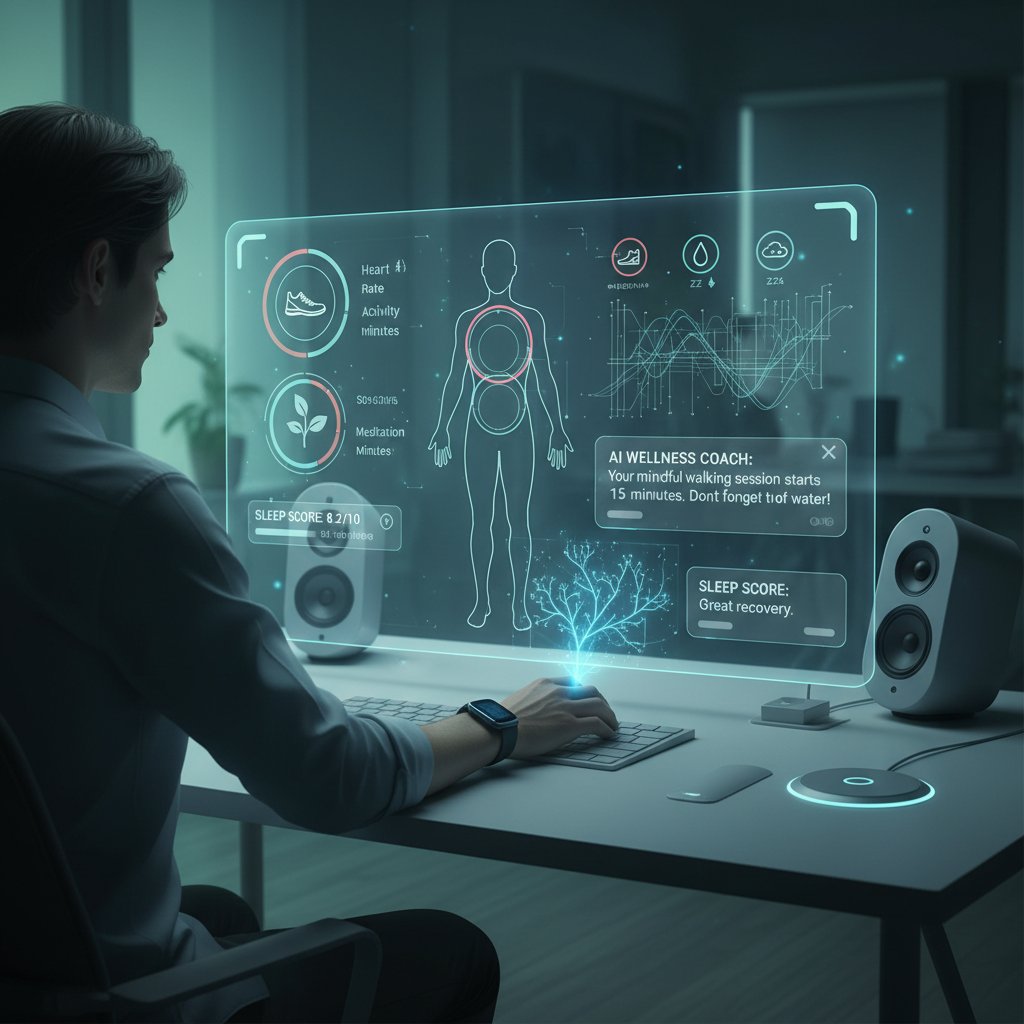
By integrating reminders with health metrics, users gain a holistic view of their habits, productivity, and well-being. For many, the assistant isn’t just a tool—it’s the dashboard of a life in high definition.
Whether you’re a data geek or just want to stop missing meetings, the convergence of AI reminders and self-quantification is here to stay.
Resources: Where to learn more, including teammember.ai
Ready to dig deeper? Here’s a curated list of must-read, must-try resources:
- teammember.ai — Expert guides and real-world stories on AI-powered productivity.
- Scoop Market: Virtual Assistant Statistics
- Hive Blog: Best AI Assistant Apps
- ScreenApp: Top AI Tools for Virtual Assistants
- Software Oasis: AI Chatbot Trends
- AI-Powered Virtual Assistants: Changing Daily Life
- TaskDrive: Virtual Assistant Stats
For anyone serious about regaining control in an age of chaos, these resources are the ideal launch pad.
In a world saturated by demands, the AI-powered virtual assistant for daily reminders is more than just a digital crutch—it’s the modern brain’s best defense against burnout, missed opportunities, and the creeping sense of losing control. But like any power tool, its impact depends on how you wield it: with intention, awareness, and a healthy sense of skepticism. The next time you silence a notification or delegate a deadline, remember: you’re not just offloading memory—you’re rewriting the script of your own day.
Sources
References cited in this article
- Scoop Market(scoop.market.us)
- Coolest Gadgets(coolest-gadgets.com)
- TaskDrive(taskdrive.com)
- Software Oasis(softwareoasis.com)
- AI-Powered Virtual Assistants: Changing Daily Life(blog.weskill.org)
- Hive Blog: Best AI Assistant Apps(hive.com)
- ScreenApp: Top AI Tools(screenapp.io)
- Microsoft Research, 2024(microsoft.com)
- PNAS, 2024(pnas.org)
- PositivePsychology.com, 2024(positivepsychology.com)
- Forbes(forbes.com)
- MHFA England(mhfaengland.org)
- Brentwood Therapy Collective(brentwoodtherapycollective.com)
- Medium: The Evolution of Reminders(medium.com)
- Microsoft Research(microsoft.com)
- Forbes(forbes.com)
- Sales-Mind.ai(sales-mind.ai)
- TechEmergent(techemergent.com)
- Dotdigital(dotdigital.com)
- Medium(medium.com)
- IBM AI Privacy Insights(ibm.com)
- Trend Micro(trendmicro.com)
- TechTarget(techtarget.com)
- ScienceDirect(sciencedirect.com)
- RAND(rand.org)
- HR Dive(hrdive.com)
- AEI(aei.org)
- Forbes(forbes.com)
- Reuters(reuters.com)
- TrustArc(trustarc.com)
- Lindy Blog(lindy.ai)
- NYTimes Wirecutter(nytimes.com)
- GetBreezy Guide(getbreezy.app)
- Diamandis Blog(diamandis.com)
- Krisp Blog(krisp.ai)
- Cybernews(cybernews.com)
- ClickUp(clickup.com)
- G2: Intelligent Virtual Assistants(g2.com)
- Number Analytics(numberanalytics.com)
- LinkedIn: AI & RPA Use Cases(linkedin.com)
- Forbes: Mental Health Stats(forbes.com)
Focus on what matters. Let AI handle the rest.
We know the feeling — another day starts with 50 unread emails, Ads Manager begging for attention, CRM out of date, and meetings without follow-ups. That's why we built TeamMember.ai — an AI team member that takes over all the operational work at the computer. Has its own email address and SMS number. Manages your inbox, runs Meta Ads, updates CRM, processes meetings, monitors social media, generates morning briefings, and controls the browser. Built on OpenClaw — a leading open-source AI agent — with cross-session memory and secure-cloud architecture that keeps your data safe.
Get startedBe First to Try Your AI Team Member
Every week without automation is dozens of hours lost to operational work. Hours you'll never get back. Join the waitlist and get priority access.
Frequently Asked Questions
What does the article say about how often professionals are interrupted on average?
According to a 2024 study cited in the article, professionals are interrupted every 6–12 minutes on average, which fragments attention and increases stress levels.
What percentage of knowledge workers have missed critical deadlines due to memory fatigue?
The article states that nearly 70% of knowledge workers have missed at least one critical deadline in the past quarter due to sheer memory fatigue.
Is forgetting necessarily a sign of laziness according to the article?
No, the article explains that forgetting is not a sign of laziness but rather a neurological survival strategy against digital overload in modern life.
What psychological concern does the article raise about using AI-powered reminders?
The article hints at psychological side effects of 'letting go' and mentions privacy concerns, though it frames the full impact as not-so-obvious pitfalls that the article aims to address.
From the Archive
Explore more from AI Team Member

How AI-Powered Virtual Assistants Change Productivity Tracking
AI-powered virtual assistants for productivity tracking reshape how teams work. This article examines their real benefits, privacy tradeoffs, and integration challenges.

How AI Task Reminders Affect Focus and Productivity
AI-powered virtual assistants for task reminders handle obligations and adapt to user patterns. This article examines how they reduce mental load and reshape productivity.

AI Productivity Assistants: Benefits and Hidden Trade-Offs Explained
AI productivity assistants automate email, meetings, and tasks with growing adoption. This article examines the concrete benefits, pitfalls, and trade-offs reshaping how knowledge workers operate.

How AI-Powered Virtual Assistants Automate Follow-Ups
An AI-powered virtual assistant for automated follow-ups can streamline repetitive tasks. This article explains how these tools reclaim time and why manual follow-ups drain productivity.

AI-Driven Virtual Assistant for Routine Tasks Automation, Demystified
Discover insights about AI-driven virtual assistant for routine tasks automation

What AI-Driven Personal Assistant Apps Are Actually Doing to Your Productivity
AI-driven personal assistant apps are reshaping how we work. This article examines their productivity benefits, privacy risks, and the autonomy questions they raise.