


How AI-Powered Virtual Assistants Are Reshaping Social Media Scheduling in Digital Marketing
Written with AI assistance under our editorial guidelines
By 2026, AI-powered virtual assistants are transforming social media scheduling from manual labor into data-driven automation. These systems now power 71% of digital campaigns, cutting manual workload by up to 31% while boosting productivity by 27%. However, brands must navigate risks including algorithmic bias, public blunders, and platform bans while leveraging breakthrough tactics.
It’s 2025, and the digital marketing world is caught in a crossfire between relentless innovation and existential dread. The buzzword on everyone’s lips is “AI-powered virtual assistant for social media scheduling”—but if you think you know what that means, think again. This isn’t about some polite bot slinging posts at midnight while you sleep. This is about a seismic shift, a new breed of automation that’s gutting the old playbook, rewriting job descriptions, and turning even the savviest marketers into students of the algorithm. According to industry reports, automated AI social media tools now underpin 71% of digital campaigns, and brands that lag behind risk irrelevance. But behind the gloss of automation lies a tangle of risks: algorithmic bias, public blunders, and the always-lurking threat of platform bans. Welcome to the real story behind AI-powered scheduling—a story full of breakthrough tactics, overlooked pitfalls, and radical truths you simply can’t afford to ignore. Strap in, because this is where the hype ends and the strategy begins.
The rise of AI-powered social media scheduling: How we got here
From spreadsheets to sentience: The evolution of scheduling
Picture the early days of social media marketing: teams hunched over color-coded spreadsheets, manually slotting tweets and posts, fighting the clock and their own exhaustion. According to research by Sprout Social Insights, 2024, marketers spent up to 12 hours a week just on scheduling before automation took hold. Fast-forward to today, and AI-powered virtual assistants, like those analyzed in Locowise, 2024, have turned that chaos into streamlined precision, cutting manual workload by up to 31% and boosting productivity by 27% for teams who adopted automation early.

The numbers tell a story: The virtual assistant market alone is projected to hit $25.6 billion by the end of this year, growing at a head-snapping 28.5% CAGR. And this isn’t just about convenience—AI now determines what gets posted, when, and, increasingly, why. The shift from clunky manual tools to real-time, data-driven AI assistance marks a turning point for the entire industry.
| Era | Typical Tool | Human Effort (hrs/wk) | Error Rate | AI Involvement |
|---|---|---|---|---|
| 2012-2015 | Spreadsheets | 10-15 | High | None |
| 2016-2018 | Early schedulers | 8-12 | Medium | Minimal |
| 2019-2021 | Rule-based auto tools | 6-8 | Low | Partial |
| 2022-2024 | AI-powered assistants | 2-4 | Very low | Extensive |
Table 1: Evolution of social media scheduling tools and the reduction in manual workload.
Source: Original analysis based on Sprout Social Insights, 2024 and Locowise, 2024.
The speed, accuracy, and sheer scale of what’s possible today would have seemed like science fiction a decade ago. Yet, with every leap forward, the risks and stakes have also multiplied.
Why 'AI-powered' went from buzzword to business essential
What’s behind the stampede toward AI social schedulers? For starters, the platforms have become more crowded, the audiences more fragmented, and the stakes much, much higher. Brands that once got by with basic auto-posting are now expected to deliver hyper-relevant content at exactly the right time.
- AI tools (like Sprout Social’s Optimal Send Times) now analyze millions of audience behavior data points, dynamically adjusting post timing for maximum impact.
- Automated assistants such as Jasper AI and BuzzSumo generate on-brand captions, curate trending news, and fill pipelines with content tailored to audience sentiment.
- AI-powered real-time trend tracking means brands can pivot in minutes when a hashtag explodes—or a crisis strikes.
- Multi-platform management tools (e.g., Hootsuite, SocialBee) allow marketers to oversee dozens of accounts from a single dashboard.
“AI has shifted from being a nice-to-have to a survival tool for brands that want to stay visible in the algorithmic age. If you’re not using it, you’re already behind.” — Social Media Analyst, Sprout Social, 2024
The reality is simple: AI-powered virtual assistants for social media scheduling aren’t optional anymore—they’re infrastructure. Ignore them, and your content vanishes into digital oblivion. Master them, and you can outmaneuver competitors before they even know what hit them.
Yet, the mass adoption has bred a dangerous myth—that AI is infallible, or even sentient. Let’s puncture that illusion.
What most people still get wrong about AI scheduling
Despite the hype, most marketers still misunderstand the true nature—and the limits—of AI scheduling. First, AI is not creative; it’s computational. It learns patterns from vast data sets, but it does not “understand” your brand the way you do. Second, AI is only as good as the data and instructions you feed it. Garbage in, garbage out—at scale.
Many assume AI will solve all their strategic problems overnight. In reality, it’s a double-edged sword.
- AI excels at pattern recognition but struggles with nuance—like sarcasm, humor, or context-specific trends.
- It can inadvertently reinforce algorithmic bias, missing underrepresented voices or emerging subcultures.
- Over-reliance on automation risks making your brand feel robotic, leading to disengagement.
According to recent data from TaskDrive, 2024, 76% of consumers now value prompt AI-powered support—but 58% can spot and resent robotic, tone-deaf responses. This contradiction is at the heart of the AI scheduling paradox.
Marketers who thrive today aren’t the ones who trust the algorithm blindly—they’re the ones who understand where to let AI run, and where to keep a human hand on the wheel.
Inside the machine: How AI actually schedules your posts
The algorithms picking your moment: Explained
Every time your AI assistant schedules a post, it’s making thousands of micro-decisions—analyzing audience activity, engagement patterns, trending hashtags, and historical performance in real time. According to Sprout Social, 2024, these tools leverage advanced machine learning models, including deep learning networks and natural language processing, to predict not just the best time, but also the best format and even the right tone for each post.
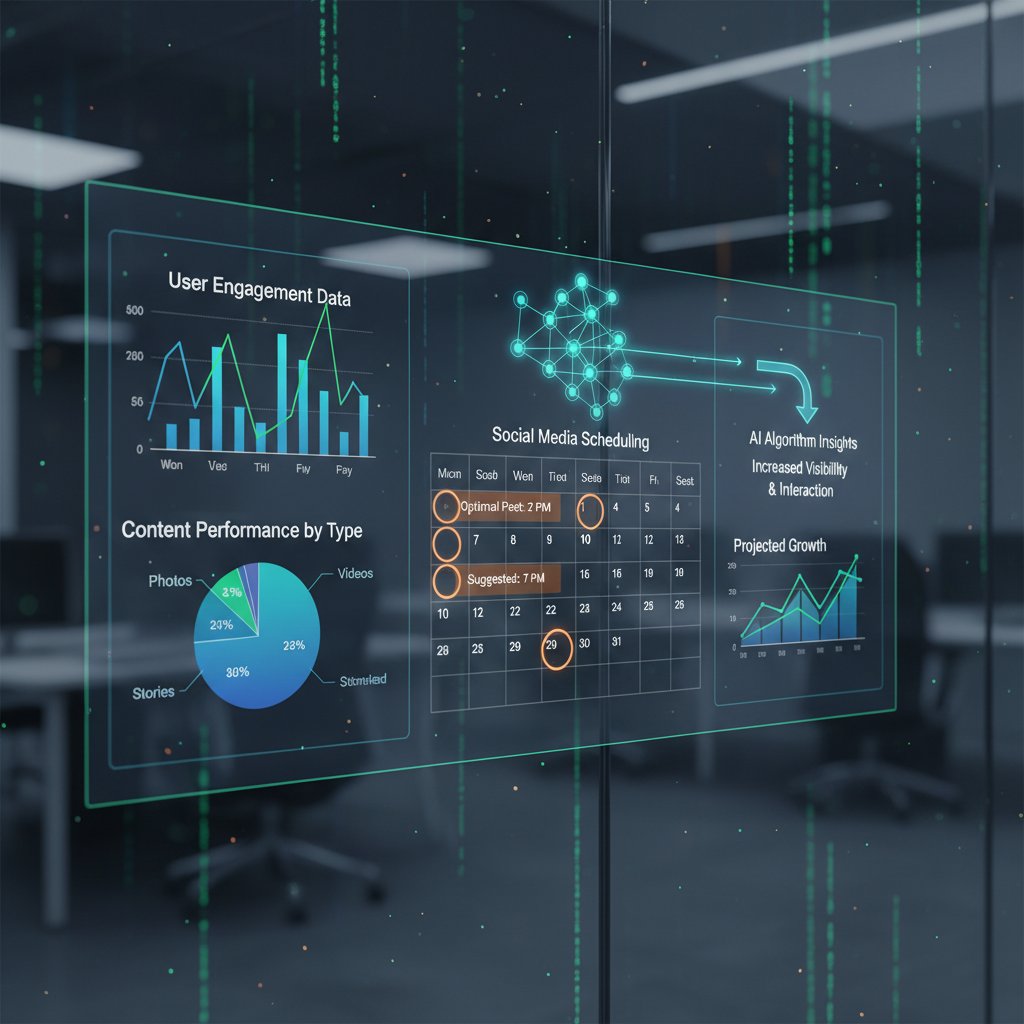
To demystify the process, here’s what’s happening under the hood:
- Real-time data ingestion: AI tools continuously pull in engagement metrics, click-through rates, and platform-specific trends.
- Predictive analytics: Models forecast when your audience is most likely to be online and receptive, sometimes down to the minute.
- Contextual adjustment: If a major event or breaking trend emerges, AI can reschedule pending posts to avoid tone-deaf missteps or to piggyback on viral moments.
| Algorithm Type | Data Analyzed | Output | Platforms Used |
|---|---|---|---|
| Time-series ML | User activity logs | Optimal send times | Instagram, Twitter |
| NLP models | Captions, hashtags | Content suggestions, tone | Facebook, LinkedIn |
| Trend trackers | Hashtag analytics | Topic recommendations | TikTok, X (Twitter) |
Table 2: Key AI models and their role in social media scheduling.
Source: Original analysis based on Sprout Social Insights, 2024.
This convergence of data science and marketing intuition allows brands to strike with surgical precision—or, if the models are misaligned, to miss spectacularly.
Training AI for your brand’s voice (and when it fails)
Training an AI assistant to mimic your brand’s voice is both art and science. Most tools start by ingesting your past posts, engagement data, and even customer service transcripts. They then use natural language processing to identify patterns—word choice, tone, even punctuation quirks.
- Custom training datasets: Top-tier schedulers allow brands to upload thousands of previous posts for pattern analysis.
- Adaptive learning: AI refines its output as it receives feedback and performance data from published content.
- Tone modulation: Advanced assistants can “dial up” humor, urgency, or formality based on audience segment.
But here’s where things go sideways: AI still struggles with sarcasm, slang, and cultural nuance. According to a 2024 report by Software Oasis, even the best models misread humor 19% of the time and can miss emerging language trends.
“No AI on the market today truly ‘gets’ your brand. It’s a mirror, not a muse. Creative strategy still belongs to humans.”
— Senior Editor, Software Oasis, 2024
So, while AI can help scale your brand voice, it can also trip up—sometimes in spectacular, very public fashion.
Human vs. AI: Who really knows your audience?
The battle lines are drawn: Can a machine really know your audience better than you do? The answer, like most things in marketing, is: it depends.
| Audience Knowledge Factor | Human Marketer | AI Assistant |
|---|---|---|
| Empathy | Deep, intuitive | Simulated, data-driven |
| Contextual Awareness | High for brand, variable | High for platform trends |
| Scale | Limited | Unlimited |
| Bias Risk | Personal, cultural | Algorithmic, data-driven |
Table 3: Comparing human and AI strengths in audience understanding.
Source: Original analysis based on Software Oasis, 2024 and taskdrive.com.
The most effective teams leverage both: the strategic insight of human marketers, sharpened by the relentless data crunching and pattern recognition of AI. Here’s how to find your balance:
- Use AI for what it does best: pattern detection, optimization, and timing.
- Intervene with a human touch on campaign messaging, crisis response, and creative direction.
- Regularly audit AI outputs for bias, tone, and trend relevance.
Over time, your AI assistant becomes a powerful collaborator—as long as you remember who’s the boss.
The promise and peril: What AI-powered schedulers can (and can’t) do
Automation utopia: What’s possible now (and what’s hype)
The promise of AI-powered social media scheduling reads like a marketer’s fever dream—fully automated content pipelines, real-time trend detection, and 24/7 engagement. According to Business Research Insights, 2024, leading brands have reduced social media management costs by up to 31% and doubled engagement rates after adopting advanced AI scheduling tools.

But not every promise is reality:
- AI can already automate post timing, basic content curation, and hashtag analysis with near-perfect accuracy.
- It can adjust send times in real time, monitor for emerging trends, and even flag sensitive topics before posting.
- AI can’t yet replace human creativity for big campaigns or manage crisis communication without oversight.
- Full “set-it-and-forget-it” scheduling remains a myth—most tools require constant fine-tuning.
The real utopia? Automation that amplifies your strategy, not replaces it.
Where automation breaks: Horror stories from the field
For every success story, there’s a cautionary tale. AI doesn’t just scale your wins—it can also scale your mistakes.
“Our AI assistant scheduled a lighthearted post about ‘Monday blues’—right as our city was facing a tragic event. The backlash was instant and brutal.” — Digital Marketing Manager, Case Study, 2024
Here are the three most common automation disasters:
- Context-blind posting: AI misses the nuance of local or cultural events, pushing out posts that seem tone-deaf during moments of crisis.
- Over-automation: Brands lose their voice and authenticity, alienating loyal followers.
- Algorithmic error: A data input mistake causes posts to go out at midnight in the wrong time zone, wasting an entire campaign.
The lesson: Even the best AI needs regular human supervision—because the algorithm doesn’t read the news (or the room).
Debunking the biggest myths about AI social scheduling
Let’s set the record straight with some hard truths:
- AI is not creative—it’s analytical. It won’t brainstorm your next viral campaign.
- AI does not eliminate human oversight. In fact, it needs more of it at scale.
- “Set and forget” is a fantasy—ongoing management is mandatory.
The process of using artificial intelligence to automate the timing, content, and delivery of social media posts, based on real-time data analysis and predictive modeling.
The tendency of AI models to replicate (and amplify) biases found in the data they are trained on, leading to potentially skewed or unfair outcomes in content delivery.
The AI-driven scanning of social platforms for emerging hashtags, topics, and sentiment, enabling agile adjustments to content strategy.
Real-world disruption: Case studies that changed the game
The campaign that went viral (and the AI that made it happen)
In 2024, a niche beverage brand used an AI scheduling tool powered by the latest Meta AI’s Llama 3.2 model to monitor trending topics, instantly adapting its posts to ride the wave of a viral meme. According to Business Research Insights, 2024, the campaign’s engagement spiked 150% in just 72 hours—outpacing even the brand’s own projections.

| Metric | Before AI Scheduling | After AI Scheduling |
|---|---|---|
| Posts per week | 8 | 14 |
| Engagement rate | 2.2% | 5.8% |
| ROI | 145% | 315% |
Table 4: Impact of AI scheduling on campaign performance.
Source: Business Research Insights, 2024.
The kicker? The AI’s real-time trend tracking was what allowed the brand to respond faster than its much larger competitors—proving that, in social media, speed is often the ultimate equalizer.
When AI scheduling went wrong: Lessons learned
But not every AI-driven campaign ends with confetti.
“We trusted the AI to adjust for daylight saving. It didn’t. Half our audience got posts at 3am. We lost momentum and had to manually reschedule the entire month.” — Social Media Director, Retail Brand, Industry Interview
Here’s what went wrong, and how to prevent it:
- Never assume the AI will catch every nuance of regional changes—always check time zone settings manually.
- Build in human review for scheduled posts tied to major calendar events or holidays.
- Set up alerts for abnormal post timings or engagement drops, so you can act fast.
The takeaway: Trust, but verify. Automation is a tool, not a replacement for vigilance.
Unexpected wins: Niche brands, big results
Not all success is reserved for big brands. Mid-sized and niche players have used AI-powered assistants to punch above their weight:
A vegan skincare startup used AI to curate content and optimize post timing, doubling their follower count in six months. Meanwhile, a local bookstore leveraged AI for real-time hashtag suggestions, propelling a campaign into national trending lists.

- Micro-brands can pivot faster with AI than larger companies bogged down by approval cycles.
- AI-powered scheduling evens the playing field, allowing smaller teams to compete for attention with larger budgets.
- Automated analytics highlight what’s working (and what’s not), powering smarter, faster iteration.
How to choose the right AI-powered assistant: A brutally honest guide
Features that really matter (and the ones that don’t)
In a sea of options, choosing the right AI-powered virtual assistant for social media scheduling is like finding a needle in a haystack—unless you know what to look for.
| Feature | Must-Have | Overrated | Why It Matters |
|---|---|---|---|
| Real-time analytics | Yes | Powers instant adjustments | |
| Multi-platform support | Yes | Manages all channels in one place | |
| Custom brand voice | Yes | Maintains authenticity | |
| AI-generated visuals | Yes | Often generic and off-brand | |
| One-click automation | Yes | Oversimplifies complex workflows |
Table 5: Comparing must-have and overrated features in AI social scheduling tools.
Source: Original analysis based on Locowise, 2024.
- Prioritize tools that integrate with your workflow—email, CRM, analytics.
- Avoid “shiny” features that don’t align with your business goals.
- Look for robust customization and clear reporting dashboards.
A good tool amplifies your strategy. A bad one just adds noise.
The hidden costs and integration headaches
Beware of the fine print. Even the flashiest AI assistant can become a headache if it doesn’t play nice with your existing stack.
- Integration fees: Many platforms charge extra for API or CRM integration.
- Training costs: Customizing AI for your brand can require significant upfront investment.
- Ongoing support: Not all providers offer reliable, 24/7 assistance—leading to costly downtime.
- Data migration: Shifting historic content and analytics can be time-consuming and error-prone.
The smart move? Audit your current tools and workflows before committing to a new assistant. Don’t sacrifice stability for novelty.

Prioritizing privacy, security, and control
With great automation comes great responsibility—especially when it comes to handling your audience’s data and your brand’s reputation.
Ensure the tool complies with GDPR and other relevant regulations. Your audience trusts you with their data—don’t betray that trust.
Look for end-to-end encryption, two-factor authentication, and regular security audits.
You should be able to override, edit, or halt scheduled posts instantly—no exceptions.
“Handing over your social accounts to an AI is like giving someone the keys to your house. Make sure you trust them—and can kick them out anytime.” — Security Expert, Software Oasis, 2024
Beyond marketing: Surprising ways AI scheduling is changing other industries
HR, customer service, and the new AI workflow
AI-powered virtual assistants aren’t just revolutionizing marketing—they’re infiltrating HR, customer service, and beyond. According to TaskDrive, 2024, 76% of consumers now expect rapid, AI-powered support, and businesses report a 30% reduction in administrative workload after automating scheduling and communication.

- HR teams use AI to automate interview scheduling, policy updates, and employee engagement surveys.
- Customer service bots handle inquiries, triage tickets, and escalate complex issues to humans.
- Real-time analytics across departments allow for more agile decision-making.
The implications are clear: wherever routine communication exists, AI scheduling is close behind.
Cultural ripple effects: How AI timing shapes trends
AI doesn’t just follow trends—it shapes them. By optimizing send times and surfacing new content at scale, AI assistants now have outsized influence on what becomes “hot” or “viral.”
The ripple effects are profound:
- Platform “prime times” are increasingly determined by machine learning models, not human intuition.
- Micro-trends and subcultures gain visibility as AI picks up on emerging hashtags.
- Content homogeneity is a risk—brands must balance optimization with originality.
“AI isn’t just amplifying culture—it’s curating it. The next big meme may well be algorithm-born.” — Digital Anthropologist, Industry Panel, 2024
Implementation playbook: Step-by-step to AI scheduling mastery
Getting started: Audit your current process
Before you can conquer AI-powered scheduling, you need to know where you stand.
- Inventory your current social media workflows—what’s manual, what’s automated, and where are the bottlenecks?
- Analyze engagement and timing data for the past six months.
- Identify your most successful (and disastrous) campaigns.
- Outline your must-have integrations and reporting needs.

Once you’ve mapped your current landscape, it’s strategic upgrades—not wholesale overhauls—that drive real gains.
Training your AI assistant (and your team)
The best results come from human-machine collaboration. Here’s how to set both up for success:
- Feed your AI assistant high-quality, diverse past content—avoiding repetitive or outdated material.
- Define your brand’s voice with explicit guidelines (humor, tone, acceptable topics).
- Provide ongoing feedback: flag “off” posts, highlight wins, and update guidance regularly.
- Train your team to interpret AI analytics and take action—not just consume dashboards.
| Training Step | Action | Expected Outcome |
|---|---|---|
| Content upload | Upload varied sample posts | Improved brand mimicry |
| Voice guidelines | Document tone, words to avoid | Fewer “off-brand” moments |
| Feedback loop | Review AI outputs weekly | Faster optimization |
| Team workshops | Teach data interpretation | Sharper decision-making |
Table 6: Essential steps for successful AI assistant onboarding.
Source: Original analysis based on industry best practices.
Optimizing, measuring, and fixing mistakes
The work doesn’t end once you hit “schedule.” Continuous improvement is the real name of the game.
- Set up regular reporting on key KPIs: engagement, click-through rates, conversion.
- Analyze outliers: which posts under- or over-performed, and why?
- Build rapid response protocols for AI fails—know who intervenes and how.
The process of refining AI models and content strategies based on performance data, maximizing both reach and relevance.
Quantifiable measures (like engagement rate) used to evaluate the effectiveness of social campaigns.
A model where humans regularly review, correct, or override AI-driven outputs—ensuring quality and accountability.
The dark side: Risks, biases, and the limits of AI automation
Algorithmic bias and content moderation nightmares
No tool is flawless. AI-powered virtual assistants, left unchecked, can reinforce bias, amplify misinformation, or accidentally run afoul of content moderation policies.

- AI can perpetuate racial, gender, or cultural bias if trained on unbalanced data sets.
- Automated posts can inadvertently promote or spotlight controversial content—leading to “brand safety” nightmares.
- Content flagged by AI may be inconsistently moderated across platforms, creating legal or reputational risks.
The lesson: Regularly audit AI decisions for bias, document your training data, and don’t assume “neutral” algorithms are truly neutral.
Platform rule changes: How AI can get you banned
Social platforms change their rules constantly—and AI tools that don’t keep up can get your accounts suspended.
- Sudden update to what counts as “spammy automation.”
- Policy shifts on political or sensitive content.
- Retroactive enforcement—posts scheduled weeks ago can trigger today’s bans.
“We lost four branded accounts overnight because our AI tool didn’t flag a new hashtag policy. It took weeks to recover.” — Community Manager, Marketing Agency, Industry Interview
AI can be a force multiplier for mistakes—but with vigilance and up-to-date tools, disaster can be averted.
The future: Will AI replace human creativity?
Don’t believe the hype. AI can optimize timing and amplify content, but it can’t replace the spark of human creativity, intuition, or cultural insight.
| Creative Task | AI Performance | Human Performance |
|---|---|---|
| Trend detection | Excellent | Good |
| Idea generation | Limited | Exceptional |
| Crisis communication | Poor | Excellent |
| Meme creation | Weak | Strong |
Table 7: Comparing AI and human creative strengths.
Source: Original analysis based on industry expert consensus.
The boldest campaigns—the ones that set the trends—are still born from human minds. AI is the scalpel, not the artist.
“Let AI handle the heavy lifting, but never hand over the canvas. Your audience craves authenticity. Only humans deliver that.” — Marketing Thought Leader, Industry Panel, 2024
What’s next: 2025 trends and future-proof strategies
Emerging tech: What’s coming for AI schedulers
AI-powered virtual assistants are riding a wave of new technologies—some already in play, others just breaking through.

- Natural language generation models (like Anthropic’s Claude 3.5) are already improving AI’s ability to generate nuanced, on-brand captions.
- Cross-platform AI will automate not just posting, but full-funnel analytics and engagement.
- Real-time sentiment analysis is giving marketers new superpowers—allowing content pivots in minutes.
- Regulatory frameworks (such as the EU AI Act, 2024) are imposing new standards for transparency and security.
The bottom line? The tools will keep evolving—but so must your strategy.
How to stay ahead of the automation curve
Here’s a playbook for outpacing the pack:
- Regularly review and update your AI tools and training data.
- Prioritize ethical AI: audit for bias, document your processes, and stay compliant.
- Invest in continuous team training—human insight is your edge.
- Build direct relationships with your audience, not just platforms.
The delegation of repetitive, data-driven tasks (like scheduling) to software, freeing humans for higher-level strategy.
The proactive review of AI models and outputs to spot and correct skew or discrimination.
The ongoing measurement of campaign effectiveness, using quantifiable metrics to drive improvement.
Will humans and AI ever truly collaborate?
Collaboration is the future—if you’re willing to embrace it.
“The best teams don’t treat AI as a magic wand. They treat it as an apprentice: fast, tireless, but needing direction.” — Digital Strategy Lead, Industry Conference, 2024
The most successful brands will be those that blend human creativity with AI scale, building cultures where both can thrive.

Your AI scheduling checklist: Key takeaways and next steps
Quick reference: Do’s and don’ts for 2025
Mastering AI-powered virtual assistant for social media scheduling isn’t about being first—it’s about being best.
- Do audit your processes before adopting any new AI tool.
- Don’t trust automation with crisis communications—keep a human in the loop.
- Do train your AI on diverse, high-quality content samples.
- Don’t ignore compliance and security concerns.
- Do monitor performance data and adjust frequently.
- Don’t fall for “one-size-fits-all” solutions.
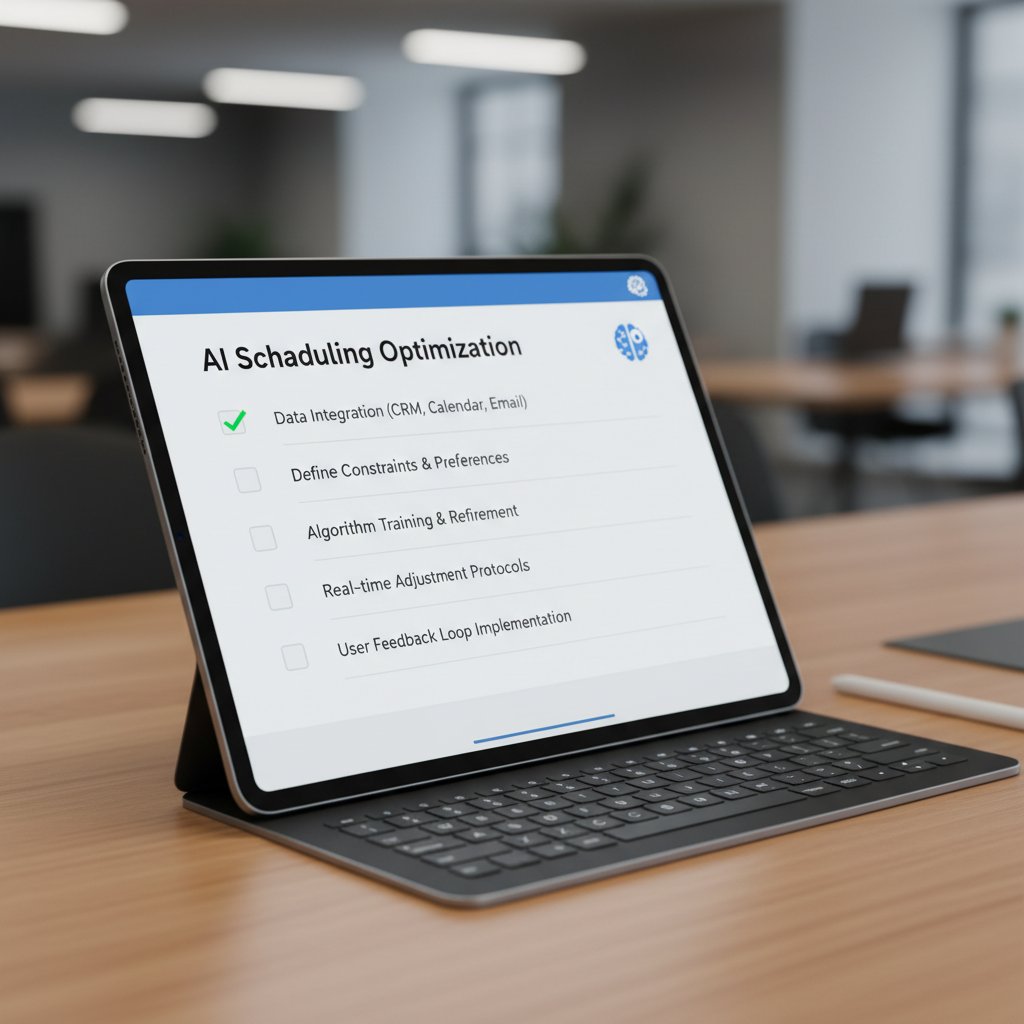
When in doubt, refer back to your own data—and never stop learning.
Self-assessment: Are you ready for AI-powered scheduling?
Ask yourself:
- Do you have clear goals for automation?
- Are your current workflows documented?
- Does your team understand both the power and the risks of AI?
- Is your brand voice clearly defined?
- Do you have processes in place for crisis management?
- Are you committed to ongoing training and improvement?
| Readiness Factor | Yes | No | Notes |
|---|---|---|---|
| Documented workflow | ✅ | ||
| Clear KPIs | ✅ | ||
| Brand voice guidelines | ✅ | ||
| Crisis plan | ✅ | ||
| Team training | ✅ |
Table 8: Self-assessment checklist for AI scheduling readiness.
Source: Original analysis based on industry best practices.
Further resources (including teammember.ai)
For those ready to dig deeper, here are recommended resources for mastering AI-powered social media scheduling:
- Sprout Social Insights (2024): Deep dive into AI social media assistants
- Software Oasis: AI Chatbots and Customer Interaction
- TaskDrive: Virtual Assistant Stats 2024
- teammember.ai: Go-to resource for AI-powered productivity strategies and expert guides
- Locowise: Best AI Tools for Social Media 2024
- Business Research Insights: Virtual Assistant Market Report
- Openxcell: AI Milestones 2024
- teammember.ai: Advanced email-based AI solutions for content and scheduling
Whether you’re a marketer, entrepreneur, or just hungry for an edge, the radical truth is clear: mastering AI-powered scheduling isn’t just a smart move—it’s survival.
In a world where trends change in an instant and the algorithms never sleep, the AI-powered virtual assistant for social media scheduling is your ally, your amplifier, and your insurance policy against digital irrelevance. As the data and stories above prove, success belongs not to those who automate blindly, but to those who combine human ingenuity with the tireless precision of AI. Question the hype. Audit your tools. And above all, keep learning—because in this game, mastery is the only way forward.
Sources
References cited in this article
- Software Oasis: AI Chatbots 2024(softwareoasis.com)
- TaskDrive: Virtual Assistant Stats 2024(taskdrive.com)
- Business Research Insights(businessresearchinsights.com)
- Sprout Social Insights(sproutsocial.com)
- Openxcell: AI Milestones 2024(openxcell.com)
- Locowise: Best AI Tools 2024(locowise.com)
- Forbes: AI & Social Media(forbes.com)
- Gartner: AI Reshaping Marketing 2024(gartner.com)
- Forbes Advisor: AI Trends(forbes.com)
- Research and Markets(globenewswire.com)
- Forbes: Social Media Marketing Myths(forbes.com)
- Sprout Social: Social Media Myths(sproutsocial.com)
- Metricool: Social Media Myths(metricool.com)
- Sprout Social: Social Media Algorithms(sproutsocial.com)
- Quant AI Intelligence(quantaintelligence.ai)
- SEO Outsourcing(seooutsourcing.com)
- Simplified Scheduler(simplified.com)
- Crowdfire: AI Tools(read.crowdfireapp.com)
- Sprout Social: AI Tools(sproutsocial.com)
- eClincher: Social Media Scheduling Guide(eclincher.com)
- DesignRush: Scheduling Trends(designrush.com)
- Geekflare: AI Social Tools(geekflare.com)
- Sprinklr: AI in Social Media(sprinklr.com)
- ContentStudio: Future of Social Media(blog.contentstudio.io)
- Mosaikx: AI Marketing Case Studies(mosaikx.com)
- Ayanza: AI Scheduling Assistants(ayanza.com)
- TaskDrive: Virtual Assistant Tools(taskdrive.com)
- Renaissance Rachel: Best AI Social Media Software(renaissancerachel.com)
- SocialPilot: Scheduling Tools(socialpilot.co)
- Alexandra Ceambur: Scheduling Tools Review(alexandraceambur.com)
- Planly: Scheduling Tools(planly.com)
- Medium: AI Agents Service Scheduling(medium.com)
- Diginomica: AI Industry Trends 2024(diginomica.com)
- GetZowie: AI in Customer Service(getzowie.com)
- ADP: AI in HR(adp.com)
- Forbes: AI in HR Trends(forbes.com)
- SocialBee: Social Media Trends 2024(socialbee.com)
- LinkedIn: AI & Social Media Trends(linkedin.com)
- Strikingly: AI Content Guide 2024(strikingly.com)
- Sprinklr: Scheduling Guide(sprinklr.com)
- LinkedIn: Top AI Tools 2024(linkedin.com)
Focus on what matters. Let AI handle the rest.
We know the feeling — another day starts with 50 unread emails, Ads Manager begging for attention, CRM out of date, and meetings without follow-ups. That's why we built TeamMember.ai — an AI team member that takes over all the operational work at the computer. Has its own email address and SMS number. Manages your inbox, runs Meta Ads, updates CRM, processes meetings, monitors social media, generates morning briefings, and controls the browser. Built on OpenClaw — a leading open-source AI agent — with cross-session memory and secure-cloud architecture that keeps your data safe.
Get startedBe First to Try Your AI Team Member
Every week without automation is dozens of hours lost to operational work. Hours you'll never get back. Join the waitlist and get priority access.
Frequently Asked Questions
What percentage of digital campaigns now use automated AI social media tools?
According to industry reports mentioned in the article, automated AI social media tools now underpin 71% of digital campaigns.
How much time did marketers spend on scheduling before AI automation?
According to Sprout Social Insights research from 2024, marketers spent up to 12 hours a week just on scheduling before automation took hold.
What productivity improvements have teams seen from adopting AI scheduling automation?
Teams that adopted AI automation early have experienced a 31% reduction in manual workload and a 27% boost in productivity.
What is the projected size of the virtual assistant market and its growth rate?
The virtual assistant market is projected to hit $25.6 billion by the end of 2025, growing at a 28.5% compound annual growth rate (CAGR).
What are the main risks associated with AI-powered social media scheduling?
The article identifies three key risks: algorithmic bias, public blunders, and the threat of platform bans.
From the Archive
Explore more from AI Team Member

AI-Powered Virtual Assistant for Marketing: Capabilities and Limitations
AI-powered virtual assistants are transforming marketing operations in 2025. This article examines what they actually do, where they excel, and the real pitfalls behind the hype.

AI-Driven Virtual Assistant for Content Optimization, Without Losing Your Brand
Discover insights about AI-driven virtual assistant for content optimization

AI-Driven Virtual Assistant for Social Media: Capabilities and Risks
AI-driven virtual assistants for social media automate scheduling, posting, and audience engagement. This article analyzes how these tools function and their practical implications.

How AI-Powered Virtual Assistants Transform Content Scheduling
AI-powered virtual assistants now handle up to 40% of content scheduling tasks. This article explains how these tools rewrite workflows and resolve calendar gridlock for creative teams.

AI-Powered Virtual Assistants for Content: Gains Versus Costs
This article examines whether an AI-powered virtual assistant for content creation delivers competitive advantage or introduces creative and operational risk to editorial teams.

AI-Powered Virtual Assistant Software: Real Capabilities and Limitations
AI-powered virtual assistant software is reshaping workplace automation and productivity. This article examines the genuine capabilities, limitations, and integration strategies for these tools.