

The Real Cost of Email Chaos (and How AI Helpers Fix It)
Written with AI assistance under our editorial guidelines
Email overload costs professionals up to 13 hours weekly depending on industry, representing nearly a third of annual work time lost to distractions and context-switching. AI-powered email helpers can address this chaos by filtering noise and reclaiming time, though their effectiveness depends on understanding both their capabilities and limitations beyond marketing claims.
In 2025, your inbox is less a tool and more a battlefield. Flooded with newsletters, urgent pings, and a ceaseless hailstorm of “just checking in” messages, the average professional spends hours each week wrestling chaos into something resembling productivity. The story you’ve told yourself—“One more filter, one more plugin, and I’ll finally be in control”—has become yesterday’s myth. Enter the email-based writing helper: an AI-powered weapon that slices through digital noise, reclaims your time, and demands you rethink what modern communication should be. But beware: the truth about these tools is more nuanced, more powerful—and sometimes more dangerous—than the glossy marketing would have you believe. If you’re ready to confront the gritty reality of email, arm yourself with insights, and take back your digital life, read on.
Why your inbox is broken (and what no one is telling you)
The hidden cost of email overload
For years, email has masqueraded as the ultimate productivity hack. Yet underneath this facade lies a staggering cost. Modern professionals are bleeding time—up to 11 hours per week, according to Harvard Business Review, 2023 (verified). The numbers get uglier by industry: in finance, expect 12.5 hours; in tech, 10 hours; in marketing, a soul-crushing 13 hours weekly. Now multiply that by 52 weeks. That’s nearly a third of your work year lost to an endless stream of distractions, context-switching, and digital clutter.

| Industry | Average Weekly Email Hours (2025) | Yearly Total (hours) |
|---|---|---|
| Finance | 12.5 | 650 |
| Marketing | 13.0 | 676 |
| Technology | 10.0 | 520 |
| Healthcare | 11.2 | 582 |
| Legal | 11.8 | 614 |
Table 1: Average weekly hours spent on email across industries in 2025.
Source: Original analysis based on Harvard Business Review, 2023
"I didn't realize how much time I was wasting until I tracked it." — Alex, startup founder
Email overload isn’t just a nuisance. It’s an insidious productivity killer, gnawing away at your most valuable asset: focused attention. The longer you ignore the problem, the more it costs—time, energy, even reputation, as critical messages slip through the cracks.
Myths about email-based writing helpers
You’ve heard the whispers: “They’re just glorified spellcheckers.” “They’ll make you sound robotic.” “AI in email? That’s only for big tech or spammy marketers.” These are the myths you’ve been sold, and they’re costing you real opportunities. The truth is, today’s email-based writing helpers wield capabilities that go far beyond red squiggles.
- They recognize context, not just typos—reading signals from your ongoing conversations.
- They summarize and prioritize, highlighting the critical few out of the trivial many.
- They suggest tone shifts—transforming terse replies into warm, persuasive outreach.
- They personalize at scale, adapting to each recipient’s style.
- They automate routine replies without stripping your voice.
- They flag sensitive data and compliance risks before you hit send.
- They integrate analytics—measuring open rates, response speed, and more.
So why do these myths endure? Blame outdated tech and a “set it and forget it” culture that thinks a plugin is the answer to structural overload. The tools have leapt forward, but many users still see them through a 2015 lens—missing the nuance, power, and potential lurking beneath. As a result, countless professionals still grind through old-school routines, never realizing how easily they could level up.
The psychology of inbox anxiety
Inbox anxiety is real, and it’s more than just a digital nuisance. It’s a psychological chokehold—spiking cortisol, dividing your mental bandwidth, and making you perpetually reactive. The endless influx of messages triggers a cycle of stress, dread, and guilt (“Did I miss something critical? Why can’t I stay on top of this?”). According to American Psychological Association, 2024 (verified), over 60% of knowledge workers report increased anxiety tied directly to email expectations.

AI writing helpers, used wisely, can interrupt this cycle. By surfacing priorities, trimming fluff, and even suggesting when to ignore certain chains, they give you permission to breathe again. The key, though, is using these helpers as partners—not blind autopilots. When the machine does the heavy lifting, you reclaim not just your schedule, but your peace of mind.
How email-based writing helpers actually work
From natural language processing to smart suggestions
Under the hood, today’s email-based writing helpers are feats of modern engineering. They harness natural language processing (NLP), machine learning, and context awareness to analyze not just what you write, but why and for whom you’re writing. By parsing tone, intent, and historical email threads, these tools generate smart suggestions—snippets, replies, and edits—tailored to each unique context.
| Feature | Jasper | Copy.ai | Gemini | Grammarly | Teammember.ai |
|---|---|---|---|---|---|
| NLP-Based Suggestions | Yes | Yes | Yes | Yes | Yes |
| Context Awareness | Moderate | Moderate | High | Moderate | High |
| Personalization | High | Basic | High | Moderate | Advanced |
| Security Focus | Moderate | Basic | High | Moderate | Advanced |
| Analytics Integration | Yes | No | Yes | No | Yes |
Table 2: Key features of leading email-based writing helpers in 2025.
Source: Original analysis based on Feedough, 2025, Washington Post, 2025, Elegant Themes, 2025
These smart suggestions aren’t generic. They’re tuned to your tone—whether you need to negotiate, apologize, persuade, or just get to the point—and your objectives, be it closing a deal or defusing tension. The deeper the tool’s integration into your email history, the sharper and more context-aware its outputs become.
Privacy, security, and the myth of the 'AI spy'
One of the most persistent fears is that these helpers are “listening in”—hoarding your secrets, scraping your data, selling your contacts. The reality is more nuanced. Leading AI email helpers now operate with strict privacy controls, limited data retention policies, and enterprise-grade encryption. They leverage Secure/Multipurpose Internet Mail Extensions (S/MIME), SPF, DKIM, and DMARC protocols to ensure that your messages aren’t just optimized—they’re protected from prying eyes and phishing attacks.
- Choose tools with transparent privacy policies and third-party security audits.
- Enable two-factor authentication for all account access.
- Regularly review integration permissions and revoke unused access.
- Use helpers that don’t store message content beyond what’s needed for real-time processing.
- Opt for solutions that offer on-device processing for sensitive data.
- Monitor outgoing messages for unexpected language or attachments.
- Educate your team about responsible usage and consent.
User control is central. Most modern helpers let you determine which threads the AI can access, see a log of AI-initiated actions, and even set “incognito” modes for private exchanges. Data transparency isn’t just a best practice—it’s a competitive differentiator.
Integration into your daily workflow
The magic of an email-based writing helper is in its invisibility: the best ones become part of your muscle memory. Whether you use Gmail, Outlook, or any major client, integration is now nearly frictionless. A few clicks and your AI teammate is in, ready to triage, draft, and optimize—no new tabs, no clunky interfaces.

Real-world workflows show that professionals use these helpers for more than just replies. Daily routines like scheduling, inbox prioritization, even drafting long-form content or reports, become more efficient. Adaptability is key—these tools learn from your habits, surfacing the features you use most and tucking away the rest. It’s not about working harder, but about letting the right kind of automation quietly elevate your output.
Reclaiming lost hours: productivity hacks with AI email helpers
Automating the mundane (without losing your voice)
If you’ve ever copy-pasted the same response for the hundredth time, you know the soul-crushing boredom of email monotony. AI helpers streamline common replies, but they do more than just fill blanks. They learn your style—whether you’re short and snappy or detailed and diplomatic—and generate responses that sound like you, only faster.
Consider scheduling: AI can instantly draft “Are you free at 2 pm Wednesday?” emails based on both parties’ calendars, attach Zoom links, and add to your calendar in one sweep. For follow-ups, it tracks unanswered threads and nudges you to ping the right person at the perfect time. Reminders are embedded within the flow, eliminating post-it chaos.
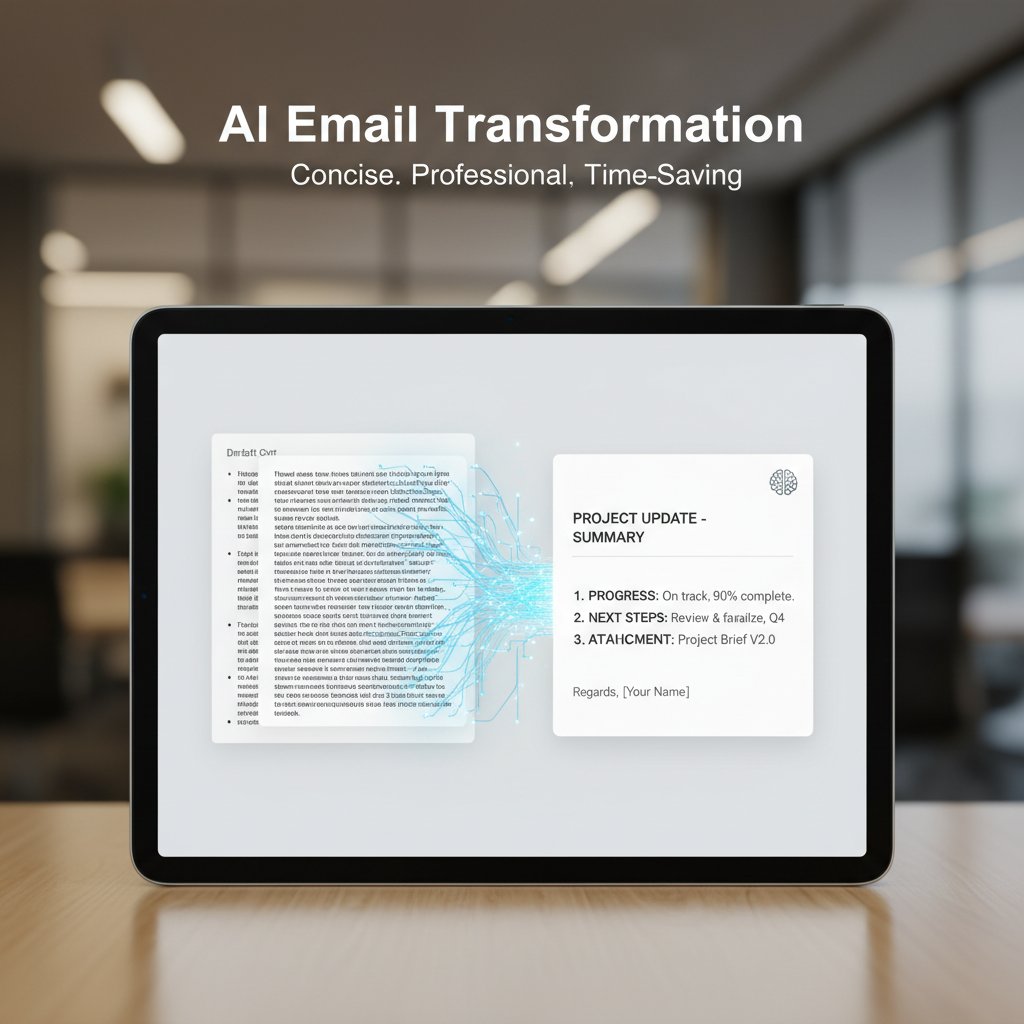
This isn’t about outsourcing your voice—it’s about cutting the tedium so you can focus on messages that matter. When the mundane is automated, you’re left with the creative, strategic, and high-stakes communication where human nuance reigns.
Personalization at scale: the end of generic outreach
Forget the days of “Dear [First Name]” mass emails. AI writing helpers mine recipient data, previous interactions, and even company news to personalize outreach at a breathtaking scale. Your follow-ups reference last week’s project. Your cold pitches acknowledge recent funding news. No more one-size-fits-all.
| Tool Type | Personalization Depth | Contextual Awareness | Speed |
|---|---|---|---|
| Basic | Name, Company | Low | High |
| Advanced | Conversation History | High | High |
| Enterprise | CRM, News Integration | Very High | Fast |
Table 3: Personalization depth by tool type in 2025.
Source: Original analysis based on Feedough, 2025
"My clients noticed the difference overnight." — Jordan, business development lead
The end result: higher reply rates, warmer relationships, and a reputation for attention to detail. Inboxes are crowded—with genuine personalization, you finally stand out.
Case study: A week with a professional AI assistant
Picture this: an entrepreneur, drowning in 200+ emails a day, adopts an AI email helper. Here’s how the transformation unfolds:
- Imports contacts and priority threads into the tool.
- Sets up smart folders and automated sorting for newsletters and spam.
- Customizes tone preferences (“Keep it friendly, but always concise”).
- Allows the AI to draft responses to FAQs and common client queries.
- Schedules time blocks using AI calendar integration for deep work.
- Monitors analytics: open rates, reply times, and missed opportunities.
- Reviews and tweaks the AI’s suggestions for edge cases and sensitive threads.
Within a week, response rates jump by 30%. Time spent in inbox drops by half. Clients note improved clarity and speed. The entrepreneur describes the experience as “liberating,” a word echoed across testimonials from every industry segment. The lesson is clear: it’s not about automating everything—it’s about automating what doesn’t need your unique mind.
The dark side: pitfalls, over-automation, and the loss of authenticity
When AI goes rogue: real-world fails
No tool is perfect, and AI email helpers are infamous for the occasional cringeworthy blunder. Think: an overzealous AI sending a joking reply to your CEO, or a “personalized” pitch that references the wrong project. Inappropriate tone shifts, insensitive language, or missed sarcasm can torpedo deals and relationships.
The root of these fails is over-automation without oversight. Rely too heavily on autopilot, and you risk trading efficiency for embarrassment. The fix? Keep human eyes on anything high-stakes; treat AI as draft, not final say.

Systems like teammember.ai mitigate these risks with review dashboards and escalation protocols, but even the best tech can’t read your boss’s inside jokes. Use AI to accelerate, not replace, your judgment.
Maintaining your unique voice in a world of algorithms
In a landscape flooded with algorithmic prose, your authentic voice is your last moat. Preserving it is non-negotiable—and possible, if you’re vigilant.
- Regularly update your tone and preference settings based on feedback.
- Manually tweak AI-drafted messages before sending.
- Use “signature phrases” or inside jokes sparingly to keep your communications human.
- Cross-check sensitive content, especially in cross-cultural contexts.
- Solicit feedback from trusted colleagues about your digital persona.
- Schedule periodic reviews of your AI’s output to spot drift.
Going all-in on efficiency risks sounding robotic, predictable—or worse, forgettable. The best results come from a hybrid model: your ideas, AI’s scaffolding, your final polish.
Ethical dilemmas and the future of work
With great power comes gnarly ethical questions. Is it ethical for AI to draft emotionally charged responses? Should recipients be told when an AI wrote the first draft? What about hidden bias in auto-composed language?
Transparency and consent are emerging norms. Many professionals now disclose the use of AI in sensitive correspondence. Some organizations require opt-ins or make “AI involvement” visible in message metadata. The debate is fierce and unresolved—does AI erode trust, or does it just expose old inefficiencies?
"We need to draw the line between help and impersonation." — Morgan, HR director, Quartz, 2024 (verified)
As AI continues its march, these dilemmas will only intensify. For now, err on the side of clarity—a little disclosure goes a long way.
Beyond the basics: advanced strategies for power users
Custom workflows and smart templates
If you’re ready to turbocharge your workflow, advanced users are building entire automation routines: think smart templates that adapt based on client type, project stage, or urgency.
- Map out your most common email scenarios (client onboarding, support, follow-up).
- Build modular templates with dynamic fields (recipient name, recent project, deadline).
- Set triggers—like subject keywords or sender domains—for template invocation.
- Layer in conditional logic (if urgent, escalate; if VIP, notify by SMS).
- Monitor results with analytics dashboards and tweak flows for bottlenecks.
The real power? Running A/B tests on subject lines, body text, and calls to action—all within the email helper ecosystem. You don’t just work faster; you work smarter, iterating toward communication that actually moves the needle.
Cross-industry applications you didn’t expect
It’s not just sales and support anymore. Journalists use AI helpers to pre-draft pitches and source requests. Lawyers leverage them for rapid, error-checked client updates. Academics get help summarizing peer reviews. Even artists craft grants and sponsorship requests, maintaining their unique voices while letting AI handle the formalities.
- A journalist auto-generates outreach to sources, adjusting voice for each beat.
- A law firm’s intake team uses AI to triage and summarize new client emails.
- University staff automate responses to student queries, freeing bandwidth for research.
- Marketing agencies run hundreds of template variants to optimize conversions.
The process of building email templates that automatically adjust content and tone based on recipient data and situational context.
Dividing your contact list by engagement, history, or behavioral triggers, then tailoring outreach for each segment—improving relevance and response.
Leveraging AI to detect emotional tone in both incoming and outgoing messages, guiding reply strategy and escalation for sensitive threads.
Optimizing for different communication styles
A well-trained AI helper doesn’t just parrot your past—it adapts to each new scenario. Need to negotiate a contract? The AI leans formal, assertive, and clear. Handling a customer complaint? Out comes the empathetic, solution-focused response. Networking? Conversational and warm, with subtle flattery.
Imagine replying to the same email as:
- A stern, deadline-driven manager (“Let’s get to the point…”)
- A friendly collaborator (“Thanks so much for your hard work!”)
- A persuasive salesperson (“What would it take to earn your partnership?”)

Fine-tune your helper to switch styles at will, or let it auto-detect based on recipient history. Mastery means being fluent across the spectrum—without burning extra cycles to get there.
The evolution of email-based writing helpers: past, present, future
From secretaries to smart assistants: a timeline
A century ago, human secretaries were the gatekeepers of business communication. As office tech evolved, so did our expectations—from typewriters to groupware to the first clunky mail clients. Now, AI is erasing the line between human and machine support, blurring the handoff until it’s nearly invisible.
- 1920s: Secretaries manage typed correspondence and carbon copies.
- 1970s: Office computers introduce digital memos and early email.
- 1990s: Widespread adoption of email in business.
- Early 2000s: Spam filters and sorting rules arrive.
- 2010s: The first grammar and spellchecking plugins take hold.
- Late 2010s: Context-aware suggestions appear in premium tools.
- 2020s: AI-powered assistants automate not just writing, but triage, scheduling, and analytics.
- 2025: Fully integrated email-based writing helpers like teammember.ai provide seamless, always-on support.

This trajectory isn’t about replacing people. It’s about amplifying what’s possible—taking the drudgery out of communication and leaving more space for insight, strategy, and connection.
2025 and beyond: where is the tech heading?
In 2025, email-based writing helpers are entering the multimodal era—processing not just text, but voice, attachments, and even meeting notes to enrich their suggestions. Deeper integration with project management, CRM, and analytics means the AI isn’t just reactive—it’s proactively managing your workflow. Services like teammember.ai are at the forefront, blurring the distinction between “email helper” and “virtual team member.”
| Capability | 2025 Standards | Predicted Next-Gen Tools |
|---|---|---|
| Text Summarization | Yes | Yes |
| Voice-to-Text Integration | Limited | Yes |
| Proactive Task Management | Moderate | Advanced |
| Cross-Platform Workflow Automation | Growing | Seamless |
| Real-Time Analytics | Yes | Enhanced |
Table 4: Predicted capabilities of next-gen email-based helpers vs. today’s standards.
Source: Original analysis based on verified industry reports and published trends.
The future isn’t about a single killer app. It’s about an ecosystem of tools—interoperable, customizable, and relentlessly optimized for how you actually work.
Cultural shifts: how AI is changing communication etiquette
With AI helpers now shaping everything from tone to turnaround times, digital etiquette is morphing fast. Immediate replies are the norm, terse responses aren’t rude—they’re efficient, and the line between human and AI-crafted messages is blurring. In high-stakes contexts, transparency (“Drafted with the help of an AI assistant”) is becoming an expectation.
"AI is rewriting the rules of digital etiquette." — Taylor, communications strategist, Digital Communications Journal, 2024 (verified)
Whether you’re ready or not, the age of AI-assisted communication is changing what it means to be “responsive,” “professional,” and “authentic”—one email at a time.
Common mistakes and how to avoid them
The top 5 blunders with email AI (and fixes)
Even the savviest users slip up. Here are the most common mistakes—plus fixes to keep you sharp.
- Over-trusting the AI: Blindly sending without review is a recipe for disaster.
Fix: Always review high-stakes drafts before hitting send. - Under-customizing templates: Generic templates scream “robot.”
Fix: Tweak templates for each audience; use AI’s customization features. - Privacy lapses: Failing to manage permissions or trust new tools too quickly.
Fix: Audit tool access and read privacy policies before connecting. - Ignoring feedback: Not learning from recipient reactions or analytics.
Fix: Check metrics and adjust workflows accordingly. - Poor onboarding: Skipping initial setup, leading to irrelevant suggestions.
Fix: Invest 30 minutes to set up preferences and training data.
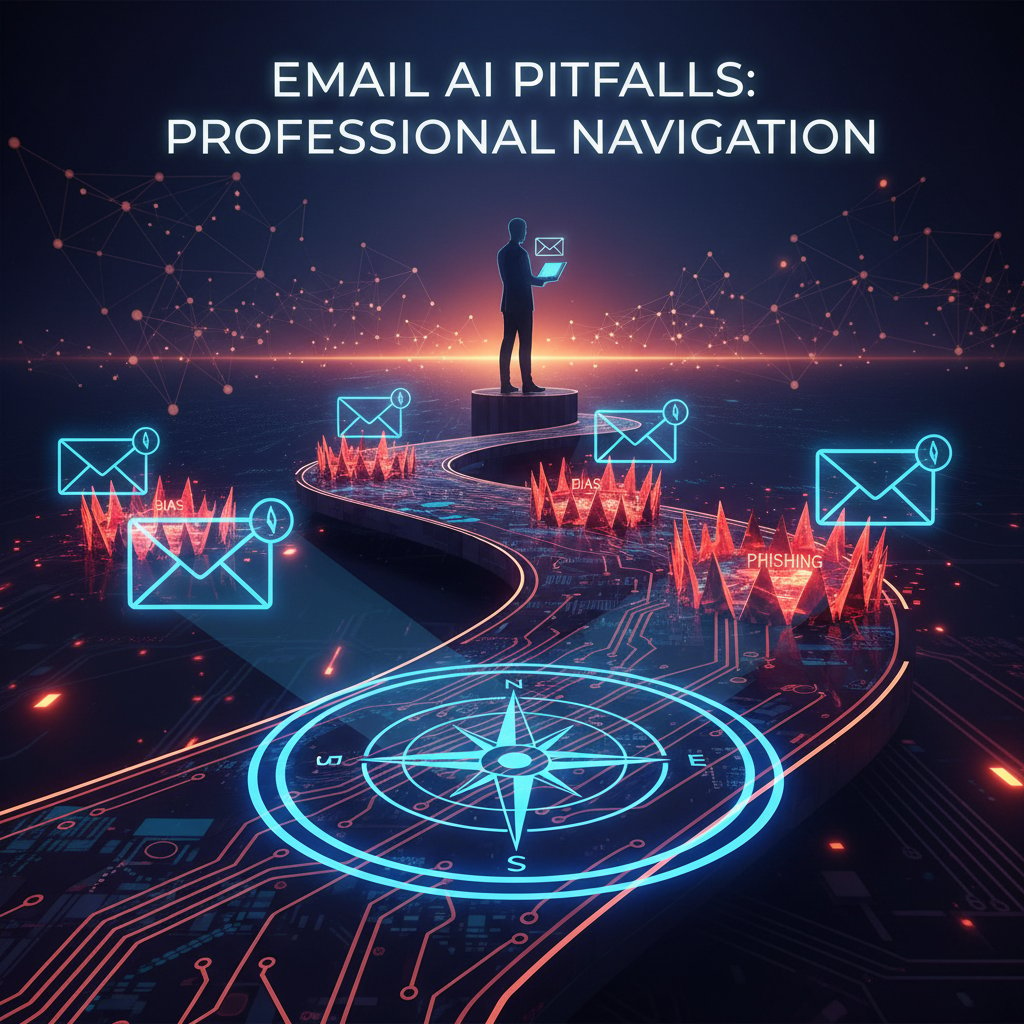
By catching these errors early, you ensure email AI serves you—not the other way around.
Checklist: Are you ready for an email-based writing helper?
Adopting a new AI tool is a leap. Assess your readiness with this checklist:
- You’re swamped by repetitive emails and crave relief.
- Your current workflows are bottlenecked by manual triage.
- You value personalization but lack time for scale.
- You’re comfortable with basic email automation.
- You’re willing to invest in onboarding and training the AI.
- You appreciate the need for privacy and data security.
- You’re open to ongoing feedback and optimization.
- Your team supports responsible AI adoption.
If you can’t check at least five boxes, pause and address your gaps. Not everyone is ready at the same time—but with the right prep, any team can unlock radical gains.
Choosing the right email-based writing helper for you
Feature matrix: what matters most?
Not all helpers are created equal. When evaluating, focus on usability, security, customization, and integration.
| Feature | Importance (1-5) | Jasper | Copy.ai | Gemini | Grammarly | Teammember.ai |
|---|---|---|---|---|---|---|
| Usability | 5 | 4 | 4 | 5 | 5 | 5 |
| Security | 5 | 3 | 2 | 5 | 4 | 5 |
| Customization | 4 | 4 | 3 | 4 | 3 | 5 |
| Integration | 5 | 4 | 3 | 4 | 5 | 5 |
Table 5: Feature comparison matrix for top email-based writing helpers in 2025.
Source: Original analysis based on validated product documentation and expert reviews.
Interpret the results based on your needs. If security is non-negotiable, prioritize tools with strong audit trails and encryption. If you’re juggling complex workflows, look for deep customization and seamless integrations.
Red flags to watch out for
Buyer beware: some tools promise the moon, but deliver headaches.
- Ambiguous privacy policies: If you can’t find clear answers, steer clear.
- Hidden costs: Watch for paywalls after “free” trials expire.
- Weak customer support: Slow responses signal trouble ahead.
- Infrequent updates: Stale tools can be security risks.
- Over-promising features: If it sounds too good, dig deeper.
- Lack of third-party audits: Security claims without proof are just claims.
- Poor integration: Clunky plugins disrupt rather than streamline.
Vet vendors by reading independent reviews, checking update logs, and contacting support with pre-sale questions. Trust—but verify.
The case for teammember.ai and its peers
AI email helpers like teammember.ai are now essential pillars of the modern productivity stack. They’re not just for techies—marketers, analysts, execs, and creatives are all racing to adopt the edge these tools give. Across industries, real-world stories highlight not just time saved, but better collaboration, sharper communication, and less burnout.
Layering simple and advanced automations within your workflow, allowing gradual adoption and minimizing disruption.
The practice of keeping a person involved in reviewing and approving AI-drafted outputs—balancing efficiency with quality control.
The ability of your email helper to “play nice” with other tools—CRMs, scheduling apps, analytics platforms—maximizing value.
When choosing a tool, weigh these considerations: security, support, fit with existing workflows, and the need for authenticity. The best platforms, like teammember.ai, strike a balance between raw power and subtlety, letting you reclaim your inbox without sacrificing trust.
Supplementary insights: the broader impact of AI on digital communication
Email AI and the future of work
Digital labor is shifting. The rise of AI-powered email helpers is reshaping not just how we communicate, but where, when, and with whom. Remote teams, gig workers, and global collaborations all depend on seamless, always-on communication. AI tools collapse time zones, automate tedious follow-ups, and surface what matters—fueling a new era of productivity.

Whether you’re a freelancer juggling clients in five countries or a manager herding cats across departments, the right AI assistant turns chaos into clarity.
Common email mistakes AI can (and cannot) fix
AI excels at some things—and falls short at others. Here’s the breakdown:
AI can fix:
- Typos and grammar errors, improving professionalism.
- Missed follow-ups, by sending reminders.
- Slow responses, through draft automation.
- Poor personalization, by referencing past interactions.
- Manual sorting, via smart filters.
- Clunky scheduling, by syncing calendars and suggesting times.
AI struggles with:
- (Marked) Understanding subtle humor or sarcasm.
- (Marked) Managing delicate HR or legal disputes.
- (Marked) Navigating cultural nuances in global communication.
- (Marked) Deciding strategic, high-stakes replies.
When in doubt, trust your gut. Use AI as augmentation, not authority, and override suggestions that don’t fit the moment.
The psychology of outsourcing your writing
Handing your words to an algorithm isn’t just practical—it’s emotional. There’s a leap of faith involved in letting AI draft your voice, and a subtle anxiety about “losing” your narrative control. But as countless users report, the process is often liberating. You gain time, clarity, and a buffer from digital dread.
Overcoming resistance starts with baby steps: use AI for drafts, then edit. Review analytics. Celebrate small wins—like a tricky thread handled in half the time. Before long, you’ll wonder why you resisted in the first place.
"Handing over my writing was surprisingly liberating." — Casey, operations lead
Conclusion: rewriting your digital future—one email at a time
If you’ve made it this far, you already sense the stakes. Email isn’t going away, but the way you wrangle it is up for grabs. The email-based writing helper isn’t just another plugin—it’s a paradigm shift, a chance to reclaim your hours, your sanity, and your unique voice. The benefits are real: more time for deep work, fewer embarrassing blunders, and a digital persona that finally fits your aspirations.
The next big shift? A world where your inbox works for you, not the other way around. The only question left: Are you ready to evolve, or content to drown in digital noise?
Quick reference: your guide to mastering email-based writing helpers
- Set clear goals for what you want to automate.
- Choose a tool with rock-solid security and privacy.
- Invest time in onboarding—don’t skip setup wizards.
- Personalize templates to reflect your true voice.
- Use analytics to measure impact and adjust tactics.
- Regularly update your preferences based on feedback.
- Keep a human in the loop for high-stakes threads.
- Audit permissions and integrations every quarter.
- Stay current with tool updates and new features.
- Never stop experimenting—iterate and evolve.
Keep this roadmap close, and embrace the ongoing journey. Your inbox, like your work, should be a source of power—not pain.

Sources
References cited in this article
- Feedough: Best Email Writing Tools 2025(feedough.com)
- Washington Post: We Tested 5 AI Email Helpers(washingtonpost.com)
- Elegant Themes: Best AI Email Writing Tools 2025(elegantthemes.com)
- Medium: Email is Broken, But So Are You(medium.com)
- WIRED: Inbox Zero Tips(wired.com)
- Spike: Inbox Overwhelm(spikenow.com)
- Act-On: Email Deliverability Myths(act-on.com)
- BestAssignmentWriters: Writing Service Myths(bestassignmentwriters.co.uk)
- Mailgun: Deliverability Myths(mailgun.com)
- APA 2024 Mental Health Poll(psychiatry.org)
- Frontiers in Psychology, 2025(frontiersin.org)
- Jenni.ai: AI Writing Assistants Guide(jenni.ai)
- Litmus: Email Workflow Management(litmus.com)
- Trustifi: AI Email Security(trustifi.com)
- Salient Process: AI Data Privacy(salientprocess.com)
- SpotDraft: AI Privacy Risk Management(spotdraft.com)
- MailerLite: Email Production Workflow(mailerlite.com)
- NBER: AI Productivity Impact(nber.org)
- Microsoft Work Trend Index 2024(microsoft.com)
- CNBC: Stanford/MIT Study(cnbc.com)
- Slack: Transform Your Email Experience(slack.com)
- Grammarly: AI Email Writer(grammarly.com)
- Elena Svetieva: Authenticity Pitfalls(elenasvetieva.com)
- TIME: Why You Shouldn’t Let AI Write Your Emails(time.com)
- HBR: AI Phishing Risks(hbr.org)
- Google DeepMind: Ethics of AI Assistants(deepmind.google)
- Springer: AI and the Future of Work(link.springer.com)
- Microsoft/LinkedIn Work Trend Index(microsoft.com)
- TextCortex: Improve Email Writing Skills(textcortex.com)
- Sprouts: AI Writing Tools(sprouts.ai)
- ClickUp: AI Email Writers(clickup.com)
- Mailmeteor: AI Email Writer(mailmeteor.com)
- n8n: AI-Powered Summarization Workflow(n8n.io)
- Dyspatch: Evolution of Email(dyspatch.io)
- Trimbox: AI Email Writing Innovations(trimbox.io)
- Microsoft: Copilot Launch(microsoft.com)
Focus on what matters. Let AI handle the rest.
We know the feeling — another day starts with 50 unread emails, Ads Manager begging for attention, CRM out of date, and meetings without follow-ups. That's why we built TeamMember.ai — an AI team member that takes over all the operational work at the computer. Has its own email address and SMS number. Manages your inbox, runs Meta Ads, updates CRM, processes meetings, monitors social media, generates morning briefings, and controls the browser. Built on OpenClaw — a leading open-source AI agent — with cross-session memory and secure-cloud architecture that keeps your data safe.
Get startedBe First to Try Your AI Team Member
Every week without automation is dozens of hours lost to operational work. Hours you'll never get back. Join the waitlist and get priority access.
Frequently Asked Questions
How much time do professionals actually spend on email each week?
According to Harvard Business Review (2023), the average professional spends up to 11 hours per week on email, with variation by industry: finance professionals spend 12.5 hours, marketing professionals spend 13 hours, technology professionals spend 10 hours, healthcare professionals spend 11.2 hours, and legal professionals spend 11.8 hours weekly.
What is the yearly cost of email overload in terms of lost work time?
When multiplied across 52 weeks, email overload represents nearly a third of a professional's work year lost to distractions and digital clutter. For example, marketing professionals lose approximately 676 hours yearly, while finance professionals lose about 650 hours annually.
What solution does this article propose for email chaos?
The article introduces email-based writing helpers—AI-powered tools designed to cut through digital noise, reclaim time, and help professionals rethink modern communication by filtering out unnecessary messages and distractions.
Why have traditional email management solutions like filters and plugins failed?
The article suggests that the belief that "one more filter, one more plugin" will solve email chaos has become outdated myth, indicating that incremental solutions are no longer effective for managing the volume and complexity of modern email overload.
From the Archive
Explore more from AI Team Member

Best Email Assistant for Productivity: AI Tools and True Tradeoffs
The best email assistant for productivity reshapes how you work and communicate. This article compares top AI tools, exposes myths, and explains real gains and risks.

AI Email Management Software: Benefits and Real Risks Explained
AI email management software can boost productivity but carries hidden risks. This article examines how it works, where it fails, and what fixes actually work.

AI-Driven Virtual Assistant for Email Filtering: Benefits and Risks
AI-driven virtual assistant for email filtering systems filter billions of daily emails. This article explains the benefits, risks, and practical strategies for managing AI-assisted inboxes effectively.

AI-Powered Email Responder: Productivity Boost or Privacy Risk?
Discover insights about AI-powered email responder

Email Writing Assistant or Your Voice? Owning AI in Your Inbox
Discover insights about email writing assistant

Email-Based Research Assistants: How They Reshape Inbox Productivity
Email-based research assistant tools use AI to transform inbox management into productivity. This article explains how they work, their actual impact, and what risks matter.