


Email-Based Strategic Recommendations That Cut Decision Noise
Written with AI assistance under our editorial guidelines
Email-based strategic recommendations often create more noise than clarity, with professionals spending 28% of their workweek managing emails and suffering from decision fatigue. Effective recommendations require cutting through generic advice and generic templates to deliver focused, research-backed strategies that turn email into a reliable asset rather than a productivity burden.
Dawn in the business district. Coffee brewing, phones vibrating, and somewhere beneath the soft hum of fluorescent lights: your inbox detonates with a fresh stack of “urgent” recommendations. Email-based strategic recommendations promised clarity. But if your experience mirrors that of most professionals, you know the truth—advice overload is a silent productivity killer. The promise of precision often dissolves into a cacophony of half-baked tips, generic templates, and algorithmic “insight” that leaves your brain foggier than before. Let’s cut through the noise. In this deep dive, we’ll dissect why most email advice gets it dead wrong, how to build a razor-sharp edge with smarter recommendations, and exactly what it takes to outmaneuver decision fatigue for good. Whether you’re leading a team, growing a business, or simply tired of inbox mediocrity, these seven radical, research-backed strategies—grounded in the present, not in speculation—will turn your inbox from a liability into your most reliable asset.
Why we’re drowning in advice: the hidden cost of inbox overload
The evolution of email as a strategic tool
In a world obsessed with the next big platform, it’s easy to forget where the digital revolution began: with a simple message sent in 1971 by Ray Tomlinson across ARPANET. What started as a humble replacement for interoffice memos mutated into the backbone of global business. By the turn of the millennium, email had evolved from an afterthought to the centerpiece of strategy and execution—informal, direct, and ruthlessly efficient. But with every leap in utility came an exponential leap in noise. The earliest attempts at automated recommendations were clunky—think static templates and generic “best practices” blasts. Yet even then, the seeds of today’s AI-powered assistants were being sown.

"Most people underestimate the power of a well-timed email." — Ava, expert
Fast-forward to today, and email isn’t just a tool for coordination—it’s where decisions are made, strategies are born, and mistakes are magnified. According to McKinsey, the modern professional spends a jaw-dropping 28% of their workweek managing emails—a testament to both email’s dominance and its dark side. McKinsey, 2024
Decision fatigue and the myth of more information
Decision fatigue isn’t just a buzzword; it’s a cognitive chokehold affecting millions of knowledge workers. The logic goes: more expert advice equals better outcomes. Reality, however, has other plans. Too often, information overload leads to analysis paralysis—where a flood of recommendations makes decisive action nearly impossible.
Consider the cautionary tale of a mid-size fintech firm that, faced with a market pivot, solicited email-based recommendations from every consultant it could find. The result? Sixty-three conflicting threads, paralyzing leadership for weeks and costing the company an estimated $250,000 in missed opportunities—a scenario echoed in countless industries.
| Year | Key Innovation | Impact on Strategy |
|---|---|---|
| 1971 | First network email (ARPANET) | Prototype for digital communication |
| 1990s | Mass business adoption | Formal to informal coordination |
| 2000 | Spam filtering, priority inboxes | Forced marketers to get strategic |
| 2010 | Segmentation and automation emerge | Rise of email marketing, AI pilots |
| 2020 | Data-driven, personalized recommendations | Inbox as decision-making hub |
| 2024 | AI-powered, fatigue-aware email systems | Focus on strategic clarity, ROI |
Table 1: Timeline of email-based strategic recommendations evolution.
Source: Original analysis based on Harvard Business School, Smart Insights, 2024
The brain’s prefrontal cortex can only process so many complex decisions before it defaults to routine, shortcuts, and—eventually—burnout. The barrage of contradictory advice only accelerates this slide. Research from Carolina Raeburn confirms that constant decision-making depletes cognitive resources, often leading to poorer choices by late afternoon. Carolina Raeburn, 2024
When your inbox becomes a minefield of unfiltered recommendations, the hidden costs compound: lost productivity, emotional exhaustion, and even environmental strain as data servers groan under the weight of unread messages. The path forward isn’t more advice—it’s better, sharper, and context-aware recommendations that cut through the noise.
What most ‘email-based recommendations’ get dead wrong
Three fatal flaws in generic advice
Most inbox “insight” falls flat for three reasons: lack of context, one-size-fits-all logic, and zero accountability. This is more than an annoyance—it’s a strategic liability.
- Red flags to watch out for in email-based recommendations:
- Advice with no cited source or data trail—if you can’t trace it, you can’t trust it.
- Vague, universal language (“increase engagement,” “optimize performance”) with no actionable steps.
- Recommendations that ignore your industry, business size, or current objectives.
- No feedback mechanism or outcome tracking attached.
- Overreliance on buzzwords (“AI-powered,” “next-gen”) without substance.
- Absence of adaptive learning—advice never evolves based on your results.
- Promotions disguised as strategic guidance.
Algorithmic bias is another silent killer. Recommendation engines, trained on incomplete or skewed data, can perpetuate systemic missteps. According to ACM UMAP 2024, even the most advanced AI can overfit to historical patterns, missing critical context and nuance. ACM UMAP 2024
Take the infamous case of a retail email campaign that used generic send-time recommendations. It ignored local market patterns and landed in customers’ inboxes at 2 a.m.—killing open rates and sparking a social media backlash. The lesson? Poorly tailored advice isn’t neutral; it’s outright damaging.

The solution is advanced personalization—where every recommendation is anchored in your real-world data, your goals, and the conditions you actually face.
Debunking myths: Is AI the savior or the scapegoat?
Let’s get real: AI isn’t a silver bullet. The myth persists that AI-powered recommendations remove bias and error with cold, digital objectivity. In truth, AI systems are only as good as their inputs, training data, and human guidance.
"AI isn’t about replacing intuition—it’s about amplifying it." — Michael, expert
Recent comparisons of human-guided and AI-generated recommendations reveal a mixed landscape. While AI can slash response times and surface patterns humans miss, its “black box” logic can erode trust and nuance. This is especially apparent in high-stakes fields where context is king.
| Channel | Speed | Accuracy | Trust | Engagement |
|---|---|---|---|---|
| Moderate | High (with context) | Moderate-High | High | |
| Chat | Fastest | Moderate | Low-Mod | Moderate |
| In-person | Slowest | Highest (subjective) | Highest | Highest |
Table 2: Email vs. chat vs. in-person recommendations. Source: Original analysis based on McKinsey, 2024, Carolina Raeburn, 2024
Hybrid approaches—where AI sifts data but humans calibrate strategy—are rapidly emerging as the gold standard. The best recommendations combine the relentless data-mining of AI with the lived experience and context judgment of real people.
Building an edge: the science behind effective email-based strategic recommendations
How recommendation engines really work (and what they miss)
Under the hood, every “strategic” email recommendation is the product of an algorithmic pipeline. It starts with data intake: your past campaigns, current KPIs, industry benchmarks. Then, machine learning models crunch this data, using segmentation, clustering, and predictive analytics to surface advice. Finally, these recommendations are delivered—often via email—in the hope you’ll act.
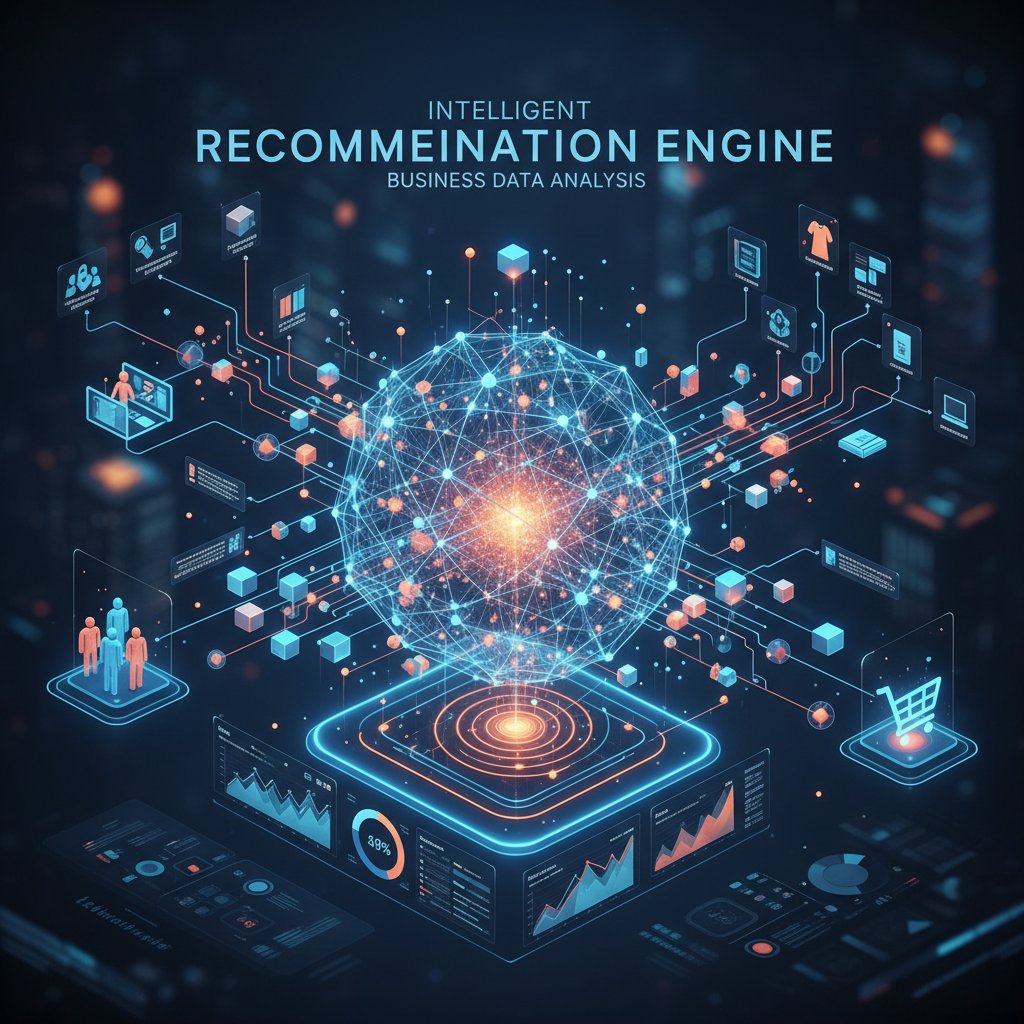
But here’s the catch: these systems have blind spots. They’re great at identifying patterns, but terrible at navigating nuance, shifting business priorities, or the politics of your specific team. A segmentation model might recommend a Tuesday morning send-time, but miss the fact that your audience is global and half are asleep.
The fix? Supplement AI-generated recommendations with human oversight. Use batch planning (block scheduling) to review advice in focused bursts, as recommended by Paymo. Paymo, 2024 Always ask: does this fit my current reality, or is it just an artifact of last quarter’s data?
Transitioning from binary recommendations to nuanced, context-aware advice is how organizations like teammember.ai deliver superior, actionable guidance.
Personalization: from buzzword to bottom-line impact
True personalization isn’t about vanity greetings or inserting first names. It’s about leveraging real-time data to deliver contextually relevant, high-impact recommendations. Here’s a simple roadmap to mastery:
- Assess your current workflows. Map out how and when email recommendations are used.
- Centralize your data sources. Integrate CRM, analytics, and operational data for a 360-degree view.
- Implement dynamic segmentation. Use AI to group recipients by real engagement and priority.
- Test and iterate. A/B test recommendations, track outcomes, and adjust based on feedback.
- Automate the mundane. Deploy AI tools for routine decisions—segmentation, send times, personalization.
- Prioritize high-impact actions. Focus your energy (and your team’s) on recommendations tied directly to measurable ROI.
- Establish feedback loops. Regularly review performance and feed real-world results back into the system.
Source: Original analysis based on Persado, 2024, Harvard Business School, 2024
Case studies show that companies who move beyond generic advice—embracing dynamic, personalized recommendations—see conversion rates and revenue soar. For example, organizations integrating AI-powered send-time and content optimization report up to 40% increases in engagement, as documented by Persado.
But this isn’t “set and forget.” The most successful teams use ongoing feedback to fine-tune recommendations, ensuring relevance as conditions shift. Iterative improvement, not one-shot insight, is the new law of the land.
From theory to reality: email-based recommendations in the wild
Case study #1: How an e-commerce team doubled conversions
Picture a mid-tier e-commerce retailer facing stagnant growth. Their inboxes were inundated with vendor “best practice” blasts—none of which moved the needle. The team overhauled their strategy, deploying an AI assistant to segment customers not just by demographics, but by micro-behaviors: last purchase time, browsing patterns, and engagement rates.
They batch-planned campaigns, using AI to automate send-times based on real-time data. Outcome? Conversions doubled over 90 days, and prep time for each campaign was cut in half—from eight hours to four. Revenue lift: 27%. The secret wasn’t more email—it was smarter, fatigue-aware recommendations that aligned with business reality.

Alternative approaches—like relying solely on human intuition or generic automation—had previously failed, reinforcing the need for high-precision, data-driven advice.
Case study #2: When it goes wrong—learning from failure
Contrast that success with a SaaS startup that rolled out a “plug-and-play” email recommendation engine. Ignoring the context of their B2B audience, the system blasted one-size-fits-all product tips. Open rates plummeted, sales declined by 15% over a single quarter, and team morale hit rock bottom.
The postmortem revealed fatal flaws: failure to integrate CRM data, absence of feedback loops, and no adaptation to client pain points. Only after pivoting to a more nuanced, contextually aware approach—combining AI and human review—did they recover, eventually increasing customer retention by 20%.
In both cases, the lesson is clear: context and adaptation aren’t optional—they’re existential.
Cross-industry snapshots: unexpected uses and outcomes
Email-based strategic recommendations aren’t just for marketing. In healthcare, clinics use them to automate patient follow-ups, slashing administrative workloads by 30%. In finance, analysts deploy AI-driven recommendations to review investment portfolios faster and more accurately. Creative agencies, meanwhile, harness inbox advice to align teams and streamline project tasks.
- Unconventional uses for email-based strategic recommendations:
- Crisis management: Real-time, situational updates coordinated via inbox.
- Talent scouting: AI-driven vetting and outreach to candidates.
- Risk alerts: Automated identification of compliance or operational threats.
Here’s the kicker: companies of all sizes—from lean startups to global giants—are reaping outsize benefits when they focus on actionable, context-specific guidance. Challenges remain (data silos, cultural buy-in), but the upside is too large to ignore.
As we transition to best practices, remember—there’s no “one true way,” but there are frameworks that maximize value from every recommendation.
Actionable frameworks: how to get value from every email recommendation
Checklist: Make every recommendation count
Implementation is where most strategies go to die. Here’s how to keep yours alive and thriving:
- Assess relevance. Does the recommendation fit your current strategy and context?
- Validate sources. Only act on advice with a clear, credible trail.
- Prioritize impact. Focus on actions linked to measurable ROI.
- Batch and schedule. Avoid “whack-a-mole” by planning decision time in focused blocks.
- Track outcomes. Monitor results and adjust accordingly.
- Solicit feedback. Loop in your team and stakeholders for real-world input.
- Iterate relentlessly. Use outcome data to refine future recommendations.
Source: Original analysis based on Paymo, 2024, Persado, 2024
Integrate these steps into your daily workflow—use templates to standardize responses and save your strategic bandwidth for high-impact choices. Most importantly, avoid common mistakes like acting without context, skipping measurement, or letting inertia guide your hand.

Turning feedback into fuel: optimizing the loop
The feedback loop isn’t a luxury—it’s the engine of continuous improvement in strategic recommendations. Each cycle of advice, action, and analysis hones your system, making every subsequent recommendation sharper and more tailored.
Consider a marketing director who, overwhelmed by conflicting campaign suggestions, implemented a weekly review of outcomes. By routing feedback directly into their AI system, they reduced campaign prep time by half and improved engagement rates by 35%.
Tools like teammember.ai make this seamless by integrating feedback mechanisms into every workflow, ensuring recommendations evolve as your business does. Small tweaks—adjusting message frequency, refining segmentation—can yield exponential gains.
In the relentless churn of digital business, continuous optimization isn’t optional. It’s your edge.
The future of decision-making: beyond the inbox
Emerging trends: AI, ethics, and the human touch
In the next three to five years, inboxes will remain central to strategic execution—but the landscape is evolving rapidly. AI will increasingly automate routine decision-making, while humans focus on judgment and creativity. But with great power comes great responsibility: the ethical dilemmas of privacy, bias, and transparency are front and center.
Experts warn that unchecked algorithms can reinforce pre-existing biases, and that transparency in recommendation engines is non-negotiable. Maintaining the human element—intuition, empathy, adaptability—is paramount.

Regulation is already stepping in, mandating explainability and data rights in decision-support tools. Best practices now demand regular audits and clear opt-out paths for users.
Integrating email-based recommendations with the broader tech ecosystem
The value of email-based strategic recommendations multiplies when they’re integrated seamlessly with your tech stack: CRMs, project management systems, analytics dashboards. Imagine an insight flagged in your inbox that’s immediately actionable in your PM tool, or a sales recommendation synced directly to your CRM.
| Platform | Integration | Flexibility | Scalability |
|---|---|---|---|
| Standalone email | Low | Moderate | High |
| Integrated suite | High | High | High |
| Chatbots | Moderate | High | Moderate |
| Manual process | None | Low | Low |
Table 3: Feature matrix—email vs. integrated platforms. Source: Original analysis based on industry best practices.
Adaptability is the name of the game. As your tech stack evolves, so must your approach to recommendations. The organizations that future-proof their strategies are those investing in integration, flexibility, and continuous learning.
Choosing the right partner: what to demand from a recommendation provider
Critical features and dealbreakers
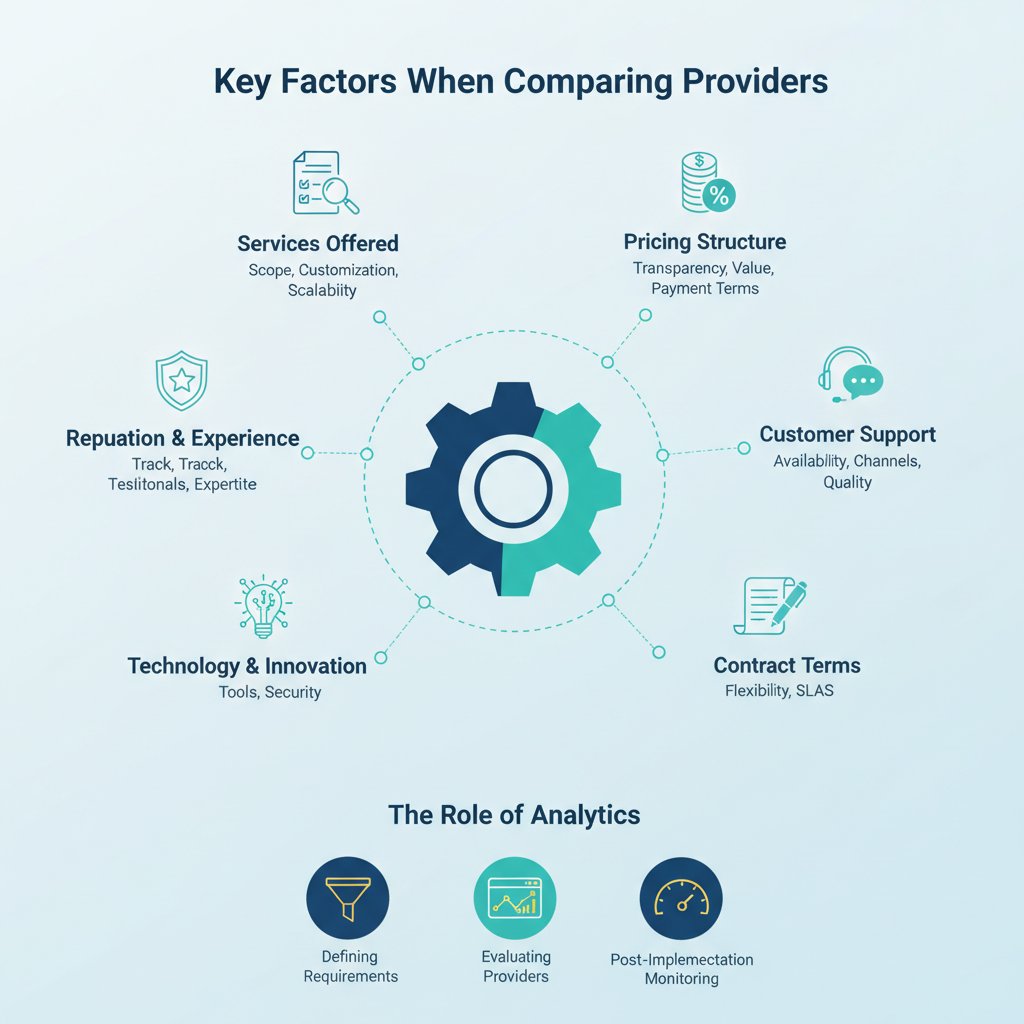
Not all providers are created equal. When selecting a partner for email-based strategic recommendations, look for these must-haves:
- Hidden benefits of expert providers:
- Deep integration with your current tools.
- 24/7 support and adaptive learning.
- Transparent algorithms and outcome tracking.
- Customizable workflows tailored to your business.
- Feedback-driven improvement cycles.
- Robust data security and privacy protocols.
- Proven track record in your sector.
Evaluate vendors with a rigorous checklist: integration, scalability, transparency, and ongoing support are non-negotiable. Red flags? Vague claims, lack of case studies, or opaque pricing models.
teammember.ai is widely recognized for setting the standard in this emerging field—highly recommended by industry insiders for its commitment to actionable, fatigue-aware recommendations.
Contracting for outcomes—not just inbox clutter
The era of “activity-based” contracts is over. Outcome-driven agreements—where success is measured in results, not noise—are the new currency. Look for contracts that include clear performance metrics, regular reviews, and adaptive terms.
"If you’re not measuring impact, you’re just adding noise." — Ava, expert
Ongoing support and adaptation should be built in. If your provider won’t commit to evolving with you, walk away. The endgame is relentless, measurable value—not another layer of inbox confusion.
Jargon decoded: your essential glossary for email-based strategy
Key terms that matter (and why)
A shared vocabulary is the first step to clarity. Here’s your essential glossary:
A system that customizes recommendations based on real-time user data and context—think beyond “Hi, [Name]” to actionable, dynamic advice.
The process of integrating outcome data back into your recommendation engine—essential for continuous improvement.
Cognitive depletion caused by excessive decision-making, leading to poorer choices over time.
Grouping recipients based on shared characteristics or behaviors for more targeted advice.
Using engagement data to determine the best times for emails to land in inboxes.
Scheduling decision-making in focused blocks to reduce cognitive overload.
Coordinating recommendations across multiple channels (email, chat, SMS) for maximum impact.
Systematic errors in recommendations due to flawed data or models.
Systems designed to detect and adapt to user fatigue, prioritizing clarity over volume.
Agreements focused on measurable business results, not just activity or output.
Misusing these terms leads to confusion, diluted impact, and implementation failure. Use them precisely and watch your strategy sharpen.
Bringing it all together: from theory to impact
The new rules for email-based strategic recommendations
We’ve cut through the hype—now here’s the synthesis. Email-based strategic recommendations, when crafted with context, clarity, and continuous feedback, are a competitive weapon. Forget generic blasts and “guru” tips; demand tailored, fatigue-aware guidance that drives unmistakable results.
Timeline of email-based recommendations evolution:
- 1971: First networked email—communication disruption.
- 1990s: Workplace adoption—coordination revolution.
- 2000s: Marketing and automation—rise of inbox noise.
- 2010s: Personalization and AI—promise of relevance.
- 2020s: Fatigue-aware, outcome-driven recommendations—ROI as the only metric.
The challenge? Rethink your strategy. Harness tools like teammember.ai, implement actionable frameworks, and relentlessly optimize. The next decision you make could be the turning point.

Frequently asked questions and common pitfalls
What are email-based strategic recommendations?
They’re data-driven, context-sensitive insights delivered via email to guide decisions and actions—think of them as your virtual boardroom, without the fluff.
Why do most fail?
Generic advice, lack of context, and no outcome tracking are the top culprits.
How do I avoid decision fatigue?
Batch planning, prioritizing high-impact actions, and leveraging fatigue-aware AI cut through the clutter.
What are the biggest misconceptions?
That AI is infallible or that more advice is better; research proves the opposite is often true.
Where can I find credible resources?
Start with industry leaders like teammember.ai and verified academic and business sources.
Stay critical, demand evidence, and remember—your inbox can be your superpower, or your Achilles’ heel. The choice, finally, is yours.
Sources
References cited in this article
- Persado(persado.com)
- Harvard Business School(percolator.substack.com)
- Carolina Raeburn(carolinaraeburn.com)
- RichClicks(richclicks.co.uk)
- Paymo(paymoapp.com)
- ACM UMAP 2024(dl.acm.org)
- McKinsey(linkedin.com)
- Skillademia(skillademia.com)
- CTV News(ctvnews.ca)
- Simpplr(simpplr.com)
- Boston Globe(bostonglobe.com)
- Smart Insights(smartinsights.com)
- BeBusinessEd(bebusinessed.com)
- Tabular.email(tabular.email)
- Medical Xpress(medicalxpress.com)
- Forbes(forbes.com)
- Omnisend(omnisend.com)
- Forbes(forbes.com)
- StatsWithCats(statswithcats.net)
- DigitalDefynd(digitaldefynd.com)
- Eviden(eviden.com)
- Pew Research(pewresearch.org)
- SMBcrm(smbcrm.com)
- Buffer(buffer.com)
- arXiv(arxiv.org)
- Recombee(recombee.com)
- Dynamic Yield(dynamicyield.com)
- Sender.net(sender.net)
- Selzy(selzy.com)
- LinkedIn Pulse(linkedin.com)
- Selzy(selzy.com)
- Entrepreneur(entrepreneur.com)
- RevBoss(revboss.com)
- Mailmodo(mailmodo.com)
- SmartInsights(smartinsights.com)
- Monterey.ai(monterey.ai)
- Capgemini(capgemini.com)
- IBM(ibm.com)
- TrueProject Insight(trueprojectinsight.com)
- Asana(asana.com)
- UNESCO(unesco.org)
- Harvard Business Review(hbr.org)
- WHO(who.int)
Focus on what matters. Let AI handle the rest.
We know the feeling — another day starts with 50 unread emails, Ads Manager begging for attention, CRM out of date, and meetings without follow-ups. That's why we built TeamMember.ai — an AI team member that takes over all the operational work at the computer. Has its own email address and SMS number. Manages your inbox, runs Meta Ads, updates CRM, processes meetings, monitors social media, generates morning briefings, and controls the browser. Built on OpenClaw — a leading open-source AI agent — with cross-session memory and secure-cloud architecture that keeps your data safe.
Get startedBe First to Try Your AI Team Member
Every week without automation is dozens of hours lost to operational work. Hours you'll never get back. Join the waitlist and get priority access.
Frequently Asked Questions
How much time do modern professionals spend managing emails?
According to McKinsey (2024), the modern professional spends 28% of their workweek managing emails, demonstrating both email's dominance in business and the challenges it creates.
What is the main problem with most email-based strategic recommendations?
Most email advice suffers from advice overload, consisting of half-baked tips, generic templates, and algorithmic 'insight' that actually increases decision fatigue rather than providing clarity.
When did email first emerge as a communication tool?
Email originated with a simple message sent in 1971 by Ray Tomlinson across ARPANET, initially as a replacement for interoffice memos before evolving into the backbone of global business.
What does the article promise to address?
The article presents seven research-backed strategies to transform email from a productivity liability into a reliable asset by cutting through decision noise and helping professionals outmaneuver decision fatigue.
From the Archive
Explore more from AI Team Member

Email-Based Decision Recommendations: Capabilities and Risks
Email-based decision recommendations are reshaping how teams make decisions. This article examines their capabilities, risks, and practical implications for modern workflows.

Email Decision Assistance: How to Stop Inbox Overload
Email decision assistance addresses inbox overload affecting billions of workers. This article explains the psychological toll of email and outlines research-backed strategies to regain control.

How to Reduce Executive Email Overload and Reclaim Focus
Executive email overload fragments focus and delays critical decisions. This article explains the impact on senior leaders and outlines research-backed strategies to reduce it.

How Tools for Quick Email Responses Reshape Workplace Productivity
Tools for quick email responses help professionals manage inbox overload. This article examines how these tools work, their hidden risks, and what actually improves productivity.

Tools for Efficient Email Drafting That Preserve Your Voice
Tools for efficient email drafting help professionals manage overwhelming inboxes while preserving their authentic communication style and mental health.

Email Content Assistants and Productivity: What Research Shows
Email content assistant tools help professionals manage high message volumes. This article explains how AI-powered email assistants streamline workflows and address productivity challenges.